The biggest myth DO students believe about MD hospitals is that “I am just a guest here.” Wrong. You are cheap labor, potential future staff, and a walking PR opportunity. They want you there. Your job is to turn that fact into actual connections, advocates, and interview invitations.
This is not an article about “being professional” and “working hard.” You already know that. This is about tactics. Specific, concrete moves that let a DO student walk into an MD-dominated hospital and walk out with:
- Residents who know your name
- Attendings who will answer your email
- A program director who does not care that your diploma says DO
If you feel like an outsider, good. Outsiders who learn the rules usually outperform the insiders who assume they belong.
Let us fix the gap.
1. Understand the Playing Field Before You Walk In
If you do not understand how MD hospitals and residency programs think, you will network blindly and waste time.
How MD Hospitals Actually See DO Students
I have heard some version of each of these in workrooms:
- “That DO student hustles more than the MDs. I’d rank them.”
- “I did not even realize they were DO until I saw the badge.”
- “Our PD is old-school about DOs. They need a killer Step 2 to be in the running.”
Translation: you are not automatically disadvantaged, but you are not automatically neutral either. You are auditioning for “equals” status.
Common MD-hospital biases (not always fair, but very real):
- Unsure about your clinical training until they see you work
- Assumptions your board scores are lower unless you prove otherwise
- Worry you will not handle high-acuity or academic environments
Your networking has one purpose: crush those doubts fast and replace them with evidence.
Know What Actually Moves The Needle
Relationships that matter:
- Residents on that service – they talk about you in the workroom and to the chief residents.
- Attendings who like to teach – they will write your letters and whisper to the PD.
- Program coordinators and chiefs – they control interview logistics and signal who is “worth a look.”
- Alumni DOs already in the program – they are your best allies; they know exactly where the landmines are.
Your goal on every rotation at an MD hospital:
- Get at least 2 residents who would say: “Yes, I would want this person as an intern.”
- One attending who would either write you a letter or email the PD about you.
2. Pre-Rotation Prep: Set Yourself Up Before Day 1
Most DO students wait until they show up to start networking. That is late. You can start 4–6 weeks before.
Step 1: Map the Program and Its DO Friendliness
Minimum research you should do:
- Check current residents on the program website. Count DOs vs MDs.
- Look at leadership: any DOs as faculty, APDs, or PDs?
- Search on PubMed or Google Scholar for the PD’s interests.
- Scan their Instagram/Twitter (yes, many programs use this heavily).
If you find more than a couple of DOs in the residency:
That is a green light. They know how to integrate DOs.
If you find 0 DOs for 5+ years:Not impossible, but you are climbing uphill. You need stronger networking and likely higher board performance.
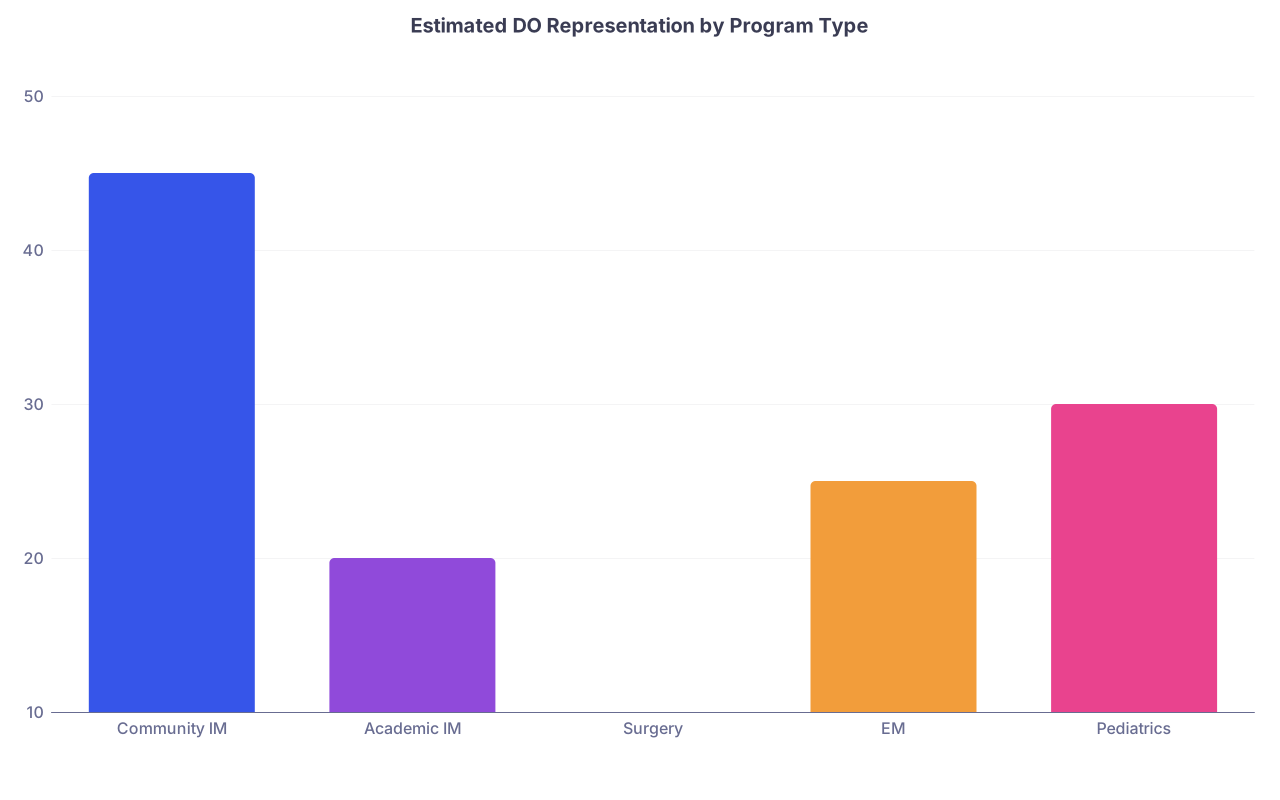
| Category | Value |
|---|---|
| Community IM | 45 |
| Academic IM | 20 |
| Surgery | 10 |
| EM | 25 |
| Pediatrics | 30 |
Step 2: Warm Reach-Out Before You Arrive
You are not “bothering” people. You are giving them a chance to invest in a student who might later be their colleague.
Two weeks before your rotation:
Send a short email to:
- One chief or senior resident (if listed)
- The rotation coordinator
Example message (adapt it, do not copy-paste verbatim):
Subject: Upcoming Sub-I – DO Student Looking to Contribute
Dear Dr. [Last Name],
My name is [Name], a 4th-year DO student from [School], scheduled for an acting internship on [Service] from [dates]. I am very interested in [Program Name] for residency and would like to make the most of my time on your team.
Are there any expectations, reading, or resources you recommend I review before starting? I want to hit the ground running and be as helpful as possible from day one.
Thank you for your time.
Best,
[Name], OMS-IV
[School]
You just did three things:
- Signaled seriousness
- Put “DO but proactive and motivated” in their brain
- Opened a channel you can use later (“We emailed before I started…”)
3. Day 1–3: First Impressions That Actually Build Network
The first 72 hours can make or break your reputation for the entire month. People decide fast.
What You Do Day 1
Introduce yourself with the right script.
When you meet residents or attendings:“I am [Name], DO student from [School], really interested in [specialty] and especially your program. I am hoping to learn your way of doing things and be useful while I am here.”
You want:
- “DO” stated once, confidently, not whispered
- “Interested in your program” so they view you as a potential future colleague
Ask this question early to the senior/junior resident:
“What makes a medical student stand out on this service — in a good way?”
Then shut up and listen. Whatever they say (notes, ownership, reading, punctuality), make those your top priorities.
Figure out the informal rules.
Every service has them:- Who presents first on rounds
- How aggressive to be about volunteering for tasks
- When it is okay to go home
Watch the other students and interns. Do not be the DO student who is culturally clueless.
4. Daily Tactical Networking: Small Moves, Big Payoff
This is where most students fail. They either:
- Try to “network” by being fake-friendly and forced, or
- Stay invisible, hoping hard work speaks for itself
You need structured, low-friction relationship building.
The 3–2–1 Daily Rule
Every day on rotation at an MD hospital, aim for:
- 3 micro-interactions with residents beyond pure clinical talk
- 2 targeted questions to attendings that show curiosity and respect
- 1 follow-up message or note at the end of the day or week
Examples of micro-interactions (takes 10–60 seconds):
- “Hey, that was a great way you explained CHF to the family. I am going to steal that approach.”
- “You mentioned you did an away rotation at [Hospital X]. Would you recommend it for a DO student?”
- “You are on nights next block? How bad is it really?”
Short. Human. Authentic.
Talking to Attendings Without Sounding Like a Sycophant
Targeted questions that work:
- “I read your paper on [topic] last night. How has that changed your practice, if at all?”
- “You mentioned earlier you look for X in interns. What do you see students consistently get wrong?”
- “I am a DO student interested in your program. Are there specific things you like to see from DO applicants?”
This does two things:
- Signals you are paying attention
- Invites them to coach you (people like being experts)
5. Owning Your DO Identity Strategically
Trying to hide that you are a DO is pointless. Owning it correctly is powerful.
How to Address DO vs MD When It Comes Up
You will hear:
- “So, DO means you do more primary care, right?”
- “Did you have to take USMLE too or just COMLEX?”
Bad responses: defensive, long explanations, or nervous jokes.
Better pattern:
- Short clarification
- Pivot to strengths
- Connect to this hospital/program
Example:
“Yeah, I am a DO. Same core medical curriculum, plus a lot of emphasis on clinical skills and patient communication. I took [COMLEX + USMLE / just COMLEX] and I am hoping to train in a place like this where the volume and complexity push me.”
Confident. No apology. Clear message: “I belong here, and I am ready for this level.”
6. Turning Rotations into Advocates and Letters
You are not just “doing a rotation.” You are building your personal referral network.
Who You Need in Your Corner
You want three types of people by end of rotation:
- A resident champion – the person who will tell others, “Yes, they are good.”
- An attending recommender – ideally someone known by the PD or on the selection committee.
- A DO insider (if present) – someone who has already bridged the DO–MD gap there.
How to Ask for Letters Without Being Awkward
Ask 7–10 days before the end of the rotation, once you have a track record.
Script:
“Dr. [Name], I have really appreciated the chance to work with you this month. I am applying [specialty], and I am very interested in programs like [this one].
Based on what you have seen of my work, would you feel comfortable writing me a strong letter of recommendation?”
The word “strong” matters. It gives them an exit if they are lukewarm.
If they say yes, follow with:
“Thank you, that means a lot. Would it help if I sent you my CV, personal statement draft, and a short summary of the cases I presented or patients we took care of together?”
You are making it easier for them to remember you clearly and write specific details. That translates into better letters.
Convert Residents into Real Contacts
On last or next-to-last day:
“I really enjoyed working with you this month. Would you mind if I emailed you later in the cycle with a quick update when I apply or if I end up interviewing here?”
If they say yes, save their email immediately in a small “Residency Contacts – [Specialty]” document with:
- Name
- Role (PGY-2, PGY-3, etc.)
- Program
- One thing you remember about them (“loves cards,” “from Texas,” etc.)
You will use this list heavily later.
7. When You Are Not At an MD Hospital Yet: Remote Networking
Premed or early DO student? You do not have rotations yet, but you still want to build MD-hospital connections. Good. This is where most people are lazy. You are going to be different.
Use Conferences and Interest Groups Like a Professional
If you are DO with an academic or competitive specialty interest (derm, ortho, ENT, EM, etc.):
Join national specialty societies as a student (many have discounted DO student rates).
Attend virtual and in-person events where MD residents and attendings show up.
Ask 1–2 targeted questions after talks and follow by email:
“I am a DO student very interested in [field]. I appreciated your points about [X]. For someone from a DO program, what would you see as the most impactful 1–2 things to do early to be competitive for programs like yours?”
You do not need dozens of these connections. You need a handful of people who remember you and are willing to give small favors: a quick CV review, advice, maybe a future email to their PD if things go well.
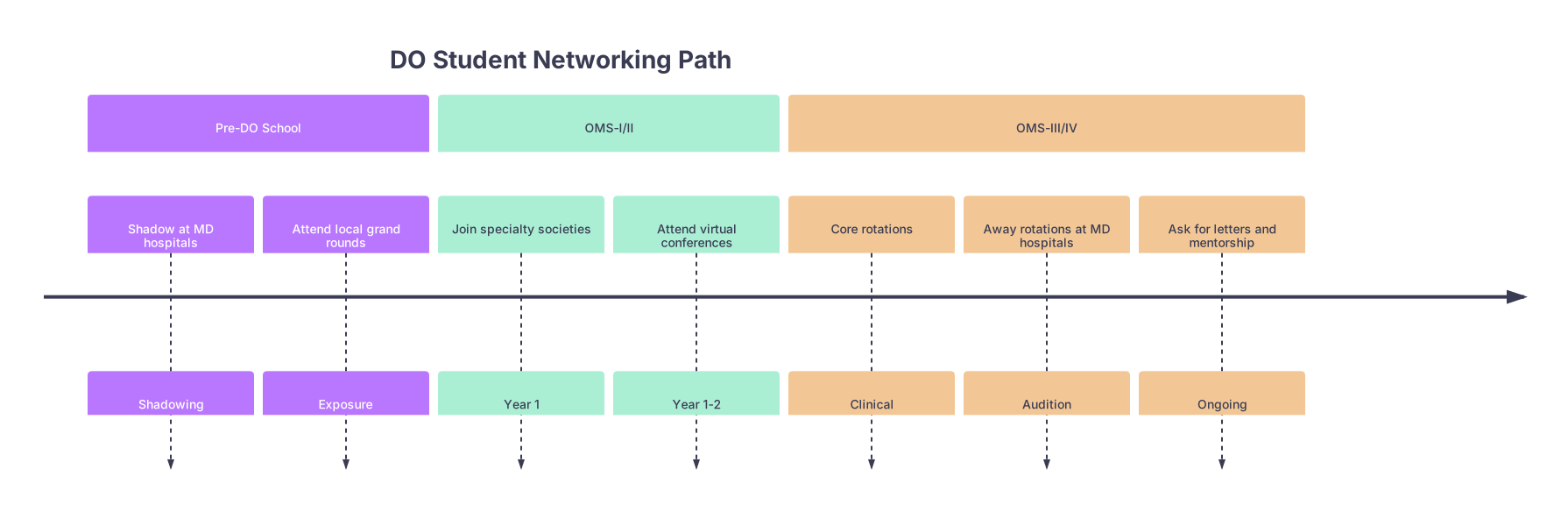
| Period | Event |
|---|---|
| Pre-DO School - Shadow at MD hospitals | Shadowing |
| Pre-DO School - Attend local grand rounds | Exposure |
| OMS-I/II - Join specialty societies | Year 1 |
| OMS-I/II - Attend virtual conferences | Year 1-2 |
| OMS-III/IV - Core rotations | Clinical |
| OMS-III/IV - Away rotations at MD hospitals | Audition |
| OMS-III/IV - Ask for letters and mentorship | Ongoing |
8. Social Media and Digital Presence: Quiet Advantage
Residency programs and attendings look people up. Pretending they do not is naïve.
Clean Up and Then Use It
Make LinkedIn minimally decent.
- Professional photo
- “DO Candidate, [Year], [School] – Interested in [Specialty]”
- Add your research, leadership, and major clinical experiences
Use Twitter / X smartly if you are in an academic field.
- Follow PDs, residents, and department accounts
- Like and occasionally comment on threads about education, research, or your specialty
- Avoid controversial takes; you are not a pundit
Never complain about rotations, hospitals, attendings, or patients publicly.
I have seen screenshots forwarded to PDs. Careers died that day.
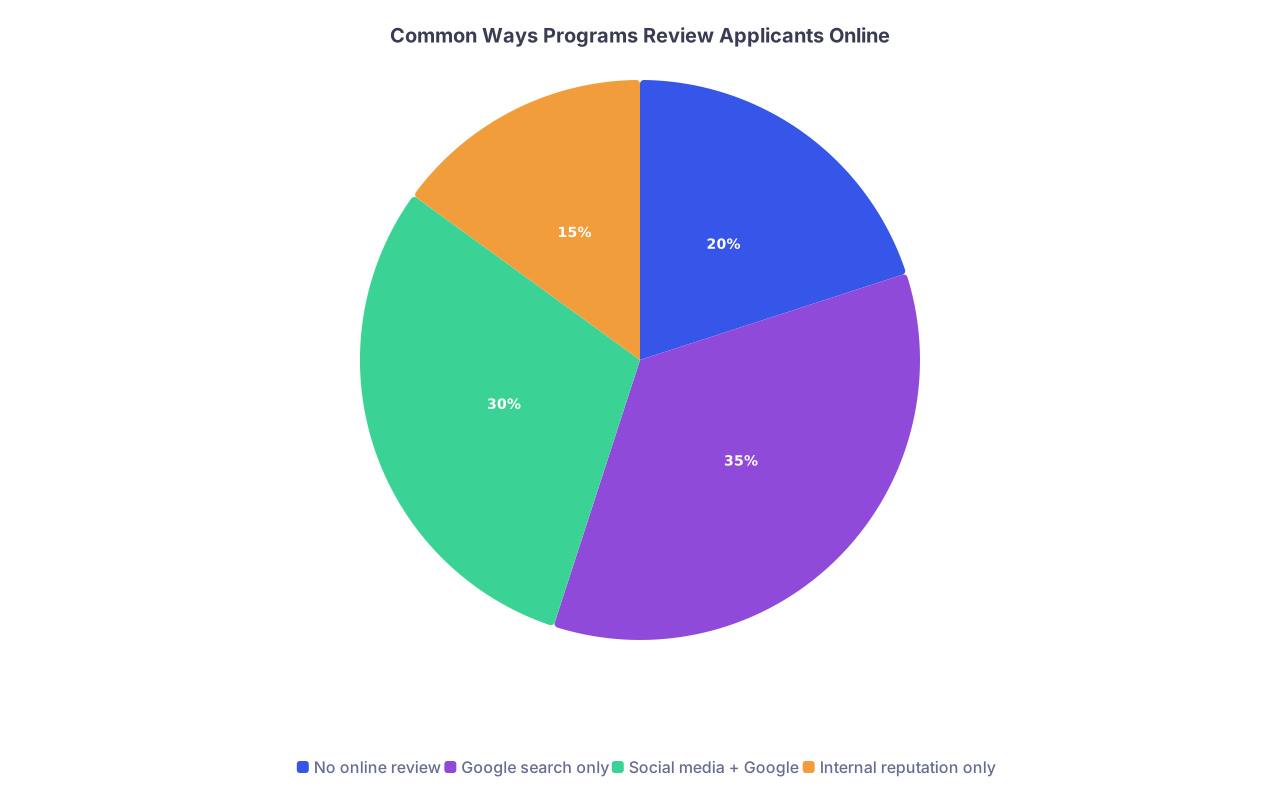
| Category | Value |
|---|---|
| No online review | 20 |
| Google search only | 35 |
| Social media + Google | 30 |
| Internal reputation only | 15 |
You want your name to pull up:
- School site
- A conference poster
- A LinkedIn profile that looks clean
That is enough.
9. Email and Follow-Up: The Part Everyone Skips
Most DO–MD networking fails here. Students make a good impression, then vanish.
Post-Rotation Follow-Up Protocol
1–2 weeks after rotation:
- Send a brief thank-you email to:
- The attending(s) who taught you the most
- The resident(s) who went out of their way for you
Template:
Subject: Thank you – [Service] Rotation
Dear Dr. [Name],
I wanted to thank you again for the chance to work with you on [Service] last month. I learned a great deal about [specific skill or concept], and I have already used your approach to [example] on my current rotation.
I remain very interested in [Program Name] for residency, and I appreciated your support and teaching.
Best regards,
[Name], OMS-IV
Later, when you submit ERAS:
“I wanted to let you know I have applied to [Program Name] this cycle and continue to rank it among my top choices. I remain grateful for your mentorship during my rotation.”
You are not begging. You are reminding. Many PDs and attendings need that nudge: “Oh right, that DO student was strong. Let us look for their application.”
10. Common Mistakes DO Students Make at MD Hospitals (Fix These First)
You can do a lot right and still sabotage yourself with a couple of bad patterns.
Mistake 1: Overcompensating or Acting Inferior
Two extremes hurt you:
- Overcompensating: constantly mentioning you took USMLE, flexing board scores, trying to out-talk everyone. You look insecure.
- Acting inferior: apologizing for being DO, making jokes about “the real doctors (MDs),” staying quiet out of fear.
Middle ground: calm, confident, curious.
Mistake 2: Networking Only Up, Ignoring Residents
Some students focus only on attendings and PDs. That is a mistake in MD hospitals.
Residents control:
- How you are presented on rounds (“They are solid,” vs “They are fine.”)
- Whether they forward your name when PD asks, “Any good students this month?”
Make residents your primary networking targets. Attendings are the bonus.
Mistake 3: No Clear Ask
People cannot help you if they do not know what you want.
At some point, you must say:
- “I am very interested in this program for residency.”
- “I would appreciate any advice on how a DO applicant can be competitive here.”
You are not being pushy. You are giving them the context to advocate for you.
11. If Your School Has Weak MD Connections: Build Your Own
Some DO schools have long-standing partnerships with MD hospitals. Others do not. If you are in the second group, do not accept that as destiny.
Actions That Actually Open Doors
Cold email for shadowing at MD hospitals in your region (premed or OMS-I/II).
Keep it short, customized, and respectful of their time.Ask your school’s clinical coordinator for every possible MD affiliate.
Even a small community MD hospital is a foot in the door.Leverage DO alumni who matched at MD programs.
- Ask your school for a list
- LinkedIn search: “[Your DO school] [specialty] [residency name]”
- Message them with: “As a DO student from [School] interested in [specialty], I would really value 10–15 minutes of your advice about how you approached MD programs.”
You are building a shadow network your classmates do not have. That matters.

12. Putting It All Together: A Sample 4-Week MD Hospital Rotation Plan
Here is what this looks like when you stop reading and start doing.
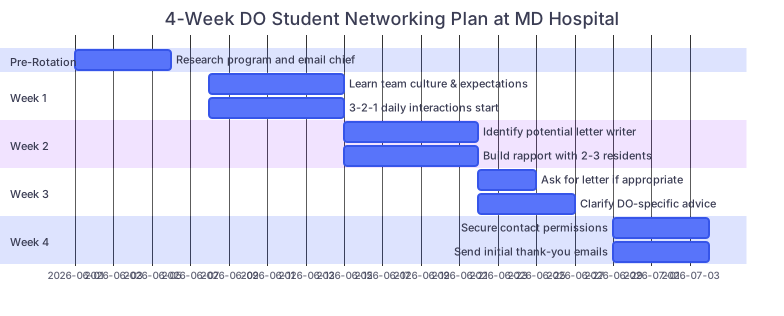
| Task | Details |
|---|---|
| Pre-Rotation: Research program and email chief | a1, 2026-06-01, 5d |
| Week 1: Learn team culture & expectations | a2, 2026-06-08, 7d |
| Week 1: 3-2-1 daily interactions start | a3, 2026-06-08, 7d |
| Week 2: Identify potential letter writer | a4, 2026-06-15, 7d |
| Week 2: Build rapport with 2-3 residents | a5, 2026-06-15, 7d |
| Week 3: Ask for letter if appropriate | a6, 2026-06-22, 3d |
| Week 3: Clarify DO-specific advice | a7, 2026-06-22, 5d |
| Week 4: Secure contact permissions | a8, 2026-06-29, 5d |
| Week 4: Send initial thank-you emails | a9, 2026-06-29, 5d |
Each week has clear networking priorities layered on top of clinical performance. You are not just “hoping to impress people.” You are executing a plan.
FAQ (Exactly 3 Questions)
1. Do I absolutely need an away rotation at an MD hospital to match an MD residency as a DO?
No, not absolutely. But in many competitive or academic programs, an away rotation is the most efficient way to prove you belong and build advocates. If you cannot get an away, you must compensate with: strong board scores, research tied to MD faculty, and remote networking (conferences, emails, DO alumni already at MD programs). It is harder, but it is not impossible.
2. How much should I talk about being a DO versus just acting like any other student?
Mention it once in your introduction and when it is relevant (boards, rotations, background). Do not center your identity around it. Your attitude should be: “Yes, I am a DO. I meet or exceed the standard here. Let me show you through my work.” If you constantly bring it up, people will think you are either insecure or trying too hard. Confident neutrality is the goal.
3. What if I encounter blatant DO bias from a resident or attending?
First, stay composed. Do not debate during rounds or in front of patients. Document the exact wording and context. If it is mild ignorance, correct gently once and then outwork the stereotype. If it is severe or repeated (especially if it affects evaluations or mistreats you), speak discreetly with a trusted resident, faculty mentor, or your school’s clinical coordinator. Your safety and career come first. But do not assume every awkward comment is hostility; sometimes it is ignorance, and your performance can change that.
Key points to walk away with:
- MD hospitals are not off-limits to DO students; they are opportunities, but you must be deliberate.
- Networking is not “being charming”; it is specific behaviors: structured introductions, good questions, follow-up, and clear asks.
- Your DO status is a data point, not your destiny. The right tactics turn skepticism into advocacy.