
Educational note: this article discusses study-resource cost and whether upgrading a paid Q-bank is worth it. It is for general educational purposes only and is not financial, legal, or tax advice. If budget decisions affect loans, reimbursement, or contracts tied to educational funding, consult a qualified advisor.
You're already stressed. Obviously. The exam is close, your sleep is weird, your caffeine tolerance is now medically interesting, and then you notice it: the Q-bank you've been using is two years old.
And suddenly your brain goes feral.
What if every management question is outdated? What if the screening recommendations changed and I've been memorizing dead facts? What if everyone else has the newest version with cleaner explanations, fresher images, better question style, and I'm out here training on academic fossils? What if I walk into the exam and get blindsided by things my bank never covered because I cheaped out, borrowed access, reused old materials, or just didn't realize the edition mattered?
I know that spiral. It's brutal because it feels logical. You're not panicking over nothing, exactly. Exams do change. Guidelines do move. Question banks do get updated. So this isn't one of those fake-comfort situations where I tell you, "Relax, nothing matters." That would be dumb.
But here's the truth: a two-year-old Q-bank is not automatically a disaster. Not even close.
The real question isn't, "Is old bad?" The real question is, "What changed, how much did it change, what exam am I taking, and am I using this resource well enough for it to still help me?" Those are very different questions. And the answers are usually less catastrophic than your 2 a.m. brain is insisting.
What Actually Changes in a Q-Bank Over Two Years
A lot can change in two years. But not everything changes equally, and that distinction matters more than people admit.
Here's what often gets updated in a Q-bank:
- explanations get rewritten or clarified
- new questions get added
- weaker or weird questions get retired
- images get refreshed
- guideline citations get updated
- the interface gets less annoying
- analytics improve
- question style may shift to better match the current exam
That's real. Those updates can make a bank better. Sometimes much better. Especially if the older version had clunky explanations or a bunch of recycled items everybody hated.
But let's not act like all medical knowledge self-destructs every 24 months. It doesn't.
The stuff that usually does not change dramatically:
- core physiology
- foundational pathology
- classic disease presentations
- common diagnostic reasoning patterns
- bread-and-butter pharmacology mechanisms
- basic anatomy and biochemistry relationships
- the general logic of exam-style elimination
If a question is testing nephrotic syndrome patterns, acid-base interpretation, murmurs, leukemia basics, seizure classification, restrictive vs obstructive physiology, or the mechanism of a drug that has been around forever, that question doesn't become trash because the copyright date is old. That fear is exaggerated. Very exaggerated.
What people really mean when they worry about an "outdated Q-bank" is usually one of two things:
- The facts may be stale in update-sensitive areas
- The bank may no longer mirror the current exam as efficiently
That's different from "this resource is useless."
Some subjects are much more vulnerable to time than others. Preventive care. Screening intervals. Vaccination recommendations. Infectious disease treatment. Evolving management standards. Public health guidance. Those can move enough in two years to matter. A management-heavy exam will punish stale recommendations more than a mechanism-heavy one.
So no, "old" doesn't equal "bad prep." That's anxiety talking in all-or-nothing language. But freshness does matter in specific lanes, and pretending otherwise is just as unhelpful.
My blunt take: if you've been doing good questions actively, reviewing mistakes honestly, and building reasoning skills, you have not "wasted" your prep because the edition is older. What you may need is targeted updating. Not a full identity crisis.
When an Older Q-Bank Is Probably Still Good Enough
Most students panic too early here. A two-year-old bank is often still completely usable, especially for content-heavy exams that still lean on the same foundational material they've always leaned on.
It's probably still good enough if:
- the exam blueprint is mostly unchanged
- there hasn't been a major format overhaul
- the specialty or test emphasizes durable core knowledge
- you already have a decent foundation and need practice more than novelty
- your scores are improving in a believable way
- you still have enough time to review weak areas calmly
That last part matters. Calmly. Because panic-shopping a new resource three weeks before a big exam is one of the most overrated bad decisions in med ed. I've seen people do it. They buy the shiny new bank, feel briefly virtuous, then spend days relearning the platform, re-tagging weaknesses, and doom-comparing every explanation instead of actually studying. It feels productive. It's often not.
Question practice works because of repetition, pattern recognition, timing pressure, and post-question analysis. Not because the interface is prettier or because the edition badge is newer. If your older bank still gives you solid stems, plausible answer choices, and explanations you're actually learning from, that's valuable. Very valuable.
And honestly? A lot of students underuse their Q-bank so badly that freshness isn't even the limiting factor. They skim explanations, avoid reviewing wrong answers, reset blocks too soon, and then blame the edition. No. The problem isn't that the bank is from two years ago. The problem is that they turned active learning into decorative clicking.
Perfection isn't required. That's the part anxious applicants hate hearing, because we want guarantees. We want the newest thing, the safest thing, the thing that removes uncertainty. But exam prep doesn't work like that. You can absolutely do well using a slightly older resource if you're squeezing real learning out of it.
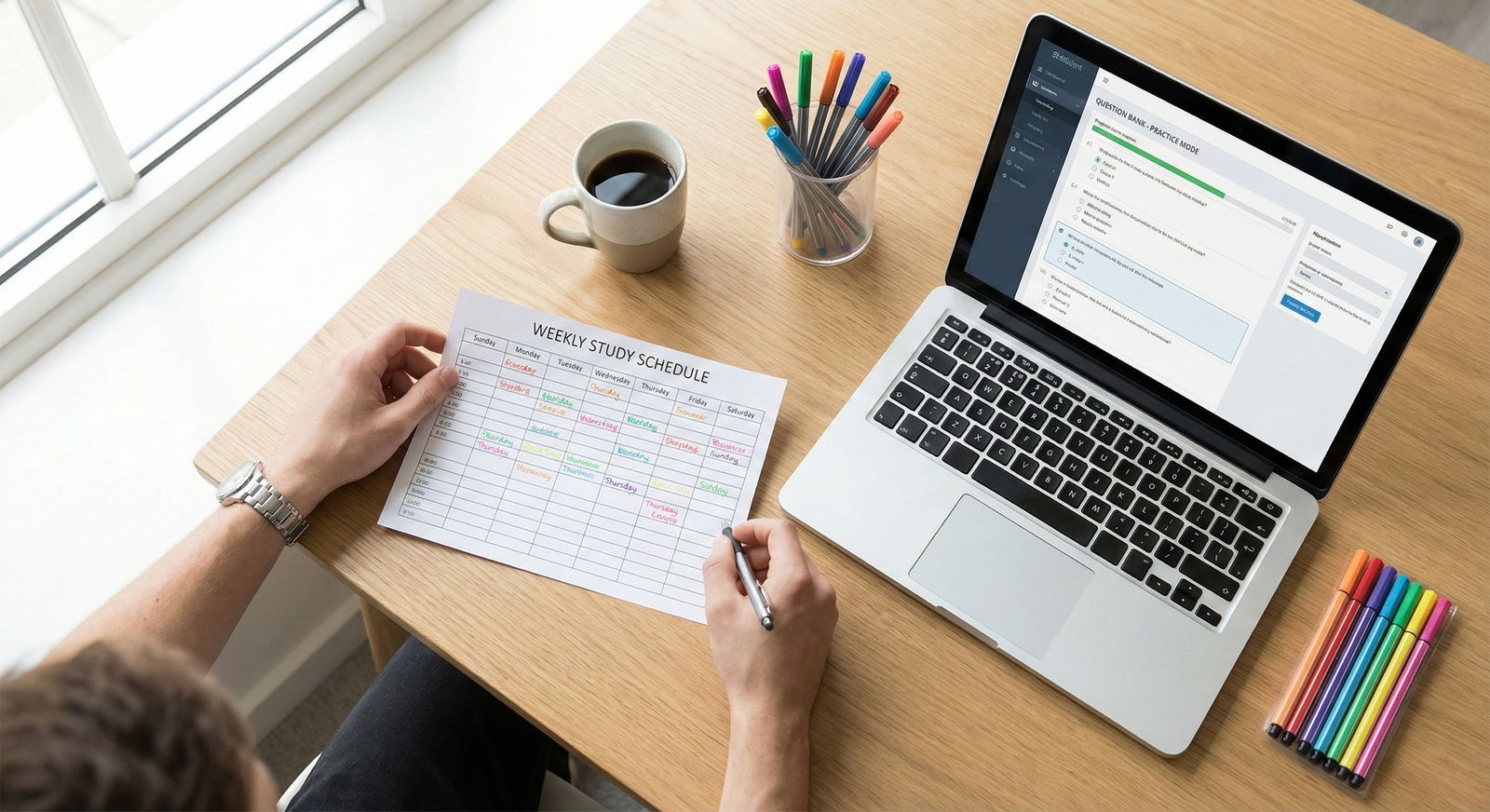
A good older bank beats a brand-new bank you barely use. Every time.
When You Should Worry More About Using an Outdated Edition
Now the part your anxious brain has been waiting for: yes, there are situations where the age of the Q-bank matters more, and pretending otherwise would be irresponsible.
You should worry more if the exam depends heavily on current management decisions, guideline-driven prevention, or rapidly changing clinical recommendations. That includes areas where "best next step" answers are tied tightly to updated protocols rather than timeless principles.
Higher-risk situations include:
- exams that recently changed their blueprint
- specialties where guidelines move fast
- screening/prevention-heavy content
- infectious disease topics with changing treatment recommendations
- immunization schedules and public health recommendations
- management algorithms that have been revised
- a publisher that heavily marketed the new edition as a major content overhaul, not just a cosmetic refresh
And then there are the red flags. The ones that should make you stop and assess instead of just hoping for the best.
Watch for these:
- you keep seeing screening ages or intervals that conflict with current guidance
- management answers feel old-fashioned or inconsistent with recent teaching
- recent test-takers say the exam emphasis shifted and your bank doesn't reflect it
- your explanations cite old recommendations without newer alternatives
- the question style feels noticeably different from current official practice material
- the newest version added large numbers of questions in areas your exam now emphasizes
This is where catastrophizing can get sneaky. The wrong conclusion is: "My old bank is useless, I'm doomed." The right conclusion is: "This resource may be less efficient for certain topics, so I need a patch plan." That's a very manageable problem.
Here's the decision framework I'd actually use:
Check the exam blueprint If the test content outline is basically the same, that's reassuring. If there was a major revision, pay attention.
Check the publisher's update notes Look for specifics. Did they add a few hundred questions? Rewrite explanations? Update all preventive care items? Retire old management content? Those details matter.
Identify update-sensitive topics Don't waste energy fact-checking renal physiology from scratch. Focus on areas likely to shift: screening, vaccines, ID, treatment algorithms, preventive care, and protocol-based management.
Ask recent test-takers or trusted advisors Not random panic-posting from someone who scored badly and is blaming Mercury retrograde. Get real feedback from people who took the current exam version or from faculty who know the blueprint.
Decide based on time and budget If you have two months left and can reasonably upgrade, great. If your exam is in ten days and changing resources will derail you, don't torch your workflow unless the outdated content problem is severe.
The key point: "old" is not the diagnosis. Misalignment is the diagnosis. If the bank still matches most of what you need, you're fine. If it misses current high-yield changes, then fix that specifically. Don't blow up your whole prep plan because of one scary realization.
How to Make an Older Q-Bank Work for You
If you're sticking with the older bank, do it strategically. Not defensively. Not with constant guilt. Use it for what it still does extremely well.
Here's the smart plan:
Use it for active retrieval Timed blocks. Real effort. No lazy tutor-mode drifting where you half-answer and tell yourself it counts.
Review missed questions hard Not just "oh right, I forgot that." Write down why you missed it. Knowledge gap? Misread stem? Fell for a distractor? That's where score gains come from.
Build a watch list Make a short list of update-sensitive topics:
- screening
- vaccines
- infectious disease treatment
- hypertension/diabetes management changes
- preventive care algorithms
- anything your clerkship, review book, or faculty taught as recently updated
Verify those topics against trusted current sources Official guidelines, current review resources, recent society summaries, updated course notes, or publisher errata/free updates. You do not need to rebuild everything. Patch the vulnerable spots.
Use newer material selectively if needed Maybe you don't need a whole new Q-bank. Maybe you just need current official practice items, a recent guideline summary sheet, or a focused review source for fast-changing topics.
Don't panic-buy at the last minute This is a classic anxious move. It creates the illusion of control while often wrecking consistency. If a new purchase doesn't clearly improve your prep, it's just expensive stress.
I'd much rather see you do 40 well-reviewed questions from an older bank and cross-check three guideline-heavy topics than buy a new subscription and spend the next week obsessing over whether to restart from zero.
That's the evidence-based move. Boring, maybe. Effective, yes.
Closing Reminder: Don't Let the Edition Number Decide Your Confidence
A two-year-old Q-bank is not an automatic disaster. It just isn't. It may be imperfect. Fine. So is every study plan.
Your score is far more likely to be shaped by whether you practice consistently, review your mistakes honestly, and patch update-sensitive gaps than by whether your resource is the newest possible edition. The panic comes from wanting certainty. I get it. But chasing a newer label in a frenzy is not the same thing as improving your prep.
So do the sane thing. Check for major blueprint or guideline changes. Identify the few areas most likely to be outdated. Decide whether to supplement, upgrade, or stay the course. Then commit.
No more spiraling. No more doom math. The edition number doesn't get to decide your confidence for you.