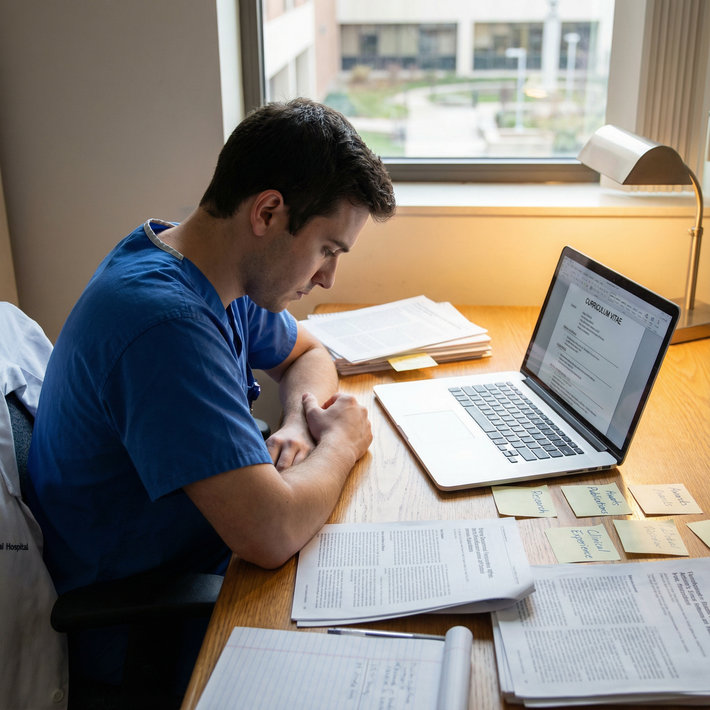
Fellowship interview season does not care about your ICU schedule. It never has. And if you are staring down a November-through-January critical care block while programs are dropping Zoom invites like confetti, you are already behind if you have not started moving pieces.
I have watched this collision wreck otherwise strong applications, not because the resident was a bad clinician, but because they handled the politics like an amateur. Program directors, ICU attendings, and especially your co-residents remember how you handled the ask. Let me tell you what actually happens behind the closed doors of the call room and the PD's office when your name comes up for interview days off the unit.
To keep your professional standing secure, check out Interview Season Calendar: Protecting Your Schedule as a Resident for proactive planning strategies.
This article is for educational purposes only. It is not financial advice, not legal advice, and not tax advice. Figures vary by individual circumstances, so consult a qualified professional before acting.
The Unspoken Reality of ICU Blocks and Interview Season
November to January is peak fellowship interview season. It is also when half the country's ICUs are staffed by residents who are simultaneously trying to look brilliant on camera for cardiology, GI, pulm/crit, or heme/onc. The overlap is brutal and completely predictable. Yet every year I still see residents act shocked when three interview invites land on their MICU nights.
For unexpected schedule conflicts, reviewing The Data on Fellowship Interview Cancellations: When Declining an Invite Actually Helps Your Match offers valuable perspective.
Here is what your attendings and program directors actually think when you request time off the unit. They are not angry that you are interviewing. Most of them want you to match well, it makes the program look good. What irritates them is the last-minute scramble. An attending who has already built the day's staffing model around four residents does not want to hear on Monday morning that you need Wednesday and Friday free. They start calculating coverage holes, wondering whether the overnight person will get hammered, and quietly marking you as "high maintenance." I have sat in those conversations. The phrase that gets used is almost always the same: "They should have known better."
The hidden politics run deeper than the attending, though. Your co-residents hold the real power. Attendings can approve the absence. Chiefs can bless the schedule change. But the person who actually covers your septic shock at 3 a.m. while you are smiling at a fellowship panel is a peer. If that peer feels used, the resentment travels faster than any formal evaluation. It shows up in the way people talk about you in the workroom, in whether anyone has your back when a note is late, and eventually in the informal comments that reach the PD. ICU coverage is a closed economy. You either deposit goodwill early or you pay interest later.
I have seen strong applicants lose internal advocacy simply because they treated the unit like a hotel they could check out of whenever an email arrived. Do not be that person.
The Art of the Pre-Emptive Strike: Communicating with ICU Attendings
Waiting until the first day of the block to disclose your interview dates is a fatal career mistake. Full stop. By then the attending has already mentally assigned roles, the charge nurse has the roster, and you look either disorganized or entitled. Neither helps you.
You need to move thirty days out at minimum. Earlier is better. The exact script I have coached dozens of residents to use looks like this, send it as a concise email, not a vague text:
"Dr. [Name], I am scheduled for the [dates] ICU block and wanted to give you as much notice as possible. I have fellowship interviews on [specific dates]. I have already begun arranging coverage with my co-residents and will ensure full handoff and continuity. I am committed to making the remaining days on service as seamless and high-yield as possible for the team. Happy to discuss any concerns or preferred coverage structure."
That email does three things at once. It shows respect for their time, it demonstrates you are already solving the problem instead of dumping it, and it frames the absence as evidence that the residency is producing competitive applicants. You are not an inconvenience. You are a walking advertisement for the program. Attendings who care about recruitment notice that framing. I have heard them say exactly that in closed faculty meetings: "At least they made us look good while they were gone."
Confirm the plan again at the two-week mark. Bring the names of who is covering which shifts. Walk in with a solution, not a request. That single habit separates the residents who get glowing comments from the ones who get the tight-lipped "we managed."
The Co-Resident Economy: Trading Shifts Without Destroying Morale
Shift trading in the ICU is not a favor. It is a currency market, and the exchange rate is set by goodwill, reliable payback, and small human gestures that most people forget.
If you need coverage, offer the payback immediately and unconditionally. Do not say "I'll get you back sometime." Say "I will take your Friday night in two weeks and your Saturday call next month, lock it in now." Put it in writing in the group chat or the official schedule request so the chiefs can see it. Then buy the coffee, the pizza, whatever the covering resident likes. It sounds trivial. It is not. I have watched entire cohorts turn on someone who "owed" three shifts and kept finding excuses.
Resentment builds fastest when the person left behind is managing multiple pressors and family meetings while you are in a quiet room practicing your "why this program" answer. Acknowledge that reality out loud. A simple "I know this sucks and I owe you big" goes further than most residents realize. Never disappear for the interview day without a crystal-clear handoff note and a phone that stays on until you are actually in the virtual waiting room.
An airtight coverage agreement protects everyone. Tell the attending and the chief exactly who is responsible for your patients, who holds the code beeper, and when you will be reachable again. When the plan is public and specific, nobody can claim they were blindsided. That keeps the heat off you and, more importantly, off the people doing you the favor.
Look at those numbers. They match what I have seen across multiple programs. Ask early and people say yes. Ask the night before and you are gambling with relationships you cannot afford to lose.
Pulling Off a Virtual Interview from the Hospital Basement
You will do at least one interview from inside the hospital. Plan for it like a procedure.
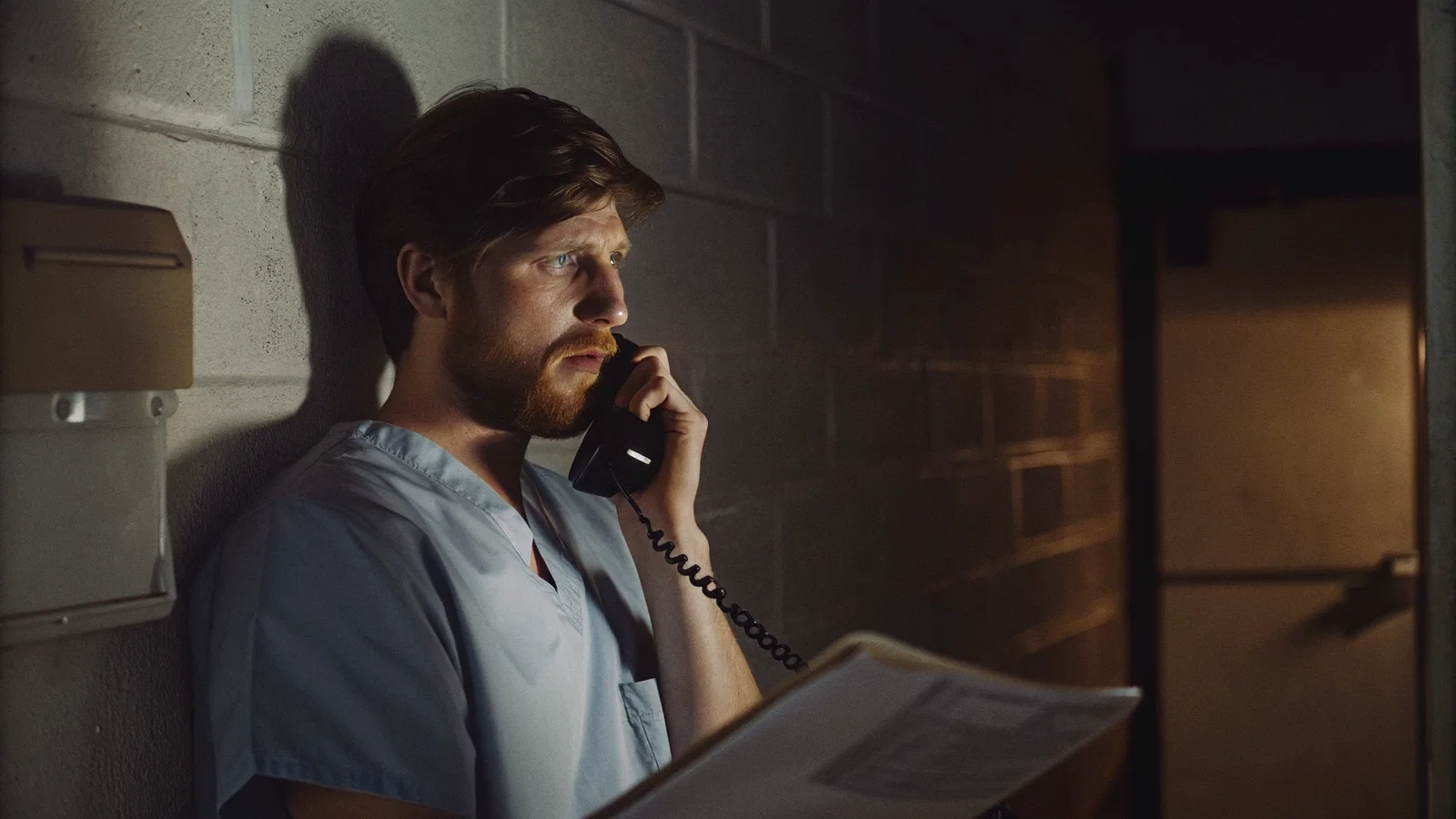
Scout locations now. Every hospital has three or four quiet pockets with decent Wi-Fi if you know where to look: the empty case management office after 4 p.m., the unused attending charting room on the far wing, the small conference room behind the pharmacy that nobody books, even a clean supply closet with a chair if you are desperate and the signal holds. Test the upload speed on your phone hotspot as backup. I have watched residents lose connection mid-answer because they trusted the public guest network. Do not be that story.
Build an emergency backup plan for the code blue that drops five minutes before you go live. Your covering resident needs to know they own the pager completely. You need a one-line text ready for the fellowship coordinator: "Active code, will rejoin or reschedule ASAP, patient safety first." Programs respect that. What they do not respect is radio silence or a shaky camera in a hallway while alarms blare behind you.
Master the costume change. Keep a pressed blazer, collared shirt, and simple jewelry or tie in a garment bag in your locker or car. You have roughly twelve minutes between signing out and logging on. Wet hair, deodorant, blazer over the scrub top if you must, but never the full scrubs on camera. Looking like you just rolled out of a rapid response tells the committee you did not take the day seriously. I have heard interviewers comment on it afterward. It is not flattering.

Handling the Fallout: Rebuilding Capital When You Return
You will miss days. The question is whether those days define the rotation or become a footnote.
Over-deliver on every non-interview day. Show up early. Take the extra admission. Write the thorough notes. Offer to stay late for the family meeting. Make the attending's life easier than it would have been if you had never left. That is how you wipe the slate. I have seen residents turn a skeptical ICU month into a letter of recommendation simply by becoming the most reliable person on the team the moment they returned.
Some older attendings still carry quiet resentment about "the generation of Zoom interviews." They trained when you flew out and missed a full week, and they view remote interviews as soft. Do not argue with them. Just outwork the stereotype. Be the resident who knows every vent setting and every family's name. Competence plus visible effort shuts down the generational grumbling faster than any explanation.
Letters of recommendation are still obtainable. The attendings who write the strongest ones are usually the ones who saw you manage chaos well, not the ones who watched you every single calendar day. Tell them early that you hope to request a letter and ask what they need to feel comfortable writing a strong one. Most will tell you straight: "Be excellent the days you are here and make the coverage airtight." Then do exactly that.
You can walk out of a fractured ICU block with your reputation intact and even enhanced if you treat every stakeholder, attending, chief, co-resident, as someone whose goodwill you still need after Match Day.
You already know how to take care of crashing patients. Now take care of the relationships that let you leave the unit long enough to interview. Give thirty days of notice. Pay your co-residents back in full and then some. Scout the quiet room with the strong signal. Come back and work like someone who is grateful for the coverage. Do those things and the collision between ICU and interview season becomes a story you tell later over drinks instead of a landmine that follows you into fellowship.
You have got this. Now go send that email.