
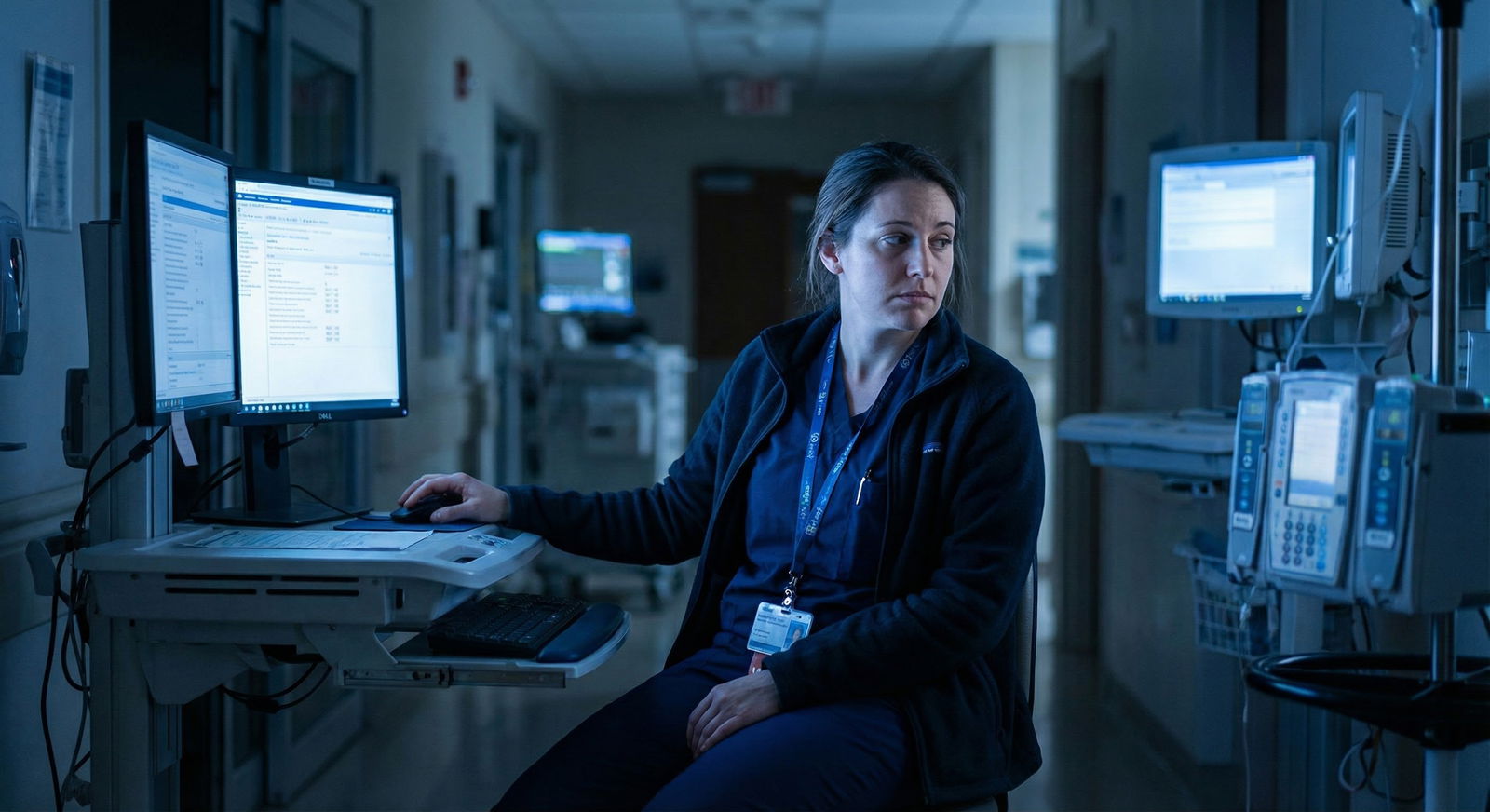
It’s August 1st. You’re post-call, half-awake in the call room, scrolling through your email. First subject line catches your eye:
“Fellowship Interview Invitation – Time Sensitive.”
You click. They want dates. Plural. Early September. On days your inpatient block is already a mess. You feel that little spike of panic: How am I supposed to do this and not blow up my schedule or my program’s goodwill?
This is what you’re up against. Fellowship interview season as a resident is not “find free days and hop on Zoom.” It’s a months‑long logistics problem where your clinical schedule, program expectations, and your future career all collide.
Let’s walk through it chronologically—what you should be doing month‑by‑month, then week‑by‑week once interviews hit, and even day‑by‑day around the heaviest stretches.
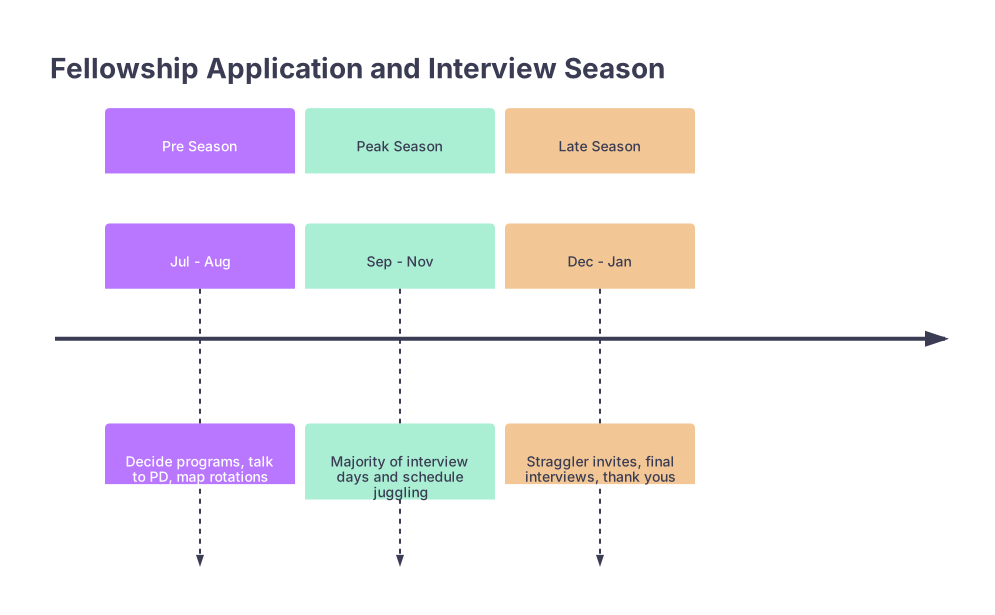
Big Picture: The Fellowship Interview Season Arc
| Period | Event |
|---|---|
| Pre Season - Jul - Aug | Decide programs, talk to PD, map rotations |
| Peak Season - Sep - Nov | Majority of interview days and schedule juggling |
| Late Season - Dec - Jan | Straggler invites, final interviews, thank yous |
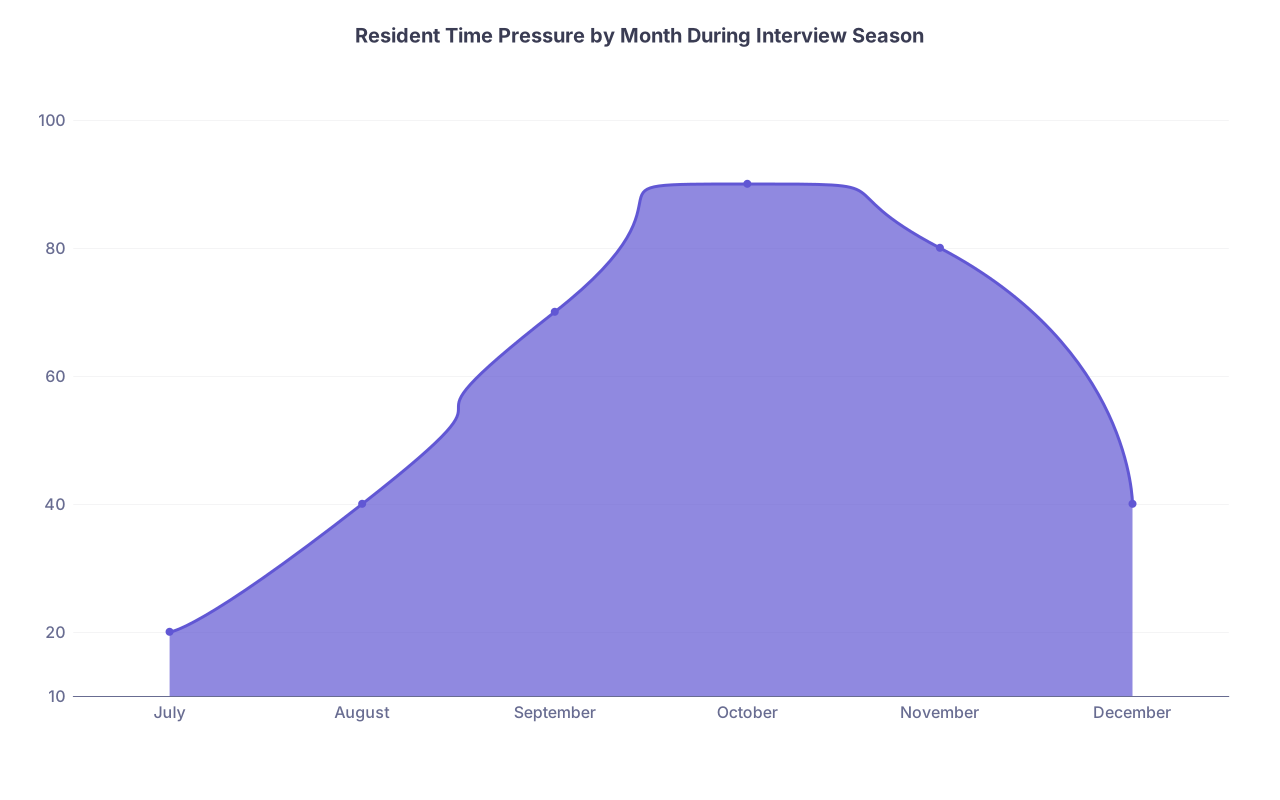
At a high level, your calendar tension looks like this:
| Category | Value |
|---|---|
| July | 20 |
| August | 40 |
| September | 70 |
| October | 90 |
| November | 80 |
| December | 40 |
- July–August: Setup, not chaos yet. This is where you either protect your time early or suffer later.
- September–November: Peak interview season. This is where rotations, PTO, sick days, “coverage favors,” and your sanity get stress tested.
- December–January: Mopup interviews, plus rank list prep. Schedule tension eases if you did not torch bridges earlier.
You cannot “wing it” through this and expect minimal damage. The residents who get through interview season intact are the ones who start protecting their schedule months before the first invite hits.
2–3 Months Before Invites: Pre‑Season Calendar Protection (July–Early August)
At this point you should be thinking: “Where can I safely disappear for a day without sinking my team?”
Step 1: Map Your Year on One Page
Print or open a 12‑month view (July–June). Then:
- Mark:
- ICU, night float, ED, high‑acuity rotations
- Lighter blocks (clinic, electives, research)
- Any known vacations, conferences, weddings, exams
- Circle:
- Blocks where missing a full day will be miserable for your co‑residents (e.g., 2‑person ICU team)
- Blocks where half‑days or virtual interviews could be realistic (e.g., outpatient clinic with flexible preceptors)
You’re looking for “interview‑friendly” months and “do‑not‑touch” months.
| Rotation Type | Interview-Friendly? | Notes |
|---|---|---|
| ICU (2-person team) | Low | Avoid full days off |
| Night Float | Medium | Possible if AM interviews |
| Outpatient Clinic | High | Easier to flex for Zoom |
| Research/Elective | Very High | Ideal for clustering |
| ED Shifts | Medium | Swappable but inconvenient |
Step 2: Talk to Key People Before Anyone Sends Invites
This is where a lot of residents screw up—they wait until the first invite, then start begging.
By late July / early August, at this point you should have:
A conversation with your Program Director (PD)
Agenda:- “I’m applying to [cardiology / heme‑onc / etc.]. Expecting interviews mostly Sep–Nov.”
- Ask explicitly:
- How many days off for interviews are typically supported?
- Are they paid days, vacation days, or “do what you must”?
- Any rotations where missing days is strongly discouraged?
- Clarify expectations:
- “If I get a last‑minute in‑person invite, what’s the right way to request leave?”
A quick touch‑base with your chief residents / scheduler
- Show them your 12‑month map.
- Say: “These are my heavy blocks. I’d like to protect lighter blocks for interviews. What can we reshuffle now before schedules harden?”
- Ask them bluntly: “What drives you most crazy about residents doing interviews?” Then don’t do that.
I’ve seen programs willing to move one ICU month earlier, trade electives, or swap a night float. But only if you ask in July, not the week before an interview.
Step 3: Reserve Interview Days on the Front End
You’re not asking for specific dates yet. You’re reserving bandwidth.
For September–November, identify:
- 1–2 “high priority” interview weeks per month, where:
- You’ll be on elective / research / outpatient
- Call is less frequent
- You can cleanly take 1–2 days off
- A hard cap for yourself:
- e.g., “Max 2 full days off per month during peak season” or “Max 3 Zoom half‑days per month on heavy inpatient blocks”
Write that cap down. Because once invites start arriving with guilt‑tripping language (“limited dates available”), you’ll be tempted to say yes to everything. You can’t. Not without burning out or screwing your team.
When Invites Start Hitting: Week‑By‑Week Battle Plan (Late August–November)
You wake up one morning and you’ve gone from zero invites to six in three days. This is the danger window where people start double‑booking, missing sign‑out, or begging co‑residents for swaps at 10 p.m.
At this point you should stop reacting and follow a fixed process.
Step 1: Build a Live Interview Calendar Immediately
Not a mental list. A real, shared calendar.
Set up:
- One primary calendar (Google, Outlook, whatever) labeled “Fellowship”
- Color‑coding:
- Red: Confirmed interviews
- Yellow: Dates you offered to programs but not yet confirmed
- Gray: “No‑go” days (critical rotations, call nights, exams, mandatory conferences)
For every invite email, you:
- Add all proposed dates into your calendar as tentative (yellow).
- Overlay your resident schedule:
- Post‑call days?
- Clinic days you can’t miss?
- Long‑call evenings?
- Then choose the least destructive date, not the easiest or earliest.
Your question isn’t “Can I fit it?” It’s “What date will cause the least chaos for my team and my sleep?”
Step 2: Use a Simple Triage Rule for Accepting / Declining
You need a decision rule before you’re stressed and biased.
Use something like this:
- Tier 1 programs (realistic top choices, strong fit, geography you want)
- Move things to make these work.
- Accept even if it means a tough week.
- Tier 2 programs (solid but not dream)
- Accept if schedule impact is moderate.
- Decline if it requires major call swaps, flying cross‑country for 2 hours, or missing key learning experiences.
- Tier 3 programs (safety, poor fit, location you dislike)
- Only accept if they slot easily into your existing “interview blocks.”
- Never blow up an ICU stretch for these.
You don’t tell programs their “tier,” obviously. But you need that ruthless mental categorization when your calendar starts to choke.
Detailed Weekly Rhythm During Peak Season
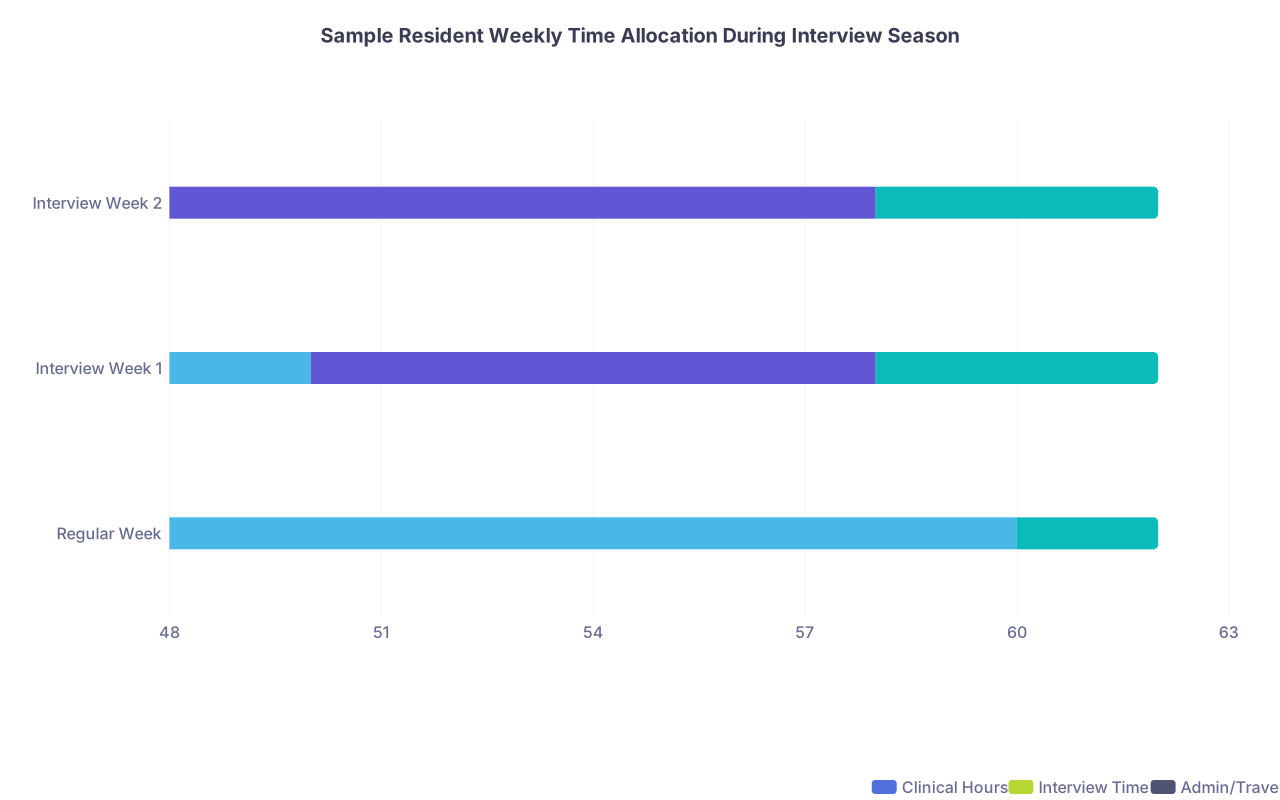
Let’s say it’s October. You’re on wards, Q4 call, and you have 3 interviews this month. Here’s how your weeks should roughly look.
| Category | Clinical Hours | Interview Time | Admin/Travel |
|---|---|---|---|
| Regular Week | 60 | 0 | 2 |
| Interview Week 1 | 50 | 8 | 4 |
| Interview Week 2 | 48 | 10 | 4 |
The Week Before an Interview
At this point you should:
- Confirm logistics with your chiefs:
- “Just confirming I’m off Wednesday for a full‑day interview—will cross‑cover my clinic on Tuesday, pre‑write notes.”
- Tell your team early, not 24 hours before:
- “Next Wednesday I’ll be out all day for an interview; I’ll front‑load discharges Tuesday.”
- Pre‑draft:
- Discharge summaries for likely discharges.
- Handover notes for the sickest patients.
- Sleep discipline the 2–3 nights before:
- Don’t be a hero taking extra admissions the night before an early interview.
- If you’re on nights, try to shift your sleep the day prior (easier for Zoom; brutal for in‑person).
Interview Week Structure
Example: Interview on Wednesday (Zoom) and Friday (in‑person).
Monday:
- Front‑load patient work:
- Close loose ends on chronic issues.
- Update problem lists, med recs, code statuses.
- Remind your attending and senior:
- “Out for interviews Wed and Fri—plan to have clean sign‑out for both days.”
Tuesday:
- Over‑prepare your Wednesday coverage:
- Write a “coverage note” for each complex patient: chief concern, current plan, known landmines.
- Make sure all consults are ordered.
- Pack or prep for Friday travel:
- Scrubs? Suit? Printed schedule? Chargers? (Do this now, not Thursday at 11 p.m.)
Wednesday: Interview Day (Zoom)
- Treat it as a protected day, not a “work until 9:45, log on at 10.”
- At this point you should:
- Fully step away from clinical Epic if your program allows.
- If you have to check in, do so during a built‑in break, not between rooms in a MMI circuit.
Thursday:
- Over‑communicate any follow‑up:
- “Hey, while I was out, did anything major happen with Patient X or Y?”
- Offer to stay a bit later if you can to help decompress census before you’re out Friday.
Friday: In‑Person Interview
- 0% clinical responsibility that day. No “I’ll just answer a few MyChart messages.”
- Travel the night before if there’s any risk of delay affecting your first interview slot.
Daily Micro‑Tactics Around Each Interview
You lose time in small leaks: missed emails, double bookings, last‑minute chaos. Here’s the day‑by‑day protection strategy.
3–5 Days Before the Interview
At this point you should:
- Lock in coverage:
- Confirm which resident is covering what (pages, notes, calls, clinic).
- Offer a concrete repay: “I’ll cover your Sunday call next month” instead of vague “Let me know if I can repay you.”
- Screenshot your interview schedule:
- Don’t rely on a web link that might time out or require login.
- Prep your tech:
- Zoom on backup device.
- Headphones.
- Phone hotspot if Wi‑Fi at home or hospital is flaky.
Day Before the Interview
Your goals today: no loose threads, no late‑night scrambling.
Checklist:
- Clothes laid out (not still in the plastic from the store).
- Travel docs ready if flying:
- Boarding pass, confirmation, address of hotel and hospital.
- “Out of Office” or email signature line set:
- Something like: “Out today for off‑site academic activity, may have delayed response.”
- If you’re on service:
- Identify one person who knows everything about your patients to receive the bulk of handoff.
Interview Day
For schedule protection, the main rule is: you are not half‑working.
Whether you’re in‑person or virtual:
- Block the entire day on your calendar.
- Turn off all nonemergent notifications. If your program expects availability, make one exception:
- One contact: maybe your senior or the charge nurse has your cell strictly for true emergencies. Not “Can you help with this discharge summary?”
- After the interview:
- Do not try to “catch up on Epic” late into the night. Do a quick skim for anything critical, then sleep.
Handling Last‑Minute Invites and Changes Without Ruining Your Reputation
You will get:
- “Can you attend an interview…tomorrow?”
- “We had a cancellation; can you come Monday instead?”
- Or the worst: “We are moving all interviews to a single consolidated date.”
At this point you should have a default script.
Decide in Advance Your “No‑Go” Zones
Before chaos starts, define:
- No same‑week changes unless:
- Tier 1 program and
- Does not require canceling existing interview or harming coverage.
- No adding interviews on:
- Post‑call days where you already feel nonfunctional.
- Days you’re the only senior or only night float.
When a last‑minute invite comes:
- Check your written rules.
- If it violates them, you decline politely:
- “Thank you so much for the invitation. Unfortunately I am not able to step away from clinical duties on such short notice and must decline. I appreciate your consideration.”
You do not say: “I might be able to…” and then blow up your schedule scrambling to make it work. That’s how mistakes happen.
Managing Different Rotation Types During Interview Season
Different months require different tactics.
ICU or Heavy Inpatient
Non‑negotiable: your patients and team come first. Fellowship committees know what an ICU month is.
At this point on ICU blocks you should:
- Strongly limit interviews:
- Prefer half‑days if possible (early AM or late PM).
- Or cluster them at the beginning or end of the rotation, not the middle.
- Inform your attending at least 1–2 weeks ahead:
- “I have one fellowship interview in two weeks on Thursday morning; I’ll hand over my sickest patients the night before.”
If a dream program offers only a full‑day interview in the middle of your busiest ICU week? Talk to your PD. Occasionally they will support a schedule tweak or arrange attending coverage. But use that card sparingly.
Outpatient / Elective / Research Months
This is where you cluster.
During these blocks:
- Front‑load any research tasks early in the month.
- Protect 2–3 full days for back‑to‑back interviews.
- Expect more flexibility:
- Many clinics will let you cancel or reschedule sessions if you give them notice.
This is also when you can take a swing at the “travel heavy” interviews—those cross‑country trips that would be impossible on a ward month.
Travel Strategy: Minimizing Time Sink and Damage
For in‑person interviews, schedule protection is 50% travel logistics.
General Rules
At this point you should:
- Always aim for:
- Arrive night before, early evening.
- Leave after the last formal event, not mid‑day.
- Avoid:
- First flight out same day unless the airport is 20 minutes away and there are multiple later flights.
- Red‑eyes before ICU shifts. Not worth it.
Cluster by Geography If Possible
If you’re applying to multiple programs in one region:
- Intentionally schedule them in a single 3–4 day stretch:
- Fly in once.
- Train / drive between cities.
- Fly home once.
Example: Cardiology in the Northeast
- Monday: Boston
- Wednesday: New York
- Friday: Philadelphia
Yes, it’s exhausting. But it’s much kinder to your rotation schedule than three separate scattered trips burning three different clinical days.
Protecting Your Reputation While Protecting Your Time
The silent fear most residents have: “My co‑residents and attendings will think I’m slacking or abandoning them.”
At this point you should be guarding two things simultaneously: your calendar and your reputation.
Behaviors That Earn Goodwill
- Front‑loading work:
- Write notes early, queue orders before leaving.
- Taking extra when you’re present:
- On non‑interview days, be slightly more available. People notice.
- Clear communication:
- Tell your team well ahead which days you’re out and what you’ve already done.
Behaviors That Destroy Goodwill
- Texting the night before: “Hey can someone cover me for tomorrow? I forgot I have an interview.”
- Being vague: “I might be out sometime next week, not sure.”
- Half‑present during rounds because you’re emailing programs on your phone.
You want people saying: “Yeah, they were gone a few days, but they always made sure we were set up. It was fine.” That’s the goal.
After Interview Season: Repair and Reset (December–January)
Once interviews taper off, you are not done. You’ve created small debts—time, favors, patience. Pay them back.
At this point you should:
- Actively offer:
- “I can pick up an extra weekend day on wards next month.”
- “I’m happy to cover a clinic afternoon if you need time off.”
- Check in with your PD:
- Brief update on how interviews went.
- Confirm anything needed for rank lists, final letters.
You also re‑establish that you are fully present again.
- No more mid‑rounds email refreshing.
- No more “Sorry, I was on an interview yesterday” a month after the fact.
One Concrete Step You Can Take Today
Open your rotation schedule and a blank 12‑month calendar side by side. Right now:
- Mark your heavy inpatient / ICU / night float blocks in red.
- Mark your electives / research / clinic‑heavy months in green.
- Circle 2–3 “interview‑friendly” weeks in September–November.
Then email your chief or scheduler with a short, direct note:
“I’m applying for [fellowship] this cycle. I mapped out my year and identified a few blocks that would be best for interviews. Can we talk sometime this week about how to protect some of that time while still covering service needs?”
That one email, sent today, will save you weeks of chaos three months from now.


