
Understanding the Fellowship Landscape for IMGs in Family Medicine
For an international medical graduate in family medicine, fellowship preparation starts much earlier than most residents realize. Whether you are interested in sports medicine, geriatrics, addiction medicine, palliative care, women’s health, behavioral medicine, hospital medicine, or academic/research-focused programs, the path to fellowship is achievable—but it requires early, strategic planning.
This IMG residency guide focuses specifically on family medicine residents who trained abroad and are now in (or planning to enter) a U.S. family medicine residency, and who want to maximize their chances of a strong FM match into fellowship afterward.
Key realities for IMGs to understand:
- Fellowship positions in family medicine–related fields are competitive but attainable. Unlike some highly bottlenecked subspecialties in other specialties, FM fellowships often look very favorably on motivated, well-prepared candidates.
- Your IMG status is a factor—but not a barrier if you plan intelligently, build a strong CV, and choose targets wisely.
- Timing is critical. The fellowship application timeline overlaps with your busiest years in residency; without planning, opportunities can be missed.
- Visa issues must be integrated into your strategy from the beginning, not treated as an afterthought.
This article will walk you through a structured approach to fellowship preparation for an IMG in family medicine, from PGY-1 through application season, with practical steps and examples.
Clarifying Your Fellowship Goals Early
Before you dive into the logistics of how to get fellowship, you need a clear sense of what you want and why. This clarity helps you make targeted choices about rotations, research, mentors, and even residency programs (if you are still applying).
Step 1: Understand Common Fellowship Options for Family Medicine
Family medicine offers a broad portfolio of fellowships, many of which are friendly to IMGs:
- Sports Medicine (one of the most popular FM fellowships)
- Geriatric Medicine
- Palliative Care / Hospice and Palliative Medicine
- Addiction Medicine
- Maternal-Child Health / Women’s Health
- Obesity Medicine
- Behavioral Medicine / Integrated Care
- Rural Medicine
- Faculty Development / Academic Medicine
- Hospital Medicine (sometimes structured as fellowships or track positions)
- Preventive Medicine / Public Health
- Research-focused fellowships (e.g., clinical research, health services research)
Each fellowship type tends to value a slightly different profile:
- Sports Medicine: Procedural skills, musculoskeletal (MSK) competence, sideline coverage, sports team involvement.
- Geriatrics: Experience with complex older adults, nursing home care, interprofessional teamwork, polypharmacy management.
- Palliative Care: Communication skills, end-of-life care, ethics, multidisciplinary collaboration.
- Addiction Medicine: Experience in MAT (medication-assisted treatment), harm reduction, behavioral health integration.
- Academic/Research fellowships: Publications, QI, teaching interest, and scholarly productivity.
Step 2: Align Fellowship Choice With Long-Term Career Vision
Ask yourself:
- Where do I see myself in 10 years—community practice, academic center, rural setting, leadership role, research?
- Do I need fellowship training to get to that destination, or can I obtain similar skills through focused clinical practice and CME?
- How will my visa status and geographic constraints influence where I can train and practice?
Example: If your goal is to be an academic family physician who does palliative care consults and teaches residents, a palliative care fellowship at a university hospital with strong academic infrastructure may be ideal. If you’re aiming to be a community FM physician with advanced sports medicine skills in a suburban area, a sports medicine fellowship with strong community rotations and team coverage might suit you better.
Step 3: Research Fellowship-Friendly Programs for IMGs
Not all programs are equally open to international medical graduates, especially for visa sponsorship. Build an initial list by:
- Checking each fellowship’s website for visa sponsorship information (J-1 vs. H-1B).
- Reviewing current and past fellows’ profiles (many programs list where they trained and if they were IMGs).
- Reaching out via email to program coordinators to ask explicitly:
- “Do you sponsor J-1 and/or H-1B visas?”
- “Do you have current or previous IMGs in the program?”
Maintain a simple spreadsheet tracking:
- Program name and location
- Fellowship type
- Visa sponsorship
- IMG-friendliness (clear yes/no/unknown)
- Research or teaching emphasis
- Application deadlines
This early research will shape your fellowship application timeline and what experiences you prioritize during residency.
Building a Fellowship-Ready Portfolio During Residency
Once you’ve clarified goals, your focus shifts to CV building. For an international medical graduate, the “baseline” expectations plus one or two distinctive strengths are often what separate accepted from rejected applications.
Clinical Excellence: The Foundation
Fellows are expected to be safe, independent clinicians. Programs will look for:
- Strong in-training exam scores and solid board pass rates in your program.
- Consistently positive evaluations from supervising attendings.
- Evidence of:
- Clinical reliability (minimal professionalism issues).
- Ownership of patient care.
- Good communication with staff, patients, and families.
Actionable tips:
- Request specific feedback early: “What one thing could I improve to be a stronger candidate for fellowship?”
- Volunteer for opportunities that demonstrate leadership, such as:
- Serving as “team lead” on inpatient services.
- Helping coordinate multidisciplinary rounds.
Targeted Clinical Experiences
Leverage elective time to align with your chosen fellowship:
- Sports Medicine: Extra MSK clinics, orthopedics rotations, ultrasound exposure, community sports clinics, school/college team coverage.
- Geriatrics: Additional nursing home, geriatric consults, falls clinic, memory clinic, outpatient geriatric continuity.
- Addiction Medicine: Time in addiction clinics, methadone/suboxone programs, inpatient consult services.
- Palliative Care: Adult and pediatric palliative teams, oncology rotations, inpatient hospice, ethics committee involvement.
Document these experiences clearly on your CV, emphasizing specific skills and responsibilities.
Research and Scholarly Activity
For many fellowship programs, especially at academic centers, research and scholarship are highly valued. As an IMG, this is a key differentiator.
You do not need dozens of publications, but you should aim for:
- At least one or two meaningful scholarly products, such as:
- Peer-reviewed publication (clinical, QI, or case report).
- Abstracts or posters presented at regional or national conferences.
- Quality improvement projects with measurable outcomes.
Practical steps to get started:
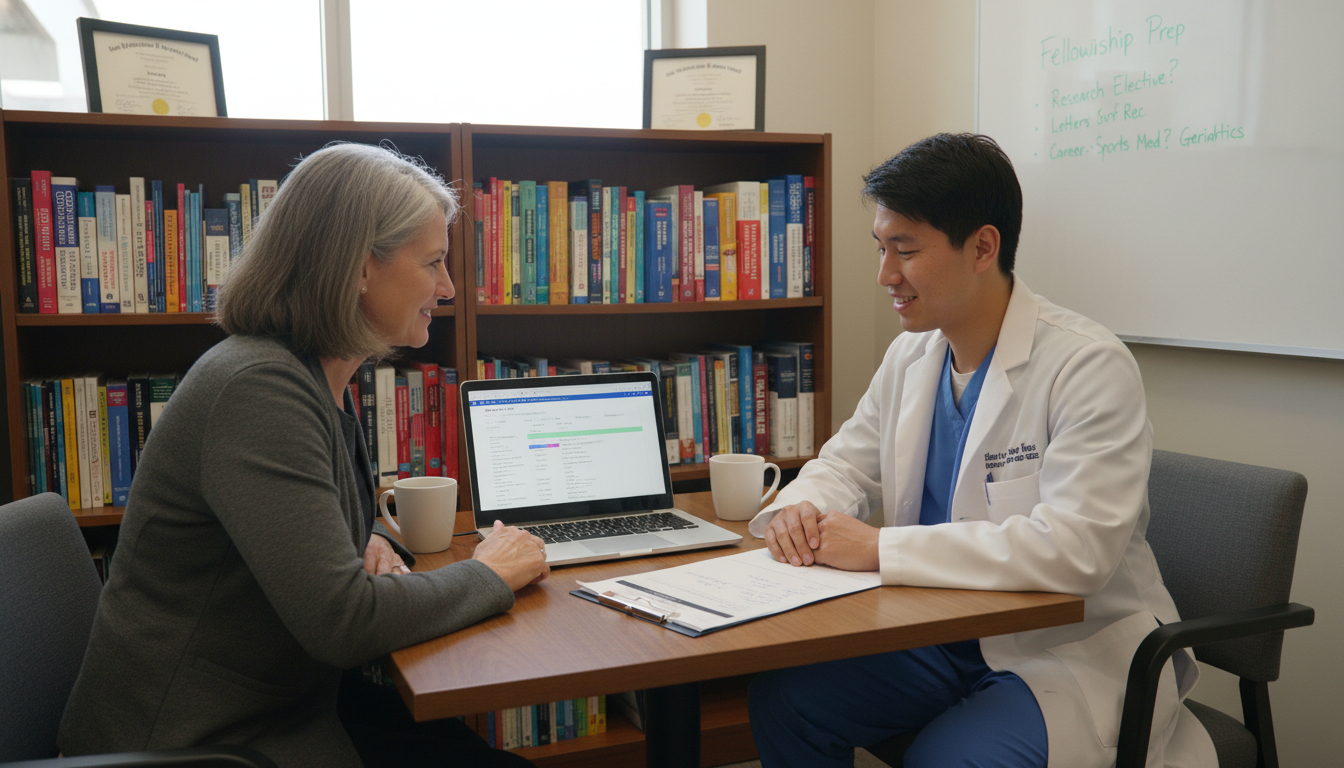
- Find a mentor early in PGY-1 or PGY-2 who is active in your target field.
- Start with feasible, small-scale projects:
- Retrospective chart review.
- QI project to improve screening, vaccination, or chronic disease management.
- Case series in your fellowship interest area.
- Aim for submission to:
- Specialty-relevant journals (e.g., family medicine, palliative care, geriatrics).
- Society conferences (e.g., AAFP, AAHPM, AGS, AMSSM, ASAM).
As an international medical graduate, scholarly productivity often reassures programs of your academic ability and commitment, especially if your medical school is less familiar to them.
Teaching and Leadership
Most fellowships—especially academic ones—value evidence that you can teach and lead:
- Volunteer for medical student teaching (bedside teaching, small groups, skills sessions).
- Participate in resident committees (wellness, QI, curriculum).
- Serve as chief resident if possible (strongly valued by many programs).
- Contribute to educational materials (handouts, protocols, workshops).
On your CV, list:
- Formal teaching roles with dates and estimated hours.
- Leadership positions, including specific accomplishments (e.g., “Co-led redesign of inpatient sign-out process, reducing errors by 25%.”)
Strategic Timeline: From PGY-1 to Applying for Fellowship
Understanding when to act is as important as knowing what to do. The fellowship application timeline can be confusing, especially for IMGs managing visa and licensure issues.
PGY-1: Exploration and Foundations
Primary goals:
- Adapt to U.S. clinical culture and documentation.
- Demonstrate reliability and strong work ethic.
- Start exploring fellowship interests.
Actions:
- Rotate broadly and note which fields energize you (e.g., palliative care family meetings, MSK procedures).
- Attend departmental or hospital grand rounds relevant to potential fellowship interests.
- Identify 1–2 potential mentors in your department and schedule short “career exploration” meetings.
- Begin tracking interesting patient cases and QI ideas in a simple document.
PGY-2: Focus and Early Productivity
Primary goals:
- Commit to one or two realistic fellowship targets.
- Begin building measurable scholarly and leadership experiences.
Actions:
- Use elective time to deepen experience in your intended field.
- Start or join at least one research or QI project.
- Present locally (departmental or hospital conferences) as a stepping stone to regional/national venues.
- Ask mentors for feedback on your evolving CV.
- Clarify visa realities with your GME office (especially if you’re on a J-1 or H-1B visa).
By mid to late PGY-2, you should:
- Have a relatively clear vision of your preferred fellowship track(s).
- Have at least one project underway that can be submitted before applications.
PGY-3: Application Year (and PGY-4 if in a 4-year program)
Most family medicine fellowships begin on an annual cycle and use various application platforms (NRMP, ERAS, or direct applications). The calendar can vary by subspecialty:
- Many FM fellowships begin accepting applications 12–15 months before start date.
- Some (like sports medicine) have formal match cycles; others use rolling offers.
Approximate checklist for a one-year fellowship starting July 2027, for example:
July–September 2025 (mid PGY-2):
- Confirm specialty interest.
- Map out a preliminary list of programs.
- Identify potential letter writers.
January–March 2026 (late PGY-2 / early PGY-3):
- Intensify scholarly activity (aim to submit and present).
- Draft your personal statement early.
- Finalize your CV and get feedback.
April–June 2026:
- Request letters of recommendation (give letter writers 6–8 weeks and specific guidance).
- Confirm fellowship application timeline and process for each program (ERAS vs. direct).
- Ensure USMLE/COMLEX results and board status are up to date.
July–September 2026 (PGY-3):
- Submit applications as early as platforms open (rolling programs often favor earlier applicants).
- Prepare for interviews (mock interviews with faculty or career advisors).
October–December 2026:
- Attend interviews (in-person or virtual).
- Send thoughtful, concise follow-up notes to interviewers.
- For match-based fellowships, submit your rank list.
- For non-match fellowships, respond promptly to offers, considering visa implications.
Always verify dates for your specific subspecialty, but this framework will help you stay proactive rather than reactive.

Optimizing the Application: CV, Personal Statement, and Letters
When you reach application season, small details can significantly impact how your file is perceived, especially as an international medical graduate.
Crafting a Fellowship-Focused CV
Your CV should be clean, organized, and tailored to fellowship goals:
Emphasize:
- Education (including medical school, residency program, and any prior degrees).
- Licensure and USMLE/COMLEX scores (if requested).
- Clinical experience with relevance to the fellowship:
- Specific rotations, elective experiences, or track participation.
- Research and scholarship:
- Separate categories for publications, abstracts, posters, and oral presentations.
- Teaching:
- Medical student teaching, workshops, curriculum development.
- Leadership and service:
- Committees, chief residency, volunteer work, global health (if relevant).
For each research or QI project, include your role (e.g., principal investigator, co-investigator, data analyst) and a one-line description of the project’s aim.
Writing a Compelling Personal Statement
Your personal statement must do more than repeat your CV. It should:
- Explain convincingly why you chose this fellowship.
- Demonstrate insight into the subspecialty—you understand what the field demands.
- Show your growth over time as an IMG in U.S. training.
- Connect your goals to what this fellowship specifically offers.
Practical structure:
- Opening vignette or brief story: A patient or moment that crystallized your interest (keep it concise and authentic).
- Development of interest: How your exposure in medical school and residency deepened this interest, especially in U.S. settings.
- Evidence of preparation: Highlight research, electives, leadership, and teaching aligned with the fellowship.
- Long-term vision: Describe your 5- to 10-year plan and how fellowship is necessary (and not merely “nice to have”).
- Program fit (for tailored versions): Specific aspects of certain programs (patient population, faculty interests, research opportunities) that align with your goals.
Avoid:
- Over-emphasizing visa issues in the personal statement (those can be discussed more tactfully elsewhere).
- Generic language that could apply to any subspecialty (“I love medicine and want to help people”).
- Excessive focus on hardships without connecting them to resilience and growth.
Letters of Recommendation: Quality Over Quantity
Strong, specific letters can offset concerns about unfamiliar foreign medical schools or differences in training systems.
Aim for:
- 3–4 letters, including:
- At least one letter from a faculty member in the target subspecialty.
- One letter from your program director or associate program director.
- One from a core FM attending who knows you well in longitudinal settings (e.g., continuity clinic).
What makes a letter strong for an IMG:
- Direct comparison: “She is in the top 5% of residents I have worked with in the last 10 years.”
- Concrete details: Specific patient cases, projects, or teaching episodes.
- Endorsement of suitability for fellowship: Clear, unambiguous support.
- Comments about communication skills, professionalism, cultural adaptability, and teamwork.
Help your letter writers:
- Provide them with:
- Your updated CV.
- A one-page “fellowship goals” summary.
- A bullet list of key points they might comment on (clinical excellence, teaching, research, character traits).
- Gently remind them of deadlines (2–3 weeks before the actual due date).
Special Considerations for IMGs: Visas, Networking, and Common Pitfalls
As an international medical graduate, there are additional layers to fellowship preparation, beyond the universal elements.
Visa and Legal Considerations
Your visa type (J-1, H-1B, others) heavily influences your options:
J-1 visa (most common for IMGs in residency):
- Subject to the two-year home-country physical presence requirement unless waived.
- Most fellowships can sponsor or continue J-1 status.
- If you plan to pursue a J-1 waiver job after training, think strategically about location and timeline (some waiver jobs prefer or require fellowship training; others do not).
H-1B visa:
- Some fellowships sponsor H-1B; others do not.
- H-1B has cap issues and timing constraints; verify each program’s approach.
Action steps:
- Meet with your GME office and/or immigration lawyer early (PGY-1 or early PGY-2) to understand:
- Whether your current visa can be extended through fellowship.
- How fellowship may affect your eligibility for waivers, permanent residence, or future employment.
- When researching programs, explicitly confirm:
- “Have you sponsored [J-1/H-1B] fellows in the past?”
- “Do you anticipate any changes for future cycles?”
Networking and Professional Societies
Networking is particularly important for IMGs who may lack U.S.-based connections from medical school.
Join relevant professional societies:
- For family medicine more broadly: AAFP
- For subspecialties:
- Sports Medicine: AMSSM
- Geriatrics: AGS
- Palliative Care: AAHPM
- Addiction Medicine: ASAM
Make the most of membership:
- Attend national or regional meetings (even virtually).
- Present posters or oral presentations.
- Introduce yourself briefly to program leaders or faculty from programs you’re targeting.
- Join interest groups or listservs where fellowship opportunities are often discussed.
A brief, professional email after meeting someone can help you stay on their radar:
- Remind them who you are, what fellowship you’re interested in, any common interests you discussed, and thank them for their time.
Avoiding Common Pitfalls
Common problems seen in IMG fellowship applications:
- Late preparation: Waiting until PGY-3 to start thinking about research or electives.
- Unrealistic targeting: Choosing highly academic, research-heavy programs without any documented scholarship.
- Weak communication skills in interviews: Not practicing enough, especially with U.S. cultural nuances in communication.
- Overlooking visa limitations: Applying broadly without checking sponsorship, leading to wasted applications and frustration.
- Generic applications: Reusing the same personal statement and not tailoring to subspecialty or program.
Mitigation strategies:
- Start early (PGY-1/early PGY-2).
- Seek feedback regularly from trusted mentors and program leadership.
- Be honest about your profile and apply to a balanced mix of “reach,” “target,” and “safety” programs.
- Treat interview preparation as seriously as board exams—practice with mock interviews and targeted feedback.
FAQ: Fellowship Preparation for IMGs in Family Medicine
1. When should I start preparing for fellowship as an IMG in family medicine?
Ideally, begin during PGY-1 with exploration and mentor identification. By mid PGY-2, you should have a clear target (or two) and be actively involved in at least one relevant research or QI project. Because the fellowship application timeline often starts 12–15 months before fellowship begins, waiting until PGY-3 to plan usually limits your options.
2. As an IMG, do I need research to match into a family medicine–related fellowship?
While not absolutely required for every program, some degree of scholarly activity strongly strengthens your application, especially for academic centers or competitive fellowships (e.g., sports medicine at large universities). For many IMGs, having 1–3 solid scholarly products—case reports, QI projects, posters, or papers—can make a significant difference and show you can contribute academically.
3. How important are letters of recommendation compared to my IMG status and test scores?
Letters of recommendation are critical. They often have more influence than marginal differences in test scores, particularly for IMGs. Strong, detailed letters from U.S.-based faculty who can vouch for your clinical skills, professionalism, and readiness for fellowship can reassures programs about any uncertainties related to unfamiliar medical schools or training backgrounds.
4. How does fellowship training affect my chances of getting a U.S. job or pursuing further training?
Fellowship can enhance your employment options, especially in underserved or specialized practice settings, and may make you more competitive for academic positions. For those preparing for fellowship with long-term goals like academic careers or leadership roles, fellowship often serves as a stepping stone, offering advanced skills, a stronger network, and sometimes research training. However, you must carefully integrate this with visa strategy, particularly if you are on a J-1 visa and will need a waiver job afterward.
By planning early, aligning your activities with clear goals, and understanding the unique considerations of being an international medical graduate, you can navigate fellowship preparation confidently and build a rewarding career after family medicine residency.