

The false belief that “the interview is what matters; follow‑up is just a formality” is how strong applicants quietly slide down rank lists.
For fellowship, your post‑interview behavior is part of the evaluation whether programs say it aloud or not. I’ve sat in meetings where a single careless email subject line, a pushy “update,” or a weirdly late thank‑you note changed how people in the room talked about an applicant. Not their score. Their tone.
You’re not just being judged on how smart you are. You’re being judged on how you’d be as a colleague at 2 a.m. on a bad call. Follow‑up missteps scream “this person will be a problem.”
Let’s make sure you’re not that person.
1. The “Silence Means I’m Cool” Mistake
Some residents think the power move is to play it too cool: no thank‑you emails, no brief check‑ins, nothing. “My file speaks for itself.” It doesn’t. It never does.
Here’s how silence backfires:
- It can be interpreted as lack of interest in the program
- It hands the narrative to other applicants who do communicate professionally
- It wastes a chance to fix minor missteps or reinforce fit
Programs don’t need gushing essays, but they notice basic professionalism.
What usually goes wrong:
- Applicant interviews, feels it went “fine.”
- They overthink the thank‑you: Should I write each interviewer? Is that annoying?
- Decision paralysis → they send nothing.
- In the ranking meeting, someone asks, “Did we ever hear from them again?” The answer is no.
That doesn’t tank you single‑handedly. But in a tie between “we liked both” candidates, the one who reinforced genuine interest and maturity gets nudged up.
Avoid this:
- Send brief, individualized thank‑you emails to interviewers within 24–72 hours.
- If you have 10+ interviewers, prioritize PD, APD, and people you spent the most time with.
- Keep it under 10 lines. Zero drama. Zero begging.
What you’re signaling: “I understand basic professional courtesy, I respect your time, I communicate clearly.”
That should be the floor for a future fellow. Do not fail the floor test.
2. Sloppy, Generic, or Overly Familiar Thank‑You Emails
If you’re going to write, don’t write junk.
I’ve watched PDs pull up emails on screen during ranking meetings. People do judge your attention to detail and emotional tone. Sloppy follow‑up screams “this is what their notes and consults will look like at 3 a.m.”
Common errors that hurt you:
- Misspelling the program name, PD name, or fellowship title
- Copy‑pasting the same generic paragraph to everyone on the team
- Writing with weird familiarity: “Hey Jim, great to hang! Fingers crossed you rank me high!”
- Turning thank‑you emails into a sales pitch: “As a reminder, my Step scores are…”
- Overexplaining or apologizing: “I was so nervous, I hope I didn’t sound dumb when…”
- Including attachments or random CV updates no one asked for
Programs don’t need a second personal statement in their inbox. They need proof you’re not a social hazard.
A clean approach:
- Subject line: “Thank you – [Your Name], [Specialty] Fellowship Interview [Date]”
- 3–5 sentences:
- One line of appreciation
- One specific reference to something you discussed
- One line reaffirming interest / fit
- Professional close
Do not:
- Ask where you stand on their rank list
- Try to “correct” an answer you gave in the interview unless it was truly egregious
- Cc random people who weren’t involved
If the email makes the reader roll their eyes, you just bought yourself a rank drop.
3. Violating Match / NRMP Communication Rules
This one isn’t cute. It can get you into real trouble.
Residents still make these mistakes every year, often because someone told them, “You have to tell your top choice they’re number one.” Wrong. Dangerous if you do it the wrong way.
Red‑flag behaviors:
- Asking a PD or coordinator directly: “Where will I be on your rank list?”
- Pushing: “If I tell you you’re my #1, can you tell me my chances?”
- Hinting at quid‑pro‑quo: “If you indicate I’m ranked to match, I will rank you first.”
- Promising multiple programs they’re your “definite” #1 when that’s not true
That last one? PDs talk. Same subspecialty, same conferences, same group chats. If you send three “you’re my absolute top choice” emails to three programs in the same city, do not be shocked if it comes up.
What the rules allow (simplified):
- You can express interest and intentions.
- Programs cannot ask you for ranking commitments or tell you how they will rank you.
- No one should be exchanging conditional promises.
The mistake is not caring about the rules because “everyone bends them.” That’s how you become the example slide at the next GME professionalism retreat.
Safe, honest lane:
Say:
- “I remain very interested in your program.”
- “Your program is among my top choices.”
- “I would be thrilled to train with your team.”
If you truly have a #1 and you want to tell them, say it once, clearly, and mean it:
- “I will be ranking your program first.”
Do not send that to more than one place. You think they won’t find out. They often do.
4. The Over‑Communicator: Neediness, Pressure, and Noise
There’s a fine line between professionalism and desperation. Many residents sprint straight over it.
Patterns that worry programs:
- Serial emailing: PD, APD, coordinator, faculty, all getting separate follow‑ups
- Weekly “just checking in!” messages in the weeks leading up to rank list deadlines
- Sending long life updates: “I rotated at X, published Y, joined Z committee…” in January
- Asking for “feedback” on how you did in the interview pre‑Match
What PDs see: if this is how demanding you are as an applicant, how intense will you be as a fellow when you want a letter, a day off, or research support?
The internal conversation sounds like:
- “Is this person going to respect boundaries?”
- “Do I want my phone buzzing with these emails all year?”
- “Is this a future problem child?”
Do not become the name people sigh about before they open their email.
Reasonable communication cadence:
- Thank‑you note within 1–3 days
- Possibly one brief update / reaffirmation of interest if something substantial changed (major accepted paper, awarded a chief position, etc.) and if it’s weeks before rank deadline, not the night before
- One genuine “you are my top choice” email if appropriate
That’s it. Anything more is noise.
5. Tone‑Deaf “Updates” That Actually Undermine You
Updates can help. They can also quietly sink you.
I’ve seen residents shoot themselves in the foot with bad timing or bad framing:
- Sending an “update” that’s fluff: random QI poster at a minor local meeting framed like a major achievement
- Highlighting a new obligation that will clearly compete with fellowship (e.g., “I just started a MBA program…” with no reassurance about time management)
- Mentioning ongoing uncertainty: “I’m still deciding between critical care and cards fellowship…” after the CC program has interviewed you
The risk: you remind them you might not be fully committed, or you look like you don’t understand scale and relevance.
Ask before you send:
- Did anything substantial change? (major publication, award, leadership role, personal circumstance that directly impacts training)
- Does this information help them understand I’m prepared and serious about this field / program?
- Will this email feel like value or like self‑promotion spam?
If you can’t answer yes to those, don’t send it.
Timing also matters. Dropping a big “personal news” bomb right before rank list deadlines (engagement, baby, moving cities, etc.) without context can unsettle people. They start asking:
- “Will they still come if they match here?”
- “How flexible are they, really?”
If there’s a major life update that might interact with location or schedule, be clear, calm, and reassuring:
- “I wanted to share that my partner has accepted a job in [City], which further reinforces my interest in your region. I remain fully committed to fellowship training starting [Year].”
You’re controlling the narrative instead of letting people fill gaps with their own anxieties.
6. Social Media and Back‑Channel Disasters
Plenty of residents are polished in interviews and then sabotage themselves on Instagram, X, or even private group chats. You think the walls are solid. They’re not.
Landmines I’ve watched blow up:
- Posting “rank lists” or “top 3 programs” publicly or in semi‑private groups, where one of the non‑listed programs sees it
- Complaining about specific places: “That [Program] felt so malignant lol never going there” — then a fellow screenshots it and forwards it
- Sharing interview day pics with identifiable patients or staff in the background
- Boasting: “Locked in if [Program] ranks me; they basically said I’m in”
That last one is particularly aggravating for PDs. It implies they broke the rules, even when they didn’t.
Remember:
- Fellows and faculty are online. They recognize their own hospitals. They recognize each other.
- WhatsApp and GroupMe threads leak. Screenshots live forever.
- A single unprofessional post can change the discussion from “great candidate” to “is this going to be a PR issue?”
Bare minimum precautions:
- Lock down your privacy settings for the match season.
- Don’t post anything specific about programs, coordinators, or interview content.
- Don’t brag online about “inside info” from any program.
- Assume anything you say in a resident group chat could end up in a PD’s inbox.
You’re applying to a small field. People remember names.
7. Burning Bridges With Other Programs After You Decide
Once you fall in love with a “top choice,” many residents mentally dismiss the rest. The mistake is letting that contempt leak out.
Examples I’ve seen:
- Canceling later interviews with minimal notice and no apology, causing scheduling chaos
- Ghosting programs that offered interviews (no decline, no response)
- Sending rude or curt decline notes: “I will not be attending. Please cancel.” and nothing else
- Telling one program, “I’m ranking you first,” then going on a podcast or posting online praising somewhere else as your “dream program”
Even if you think you’ll never cross paths with those other institutions again, you’re wrong. These are future colleagues, letter‑writers, examiners, co‑authors.
And some of them are on the same national selection committees you’ll want to impress later.
What to do instead:
If you decide not to rank or not to attend additional interviews:
- Decline with a brief, polite message.
- Give at least a few days’ notice for cancellations whenever possible.
- Thank them for their time and consideration. That’s it.
There’s also this: your “top choice” may not rank you where you think. Doors you slam now might be the ones you wish were open later.
8. The “Top Choice” Email Done Wrong
Everyone is obsessed with the mythical “love letter” to their #1 program. It can help a little. It can hurt a lot if you do it wrong.
Common errors:
- Writing a full essay about how “only your program can make my dreams come true” — melodramatic and frankly off‑putting
- Talking more about the city / lifestyle than the training: “I love your beaches and breweries”
- Making conditional or manipulative statements: “If you rank me to match, I will rank you first”
- Writing too early (before you’ve even finished your other interviews) and then changing your mind
- Sending versions of the same “you’re #1” email to multiple places
Here’s the reality: plenty of PDs don’t care about these emails at all. Some look at the tone as a professionalism check. A few might factor genuine enthusiasm into a marginal decision.
You don’t know which type you’re dealing with. So err on the side of clean, honest, and restrained.
Reasonable structure:
- One short paragraph reaffirming what you appreciated about the program
- One clear sentence that, if true, says: “I will be ranking your program first.”
- One line expressing gratitude for the interview experience
- Done
No flattery. No bargaining. No rank questions. No drama.
If you’re not 100% sure they’re your top choice — do not use that language. Say “among my top choices” or “very high on my list” and leave it.
Lying here doesn’t just feel gross. It’s remembered. People talk.
9. Disappearing From Your Current Program After Interviews
This one is subtle but lethal. You get caught up in applications, interviews, emails to PDs across the country… and you start neglecting the people whose letters and impressions still matter most: your own faculty.
Ways this shows up:
- Coming back from interviews disengaged and half‑present on service
- Complaining constantly about your home institution, comparing it to every place you visited
- Letting your documentation, sign‑outs, or patient care standards slip because “I’m almost done”
- Being openly fixated on where you’ll match in front of fellows and attendings who didn’t get a fellowship when they applied the first time
Guess who programs call when they’re on the fence about you? Home PD. Division chief. People who worked with you recently.
If your post‑interview behavior at home raises red flags, those calls will not go your way.
Maintain, or even slightly raise, your professionalism on your home turf after interviews. The message should be:
- “This person is still reliable.”
- “They didn’t mentally check out after interviewing.”
- “I’d stake my reputation on them.”
Your out‑of‑town follow‑up cannot compensate for eroding trust where you are now.
10. Ignoring How Timing and Volume Affect Perception
One of the biggest hidden mistakes: you forget that PDs are flooded with communication in a very short window. Four hundred applicants. Dozens of emails. Rank lists due. Faculty opinions to reconcile.
Your message is being read in that context — tired, overloaded decision makers with limited patience.
So:
- Long emails don’t get read. They get skimmed or ignored.
- Overly emotional messages feel burdensome.
- Anything that looks like it might trigger a reply‑all conversation is resented.
You want your name associated with relief, not work.
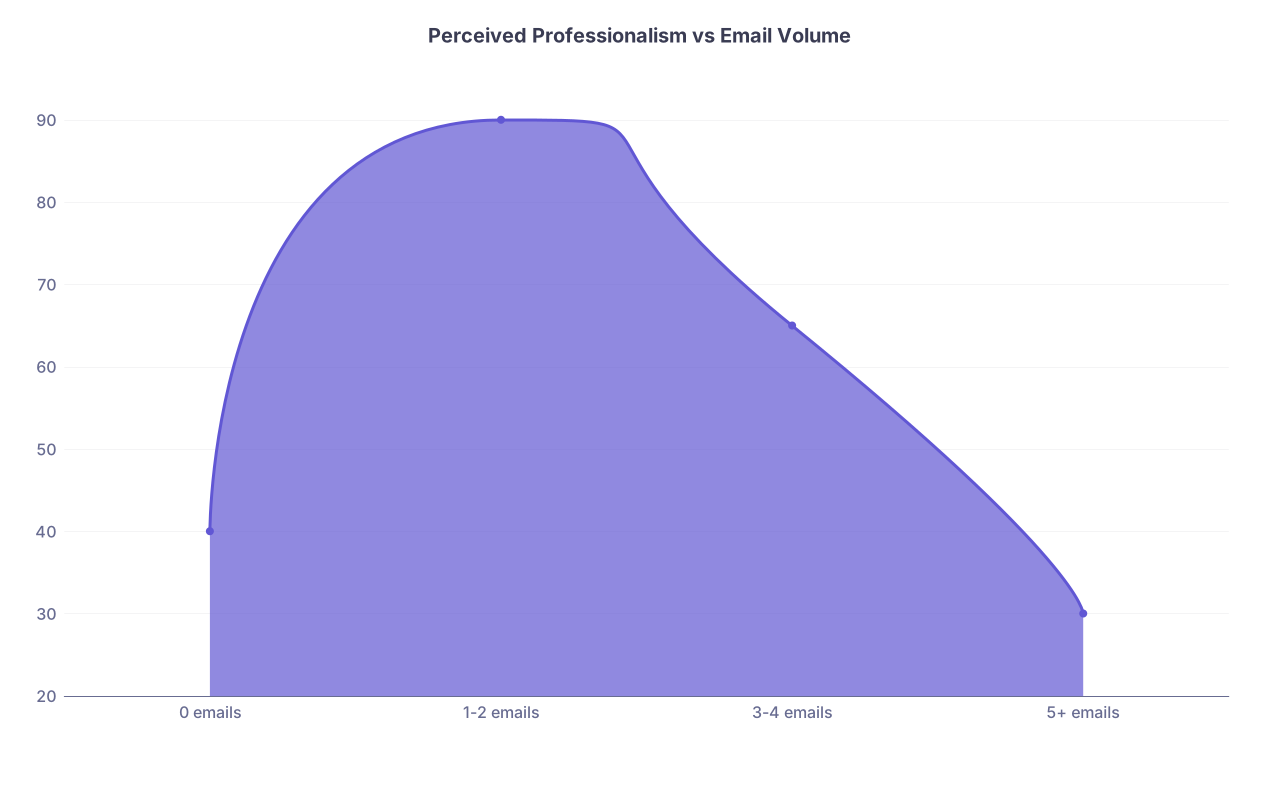
| Category | Value |
|---|---|
| 0 emails | 40 |
| 1-2 emails | 90 |
| 3-4 emails | 65 |
| 5+ emails | 30 |
Interpretation: most PDs will rate you as most professional when you land in that 1–2 concise, relevant emails range. Zero can suggest indifference. A flood looks needy or tone‑deaf.
11. Concrete Guardrails: A Simple Post‑Interview Plan
You don’t need a complicated strategy. You need guardrails to stay out of trouble.

| Step | Description |
|---|---|
| Step 1 | Interview Day |
| Step 2 | Thank you emails 24-72 hr |
| Step 3 | No further contact needed |
| Step 4 | One concise update email |
| Step 5 | One honest top choice email |
| Step 6 | No rank promises |
| Step 7 | Any major updates later? |
| Step 8 | True clear top choice? |
Basic rules:
- 24–72 hours: send focused thank‑you notes.
- Beyond that: only email if there’s a real reason (substantial update or honest top choice message).
- Never beg, bargain, or fish for your rank position.
- Zero social media stupidity.
- Treat your current program like it still holds your career in its hands. It does.
| Email Type | Risk Level |
|---|---|
| Brief thank-you (24–72 hours) | Low |
| Single concise update | Low |
| Honest single top-choice email | Medium |
| Multiple “check-in” emails | High |
| Asking about rank position | Very High |
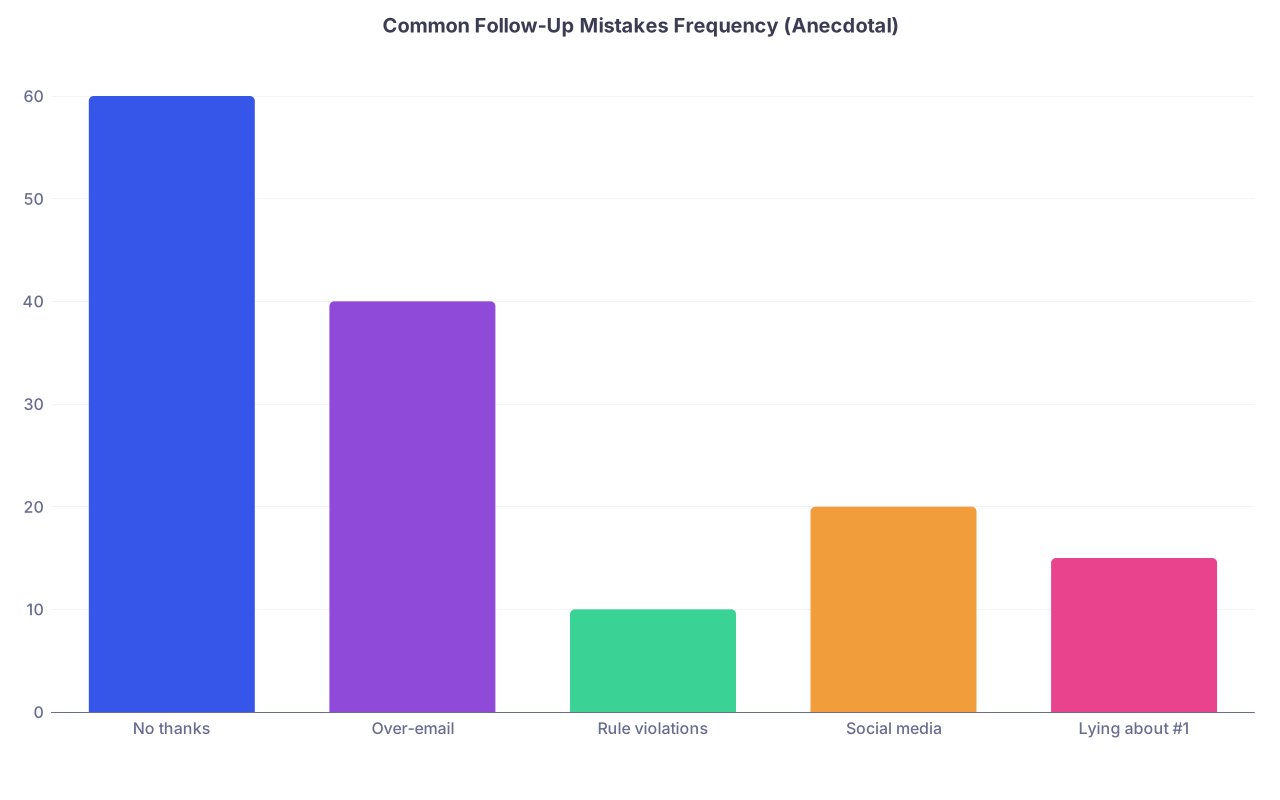
| Category | Value |
|---|---|
| No thanks | 60 |
| Over-email | 40 |
| Rule violations | 10 |
| Social media | 20 |
| Lying about #1 | 15 |



The Bottom Line: Don’t Lose Ground After You’ve Earned It
If you’ve read this far, here’s the blunt summary:
- Your follow‑up is part of your evaluation. Silence, sloppiness, or neediness all send signals. None of them are neutral.
- Less, done well, beats more, done nervously. One clean thank‑you, maybe one real update, and at most one honest top‑choice email will serve you better than a dozen anxious messages.
- Protect your reputation beyond this match. PDs, fellows, and faculty remember who played it straight, respected boundaries, and acted like a future colleague — not a panicked applicant.
Do not let the weeks after interviews undo the impression you worked so hard to build during them.


