

The fastest way to torpedo a fellowship application you “deserve” is not a bad LOR or a mediocre research CV. It is a careless social media footprint.
I have watched otherwise competitive residents get quietly dropped from rank lists because of what a program director saw on Instagram, X, or TikTok. No formal warning. No professionalism committee. Just deleted from the spreadsheet.
If you think “they will never look,” you are making a serious mistake.
Let’s walk through the social media missteps that actually cost people interviews and spots – and how to stop yourself from becoming a cautionary tale.
1. Believing Your Accounts Are “Private” or “Personal”
The most dangerous myth in residency and fellowship is this: “That’s my personal account. It’s separate from work.”
No, it is not.
Once you are a physician in training, your identity and your profession are linked. Programs know this. GME offices know this. Hospital risk management definitely knows this.
Here is what residents routinely underestimate:
“Private” is not private if:
- You accept follow requests from co-residents, med students, nurses, or anyone you do not truly know.
- Someone screenshots your story and sends it to a chief resident or PD.
- You reuse your username across platforms and someone connects the dots.
“Anonymous” is rarely anonymous:
- Same profile photo as your other accounts.
- Same distinctive username you used on Reddit and Instagram.
- You mention your specialty, city, and year of training. People can triangulate that in under a minute.
I have seen PDs shown “anonymous” meme pages by their own residents – often in a tone of “look how funny this is” – only to recognize the hospital layout in the background of a supposedly generic ED photo. That account owner never knew they were on the projector in a conference room.
If you would be uncomfortable with your PD, fellowship director, or hospital CMO reading or seeing it on a slide at grand rounds, do not post it. Private or not.
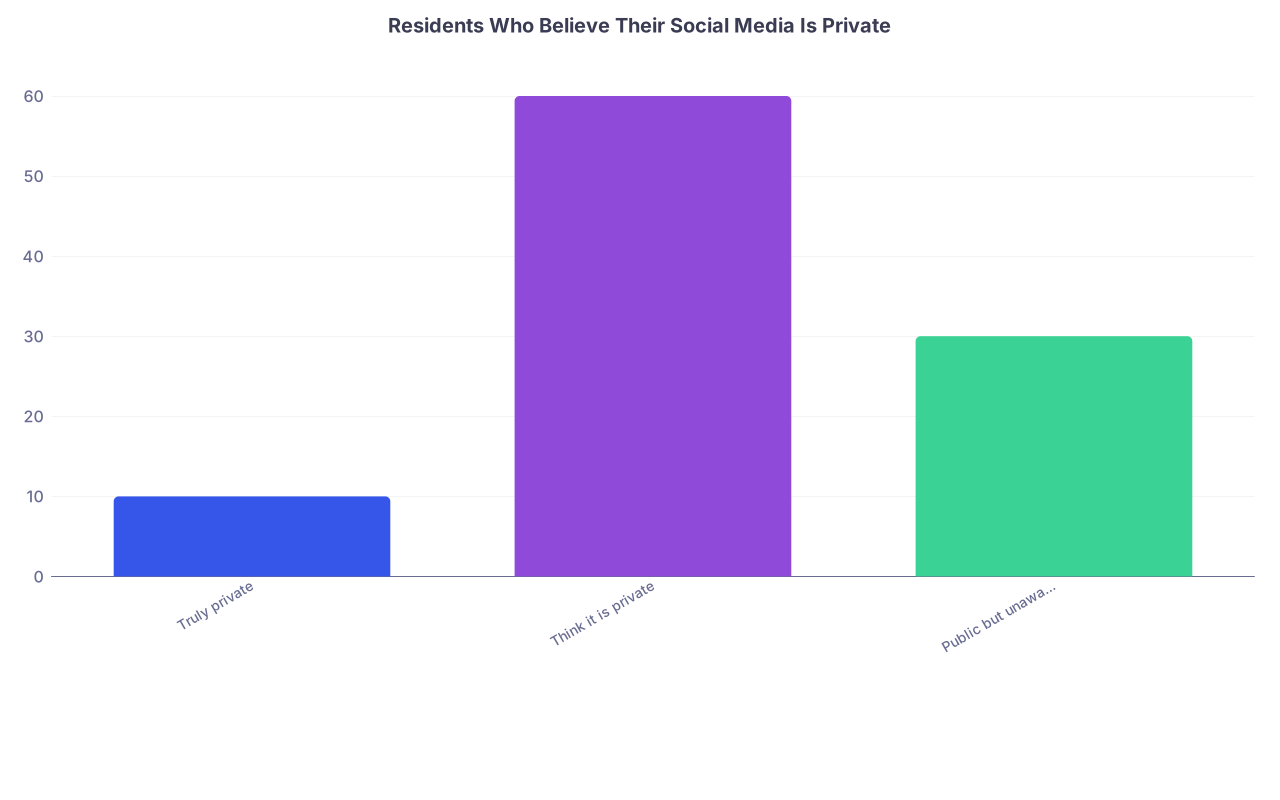
| Category | Value |
|---|---|
| Truly private | 10 |
| Think it is private | 60 |
| Public but unaware | 30 |
2. Casual HIPAA Violations That Do Not Feel Like Violations
This is the big one. People think HIPAA only means “no names, no faces.” Wrong.
HIPAA violations that end careers often look small and harmless to the person posting:
A blurred-face photo of a trauma patient’s room… but:
- The date and time of the code are visible on the monitor.
- The unusual mechanism of injury is described in the caption.
- The city and hospital are obvious from your profile.
A “crazy case” story:
- “31-year-old marathon runner with…” in a mid-sized city. That person is identifiable to anyone who knows them.
- Timestamped during the admitted hospitalization.
- Combined with your specialty and hospital information.
A selfie in the OR:
- The whiteboard behind you shows initials, age, procedure, and room number.
- Even partially visible data can be linked.
Residency leadership has very little tolerance for this. Fellowship leadership has even less.
Do not assume:
- “The patient would not care.”
- “Everyone posts stuff like this.”
- “It is educational; that makes it fine.”
Those are the precise sentences I have heard from residents sitting in front of professionalism committees. You do not want to end up there.
Practical protection rule: If it references a real patient encounter in a real location at a real time – do not post it. Even anonymized. Even in a private group. Screenshots escape.
3. Trash-Talking Colleagues, Nurses, or Programs
You may think your “spicy” tweets about nurses, surgery colleagues, or your home program are just venting. Fellowship selection committees see something else: risk.
Red flags I see repeatedly:
“Jokes” that insult:
- Nurses as lazy or dumb.
- Certain specialties (anesthesia, psychiatry, family medicine) as useless.
- CRNAs, PAs, NPs as incompetent.
Complaints about:
- Your residency program by name.
- Specific rotations, attendings, or departments in a contemptuous tone.
- “Stupid patients” who do not follow instructions.
Subtweets about:
- Co-residents, chiefs, or faculty that are recognizable to insiders.
Here is how that lands in a PD’s head:
- “This person will be a problem when they do not get what they want.”
- “They will poison the team culture when they are frustrated.”
- “If they talk like this publicly now, what will they be like as faculty?”
A reputation for being difficult, disrespectful, or bitter is incredibly hard to undo. And medicine is a small village. That “anonymous” vent thread about your program? Someone screenshotted it and emailed it to a faculty member. I promise.
You do not need to pretend everything is perfect. You do need to stop broadcasting contempt where search committees can find it.
4. Posting While Impaired (Alcohol, Substances, or Pure Exhaustion)
No PD cares that you enjoy a beer on the weekend. They care if your judgment, online and offline, looks impaired.
The mistakes usually happen at 1:00 a.m.:
- You post a blurry story from a bar, tagging “post-call and half-dead, let’s gooo.”
- You tweet about going straight from a party to pre-rounding.
- Someone tags you in a video where you are obviously intoxicated, in scrubs, with your badge visible.
Even if you are technically off duty, this can look very bad. Especially during fellowship season, when everyone is reading your file with a highlighter.
What interviewers worry about:
- Fitness for duty.
- Reliability with call schedules.
- Safety and judgment with procedures and medications.
They do not need proof of actual impairment at work. The appearance alone can push them to pick the other candidate with a clean footprint.
One more thing: posting while emotionally “impaired” counts too. Angry threads about an attending, a patient, or a bad night. Long rants written on no sleep. Those are the posts people regret most.
If you are angry, exhausted, or buzzed, step away from the keyboard. Draft in Notes if you must. Revisit 24 hours later. Most of it will not survive your own review.
5. Over-Sharing About Burnout and Hating Medicine
This one is touchy, but I am going to be blunt.
Residency is brutal. Many residents are burned out, depressed, or questioning their career. That is real and serious. Get help. Talk to friends. Use therapy. Use formal support.
But be careful about leaving a public, searchable trail that reads like: “I hate medicine and I want out.”
Fellowship PDs read this as:
- “High risk for non-completion of fellowship.”
- “May be resentful, disengaged, or checked out.”
- “May require significant support we cannot reliably provide.”
Examples that unsettle selection committees:
- Repeated posts about regretting becoming a doctor.
- Threads about “counting down the days until I quit medicine.”
- Public admissions of active suicidal ideation without context of treatment or recovery.
You deserve help and understanding. But a Twitter thread is not a protected mental health record. It is an artifact that can be screenshotted, forwarded, and interpreted by people who do not know the whole story.
If you are struggling (and many are), protect your future by:
- Seeking real support through confidential channels.
- Keeping the most vulnerable, raw content off searchable, public platforms.
- Writing in closed, truly anonymous spaces if you need to vent in text – and even then, sparingly.
Your mental health matters more than any fellowship. But do not let the worst night of your residency become the first page of your Google results forever.
6. Political, Ideological, and “Hot Take” Combustion
Politics, religion, and social issues are not off-limits for physicians. In fact, advocacy is part of the job.
The mistake is how you do it.
Two different online personas:
Physician advocating:
- Thoughtful posts linked to data or guidelines.
- Respectful disagreements.
- Clear separation between personal views and patient care.
Physician firestarter:
- Name-calling, mocking, or demeaning those who disagree.
- Retweeting or posting conspiracy content.
- Harassing or dogpiling individuals (even if you think they “deserve” it).
Fellowship selection committees will not always agree on politics. They will agree on this: openly aggressive, absolutist, or conspiratorial online behavior is a liability to the program.
Disqualifying patterns:
- Openly racist, sexist, homophobic, or transphobic language, including “jokes” and “memes.”
- Pandemic conspiracy posts, anti-vaccine rants, or denial of basic scientific consensus.
- Harassment of colleagues or public figures in medicine.
You are allowed opinions. You are not owed a competitive fellowship when those opinions are expressed in ways that raise serious concerns about professionalism or judgment.
One more subtle trap: quote-tweeting or amplifying others’ extreme statements with “LOL,” “this,” or similar. PDs do not usually parse nuance. They just see your handle attached.
7. Misusing “Med Twitter,” “MedTok,” and Online Branding
There is a strange belief among some residents that building a social media “brand” will strengthen their fellowship applications.
Sometimes it does. Often it backfires.
Problems I see:
Inflated or misleading claims:
- Calling yourself an “expert” in an area where you are barely a PGY-3.
- Suggesting you “run a program” or “lead a clinic” when you are describing basic resident duties.
- Implying board certification, credentials, or research that do not exist.
Questionable “educational” content:
- Throwing out treatment advice to the general public without context or disclaimers.
- Sharing “hot pearls” based on N=1 anecdote that contradict standard guidelines.
- Filming TikToks while on duty, in patient care areas, or in scrubs with hospital logos visible.
Sloppy professional boundary:
- Patients or families following your “professional” page and DM-ing you for personal medical advice.
- Responding to these DMs in ways that blur boundaries and liability.
A healthy professional presence is fine. Useful, even. But fellowship programs want evidence of maturity, not self-promotion at any cost.
If you are building a public “doctor” persona, treat it like a conference talk with your department chair in the front row. That is the standard you will be held to.
8. Underestimating How Often Committees Actually Look
You may think, “PDs are too busy to stalk my Instagram.” That is half-true. They often are. But:
Many programs have:
- An APD, chief resident, or coordinator who checks applicants’ online presence.
- A younger faculty member who “just glances” if something feels off.
- Residents who quietly look up applicants and sometimes share what they find.
And even if the program never searches:
- Other residents from your institution may talk.
- A faculty member may forward a concerning post.
- A nurse or staff member may report something to GME.
I have personally seen:
- An applicant removed from the rank list after a resident found blatantly racist tweets from years earlier.
- Another who did not get ranked after their public Instagram showed repeated intoxication in scrubs and mocking commentaries about “idiot patients.”
- A third whose “anonymous” meme account mocking ICU patients was identified and quietly blacklisted across multiple programs after residents shared it.
No one sent them an email explaining any of this. They only saw it as “unexpectedly bad match result” or “fewer interviews than expected.”

9. The “Receipts Last Forever” Problem
Deleting a post or making your account private is not a magic reset. Many residents learn this too late.
Digital reality:
- Screenshots exist.
- Archived pages exist.
- Old usernames link to new identities.
Common mistakes:
Cleaning up social media only after ERAS submissions, but:
- Years of content were already seen and saved by colleagues.
- Cached copies exist in search engines and archives.
Changing your username but:
- Using the same profile photo, bio, or email.
- Leaving behind comments on public pages as your old handle that still clearly identify you.
Assuming “close friends” stories are safe:
- They are not. One angry ex, one annoyed colleague, one person you misjudged – and that story is in someone else’s gallery.
You cannot fully erase the past. You can stop adding ammunition.
Do a structured cleanup:
- Search your own name + specialty + hospital.
- Search your common usernames.
- Search images that might show your face, badge, or hospital identifiable features.
Then change two things:
- What exists going forward.
- Your threshold for what you put your name on, ever again.
10. What a Safe, Fellowship-Ready Social Media Presence Actually Looks Like
Let me be concrete. You do not need to disappear from the internet. You do need to stop making yourself an easy “no.”
A fellowship-ready profile usually has these features:
Either:
- Low-key, mainly personal content (travel, hobbies, pets), with:
- No patient content.
- No obvious work identifiers in risky contexts.
- No public meltdowns.
Or:
- Thoughtful professional presence, with:
- Occasional educational threads linked to guidelines.
- Conference photos, posters, academic achievements.
- Clear boundaries (“not medical advice,” no DM consults).
- Low-key, mainly personal content (travel, hobbies, pets), with:
Strong avoidance of:
- Disparaging posts about colleagues, staff, or patients.
- Unprofessional intoxication content.
- Extreme, aggressive, or demeaning political or social commentary.
Here is how programs informally “score” what they see:
| Profile Type | Typical Reaction |
|---|---|
| Clean, minimal, mostly hobbies | Neutral to slightly positive |
| Professional, educational, respectful | Positive |
| Heavy venting, complaining | Cautious or negative |
| Questionable jokes, borderline content | Negative, potential red flag |
| Overtly offensive or risky posts | Strong negative, often reject |
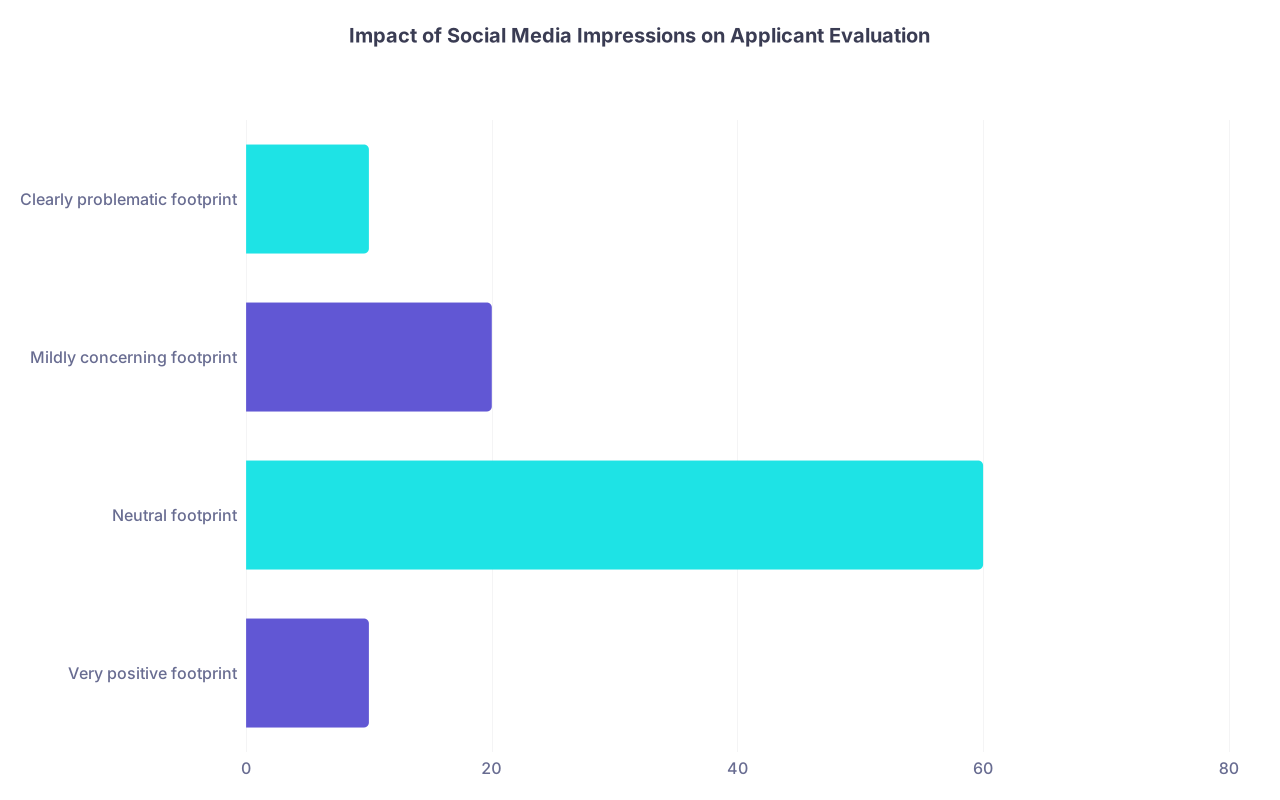
| Category | Value |
|---|---|
| Very positive footprint | 10 |
| Neutral footprint | 60 |
| Mildly concerning footprint | 20 |
| Clearly problematic footprint | 10 |
They will not tell you this score. But it affects how they interpret every other part of your file.
11. How to Audit and Fix Your Social Media Before Fellowship Season
You are not stuck with your current footprint. But you do need to be systematic. Half-measures are where people get burned.
Here is a straightforward process.
Step 1: Inventory
List every account:
- X/Twitter
- TikTok
- Old blogs, Tumblr, Medium, YouTube, etc.
List all usernames you have used.
Step 2: Self-search
- Google:
- Your full name + “MD” or “DO”
- Your name + residency + specialty
- Your usernames, in quotes
Look specifically for:
Images that show:
- You in scrubs in contexts that look unprofessional.
- Hospital logos and badges with anything questionable in frame.
Posts with:
- Patient-related content, even de-identified.
- Angry rants about work.
- Demeaning or insensitive jokes.
Step 3: Aggressive cleanup
Delete outright:
- Any posts with patient stories, even “good outcome” ones.
- Any public complaining about your program, attendings, or colleagues.
- Any content that could reasonably be read as biased, hateful, or mocking.
Lock accounts:
- Set personal accounts to private.
- Remove work affiliations from highly personal spaces if you keep them.
Untag yourself:
- From friends’ photos or videos that show you in questionable settings in scrubs or clearly identifiable as a physician.
Step 4: Future rules Before you post anything, run this mental checklist:

| Step | Description |
|---|---|
| Step 1 | Want to post |
| Step 2 | Do not post |
| Step 3 | Ok to post |
| Step 4 | Mentions patient or case |
| Step 5 | Shows you in scrubs or hospital |
| Step 6 | Fully neutral and professional? |
| Step 7 | Any insult, rant, or mockery? |
| Step 8 | Would you show this to PD? |
If this flow feels extreme, remember: you are not just any social media user. You are a physician whose public behavior reflects on a residency, a hospital, and a profession.
12. The Quiet Penalty: You Will Rarely Know You Were “Cut” For This
The final mistake is assuming, “If it were really a problem, someone would tell me.”
No. They will not.
Reading a concerning tweet is not a reportable offense in most settings. It is a “soft” data point:
- PDs use it to justify ranking another candidate higher.
- Committees cite “fit” or “professionalism concerns” in vague terms.
- Emails to you say, “We were impressed by your application but…” and nothing more.
You will never see the line in the notes that says:
- “Found patient-mocking TikTok – remove from rank list.”
- “Public anti-vaccine statements – do not invite.”
- “Twitter full of hateful jokes – high risk, skip.”
But those lines get written.
Do not count on being warned. Protect yourself before any committee opens your name in a search bar.
Your next step is not theoretical.
Open your most-used social media app right now and scroll back 12 months. Pick the first post, story, or comment that would make you squirm if it were on a projector in front of your fellowship PD and selection committee. Delete it. Then keep going until you run out.


