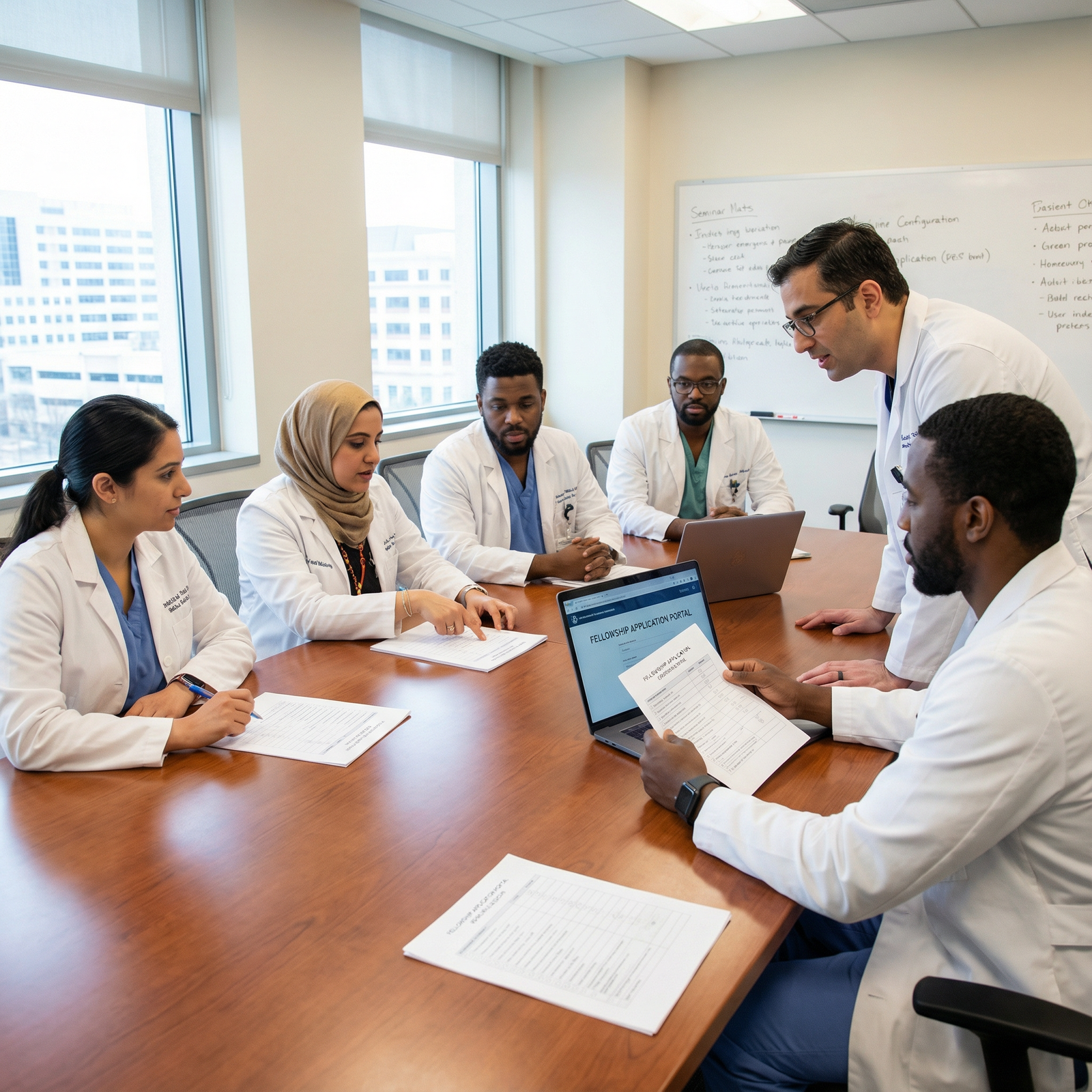
Understanding the Fellowship Landscape for Caribbean IMGs in OB/GYN
For a Caribbean medical school graduate in obstetrics and gynecology, fellowship can feel both exciting and intimidating. You have already navigated the challenges of being an international medical graduate (IMG): applying from a Caribbean medical school, earning strong US clinical experiences, and securing an OB GYN residency. Now you are asking the next big question: how to get fellowship in a competitive environment that can still be biased against IMGs.
This article is designed specifically for Caribbean IMGs in OB/GYN residencies (including those from SGU, AUC, Ross, Saba, etc.) who are thinking ahead about fellowship. Whether you are in your intern year or already a senior resident, you will find practical, step‑by‑step guidance to:
- Understand which OB GYN fellowships are most IMG‑friendly
- Build a competitive fellowship portfolio during residency
- Map out your fellowship application timeline year by year
- Strategize letters, research, and networking as a Caribbean IMG
- Balance residency life and challenges while preparing for fellowship
Along the way, we will weave in examples tailored for graduates of Caribbean medical schools and discuss nuances for popular pathways like the SGU residency match pipeline.
Key OB/GYN Fellowship Options and IMG Considerations
OB/GYN offers a range of ACGME‑accredited fellowships, each with different competitiveness levels and IMG‑friendliness. As a Caribbean IMG, you’ll want to be realistic yet ambitious—identifying which path aligns with your strengths and long‑term goals.
Major OB/GYN Fellowship Pathways
1. Maternal–Fetal Medicine (MFM)
- Focus: High‑risk obstetrics, fetal diagnosis, complex maternal disease
- Fit for: Residents who love the obstetrics match side, ultrasound, critical care, and research
- IMG considerations: Competitive, but several programs have a history of taking IMGs, especially those with strong research portfolios and robust US training
- Value: Excellent if you want to stay closely tied to obstetrics, academic medicine, or tertiary care hospitals
2. Reproductive Endocrinology and Infertility (REI)
- Focus: Infertility, assisted reproductive technology (ART), reproductive hormones
- Fit for: Residents drawn to physiology, lab‑based work, and longitudinal outpatient care
- IMG considerations: Very competitive; fewer positions nationally; programs sometimes prefer candidates from large US academic centers. Caribbean IMGs can still succeed with substantial research and a strong network.
- Value: High compensation and subspecialty niche; relatively less in‑house call compared to high‑risk obstetrics.
3. Gynecologic Oncology
- Focus: Surgical oncology, complex pelvic surgery, chemotherapy
- Fit for: Surgical enthusiasts who enjoy long, complex cases and longitudinal cancer care
- IMG considerations: Among the most competitive OB GYN fellowships. Caribbean IMGs who match generally have:
- Significant research output (posters, publications)
- Strong letters from well‑known gyn onc faculty
- Excellent surgical evaluations and case logs
- Value: Offers a high‑impact career and academic opportunities, but intense workload and long training pathway.
4. Female Pelvic Medicine & Reconstructive Surgery (FPMRS / Urogynecology)
- Focus: Pelvic floor disorders, incontinence, reconstructive procedures
- Fit for: Residents who enjoy pelvic anatomy, functional outcomes, and a mix of clinic and OR
- IMG considerations: Moderately competitive and often more open to IMGs, especially those with strong clinical evaluations and relevant electives
- Value: Balanced OR/clinic schedule, opportunities in academic centers and high‑volume private practices.
5. Complex Family Planning
- Focus: Contraception, pregnancy options counseling, complex reproductive healthcare
- Fit for: Residents motivated by advocacy, public health, and reproductive rights
- IMG considerations: Growing subspecialty; programs vary in size and philosophy. Caribbean IMGs with academic interest and strong values alignment often do well.
- Value: Academic roles, policy/advocacy, and global health opportunities.
6. Minimally Invasive Gynecologic Surgery (MIGS)
- Focus: Advanced laparoscopy, hysteroscopy, fibroid and endometriosis surgery
- Fit for: Those enthusiastic about surgical innovation and technology
- IMG considerations: Mix of AAGL‑accredited and non‑ACGME programs. Some are highly competitive, but there may be more entry points for strong technical surgeons from community‑heavy residencies.
- Value: Builds a highly marketable surgical niche with broad applicability.
Mapping Fellowships to Your Career Goals
Before you deeply engage in preparing for fellowship, clarify your “why”:
- Do you want a career in academic medicine, teaching, and research?
- MFM, Gyn Onc, REI, and Complex Family Planning often align best.
- Do you want a procedure‑heavy surgical practice?
- Gyn Onc, MIGS, and FPMRS stand out.
- Do you want to continue focusing mainly on obstetrics?
- MFM is typically the best fit.
- Do you envision private practice with subspecialty skills?
- MIGS, FPMRS, and some MFM roles can fit this path.
For a Caribbean IMG, being intentional about your long‑term vision helps you use every year of residency strategically rather than chasing random opportunities.

Year‑by‑Year Fellowship Preparation Plan for Caribbean IMGs
Your fellowship application timeline generally runs early—most OB/GYN subspecialties use ERAS and interview cycles starting in PGY‑3. That means serious preparation starts early in residency.
PGY‑1: Laying the Foundation
Goals:
- Adjust to residency life and challenges
- Build a reputation as reliable, hardworking, and teachable
- Sample different subspecialties to gauge interests
Key Actions:
Excel Clinically First
As a Caribbean IMG—especially if your program is your first US training environment—PDs and faculty will be watching to see how you adapt. Focus on:- Being on time, prepared, and organized
- Strong documentation and communication
- Owning your patients and following up consistently
This foundation is critical: future letters of recommendation will often reference your intern‑year performance.
Identify Early Mentors
Look for faculty who:- Work in the fellowship area you are considering (e.g., MFM attending, REI faculty)
- Are engaged in teaching and approachable
- Have a track record of mentoring residents into fellowship
Arrange brief meetings to discuss career interests. As a Caribbean IMG, be transparent that you trained at a Caribbean medical school and are highly motivated to build a strong academic profile.
Start a Simple CV and Case Log System
Document:- Presentations (M&M, journal club, teaching sessions)
- Quality improvement (QI) projects you participate in
- Feedback/recognitions you receive
Keeping an updated CV will save time later and highlight growth.
Dabble in Small Research or QI Projects
Don’t overcommit. Start with:- Case reports involving rare OB complications or surgical challenges
- A QI project in postpartum hemorrhage protocols, prenatal care, or OR efficiency
- Helping a fellow or senior resident with data collection
PGY‑2: Committing to a Direction and Building Your Portfolio
Goals:
- Confirm your subspecialty interest
- Begin meaningful research or scholarly work
- Gain exposure to key faculty at your home or nearby institutions
Key Actions:
Clarify Your Fellowship Target
By mid‑PGY‑2, you should strongly lean toward at least one area (e.g., MFM or Gyn Onc). That does not mean you cannot change later, but specificity helps you:- Focus research in a relevant domain
- Get letters from subspecialists in that field
- Choose electives and away rotations wisely
Launch a Focused Research Project
For competitive fields (REI, Gyn Onc, MFM), aim for:- At least one original project (retrospective chart review, outcomes study, etc.)
- Plus smaller contributions (abstracts, posters, book chapters, educational tools)
If your home program has limited research infrastructure—common in many community‑based programs that accept Caribbean IMGs—consider:
- Partnering with a nearby university or academic center
- Remote collaboration with mentors from your Caribbean medical school or faculty you met during US rotations (e.g., during your SGU clinical years)
- Using multi‑center databases if available
Present Regionally or Nationally
Target:- ACOG district meetings
- SMFM (for MFM), SGO (for Gyn Onc), SREI/ASRM (for REI), AAGL (for MIGS), AUGS (for FPMRS)
Even a poster presentation signals to fellowship programs that you are engaged and capable of scholarly work.
Strengthen Your Clinical Niche
On your OB, gyn, and subspecialty rotations:- Seek extra ultrasound scans if going into MFM
- Ask to scrub in complex oncologic cases if considering Gyn Onc
- Shadow and assist in IVF lab or REI clinics if considering REI
PGY‑3: Application Preparation and Execution
Goals:
- Finalize portfolio (research, leadership, teaching)
- Secure strong letters of recommendation
- Submit ERAS early and perform well on interviews
Because OB/GYN fellowship application cycles have moved earlier over the years, PGY‑3 is often the main application year.
Key Actions:
Know Your Application Cycle
Most OB GYN fellowships use ERAS and NRMP, but some use SF Match or internal processes. Confirm:- ERAS opening date
- Application submission window
- Typical interview months for your subspecialty
Begin preparing documents 6–9 months before typical deadlines.
Select and Prepare Letter Writers Strategically
Aim for 3–4 letters, often including:- Your program director (required)
- Chair or vice chair (if they know your work)
- 1–2 subspecialists in your chosen fellowship field
For Caribbean IMGs, name recognition of your letter writers can help offset bias about your Caribbean medical school background. Choose attendings who: - Know you well enough to write detailed, enthusiastic letters
- Are respected within your specialty (or have academic titles, publications, national roles)
Provide each letter writer with:
- Your updated CV
- Personal statement draft
- Summary of your key achievements and career goals
- A reminder of specific cases or projects you worked on together
Craft a Fellowship‑Specific Personal Statement
Clearly address:- Why this subspecialty (with specific clinical/research experiences)
- Why you are well prepared (focus on US residency training, research, case mix)
- What you bring as a Caribbean IMG (resilience, diverse patient experiences, adaptability)
- Long‑term goals (academia, private practice with subspecialty focus, global health, etc.)
Avoid re‑using your residency personal statement; your narrative must show evolution and depth.
Confirm and Update Your Scholarly Work
On ERAS, carefully list:- Peer‑reviewed publications (accepted/in‑press clearly noted)
- Posters, oral presentations, grand rounds
- QI or education projects
- Teaching roles (medical students, junior residents)
Be honest about statuses and avoid exaggeration.
Prepare for Interviews with Focus on IMG‑Specific Questions
As a Caribbean IMG, you might be asked:- Why did you choose a Caribbean medical school?
- How did your Caribbean training prepare you for this path?
- How have you addressed gaps or challenges in your journey?
Practice polished, confident, non‑defensive answers that emphasize:
- Determination to obtain US training
- Successful SGU residency match or equivalent pathway
- Mature growth from overcoming systemic obstacles
PGY‑4: Match Results, Backup Plans, and Next Steps
Goals:
- Solidify match or pivot plan
- Finish residency strong and prepared for independent practice
- Optimize for future academic or clinical opportunities
If You Match into Fellowship:
- Coordinate licensure and credentialing early.
- Arrange housing and relocation logistics.
- Ask future co‑fellows or PDs about recommended reading or procedural prep.
If You Don’t Match:
This is a real possibility, especially in very competitive subspecialties. Common, viable options include:
- Reapply after 1–2 years in:
- Generalist academic practice
- A hospitalist OB role
- A research‑heavy position, especially for MFM or Gyn Onc
- Refine your application: more publications, stronger letters, better interview skills.
- Consider alternative but related fellowships (for example, MIGS instead of REI, or FPMRS instead of Gyn Onc depending on your interests).
As a Caribbean IMG, demonstrating persistence and upward trajectory between cycles can dramatically change your competitiveness.

Overcoming Unique Challenges for Caribbean IMGs in Fellowship Applications
Coming from a Caribbean medical school residency pipeline, you may face additional barriers—real or perceived. Understanding them helps you craft strategies to overcome them.
1. Perceived Prestige Gap
Some fellowship programs may subtly (or overtly) favor US MD/DO graduates. To counter this:
- Highlight the strengths of your residency program:
- Case volume, diversity of pathology, surgical exposure
- Quality metrics, accreditation status, faculty reputation
- Showcase objective achievements:
- In‑service scores, CREOG performance
- Research productivity
- Teaching awards or leadership roles
Avoid apologizing for your Caribbean background; instead, frame it as part of a resilient and non‑traditional path.
2. Limited Home‑Program Research Support
Especially for community‑based OB/GYN residencies with strong Caribbean IMG representation, research infrastructure may be limited. You can:
- Partner with academic affiliates (even informally)
- Use multi‑site collaborations through professional societies
- Initiate QI projects that can be converted into abstracts/publications
- Use online databases (e.g., OB registries, ultrasound logs) for retrospective studies
3. Smaller Professional Network
Leverage:
- Connections from your Caribbean medical school US rotations (for example, SGU clinical sites). Even if you rotated there as a student, these attending physicians can still become mentors or collaborators.
- Conferences: attend and introduce yourself to faculty from programs of interest.
- Virtual networking: many societies have online interest groups or mentoring programs suitable for IMGs.
Bring updated copies of your CV to conferences. A short, focused pitch like:
“I’m a PGY‑2 OB/GYN resident at [Program], originally a Caribbean IMG from [School]. I’m very interested in MFM and currently working on a project about [topic]. I’d appreciate any guidance or collaboration opportunities.”
This can open doors to mentorship and future letters.
Practical Tips on Balancing Residency Life, Exams, and Fellowship Preparation
Balancing call, OR days, night float, and scholarly work is challenging for any resident—more so when you’re an IMG trying to “close the gap.” A structured approach can help.
Time Management Strategies
Use a weekly planning system:
- Block out fixed duties (clinics, ORs, calls).
- Reserve 2–3 protected hours weekly for research or CV updates.
- Avoid overcommitting to more than 1–2 active projects at once.
Create micro‑goals:
- This week: draft research proposal introduction
- Next week: submit IRB or abstract
- Following: analyze initial data
Optimize Existing Work for Scholarship
Instead of starting from scratch:
- Turn unusual cases into case reports or poster abstracts.
- Convert your QI projects (e.g., postpartum hemorrhage bundle, cesarean infection reduction) into conference presentations.
- Use grand rounds presentations as the base for manuscripts or review articles.
Maintain Wellness to Avoid Burnout
Especially during fellowship preparation:
- Set boundaries about the number of extra calls or moonlighting shifts.
- Use residency wellness resources (counseling, peer support groups).
- Maintain at least one consistent non‑medical activity (exercise, hobbies, religious community, etc.).
Your long‑term goal is to start fellowship energized, not depleted.
Actionable Checklist: How to Get Fellowship as a Caribbean IMG in OB/GYN
By End of PGY‑1:
- Strong clinical evaluations and good rapport with PD
- Identified 1–2 potential subspecialty interests
- Met at least 2 faculty in those areas for mentorship
- Started 1 small scholarly project (case report or QI)
By Mid‑PGY‑2:
- Committed to a target fellowship (primary + backup considered)
- Active in at least one focused research project
- Presented at a local or regional meeting (or submitted abstract)
- Updated CV with all academic and leadership roles
By Early PGY‑3 (Before ERAS Opens):
- Confirmed fellowship application requirements and dates
- Selected letter writers and provided them with CV + personal statement draft
- Drafted and refined fellowship‑specific personal statement
- Listed target programs (including IMG‑friendly and reach programs)
By Late PGY‑3:
- Interviews completed with prepared talking points for IMG‑related questions
- Thank‑you emails sent, and interest clearly communicated to top programs
- Backup plans considered in case you do not match
Early PGY‑4:
- If matched: logistics for relocation and licensure underway
- If unmatched: debrief with mentors, identify gaps, and plan reapplication strategy or alternative paths
FAQs: Fellowship Preparation for Caribbean IMG in Obstetrics & Gynecology
1. As a Caribbean IMG, which OB GYN fellowships are most realistic for me?
Realistic does not mean “easy,” but based on recent patterns, Caribbean IMGs often find more opportunities in:
- MFM and FPMRS, especially when they have strong clinical performance and at least moderate research
- MIGS (depending on the program and your surgical skills)
- Complex Family Planning, particularly if you are engaged in advocacy and academic work
REI and Gyn Onc are highly competitive but achievable with an exceptional portfolio (research, strong letters, leadership). Look at program websites and NRMP data to identify where IMGs have matched historically.
2. How important is research for fellowship if my residency is community‑based with limited resources?
Research is very important, but it can be tailored to what is feasible:
- At least 1–2 substantial projects (retrospective study, outcomes research, or multi‑site collaboration)
- A few posters or presentations at professional meetings
- QI projects that produce measurable outcomes and can be written up
Even community‑heavy residencies that attract Caribbean IMGs can produce competitive fellowship candidates when they are intentional about scholarly work.
3. When should I start thinking about fellowship—during residency or even as a medical student?
As a Caribbean medical student (especially if you plan a Caribbean medical school residency or aim for an SGU residency match), it is helpful to know your broad interest areas, but formal preparation really ramps up in residency:
- PGY‑1: Explore and build foundations
- PGY‑2: Commit to a direction and start robust projects
- PGY‑3: Apply
Having early awareness as a student can help you choose US rotations and mentors strategically, but don’t feel locked into a subspecialty before you actually experience residency.
4. What if my Step scores or transcript from my Caribbean school are not stellar—can I still get a fellowship?
Yes—many Caribbean IMGs with average scores and transcripts have successfully matched fellowship by:
- Excelling in residency (clinical evaluations, CREOG scores, leadership roles)
- Building a strong narrative of growth, resilience, and maturity
- Producing meaningful scholarly output
- Securing powerful, personalized letters from respected faculty
Fellowship programs care deeply about what kind of OB/GYN physician you have become, not just what your numbers looked like several years ago.
Fellowship preparation as a Caribbean IMG in OB/GYN is demanding, but entirely achievable with early planning, focused effort, and strategic mentorship. By understanding the fellowship application timeline, aligning your activities with your chosen subspecialty, and leveraging the strengths of your unique journey, you can successfully navigate the path from residency life and challenges to a fulfilling subspecialty career.