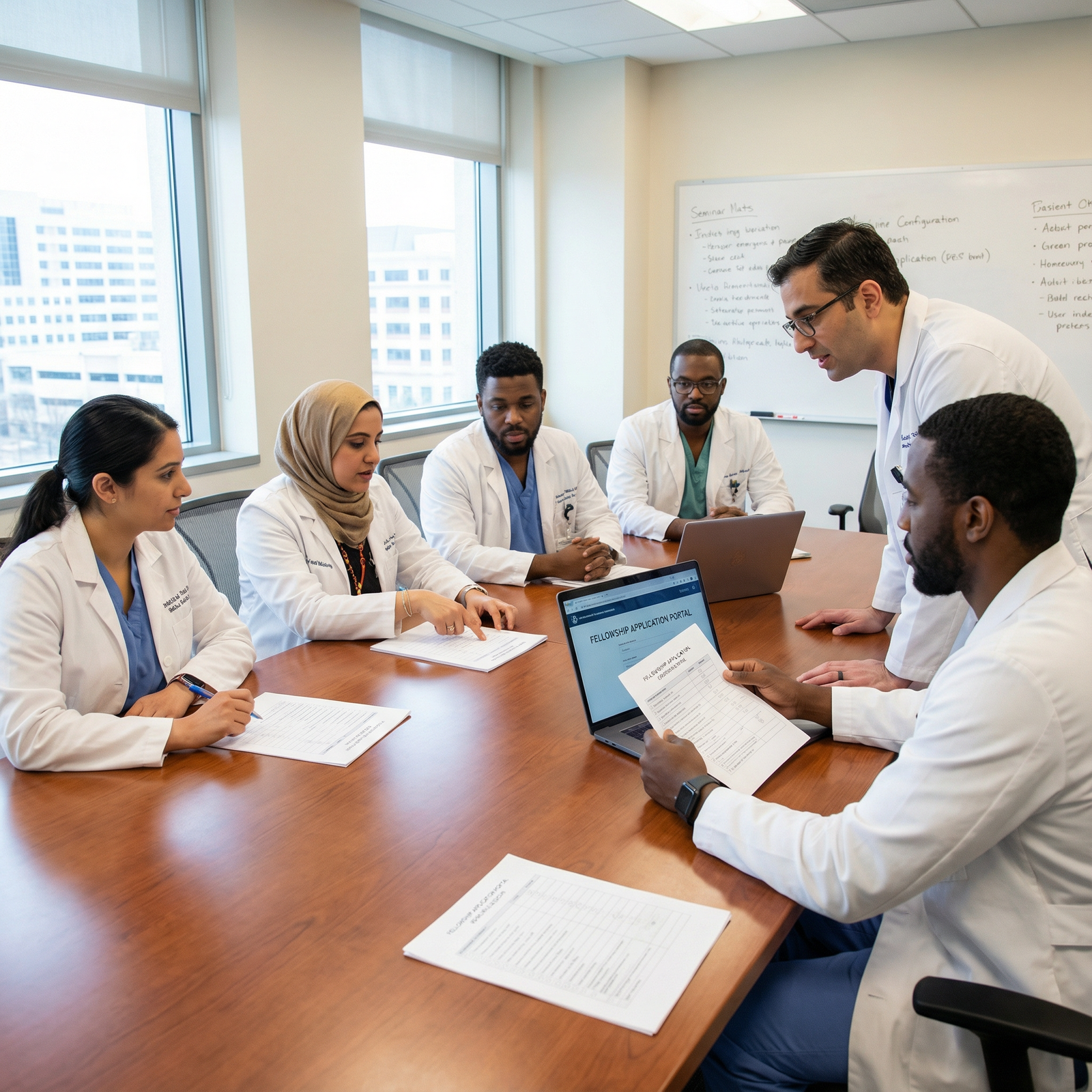
Understanding the Fellowship Landscape for IMGs in Diagnostic Radiology
For an international medical graduate in diagnostic radiology, fellowship preparation starts long before you submit an application. You are planning not only your subspecialty training, but also your long-term practice environment, visa strategy, and academic identity. A strong IMG residency guide to fellowships must acknowledge that you are navigating more constraints—and often more uncertainty—than many of your U.S. graduate peers.
In diagnostic radiology, fellowship is now essentially mandatory in most competitive markets. Whether you are targeting Neuroradiology, Interventional Radiology (IR independent), Musculoskeletal (MSK), Body Imaging, Breast, Cardiothoracic, or Pediatric Radiology, your preparation should be deliberate and early. It’s not just about how to get fellowship; it’s about aligning the right fellowship with your professional goals, visa situation, and realistic competitiveness.
Key realities for IMGs:
- Fellowship slots are often more flexible than residency in sponsoring visas, but not uniformly so.
- Some subspecialties (e.g., Breast, Body, Emergency Radiology) may have more open positions and mid-cycle vacancies.
- Academic programs may be more welcoming to IMGs than small private groups, but research and networking matter more.
- The fellowship application timeline can vary significantly by subspecialty and institution.
Before you invest energy, clarify three central questions:
- What type of radiology practice do I want (academic vs private, subspecialized vs generalist)?
- Where do I want to live and work long term (U.S. vs abroad, specific states/regions)?
- What are my visa constraints, and how will they evolve from residency through fellowship?
Your answers will shape every step of your diagnostic radiology match strategy and your approach to preparing for fellowship.
Choosing the Right Fellowship Path as an IMG
Selecting a fellowship is both a career decision and an immigration strategy. The “best” fellowship for a U.S. graduate may not be the best option for an international medical graduate balancing visas, future employability, and personal circumstances.
1. Clarify Your Career Vision Early
Start thinking concretely about fellowship during your PGY-2/PGY-3 (R1/R2) year:
Academic career goals
- Stronger fit: Neuroradiology, IR, MSK, Cardiothoracic, Pediatric Radiology.
- Academic centers often favor fellows with research, teaching interest, and a clear subspecialty narrative.
Private practice goals
- Marketable fellowships: Body/Abdominal Imaging, Neuroradiology, MSK, Breast, IR, Emergency Radiology.
- Many private practices value a “workhorse” subspecialty with broad coverage and call usefulness.
Hybrid or flexible careers
- MSK, Body, Neuro, and Emergency Radiology often allow a mix of subspecialty and general work.
2. Understand Subspecialty Competitiveness and Fit for IMGs
Competitiveness shifts over time, but typical patterns:
More competitive (especially at top-tier programs):
- Neuroradiology
- MSK Radiology
- Interventional Radiology (independent)
- Some elite Body and Cardiothoracic programs
Moderately competitive and IMG-friendly at many centers:
- Body/Abdominal Imaging
- Breast Imaging
- Emergency Radiology
- Pediatric Radiology (but consider personal interest in complex pediatrics)
This doesn’t mean IMGs cannot match into competitive programs; many do. It means:
- You will need stronger evidence of excellence (letters, case logs, research).
- Visa restriction programs may reduce your options.
- Networking and institutional familiarity (e.g., away rotations, research) matter more.
3. Align Fellowship Choice with Long-Term Job Market and Visa Needs
Think beyond the one-year fellowship:
Job prospects:
- Breast and Body imaging fellowship training may open jobs in both academic and community practices.
- IR and Neuro may lead to high-demand roles, but credentialing and call burden differ.
- Emergency Radiology is expanding and can be particularly attractive for tele-radiology or shift-based work.
Visa strategy:
- Some large academic institutions have robust systems for H‑1B and O‑1 sponsorship.
- Some fellowships accept only J‑1; some avoid any visa sponsorship.
- Certain locations (e.g., medically underserved or rural areas) may later qualify for J‑1 hardship or waiver jobs if you are on J‑1.
For an IMG, the “best” fellowship is the one that advances your subspecialty interests and preserves as many job and visa options as possible.
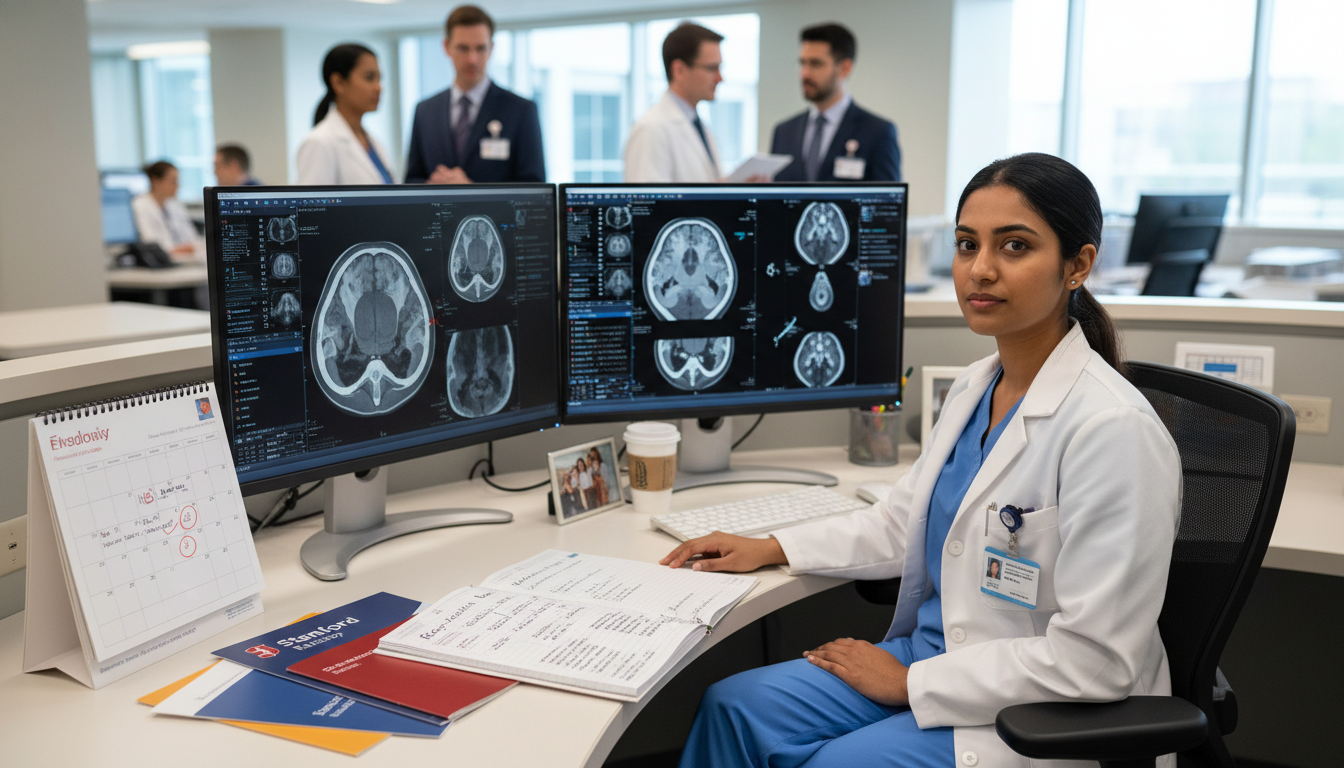
Mastering the Fellowship Application Timeline
Understanding the fellowship application timeline is crucial for international medical graduates. Different subspecialties follow slightly different patterns, and changes to the match system can be confusing.
Below is a generalized framework; always confirm current details with specialty societies (e.g., SCARD, NRMP, individual programs).
1. High-Level Timeline (U.S. Diagnostic Radiology Fellowships)
Assuming you are a four-year DR resident (PGY-2 to PGY-5 or R1–R4):
PGY‑2 (R1)
- Explore subspecialties through rotations and shadowing.
- Start basic research or quality improvement projects.
- Attend national or regional meetings if possible (RSNA, ARRS, subspecialty meetings).
PGY‑3 (R2) – Critical Preparation Year
- Narrow your preferred subspecialty choices.
- Solidify at least 2–3 potential letter writers in your targeted specialty.
- Aim to submit abstracts or manuscripts.
- Begin checking each subspecialty’s fellowship application timeline and match participation.
PGY‑4 (R3) – Application Year
- Applications for many radiology fellowships now occur 18+ months before the fellowship start date.
- Interviews often run throughout R3.
- Offers/match results usually finalize well before the midpoint of residency.
PGY‑5 (R4) – Confirm and Prepare
- Manage credentialing, state licensure, and visa applications for fellowship.
- Refine your skills in your future subspecialty and address any gaps.
For some fellowships (e.g., certain IR independent or newly created positions), applications may occur slightly later or outside of centralized match systems, but the trend is toward earlier and more standardized timelines.
2. Subspecialty-Specific Considerations
Neuroradiology, MSK, Body, Breast, Pediatric, Cardiothoracic, Emergency Radiology
- Most now participate in a coordinated or NRMP match schedule.
- Application windows typically open early in PGY-4 (R3) for fellowships starting after PGY‑5 (R4).
Interventional Radiology (Independent)
- Uses NRMP and its own structured process.
- Timeline is well defined; follow Society of Interventional Radiology (SIR) updates closely.
Because changes occur frequently, start each cycle by:
- Checking SCARD/NRMP announcements.
- Visiting major institutional program websites (especially your top choices).
- Asking your program director or fellowship director for the latest updates.
3. Key Milestones You Should Not Miss
Treat these as non-negotiable checkpoints:
- By mid-PGY‑2: Identify 1–2 subspecialties of interest.
- By end of PGY‑2: Have at least one faculty mentor in each area.
- Early PGY‑3: Start drafting your fellowship-oriented CV and personal statement ideas.
- Mid PGY‑3: Request letters of recommendation (with lead time and concrete bullet points of your achievements).
- Early PGY‑4: Submit applications as soon as portals open.
- PGY‑4: Interview season—coordinate with rotation schedules and visa travel constraints.
- Late PGY‑4: Finalize rank lists or accept offers per match rules.
Missing this internal fellowship application timeline compresses your options and may force you into a late-cycle search or a research year—sometimes workable, but more stressful for an IMG.
Strengthening Your Application as an IMG in Diagnostic Radiology
Your application must overcome two common assumptions:
- Limited familiarity with your international medical background.
- Concerns about visa complexity and long-term retention.
You counter these by being undeniably strong on the radiology fundamentals and by projecting professionalism, reliability, and long-term commitment.
1. Academic and Clinical Performance
Residency performance
- Strong rotation evaluations, especially in your chosen subspecialty.
- Demonstrated independence and safe decision-making on call.
- Active engagement in case discussions and teaching conferences.
Board exams
- Good performance on the ABR Core Exam is a major credibility marker.
- If you have unique constraints (e.g., late training start, language adjustment), discuss with your mentor how to address them.
Case logs and exposure
- Ensure meaningful exposure in your intended subspecialty; seek elective time if needed.
- Maintain a list of interesting or complex cases you were involved in—these help in interviews and letters.
2. Research and Scholarly Activity
Research is not mandatory for every fellowship, but it clearly helps, especially for academic programs.
Aim for:
- At least one or two radiology-related scholarly products:
- Original research
- Case reports
- Review articles
- Educational exhibits (e.g., RSNA, ARRS, subspecialty meetings)
- Subspecialty-focused work when possible:
- For Neuroradiology: stroke imaging, epilepsy protocols, advanced MRI.
- For Body: oncologic imaging, liver MRI, AI applications.
- For Breast: screening outcomes, disparities, tomosynthesis, DBT.
For an IMG residency guide to research success:
- Start small: quality improvement, retrospective chart/image reviews.
- Partner with a productive mentor early in PGY‑2.
- Volunteer for data collection or image review to build trust.
Even one poster at a national meeting can:
- Provide a strong CV line.
- Justify travel funding from your department.
- Offer powerful networking opportunities with potential fellowship programs.
3. Letters of Recommendation
Letters can make or break your application, especially if your medical school and earlier training are less recognized in the U.S.
Target:
- 3–4 letters total, with:
- At least 2 in your desired subspecialty.
- 1 from your residency program director or chair.
- Optional: 1 from a research mentor if they know you well clinically.
Strong letters should:
- Provide concrete examples of your diagnostic reasoning and work ethic.
- Comment on your growth trajectory across residency.
- Highlight communication skills, collegiality, and reliability—key for radiology teams.
Help your letter writers by:
- Providing an updated CV and personal statement draft.
- Sending a bullet list of projects, notable cases, and teaching contributions.
- Reminding them of your visa and anticipated timeline (so they can mention your long-term career goals).
4. Crafting a Focused Personal Statement
Your fellowship personal statement for an international medical graduate should be concise (usually one page) and answer three questions:
- Why this subspecialty?
- Use specific experiences from residency: cases, role models, patient stories.
- Why fellowship now?
- Emphasize the skills, depth, and autonomy you want to acquire.
- How does this fit your long-term goals?
- Clarify your intended practice environment (academic vs community vs international), including your plan for staying in or returning from the U.S., without turning it into an immigration essay.
Avoid:
- Generic statements that could apply to any subspecialty.
- Overemphasis on visa issues or financial hardship; mention only if relevant and tactful.
- Overly emotional or dramatic narratives.
Instead:
- Show maturity, resilience, and a clear trajectory from medical school to diagnostic radiology match to your planned fellowship.
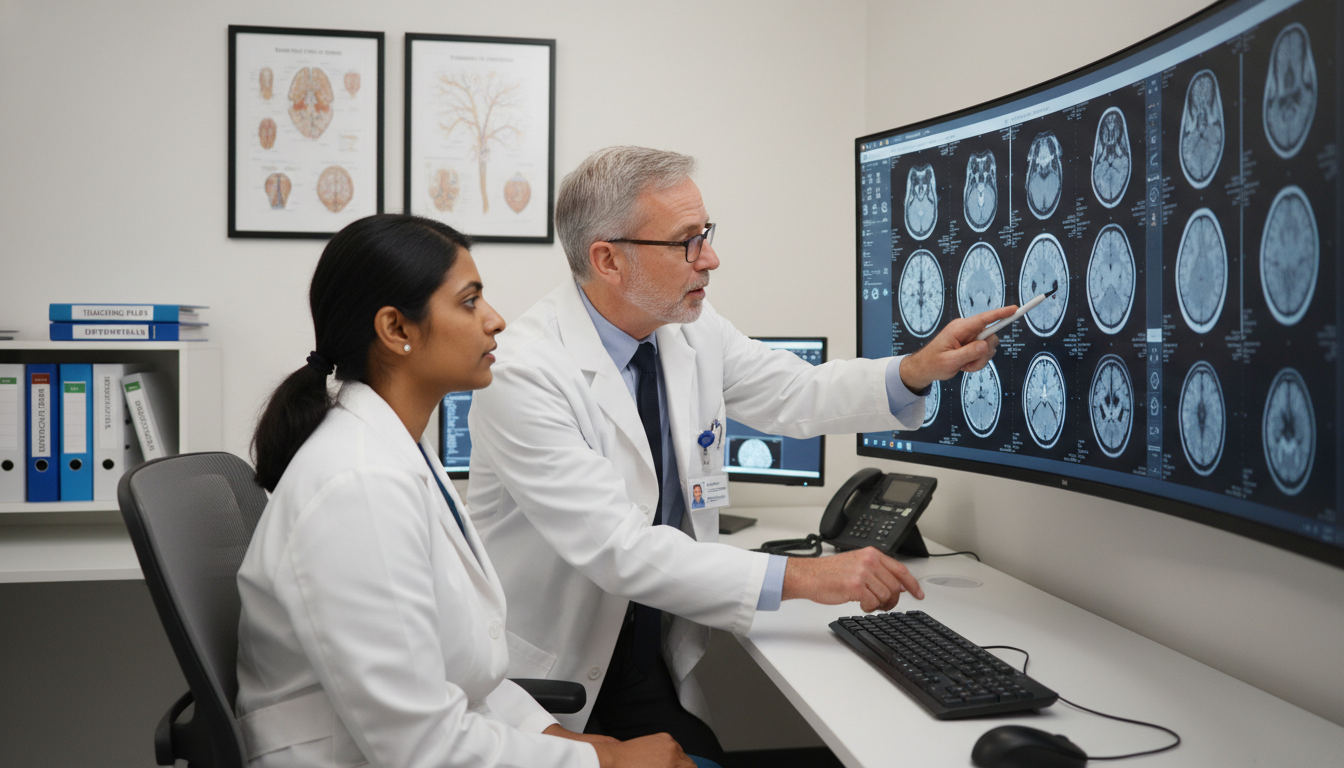
Visa, Networking, and Program Targeting Strategies
For IMGs, strong clinical credentials are necessary but not always sufficient. You also need a deliberate strategy for visas, networking, and program selection to maximize your probability of a successful fellowship placement.
1. Visa Considerations and Communication
Common scenarios:
Currently on J‑1 during residency
- Many academic fellowships accept J‑1 for training.
- You will need to think ahead about your J‑1 waiver or hardship strategy after fellowship.
- Some programs may ask about your long-term plan; be honest but concise.
Currently on H‑1B during residency
- Some fellowships sponsor H‑1B; many prefer J‑1 due to administrative simplicity.
- Early verification with programs is critical—do not assume.
- Transferring H‑1B requires careful timing and legal coordination.
Other statuses (e.g., green card applicant, EAD)
- These may expand your options, but transparency with programs is still essential.
Best practices:
- Check each program’s website for current visa policies.
- If unclear, email the program coordinator politely before applying.
- Avoid applying to large numbers of programs that don’t sponsor your visa type—focus your energy strategically.
2. Networking: How to Get Fellowship Offers You Want
Networking is not about favoritism; it is about credibility, familiarity, and information flow.
Effective steps:
Within your own institution
- Build strong ties with subspecialty faculty and current fellows.
- Seek feedback on your performance and act on it.
- Ask them to introduce you (by email) to colleagues at other programs of interest.
National meetings
- RSNA, ARRS, and subspecialty meetings (e.g., SIR, ASN, SSR) are prime venues.
- Attend sessions led by programs where you want to train.
- After a talk, introduce yourself briefly, mention your residency/institution, subspecialty interests, and ask if their program might be a fit for an IMG with your background.
Virtual opportunities
- Many programs offer virtual open houses or informational sessions.
- Participate actively, ask thoughtful questions, and follow up with a short thank-you email.
Actionable networking template:
- Email subject: “Prospective [Subspecialty] Fellow – [Your Name], IMG DR Resident at [Institution]”
- Body: 3–4 short paragraphs:
- Who you are and your current training year.
- Your subspecialty interests and relevant projects.
- Why you are specifically interested in their program.
- A polite question (e.g., fit for IMGs, research opportunities, or what they look for in applicants).
3. Targeting Appropriate Programs
To create a realistic yet ambitious list:
Review program rosters
- Look at current and recent fellows on program websites.
- If you see multiple IMGs or graduates from a broad set of schools, the program may be more IMG-friendly.
Consider geographic and lifestyle factors
- Cost of living, family needs, climate, etc.
- Remember that some less popular locations may offer more flexible visa policies or greater responsibility/training volume.
Balance reach, match, and safety programs
- Reach: top-tier, heavily academic programs where competition is highest.
- Match: solid academic or hybrid programs where your profile fits well.
- Safety: programs and locations less in demand, but still with strong training.
Your goal is not just any fellowship, but one that reasonably sets you up for your next step—whether that is a job in your home country, a U.S. academic position, or a community practice.
Preparing for Interviews and Transitioning to Fellowship
Once interviews arrive, your preparation shifts from building your CV to presenting your best self and thinking beyond the match—into the actual day-to-day life of a radiology fellow.
1. Interview Preparation for IMGs
Expect a mix of:
- Behavioral questions (teamwork, communication, stress management).
- Professional trajectory questions (why this subspecialty, why this program).
- Sometimes clinical or case-based questions (especially in IR or highly specialized neuro/MSK programs).
Prepare:
Your narrative
- A concise 1–2 minute “story” of your path from medical school to diagnostic radiology residency and your choice of subspecialty.
- Emphasize growth, resilience, and deliberate decisions.
Program-specific knowledge
- Review each program’s key strengths (e.g., volume, procedures, niche expertise, research).
- Prepare 2–3 tailored questions per program that show you understand their structure and culture.
Visa clarity
- Be prepared to briefly and clearly explain your current status and needs.
- Avoid overemphasis; present it as one logistical aspect of a larger, coherent career plan.
Common IMG-specific questions to anticipate:
- “Why did you choose to train in the U.S.?”
- “How have you adapted to differences in medical practice and communication?”
- “What are your long-term plans after fellowship?”
Answer with:
- Specific experiences.
- Evidence of successful adaptation (evaluations, awards, responsibilities).
- Realistic but optimistic plans.
2. Evaluating Offers: Beyond Prestige
When preparing for fellowship, prestige matters—but so do training quality, case mix, safety, and your ability to thrive.
Key considerations:
- Volume and diversity of cases.
- Balance of autonomy vs supervision.
- Exposure to multidisciplinary conferences and tumor boards.
- Opportunities for teaching residents and medical students.
- Research support (if academic career is a goal).
- Culture—how fellows are treated, burnout, and schedule predictability.
- Past fellows’ outcomes (jobs, academic positions, further subspecialization).
For an international medical graduate, also weigh:
- Visa sponsorship track record.
- Institutional legal/HR support.
- Location’s job market and potential J‑1 waiver or underserved area options (if applicable).
3. Transitioning from Residency to Fellowship
Once matched:
Clinical preparation
- Identify knowledge or procedural gaps and address them via targeted reading, online courses, or electives.
- Ask your future program if there are recommended readings or resources before starting.
Administrative preparation
- Start licensure and credentialing early; delays can affect your ability to begin work or moonlight.
- Coordinate with GME offices on visa paperwork well ahead of deadlines.
Professional identity
- Update your CV and online profiles (e.g., institutional bio) to reflect your new subspecialty focus.
- Reach out to your future mentors and co-fellows—building rapport before arrival eases the transition.
FAQs: Fellowship Preparation for IMGs in Diagnostic Radiology
1. When should I start preparing for fellowship as an IMG in diagnostic radiology?
Begin serious exploration in PGY‑2 (R1). By mid-PGY‑3 (R2), you should have a clear subspecialty interest, mentors, and at least initial scholarly activity. Most fellowship application timelines now require you to apply early in PGY‑4 (R3), so delaying your planning compresses your options significantly.
2. Which subspecialty fellowship is best for long-term job prospects as an IMG?
There is no single “best,” but Body/Abdominal Imaging, Neuroradiology, MSK, IR, Breast, and Emergency Radiology are consistently valuable. Consider your long-term goal: academic vs private, procedural vs diagnostic, lifestyle, and visa constraints. For example, Emergency Radiology and Breast may have growing opportunities, while IR and Neuro can open doors to highly specialized roles but may involve more intensive call and credentialing requirements.
3. How important is research for matching into a radiology fellowship as an IMG?
Research is not mandatory for all fellowships but is highly advantageous, especially in academic programs and competitive subspecialties like Neuroradiology, MSK, and IR. At minimum, aim for a few meaningful scholarly efforts (case reports, posters, QI projects). Quality and relevance to your chosen subspecialty matter more than sheer quantity.
4. What if I don’t match into my desired fellowship on the first attempt?
Options include:
- Applying to unfilled or late-cycle positions in the same year.
- Pursuing a research year in your subspecialty of interest, ideally at a program where you hope to train.
- Applying to a related or more available fellowship (e.g., general Body or Emergency Radiology) that still provides valuable skills. Use that time to strengthen your application—additional research, stronger letters, improved board scores, and more targeted networking—before applying again.
By planning early, understanding the diagnostic radiology match landscape, and approaching each step of the fellowship application timeline strategically, you can navigate fellowship preparation successfully as an international medical graduate. The path may be more complex, but with focused effort, mentorship, and deliberate choices, you can build a subspecialty career in radiology that aligns with both your professional ambitions and your life goals.