Future-Proofing Your Career in Medicine: Why Fellowship Applications Really Matter
Embarking on a medical career is not just about surviving residency—it’s about positioning yourself for long-term growth, flexibility, and impact in an evolving healthcare system. One of the most powerful tools for doing this is strategic pursuit of a Medical Fellowship.
For many residents, fellowship applications can feel like “one more hurdle” after years of training and exams. But when approached thoughtfully, they become a critical part of career development, specialization, and long-term career security.
This guide explores why fellowship applications matter, how they future-proof your career, and how to approach the process strategically during residency.
Understanding Medical Fellowships and Their Role in Your Career
A medical fellowship is a post-residency training program that allows physicians to pursue further subspecialization and advanced expertise. Fellowships typically last one to three years (sometimes longer in highly specialized fields or combined research tracks).
What Exactly Is a Fellowship?
After completing residency (e.g., Internal Medicine, Pediatrics, General Surgery, Emergency Medicine), a fellowship allows you to focus deeply on a narrower area, such as:
- Cardiology, gastroenterology, hematology/oncology, nephrology
- Critical care medicine, pulmonary medicine, infectious diseases
- Maternal-fetal medicine, reproductive endocrinology, pediatric cardiology
- Interventional radiology, sports medicine, hand surgery, spine surgery
- Palliative care, addiction medicine, clinical informatics, medical education
Fellowships exist in both clinical disciplines and non-clinical or hybrid areas such as quality improvement, healthcare administration, or medical education.
Core Objectives of Fellowship Training
While the specifics vary by specialty and program, most fellowships share four core aims:
Deepen Clinical Expertise
- Master advanced procedures, diagnostic algorithms, and management strategies not fully covered in residency
- Gain comfort with high-complexity, high-acuity cases
- Learn nuanced decision-making in a focused patient population
Engage in Meaningful Research and Scholarship
- Learn to design studies, analyze data, and interpret literature at a sophisticated level
- Contribute to new guidelines, practice-changing trials, or quality improvement projects
- Build an academic portfolio (posters, presentations, manuscripts, book chapters)
Expand Career Opportunities and Flexibility
- Open doors to academic medicine, subspecialty practice, and leadership tracks
- Qualify for niche roles in large healthcare systems, tertiary centers, and specialized clinics
- Position yourself for evolving roles in technology, policy, and innovation
Enhance Long-Term Income Potential and Job Stability
- Many subspecialists earn higher compensation than generalists in the same base specialty
- Subspecialty skills can be in high demand, increasing bargaining power and job security
- Expanded skill sets can justify roles in multiple practice settings (clinical, administrative, academic)
In short, a fellowship is not just “extra training”—it is an investment in career resilience and strategic specialization.
Why Fellowship Applications Matter: Beyond Just Getting a Spot
Even before you match into a program, the process of planning and submitting fellowship applications can transform how you think about your career.

1. Specialization and Competitiveness in a Crowded Job Market
Healthcare is shifting toward subspecialized care, particularly in large health systems and academic centers. While generalists remain critically important, many employers increasingly value subspecialty expertise.
Pursuing a fellowship:
- Signals commitment to a particular field
- Demonstrates capacity for advanced training and rigorous scholarship
- Differentiates you from peers who stop at residency, especially in urban or academic markets
Real-World Example
Consider a resident completing an Internal Medicine residency who is interested in gastroenterology. Initially, they hoped to work in a community practice. However, they found:
- Many positions specifically requested or preferred fellowship training (e.g., advanced endoscopy, hepatology)
- Compensation packages and job variety were better for subspecialists
- Leadership roles in endoscopy centers or digestive disease programs almost always required fellowship training
After completing a Gastroenterology fellowship followed by an Advanced Endoscopy fellowship, they received multiple offers from leading hospitals and large practices, with:
- Protected procedure time
- Opportunities to build an advanced endoscopy service line
- Involvement in clinical trials and academic conference presentations
Fellowship didn’t just help them get a job—it allowed them to shape the job they wanted.
2. Networking Opportunities That Shape Your Future
Fellowship is one of the most important stages for building high-impact professional networks that will span your entire career.
During fellowship, you interact intensively with:
- Nationally recognized experts and thought leaders
- Subspecialty colleagues from different training programs
- Multidisciplinary teams (nurses, pharmacists, APPs, therapists, administrators) who influence care delivery
Networking Opportunities Include:
- Working closely with program directors and senior faculty who can champion your career
- Attending national and international conferences with support from your program
- Joining committees, working groups, and interest groups within specialty societies
- Participating in multicenter trials or collaborative research initiatives
These relationships can lead directly to:
- Job offers you never see posted publicly
- Invitations to speak on panels, podcasts, or grand rounds
- Early involvement in guideline development or national initiatives
- Mentorship that accelerates your growth and avoids common career pitfalls
3. Enhanced Research and Innovation Opportunities
Fellowships often provide protected time, mentorship, and infrastructure for research—luxuries that are rare in busy residency schedules and many post-training jobs.
Depending on the program, you may:
- Complete a hypothesis-driven research project
- Develop expertise in clinical trials, implementation science, or basic science
- Build niche expertise (e.g., cardio-oncology, interventional pulmonology, transplant infectious disease)
- Learn skills in data science, informatics, AI-driven diagnostics, or digital health tools
Example: Research Impact in Practice
Dr. Susan, an aspiring cardiologist, entered a fellowship with an interest in acute coronary syndromes. With strong mentorship:
- She joined a multicenter research project on myocardial infarction treatment delays
- Her work contributed to modifying local STEMI protocols and improving door-to-balloon times
- She published several manuscripts and presented at a major cardiology conference
- Her research portfolio later helped her secure a position at an academic center with protected research time and a pathway to promotion
Research during fellowship isn’t just about publications; it builds your brand, sharpens your critical thinking, and broadens your career options.
Navigating the Fellowship Application Process Strategically
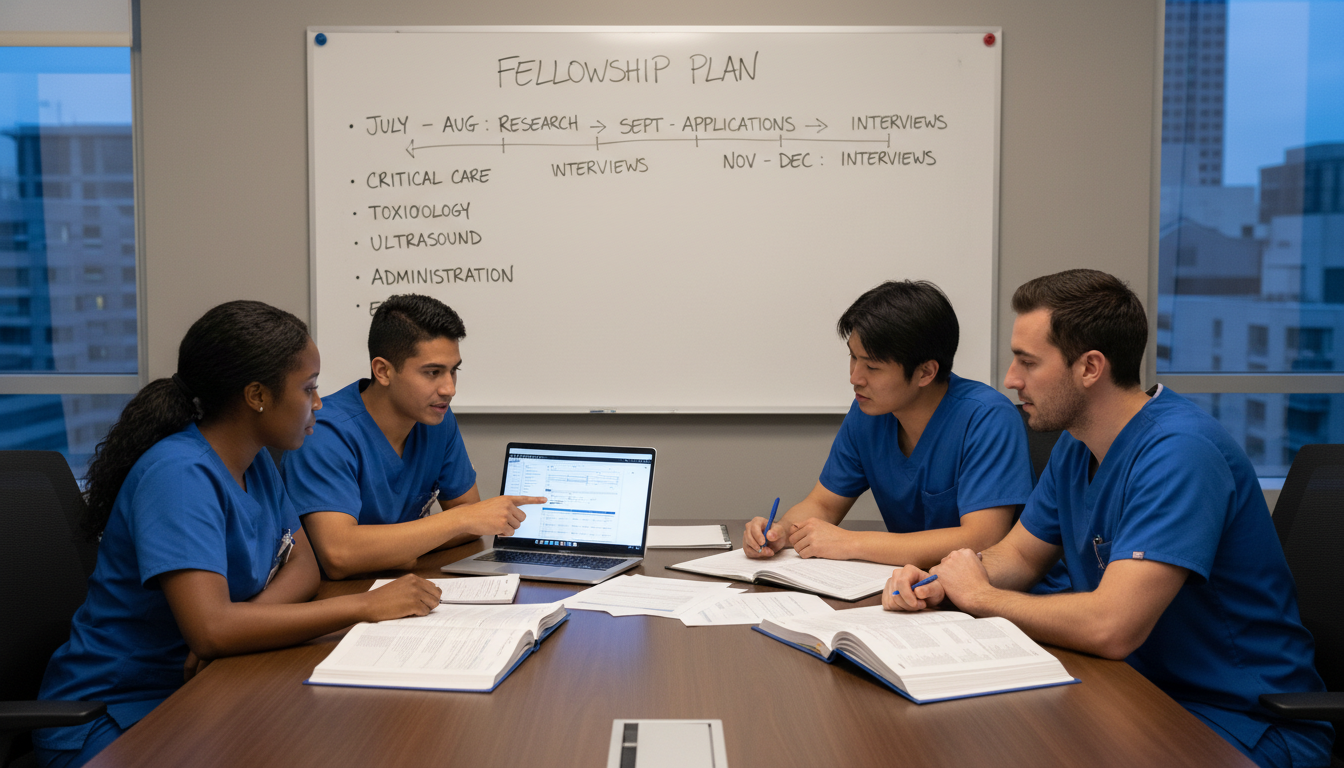
The fellowship application process is itself a career development exercise. You’ll clarify your goals, refine your professional narrative, and learn to present yourself as a specialist.
1. Clarify Your Career Goals Early in Residency
Start by asking:
- Do I see myself in academic medicine, community practice, or a hybrid role?
- Do I enjoy procedures, longitudinal clinic relationships, acute care, or systems-level work?
- Am I drawn to teaching, research, policy, innovation, or administration?
Use PGY-1 and early PGY-2 to:
- Rotate through potential subspecialties
- Seek out mentors in areas that interest you
- Observe the “day in the life” of fellows and attendings in those fields
- Attend relevant departmental conferences and journal clubs
2. Researching Programs and Matching Them to Your Priorities
Not all fellowships are created equal. Programs differ in:
- Clinical volume and case mix
- Procedural exposure
- Research expectations and support
- Culture, work-life balance, and mentorship quality
- Geographic location and institutional reputation
Where to Start:
- ACGME and specialty-specific fellowship directories
- Specialty society websites (e.g., ACC, ACG, ASCO)
- Program websites, virtual open houses, and social media
- Conversations with current or recent fellows at target programs
- Input from trusted mentors and your residency program leadership
Create a comparison spreadsheet that includes:
- Program strengths and weaknesses
- Faculty with aligned interests
- Research infrastructure and prior fellow outputs
- Call schedules, moonlighting policies, wellness initiatives
- Alumni job placements
This transforms your search into a strategic evaluation of long-term fit, not just name recognition.
3. Application Components: Making Each Element Count
A strong fellowship application isn’t about perfection in one area; it’s about presenting a coherent story across all components.
a. Curriculum Vitae (CV)
Your CV should:
- Highlight clinical excellence (evaluations, chief resident roles if applicable)
- Emphasize scholarly work (projects, posters, publications, QI initiatives)
- Include teaching activities, leadership roles, and volunteerism
- Organize content clearly and consistently, with updated contact information
Tip: Create a “master CV” during residency and update it quarterly to avoid scrambling later.
b. Personal Statement: Your Professional Narrative
Your personal statement should:
- Explain why you are drawn to this subspecialty
- Reflect on specific patient encounters, rotations, or mentors that shaped your path
- Demonstrate insight into the realities of the field (not just idealized versions)
- Articulate your long-term goals: clinical, academic, leadership, or otherwise
- Show how the specific fellowship will help you reach those goals
Avoid generic statements; be specific and reflective, not dramatic. Programs are looking for maturity, self-awareness, and a clear trajectory.
c. Letters of Recommendation
Letters can significantly influence how your application is perceived.
Choose letter writers who:
- Know you well and can speak to your clinical performance, professionalism, and growth
- Work in or are closely related to the subspecialty you’re applying to
- Have a track record of mentoring fellows or trainees successfully
Help your letter writers by providing:
- Your updated CV
- Draft of your personal statement
- A brief bulleted list of projects you worked on together and key strengths they might highlight
- Ample lead time (ideally 6–8 weeks)
d. Interviews: Showcasing Fit and Potential
Fellowship interviews are often conversational, but preparation still matters. Be ready to discuss:
- Why this subspecialty and why now
- Your research or scholarly work (know your methods and results)
- Cases that challenged you and what you learned from them
- How you handle stress, conflict, and uncertainty
- Your career goals and how the program aligns with them
Also prepare thoughtful questions about:
- Faculty mentorship and fellow support
- How fellows are evaluated and supported when struggling
- Typical graduate career paths from the program
- Opportunities in teaching, QI, or leadership development
Think of interviews as a two-way assessment of fit, not just an exam.
4. Balancing Your Application Strategy: Range, Risk, and Realism
Similar to residency applications, fellowship applicants should:
- Apply to a range of programs: some aspirational, some solid matches, some safer options
- Be honest with themselves and mentors about competitiveness (board scores, research, evaluations)
- Avoid applying blindly to programs they would not actually be willing to attend
Consider:
- Geographic preferences—but remain flexible if your specialty is extremely competitive
- Programs more aligned with clinical training vs. research focus, depending on your goals
- Seeking additional training paths (e.g., chief residency, hospitalist scholar years) if you need more time to build your application profile
Benefits of Fellowship That Extend Far Beyond Training
The value of fellowship doesn’t end on graduation day. It can shape your entire professional trajectory.

1. Future-Proofing Your Career in a Changing Healthcare System
Healthcare is undergoing rapid transformation with:
- Artificial intelligence and machine learning enhancing diagnostics and imaging
- Precision medicine and genomics reshaping treatment decisions
- Telemedicine and digital health expanding access models
- Value-based care and quality metrics influencing reimbursement
- Increasing subspecialization within nearly every major field
Fellowship training makes you:
- More adaptable to these changes due to deeper subject matter expertise
- More competitive for roles that involve innovation, technology integration, or systems redesign
- Better equipped to critically appraise emerging evidence and integrate it into practice
For example, a radiology fellow trained in AI-driven image analysis or a cardiology fellow trained in structural heart interventions will be better positioned for new roles that didn’t exist a decade ago.
2. Leadership Development and Healthcare Systems Impact
Many fellowships intentionally cultivate leadership skills through:
- Participation in hospital committees (quality, safety, diversity, education)
- Leading multidisciplinary rounds and case conferences
- Involvement in protocol development, pathway design, or QI initiatives
- Formal leadership curricula or healthcare management courses
These experiences prepare you to become:
- Section chiefs, division directors, or department chairs
- Medical directors of service lines or specialty clinics
- Leaders in professional societies or advocacy organizations
- Innovators involved in startup ventures, digital health, or device development
3. Greater Job Satisfaction and Professional Identity
Working in a subspecialty you genuinely care about can significantly enhance:
- Day-to-day engagement
- Sense of mastery and competence
- Long-term resilience and career satisfaction
Fellows and subspecialists often report that:
- They enjoy learning deeply about a specific patient population
- They value being a “go-to” resource for complex problems
- They find meaning in tackling high-stakes, intellectually challenging cases
Fellowship can help you move from “general physician” to trusted expert in a niche where your strengths and passions align.
4. Better Patient Care and Population-Level Impact
Ultimately, the strongest argument for fellowship is its impact on patient outcomes.
As a fellowship-trained physician, you can:
- Offer advanced diagnostic and therapeutic options not available in general practice
- Lead multidisciplinary teams that provide coordinated, high-quality care
- Participate in or lead clinical trials that bring new treatments to patients
- Contribute to guidelines and policies that shape care nationally or globally
Your additional training becomes a multiplier—for every patient you directly treat, there are countless others who benefit indirectly through your research, teaching, and leadership.
Frequently Asked Questions (FAQ) About Medical Fellowships
Q1: How early in residency should I start planning for fellowship applications?
Ideally, start exploring potential interests in PGY-1 and solidifying your goals by early to mid-PGY-2. This timeline allows you to:
- Select rotations strategically
- Build relationships with mentors in your target field
- Get involved in research or QI projects
- Prepare a competitive application by the time ERAS or specialty-specific applications open
If you decide later, it’s still possible—but you may need to extend training (e.g., chief year or hospitalist research year) to strengthen your profile.
Q2: Is a fellowship necessary for a successful medical career?
Not always. Many physicians have outstanding, fulfilling careers without fellowship training—especially in primary care, hospital medicine, general pediatrics, general surgery in some settings, or rural/underserved areas.
A fellowship is particularly valuable if:
- You want to work in a highly specialized or academic environment
- You enjoy complex cases and focused expertise
- Your target jobs explicitly require subspecialty training
- You’re interested in research, teaching, or leadership roles that benefit from added specialization
The key is aligning your decision with your long-term goals—not pursuing fellowship just because “everyone else is doing it.”
Q3: How competitive are fellowship applications, and how can I assess my competitiveness?
Competitiveness varies widely by specialty (e.g., cardiology and GI are more competitive than some other internal medicine subspecialties) and by geography.
To assess your readiness:
- Discuss honestly with mentors and program leadership
- Review your board scores, evaluations, research output, and clinical performance
- Look at NRMP or specialty match data, if available, for your target field
- Consider whether you need additional time or experiences to strengthen your application
You can increase your competitiveness by:
- Excelling on core rotations
- Seeking strong mentorship early
- Completing at least one meaningful scholarly project
- Taking on roles that demonstrate leadership and professionalism
Q4: Can I pursue more than one fellowship or change direction later?
Yes. Some physicians complete sequential fellowships (e.g., Pulmonary followed by Critical Care, Cardiology followed by Electrophysiology, Hematology/Oncology, or a second fellowship in Medical Education or Informatics). Others pivot during or after fellowship as their interests evolve.
However, multiple fellowships:
- Extend training time and may delay earning attending-level income
- Require careful planning to ensure each step clearly contributes to your long-term goals
- May not always be necessary; sometimes targeted post-fellowship training or certificates suffice
Discuss potential pathways openly with mentors and alumni who took nontraditional routes.
Q5: Where can I find reliable information and support for fellowship applications?
Useful resources include:
- ACGME and specialty-specific fellowship databases
- Specialty society websites and career centers
- Your residency program’s fellowship advisors, program director, and chiefs
- Recent graduates from your program who matched into your target specialty
- Online communities and webinars focused on fellowship preparation
You can also build your application skills by exploring resources on Healthcare Training, Networking Opportunities, and strategic career planning—topics that will remain relevant well beyond the application cycle.
By approaching fellowship applications as part of a broader career development strategy, you’re not just competing for a training spot—you’re actively future-proofing your career, building specialized skills, expanding your network, and setting yourself up for a lifetime of impactful, meaningful work in medicine.