

The way residents talk about their future plans with program directors is often dangerously naive.
Most residents think these conversations are informal, friendly check‑ins. They are not. They are high‑stakes professional disclosures that can shape your evaluations, your letters, your opportunities—and in some cases, your ability to match into the fellowship you want.
If you are careless here, you will pay for it later.
Below are the biggest mistakes I see residents make when discussing future plans with PDs, especially around fellowship aspirations. Learn them now, so you do not become the cautionary story everyone whispers about at morning report.
1. Treating PD Conversations Like Therapy Sessions
Your PD is not your therapist, your co‑resident, or your favorite attending. They sit at the intersection of education, service, and institutional politics. Everything you say passes through that filter.
Here is the mistake:
Residents overshare raw, unfiltered thoughts about:
- How burned out they feel
- How much they hate their current specialty
- How little interest they have in certain rotations
- How strongly they want a different field “as soon as possible”
and they say all of this to the person who signs their evaluations and writes their fellowship letter.
I have watched this play out:
Resident, second‑year IM: “Honestly, I cannot stand the ICU. It is why I want outpatient cards only. I have no interest in critical care, it just drains me.”
Later that year—same resident asks the PD for a “strong letter” to cardiology. PD writes a letter that repeatedly emphasizes the resident’s “preference for lighter acuity and ambulatory settings.” Guess how that sounds to a cardiology PD reading between the lines.
Your emotions may be valid. But unedited emotional unloading to the PD is a tactical error.
Better rule:
Talk in terms of:
- Growth, not grievance
- Preferences, not contempt
- Direction, not despair
If you are struggling or burned out, get help—from GME wellness, a therapist, trusted peers, maybe one carefully chosen faculty mentor. But do not casually dump every frustration about your current specialty into a PD meeting and expect no collateral damage.
2. Being Vague or Confused About Your Goals
Another common and avoidable mistake: showing up with no coherent narrative.
The resident version of this sounds like:
- “I am thinking maybe GI or cards or endocrinology. I am not really sure.”
- “I kind of want heme/onc but also maybe hospitalist. I am just seeing what happens.”
- “I will probably apply this cycle, unless I change my mind.”
What your PD hears:
You are unfocused. You have not done the work. You are asking them to guess what you want more than you are asking for guidance.
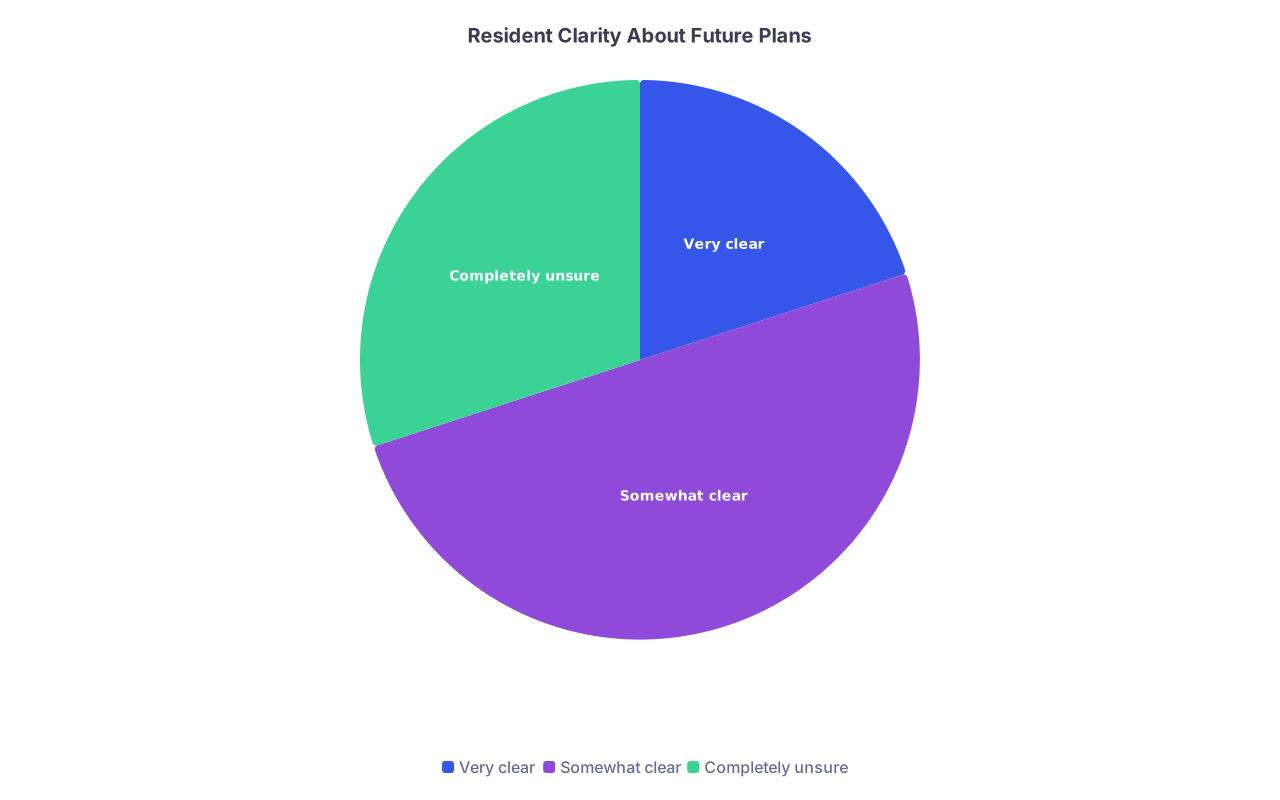
| Category | Value |
|---|---|
| Very clear | 20 |
| Somewhat clear | 50 |
| Completely unsure | 30 |
Most PDs are willing to help. But they want to see that you have at least attempted to think strategically.
Do not make this mistake: Going into your PD’s office expecting them to define your path for you.
Before any “future plans” meeting, you should:
- Narrow to 1–2 realistic options
- Know the basic competitiveness of those fields
- Have a rough timeline (do you need a research year? extra electives?)
- Be able to explain why in 2–3 clear sentences
You can say, “I am still deciding between pulm/crit and cards.” That is fine. But then you need to follow it with: “Here is what I have done so far, here is what I am planning, and here is where I need your input.” Otherwise you look lost, and lost is not what you want in the mind of someone writing your letter.
3. Misjudging When and How to Tell PDs You Are Leaving the Specialty
Very big landmine here.
Residents going into a different specialty—or leaving for another field entirely—tend to make one of two bad choices:
- They tell the PD way too late, by which time scheduling, rotations, and letters are already a mess
- They tell the PD too bluntly, with language that sounds like contempt for the home program or specialty
Both can hurt you.
Classic version:
A PGY‑2 in surgery decides to apply to anesthesia.
They avoid talking to their PD because they are afraid.
By the time they finally disclose, ERAS is basically open, they have no anesthesia‑aligned mentors, and their PD feels blindsided and irritated.
This is how bridges get burned.
The mistake is not the decision to leave.
The mistake is acting like you can sneak your way through the process and only inform leadership once everything is done.
You need to time this conversation carefully:
- Not in your first month
- Not two weeks before ERAS opens
- Typically somewhere in early‑to‑mid PGY‑2 for 3‑year programs, earlier if matching into extremely competitive fields
And then you must frame it maturely:
- Express gratitude for your training
- Emphasize what you have learned and how it will make you better in the next specialty
- Avoid trash‑talking the current field (“I hate clinic,” “Medicine is boring,” “Surgery is toxic”)
You are asking your PD to support your exit. Do not make it feel like an indictment of everything they have devoted their career to building.
4. Lying or Massaging the Truth About Competitiveness
Residents routinely underestimate how much PDs know about fellowship match realities.
Here is the mistake:
Minimizing the competitiveness gap between your record and your target fellowship, then acting surprised when the PD does not immediately offer full‑throated support.
Typical version:
You scored at the low end of your cohort, are middle of the pack clinically, minimal research, and you walk in saying, “I am committed to derm or interventional cards at a top‑10 program.”
That does not make you ambitious. It makes you look disconnected from reality.
Your PD knows the numbers. Sometimes better than you do.
| Fellowship | Typical Step 2+ | Research Expected | Spots per Year |
|---|---|---|---|
| Cardiology | 245+ | Moderate | Moderate |
| GI | 250+ | Strong | Low |
| Heme/Onc | 245+ | Strong | Moderate |
| Pulm/Crit | 240+ | Moderate | Moderate |
| Nephrology | 235+ | Helpful | Higher |
The red‑flag move: Pretending your record is stronger than it is, or acting offended when the PD suggests you build a parallel plan (e.g., hospitalist, community program, less competitive subspecialty).
Better approach:
- Acknowledge your metrics honestly
- Ask, “Given my current performance, what is realistic?”
- Be open to bridging steps—research year, chief year, away electives, strengthening letters
Do not die on the hill of “I deserve a top‑tier GI spot” if your file says otherwise. You are allowed to want it. You are not entitled to have everyone agree it is likely.
5. Undermining Yourself with Negative Framing
Many residents unintentionally talk their PD out of believing in them.
They say things like:
- “I am not as strong as other people in my class.”
- “I know my scores are pretty bad.”
- “Honestly I am average at best; I just hope something works out.”
- “I am probably not competitive, but I will try anyway.”
The instinct comes from humility. The effect is self‑sabotage.
Your PD is evaluating:
- Are you serious about this path?
- Do you have enough confidence to advocate for yourself?
- Will my letter match what programs see during interviews?
If you keep stressing how weak you are, do not be surprised when that language bleeds into your letters: “Resident is very realistic about limitations and understands that they may not be among the strongest applicants.”
That is poison in a fellowship letter.
The fix is not fake bravado.
It is grounded confidence:
- “My scores are not at the top, but my clinical performance and feedback have been strong.”
- “I know I will need to bolster my research, and I have already started X and Y projects.”
- “I believe I can be a solid candidate if I continue on this trajectory and get the right mentorship.”
You must not hand your PD a negative narrative and then expect them to ignore it when they write about you.
6. Failing to Understand PD Incentives and Constraints
You will make bad conversational choices if you forget one thing: your PD plays multiple roles at once.
They are:
- Advocate for individual residents
- Guardian of the residency’s reputation
- Manager of service needs and scheduling
- Representative to department and hospital leadership
Where residents screw up is assuming the PD is “only” their personal coach.
So they say things like:
- “Can I get eight weeks of back‑to‑back research elective during peak service months?”
- “I want to miss most of this rotation for interviews but still get a strong evaluation.”
- “Can we change my vacation so I can stack it on the front of interview season even though others have already picked?”
You sound like you see yourself as the main character. PDs do not have that luxury. They must consider fairness, coverage, and optics.

| Step | Description |
|---|---|
| Step 1 | Resident Request |
| Step 2 | Likely Support |
| Step 3 | Needs Negotiation |
| Step 4 | Possible Denial |
| Step 5 | Plan Implementation |
| Step 6 | Alternative Options |
| Step 7 | Impact on Program |
When your ask is reasonable but badly framed, you still lose.
Better way to approach:
- Acknowledge cost: “I realize this request affects service coverage.”
- Show flexibility: “If this timing is impossible, are there other windows that might work?”
- Offer trade‑offs: “I am willing to take X or Y less desirable rotation later if needed.”
If you act like your PD has infinite flexibility and no competing obligations, you will come across as naive or selfish. Either will hurt your reputation when it is time for fellowship letters.
7. Being Secretive About Fellowship Applications
Another self‑defeating move: trying to run a stealth fellowship campaign.
Residents do this because they:
- Do not want to look arrogant if they “aim high”
- Fear the PD will discourage them
- Worry about being judged by peers if they do not match
So they keep everything vague: “I am just seeing how things go,” “I might apply, I am not sure,” even as they:
- Ask faculty for letters
- Line up away rotations
- Submit ERAS
Eventually the PD finds out anyway—from faculty, from coordinators, from the rank list request emails. And the reaction is rarely positive.
Secretive residents are seen as:
- Distrustful
- Poor team players
- Difficult to advocate for
If your PD finds out about your application plans from someone else, do not expect them to go to war for your resume.
You are not obligated to share every detail of your rank list. But you must share the basics:
- Field you are applying to
- Rough program tiers you are targeting
- Any special circumstances (geographic restrictions, spouse match, visa issues)
Then ask directly:
“Would you be comfortable supporting my application with a strong letter if my performance continues on this track?”
Clear. Adult. Professional. No games.
8. Ignoring Timing and Context
Residents often pick terrible moments for “future plan” conversations.
Bad choices I have actually seen:
- Right after a major clinical error
- During the middle of a crisis on the ward
- In a rushed hallway chat between cases
- In an email asking for a letter two weeks before ERAS opens
You are signaling that you do not understand workload, priorities, or professional boundaries.
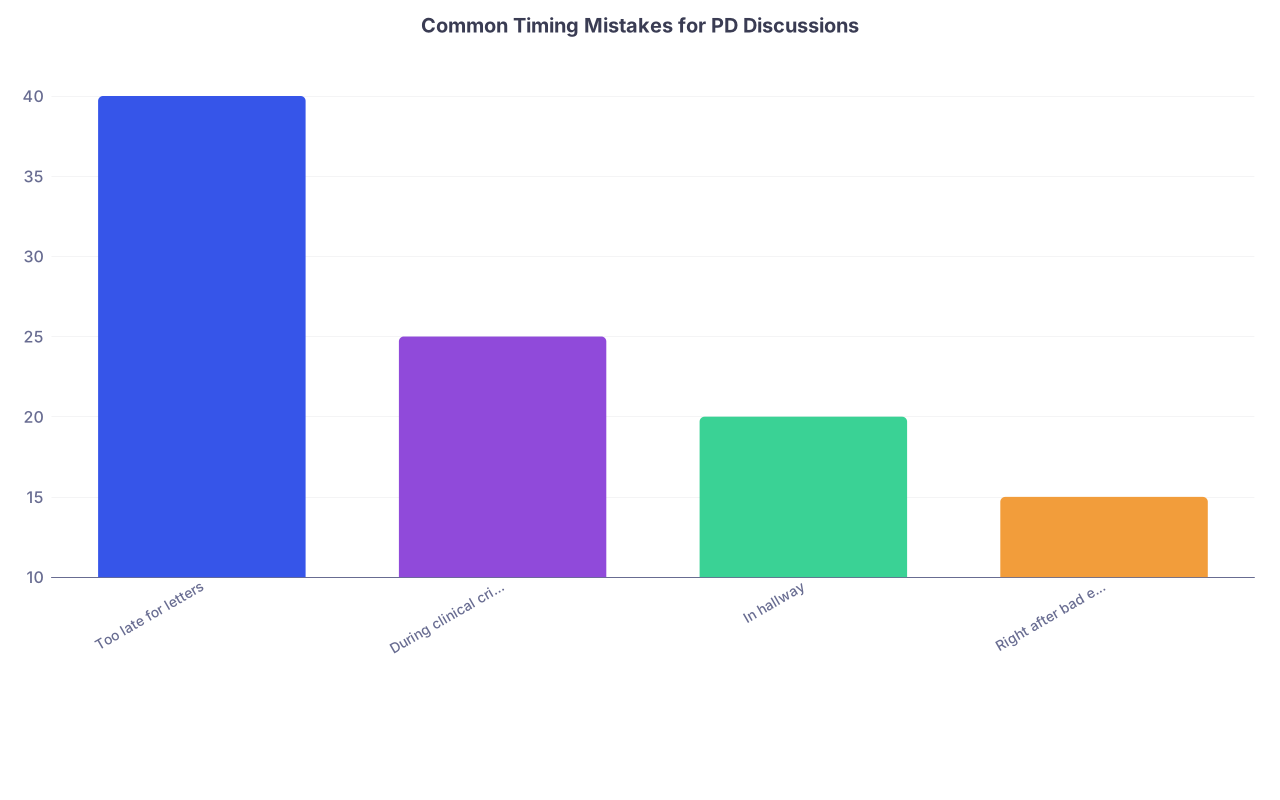
| Category | Value |
|---|---|
| Too late for letters | 40 |
| During clinical crisis | 25 |
| In hallway | 20 |
| Right after bad eval | 15 |
You need three things for this to go well:
- A scheduled, dedicated meeting (not a drive‑by chat)
- Enough lead time before application deadlines
- A moment when your recent performance has been stable or trending up
Also, watch the sequence:
- Do not ask for a strong letter before your PD has seen you on any demanding rotations.
- Do not reveal serious doubts about your current specialty after they have just spent months advocating to get you advanced rotations in it.
- Do not try to renegotiate your schedule for interviews when the yearly calendar is already locked.
Time your conversations like you understand this is a multi‑year process, not a last‑minute scramble.
9. Failing to Bring Evidence and Specific Asks
Walking into your PD’s office with nothing but vague hopes is lazy.
The smart resident brings:
- A short CV (updated)
- A rough list of target fellowship programs or tiers
- Key projects, leadership roles, and feedback highlights
- Specific questions or “asks” (research elective, letter, connections to faculty, feedback on competitiveness)
If you show up empty‑handed and say, “So… yeah… I want to do cards. What do you think?” you are putting all the intellectual work on them.
PDs are much more willing to help residents who meet them halfway.
You want them thinking:
“This resident is organized, proactive, and serious. If I invest in them, it will reflect well on our program.”
Not:
“Another resident who wants a top‑tier fellowship with no plan and expects me to fix it.”
10. Misreading PD Silence or Caution
One last subtle but important trap.
Residents often misinterpret a PD’s cautious tone as pure discouragement or hostility.
You might hear:
- “That is a very competitive field.”
- “We should also talk about some backup options.”
- “Your current trajectory would make mid‑tier programs more realistic right now.”
And you emotionally translate it as:
- “You are not good enough.”
- “They do not believe in me.”
- “I should hide my plans from them.”
So you pull back, stop communicating, and start making panicked side deals with other faculty. Which then confirms the PD’s suspicion that you are not handling this maturely.
Sometimes PDs are unsupportive for bad reasons. But more often, they are trying (a bit awkwardly) to:
- Protect you from a total shutout
- Push you to address real weaknesses
- Avoid promising outcomes they cannot guarantee
Your job is not to argue. It is to extract information:
- “Given my current profile, what would make me a stronger candidate in the next 6–12 months?”
- “Are there specific concerns that would make you hesitant to write a strong letter?”
- “If I did X and Y, would your level of support change?”
This gives you something concrete to act on instead of just stewing in resentment and guesswork.
FAQs
1. When is the right time in residency to first talk to my PD about fellowship plans?
Usually late PGY‑1 to early PGY‑2 for three‑year programs (IM, peds, FM), and around PGY‑2 for longer ones, unless you are targeting an ultra‑competitive field where earlier planning is crucial. Too early and you look impulsive. Too late and you will be scrambling for letters, electives, and projects.
2. How honest should I be if I am not sure I even want fellowship?
You can be honest about uncertainty, but do not show up empty. Come with 1–2 preliminary directions (“hospitalist vs cards,” “general peds vs NICU”), plus concrete plans to explore them—electives, mentors, reading, conferences. “I am uncertain but actively investigating” sounds mature. “I have no idea and have done nothing about it” does not.
3. What if I want to switch specialties—should I tell my PD early or late?
Early enough to plan, late enough that your decision is real. Once you have done substantial rotations, talked with mentors in the new field, and are leaning strongly toward switching, you should inform your PD with a respectful, grateful framing. Hiding this until the last minute only makes things messier and erodes trust.
4. How do I ask for a “strong letter” without sounding arrogant?
Be direct and professional: “If you feel you can write a strong, supportive letter for my fellowship applications, I would be very grateful. If there are concerns that would limit that, I would appreciate honest feedback so I can address them.” That gives the PD an off‑ramp if they are not comfortable, and it signals that you care about substance, not just any letter.
5. What if my PD clearly does not support my fellowship goals?
First, clarify why. Ask for specific concerns and what, if anything, could change their view. If the answer is still negative or vague, you need to build support elsewhere—core faculty, section chiefs, research mentors—and possibly involve the associate PD or chief residents for guidance. Do not start a political war. Do quietly assemble a realistic plan, including backup paths, while keeping communication civil and documented.
Key takeaways:
- Treat every “future plans” conversation with your PD as high‑stakes and strategic, not casual.
- Avoid the big mistakes: vagueness, secrecy, self‑sabotaging negativity, and disrespect for timing and context.
- Come prepared, be realistic, and frame your ambitions in a way that lets your PD see you as someone worth fighting for when fellowship season hits.


