
The way most residents use away rotations for fellowships is wrong. Wasteful at best, self‑sabotaging at worst.
If you treat away rotations like “auditions” without understanding how programs actually think, you will burn time, money, and goodwill and come out with fewer interviews than your peers who stayed home and just did solid work.
Let us walk through the biggest misuses I see every year when residents chase cardiology, GI, heme/onc, critical care, etc. The mistakes that quietly kill fellowship applications.
1. Treating Every Away as a Golden Ticket
The biggest lie floating around resident workrooms: “If you rotate there, they have to at least interview you.”
No. They do not.
I have watched residents do 3 away rotations, spend thousands of dollars, and get exactly zero interviews from those programs. Because they believed a myth and ignored the realities.
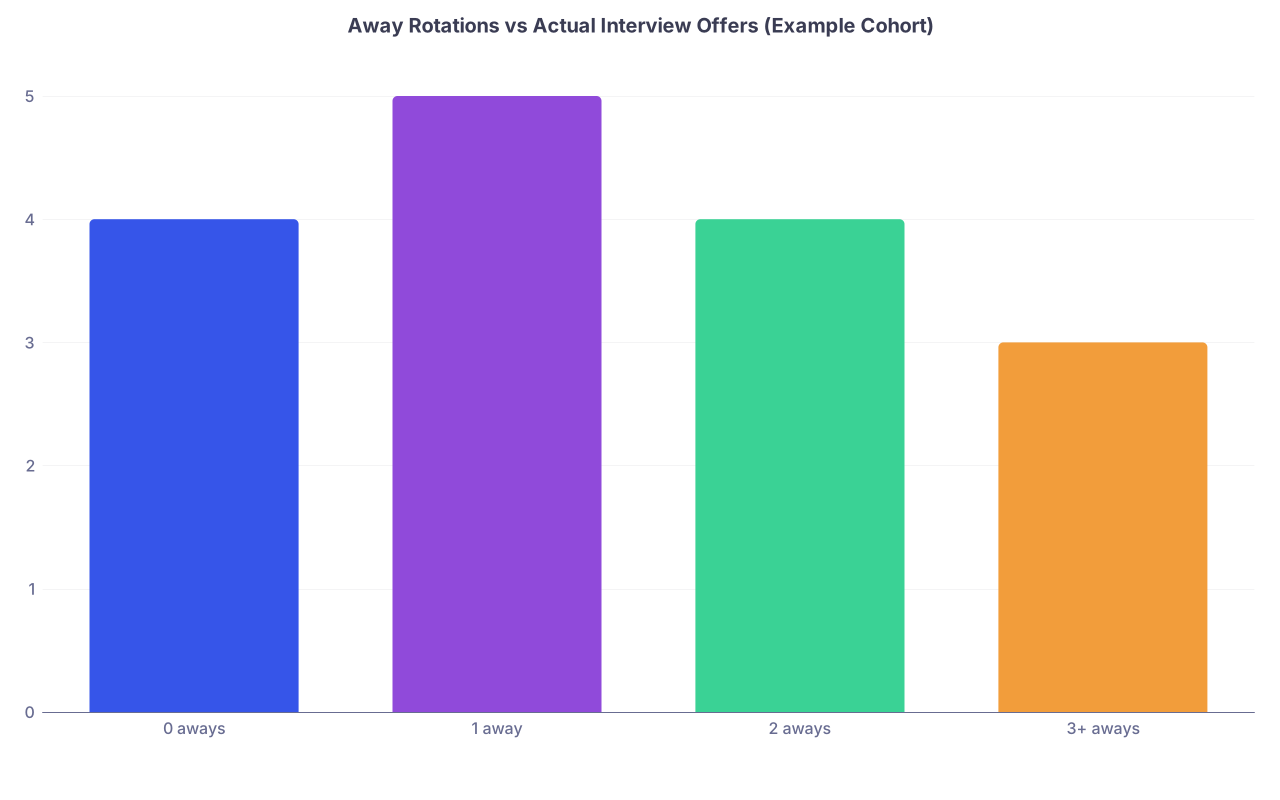
| Category | Value |
|---|---|
| 0 aways | 4 |
| 1 away | 5 |
| 2 aways | 4 |
| 3+ aways | 3 |
The core misuse
Residents assume:
- “Showing my face” = “automatic interview”
- Proximity outweighs:
- Letters
- Research productivity
- Home program reputation
- Board scores and in‑training exams
- Fit with program priorities
Programs do not think that way. They think:
- “Does this person clearly help our fellowship?”
- “Are they academically aligned with what we care about?”
- “Did they bring value or need constant rescue?”
That last one matters more than you think.
Red flags residents ignore
Misusing an away as a “sure thing” shows up in subtle ways:
- You pick the most prestigious name, not the program whose fellows or faculty know your mentors.
- You go in without understanding their fellowship’s niche (for example, heavy transplant focus vs community‑oriented) and then look lost when everyone is transplant‑obsessed.
- You treat the rotation like a formality rather than a month‑long interview.
On their side, faculty see:
- Another visiting resident who wants something but has done no homework.
- Someone whose only investment is “I showed up.”
That does not move you above the paper stack.
How to avoid this mistake
Use away rotations as force multipliers, not lottery tickets:
- Only apply for an away if:
- The program is in your realistic competitiveness range.
- You can name at least 2–3 faculty whose work lines up with your path.
- Someone who knows you can email them and say, “We are sending you one of our best.”
If you cannot check those boxes, you are not doing an away. You are doing tourism.
2. Going to the Wrong Programs for the Wrong Reasons
Choosing away sites by brand name is a classic error. You know it is happening when you hear:
- “I just want a big‑name letter.”
- “I want to say I rotated at [famous place].”
- “Everyone applies there.”
This is how people end up miserable for a month and get nothing out of it.

Mismatch #1: Prestige vs reality of fit
You pick:
- A hyper‑research‑heavy department when your CV has almost no research.
- A niche‑heavy program (e.g., advanced heart failure, interventional, bone marrow transplant) when your interests are broad or poorly defined.
- A culture that prizes aggressive autonomy when you are slower, more deliberate, and need more guidance (or the opposite).
Faculty are not fooled. They can tell you came for the name, not because you are actually aligned.
Mismatch #2: Geography theater
You say you want to “end up in that city,” but you:
- Do not know anything about their affiliated hospitals.
- Cannot name local patient population specifics.
- Have no personal or family ties nearby.
Programs hear “geography” as code for “I do not have a better reason.” That is not a selling point.
Mismatch #3: Level of training and readiness
The silent killer: going too early or too late.
| Timing in Residency | Common Outcome | Risk Profile |
|---|---|---|
| Early PGY-2 | Too green, underperform | High |
| Mid PGY-2 | Best balance of growth and competence | Moderate |
| Late PGY-3 (for 3-year residencies) | Minimal impact; fellowship list mostly set | High |
I have seen PGY‑1s pushed into “prestige” aways where they could barely manage the EMR. The impression: not “eager,” but “unprepared.”
How to avoid this mistake
Pick programs based on strategic alignment, not status anxiety:
- Look at:
- How many fellows they take from your type of residency (community vs academic).
- Their recent match lists (do they take people with similar CVs?).
- Their research output in areas you can credibly plug into.
If your reason for choosing a site cannot be explained without the word “prestige,” you are headed toward a bad away.
3. Using an Away to “Fix” Major Weaknesses
Here is the harsh truth: away rotations rarely fix red flags. They usually spotlight them.
Residents try to use aways as clean‑slate opportunities for:
- Poor in‑training exam performance
- Weak home program letters
- Unsteady clinical skills
- Shaky professionalism history
They tell themselves, “I will crush this rotation and override my record.”
Then they get there, and the same issues appear. Under more scrutiny. With less benefit of the doubt.

| Step | Description |
|---|---|
| Step 1 | Weak Application |
| Step 2 | Plan Away Rotation |
| Step 3 | Performance Problems Visible |
| Step 4 | Neutral or Negative Letter |
| Step 5 | No Added Interview Boost |
| Step 6 | Solid, Consistent Performance |
| Step 7 | Strong Letter and Advocacy |
| Step 8 | Underlying Issues Fixed? |
Why this strategy backfires
On an away:
- You get no grace period.
- You are compared to:
- Their own residents, who know the system.
- Other visiting residents, often chosen selectively.
If your weakness is:
- Knowledge deficit → you look unprepared and unsafe.
- Professionalism → they pick up on you being late, disorganized, or emotionally reactive faster than at home.
- Communication → patients and nurses complain, and those complaints count double for visitors.
And then you have a visiting evaluation that quietly confirms the red flags your application already suggests. That letter does not “fix” anything. It locks your narrative in place.
The only time an away can help a weakness
There is one narrow scenario where this works:
- Your weakness was context‑dependent (toxic team, terrible fit, documented conflict that was not your fault).
- You have already improved or proven yourself elsewhere.
- You perform at a clearly higher level on the away, with:
- Strong initiative
- Stable behavior
- Consistent clinical reasoning
Even then, the away does not erase the past; it gives a program permission to believe the better version of your story.
How to avoid this mistake
Before using an away as a “fix,” ask:
- Have I actually corrected the underlying issue?
- Do I have objective signs of improvement at home (better evals, higher ITE, strong feedback)?
- Is my PD on board and willing to support me?
If the answer is “no” to any of those, do not put your weaknesses on a bigger stage. Work on them at home, where you have more protection and time.
4. Performing for the Wrong Audience on Service
Another chronic misuse: treating away rotations like extended PD interviews, while ignoring who actually shapes your fate.
Your primary evaluators are often not the big‑name section chiefs. They are:
- Fellows.
- Mid‑career attendings.
- Senior residents.
- APNs and nurses who quietly tell chiefs who made the month easier and who made it harder.

Common performance mistakes
I see this constantly:
- Over‑rounding with the “important” attending and under‑communicating with the fellow who actually runs the service.
- Flexing obscure knowledge in front of big names while dropping basic tasks:
- Follow‑up labs not ordered
- Families not updated
- Notes incomplete
- Ignoring nurses until there is a crisis, then trying to charm them after you need something.
On paper you are “eager.” In real life, you are high‑maintenance.
What your evaluators actually value
Away services usually care about three things above all:
Reliability
- Do you show up on time, prepared?
- When you say you will do something, does it get done?
Team awareness
- Are you aligned with how the fellow runs the list?
- Do you help the intern instead of competing with them?
Clinical maturity
- Do you recognize when you are at your limit?
- Do you escalate concerns early instead of hiding uncertainty?
If you focus on impressing the “big names” and neglect these, you will leave with a tepid or even damaging evaluation.
How to avoid this mistake
First week of the away, ask directly:
- The fellow: “What makes visiting residents successful on this service?”
- The charge nurse or senior nurse: “What tends to go wrong with outside rotators?”
Then listen. Adjust.
You are not there to show off your brilliance. You are there to prove you can be trusted with their patients and their brand.
5. Collecting Letters You Will Never Actually Use
Residents often chase letters the way premeds chased shadowing hours. More is not better. Better is better.
I routinely see ERAS applications with:
- 1 tepid away letter from a big name who barely knew the resident.
- 1 decent home letter.
- 1 generic “good resident” letter from a random attending.
The away letter was supposed to be the differentiator. Instead it reads:
“Dr. X was a pleasure to work with. She is enthusiastic and will make a fine fellow.”
Code for: safe but unremarkable.
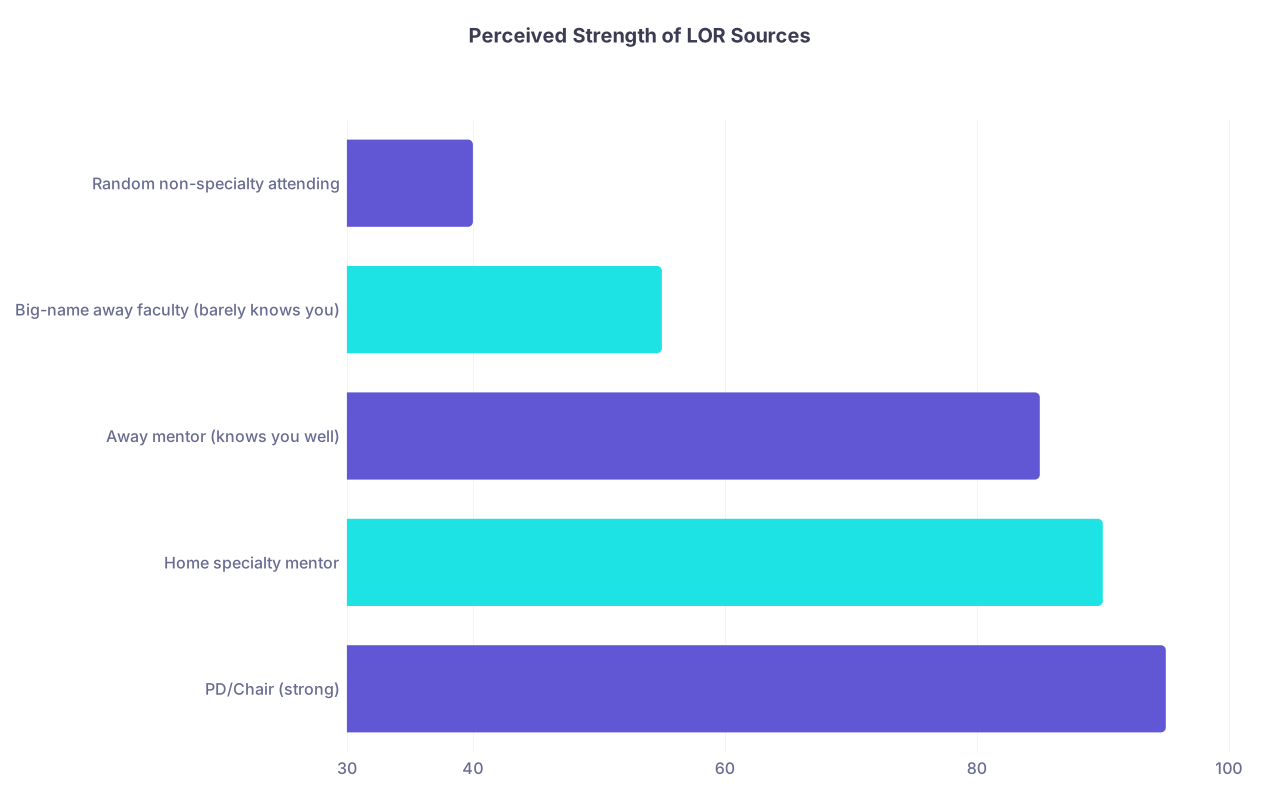
| Category | Value |
|---|---|
| PD/Chair (strong) | 95 |
| Home specialty mentor | 90 |
| Away mentor (knows you well) | 85 |
| Big-name away faculty (barely knows you) | 55 |
| Random non-specialty attending | 40 |
Why away letters so often disappoint
The classic failure pattern:
- You spend one month with an attending on a busy service.
- They see you on rounds and in conference, but not in depth.
- You ask for a letter because of their title, not your actual relationship.
So they:
- Recycle phrases from prior letters.
- Avoid specifics because they do not have enough.
- Include zero advocacy language (“we will be recruiting Dr. X heavily,” “top 5% of residents I have worked with,” etc.).
Fellowship selection committees read hundreds of these. They can tell when the writer is hedging or filling space.
When an away letter is actually worth it
An away letter is powerful if:
- You worked closely with the writer:
- They watched you handle complex patients.
- They saw your growth across the month.
- They are willing to write specific, comparative statements:
- “Top 10% of residents I have worked with in the last 5 years.”
- “Easily at the level of our own matched fellows this year.”
- They have some influence in the specialty (not necessarily world‑famous, but respected).
No specifics, no comparison, no advocacy = not a letter you burn a month to obtain.
How to avoid this mistake
Before asking for a letter, ask yourself honestly:
- Could this person describe 2–3 specific cases or actions of mine?
- Did they supervise me enough days to know my consistency?
- Have they written strong letters for other successful applicants?
If you are not sure, ask them directly:
- “Do you feel you know my work well enough to write a strong letter for competitive [your specialty] fellowships?”
If they hesitate or soften that word “strong,” thank them and move on.
6. Ignoring the Cost–Benefit Reality
Away rotations are expensive. Financially, physically, and politically.
Residents underestimate this constantly. They think, “It is just one month.” It rarely is.
| Category | Approximate Range (USD) |
|---|---|
| Travel | $300–$900 |
| Housing | $800–$2000 |
| Food/Local Transit | $300–$600 |
| Lost Moonlighting/Income | $500–$2000 |
| Application/Processing Fees | $100–$300 |
Then add:
- Sleep disruption
- Being away from your support system
- Being the outsider on a new team (social and cognitive load)
- Lost opportunities at home (research, leadership, elective flexibility)
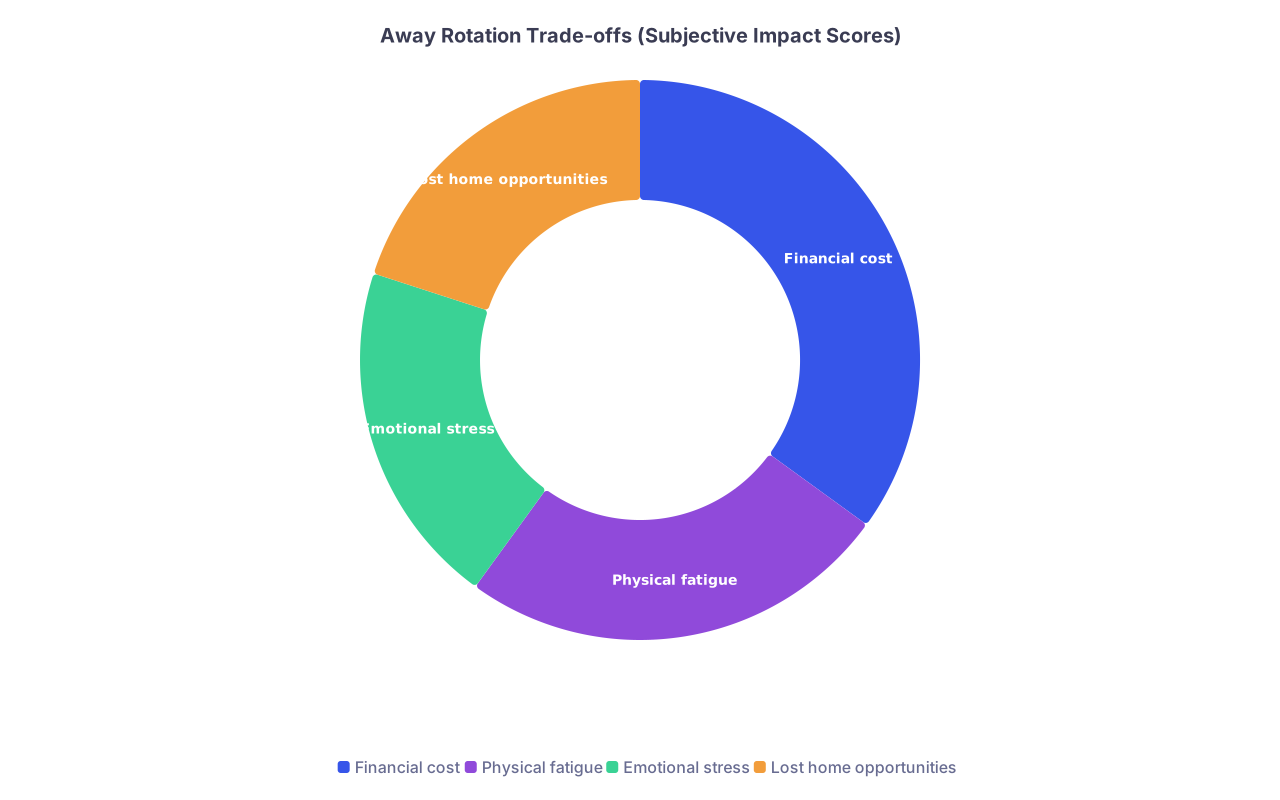
| Category | Value |
|---|---|
| Financial cost | 35 |
| Physical fatigue | 25 |
| Emotional stress | 20 |
| Lost home opportunities | 20 |
The hidden political cost
Programs notice when:
- You disappear for multiple months to chase fellowships elsewhere.
- Your best work happens away, not at home.
Your PD and core faculty are the ones:
- Ranking you for fellowship.
- Taking calls from outside PDs about you.
- Deciding whether to push your application or let it float.
If they feel abandoned, or suspect you view their program as a stepping stone you have already left mentally, your advocacy suffers.
How to avoid this mistake
Do a brutal cost–benefit analysis before committing:
Ask:
- What is the realistic upside?
- Interview probability bump
- Strong letter from a committed advocate
- Exposure in a region I truly plan to live in
- What is the downside?
- Money you do not actually have
- Fatigue before boards or key rotations
- Strain with PD or home mentors
Many residents discover that one strategically chosen away (or none) beats three poorly thought‑out ones.
7. Failing to Integrate the Away into Your Overall Narrative
The last misuse: treating an away as a stand‑alone “experience” instead of a piece of your larger story.
Fellowship programs are asking:
- “Does this away rotation make sense in the context of who this person is?”
- “Or is it random?”
If your CV shows:
- All research in general oncology → Away in advanced heart failure
- Repeated statements of loving community‑based care → Away at a hyper‑tertiary, niche academic center with no community tie
- Deep local roots and family commitments → Away halfway across the country with no explanation
Readers get confused. Confusion kills applications.

How to avoid this mistake
Before you apply for any away rotation, be able to answer:
- How does this specific rotation:
- Support my stated career goals?
- Connect with my prior experiences?
- Build logically on what I have done at my home program?
If you cannot explain that in two or three clean sentences, it will not make sense to the selection committee either.
And do not forget to:
- Mention the away purposefully in your personal statement only if it adds coherence.
- Ask your away mentor (if they truly know you) to highlight how your work with them fits your broader goals.
Final Thoughts: Use Away Rotations Like a Scalpel, Not a Sledgehammer
Three points you need to walk away with:
Away rotations are high‑risk, high‑cost, modest‑upside tools. Do them only when the program, timing, and mentors align enough that the expected benefit clearly outweighs the financial, emotional, and political cost.
The wrong away, at the wrong time, for the wrong reason will hurt you. Chasing prestige, trying to “fix” deep weaknesses, or collecting generic letters is how residents burn themselves out and end up with fewer interviews than they deserved.
Your performance and relationships at your home program still matter more. A single well‑chosen away can amplify a strong foundation. It cannot replace one. Build your story where you are, then use an away only if it fits that story, not because everyone else on your service “is doing one.”