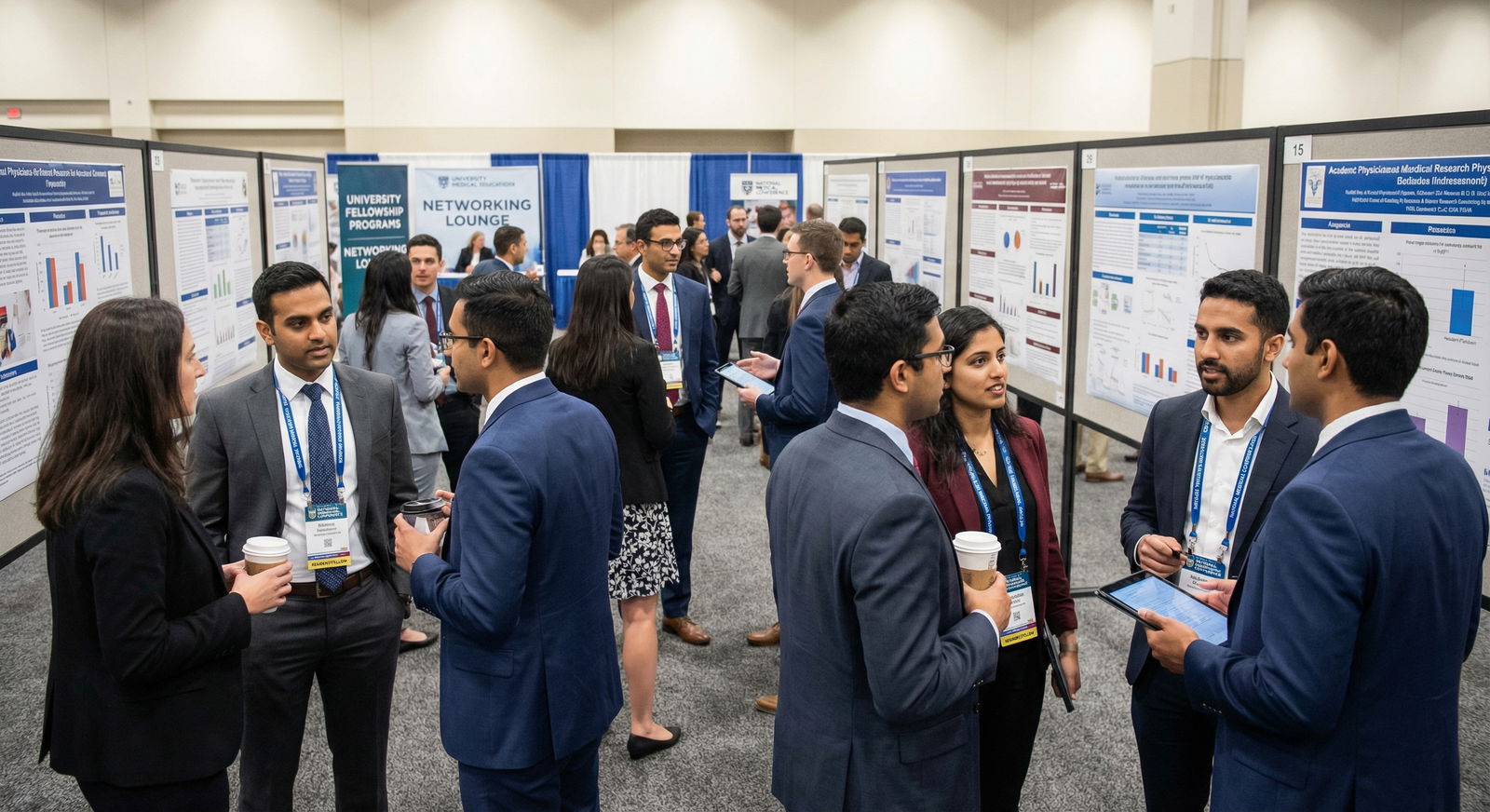
Program directors do not reject you because of one bad sentence. They reject you because your story does not add up.
Fellowship applicants underestimate this constantly. You obsess over a single line in your personal statement, but you miss the fact that your entire application tells three different stories that don’t match each other. PDs are not reading your file like a novel; they’re scanning for pattern and coherence. And when something feels off, they move on.
You’re in residency. You’re tired. You’re juggling service, research, maybe a family. This is exactly when people get sloppy with their narrative. That sloppiness is what I want to keep you from.
Let’s go through the inconsistencies PDs pick up in seconds—and how to avoid making yourself look fake, unfocused, or worse, dishonest.
1. “I’ve Always Wanted X”… But Your Record Says Otherwise
The most common lie in fellowship applications?
“I have always wanted to be a cardiologist / gastroenterologist / oncologist…”
No, you haven’t. And PDs know it.
They flip through your ERAS (or equivalent) and see:
- Early med school research: orthopedics
- MS4 away rotation: neurosurgery
- Residency: floated between ICU love and hospitalist interest until PGY-3
- Suddenly: “I’ve always been drawn to nephrology”
That kind of statement immediately triggers doubt.
The problem is not that you came to the specialty late. That’s normal. The problem is the fake origin story.
Instead of sounding committed, you sound inauthentic. PDs have read thousands of these; they can smell “application fiction” instantly.
How to avoid this mistake
Do not manufacture a lifelong calling that doesn’t match the file they’re holding.
Say this instead:
- “I came into residency open-minded, initially leaning toward X, but over PGY-2 and PGY-3 my exposure to Y changed my trajectory.”
- “My interest in oncology crystallized later than most, after consistent exposure on consult months and a specific patient experience.”
Own the evolution.
If you did switch interests:
- Anchor it with timelines (PGY level, rotations)
- Name specific settings (consult service, ICU, clinic)
- Be honest about prior interests without sounding flaky
What PDs think when your story is honest and evolving: mature, self-aware, realistic. That’s a win.
2. Research Story vs. CV: The “Invisible Work” Problem
A huge red flag: your personal statement says research is central to your identity, but your CV disagrees.
You write:
“Research has been a cornerstone of my training and future career goals.”
The PD looks at your application and sees:
- One poster in PGY-1
- A case report “in preparation” for three years
- No ongoing projects listed
- No clear PI or mentors named
That’s not “cornerstone.” That’s a side project at best.
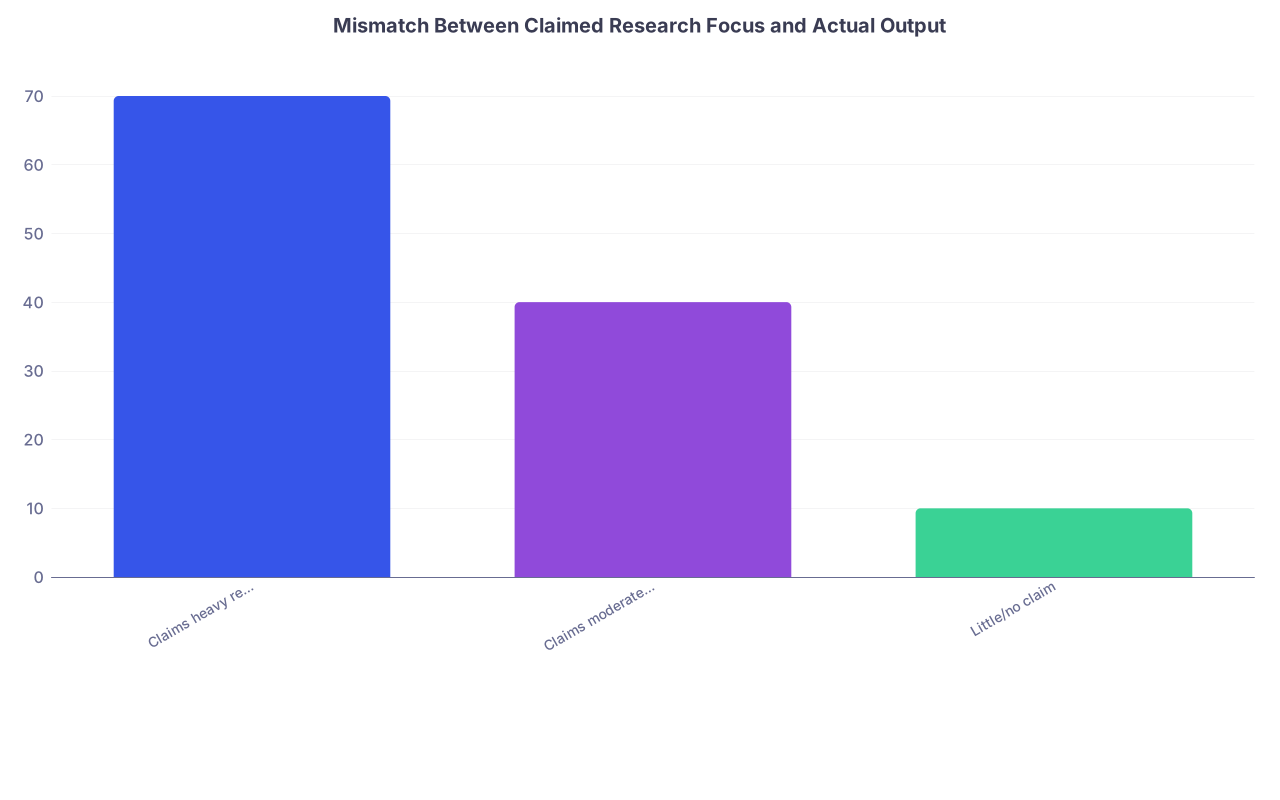
| Category | Value |
|---|---|
| Claims heavy research | 70 |
| Claims moderate research | 40 |
| Little/no claim | 10 |
(Those “claims heavy research” folks with thin CVs look the worst.)
Common inconsistency patterns
Calling yourself “research-focused” when:
- You’ve done minimal scholarly work
- You have no ongoing projects during application season
- There’s no clear thread connecting your projects to the fellowship specialty
Saying “I led a project…” but:
- You’re listed as 4th or 6th author
- There’s no description of your role anywhere
- You can’t explain the methodology in interview
PDs aren’t just checking whether you did research. They’re asking: Does the way you describe your research line up with the actual scope of your work?
How to avoid this mistake
Match your language to your output
Heavy research track, multiple first-author pubs?
Sure: “I am deeply committed to an academic, research-driven career.”One or two modest projects?
Better: “Research has complemented my clinical interests and taught me to think critically about evidence.”
-
Instead of “I led a quality improvement project,” try:
- “I designed the data collection tool and performed the chart review on 80 patients.”
- “I was responsible for data analysis and writing the methods section.”
Align your research with your stated interest
If you’re applying to GI and all your work is in dermatology, don’t pretend that’s tightly aligned. Explain the pivot:
- “My early research in dermatology taught me X and Y, but during residency my clinical exposure to GI shifted my focus. I’m now working on Z GI-related project with [name mentor].”
If your CV is light, don’t sell yourself as a budding physician-scientist. Sell what you actually are: a clinically strong, curious fellow applicant who’s willing to learn.
3. Personal Statement vs. Letters vs. MSPE: Personality Whiplash
This one sinks more people than they realize.
You describe yourself in your personal statement as:
“Calm under pressure, highly collaborative, and always approachable.”
But then:
- MSPE: “Can become flustered under high workload, initially struggled with communication on busy services.”
- Letter: “Initially had some challenges with time management and accepting feedback, but improved significantly over the year.”
Alone, those comments aren’t fatal. PDs understand growth.
But if you never acknowledge growth and instead claim you’ve always been flawless, you look disconnected from reality.
The inconsistency PDs see
You: “I’m a natural leader.”
Letters: “Shy, initially reticent, grew into a stronger team member by the end of the year.”
You: “Communication has always been my strength.”
MSPE: “Early concerns about closed-loop communication were addressed through coaching.”
Do you see the mismatch? You’re not “wrong” for having needed improvement. You’re wrong for pretending that improvement arc never happened.
How to avoid this mistake
Use the file as your starting point, not an obstacle.
If there’s documented growth or early concerns:
- Acknowledge it briefly and confidently:
- “I received early feedback about my efficiency during busy call nights, which pushed me to create a structured pre-rounding system. That change significantly improved both my workflow and my team’s experience.”
- Show that you:
- Heard the feedback
- Did something actionable
- Can now function better because of it
What you must not do: pretend the criticism does not exist and paint yourself as perfectly polished from day one.
PDs are not looking for a flawless robot. They are looking for a fellow who can adjust, reflect, and improve. If your letters show growth and your personal statement ignores it, you look unaware or avoidant.
4. “Academic Career” Claims Without Evidence
Every fellowship PD has seen this line:
“I am committed to a career in academic medicine.”
Sometimes that’s true. Sometimes it’s pure desperation-speak to impress university programs.
PDs test this statement by cross-checking:
- Have you done meaningful teaching?
- Any consistent involvement in education committees, resident teaching, med student sessions?
- Actual scholarly output?
- Do your letter writers describe you as someone who elevates the learning environment?
- Is there any sign, anywhere, that you prefer academic settings?
If your application looks like pure community practice (no teaching, no research, no academic activities) and then you suddenly claim you’re “dedicated to academics,” it feels slapped-on.
| Claim | Strong Signal Present? |
|---|---|
| Teaching experience | Regular, structured |
| Research/scholarship | Ongoing or published |
| Committee involvement | Yes |
| Academic mentors | Named |
| Letters mention academics | Yes |
How to avoid this mistake
Do not write “I’m committed to an academic career” unless:
- You have at least some substance behind it (teaching, projects, mentorship, committees)
- Your letters back it up
- Your mentors can actually talk about it during phone calls
If you’re unsure about your long-term plans:
- Be honest but focused:
- “I’m currently most drawn to a clinically focused career with opportunities for teaching.”
- “I see myself in a practice where I can balance patient care with resident education and occasional scholarly work.”
That sounds far better than fake academic zeal.
5. Timeline & Commitment Gaps: The “What Were You Doing Then?” Problem
PDs are very good at scanning timelines. They’re used to residents with complex paths: research years, leaves, transfers, visa issues. None of that is fatal by itself.
What is a problem is when your story hides or contradicts your timeline.
Common red flags:
- You claim “continuous dedication to internal medicine” but:
- You did a year of anesthesia and then switched
- You took a non-clinical year without explanation
- You say “I have been consistently involved in research” but:
- There’s a 3-year gap in listed activities
- You write about “always gravitating toward hematology-oncology” but:
- Your heme-onc elective is in PGY-3 September just before applications
- You did no earlier rotations or exposure
PD thought process when they see gaps
- “Why did this person switch programs or specialties? Was it performance? Fit? Something else?”
- “Why is there a one-year gap with no activities listed?”
- “Why does their ‘lifelong interest’ not show up until the last minute?”
Silence makes them fill in the blanks with worst-case scenarios.
How to avoid this mistake
Fill gaps explicitly
Do not leave 6–12 month periods unexplained.Brief is fine:
- “From July 2021 to June 2022 I worked as a hospitalist while my partner completed training and I finalized my decision to pursue cardiology.”
- “I took a research year between PGY-2 and PGY-3 to work on outcomes projects in sepsis care.”
Align your narrative timing with reality
If your interest developed late, say so:
- “My interest in nephrology solidified midway through PGY-2 after sustained exposure on the consult service and ICU rotations.”
You’re not penalized for honest development. You are penalized for pretending a last-minute shift was a lifelong passion.
6. Generic Story vs. Specific File: The Copy-Paste Problem
Another subtle inconsistency PDs pick up immediately: your essay could belong to any applicant, but your file is actually quite distinct.
You write a generic personal statement about:
- “Loving procedures”
- “Teamwork”
- “Continuity of care”
But your file actually shows:
- Heavy QI involvement
- Limited procedural exposure
- Strong outpatient focus, weak inpatient, or vice versa
The PD feels like they’re reading a template, not a person.
They check:
- Does this essay reference anything I just saw in the CV?
- Are there specific patients, projects, or mentors that show up in both?
- Or is this a generic PGY-3 boilerplate downloaded from someone’s Google Drive?
How to avoid this mistake
Write a statement that couldn’t easily be swapped with another resident’s.
That means:
- Name one or two real projects from your CV and explain what they changed about your thinking.
- Mention a specific clinical setting that matches your listed experiences (e.g., “night float admissions on our 28-bed MICU”).
- Refer to mentors that actually appear in your letters or research entries.
If your statement says you love procedures but you’ve done minimal procedural elective time and no advanced procedural notes, PDs notice. They will ask about it. You will stumble.
Make your story anchored enough in your true experiences that it feels uniquely yours.
7. Interview Day vs. Application: Sudden Personality Shifts
Some inconsistencies don’t show up until interview day. PDs are absolutely comparing what you wrote to how you act in real life.
Two big ones:
You write: “I thrive in high-acuity, fast-paced environments.”
In interview:- You admit you hate night float
- You say you want a “chill” program with easy call
- You seem anxious discussing high-stress scenarios
You write: “I’m deeply committed to underserved patient populations.”
In interview:- You say your ideal job is a high-end private clinic
- You never mention underserved work unless prompted
- You can’t name a single concrete project or clinic that supports that claim

| Step | Description |
|---|---|
| Step 1 | Application Claims |
| Step 2 | PD Questions |
| Step 3 | Credibility Up |
| Step 4 | Credibility Down |
| Step 5 | Matches Behavior? |
PDs aren’t expecting you to be a performer. They’re just checking if the tone and values of your written story line up with how you think and talk.
How to avoid this mistake
- Read your own application and statement before interviews. Yes, really. Residents forget what they wrote.
- Don’t exaggerate in writing.
If you’re neutral-to-positive about underserved settings, don’t claim they’re your core identity. - Make sure your true priorities (location, workload, academic vs private, procedures vs clinic) are consistent across:
- Personal statement
- Interview answers
- Post-interview communication
You’re allowed to be honest. You’re not allowed (if you want success) to be contradictory.
8. Letters That Don’t Match Your Self-Description
You can’t write your own letters. But your choice of letter writers absolutely telegraphs something. And there’s a very specific inconsistency PDs notice:
You sell yourself as:
- “Consult work–driven”
- “ICU-focused”
- “Bound for complex tertiary care practice”
…but your letters are:
- All from clinic attendings in low-acuity settings
- Or from people who barely supervised you in the fellowship-relevant spaces
Or you present yourself as a team-builder, but:
- No letter mentions leadership
- No one comments on your role in interdisciplinary communication
How to avoid this mistake
Align your self-story with your letter writer selection:
- If you highlight procedural or high-acuity interest → at least one letter from someone who has seen you in that exact environment.
- If you sell yourself as a future educator → someone should explicitly describe your teaching.
Before asking for letters:
- Tell your writer your main narrative for fellowship.
- Ask if they feel they can strongly support that version of you.
- If they hesitate, thank them and ask someone else. A lukewarm or misaligned letter hurts more than no letter.
Quick Self-Audit: Where Your Story Might Be Leaking
Use this as a blunt checklist. If any answer stings, fix it before you submit.
| Area | Question to Ask Yourself |
|---|---|
| Specialty interest | Does my timeline match my claimed passion? |
| Research | Does my output match the strength of my claims? |
| Academic goals | Do my activities support an "academic" aim? |
| Feedback/growth | Do I acknowledge issues reflected in MSPE/letters? |
| Interview alignment | Do I actually talk like I write? |
FAQs
1. Is it bad if my interest in the specialty developed late in residency?
No. What hurts you is pretending it started in childhood when your file screams “I decided in PGY-3.” Be honest: describe when and how it actually clicked, and back it up with concrete rotations, mentors, or projects from that time forward.
2. I have very little research—should I just not mention it?
You should mention what you’ve done, but don’t inflate it. Frame it as exposure that sharpened your critical thinking rather than as the centerpiece of your identity. Overstating minimal research is far worse than modest, accurate description of a small project.
3. How do I know if my story is inconsistent?
Have a senior resident or faculty member read just your personal statement and then your CV and MSPE, in that order. Ask them one question: “Does this feel like the same person?” If they flag mismatches—timelines, tone, overclaims—believe them and revise until the answer is yes.
Remember:
- PDs are not hunting for perfection; they’re hunting for coherence.
- The fastest way to tank your credibility is to tell a story that does not match your own record.
- Anchor every claim to something real in your file, and you’ll stand out for the right reason: you actually make sense.