Understanding the Landscape: Fellowships After PM&R Residency
For a DO graduate in Physical Medicine & Rehabilitation (PM&R), fellowship preparation starts much earlier than most people think. Whether you’re aiming for interventional spine, pain medicine, sports, brain injury, pediatric rehab, neuromuscular, cancer rehab, or another niche, your strategy should begin in PGY-2 (or even late intern year).
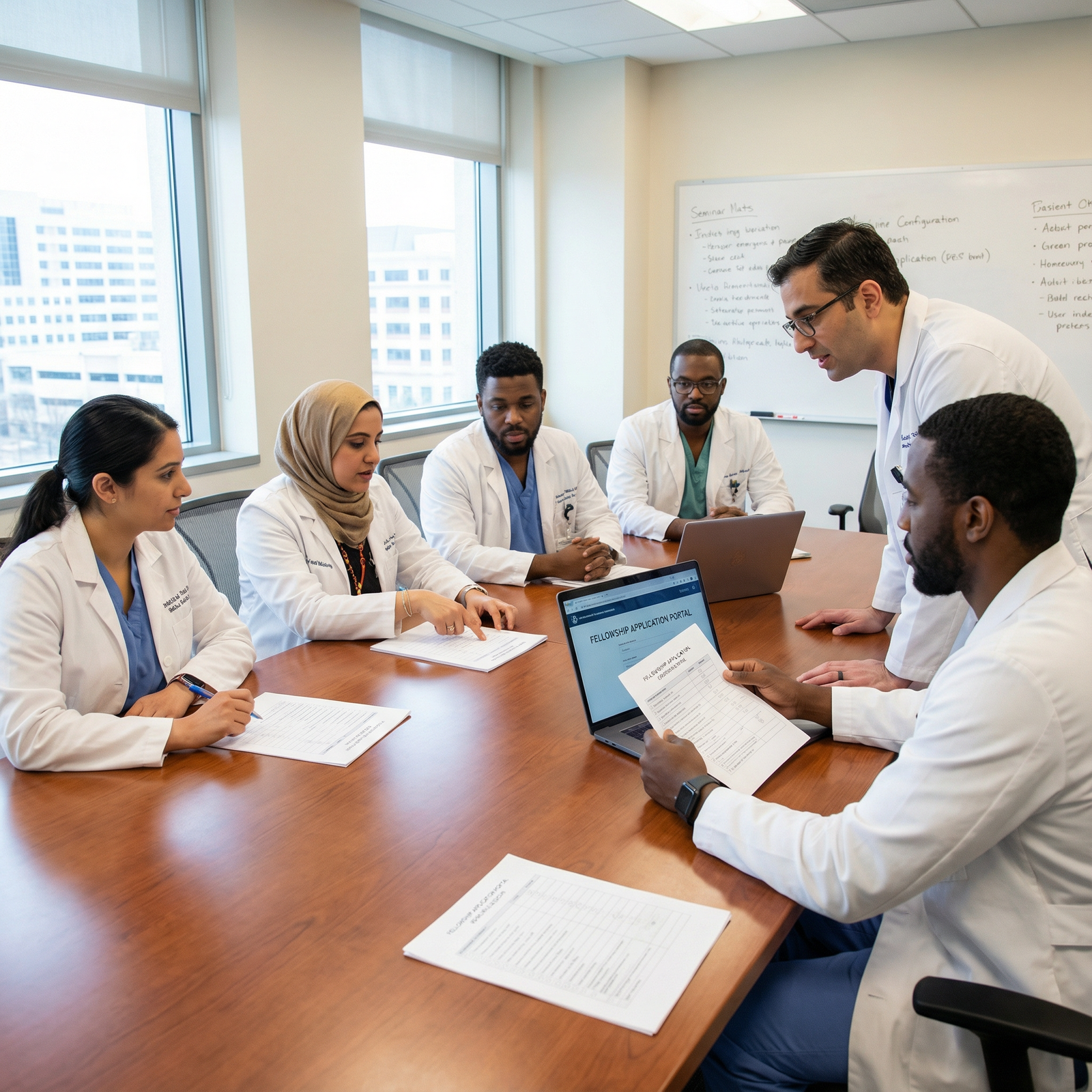
As a DO graduate residency trainee, you bring distinct strengths: osteopathic principles, hands-on skills, and often a holistic perspective on patient care. Many fellowship programs in physiatry now actively recruit DOs—but competition is real. Thoughtful planning, early exposure, and deliberate mentoring can dramatically improve your physiatry match for fellowship.
This guide walks through a practical, stepwise approach to fellowship preparation during PM&R residency, with a focus on what matters most for DO graduates and how to get fellowship positions that fit your goals.
Clarifying Your Fellowship Goals in PM&R
Before diving into timelines and CV building, you need clarity on why you’re pursuing fellowship and what kind of physiatry practice you want.
1. Know Your “Why”
Ask yourself:
- What patient population energizes you? (e.g., athletes, pain patients, children, stroke survivors, SCI, TBI, amputees, neuromuscular patients, cancer patients)
- What procedures or skills do you want to master? (e.g., EMG, interventional spine injections, ultrasound, botulinum toxin injections, spasticity management, fluoroscopic procedures, advanced MSK ultrasound)
- What setting do you envision?
- Academic center with research and teaching
- Private practice with high-volume procedures
- Hybrid model (hospital-based but community-focused)
- What lifestyle factors matter most? (call burden, clinic vs procedure mix, geographic preference, income expectations)
Spend a few weeks tracking which rotations, patients, and tasks you look forward to—and which you dread. Your day-to-day joy is a critical data point.
2. Understand Major PM&R Fellowship Pathways
Common post-PM&R fellowship options include:
- Interventional Spine / Pain Medicine
- Focus: Spine, chronic pain, fluoroscopic and ultrasound-guided injections, neuromodulation
- Certification: Often through Pain Medicine (multispecialty boards) or non-ACGME interventional spine
- Sports Medicine
- Focus: Athletes, MSK ultrasound, joint injections, on-field coverage, return-to-play decisions
- Pathways: Via PM&R, Family Med, EM, etc.
- Brain Injury Medicine (BIM)
- Focus: TBI, concussion, disorders of consciousness, polytrauma
- Spinal Cord Injury Medicine (SCIM)
- Focus: SCI, neurogenic bowel/bladder, spasticity, mobility tech
- Pediatric Rehabilitation
- Focus: Cerebral palsy, developmental disorders, congenital conditions
- Neuromuscular Medicine
- Focus: EMG, neuropathies, myopathies, ALS, neuromuscular junction disorders
- Cancer Rehabilitation
- Focus: Functional outcomes in oncology patients, survivorship, lymphedema
- Palliative Care, Hospice, or Research-focused fellowships
- Niche but growing in relevance to physiatry
As a DO graduate residency trainee, your osteopathic background may be especially valued in MSK- and function-focused fellowships like interventional spine, sports, and cancer rehab—but you can match into any of these pathways.
3. Align Your Interests With the Job Market
Look ahead:
- What kind of positions are being posted now (3–5 years ahead of you)?
- Ask attendings: “If you were finishing fellowship today, which skills would be most marketable?”
- Investigate:
- Spine/pain jobs in your desired region
- Academic PM&R postings emphasizing subspecialty training
- Demand for pediatric, SCIM, and BIM physiatrists
Use this to fine-tune your target fellowship track and the skills you need.
Building a Fellowship-Ready Profile During Residency
Your osteopathic residency match experience has already proven you can navigate a competitive process as a DO graduate. For fellowship, the stakes are similar but more specialized. Program directors look for evidence that you’re both committed to and ready for subspecialty practice.
Think in four main buckets: clinical exposure, relationships, scholarly work, and leadership/teaching.
1. Clinical Exposure: Be Intentional With Rotations
Your rotations are your most powerful tool to shape your fellowship readiness.
PGY-1 (Transitional/Prelim Year)
- Lay the foundation: internal medicine, neurology, orthopedics, ICU—these rotations help regardless of subspecialty.
- If possible, seek:
- An elective in pain, spine, sports, rehab consults, or neurorehab
- Opportunities to demonstrate work ethic and reliability (attending letters later!)
PGY-2 (First PM&R year)
- Treat this year as your “exploration + early branding” phase:
- Sample broad areas: inpatient rehab (SCI, stroke, TBI), EMG, MSK clinics, consults.
- Identify what you naturally gravitate toward.
- Tactics:
- Keep a running note on your phone: patient encounters or skills that resonate with you.
- Ask for early elective time in your area of interest (e.g., extra outpatient spine, sports clinic, BIM, pediatric rehab).
PGY-3 (Core PM&R year)
- This is a high-yield time for fellowship preparation:
- Aim to schedule subspecialty-heavy rotations before applications open if your track uses a centralized match.
- For pain, sports, or spine: do extra MSK, EMG, interventional, or sports coverage.
- For BIM/SCIM: prioritize TBI units, SCI programs, and neurorehab consults.
- For peds rehab: children’s hospital rotations and outpatient peds clinics.
Document your experiences:
- Track the number and types of procedures (US-guided injections, EMGs, botox, etc.).
- Note key responsibilities (leading rounds, complex discharge planning, teaching juniors).
PGY-4 (Chief/Advanced year)
- Clarify and refine:
- Spend 2–4 electives at your top-choice fellowship sites if possible (as away rotations or visiting experiences).
- Continue procedures and advanced clinics to demonstrate senior-level competence.
2. Relationships: Mentors, Sponsors, and Networking
Fellowship preparation is not a solo sport. Letters of recommendation and behind-the-scenes advocacy are often decisive.
Types of faculty you need:
- Primary subspecialty mentor
- In your chosen field (e.g., interventional spine for pain, pediatric physiatrist for peds).
- Helps guide research, suggests rotations, and reviews your personal statement.
- Program leadership ally
- Your program director or associate program director.
- Offers a “global” letter about your professionalism, work ethic, and fit as a fellow.
- Technical skills champion
- An attending who can vouch for your procedural skills, EMG competence, or advanced clinical reasoning.
As a DO graduate, mentorship is also where you can neutralize any subtle bias about training background. The stronger and more specific your faculty advocates, the less your degree becomes a focus.
How to cultivate these relationships:
- Show up early, be reliable, and ask for feedback.
- Schedule a 20–30 minute career meeting with likely mentors:
- “I’m exploring a PM&R fellowship in [X]. Could we discuss what experiences I should prioritize over the next 12–18 months?”
- Send concise, professional follow-up emails summarizing action items.
3. Scholarly Work: Turn Clinical Curiosity Into Output
You don’t need 10 publications, but you do need some evidence of academic engagement—especially for competitive fellowships and academic career goals.
Target goals (realistic for a busy DO graduate residency schedule):
- 1–2 posters at national or major regional meetings (AAPMR, AAP, AANEM, sports conferences, pain societies, etc.)
- 1 publication (case report, retrospective review, or quality improvement project) OR strong involvement in someone else’s project
- 1 local presentation (grand rounds, resident conference, journal club)
Where to find projects:
- Ask attendings: “Do you have any ongoing projects you’d like resident help with?”
- Convert interesting patient cases into case reports.
- Join or initiate QI projects (e.g., optimizing bowel regimens on SCI unit, improving spasticity referral systems, standardizing concussion assessments).
For procedural or sports/pain fellowships, having at least:
- A project with a procedural or MSK focus OR
- A study related to pain outcomes, sports injuries, or interventional rehab is a strong plus.
For BIM/SCIM/peds, aim for:
- Neurorehab, TBI, SCI, or pediatric functional outcomes projects.
4. Leadership, Teaching, and Professionalism
Fellowships need residents who can function as junior faculty. Demonstrate:
- Leadership roles:
- Chief resident
- Committee membership (wellness, diversity, residency improvement)
- Organization involvement (AAPM&R, AAP, specialty societies)
- Teaching:
- Leading resident lectures or skills workshops
- Teaching medical students or DO/MD rotators
- Professionalism:
- Reliable clinical performance
- Smooth work with nursing, PT/OT, SLP, and interdisciplinary teams
- Minimal (ideally zero) professionalism concerns documented
These “soft skills” often come through in letters of recommendation and can outweigh marginal differences in academic metrics.
The Fellowship Application Timeline: Year-by-Year Roadmap
Understanding the fellowship application timeline is crucial so you’re not scrambling. Specific dates vary depending on subspecialty and whether they use ERAS/NRMP, SF Match, or independent processes, but the general structure is similar.
PGY-1: Laying the Groundwork
Key goals:
- Adjust to residency and clinical workload.
- Start networking lightly:
- Attend PM&R or pain/sports conferences if feasible.
- Connect with senior residents in PM&R who pursued fellowship.
- Begin a low-intensity scholarly project if you have capacity.
PGY-2: Exploration and Early Branding
By the end of PGY-2, try to:
- Narrow your fellowship interest to 1–2 primary options.
- Identify at least one potential subspecialty mentor.
- Join or start a research or QI project related to your target area.
- Attend at least one relevant conference and introduce yourself to potential future fellowship faculty.
Practical steps:
- Ask your program director to help you map out PGY-3/PGY-4 electives.
- If aiming for highly competitive fellowships (pain, sports), start shadowing procedures, sports coverage, and advanced clinics now.
PGY-3: High-Yield Application Preparation
This is often your most critical fellowship preparation year.
6–18 months before fellowship start (depending on subspecialty):
Spring–Summer of PGY-3:
- Clarify your exact fellowship type (e.g., “ACGME Pain vs Non-ACGME Spine,” “PM&R vs Family Med-based Sports”).
- Make a list of target programs (10–25, depending on competitiveness and your profile).
- Request initial letters of recommendation—give faculty at least 4–6 weeks and your updated CV.
- Draft your personal statement and have 1–2 mentors review it.
Summer–Fall of PGY-3:
- Submit ERAS or other application materials as soon as the cycle opens.
- Complete away rotations or observerships at top-choice programs if available.
- Keep up momentum on research/review articles.
Remember: Application cycles for different fellowships vary:
- Pain: Often earlier; track carefully via ACGME/NRMP or relevant societies.
- Sports: Typically follows a structured match.
- BIM/SCIM/Peds: May be more variable; confirm each year’s timeline.
Your best source of up-to-date specifics is:
- Current PGY-4s who just matched
- Your program coordinator and PD
- Specialty society or NRMP/SF Match websites
PGY-4: Interviews, Ranking, and Back-Up Plans
During PGY-4:
- Interviews:
- Prepare concise stories about clinical challenges, leadership roles, and research.
- Be ready for questions about your osteopathic background and how it shapes your practice.
- Have clear reasons for each program—geography, caseload, faculty expertise.
- Rank list or offer negotiation (if non-match):
- Discuss options with mentors if you’re undecided between programs.
- Consider long-term career trajectory, not just location or salary.
- Back-up strategies:
- If you don’t initially match, talk early with your PD about:
- One-year academic positions with high subspecialty exposure
- Non-ACGME fellowships
- Reapplying the following cycle with a stronger profile
- If you don’t initially match, talk early with your PD about:
Application Essentials: Standing Out as a DO in the Physiatry Match
Whether your subspecialty uses a formal match or a direct-offer process, the fundamentals are the same. Fellowship directors will evaluate you on clinical performance, academic engagement, and alignment with their program’s mission.
1. Curriculum Vitae (CV)
Your CV should be:
- Clean, consistent, and easy to scan
- Organized by:
- Education and training
- Licensure and certifications
- Clinical experience/highlights (if appropriate)
- Research and publications
- Presentations and posters
- Leadership and teaching
- Professional memberships and service
Highlight aspects especially relevant to PM&R fellowships:
- Number and types of procedures (e.g., “Performed >150 ultrasound-guided joint injections”)
- EMG volume and complexity
- Key rotations (e.g., 3 months in SCI, 2 months dedicated TBI)
- Any sports coverage or team physician experiences
- Osteopathic manipulative medicine (OMM) skills if you use them in your practice
2. Personal Statement
Use your statement to answer three main questions:
- Why this field?
- Describe a few formative patient cases, rotations, or mentors.
- Why you?
- What specific strengths do you bring (clinical, procedural, interpersonal)?
- How has being a DO shaped your approach to rehabilitation and function?
- Why this fellowship and future goals?
- Are you aiming for academic physiatry, private practice, rural care, niche subspecialty?
Aim for ~1 page, tightly written. Avoid generic statements; tailor each one if the program allows.
3. Letters of Recommendation
For competitive PM&R fellowships, most programs prefer:
- 3–4 letters total
- At least:
- 1 from your program director
- 1–2 from subspecialists in your desired field
- 1 from another key PM&R attending who knows your clinical work well
As a DO graduate, your letters are particularly valuable to:
- Emphasize your clinical acumen vs any perceived pedigree issues.
- Speak to your procedural skill and hands-on patient care.
- Highlight how your osteopathic training positively influences outcomes and team dynamics.
When requesting letters:
- Provide:
- Updated CV
- Personal statement draft
- List of programs (with notes if there’s a personal connection)
- Politely ask: “Would you be comfortable writing a strong letter of recommendation on my behalf?” to gauge enthusiasm.
4. Interview Performance
Use the interview to:
- Demonstrate humility, curiosity, and teachability.
- Communicate clearly why you chose this subspecialty.
- Show that you understand the program’s structure (case mix, call schedule, procedures).
- Bring thoughtful questions:
- “How do fellows transition to independent practice?”
- “What is your fellows’ case volume for X procedures?”
- “How do you support fellows who want to pursue academic vs private practice careers?”
Be prepared for questions about:
- A challenging patient or complication and how you handled it.
- A time you gave or received difficult feedback.
- Your work with an interdisciplinary team in PM&R.
- How you use osteopathic principles in your current practice.
Preparing for Fellowship and Beyond: From Training to Early Career
Fellowship preparation is not just about “how to get fellowship” but also about preparing for fellowship itself and your longer-term path, including eventually preparing for fellowship graduates’ early careers.
1. Clinical and Procedural Readiness
Before starting fellowship:
- Review foundational knowledge:
- Anatomy (especially MSK, spine, and neuroanatomy)
- Pharmacology relevant to your subspecialty
- Imaging basics (MRI, CT, ultrasound)
- Log and summarize your procedural experience:
- This helps fellowship directors and your future mentors know your starting level.
- Ask your PD and mentor:
- “What specific skills do you think I should sharpen in my last 6–12 months before fellowship?”
2. Professional Branding and Career Planning
Use fellowship as a bridge to your first attending job.
- During fellowship:
- Join relevant national societies and committees.
- Give talks (local or regional).
- Identify your niche (e.g., “ultrasound-guided spine interventions,” “concussion in collegiate athletes,” “post-acute TBI rehab”).
- Toward the end of fellowship:
- Start monitoring job postings 6–9 months before graduation.
- Decide: academic vs private practice vs hybrid.
- Reach back to residency and fellowship mentors—they often know unadvertised opportunities.
3. Preparing for Fellowship as a DO Graduate: Special Considerations
As a DO, consider:
- Licensing and credentials:
- Make sure you’re clear on any state-specific DO vs MD issues (rare, but worth checking).
- Maintain your osteopathic board certification status and understand how it interfaces with subspecialty boards (pain, sports, BIM, etc.).
- OMM integration:
- Decide if and how you want OMM to be part of your future practice.
- Some fellowships and jobs value OMM explicitly—highlight this added skill set when appropriate.
- Mentor DO fellows/attendings:
- Specifically seek out DOs in your desired fellowship track:
- Ask, “Were there any unique challenges or opportunities for you as a DO when applying for this fellowship or early jobs?”
- Use their playbook; they’ve already navigated your exact path.
- Specifically seek out DOs in your desired fellowship track:
Frequently Asked Questions (FAQ)
1. When should I start planning for fellowship during PM&R residency as a DO graduate?
Begin exploring seriously in PGY-2. By mid-PGY-3, you should have a clear target subspecialty, a primary mentor, and at least one active scholarly project. The exact fellowship application timeline depends on your chosen field, but planning earlier than you think is almost always beneficial.
2. Are DOs at a disadvantage in the physiatry match for fellowships?
In most PM&R fellowships, DOs are not systematically disadvantaged, especially as many programs already have DO faculty and fellows. However, in some highly competitive pain or sports fellowships, subtle pedigree preferences can exist. You can counter this by:
- Strong letters from respected attendings
- Solid clinical and procedural skills
- Demonstrated scholarly work
- Professional networking and good interview performance
3. How important is research for PM&R fellowship applications?
Research is important, but the type and quality matter more than sheer quantity. For many PM&R fellowships:
- 1–2 relevant projects or presentations are enough, especially if combined with strong clinical evaluations and letters.
- For highly academic programs or those in major research institutions, more substantial research may be an advantage.
- If you’re not research-oriented, focus on at least one solid QI or case-based project and emphasize your clinical strengths.
4. What if I don’t match into fellowship the first time?
Not matching is not the end of the road. Many applicants successfully match on a second attempt. Constructive steps include:
- Meet early with your PD and mentors to debrief your application.
- Strengthen your profile with:
- Additional research
- One-year non-ACGME fellowship or academic position with subspecialty focus
- More procedures or targeted clinical experience
- Refine your application documents and interview skills.
- Consider a slightly broader set of programs or geographic regions.
Fellowship preparation for a DO graduate in Physical Medicine & Rehabilitation is a multi-year process that blends self-reflection, strategic clinical exposure, mentoring, and professional development. By approaching it systematically—understanding the fellowship landscape, building a targeted profile, following a clear timeline, and leveraging your osteopathic strengths—you position yourself not just to secure a fellowship, but to build a rewarding, sustainable career in physiatry.