

The myth that PGY-3 will “finally slow down” is dangerous. PGY-3 is when boards pressure peaks, fellowship timelines collide with heavy rotations, and your future is decided while you are still on call.
You cannot wing this year.
You need a calendar, a strategy, and a ruthless sense of timing. I am going to walk you month by month through a realistic PGY-3 year for a resident targeting fellowship, while also passing boards and not imploding during service months.
I will assume:
- You are in a 3-year core residency (IM, Peds, EM, etc.).
- You plan to apply for fellowship that starts immediately after residency.
- You still need to take (and pass) your ABIM/ABP/ABEM or equivalent boards.
- You have a mix of heavy inpatient rotations and lighter electives/clinic.
Adjust the exact months to your program’s academic calendar, but the sequence holds.
Big-Picture Timeline: PGY-3 Year at a Glance
Before we get granular, you need to see how the three major pressures overlap: fellowship, boards, rotations.
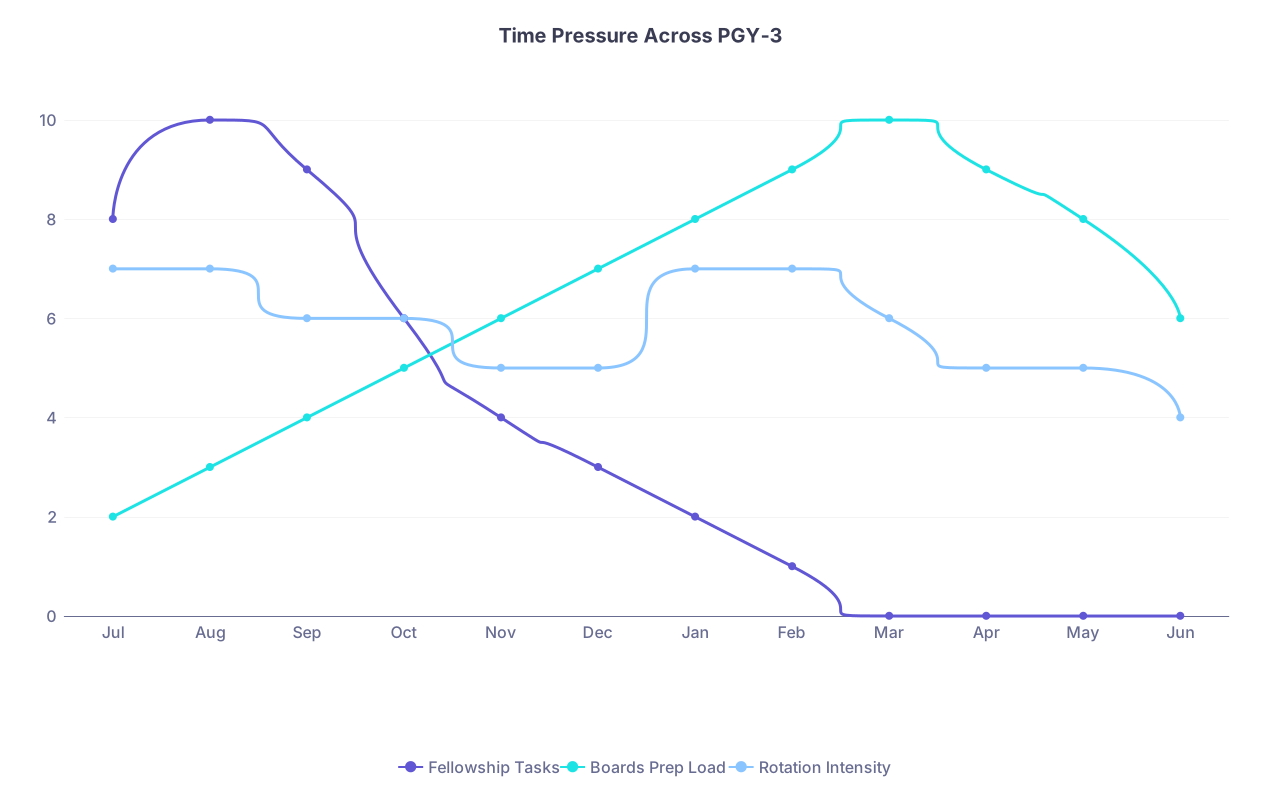
| Category | Fellowship Tasks | Boards Prep Load | Rotation Intensity |
|---|---|---|---|
| Jul | 8 | 2 | 7 |
| Aug | 10 | 3 | 7 |
| Sep | 9 | 4 | 6 |
| Oct | 6 | 5 | 6 |
| Nov | 4 | 6 | 5 |
| Dec | 3 | 7 | 5 |
| Jan | 2 | 8 | 7 |
| Feb | 1 | 9 | 7 |
| Mar | 0 | 10 | 6 |
| Apr | 0 | 9 | 5 |
| May | 0 | 8 | 5 |
| Jun | 0 | 6 | 4 |
Think of PGY-3 in three phases:
July–September: Fellowship application sprint
- ERAS open. Letters. Personal statement. Interviews begin.
- Boards prep is background noise. Rotations are the scaffolding you build this on.
October–January: Interview + service juggling
- Fellowship interviews, travel or virtual fatigue.
- Increasing boards prep. Calls and ICU still exist.
February–June: Boards-focused closeout
- Rank list done. Match results.
- Shift hard into structured boards study while finishing residency.
Now let us go in order.
July–September: Application Heavy, Boards Light
At this point you should be locking in your fellowship application while keeping boards simmering, not boiling.
July (PGY-3 Month 1): Finalizing Your Fellowship Package
By July 1, you should already have:
- Specialty chosen.
- Rough CV updated.
- At least 2 of your 3 letters committed verbally.
If you do not, your first two weeks of July are going to hurt.
Week 1–2 (July 1–14): Tighten the application
Focus:
- Polish your ERAS (or equivalent) to submission-ready.
- Nail the personal statement.
- Confirm all letters.
Tasks:
- Block 1–2 evenings dedicated only to:
- Editing your personal statement.
- Rechecking all dates, publications, presentations.
- Email letter writers with:
- ERAS upload link.
- Final CV.
- Statement.
- Bullet list of what you hope they will highlight.
At this point, boards prep:
- 30–60 minutes, 3–4 days per week, max.
Use question banks only. No massive reading. You are setting the habit, not mastering content.
Rotation strategy:
- If you can pick, July should be:
- A moderate-intensity ward month
or - An elective/consult month with predictable hours.
- A moderate-intensity ward month
- Avoid ICU or ED nights in early July if your program allows any say. This is when residents sabotage their own applications.
Week 3–4 (July 15–31): Submit and shift to interview readiness
By July 31, you should:
- Have submitted your fellowship application.
- Have all letters either in or with clear ETAs.
Tasks:
- One evening: review potential fellowship programs and tier them:
- Tier 1: dream/reach.
- Tier 2: realistic.
- Tier 3: safety.
- Start a simple tracking sheet with:
- Program name, location, program director.
- Application status.
- Interview invite status.
- Notes on clinical strengths/weaknesses.
Boards:
- Maintain light question-based review.
- Do ~10–20 questions per day on 3–4 days per week.
August: Interview Invites and Time-Off Strategy
In August, invites trickle in and you will start seeing how competitive your application actually is.
Early August (Aug 1–15): Respond Fast, Hold Your Ground
At this point you should:
- Be checking email frequently. Programs still like fast responses.
- Have a clear plan for how many interviews you can realistically attend.
When invites hit:
- Reply same day. Same hour if possible.
- Protect post-call days. Do not schedule an interview the morning after a 28-hour call unless you enjoy self-sabotage.
Time-off strategy:
- Sit down with your rotation schedule and program coordinator:
- Identify the “flexible” months where you can miss a clinic or trade calls.
- Identify the hard stop months (ICU, night float, required rotations) where interviews will be logistically painful.
- Decide early: Are you OK using vacation days for interviews?
- If yes: reserve at least 1 week of vacation for the peak interview window (commonly Oct–Nov for many specialties).
Boards:
- Still light.
- Shift to:
- 20–30 questions, 4–5 days per week.
- Quickly tagging weak areas but not spiraling into guilt.
Late August (Aug 16–31): Start Preparing for Interview Content
Tasks:
- Draft core answers:
- “Why this specialty?”
- “Tell me about this research project.”
- “What are your career goals?”
- Make a one-page summary for each program:
- Length of fellowship.
- Key faculty.
- Research focus.
- Call schedule.
- Location pros/cons.
Use one evening a week:
- 30–45 minutes of mock interview practice with:
- Co-fellowship applicants.
- A trusted attending.
- Chief resident.
Rotation tip:
- This is still a decent time for heavier rotations, but not the heaviest.
- Plan your ICU/nights in a way that they do not collide with peak interviews (Oct–Nov).
September: Application Done, Interview Season Starts
By now your application is submitted, and interview invitations are realistically in process.
September 1–15: First Interviews, First Trades
At this point you should:
- Have accepted several interview dates or be in active communication with programs.
- Start seeing the true time cost: not just the interview day, but prep, travel (if in-person), and post-interview fatigue.
Weekly structure:
- 1–2 evenings per week:
- Review upcoming program.
- Rehearse 2–3 key stories (a conflict with a consultant, a memorable patient, an error you learned from).
- 4–5 days per week:
- 20–30 board questions per day.
Rotation:
- This is where a nice consult elective or ambulatory block pays off.
- If you are unlucky and have a hard month (ICU, wards):
- Tell your senior and attending your interview dates as early as possible.
- Offer swaps, cover weekends in exchange for weekdays off.
September 16–30: Get Organized Before the Peak
You should now:
- Have a clear spreadsheet of all interview dates.
- Know your heavy versus light months for PGY-3.
Tasks:
- After each interview:
- Same day or next: write 3–5 bullet reflections:
- Culture vibe.
- Faculty you liked.
- Geographic or family fit.
- Same day or next: write 3–5 bullet reflections:
- Create a rank factors list:
- Fellowship volume.
- Research opportunity.
- Location.
- Lifestyle/call.
- Job placement.
Boards:
- Maintain your question habit despite interviews. Consistency beats intensity this early.
October–January: Interview Peak and Mounting Boards Pressure
This is the most chaotic quadrant of PGY-3. You are toggling between being a competent senior resident on the wards and a polished future-fellow in a suit. You also cannot ignore boards anymore.
October: Peak Interview + Senior Responsibilities
October 1–15: Double Life Mode
At this point you should:
- Accept that some weeks will be brutal.
- Build rigid boundaries around interview days.
Structure the week:
- Interview days:
- No studying. Do not pretend you will.
- Focus on sleep, hydration, and being sharp.
- Non-interview days:
- 25–40 board questions.
- 10–15 minutes of flash review (weak topics).
Rotation choices:
- If possible, October = lighter clinic/elective or a predictable consult service.
- If you are a senior resident on the wards:
- Protect yourself from being overly “available”.
I have watched residents become default do-it-all seniors and then scramble for interviews at 11 p.m. - Use interns effectively. Delegate appropriately, do not martyr yourself.
- Protect yourself from being overly “available”.
October 16–31: Mid-Season Adjustments
You now:
- Have a sense of your interview volume.
- May need to add or cancel interviews.
At this point you should:
- Ruthlessly cut programs you:
- Would never realistically rank high.
- Cannot logistically attend without blowing up your rotation.
- Tighten your narrative:
- Your story should be consistent across interviews:
- Why this subspecialty.
- Why this training environment.
- Long-term goals (academics vs community vs niche practice).
- Your story should be consistent across interviews:
Boards:
- Try to hit ~200–300 questions this month total.
- Start keeping a running list of persistent weak areas.
November: Late-Season Interviews and Fatigue
November 1–15: Push Through, Do Not Check Out
By this point you should:
- Have finished the majority of your interviews or be close.
- Feel some cognitive exhaustion and mild cynicism. That is normal.
Tasks:
- Keep your interview reflection notes updated.
- Start a preliminary rank draft:
- Quick ordering of programs, knowing it will change later, but getting gut reactions down now while memory is fresh.
Boards:
- Aim for:
- 30–40 questions per day, 4–5 days per week.
- Start using:
- Short review bursts (15–20 min) on post-call afternoons instead of doom-scrolling.
Rotation:
- If possible, November should not be your most malignant month.
- If you have nights:
- Do not schedule interviews within 24 hours of coming off nights. You will look and sound exhausted. Because you will be.
November 16–30: Transition Out of Interview Headspace
Interview season for many specialties is winding down. At this point you should be:
- Turning mental energy back toward:
- Performance as a senior.
- Boards preparation.
Tasks:
- Finish last few interviews.
- Do a first serious pass at your rank list draft:
- Ignore gossip and bird-board rumors. Focus on fit + training + outcomes.
Boards:
- Move toward:
- 200–400 questions this month.
- Repetition of weak topic areas.
December: Rank List Refinement and Boards Baseline
December is deceptively quiet on the fellowship front. That is exactly why you use it for boards.
December 1–15: Density Without Panic
At this point you should:
- Be mostly done with interviews.
- Have a working rank order in your head or written somewhere private.
Tasks:
- One dedicated evening:
- Go through each program’s notes.
- Update your rank list draft with concrete reasons for placement.
- If your match system has an early rank deadline:
- Block 30–60 minutes with a mentor to sanity-check your list.
Boards:
- Start a more structured plan:
- Choose primary Q-bank and secondary (if any).
- Decide on an approximate “blocks per week” goal.
- Baseline self-test:
- Do a timed 2–3 hour set of questions to see:
- Endurance.
- Major gaps.
- Do a timed 2–3 hour set of questions to see:
Rotation:
- December can be weird (holiday coverage).
- Protect at least a few full days off for mental reset.
- Do not burn them all on studying. Burnout will cost you more than a single extra study day helps.
December 16–31: Quiet Setup for Boards Push
You now:
- Have a pretty stable fellowship trajectory.
- Should formally shift into “boards is the next big mountain” mindset.
Tasks:
- Create a boards calendar from January through exam date:
- Weekly question targets.
- 3–4 full-length practice exams spaced out.
- Decide your primary study time:
- Early morning before work?
- Post-call day?
- Evening 3 nights per week?
Stick to something realistic. Fantasy schedules do not survive wards.
January: Rank List Finalization and Serious Boards Ramp-Up
January 1–15: Lock in Fellowship Future
At this point you should:
- Finalize your fellowship rank list.
- Stop obsessively re-sorting it at 2 a.m.
Tasks:
- Meet (in person or virtually) with:
- Program director.
- Trusted subspecialty mentor.
- Go through your list and rationale.
- Submit rank list by internal and official deadlines.
Boards:
- Study volume increases:
- 40–60 questions per day, 5 days per week.
- Start:
- Topic-based review for your worst sections (renal, rheum, stats, whatever your nemesis is).
Rotation:
- Not ideal to be in ICU as boards ramp-up, but reality is reality.
- If you are on a heavy rotation:
- Use micro-study blocks:
- 10–15 questions on a post-call afternoon.
- 20-minute flashcards between admissions.
- Use micro-study blocks:
January 16–31: Mentally Close the Fellowship Chapter
Now:
- Your application season is essentially over.
- The match outcome is out of your hands.
At this point you should:
- Consciously reframe:
- Fellowship is decided (for practical purposes).
- Your job now is to finish residency strong and pass boards.
Boards:
- Sustain the 40–60 questions per day pace.
- Start logging:
- Accuracy by system.
- Repeated misses.
February–June: Boards Dominate, Residency Winds Down
Here is where a lot of PGY-3s get sloppy. They matched (or did not) and mentally clock out. And then underperform on boards.
Do not be that person.
February: Match Results and Emotional Whiplash
February 1–15: Stay the Course
At this point you should:
- Be on a boards schedule and not deviate because “match is coming.”
Boards:
- One long practice session:
- 3–4 hours of questions in exam-like conditions.
- Review:
- Timing.
- Fatigue curve.
- Question types that consistently slow you down.
Rotation:
- Ideally, a moderate month. You do not need a super-light rotation yet, but not your most punishing either.
Mid–Late February: Fellowship Match Day
Match outcome feeds your emotional state. Here is how to use that without derailing boards:
If you matched well:
- Celebrate for a weekend.
- Do not suddenly decide boards are “easy” or “less important.”
If you did not match:
- Take 3–7 days to regroup emotionally.
- Talk with your PD and mentors:
- Reapplication vs alternative plans.
- Then: re-engage boards prep. A fail here compounds the problem.
At this point you should:
- Keep your daily question volume consistent. Stability is your friend.
March: Early Final Push Phase
March is where disciplined residents start separating themselves. Casual ones wait until May and then panic.
March 1–31: Build Endurance
Tasks:
- Two formal practice blocks:
- One early March.
- One late March.
- Each mimicking test-day length as much as possible.
- After each:
- Spend 2–3 sessions reviewing rationales of missed questions.
- Do not just stare at percentages.
Boards:
- Aim for:
- 1,000+ questions in March if feasible.
- Start active recall:
- Short written summaries of high-yield topics you always forget.
Rotation:
- If you can choose, March can be a bit heavier than May/June.
- You want your lightest rotation right before the exam, not months earlier.
April: Structured, Targeted Review
At this point you should:
- Have completed the majority of your primary Q-bank.
- Know your 3–5 weakest systems.
Tasks:
- Allocate 1–2 weeks fully focused on:
- Your worst systems.
- Mixed review blocks to keep other areas fresh.
- Continue:
- Weekly or biweekly long practice exams.
Boards:
- Question volume still high:
- 40–60 questions per day on most days.
- Refinement:
- Work on test-taking strategy:
- Not second-guessing into wrong answers.
- Managing time so last block is not rushed.
- Work on test-taking strategy:
Rotation:
- If possible, choose a less intense month:
- Outpatient clinic-heavy blocks.
- Elective with stable hours.
May–June: Final Pre-Boards Phase and Residency Finish
The exact timing of your boards will dictate how you shape these months, but the principles are the same.
May: Peak Focus Month
At this point you should:
- Be within 4–8 weeks of your exam date (for many specialties).
- Shift schedule to simulate test-day timing:
- If exam is in the morning, study seriously in the morning.
Tasks:
- 1–2 full-length practice tests this month.
- Aggressive weak-spot clean up:
- List of “must know before test day” topics.
- Daily 30–45 minute focused review on that list.
Rotation:
- Aim for your lightest month here:
- Ideal: primarily clinic/elective.
- Avoid: ICU, nights, or heavy ward months if scheduling allows any flexibility whatsoever.
Boards:
- Keep consistency over heroics.
- Do not do 200 questions one day and zero for 4 days.
June: Exam and Closure
Assuming your boards are in June or soon after:
At this point you should:
- Taper volume slightly in the week before the exam:
- More review, fewer brand-new questions.
- Two days before:
- No long practice blocks.
- Just light review and rest.
Day before the exam:
- Stop heavy studying by mid-afternoon.
- Confirm logistics:
- Test center location.
- ID.
- Snacks.
- Travel time.
After the exam:
- Do not autopsy every question with co-residents. It is wasted cortisol.
Rotation:
- If exam is mid-June:
- Front-load any heavy responsibilities to early June if possible.
- Ask chiefs / PD in advance for lighter duties in the days before the exam.
Quick Reference Table: What Dominates Each Month
| Month | Fellowship Focus | Boards Focus Level | Ideal Rotation Intensity |
|---|---|---|---|
| July | Application completion | Low | Moderate |
| August | Invites + logistics | Low–Moderate | Moderate–Heavy |
| September | Early interviews | Moderate | Light–Moderate |
| October | Peak interviews | Moderate | Light if possible |
| November | Late interviews + ranks | Moderate–High | Moderate |
| December | Rank refinement | High | Moderate |
| January | Submit ranks | High | Moderate–Heavy |
| February | Match + regroup | High | Moderate |
| March | Endurance building | Very High | Moderate–Heavy |
| April | Targeted review | Very High | Light–Moderate |
| May | Final push | Maximal | Light |
| June | Exam + closeout | Maximal | Light |
Visual Timeline: How the Year Actually Feels
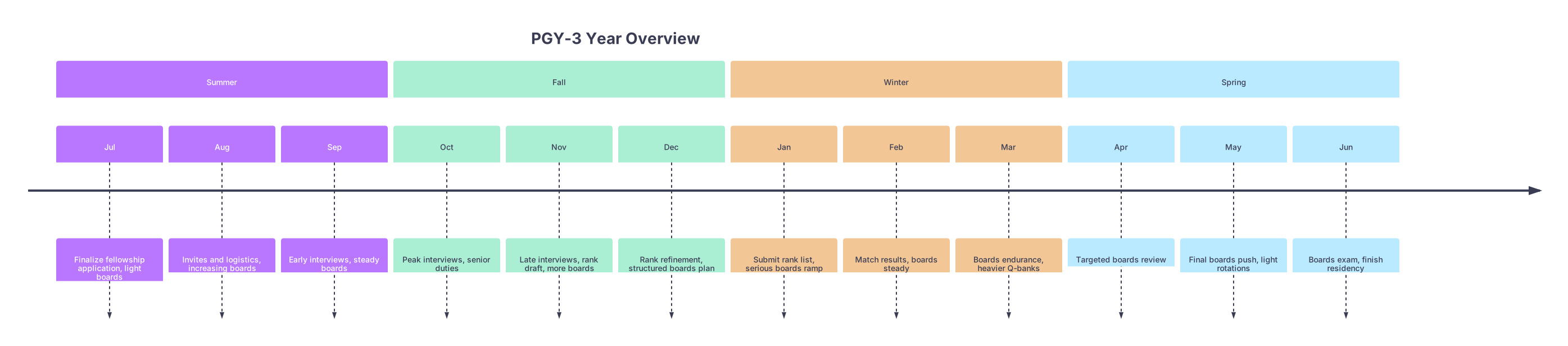
| Period | Event |
|---|---|
| Summer - Jul | Finalize fellowship application, light boards |
| Summer - Aug | Invites and logistics, increasing boards |
| Summer - Sep | Early interviews, steady boards |
| Fall - Oct | Peak interviews, senior duties |
| Fall - Nov | Late interviews, rank draft, more boards |
| Fall - Dec | Rank refinement, structured boards plan |
| Winter - Jan | Submit rank list, serious boards ramp |
| Winter - Feb | Match results, boards steady |
| Winter - Mar | Boards endurance, heavier Q-banks |
| Spring - Apr | Targeted boards review |
| Spring - May | Final boards push, light rotations |
| Spring - Jun | Boards exam, finish residency |
A Realistic Weekly Template During Peak Chaos
To make this concrete, here is what a peak interview + boards week might look like (say, October on a consult month).
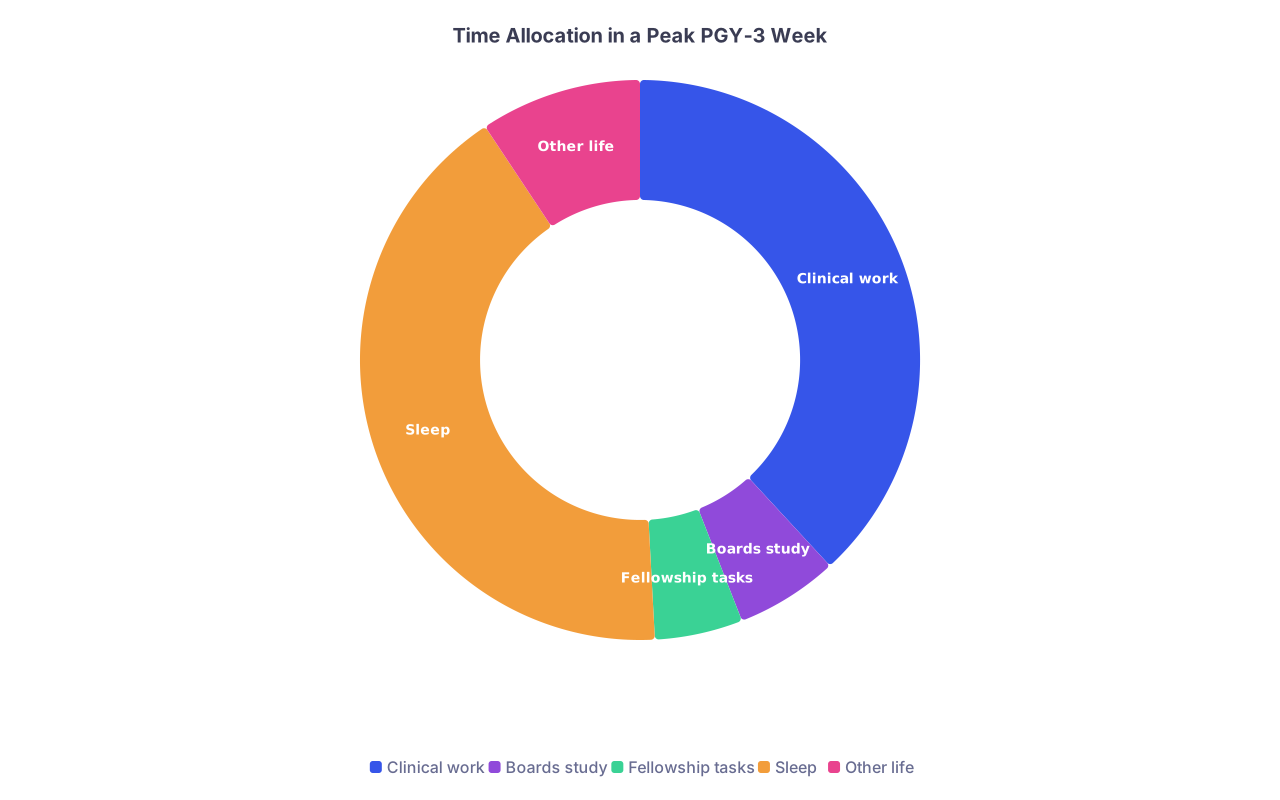
| Category | Value |
|---|---|
| Clinical work | 45 |
| Boards study | 7 |
| Fellowship tasks | 6 |
| Sleep | 49 |
| Other life | 11 |
Sample week structure:
Mon (clinical)
- 7a–6p: Consults
- 7p–8p: Boards questions (20–30)
Tue (clinical)
- 7a–6p: Consults
- 7p–8p: Interview prep for Thu program
Wed (clinical-light)
- 7a–5p: Consults
- 6p–7p: Boards questions
- 7p–7:30p: Quick review of previous interview notes
Thu (interview day)
- Off from clinical (planned).
- No formal studying.
Fri (clinical)
- 7a–6p: Consults
- 7p–8p: Light review or rest (depending on fatigue).
Sat
- Morning: 2-hour board block.
- Afternoon: Life, sleep, errands.
Sun
- 1–2 hours: review weak topics and plan weekly schedule.
Notice the pattern: small, consistent studying, not fantasy marathons.
The Non-Negotiables
To close, three points you ignore at your own risk:
You cannot treat boards as “future you”’s problem.
Start light, stay consistent, ramp up on schedule. PGY-3 does not give you a clean gap for last-minute cramming.Protect interview days like OR time.
No post-call interviews. No “I will just round quickly then log in from the call room”. You will look disorganized and uninterested.Schedule your rotations strategically, not passively.
Whenever you have even limited choice, stack:- Interviews during lighter blocks.
- Boards peak during your least malignant months.
PGY-3 is survivable—and you can actually set yourself up brilliantly for fellowship and boards—if you treat the year like a timeline, not a blur.


