

Post-Match Timeline: Preparing Logistically to Start Fellowship Smoothly
It’s the afternoon of Match Day. Your email just confirmed it: you matched into fellowship. The group chat is blowing up, your co-resident is crying happy tears over a cards spot, and your attending just said, “Congrats—now the real fun starts… paperwork.”
You’ve got 3–5 months before fellowship starts. It feels like a lot. It is not.
Here’s what actually happens: people stare at the NRMP result, do nothing for four weeks, then suddenly realize they’re moving states, changing insurance, waiting on credentialing, and maybe planning a wedding. They end up signing a lease they hate and begging GME to rush their paperwork.
You’re not going to do that.
We’ll walk this from Match Week to Day 1 of fellowship. At each point: what should be done, what can wait, and what, if you drag your feet, will bite you.
Match Week: Celebrate… and Lock Down the Essentials
Match Day to +7 days: Information, Not Action
At this point you should just gather data and keep your schedule light.
Read your match email carefully
- Fellowship start date (often July 1, sometimes late June)
- Program contact:
- Fellowship coordinator
- Program director
- Any mention of:
- Orientation dates
- Pre-hire requirements
- Visa needs (if applicable)
Reply to the fellowship coordinator (brief but adult) Something like:
- Confirm you matched and are excited
- Ask for:
- Onboarding timeline
- Expected contract date
- Orientation dates (even approximate)
- Any known call/vacation rules for year 1
Do not send an essay. Coordinators are triaging 15–30 new fellows across multiple services.
Check your current residency contract and GME policies You’re looking for:
- End date of current contract (usually June 30)
- Rules for:
- Using remaining vacation
- Moonlighting (if you plan to keep it up for a bit)
- Educational days for moving/boards
- Any penalties for leaving early (rare but I’ve seen PGY-3s try to cut out 2 weeks early and get shut down).
Start a single “Fellowship Launch” document Keep it in Google Docs/Notion/OneNote—wherever you’ll actually use it:
- Tabs or sections:
- Timeline & key dates
- Program onboarding tasks
- Licensing/credentialing
- Housing & moving
- Financial & benefits
- Personal life (family, childcare, partner job, etc.)
- Tabs or sections:
Your only real job this week: get visibility. No big life decisions yet.
1 Month Post-Match: Foundation Work (Licensing, Money, Housing Research)
Call this Match + 2 to 4 weeks. Emotions cool. This is the danger zone where people procrastinate.
At this point you should: front-load everything that has a long processing time.
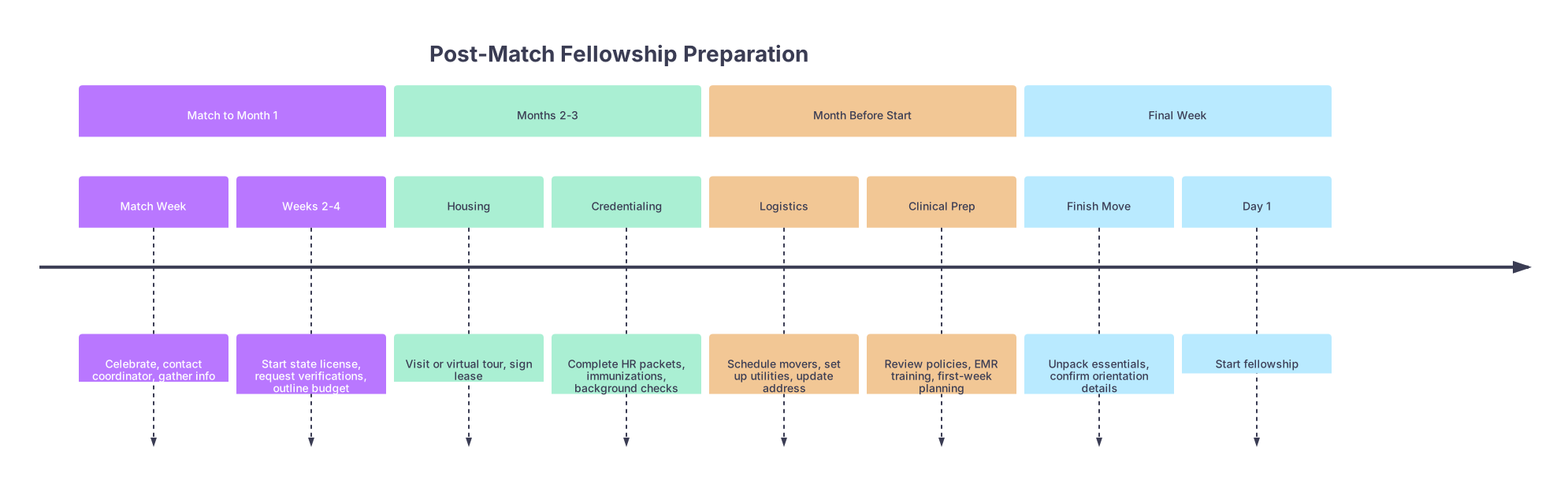
| Period | Event |
|---|---|
| Match to Month 1 - Match Week | Celebrate, contact coordinator, gather info |
| Match to Month 1 - Weeks 2-4 | Start state license, request verifications, outline budget |
| Months 2-3 - Housing | Visit or virtual tour, sign lease |
| Months 2-3 - Credentialing | Complete HR packets, immunizations, background checks |
| Month Before Start - Logistics | Schedule movers, set up utilities, update address |
| Month Before Start - Clinical Prep | Review policies, EMR training, first-week planning |
| Final Week - Finish Move | Unpack essentials, confirm orientation details |
| Final Week - Day 1 | Start fellowship |
Week 2–3: Licensing & Credentialing prep
If you’re staying in the same state and same institution, this is easier. If you’re moving states or hospitals, do not wait.
-
- If fellowship requires a full license (cards, GI, pulm/crit often do):
- Go to the state medical board website
- Download or start the application
- List all:
- Prior licenses (training licenses in multiple states)
- Past employment (yes, all those PGY years)
- Disciplinary/fitness questions (be meticulous here)
- Order/prepare:
- USMLE/COMLEX score reports
- ECFMG certificate (if IMG)
- Medical school transcript and diploma copy
- Residency verification form (your current GME must complete this)
- Some boards are 8–12 weeks. I have seen fellows unable to start independent call because their license was late.
- If fellowship requires a full license (cards, GI, pulm/crit often do):
DEA registration (if required)
- Some fellowships require your own DEA, some allow use under attending/supervising physician. Ask the coordinator directly.
- If needed, you cannot apply until you have:
- Active medical license number
- Practice address
- Mark this as a later step if the license is still pending.
Immunizations and health records
- Locate:
- Hep B titers/vaccine record
- MMR, Varicella, Tdap documentation
- TB testing (often annual)
- If anything is missing or you’re unsure, schedule titers now while you’re still in residency. Much easier than scrambling in June.
- Locate:
Week 3–4: Money and Initial Housing Recon
You’re not signing a lease yet (usually). But you are getting clear.
Run a rough fellowship year budget
- Look up PGY-4/5 pay or “fellow” pay at your new institution.
- Factor in:
- Likely rent in that city
- Loan payments (if they restart or change)
- Relocation costs (movers, flights, deposits)
- Decide:
- Do you need a signing bonus/relocation stipend advance?
- Will you need a 0% APR card or small personal line for moving expenses?
Clarify relocation benefits
- Ask GME or HR:
- Is there a relocation allowance? Amount? Taxable?
- Reimbursed vs upfront?
- What’s covered:
- Movers vs U-Haul
- Temporary housing
- Travel for house-hunting
- Ask GME or HR:
Start housing research (not commitments yet)
- Focus radius:
- Under 30–40 minutes commuting at worst traffic
- Ask current fellows (email or group chat):
- “If you had to move again, where would you live and where would you avoid?”
- Map out:
- 3–5 neighborhoods
- Typical rent for studio/1BR/2BR
- Parking situation, if you own a car
- Focus radius:
At this point, you should have:
- License application started (or at least requirements mapped out)
- A budget estimate
- A short list of target neighborhoods
Months 2–3 Before Start: Lock the Big Stuff (Housing, License Progress, HR)
This is April–May for a July 1 start, roughly.
Now you move from research to decisions.
Month 2: Make Decisions and Commit
At this point you should be:
Pushing your license across the finish line
- Follow up:
- Confirm your residency program sent verifications
- Confirm medical school credentialing sent what was required
- Check board portal weekly:
- If it’s been >6 weeks and no movement, call. Politely, but firmly.
- If you need the license before orientation (for credentialing), keep your coordinator updated so they can warn hospital credentialing.
- Follow up:
Signing a lease or finalizing housing Ideal timeline: 6–8 weeks before move.
Decide:
- Fly for an in-person visit if:
- You’re moving across the country
- You have kids or a partner who cares strongly about neighborhood quality
- Use video tours if:
- It’s a hot market and units go in 24–48 hours
- You know current fellows in the area who can reality-check places
Watch for:
- Start date of lease:
- I like 1–2 weeks before fellowship start so you can move and breathe.
- Early termination clauses:
- Unlikely you’ll need it, but nice to know.
- Parking, laundry, and noise (night shifts + thin walls = miserable).
- Fly for an in-person visit if:
Planning vacation and time off from residency
- Check with your current PD:
- Max vacation days still allowed between now and contract end
- Any rules about taking time off in June
- Block:
- 3–5 days for moving
- 3–7 days for actual rest before you start fellowship (seriously, do this)
- Check with your current PD:
Month 3: Fellowship HR, Hospital Credentialing, and Logistics
At this point you should be seeing a wave of emails: onboarding, HR, credentialing.
HR onboarding packet You’ll likely get:
- Offer letter / contract (sign this quickly)
- Background check info
- Drug screen orders
- Employment forms (W-4, direct deposit, emergency contact)
Do not sit on these. Hospital bureaucracy moves slowly after you finish your part. If you’re slow, everything backs up.
Hospital credentialing packet Often a separate beast from HR.
You’ll need:
- Updated CV (month-by-month, no gaps)
- Copies:
- Medical license (if required)
- Training license (if applicable)
- DEA (if you have it already)
- Board certifications (if IM or prelim year completed)
- References and previous supervisors
- Proof of malpractice coverage (usually from residency GME)
Fill it out within a week. Credentialing committees often meet monthly. Miss a cycle, and you start without full privileges.
Health clearance
- Schedule:
- Drug screen
- Employee health visit (TB test, physical if required)
- Bring:
- Immunization records
- Titer results
- Any accommodation paperwork if you need it
- Schedule:
Compare benefits and adjust insurance timing
Use a quick comparison to plan transitions:
| Item | Residency (Current) | Fellowship (New) |
|---|---|---|
| Health insurance end | June 30 | Starts July 1 |
| Dental/Vision | Yes/Yes | Yes/No |
| Retirement match | 3% | 5% |
| Life/Disability | Basic only | Optional upgrade |
| Relocation stipend | None | $1,500 taxable |
You care about:
- Ensuring no insurance gap (COBRA if there’s a weird lag—rare but check)
- Rolling over or cashing out retirement
- Updating beneficiaries and coverage if you have dependents
Final 4–6 Weeks: Moving, Cleanup, and Clinical Readiness
This is mid-May to June for July starters. Stuff piles up here. You want most of it already moving.
4–6 Weeks Before Start: Concrete Logistics
At this point you should:
Book your move
- If hiring movers:
- Get 2–3 quotes
- Confirm:
- Pickup date
- Delivery window (some cross-country movers give a 7–10 day window)
- If DIY:
- Reserve truck
- Recruit help on both ends (and then assume 30% will bail)
- If hiring movers:
Set up your new life infrastructure
- Schedule start dates for:
- Internet
- Electricity/gas
- Water/trash if not included
- Cancel or transfer:
- Current utilities
- Gym memberships
- Parking permits
- Schedule start dates for:
Address changes
- Update:
- USPS mail forwarding
- Banks and credit cards
- Loan servicers
- State licensing board (yes, them too)
- Professional orgs (ACP, ACC, CHEST, etc.)
- Update:
Car and driving logistics
- If moving states:
- Check deadline for new driver’s license and vehicle registration
- Insurance coverage changes (often more expensive in big fellowship cities)
- If you’re going car-free:
- Check call site locations and late-night transit reality, not fantasy.
- If moving states:
2–3 Weeks Before Start: Finish Residency Cleanly
At this point you should be transitioning mentally too.
Close out your residency properly
- Wrap up QI projects and research to a clear handoff:
- Where data is stored
- What’s pending
- Return:
- Pagers
- Badges
- Parking passes
- Get copies:
- Final evaluation summary if possible
- Any letters of recommendation you might need later (yes, for jobs after fellowship).
- Wrap up QI projects and research to a clear handoff:
Say goodbye like a grown-up
- Thank the nurses and staff who saved your butt for three years.
- Give your PD and key attendings a real goodbye email or short note. These things come back to you when someone calls for back-channel references.
Clinical prep (light touch) No need to “pre-study” like it’s Step 1. But:
- Get the fellowship handbook and call manual from your coordinator or a current fellow.
- Ask:
- “What surprised you most the first month?”
- “If you could have read 1 thing before starting, what would it be?”
- Skim:
- Local protocols (e.g., anticoagulation, chemo, ventilator management, etc.)
- Common order sets in the EMR (you can often get screenshots or a PDF).
Final Week and Day 1: Tighten the Last Screws
This week is a blur if you’re not intentional.
5–7 Days Before Start
At this point you should:
Unpack aggressively, not perfectly
- Prioritize:
- Bedroom (bed set up, blackout curtains if you do nights)
- Bathroom
- Work space (desk, chair, charging station)
- Accept that the living room might look like a box warehouse for a week. It’s fine.
- Prioritize:
Confirm all orientation details
- Double-check:
- Start time and location for Day 1
- Dress code (some programs want business attire, some scrub-friendly)
- Required documents to bring:
- Government ID
- License/DEA copies if you have them
- Vaccination card if they’re old school
- Double-check:
Money/benefits last checks
- Verify you see:
- Your fellowship job listed in hospital portal
- Direct deposit info correctly entered
- Plan for:
- First paycheck date (often mid-July)
- Cover that weird gap with savings/credit if needed
- Verify you see:
Sleep and reset If you can swing it, have at least 3 days without clinical work or moving chaos. Your brain needs to hit fellowship at >50% battery.
Day Before and Day 1
At this point you should be done “preparing” and just executing.
Day before:
- Lay out:
- Clothes
- Badge lanyard (if issued early)
- Notebook and pen
- Map your route:
- Physically or on Google Maps at the right time of day
- Go to bed earlier than usual. It will still feel too late.
Day 1:
- Show up 10–15 minutes early. No more.
- Bring:
- Small notebook with key phone numbers you wrote down (coordinator, chief fellow, program director’s assistant, GME office)
- Goal of Day 1:
- Learn faces, not facts.
- Figure out:
- Where to park
- Where to eat
- Where call rooms are
- The medical complexity will come. Logistics first.
High-Yield Timeline Snapshot
Here’s a very stripped-down month-by-month:
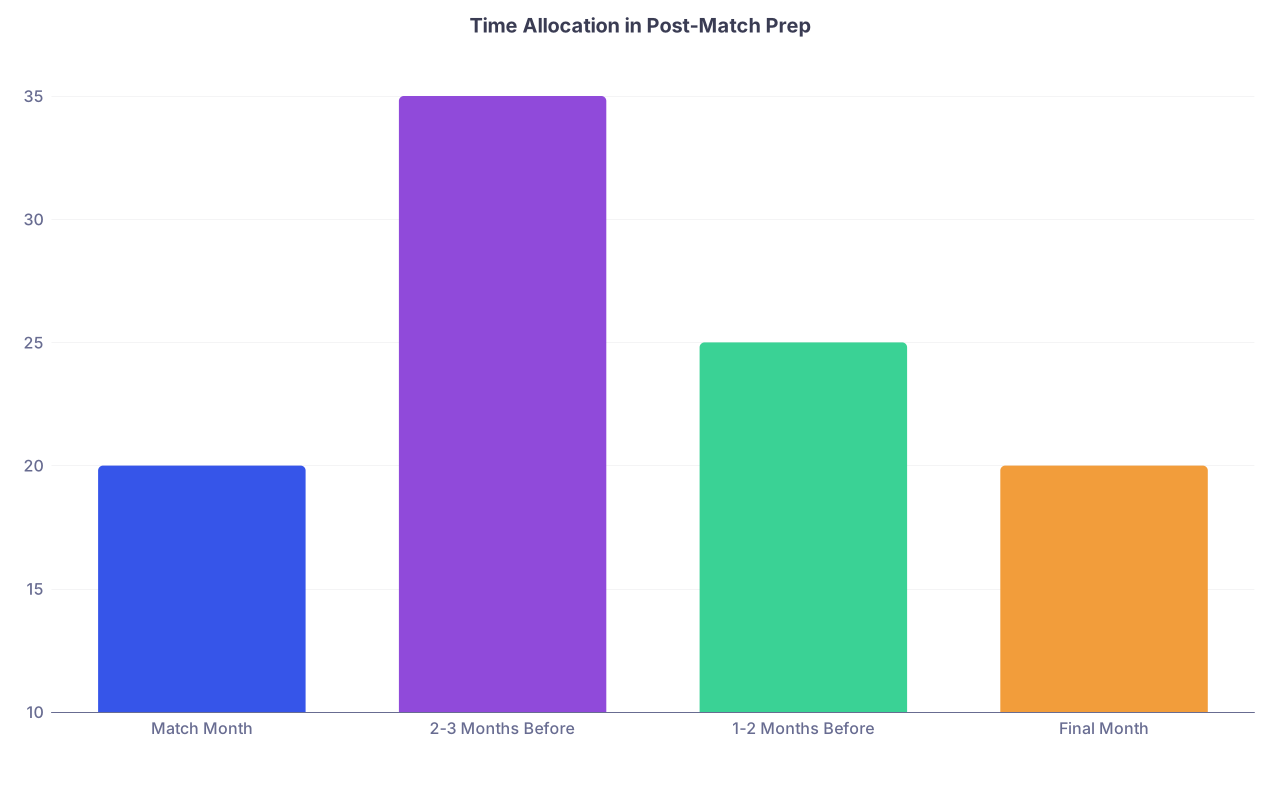
| Category | Value |
|---|---|
| Match Month | 20 |
| 2-3 Months Before | 35 |
| 1-2 Months Before | 25 |
| Final Month | 20 |
- Match Month
- Contact coordinator
- Start license
- Outline budget and housing targets
- 2–3 Months Before
- Push license/credentialing
- Sign lease
- Plan vacation/move days
- 1–2 Months Before
- Complete HR, employee health
- Book movers/travel
- Set up utilities and address changes
- Final Month
- Finish residency strong
- Move, unpack essentials
- Light clinical prep and mental reset
Key Takeaways
- Front-load anything that requires another institution or government agency: state license, credentialing, HR, and health clearance. Your delay becomes their delay.
- Make housing and moving decisions by 6–8 weeks before your start date so the final month is about transitioning clinically, not scrambling for a place to sleep.
- Protect a real buffer between residency and fellowship—at least a few days of actual rest. You need more than a new badge to start this next phase on stable footing.


