

It's July 1st. New academic year. You’re a PGY‑2 (or early PGY‑3 depending on specialty) on wards, and someone just said, “You’re applying for fellowship this year, right?”
Your stomach drops a bit. You vaguely know ERAS opens “sometime in summer.” You’ve heard mixed horror stories about letters, research, and programs that fill instantly. But your schedule’s already packed with nights, clinics, and the usual residency chaos.
You’ve got 12 months until you (hopefully) start fellowship. Here’s what you do, month by month, week by week, so you’re not the one panic-emailing your PD at 2 a.m. in August because your letters aren’t in.
Overview: The 12-Month Fellowship Countdown
At this point you should understand the basic timeline:
- Applications usually submit: Mid-late summer (varies by specialty, many around July–August)
- Interviews: Late summer through fall
- Rank lists/Match: Late fall–winter (or earlier for non-match specialties)
- Fellowship start: Next July 1
So, we’ll work backward from July 1 fellowship start.
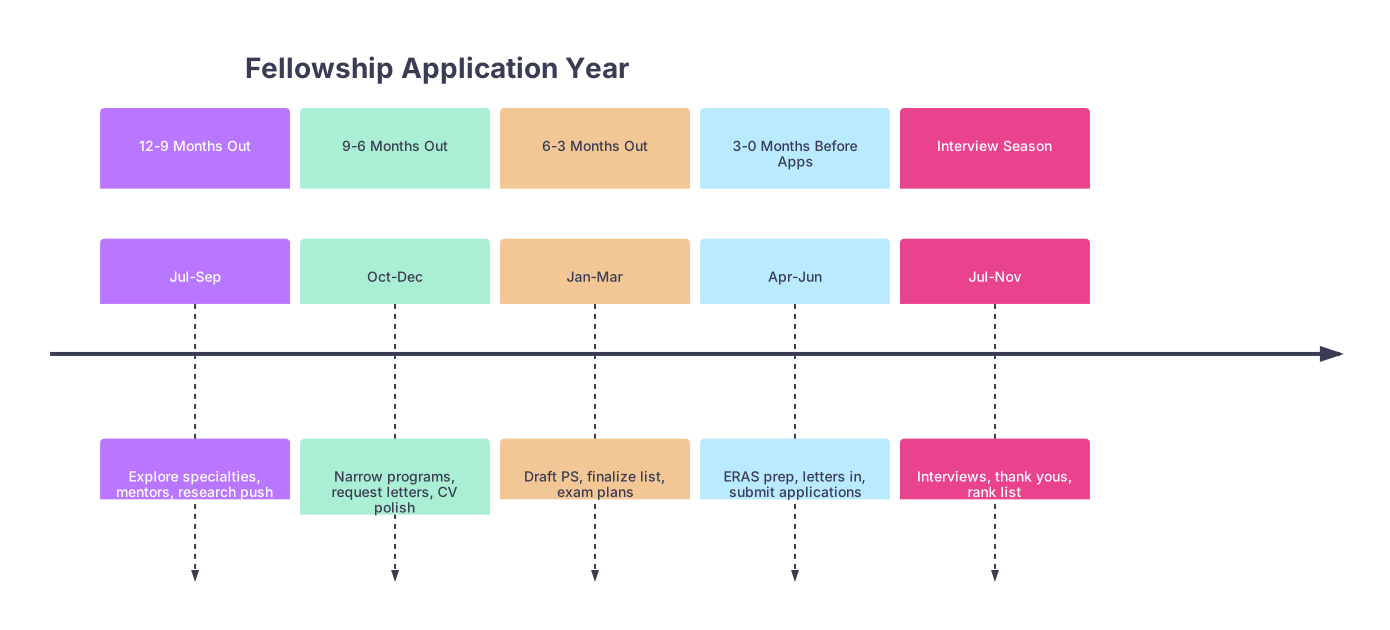
| Period | Event |
|---|---|
| 12-9 Months Out - Jul-Sep | Explore specialties, mentors, research push |
| 9-6 Months Out - Oct-Dec | Narrow programs, request letters, CV polish |
| 6-3 Months Out - Jan-Mar | Draft PS, finalize list, exam plans |
| 3-0 Months Before Apps - Apr-Jun | ERAS prep, letters in, submit applications |
| Interview Season - Jul-Nov | Interviews, thank yous, rank list |
Your job: hit the right tasks in the right windows. Not everything can be fixed last minute.
12–10 Months Before Fellowship Start (July–September): Foundation and Direction
You are here: early in the academic year before you apply. You still have room to change your mind and to build your application. Use it.
At this point you should…
- Be honest about your specialty decision
If you’re still between, say, cards vs heme/onc (or GI vs hospitalist track), this is the window to decide.
Actions for July–August:
- Talk with:
- Fellowship program director at your home institution
- At least 1–2 attendings in each field you’re considering
- Your residency PD or APD
- Do targeted rotations:
- Cardiology consult vs oncology inpatient block
- Clinic exposure in the field you’re leaning toward
If you haven’t done at least one substantial rotation in your target subspecialty by September, fix that. Ask chief residents or scheduling to prioritize.
- Pick your “application mentors”
You need:
- One primary mentor in your desired field
- One backup/secondary mentor
- Your residency PD looped in early
By end of September:
- Have had at least one sit-down (30–60 minutes) with your primary mentor.
- Have asked them explicitly:
“I’d like to apply to [X] fellowship this year. Can you help guide my application and be a letter writer if things go well?”
- Check your exam status
For IM subspecialties, many programs want Step 3 / Level 3 done. By now you should:
- Know your Step 3/COMLEX 3 date or have a concrete plan.
- Aim: Exam completed at least 6–9 months before fellowship start.
If you haven’t scheduled by August, that’s late. Do it.
- Start (or push) a research/project narrative
No, you don’t need a NEJM paper. But you do need something in your subspecialty lane.
From July–September:
- Clarify ongoing projects:
- Case report? Abstract? QI project? Multi-center database?
- Get timelines:
- Abstract submission deadlines (ACC, ASCO, ACG, etc.)
- Local/regional conference deadlines
If nothing is happening, ask:
- “Is there a case, chart review, or QI project I can realistically complete or at least submit before fellowship applications open?”
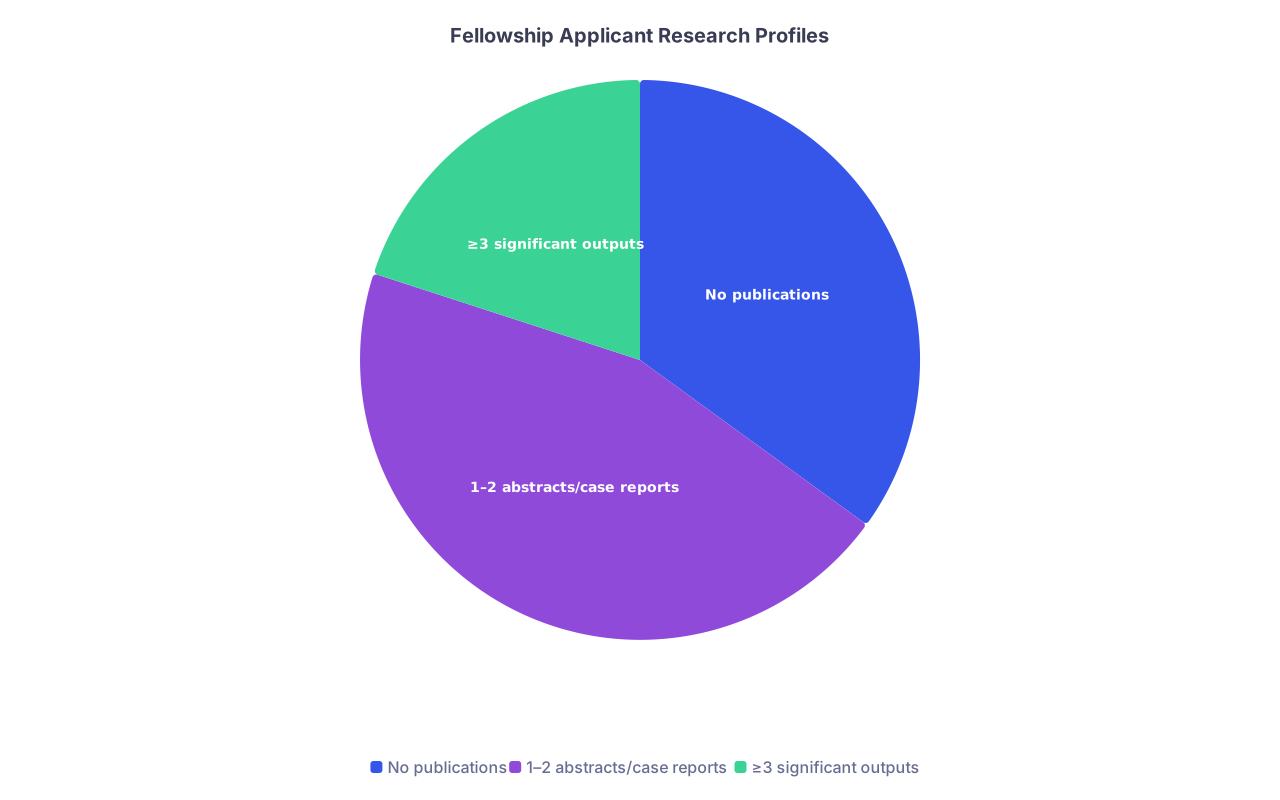
| Category | Value |
|---|---|
| No publications | 35 |
| 1–2 abstracts/case reports | 45 |
| ≥3 significant outputs | 20 |
Interpretation: You don’t need to be in the 20%. But you don’t want to be the 35% with nothing.
9–7 Months Before Fellowship Start (October–December): Strategy and Letters
You are here: mid academic year. Interview season for current seniors is happening. You’re a cycle behind them. Time to get organized.
October: Define your competitiveness and target program tiers
At this point you should:
- Do a brutally honest self-assessment
Look at:
- USMLE/COMLEX scores
- Class ranking / AOA / Gold Humanism (if relevant)
- Research output
- Home institution strength in your subspecialty
- Clinical reputation (ask a trustworthy attending bluntly)
Create rough buckets:
- Strong applicant
- Middle-of-the-pack
- Needs strategy / broad list
- Build an initial program list
Use:
- FREIDA
- Fellowship program websites
- Your mentors’ recommendations
- Where prior residents from your program matched
Aim for a balanced early sketch:
- Some “reach” programs
- A solid core of realistic programs
- A few “safety” options (community or smaller-region fellowships, if they exist in your field)
| Program Type | Approx. Number | Example |
|---|---|---|
| Reach | 5–8 | Top 10 academic names |
| Core/Realistic | 10–20 | Solid regional academics |
| Safety | 3–6 | Smaller/community |
- Clarify letter strategy
You’re aiming for:
- 1–2 letters from subspecialty attendings
- 1 letter from PD or APD (often mandatory)
- Possibly 1 from another strong clinical rotation or research mentor
By end of November:
- Identify exactly who you want letters from.
- Ask verbally in person when you can.
Script to use:
“I’m planning to apply for [X] fellowship this coming cycle. I’ve really valued working with you on [specific thing]. Would you feel comfortable writing me a strong letter of recommendation?”
If they hesitate even slightly, don’t use them. That hesitation shows up in their writing.
6–4 Months Before Fellowship Start (January–March): Content Creation and Exam Clean-Up
You are here: winter. Things feel far away, but this is actually high-yield time. The people who wait until May to write their personal statement always regret it.
January: Lock in letters and projects
At this point you should:
- Formalize letter requests
For each letter writer, send:
- Updated CV
- Brief personal summary:
- Intended specialty
- Career goals (academic vs community vs hybrid)
- Key experiences with that attending
- Draft of your personal statement (if you have it; if not, you’ll send later)
Give them:
- Expected application open/submit dates
- Exact submission platform (ERAS vs other)
- Push research across finish lines
You do not control acceptance. You do control submission.
By end of March, aim to:
- Submit any pending abstract or manuscript.
- Get at least one thing in “submitted” or “in press” status.
If nothing is happening, compress the scope. Turn the giant never-ending project into:
- A single focused case series
- A realistic QI project with measurable outcomes
February–March: Draft your personal statement and CV
At this point you should:
- Have a rough personal statement draft by end of February
Non-negotiable. Bad ones read like:
- “I knew I wanted to be a [subspecialty] during my first rotation when…”
- Random patient vignettes with no point
What works:
- Clear narrative of why this field
- Evidence that your experiences match that story
- Specific career trajectory (even if it evolves later)
Process:
- Version 1: Brain dump without worrying about length
- Version 2: Cut the fluff and cliché
- Version 3: Share with:
- Primary mentor
- One co-resident who writes well
- Maybe your PD or APD
- Polish your CV
By March, your CV should be:
- Cleanly formatted
- Up to date with:
- All presentations/posters
- Leadership roles (chief apps, committees)
- Teaching activities
- Awards
4–2 Months Before Fellowship Start (April–May): ERAS, Programs, and Final Prep
You are here: late spring. Application systems are about to open or already open, depending on specialty. The stress starts to feel real.

April: Get systems and logistics in place
At this point you should:
- Know the exact application platform and dates
- ERAS, SF Match, or specialty-specific portal?
- Exact:
- Application open date
- Submission date
- When programs can see applications
Write these down in a visible place. Calendar reminders. Multiple.
- Finalize your program list
With your mentor and PD, answer:
- How many programs are you applying to?
- Any geographical non-negotiables?
- Any “do not apply here” programs for personality or fit reasons?
Refine that initial list into something you can actually manage. The shotgun approach (50+ programs) is sometimes needed, but for some fields it’s just panic.
- Pre-draft your ERAS content
So you’re not typing in trash at midnight on opening day.
- Translate your CV into ERAS fields.
- Prepare concise descriptions for each experience.
- Decide on which experiences to highlight as “most meaningful” (if applicable for your platform).
May: Lock down letters and test status
At this point you should:
- Confirm all letter writers are on track
Send a polite nudge email:
- Thank them again.
- Remind them of timeline.
- Offer updated CV and personal statement.
Do not wait until 2 weeks before submission day to figure out that your strongest letter writer never logged into ERAS.
- Finish exams and licensing details
By June:
- Step 3 / Level 3 should be done or scheduled with results expected in time.
- Update any license info if you have a training license.
2–0 Months Before Fellowship Start (June–July): Submit and Survive
You are here: high stress zone. Apps are live or about to be. Residents either crush this or miss obvious pieces.
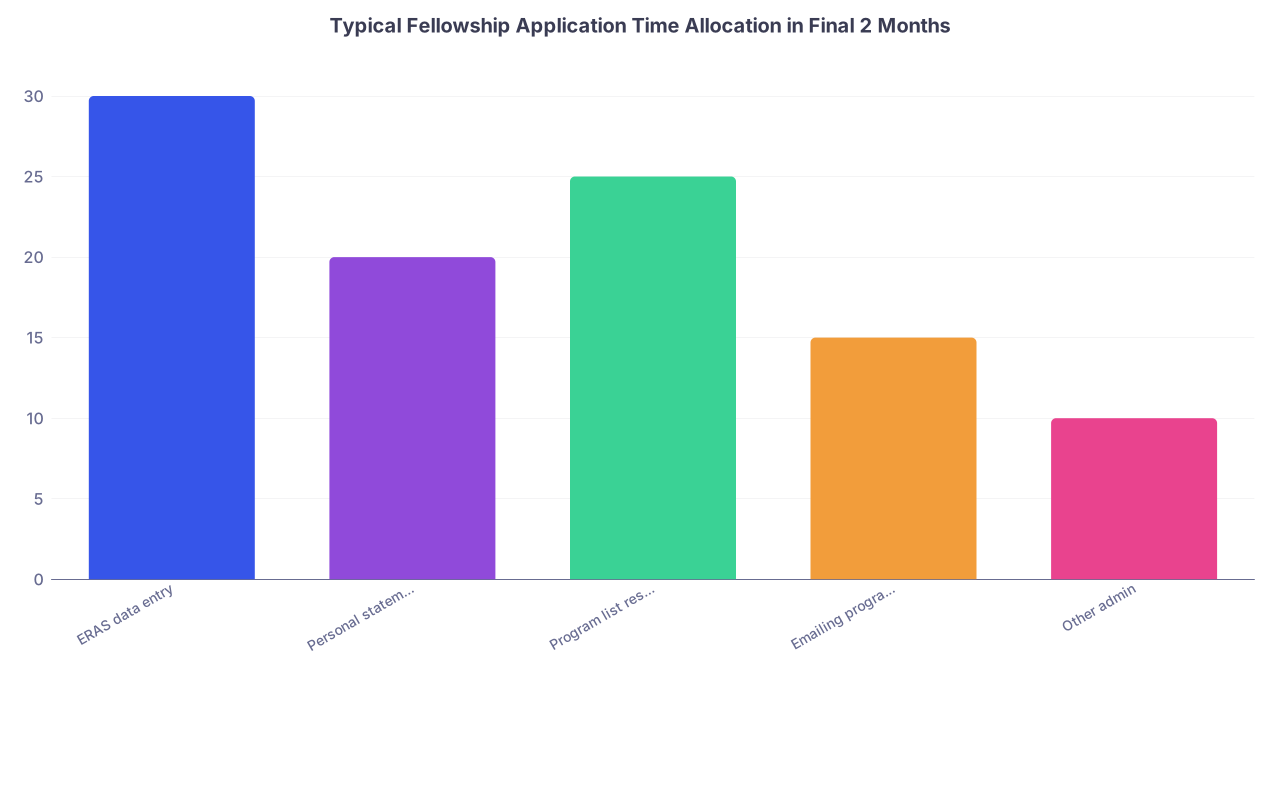
| Category | Value |
|---|---|
| ERAS data entry | 30 |
| Personal statement edits | 20 |
| Program list research | 25 |
| Emailing programs/mentors | 15 |
| Other admin | 10 |
June: Application building
At this point you should:
- Complete all standard fields
Systematically:
- Demographics, education, training
- Board scores (where applicable)
- Experiences and descriptions
- Publications/presentations
Do not improvise dates or titles. Programs notice inconsistencies between CV and ERAS.
- Finalize your personal statement per program or per specialty
Some people:
- Use one generic statement for all
- Modify a paragraph for certain program types or geographic regions
Reasonable approach:
- One strong core statement
- A couple of optional program-specific lines if you actually have a connection (medical school here, partner’s job, etc.)
- Double-check letters are uploaded
Log into the system:
- Verify each letter is:
- Received
- Assigned to each program
If someone’s letter is missing, you kindly (but clearly) ask if they need anything to complete it.
July/August: Submission and immediate post-submission
At this point you should:
- Submit as early as your specialty recommends
For competitive fellowships, waiting weeks after applications open is just a self-inflicted wound.
Target:
- Submit within the first 48–72 hours of the system allowing transmission to programs.
- Send a short, targeted courtesy email where it makes sense
To:
- Home institution fellowship PD
- External mentors at other institutions (if appropriate)
- A few programs where you have a genuine connection
Content:
- One paragraph max:
- Who you are
- Your interest in their program
- That you’ve submitted an application
- Optional: mention shared research interest or a connection
No essays. No desperation.
Interview Season (July–November): Invites, Scheduling, and Ranking
You are here: your phone is now an anxiety machine. Emails, voicemails, scheduling portals.
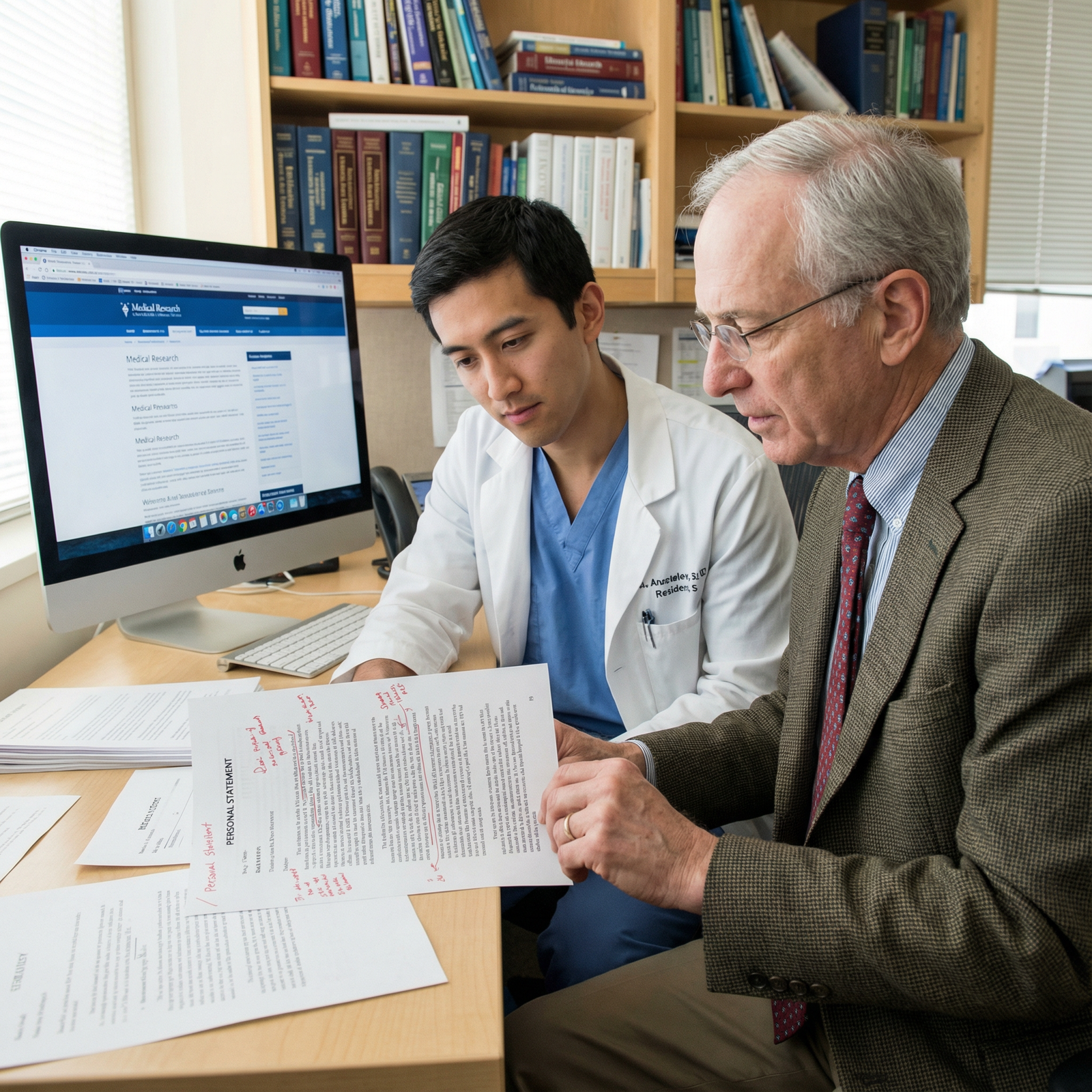
At this point you should…
- Respond fast, but not frantically
When invites come:
- Reply same day if humanly possible.
- Have a rough priority list of programs beforehand so you don’t freeze.
Keep one centralized calendar with:
- Clinic duties
- Call shifts
- Interviews
- Travel (if in-person)
- Coordinate with your chiefs/PD early
You’ll need:
- Clinic cancellation or coverage
- Switches for call/weekend duties
Ask early, nicely, and with a plan:
- “I have 3 interviews in October. Can we block those days in advance or arrange coverage?”
- Prepare for each interview in a focused way
Night before:
- Review program specifics: structure, tracks, research strengths.
- Know 2–3 faculty names whose work you can comment on.
- Prepare 3–4 thoughtful questions that are not answered on their website.
- Post-interview: document, don’t obsess
After each interview:
- Write down:
- Gut impression
- Pros/cons
- Any red flags in culture or training
- How fellows looked: tired, engaged, supported?
This matters more than whatever glossy slide deck they showed you.
- Communications after interviews
You do not need elaborate thank-you novels.
Reasonable approach:
- Simple thank-you email to the coordinator or main interviewer within 48 hours.
- If a program is your top choice later, a clear, honest note at the right time is fine (assuming that’s allowed by your specialty’s communication rules).
Ranking and the Home Stretch
You are here: late interview season / post-interview lull. You’re tired. You want this done.

| Step | Description |
|---|---|
| Step 1 | Interviews completed |
| Step 2 | Reflect on each program |
| Step 3 | Discuss with mentors |
| Step 4 | Draft rank order |
| Step 5 | Adjust for personal factors |
| Step 6 | Finalize rank list |
| Step 7 | Submit before deadline |
At this point you should:
- Talk bluntly with mentors and your PD
- Show them your draft rank list.
- Ask directly:
- “Given my goals, does this order make sense?”
- “Are there programs you’d move up or down based on reputation or fit?”
- Weigh real-life factors
You can pretend location, partner, and burnout risk don’t matter. They do.
Consider:
- Geographic support (family, partner job)
- Call schedule and culture
- Where recent graduates ended up (jobs, academic vs private)
- Submit your rank list on time, not at the last second
Obvious. But residents have absolutely missed deadlines before.
Take screenshots. Confirm submission. Do not rely on “I think I pressed submit.”
Quick Month‑by‑Month Checklist
| Months Before Start | Main Focus |
|---|---|
| 12–10 | Decide field, find mentors |
| 9–7 | Program research, letter plan |
| 6–4 | Personal statement, CV, projects |
| 4–2 | ERAS prep, finalize programs |
| 2–0 | Submit apps, manage letters |
| Interview Season | Interviews, thank yous, ranking |

FAQ (4 Questions)
1. How many fellowship programs should I apply to?
Depends on field and competitiveness. For highly competitive IM subspecialties (cards, GI), many residents apply to 25–40 programs if they’re average-strength applicants. Stronger candidates with solid home programs might target 15–25. Talk numbers with your PD—they know your specific market better than any generic online advice.
2. What if my research is weak or non-existent?
Then you lean hard into your clinical strength, teaching, and clear narrative. But let me be direct: in many academic subspecialties, zero research is a real handicap. You should scramble now for at least a small, achievable project. Even a single abstract or case report signals that you can complete scholarly work.
3. How bad is it if one letter is late or missing?
Pretty bad if it’s your PD letter or your main subspecialty letter. Programs notice. You want all core letters in before you submit. A fourth “bonus” letter being late is survivable. If an essential letter writer is chronically non-responsive, pivot early and ask someone else.
4. Can I switch fellowship interests late (e.g., from cards to heme/onc in January)?
You can, but you’ll pay for it. Your rotations, mentors, and research may no longer line up. If you’re genuinely miserable in your original choice, it’s better to pivot than to lock yourself into the wrong field—but do it by early winter at the latest, and immediately connect with a new mentor to rebuild your story and letters quickly.
Key takeaways:
- The best fellowship applications are built 9–12 months out, not 9–12 days before ERAS opens.
- Mentors and letters matter as much as raw stats—get those relationships and commitments early.
- Protect your time in the final 3–4 months so you can submit early, interview well, and build a rank list that matches your actual life, not just your CV.


