

The worst way to plan for fellowship is to “figure it out later.”
By the time you feel ready, the calendar has already closed the doors you needed open.
If you want a realistic shot at a competitive fellowship, your rotation schedule from PGY‑1 onward must be intentional. Month by month. Block by block. You are building a narrative and a network, not just surviving the call schedule.
Below is the timeline I wish more residents saw on day 1.
Big Picture: The Fellowship Timeline You’re Actually On
First, anchor the dates. Fellowship applications do not care that you “just started” residency.
For a standard 3‑year residency (IM, Peds, EM), here is your real application window:
| Training Year | What Happens | Typical Timing |
|---|---|---|
| PGY-1 | Exposure & early networking | July–June |
| PGY-2 | Core rotations, auditions, letters | July–June |
| PGY-3 | Applications & interviews | July–March |
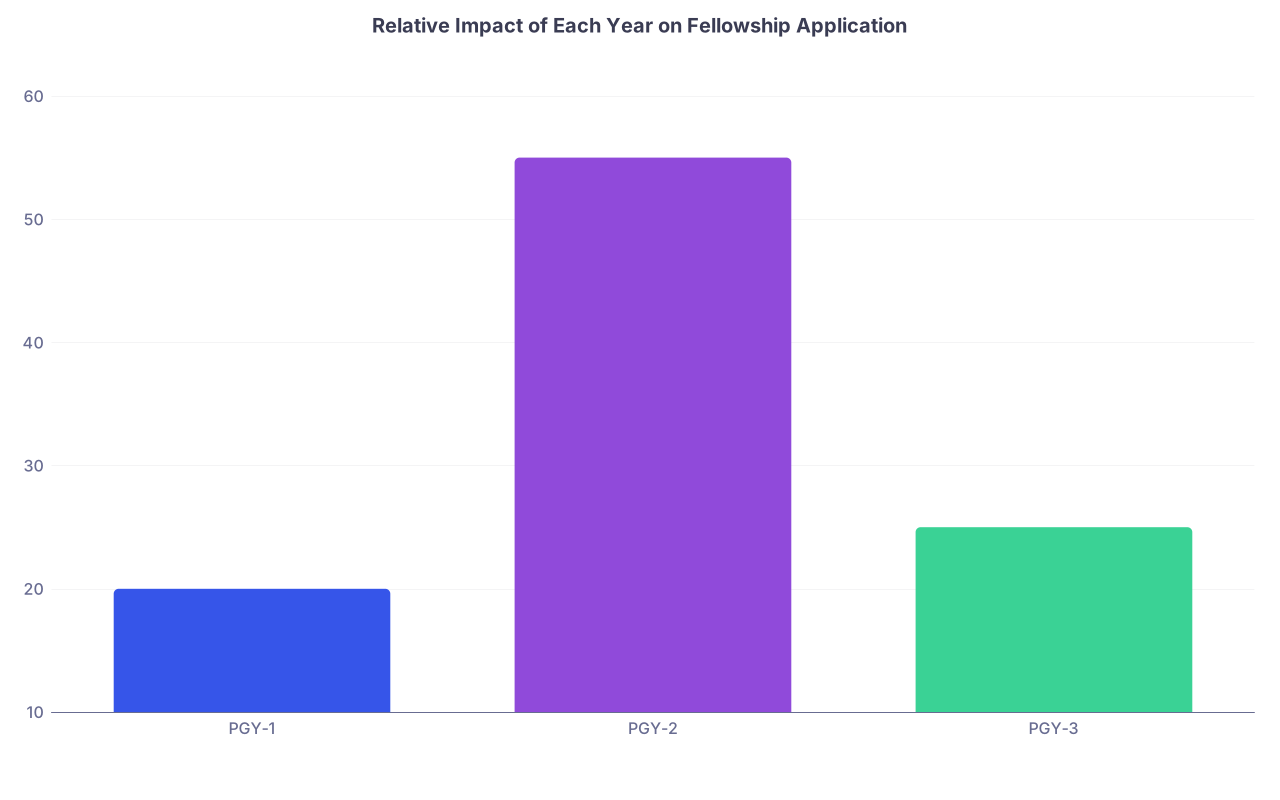
| Category | Value |
|---|---|
| PGY-1 | 20 |
| PGY-2 | 55 |
| PGY-3 | 25 |
- PGY‑3: You submit your fellowship applications early in the year (often July–September).
- That means almost everything that matters was already done in PGY‑1 and PGY‑2.
- Your PGY‑3 schedule matters mainly for interviews and finishing strong, not for “catching up.”
So your question is not abstract. It is:
Exactly when in PGY‑1 and PGY‑2 should you schedule key rotations to help your fellowship application?
Let’s walk it chronologically.
PGY‑1: Months 1–12 – Exposure, Early Impressions, and Quiet Positioning
PGY‑1 is not when you “apply.” But it is when people decide if they will ever write you a strong letter.
Months 1–3: Just Survive, But Pay Attention
At this point you should:
- Focus on being reliable, teachable, and not a disaster on the wards.
- Identify which subspecialties you might actually enjoy more than 2 weeks.
- Note which attendings are clearly respected and known in their fields.
Rotation priorities:
- You do not need niche electives yet.
- Aim to keep:
- Heavy inpatient rotations early (helps you toughen up, meet leaders).
- Try to avoid stacking brutal blocks before an in‑service exam if your program allows any input.
What matters this early?
- Showing up prepared.
- Asking smart, limited questions.
- Recovering quickly from mistakes.
You are building your “baseline reputation.” This will follow you into PGY‑2.
Months 4–6: Start Targeted Exposure (Without Overcommitting)
At this point you should:
- Lock in your top 1–2 fellowship interests, even if tentatively. Cards vs GI. Heme‑Onc vs ID. NICU vs PICU.
- Request at least one early exposure rotation in your potential field if scheduling allows.
Examples:
- IM resident considering Cardiology:
- Try to get a Cardiology ward month or CCU block in the second half of PGY‑1.
- Peds resident considering NICU or PICU:
- Early NICU/PICU or step‑down months matter; you learn the culture and key attendings.
Goals of these rotations:
- Get your name and face recognized.
- Find at least one attending you would not mind having as a mentor.
- See if the day‑to‑day life of that subspecialty actually fits you.
You are not asking for letters yet. You are building context.
Months 7–12: Deliberate Relationship‑Building and Smart Electives
This is when residents either coast or quietly move the chess pieces.
At this point you should:
- Narrow to 1 serious fellowship target (you can keep a backup in your head).
- Look ahead to PGY‑2 and request:
- 1–2 prime‑time rotations in that field (more on “prime‑time” in the next section).
- Electives that build relevant skills or research time.
Rotations to prioritize late PGY‑1:
Subspecialty electives that preview PGY‑2
Example: Clinic‑based Rheumatology if you are fellowship‑curious but not sure.
Example: Infectious Disease consults if ID is on your short list.Research or QI elective
- Especially valuable in fields that care about CV heft (Cards, GI, Heme‑Onc, Critical Care).
- Use this to:
- Join an ongoing project.
- Collect data or chart review that can carry into PGY‑2.
Rotations with education‑minded attendings
- The best future letter writers are often those who actually teach on rounds, give feedback, and remember residents’ names.
Your objective by the end of PGY‑1:
- 1–2 potential mentors identified.
- An idea of which rotations you want early PGY‑2 with those mentors.
- One small project started or at least a plan to join one.
PGY‑2: The Critical Year – When Rotation Timing Really Counts
PGY‑2 is where fellowship applications are effectively made. Your schedule now either helps you or handicaps you.
Key reality: Your fellowship application will mostly reflect work done between July PGY‑1 and January PGY‑2.
Everything after that is marginal gains.
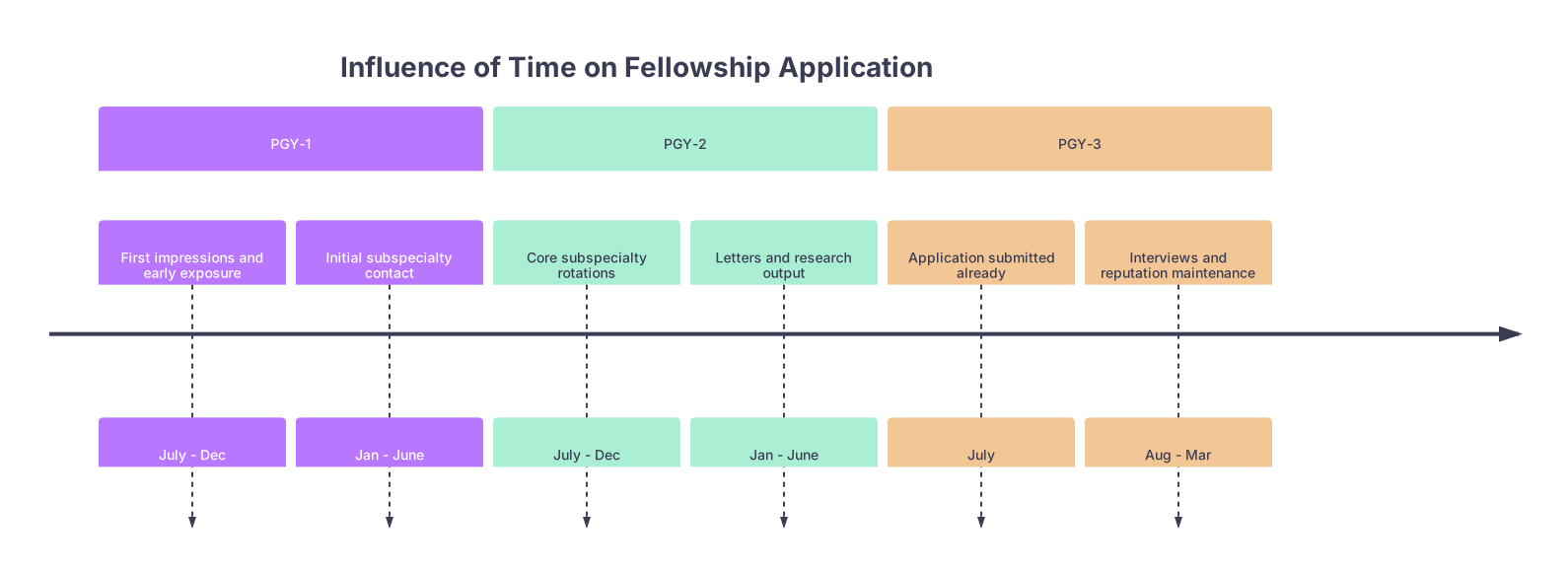
| Period | Event |
|---|---|
| PGY-1 - First impressions and early exposure | July - Dec |
| PGY-1 - Initial subspecialty contact | Jan - June |
| PGY-2 - Core subspecialty rotations | July - Dec |
| PGY-2 - Letters and research output | Jan - June |
| PGY-3 - Application submitted already | July |
| PGY-3 - Interviews and reputation maintenance | Aug - Mar |
PGY‑2, Months 1–3 (July–September): Prime “Audition” Rotations
At this point you should:
- Be on a high‑visibility rotation in your intended fellowship field if you can possibly arrange it.
- Work directly with attendings who are capable of writing strong, name‑recognizable letters.
Ideal rotations here:
- IM → Cardiology: CCU, cardiology wards, echo lab plus consults.
- IM → GI: GI consults with heavy inpatient exposure.
- IM → Heme‑Onc: Inpatient Heme‑Onc or dedicated malignant hematology.
- Peds → NICU: High‑acuity NICU with academic faculty.
- Peds → PICU: Core PICU month with fellowship‑trained intensivists.
- EM → Ultrasound / ICU / subspecialty ED month linked to your goal (Toxicology, Ultrasound, Critical Care).
Why this window matters:
- You are now good enough clinically to impress people.
- You still have time after this to:
- Ask for letters.
- Start or expand research.
- Pick up a second rotation in the same field if needed.
During these months:
- Take notes after each shift on specific patient cases and feedback you received. When you ask for letters later, these details help jog the attending’s memory and improve letter quality.
- Signal interest like an adult, not a fangirl:
- “I am strongly considering GI fellowship and would appreciate your feedback on how competitive I might be and what to focus on this year.”
PGY‑2, Months 4–6 (October–December): Letters, Research Momentum, Second Look
This is the letter‑writing season whether programs say it out loud or not.
At this point you should:
- Have at least 1 major rotation in your target field behind you.
- Be scheduling either:
- A second rotation in the same field with different faculty, or
- A research/QI block directly tied to that subspecialty.
Rotations to prioritize:
Second subspecialty block (preferably October–November)
- Lets you:
- Work with additional attendings = more letter options.
- Show consistency, not just a one‑off good month.
- Lets you:
Research elective (October–January window)
- Use this to:
- Finish at least one abstract or poster.
- Get on a manuscript, even as middle author.
- Conference submissions for many big meetings (ACC, ATS, ASH, PAS, etc.) fall in this stretch or shortly after.
- Use this to:
When to ask for letters:
- Ask your strongest attendings near the end of a subspecialty rotation while you are still fresh in their minds.
- Ideal window: Late October through February PGY‑2.
- You want letters done or at least promised by spring of PGY‑2.
What to say:
- “I am planning to apply for [X] fellowship this coming cycle. I really valued working with you on [rotation]. Do you feel you know me well enough to write a strong letter of support?”
If they hesitate or waffle, that is a “no.” You want people who say yes immediately and offer specifics.
PGY‑2, Months 7–9 (January–March): Solidifying Your Application Backbone
By now:
- You should know your top fellowship choice.
- You should have 2, ideally 3 committed letter writers.
- You should have at least one tangible scholarly product brewing.
At this point you should:
- Protect time for:
- Finishing abstracts/manuscripts.
- Setting up away/audition electives if your field cares about them (more in the next section).
- Taking on leadership roles (chief of a rotation, curriculum committee, etc.) if that aligns with your fellowship culture.
Rotations to prioritize now:
- Balanced: Do not load these months with rotations that crush your ability to do any academic work (e.g., back‑to‑back ICU + nights + ED with no off days), unless you have already locked in your scholarly output.
- Strategic consult services:
- IM → ID, Nephro, Palliative, Pulm consults that showcase your consult etiquette and communication.
- Peds → Complex care, subspecialty clinics, developmental peds.
Why this period matters:
- Programs want to see that your trajectory is upward, not that you peaked on one subspecialty month and then coasted.
- You may get informal pre‑application feedback from faculty during this time: realistic program tiers, where they can call for you, etc.
PGY‑2, Months 10–12 (April–June): Clean‑Up, Backup Planning, and PGY‑3 Prep
This is where you correct earlier mistakes.
At this point you should:
- Identify any gaps:
- No strong inpatient month in your field?
- No continuity with your main mentor?
- Weak research output?
Then you fix what you can with late PGY‑2 and early PGY‑3 scheduling.
Rotations to schedule now:
Final subspecialty block PGY‑2 or very early PGY‑3
- For residents whose earlier rotations were mediocre or mistimed.
- Helps create a more recent data point for letters and application narratives.
Light rotation June PGY‑2 or July PGY‑3
- You want some breathing room during:
- Application writing.
- Fellowship personal statement work.
- ERAS (or equivalent) assembly.
- You want some breathing room during:
At the end of PGY‑2 you should have:
- Letters lined up or already uploaded.
- At least one strong subspecialty month with your primary mentor.
- A second subspecialty month or closely related elective.
- Evidence of academic or leadership engagement, even if small.
If you do not, you will be playing defense in PGY‑3.
PGY‑3: Applications, Interviews, and Not Sabotaging Yourself
By PGY‑3, the die is mostly cast. Rotation timing now is more about not getting in your own way.
Months 1–3 (July–September): Application Submission + Interview Scheduling
At this point you should:
- Have a lighter front‑loaded PGY‑3 if at all possible:
- Avoid ICU, nights, or heavy holiday coverage precisely when applications are due.
- Good options: Outpatient clinics, electives, research blocks, or daytime ward months with predictable schedules.
Key reason:
You will be juggling:
- Finalizing your CV and personal statement.
- Asking for last‑minute letter tweaks.
- Responding to program emails quickly.
- Starting to receive interview invites.
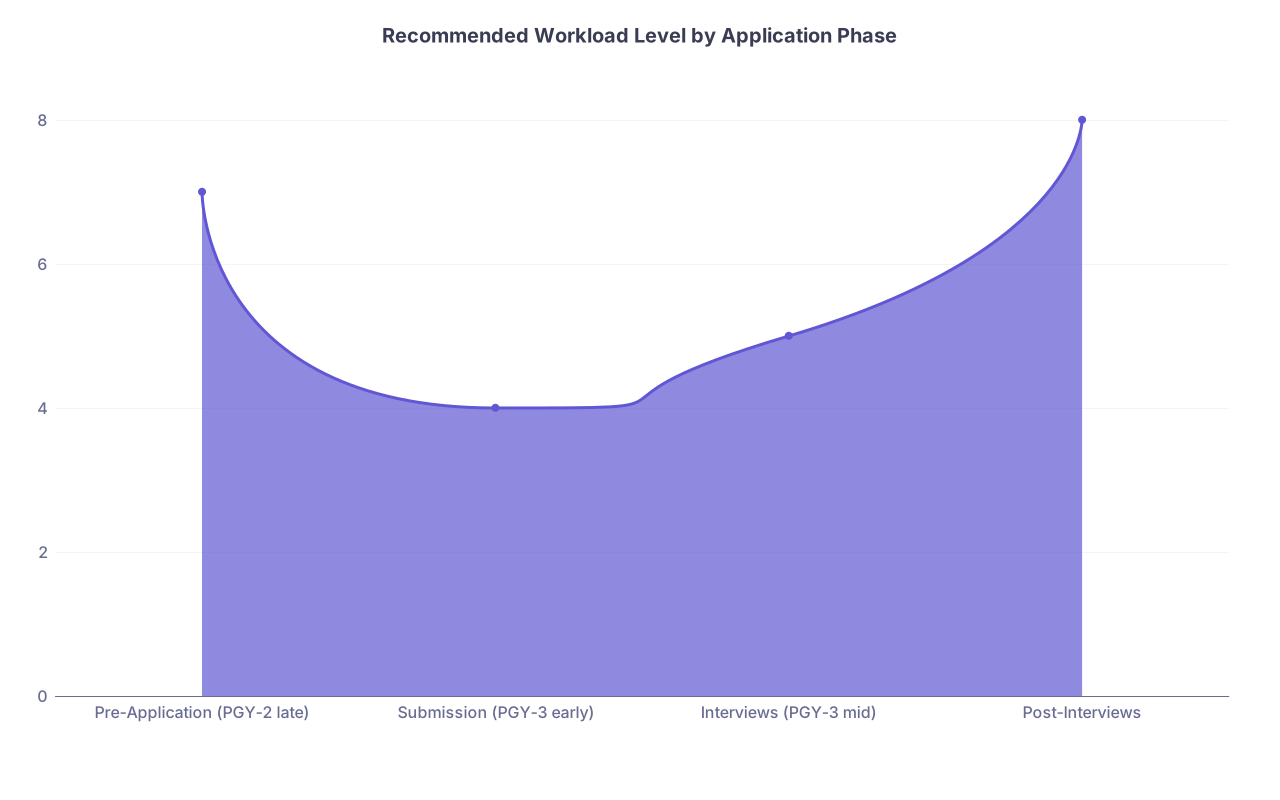
| Category | Value |
|---|---|
| Pre-Application (PGY-2 late) | 7 |
| Submission (PGY-3 early) | 4 |
| Interviews (PGY-3 mid) | 5 |
| Post-Interviews | 8 |
Try not to schedule:
- Back‑to‑back nights in August when 90% of invites are coming.
- Unavoidable 24‑hour call right before major virtual interview days.
If your program gives you minimal say, advocate early:
- “I will be applying to fellowship; can we keep one of July–September somewhat lighter for applications and interviews?”
Months 4–6 (October–December): Interview Season and Visible Maturity
At this point you should:
- Be in rotations that still let you look competent and senior in your own residency.
- Avoid being so exhausted that you are incoherent on Zoom interviews.
Good choices:
- Senior ward months where you can showcase leadership and then discuss those experiences in interviews.
- Electives with flexible schedules (palliative, consult services with lighter call).
- Any block where swapping a day or two for interviews is less disruptive.
Bad choices:
- Stacked ICU rotations with Q2 or Q3 calls across multiple months in peak interview season.
- Rotations with program directors who resent you constantly leaving for interviews.
If you must be on a heavy rotation:
- Communicate early with your attending and PD. Spell out expected interview dates and propose coverage plans.
Months 7–12 (January–June): Finish Strong and Prepare For Transition
Fellowship rank lists are usually in. Your job now:
- Do not implode.
- Maintain the clinical skills and leadership that got you where you are.
Rotation priorities:
- At least one solid senior month that leaves your chiefs and PD comfortable signing off on you.
- Avoid “checking out” on key rotations in your fellowship target field. Faculty talk.
You may also schedule:
- A final subspecialty elective just before fellowship starts to sharpen skills.
- Time off for moving if fellowship is in another city.
Special Cases: Away Rotations and Highly Competitive Fellowships
Some fellowships care a lot about external impressions (e.g., certain Surgical subspecialties, some highly competitive Cards or GI programs, Pediatric subspecialties at top‑tier institutions).
When to schedule away/audition rotations:
- Late PGY‑2 or very early PGY‑3 is best:
- You are competent enough clinically.
- There is still time for them to see you before they rank applicants.

Do not:
- Use an away rotation as your very first exposure to that subspecialty. That is how you get exposed as unprepared.
Do:
- Preview the field at home first.
- Get a home institution mentor to email the away site’s faculty on your behalf where appropriate.
Fields where careful timing is particularly critical:
| Fellowship Field | Key Rotations | Best Timing |
|---|---|---|
| Cardiology | CCU, cards consults | Early–mid PGY-2 |
| GI | GI consults, hepatology | Early–mid PGY-2 |
| Heme-Onc | Inpatient Heme-Onc | Early–mid PGY-2 |
| Pulm/CC | MICU, pulm consults | Early PGY-2 + second block |
| NICU/PICU | High acuity units | Late PGY-1 + early PGY-2 |
Putting It All Together: A Model Month‑by‑Month Skeleton
This is example structure for a 3‑year IM resident aiming for Cardiology. Adjust for your specialty, but the logic holds.
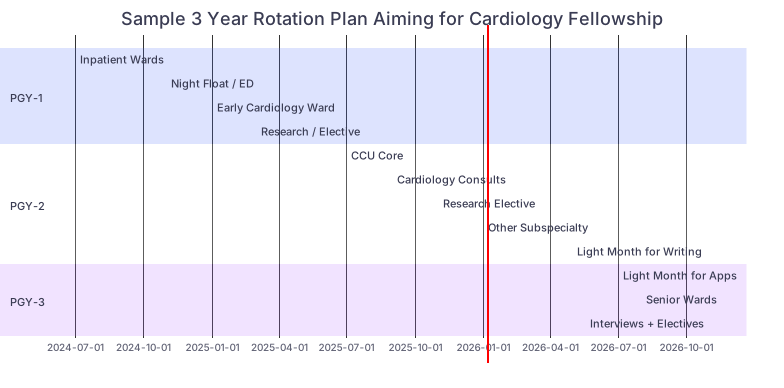
| Task | Details |
|---|---|
| PGY-1: Inpatient Wards | p1, 2024-07, 4m |
| PGY-1: Night Float / ED | p2, 2024-11, 2m |
| PGY-1: Early Cardiology Ward | p3, 2025-01, 1m |
| PGY-1: Research / Elective | p4, 2025-03, 1m |
| PGY-2: CCU Core | p5, 2025-07, 1m |
| PGY-2: Cardiology Consults | p6, 2025-09, 1m |
| PGY-2: Research Elective | p7, 2025-11, 1m |
| PGY-2: Other Subspecialty | p8, 2026-01, 3m |
| PGY-2: Light Month for Writing | p9, 2026-05, 1m |
| PGY-3: Light Month for Apps | p10, 2026-07, 1m |
| PGY-3: Senior Wards | p11, 2026-08, 3m |
| PGY-3: Interviews + Electives | p12, 2026-11, 3m |
You do not need this exact layout. But you do need this level of intentionality.
Final Checklist by Year

By End of PGY‑1, You Should Have:
- One or two exposures to your potential fellowship field.
- At least one attending who knows your name and work ethic.
- A draft idea for a research or QI project, ideally already started.
- Requests submitted (if allowed) for key PGY‑2 subspecialty months in July–December.
By End of PGY‑2, You Should Have:
- At least 2 solid rotations in your target field, with different attendings.
- 2–3 strong letter writers who have agreed explicitly.
- At least one tangible scholarly product (abstract, poster, submitted paper, or serious QI project).
- A PGY‑3 schedule that is lighter around application and interview season.
By PGY‑3 Application Month, You Should Have:
- Fellowship application materials drafted before the heaviest rotations.
- A schedule that allows you to actually attend interviews.
- Enough senior‑level rotations to make your PD comfortable signing off that you are ready for fellowship.

Core Takeaways
- The decisive year for fellowship is PGY‑2; your key subspecialty rotations should cluster in July–December of that year.
- Schedule at least two substantial rotations in your target field with different attendings before applications open, and secure letters soon after.
- Treat your PGY‑3 schedule as support infrastructure for applications and interviews, not as a last‑minute chance to “prove yourself.”


