

It’s January of your PGY-2 year. Night float just ended, your inbox is full of random committee emails, and your chief casually says on rounds: “Hey, you should get your fellowship letters lined up by summer.”
You smile, nod, and inside you’re thinking: Wait. I still don’t even know exactly what I want. And my elective schedule is basically a game of Tetris.
This is the moment where elective timing starts to matter. A lot.
You are here:
- You’ve finished at least half of intern year.
- You’re leaning toward a fellowship (cards, GI, heme/onc, PICU, whatever).
- Your schedule isn’t locked yet — or you might still be able to swap.
From here on, every month has a “best move” if you want your rotations, mentors, and letters to actually line up with fellowship deadlines instead of tripping over them.
Let’s walk it month-by-month and specialty-by-specialty.
1. First, Know the Fellowship Clocks You’re Dealing With
The fellowship timelines are not all the same, and if you ignore that, you will time your electives wrong.
Here’s the rough timing for the big NRMP Medical Specialties Matching Program (MSMP) fellowships (cards, GI, heme/onc, pulm/crit, etc.):
| Step | Approx Timing (for PGY-2s applying) |
|---|---|
| ERAS opens to applicants | Mid-late November (PGY-2) |
| Programs start downloading | Early December (PGY-2) |
| Application due window | December–January (PGY-2) |
| Interviews | February–May (PGY-2) |
| Rank list due | Late May–June (PGY-2) |
| Match Day | Late June (PGY-2) |
For most internal medicine and peds subspecialties:
- You apply in the middle of PGY-2.
- You start fellowship after PGY-3.
Some outliers:
- Neonatology, pediatric subspecialties, some others: often very similar schedule, but check your specialty’s NRMP/ERAS page now, not “later.”
- EM fellowships (toxicology, ultrasound, admin) and non-NRMP fellowships: wildly variable. They may open applications PGY-2 or PGY-3, some even rolling.
So from a rotation-planning standpoint, here’s the key thing:
Your most critical fellowship-aligned rotations need to happen from:
Late PGY-1 → PGY-2 spring, with a few targeted ones in early PGY-3 for backup letters/experience.
2. PGY-1: Laying the Groundwork (Yes, This Early)
You’re not applying yet. You might not even know your fellowship goal yet. Still, how you spend PGY-1 sets up your options.
Months 1–6 of PGY-1: Exposure and Data Gathering
At this point you should:
- Stop pretending you’ll “figure it out later.” Start paying attention.
- Track which rotations light you up after week 2, when the initial panic fades.
- Notice which attendings you’d actually want as fellows-hip letter writers.
If your program lets you choose any PGY-1 electives (some do, some do not):
- Load one or two subspecialty electives you think you might like in the second half of intern year.
- Do not blow all your good electives early on things you “just want to get out of the way.” That’s how people end up doing cardiology in PGY-3 after submitting a cardiology application with zero cards letters.
Good intern-year electives for “fellowship maybe” thinking:
- For IM: cardiology consults, heme/onc, ICU (MICU/NICU/PICU), nephrology, GI.
- For peds: NICU, PICU, heme/onc, cardiology, pulmonary.
- For EM: ultrasound, tox, ICU.
Your goal in PGY-1 isn’t to lock in a path. It’s to:
- Figure out what you definitely don’t want.
- Identify 2–3 subspecialties that are plausible targets.
- Meet at least 2 attendings who could someday write a strong letter.
3. PGY-2: The Critical Application Year
This is where people screw up elective timing the most. They either:
- Pack all their dream electives into late PGY-2 after their application is already submitted, or
- Burn out on wards all spring while others are getting to know fellowship faculty.
Let’s map PGY-2 month by month with the MSMP schedule in mind.
July–September PGY-2: Decision + Strategic Electives
At this point you should:
- Commit (at least 80–90%) to your fellowship target by end of September.
- Frontload at least one key subspecialty elective July–September in that area.
Why early PGY-2?
Because:
- You need time to impress someone.
- Then time to ask for a letter.
- Then time for them to actually, you know, write it.
- All before your ERAS fellowship application opens in November.
On these early PGY-2 electives:
- Show up like this is an audition month. Because it is.
- Ask for concrete feedback in week 2:
“I’m seriously considering GI fellowship. Is there anything I should focus on this month to be more competitive?” - By week 3–4, if it’s going well, say clearly:
“I’m planning to apply to GI this cycle — would you be comfortable writing a strong letter for me?”
Lock down at least one subspecialty elective in your target field during this window. Two is better, but one high-yield month with the right person is worth more than three anonymous consult rotations.
October–November PGY-2: Letter Consolidation + Application Build
Now the timing really crunches.
At this point you should in October:
- Have your fellowship target clearly decided.
- Have 2 letters essentially confirmed (they may not be uploaded yet, but the attendings have said yes).
- Be scheduled for no new critical subspecialty electives that start after November, expecting them to save your application. It will be too late for letters from those.
Ideal rotation structure October–November:
- One lighter rotation (clinic block, elective, or a non-malignant consult month) to:
- Work on your personal statement.
- Update CV.
- Nudge letter writers.
- Avoid IF YOU CAN:
- ICU + night float stacked with your entire fellowship prep. You’ll do it if you must, but it’s miserable.
ERAS opens to you in mid-late November:
- You enter info, upload personal statement, request letters.
- Programs usually see applications starting early December.
You want your key rotations and relationships already in the rearview mirror by this point, not upcoming.
December–January PGY-2: Submission Window
By early December you should:
- Have your ERAS fellowship application submitted or ready to submit.
- Have at least 2 letters uploaded, ideally 3.
Your rotation priorities now:
- Minimize chaos.
You will be emailing programs, answering random requests, maybe doing early virtual interviews. - Good blocks here:
- Outpatient blocks
- Research electives
- Lighter subspecialty rotations where you’re not on 6-day weeks
You can still squeeze one more letter out of a December rotation if:
- You’re doing a second month with an attending you already know.
- You’re applying to a field where January letters are still acceptable. But for most competitive MSMP fellowships, a December-start elective is late for primary letter generation.
February–May PGY-2: Interview Season
This is where past-you either helps or screws present-you.
At this point you should:
- Expect interviews scattered brutally across these months.
- Anticipate needing random full or half days free, often with short notice.
Do yourself a favor with rotations here:
- Avoid heavy ICU stretches if you can’t realistically step away for 3–4 half-days of interviews.
- Steer clear of rotations where your absence destroys the team (small community ICUs, solo night float).
- Aim for:
- Outpatient blocks
- Electives with predictable hours
- Research months
Programs know this is the interview window. Most chiefs will work with you if you plan early. The residents who get destroyed are the ones who pretend interviews “won’t be that many,” then match at 15+ places and try to juggle them on MICU.
June PGY-2: Rank List and Match
Honestly, by this time:
- Your rotation choice matters less for fellowship, more for your sanity.
- But it’s a nice place for a chill(er) month:
- Clinic
- Teaching elective
- Admin/QI
You submit rank lists late May–June; match hits late June.
Then PGY-3 starts, and you’re in the “protect what matters and prep for fellowship” phase.
4. PGY-3: Cleanup, Prep, and Backup Options
You’ve either:
- Matched into fellowship
- Or you didn’t, and now you need a salvage plan.
Either way, PGY-3 rotation timing still matters.
If You Matched
At this point you should:
- Use early PGY-3 to fill actual knowledge gaps for your future fellowship.
Examples:
- Matched into cardiology?
- PGY-3 electives: additional CCU, general cardiology clinic, maybe cardiac imaging if available.
- Matched into GI?
- Hepatology block, GI clinic, maybe another inpatient GI month to not feel useless as a first-year fellow.
- Matched into heme/onc?
- Outpatient oncology, BMT/Cell therapy exposure, palliative care.
Also:
- Avoid stacking every miserable rotation in late PGY-3 when you’re supposed to be transitioning and moving.
If You Did Not Match (Or Are Applying Off-Cycle/Non-NRMP)
You need a different timeline.
At this point you should:
- Frontload PGY-3 with high-impact subspecialty rotations in your target field.
- Line up new letters that explicitly address your growth since the last cycle.
- Schedule research/QI time to generate something concrete: poster, abstract, small paper.
Your new unofficial timeline:
- July–November PGY-3:
- Heavy subspecialty + research.
- Get 1–2 new letters.
- December–March PGY-3:
- Apply to off-cycle spots, unfilled positions, non-NRMP fellowships.
- Later PGY-3:
- Keep one foot in your home specialty in case you work as a hospitalist or generalist for a year while reapplying.
5. Specialty-Specific Elective Timing Traps (And Fixes)
Different fellowships punish bad timing in different ways. Here’s where people I’ve seen get burned the most.
Cardiology
Common mistake:
- Doing your first real cardiology consult month November of PGY-2.
- Result: generic letter from someone who barely knows you, and your app looks late/immature.
Better timing:
- PGY-1 late: one exposure month if possible.
- July–September PGY-2: a serious cardiology consult month or CCU where you:
- Work with the fellowship PD or major faculty.
- Ask directly about a letter by week 3.
- PGY-3: advanced or imaging electives after you match.
Gastroenterology
Common mistake:
- Loading GI in February–April PGY-2 to “show interest” — after apps are already in.
Better timing:
- PGY-1: general GI exposure if available.
- Early–mid PGY-2 (July–October):
- Inpatient GI
- Hepatology
- Maybe one month clinic-focused GI
- Use February–April PGY-2 instead for interviews, not brand-new relationship building.
Heme/Onc
Common mistake:
- Only doing one heme/onc month as an R1, then assuming “I’ll get letters later” and never getting back to it.
Better timing:
- PGY-1 late: first heme/onc exposure.
- Early PGY-2: second heme/onc month focused on:
- Continuity in clinic (see return patients).
- Getting to know at least 2 potential letter writers.
- Research elective somewhere in PGY-1/PGY-2 if you’re serious; then mention this on electives so faculty see the longitudinal interest.
Critical Care / Pulm-Crit
Common mistake:
- Doing first true MICU month January PGY-2, being overwhelmed, and coming off that month too exhausted to even think about asking for letters.
Better timing:
- PGY-1: one ICU month to see if you like it.
- PGY-2 July–October:
- One ICU month where you’re actually functional and can shine.
- If you’re pulm/crit-bound:
- Have at least one pulmonary consult or clinic elective pre-application.
- Do not only have ICU and zero pulm on your CV.
6. How to Sequence Your Entire Residency Schedule (Macro View)
Let’s put this together in a simplified “ideal” layout for a typical three-year IM resident aiming for a fellowship with a standard MSMP timeline.
Big-Picture Gantt-Style View
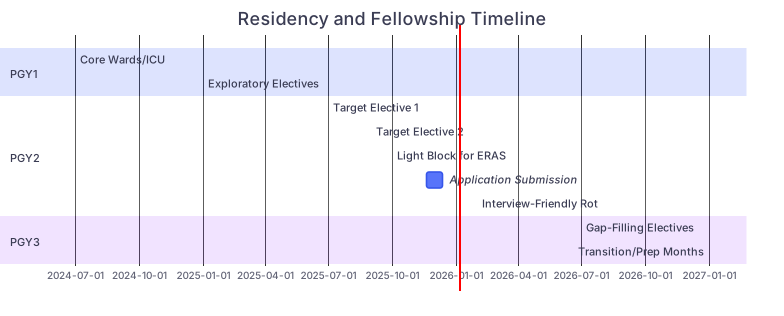
| Task | Details |
|---|---|
| PGY1: Core Wards/ICU | a1, 2024-07, 6m |
| PGY1: Exploratory Electives | a2, 2025-01, 3m |
| PGY2: Target Elective 1 | b1, 2025-07, 1m |
| PGY2: Target Elective 2 | b2, 2025-09, 1m |
| PGY2: Light Block for ERAS | b3, 2025-10, 2m |
| PGY2: Application Submission | milestone, 2025-12, 1d |
| PGY2: Interview-Friendly Rot | b4, 2026-02, 4m |
| PGY3: Gap-Filling Electives | c1, 2026-07, 3m |
| PGY3: Transition/Prep Months | c2, 2027-01, 3m |
You won’t match this exactly. No one does. But you can push your schedule in this direction.
Approximate Allocation of “Prime” Fellowship-Building Time
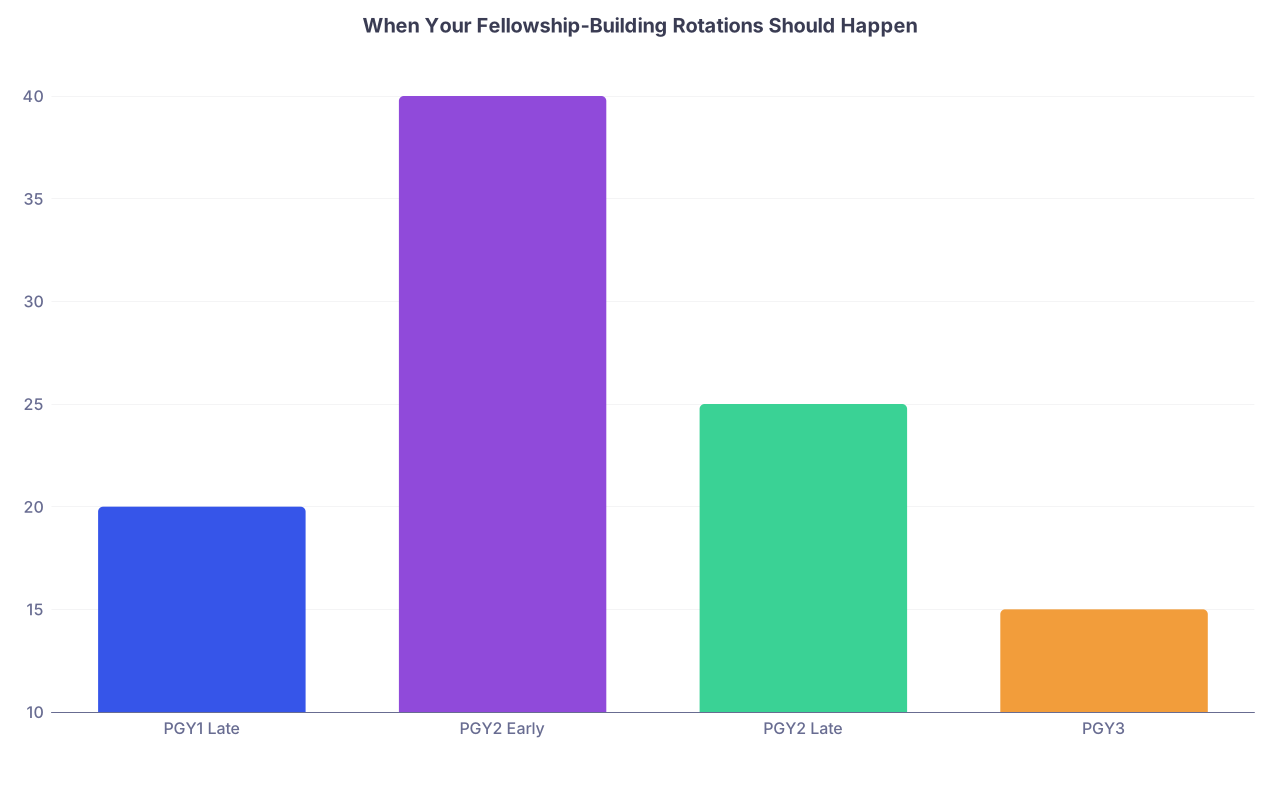
| Category | Value |
|---|---|
| PGY1 Late | 20 |
| PGY2 Early | 40 |
| PGY2 Late | 25 |
| PGY3 | 15 |
Interpretation:
- ~20% of the critical fellowship groundwork happens late PGY-1.
- ~40% in early PGY-2 (this is the key window).
- ~25% in late PGY-2 (interview-friendly, light blocks).
- ~15% in PGY-3 (gap filling and prep).
7. Concrete “By This Date” Checklist
You’re busy. So here’s what you should have done by specific points in training if you want your elective timing to actually support your fellowship plans.
By End of PGY-1
You should:
- Have completed at least one elective in each of 2–3 fields you’re considering.
- Know which subspecialty attendings might be future letter writers.
- Have told at least one trusted mentor: “I’m seriously considering [X] fellowship.”
By September of PGY-2
You should:
- Be 90% committed to a fellowship target.
- Have completed one high-quality month in that field as a PGY-2.
- Have verbally asked at least one attending for a fellowship letter.
- Have another subspecialty block in your field already scheduled before December.
By November of PGY-2
You should:
- Have:
- Personal statement draft done.
- CV updated.
- 2–3 letters requested, with at least 1 likely to upload soon.
- Be on a rotation that realistically leaves evenings and some weekends free enough to work on applications.
By January of PGY-2
You should:
- Have your fellowship application submitted.
- Be scheduled for light-to-moderate rotations February–May to allow interviews.
By Early PGY-3
You should:
- Fill your schedule with:
- Electives that strengthen specific weaknesses for your upcoming fellowship.
- Reasonable rotations toward the end for an actual transition to fellowship and life.
8. One More Thing: Build Relationships, Not Just Rotations
Residents obsess over which month they’re scheduled for GI or cards.
Here’s the uncomfortable truth: the name of the rotation matters less than who sees you work and how long they know you.
So at each key time point:
- Choose rotations where you’ll work with:
- The fellowship PD
- Core faculty in that subspecialty
- People who actually write strong letters and are known in the field
- Ask to follow up in clinic, join their research, or present at conference.
Rotations are just containers. Mentors and letters are what programs actually read.
Your Next Step Today
Do one concrete thing right now:
Open your residency schedule (or draft schedule) and mark July–November of your PGY-2 year. For each of those months, write in pencil:
- “Target fellowship elective”
- “Light block for ERAS”
- Or “Swap this — too heavy for interviews”
If you cannot label at least two of those months as high-yield for fellowship (either letter-generating electives or application-friendly/light), email your chief or program coordinator today and ask:
“Can we look at options to move one of my [target subspecialty] electives into July–October of PGY-2? I’m planning to apply to [fellowship] that cycle and want time to build strong letters.”
That one email, sent now instead of “later,” will do more for your fellowship application than any last-minute heroic personal statement rewrite.


