

The rotations you choose in residency can quietly kill your fellowship chances long before you ever open ERAS.
Not because you are lazy. Not because you are incapable. But because you made a set of completely understandable, very common rotation decisions that send the wrong signals to fellowship program directors.
I’ve watched strong residents with real potential sabotage themselves this way—and then blame everything except their rotation choices. Do not be that person.
You’re not just “picking rotations.” You’re building a public record of what you care about, who will vouch for you, and how seriously you took your supposed career goal. Fellowship directors read that record very closely.
Let’s go through the big ways residents quietly undermine their fellowship chances with rotation choices—and how to avoid them.
1. Treating Electives Like Vacation Time
This is the classic, career-limiting mistake.
You say you want cards, GI, heme/onc, critical care, whatever. Then your PGY‑2 and PGY‑3 elective schedule is:
- “Easy” ambulatory blocks
- Random dermatology because “I might never see this again”
- Research-block-that-is-actually-vacation
- Vague “procedures” elective that no one can describe clearly
Fellowship PDs are not stupid. They see this pattern all the time. It reads as:
- Not serious about the subspecialty
- Avoids high-intensity, high-yield training
- Possibly coasting
If you are targeting a competitive fellowship (cards, GI, heme/onc, pulm/crit, certain surgical subs), your electives need to show:
- Clear commitment
- Repeated exposure
- Willingness to take on hard work in the field
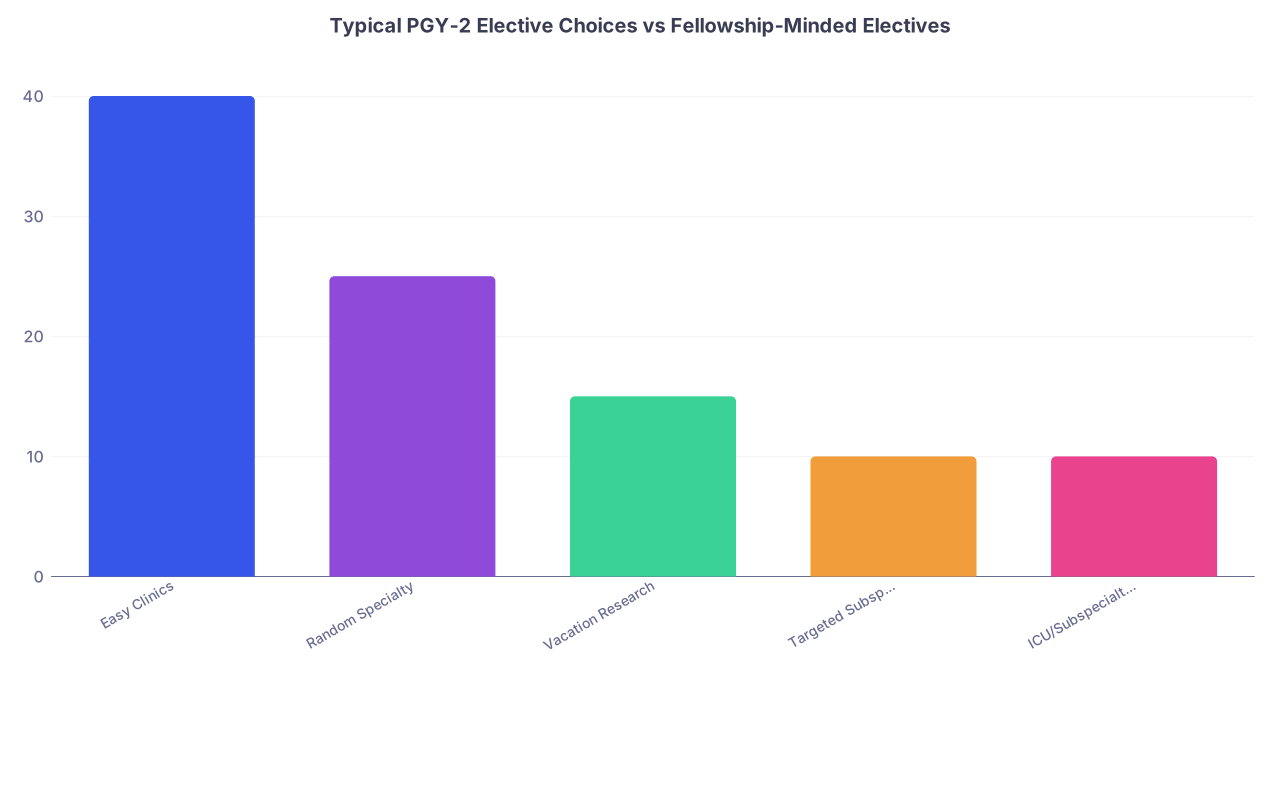
| Category | Value |
|---|---|
| Easy Clinics | 40 |
| Random Specialty | 25 |
| Vacation Research | 15 |
| Targeted Subspecialty | 10 |
| ICU/Subspecialty ICU | 10 |
The trap: Everyone around you is tired. Everyone jokes about “cush” electives. The loudest voices on your team will push you toward relaxed rotations. They’re not the ones trying to match your fellowship.
What to do differently:
- Anchor at least 50–70% of your elective time in or adjacent to your target field
- Save one truly easy block if you must; do not let your whole schedule drift that way
- Make sure at least one of your hardest electives is in your intended subspecialty, not something random
If your schedule doesn’t look like someone who genuinely loves the field and wants to be good at it, you’re already behind.
2. Delaying Subspecialty Exposure Until It Is Too Late
Waiting until PGY‑3 to “try out” a field you claim you’re pursuing is a quiet disaster.
Here’s what I’ve seen multiple times:
Resident decides late PGY‑2 that they “might” want cards. But their schedule is already locked. Their only true cardiology experience ends up being:
- One consult month in early PGY‑3
- Maybe a random echo or cath elective shortly before ERAS opens
No continuity. No time to impress attendings. No window to generate strong letters. And no realistic chance to build a project with the division.
By the time they really show up on the fellowship service, it is already application season. They’re treating the rotation as a 4-week audition; faculty are just trying to survive another month with yet another resident who “is interested in cardiology.”
That is not a plan. That’s a Hail Mary.

| Step | Description |
|---|---|
| Step 1 | PGY 1 |
| Step 2 | Generic wards and ICU only |
| Step 3 | Early subspecialty elective |
| Step 4 | Late PGY 2 panic |
| Step 5 | PGY 3 single subspecialty month |
| Step 6 | Weak letters and no project |
| Step 7 | Repeat elective PGY 2 |
| Step 8 | Strong letters and project |
| Step 9 | Subspecialty exposure? |
Avoid this trap:
- Aim for your first subspecialty elective by mid-PGY‑1 or very early PGY‑2
- Plan a second, deeper elective in the same field before ERAS opens
- Use that first rotation to identify letter-writers and potential mentors, not just to “see if you like it”
If you’re still “exploring” at the exact moment you should be solidifying your story and letters, you’ve put yourself at a serious disadvantage.
3. Ignoring the “Letter-of-Rec” Rotations
Some rotations pay you in skill. Some pay you in reputation.
The rotations that matter most for fellowship aren’t just the ones with cool pathology. They’re the ones where:
- You work closely with faculty who actually write letters
- Those faculty are respected in your target subspecialty
- You’re visible, consistently, not one face among twenty rotating learners
I’ve seen residents chase exotic electives—transplant somewhere else, international rotations, random outside electives—while skipping the high-yield local rotation where the division chief and fellowship PD work side by side.
They come back with a nice story and zero meaningful letters.

Ask yourself this about every elective:
- Will I be seen by people who actually influence fellowship decisions?
- Will I work with them closely enough that they can write a detailed letter, not a generic one?
- Are these the people fellowship PDs trust when they see a name on a letter?
If the answer is no, that elective might still be worth doing—but do not let it replace the rotations that build your letter portfolio.
Practical moves:
- Identify which rotations the fellowship PD typical letter-writers staff
- Prioritize those blocks in PGY‑2 or early PGY‑3
- When you’re on those rotations, treat them as auditions: show up prepared, read ahead, follow up on patients, and be visible for the right reasons
You don’t need 10 letter-writers. You need 2–3 people who genuinely believe in you and saw you at your best. Your rotation choices either make that easy or nearly impossible.
4. Staying Too Narrow: No Breadth, No Perspective
There’s another subtle mistake: over-correcting and doing nothing but hyper-narrow, same-service electives.
“I want cards” → four cardiology electives, nothing else.
“I want heme/onc” → back-to-back malignant heme, BMT, and infusion center, with zero ICU or palliative exposure.
On paper, this can look unbalanced. Fellowship directors don’t want someone who has never operated outside their niche. They want a subspecialist who is still a solid overall physician or surgeon.
They notice when your rotation choices suggest:
- You avoided ICU or high-acuity experiences
- You never touched related fields (e.g., nephro for cards, ID for heme/onc, palliative for any field involving serious illness)
- You built technical knowledge with no system-level understanding
| Pattern | Rotations |
|---|---|
| Unbalanced | 3x Same Subspecialty, 0 ICU |
| Strategic | 2x Subspecialty, 1x ICU |
| Overly General | 0 Subspecialty, 3x Random IM |
| Fellowship-Ready | 2x Subspecialty, 1x Related IM, 1x ICU |
Strategy instead:
- Yes, do multiple electives in your target field—but not exclusively
- Add at least one strong ICU or high-acuity rotation (especially for cards, pulm/crit, GI, heme/onc)
- Choose 1–2 “adjacent” specialties that complement your narrative:
- Cards → nephro, ICU, advanced imaging
- Heme/onc → ID, palliative, ICU
- GI → hepatology, ICU, ID
- Pulm/crit → anesthesia, ID, nephro
Overly narrow elective choices make you look like someone chasing a label, not building durable clinical judgment.
5. Hiding from Hard Rotations in Your Target Field
This one is brutal—and fellowship PDs can smell it.
You’re “interested” in cardiology, but you:
- Never do the CCU rotation
- Avoid nights or weekends on the subspecialty service
- Choose outpatient-only electives when there’s an option to do a more intense, mixed service that includes consults and inpatient
Or you want ICU-heavy fellowships, but you:
- Skip the sickest ICU in your hospital because it has a reputation for being “malignant”
- Pick the step-down or “neuro-ICU-lite” elective to avoid tough call schedules
On paper, this tells a story you do not want told:
- Wants prestige of the field, not the workload
- Has not stress-tested themselves in real subspecialty conditions
- Possibly lacks resilience for fellowship-level intensity
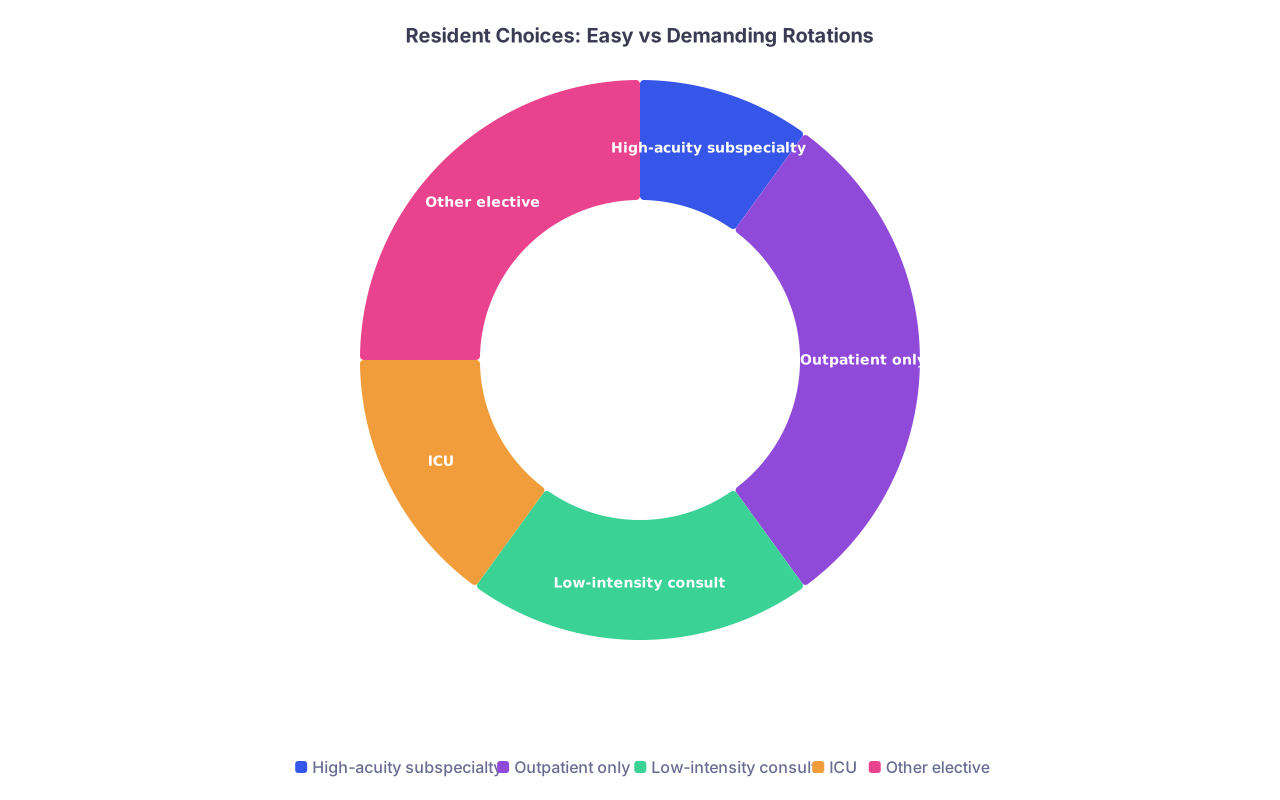
| Category | Value |
|---|---|
| High-acuity subspecialty | 10 |
| Outpatient only | 30 |
| Low-intensity consult | 20 |
| ICU | 15 |
| Other elective | 25 |
You do not need to martyr yourself, but you must show you’ve leaned into at least one genuinely hard rotation in your field.
How to avoid this mistake:
- Pick at least one “flagship” rotation in your target field that has a reputation for being challenging
- Do not schedule all subspecialty rotations as cush clinics; mix inpatient, consult, and ICU where relevant
- Time a hard subspecialty rotation before ERAS if you can, so that attendings see your max effort when it matters
When PDs see that you chose the hard path at least once—and thrived—they trust you more. When they see you consistently duck intensity, they rightfully question how you’ll survive fellowship.
6. Never Building a Longitudinal Presence with One Team
Another quiet way to damage your application: you’re a ghost.
You rotate through five different subspecialty services, all at different sites, all for four-week stretches, with different attendings, different teams, and no continuity. You leave some positive impressions—but no one feels ownership of your career.
Fellowship PDs like to see that a division knows you. Not that you were “around sometimes.”
What this looks like in practice:
- No one faculty member has seen you more than 2–3 weeks
- Your letters end up being generic and brief
- There’s no sense that you’re “part of the team” anywhere

Better approach:
- Repeat at least one key elective on the same service, with some of the same attendings, preferably 6–12 months apart
- Be present at divisional conferences, journal clubs, or case conferences beyond just your rotation month
- If your program offers longitudinal clinics or longitudinal research in your field, commit early and stay consistent
This is how you stop being “that PGY‑2 who rotated in January” and become “our resident who’s been coming to cards conference for a year and helped with that QI project.”
Fellowship PDs prefer the second story every time.
7. Failing to Align Rotations with Research or Scholarly Work
You say you did “research,” but your rotation schedule tells a different story:
- A single 4-week “research elective” with no output
- Research projects that have nothing to do with your target fellowship
- No service time with the person listed as your supposed research mentor
This disconnect is a red flag. It suggests box-checking.
If your rotations never intersect your scholarly interests, PDs assume:
- The project was mostly done by someone else
- You jumped on at the end for a “line on the CV”
- You’re not genuinely invested in the field’s questions or problems
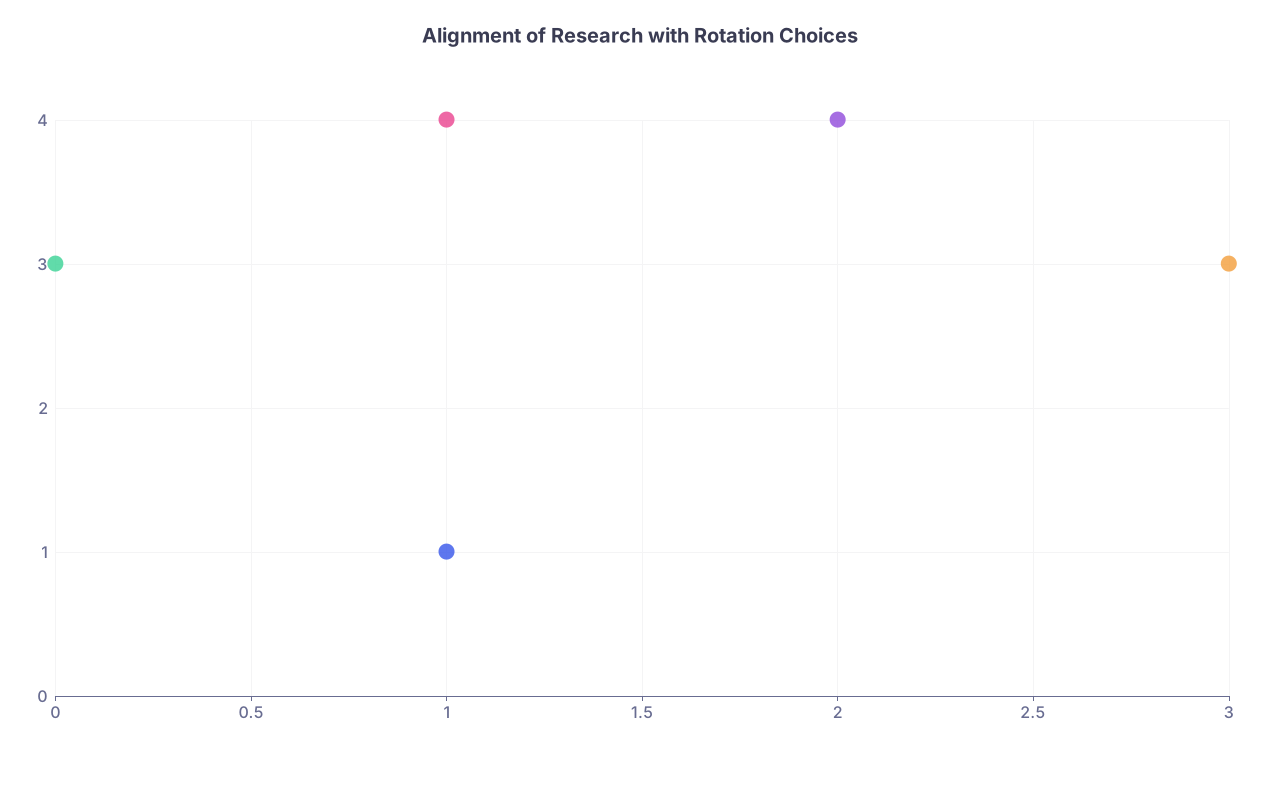
| Category | Value |
|---|---|
| Resident A | 1,1 |
| Resident B | 2,4 |
| Resident C | 0,3 |
| Resident D | 3,3 |
| Resident E | 1,4 |
(x-axis: number of related research projects, y-axis: number of aligned subspecialty rotations — residents in the upper right look committed and coherent.)
Avoid the “CV-only” research trap:
- Do at least one elective with your research mentor’s clinical team
- Time a research block directly before or after a related subspecialty rotation so you can discuss cases and integrate learning
- If you pivot fields, pivot both your rotations and your research, not just one or the other
When the same names appear in your rotation schedule, your research projects, and your letters, the application feels coherent. That coherence is rare. And powerful.
8. Trusting “Away Rotations” to Fix a Weak Home Record
Away rotations can help, but they’re also over-romanticized and often misused.
Here’s the mistake pattern:
- Resident underperforms or under-engages in their home division
- Late PGY‑2 panic → schedules an away rotation at a “big name” place
- Assumes one shiny outside month will override two years of mediocre home performance
Bad news: fellowship PDs talk to each other. Home program letters and internal reputation still dominate. A single away rotation, especially if it’s brief and you’re one of many visiting residents, rarely erases weak home engagement.

When are away rotations actually helpful?
- You come from a smaller or community program and need high-volume exposure in your target field
- You realistically want to match at that specific institution and can do an away there with enough time to be known
- Your home program has limited or no subspecialty presence in your target area
When are they misused?
- As a patch over inconsistent performance or poor engagement at home
- As an excuse to avoid hard home rotations with attendings who know your reputation
- As a CV decoration without strategic planning for letters and continuity
If you do an away, treat it like a high-stakes audition—show up early, stay late, follow up on patients long after sign-out, be intellectually present. But don’t fool yourself into thinking it erases the story your home rotations already told.
9. Poor Timing: Rotations That Don’t Match the Application Calendar
The calendar can quietly ruin you if you don’t respect it.
- Doing your first subspecialty rotation after ERAS is already submitted
- Scheduling your best, most evidence-generating rotation (where you’d shine) for late PGY‑3, when most interviews are already decided
- Stacking all your “serious” subspecialty effort after fellowship applications open, so none of it is reflected in your letters or CV
You cannot retroactively impress someone.
Think of it this way: the version of you that PDs see is frozen in time around the date letters are written and ERAS is submitted. Rotations after that are for your skill, not your application.
You need at least this before ERAS opens:
- Two strong subspecialty rotations (or one rotation you repeated)
- At least 2 faculty ready to write detailed, personalized letters
- Some visible engagement (research, QI, conferences, teaching) linked to that field
If your calendar doesn’t give you that by the time applications go in, you’ve let the timeline quietly undercut your chances.
FAQ (Exactly 5 Questions)
1. I’m only a PGY‑1. Isn’t it too early to worry about fellowship rotations?
No. The biggest “too-late” errors I see started with PGY‑1s drifting through year one assuming they’d figure it out later. You don’t need a locked-in plan, but you should aim for at least one early exposure to any field you’re remotely serious about. That early taste lets you plan PGY‑2 intentionally—where the rotations really start to matter for letters and continuity.
2. What if my program has weak exposure in the subspecialty I want?
Then you must be more deliberate, not less. Max out what you do have—do every relevant elective offered, work closely with the one or two faculty in that field, and tie in research or QI if they have it. If you add an away rotation, it should complement this, not replace it. Fellowship PDs respect someone who clearly squeezed everything possible out of a modest environment.
3. How many electives in my target field are “enough” without looking obsessed?
For most internal medicine subspecialties, two solid rotations plus one related field (like ICU or nephro/ID/palliative depending on the target) is a good baseline. Three subspecialty blocks isn’t crazy if they’re spread out and you still show breadth elsewhere. The red flag is doing four or five hyper-specific electives while dodging core experiences like ICU or general inpatient medicine.
4. I realized late that I want a competitive fellowship. Is it hopeless?
Not automatically, but you cannot afford any more passive choices. Sit down with a trusted faculty member now, restructure your remaining electives toward: one hard subspecialty block, one related field, and at least one setting where you can build or deepen a relationship with a potential letter-writer. You might need a research or QI project that can realistically produce something within months, not years. It’s triage time, but I’ve seen people pull it off.
5. Should I sacrifice all “easy” electives if I want a strong fellowship shot?
No, but you should stop pretending every elective has equal strategic value. One or two lighter rotations to protect your sanity are fine. A schedule built around “easy clinic,” vague research, and random one-off specialties is not. As a rule of thumb: if your rotation list doesn’t clearly scream your intended field plus a few smart complements, you’re probably under-investing in the thing you claim to care about.
Key points to walk away with:
- Your rotation schedule is a public story about your priorities and resilience; fellowship PDs read it very carefully.
- The biggest mistakes are quiet ones—delayed exposure, avoiding hard rotations, and failing to position yourself for strong letters on the right services at the right time.
- If you plan even a year ahead, you can turn your rotations from a random list of blocks into a coherent, compelling case for why you belong in that fellowship.


