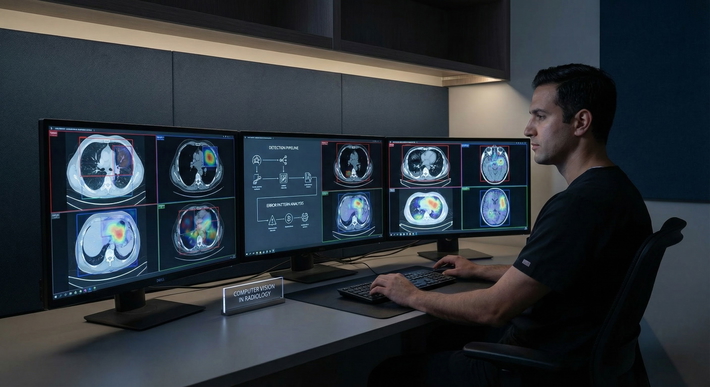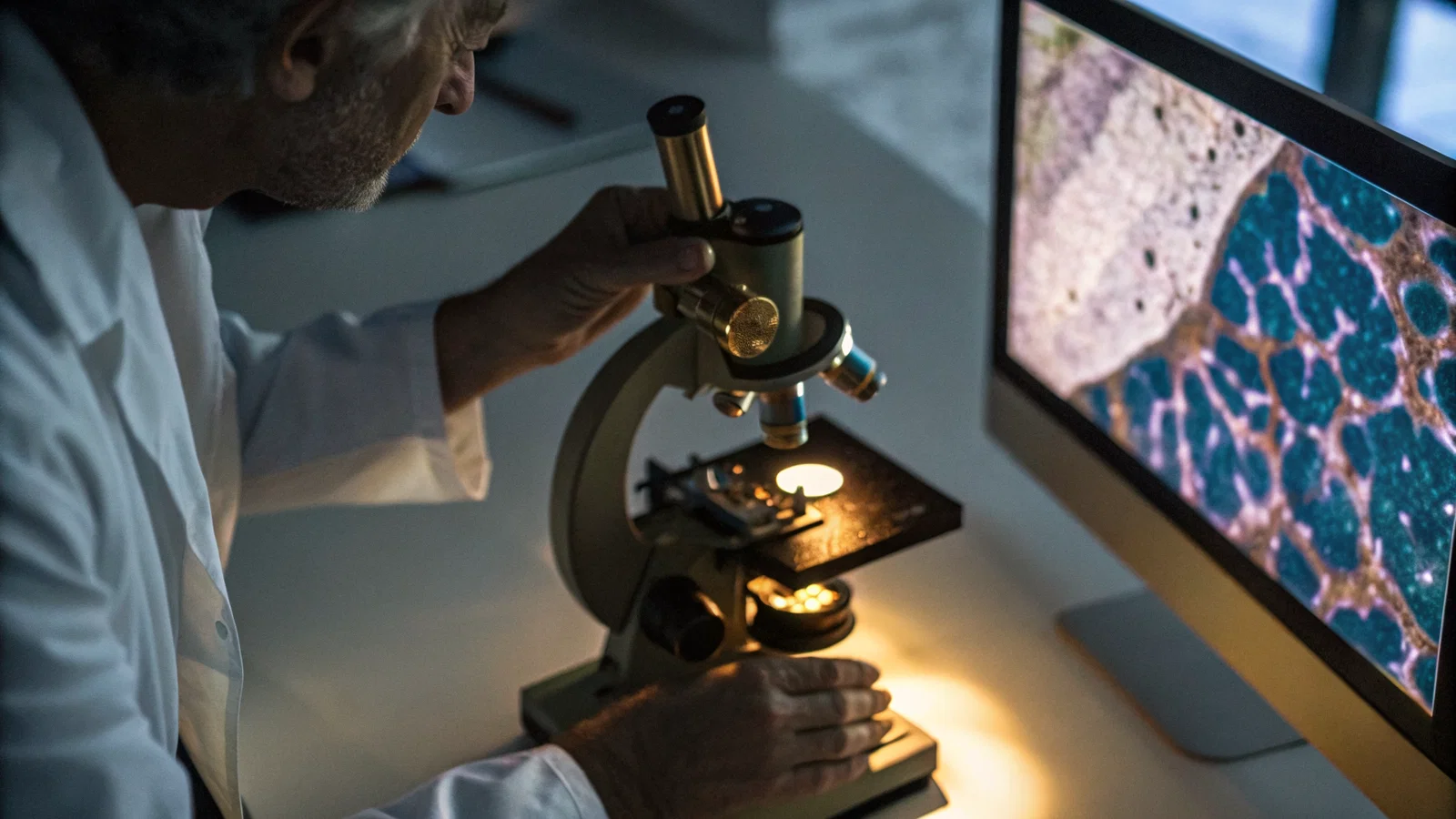
The sales pitch is simple: AI will read pathology slides faster, cheaper, and maybe better than humans. The reality is messier. A lot messier.
Here's the myth I'm going to kill: if an AI model performs brilliantly on a polished validation set, it's ready to be trusted in routine pathology. No. That's how you end up mistaking pen marks for tumor, missing rare variants, and treating confidence scores like wisdom. They're not wisdom. They're math wrapped in confidence theater.
I've seen how this goes in practice. The demo looks gorgeous. Heatmaps. Percentages. Clean annotations. Then the real slides show up: scanner differences, weird fixation, crush artifact, uneven staining, edge chatter, tissue folds, necrosis, ink, floaters. Suddenly the "superhuman" model starts acting very human. Worse, actually. Because humans can say, "This looks off." Badly deployed AI often can't.
This article is for educational purposes only. It is not financial advice, not legal advice, and not tax advice. Figures vary by individual circumstances, consult a qualified professional before acting.
The Hype vs. Reality: AI in Pathology
Let's start with the biggest fantasy: AI is about to replace pathologists. That claim makes for clickable headlines and terrible policy decisions.
What AI does well is narrow and specific. Very specific. Counting mitotic figures in a constrained use case. Flagging suspicious regions on prostate biopsies. Quantifying immunohistochemistry staining under standardized conditions. Measuring, sorting, prioritizing. Pattern-heavy tasks. Repetitive tasks. Fatigue-prone tasks. That's real value.
What it does not do well is pathology in the full sense of the word. Pathology is not just image recognition. It's context integration. You're not merely spotting blue and pink shapes. You're deciding whether the architecture fits the clinical history, whether the artifact explains the oddity, whether the "lesion" is actually a processing error, whether the differential changes because the patient is 9 years old, 89 years old, immunosuppressed, post-treatment, or carrying a known mutation. AI doesn't "understand" any of that unless those signals are explicitly built in, and even then the system is only correlating patterns.
That distinction matters. A lot. Because a model can be excellent at a benchmark task and still be unsafe as a diagnostic decision-maker.
The other thing the hype machine hides: real-world pathology is full of pre-analytical variation. Different scanners. Different labs. Different stain intensity. Different coverslipping quality. Different fixation times. Different section thickness. The model trained on immaculate slides from three academic centers may face-plant when exposed to routine community lab material. That's not a small technical footnote. That's the whole game.
Media stories love words like revolutionary and game-changing. Fine. Here's my version: AI in pathology is useful, but brittle. Powerful, but narrow. Impressive, but easily overclaimed.
Use it for what it is. A highly capable pattern recognizer. Not a synthetic pathologist in a box.
Common Misinterpretations: Pattern Matching vs. Understanding
The most dangerous misunderstanding is believing AI "knows" what it's looking at. It doesn't. It matches patterns statistically. That's it.
When a model labels a region malignant, it hasn't reasoned through tissue context the way a pathologist does. It hasn't considered the architecture in a human sense. It hasn't reflected on whether the staining is technically poor or whether the artifact is distorting morphology. It has seen a pixel arrangement that resembles examples from training and generated an output.
That's why confidence scores get abused. People see 0.97 and imagine certainty. Wrong. A high-confidence output can still be dead wrong when the slide differs from the model's training distribution. Different scanner? Different stain protocol? Rare subtype? Unexpected artifact? Confidence can stay high while accuracy quietly collapses.
See also: treating AI output as evidence in presentations for a related perspective.
I've seen systems get tripped up by exactly the stuff any working pathologist worries about:
- tissue folds interpreted as abnormal architecture
- ink or debris treated like pathologic signal
- out-of-focus regions producing false reassurance
- rare tumor variants pushed into the nearest common category
- treatment effect mistaken for viable malignancy
That's not a quirky exception. That's the core weakness of pattern-matching systems.
The phrase I want you to remember is this: pattern matching is not understanding. If you confuse the two, you'll trust AI at exactly the wrong moment, when the case is unusual, messy, or clinically consequential.
And of course those are the cases that matter most.
The Evidence: What Studies Actually Show About AI in Pathology
Now for the part people often skip. Data.
Controlled studies of pathology AI can look spectacular. Systematic reviews routinely report AUCs above 0.95 for tasks like cancer detection, metastasis identification, or biomarker quantification. On paper, that sounds like the argument is over. It isn't.
Because internal validation is easy to flatter. Curated datasets are cleaner. Labels are tighter. Edge cases are underrepresented. The patient population is often narrower than the real world. The scanner setup is more uniform. In other words, the model is taking an exam written by its friends.
External validation is where the truth starts leaking out. Move the model to a different institution, scanner, stain protocol, or case mix, and performance commonly drops, sometimes modestly, sometimes sharply. That's been one of the most consistent findings across medical AI, and pathology is not exempt.
For cancer detection tasks, real-world sensitivity often lands in the roughly 80% to 90% range depending on task, workflow, and deployment quality. That's useful for triage. It is not a license to replace a board-certified pathologist, whose performance in actual diagnostic practice is typically higher when cases are interpreted in context and with access to ancillary studies. The fantasy that a high benchmark AUC automatically means superior clinical performance is just bad reading of the literature.
Another uncomfortable fact: training data diversity matters more than vendors like to admit. If a model is built mostly on slides from limited geographic regions, narrow patient demographics, one or two scanner brands, and tightly standardized stains, don't act surprised when it struggles elsewhere. Race and ancestry can correlate with disease prevalence and morphology patterns in some contexts. Scanner optics differ. Labs stain differently. Section prep varies. "Generalizable" is a claim that needs proof, not marketing adjectives.
So what does the evidence actually support? AI can perform very well on targeted pathology tasks, especially when the use case is constrained and the workflow is tightly controlled. But the leap from "excellent benchmark model" to "safe autonomous diagnosis" is where the wheels come off.
That's not anti-AI. That's just reading the studies honestly.
Best Practices: How to Use AI as a Tool, Not a Crutch
Here's the sane approach: use AI as a tool for triage, screening, quantification, or second review. Don't use it as the final brain in the room.
That means a few practical rules.
First, keep human verification in the loop. Always. If AI flags suspicious regions, great, let it reduce search time. If it quantifies Ki-67 or HER2 under validated conditions, useful. If it prioritizes cases likely to contain malignancy, even better. But final diagnosis belongs to a pathologist who can integrate morphology, clinical history, gross findings, immunostains, molecular data, and common sense. Yes, common sense still matters.
Second, validate locally. Not once. Continuously. A model that performed well during procurement can drift into mediocrity after scanner replacement, stain protocol tweaks, new specimen types, or changes in patient mix. Labs should track sensitivity, specificity, discordance patterns, and failure modes using local cases. If you're not monitoring for distribution shift, you're not doing quality assurance, you're gambling.
For more on this, read about transforming patient care with AI.
Third, train the users, not just the software. Pathologists need to know where the model breaks:
- what low-confidence outputs mean
- which artifacts trigger false positives
- which rare variants get missed
- whether the heatmap is explanatory or merely decorative
- when to ignore the machine entirely
That last point is underrated. Good AI governance includes permission to distrust the model.
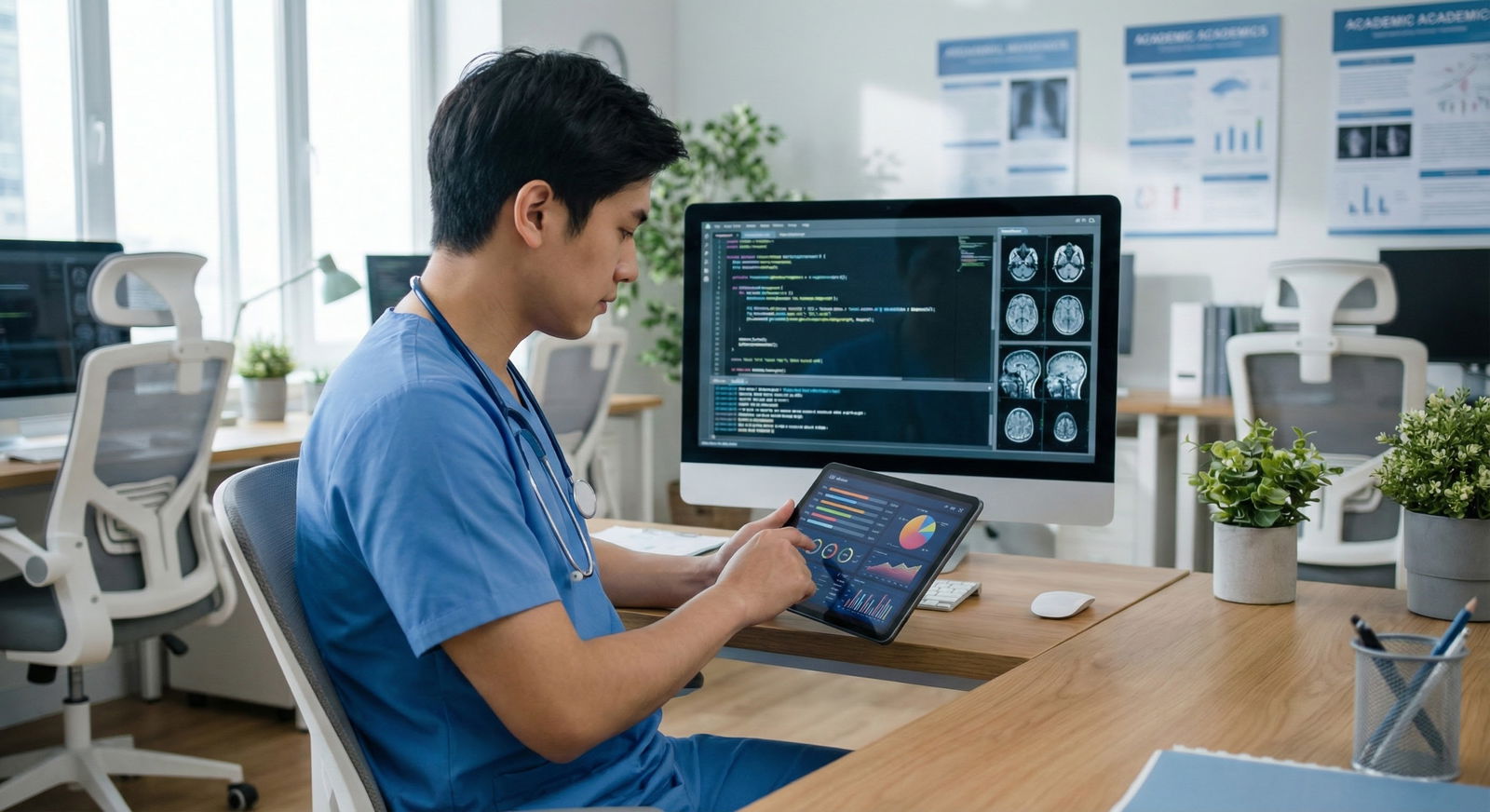
A practical workflow usually looks like this:
- AI screens or prioritizes slides.
- AI highlights candidate regions or provides quantitative outputs.
- Pathologist reviews the slide independently and in context.
- Discordant or low-confidence cases trigger deeper review, not blind acceptance.
- Performance metrics are audited over time.
That's how you get benefit without self-deception.
Because once AI becomes a crutch, the user gets lazier, the edge cases get missed, and the institution starts mistaking automation for quality. Dumb move.
The Future: Where AI Fits and Where It Doesn't
AI is coming to pathology. That part is settled. But the shape of adoption matters.
Where it fits is obvious: second reads, slide prioritization, workload reduction, quality control, quantitative scoring, and maybe surfacing subtle patterns humans are prone to overlook when tired. Pathology has too much volume and too much repetitive visual labor not to benefit from assistance.
Where it doesn't fit, at least not yet, is replacing human judgment in open-ended diagnosis. Not because pathologists are romantic heroes with microscopes, but because diagnosis is a contextual act. It mixes image interpretation with clinical reasoning, uncertainty management, differential diagnosis, and awareness of technical pitfalls. Current AI is weak at that blend.
Then there's the boring stuff that actually decides adoption: regulation, reimbursement, liability, interoperability, validation burden, IT infrastructure. People love to talk about model performance and ignore the swamp of implementation. But the swamp wins. A brilliant algorithm that can't clear regulatory review, integrate into workflow, or justify reimbursement remains a conference slide.
The interesting frontier is multimodal AI, systems that combine histology with genomics, radiology, lab values, and clinical notes. That's more promising than slide-only models because it moves a little closer to actual medical reasoning. A little. Still not the same as understanding, but better context beats isolated pixels.
My bet? AI will become routine in pathology, but mostly as infrastructure. Quietly useful. Embedded in workflows. Saving time, reducing oversight burden, flagging suspicious areas, standardizing quantification. Not replacing pathologists. Not becoming the oracle. Just becoming another instrument, like the scanner, the stainer, the LIS. Valuable. Limited. Easy to misuse if you forget what it is.
The reminder is simple: AI in pathology can help you see more, faster. It cannot absolve you from thinking. If you treat it like a diagnostic copilot with known blind spots, it's powerful. If you treat it like a replacement for judgment, it will eventually embarrass you, and maybe hurt a patient. That's the reality check the hype keeps avoiding.