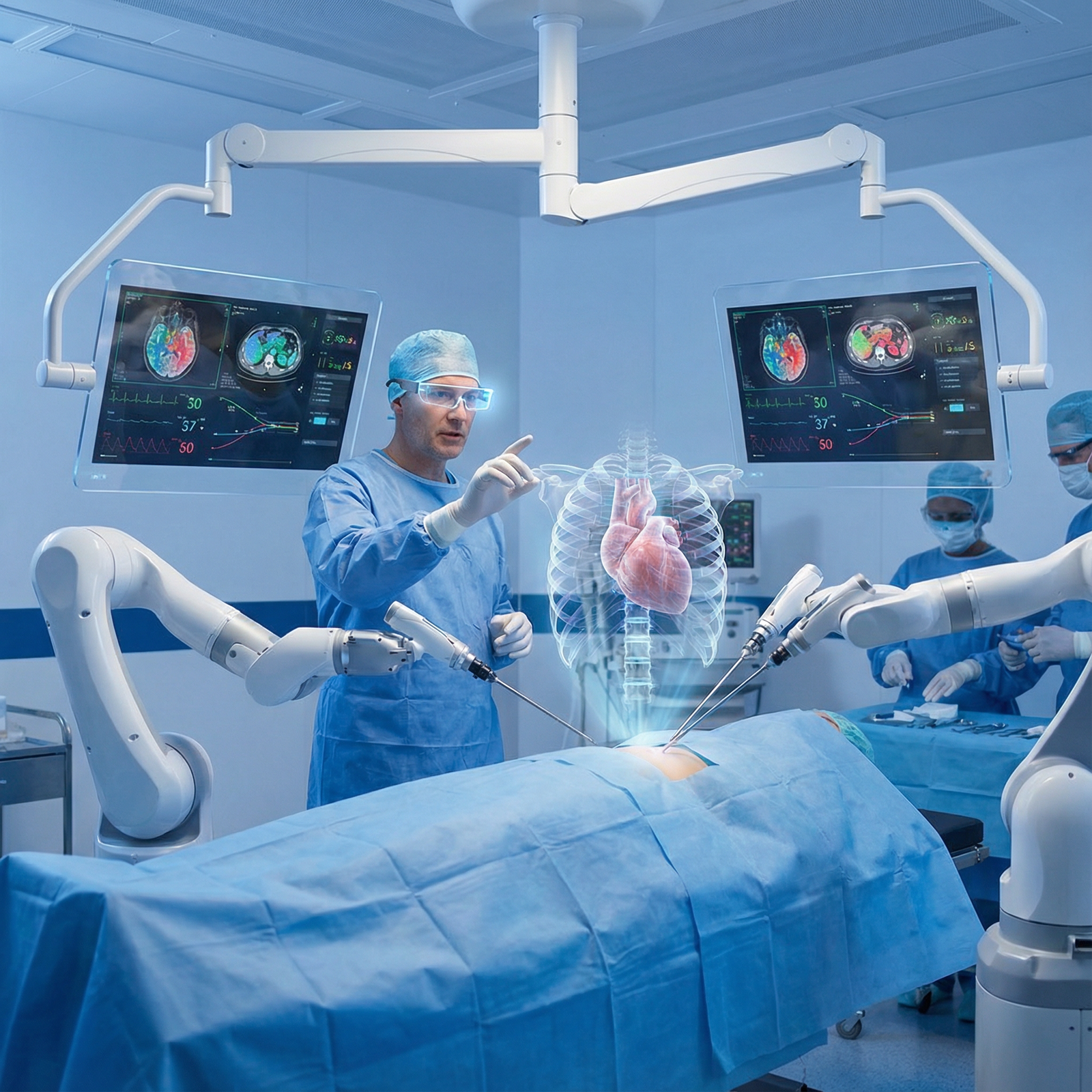
AI is not coming for doctors’ jobs. It is coming for doctors’ bad habits, wasted hours, and outdated workflows.
The drama headline—“Will AI replace doctors?”—is already the wrong question. It assumes that “doctor” is a single, monolithic task you either do or do not automate. Reality is uglier and more interesting: AI is already replacing pieces of what physicians do every day. Some of those pieces deserve to die. Some do not. And the data we actually have paints a very different picture from the breathless hype and the Luddite panic.
Let me walk through what’s real, what’s speculative, and what will probably age poorly.
What AI Is Actually Doing in Medicine Right Now
Strip away the marketing decks. Look at deployed systems, published studies, and reimbursement codes.
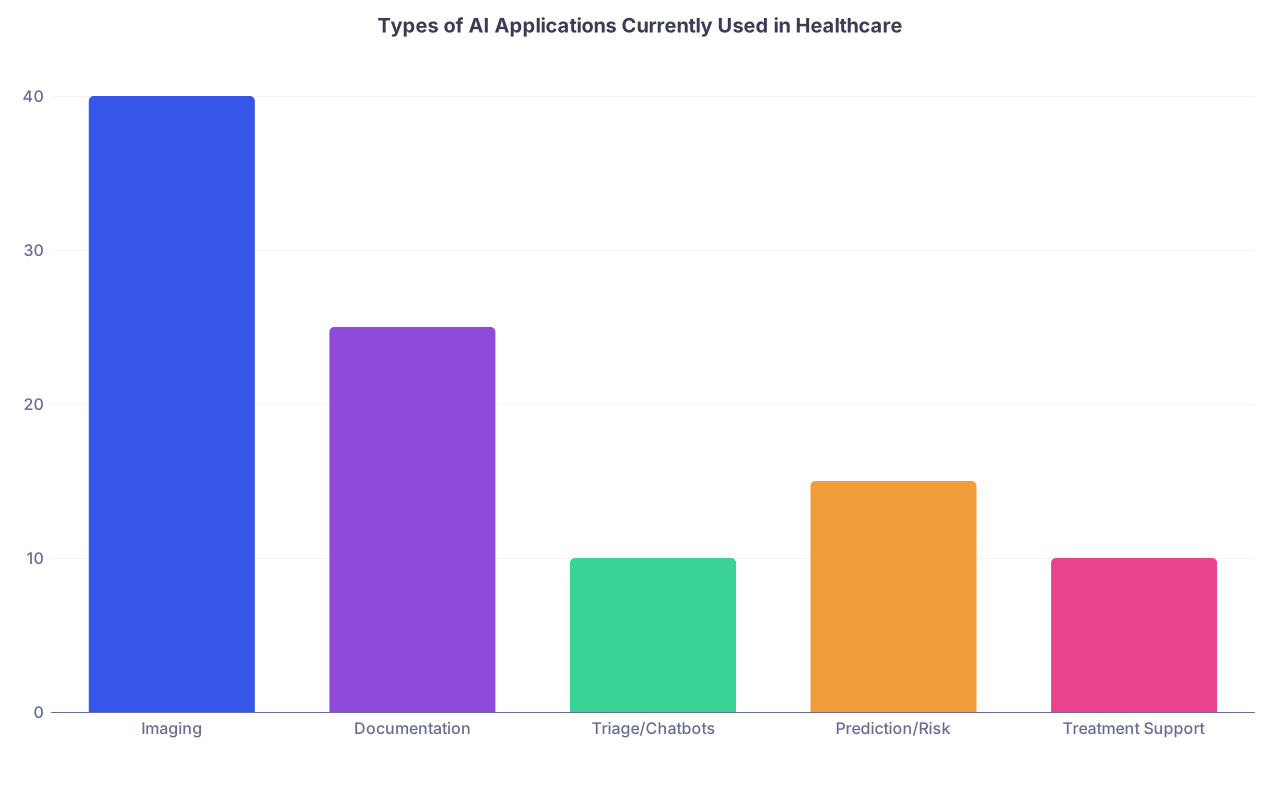
We are not talking about a general “doctor AI.” We are talking about targeted systems that are very good at very narrow tasks.
| Category | Value |
|---|---|
| Imaging | 40 |
| Documentation | 25 |
| Triage/Chatbots | 10 |
| Prediction/Risk | 15 |
| Treatment Support | 10 |
That split is roughly aligned with what surveys and market analyses show: imaging and documentation are where the action is.
You can see the pattern clearly.
Radiology and pathology: FDA-cleared algorithms now detect diabetic retinopathy, flag lung nodules on CT, quantify coronary calcium, grade prostate biopsies. In some head-to-head tests, models match or slightly beat average radiologists on specific tasks.
But those “AI beats radiologists” headlines always leave out three things:
- The test is usually on a narrowly defined problem (e.g., “find pneumothorax on chest X‑ray”), not on the full complexity of a real case.
- Performance depends heavily on curated, high-quality data sets that don’t match messy, real-world hospital data.
- The models are typically evaluated as assistive tools; when you combine AI + clinician, you almost always get the best result.
There’s a reason no health system fires its radiologists after installing an AI tool. They just read more images, faster, with slightly fewer misses.
Documentation: This is where AI may already be quietly saving more physician hours than anywhere else. Ambient scribe tools like Nuance Dragon Ambient eXperience, Abridge, and others are generating visit notes in the background from recorded encounters. Early data from pilot programs show:
- Reduced documentation time
- Lower burnout scores
- Higher visit throughput without lower patient satisfaction
That is not replacement. That is targeted demolition of administrative burden, which frankly should have been automated a decade ago.
Triage and chatbots: Symptom checkers and “AI nurses” are mostly glorified decision trees with some language dressing, though the new LLM-based systems are more fluent. Their job is to keep nonsense out of your in-basket and stop every sore throat from becoming an urgent care visit. They’re imperfect, sometimes dangerously overconfident. But they’re clearly not taking anyone’s cardiology fellowship.
Prediction and risk models: Readmissions, sepsis, ICU deterioration, risk of AKI—these models are now embedded in many EHRs. The dirty secret: a lot of them aren’t very impactful in practice. Either clinicians ignore yet another risk score, or the models don’t generalize, or there’s no workflow to act on the signal. The tech is there; the systems around it are not.
So, if you actually look at current deployments, you see a pattern: AI is eating narrow tasks inside the doctor’s job, not the job itself.
The Myth of the “Replaceable” Doctor
The “AI will replace doctors” narrative confuses two very different things:
- Perception: that doctors are mostly pattern-recognition machines with some memorized facts.
- Reality: that modern clinical work is a nasty mix of uncertainty management, risk negotiation, communication, logistics, and ethics sprinkled over pattern recognition.
Medical students are especially vulnerable to this confusion, because preclinical years reward pattern recognition and recall. So when they see a model beat humans on board-style questions or image classification, they extrapolate: “So what exactly is left for me?”
Plenty. The data on automation risk is actually pretty clear if you look where economists look.
| Role | Estimated Automation Risk (Next 20 Years) |
|---|---|
| Radiologic Technologist | High (task-level) |
| Medical Transcriptionist | Very High |
| Primary Care Physician | Low to Moderate |
| Surgeon | Low |
| Nurse | Low to Moderate |
Those are not made-up relative rankings; they mirror several labor and AI-economics analyses. The consistent take: repetitive, codifiable tasks are at high risk; complex, interpersonal, and high-liability roles are not fully automatable anytime soon.
You know what’s very automatable?
- Generating boilerplate notes
- Checking drug interactions
- Flagging obvious imaging findings
- Turning a guideline into a decision tree
You know what is not even close to fully automatable?
- Having a 7‑minute conversation that convinces a half‑convinced patient to actually start insulin
- Figuring out which of three conflicting specialist recommendations is sane
- Managing end-of-life conversations where the family isn’t on the same page
- Allocating scarce resources in a crisis without getting the hospital sued or on the front page
AI can assist with the information and maybe with some phrasing. It cannot carry the liability, the human trust, or the moral residue.
Does that mean every doctor is safe? No. It means the mix of tasks inside each specialty is going to shift, and some subroles will get hollowed out.
Who’s Actually at Risk Inside Medicine?
Let’s not pretend everyone is equally insulated. Some roles are already under silent pressure.
The real target is not “doctors” but low-autonomy, high-repetition cognitive work that happens to be done by clinicians.
Within radiology and pathology, narrow, repetitive reads (screening mammography, standard chest X‑ray triage, high-volume slide pre-screening) are absolutely vulnerable. That doesn’t eliminate radiologists; it changes the case mix. More complex cases, more interventional work, more multidisciplinary consultations. Fewer hours of staring at normal screening films.
Hospitalists and primary care physicians who function purely as “lab and imaging interpreters with a prescription pad” are also more exposed. If you practice like a guideline-autocomplete bot, you are easier to assist and eventually partially replace.
But medicine has physics-like constraints: liability, regulation, and blame. When an AI misses a critical finding, the lawsuit is not against the neural net. It is against the hospital and whoever signed the note. This alone dramatically slows “full automation” of core physician decisions.
We see this play out in FDA approvals: the majority of clinical AI systems are cleared as assistive or “clinical decision support” tools, not as autonomous decision-makers. Even when models can theoretically make autonomous calls, they’re deployed with a human in the loop.
If you are that human in the loop, your job changes. It doesn’t evaporate.
What the Data Actually Says About Performance
Let’s talk numbers, because hand-waving about “AI is impressive” gets you nowhere.
Vision models: On very specific imaging tasks, AI can hit or exceed average human performance. But the performance usually drops outside the data domain it was trained on. Different scanner, different patient population, slightly different disease prevalence—performance shifts. Sometimes dramatically.
LLMs on medical exams: GPT‑4 level models can pass medical licensing exams in multiple countries. Impressive? Yes. Threatening to your job? Not really.
Exams are a filtered, cleaned representation of medicine. Real life is noisy, incomplete, contradictory data in a constrained time window with angry relatives and a failing EHR. Being able to answer, “What is the next best step?” when the right labs are neatly provided is very different from realizing which labs matter, which ones you can skip, and when the entire question is misframed.
Where LLMs shine right now in clinical work:
- Drafting: notes, letters, appeal letters, patient instructions
- Summarizing: long charts, old records, discharge summaries
- Educating: explaining complex ideas at different literacy levels
Where they are weak and dangerous:
- Making high-stakes decisions without constraints
- Handling rare edge cases or atypical presentations
- Maintaining calibrated uncertainty (they sound confident when wrong)
So yes, you can—and probably should—use AI as a thinking aid and a documentation hammer. But if you outsource clinical judgment, that’s not AI replacing doctors. That is doctors abdicating.
How AI Will Reshape the Physician Workday
Here’s the part almost nobody models correctly: AI won’t just replace tasks; it will change what patients and systems expect from you.
As documentation and basic triage get more automated, you will be expected to:
- See more patients in the same time while maintaining quality
- Handle more complex and multimorbid cases (because the simple ones got triaged away or trivialized)
- Be the escalation layer for all the messy, conflicting, or distressing scenarios the system doesn’t want the bot to touch
There’s some early evidence from health systems piloting ambient scribes and AI triage:
- Clinic throughput goes up when documentation burden falls
- Patient satisfaction often stays stable or improves
- Physician burnout improves if the AI feels like a support, not surveillance
But notice the hidden tension: the system will be tempted to use that freed-up time to cram more visits in, not to give you more breathing room. This is not a technology problem; it’s an incentives problem.
| Category | Value |
|---|---|
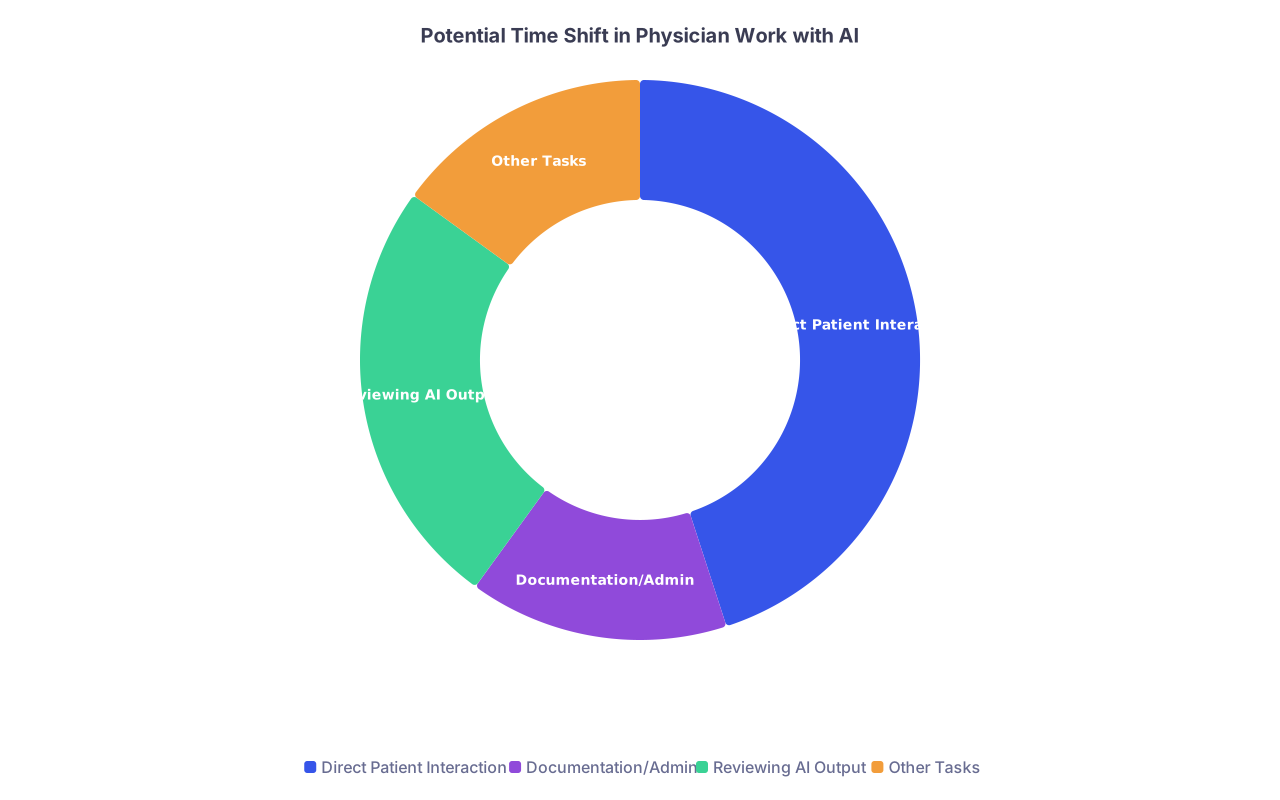
| Direct Patient Interaction | 45 |
| Documentation/Admin | 15 |
| Reviewing AI Output | 25 |
| Other Tasks | 15 |
Roughly speaking, you should expect your work mix to move away from raw documentation and more toward reviewing AI output, fixing its mistakes, and doing the emotional and ethical labor it cannot.
That’s not less work. It’s different work.
The Real Competitive Advantage for Future MDs
If you’re in med school or residency now, your edge is not “being better than AI at memorizing facts.” You have already lost that arms race.
Your edge is:
- Being AI-literate enough to use these tools aggressively
- Being clinically mature enough to know when they’re wrong or harmful
- Being human enough that patients prefer you over a flawless chatbot
I keep seeing two equally naive reactions in trainees:
- “AI will never replace doctors because human touch is irreplaceable.”
- “AI will make most of what we do obsolete; I chose the wrong field.”
Both are lazy takes.
Human touch is neither enough nor necessary in every interaction. There are plenty of low-value, high-friction visits—routine med refills, basic counseling—that could be offloaded or semi-automated without causing a societal crisis.
On the other hand, “obsolete” ignores the way complex systems actually evolve. When ATMs arrived, everyone predicted the death of bank tellers. What happened? The number of tellers initially increased, but their roles changed—they did more relationship management, sales, and complex support rather than cash handling.
You should expect something similar:
- Fewer minutes typing notes
- More time in higher-complexity decision-making
- More responsibility for integrating AI outputs with real-world constraints
The “I’m safe because my job is too human” crowd and the “We’re all doomed” crowd share one flaw: they’re trying to avoid doing the cognitive work of adaptation.
Limits That Hype Merchants Rarely Mention
The strongest argument against “AI will replace doctors soon” is not emotional. It’s structural.
Three hard constraints:
Regulation: Clinical AI is a regulated medical device. Every significant update theoretically triggers revalidation or reapproval. That slows down the iteration pace massively compared with consumer tech. No hospital is going to plug in a self-updating black box that changes behavior weekly.
Liability: Health systems are deeply conservative when blame is on the line. Right now, AI works best as a decision-support tool with clear human oversight. That’s not going away quickly. The more autonomous you make the system, the more you have to solve for who gets sued when it goes wrong. Nobody has a clean answer.
Data quality: Most hospital data is garbage—missing, mislabeled, biased, fragmented across systems. Models trained on pristine academic-center data fall apart in under-resourced settings or on minority populations that were underrepresented in training. You do not get safe autonomous AI on top of bad data.
So the fantasies of “log in to an app instead of seeing an oncologist” are just that—fantasies. Not impossible in principle. But worlds away from current data and regulatory realities.
So, Will AI Replace Doctors?
Let me be precise.
Over the next 10–20 years:
- AI will likely replace a lot of routine administrative work and low-complexity cognitive tasks currently done by doctors.
- AI will not replace the role of “physician” as society’s designated agent for handling complex medical uncertainty, risk, and responsibility.
- Physicians who practice like checklists with a pulse are at risk of being partially automated into irrelevance.
- Physicians who learn to wield AI as a force multiplier will be in higher demand, not lower.
The mistake is thinking of this as a binary outcome—employed or unemployed. The more realistic picture is a profession that is slowly re-architected around new tools.

| Step | Description |
|---|---|
| Step 1 | Today Physician Role |
| Step 2 | AI Assists Tasks |
| Step 3 | Shift to Complex Cases |
| Step 4 | Higher Volume and Complexity |
| Step 5 | New Skills - AI Literacy |
| Step 6 | Redefined Physician Role |
If you want to be on the right side of that shift, the moves are straightforward, even if they’re uncomfortable:
Use the tools. Learn where they break. Talk openly about their failures and their strengths. Don’t posture as “above it,” and don’t outsource your judgment to it.
The scary scenario is not AI replacing doctors. It’s health systems using AI as an excuse to squeeze doctors harder, stripping time, autonomy, and support under the banner of “efficiency.” Fight that. Not the silicon.
Years from now, you will not remember the tech headlines screaming that your career was doomed. You will remember whether you chose to be the doctor who competed with the machine—or the one who made it work for you.