Introduction: Why Networking Is Mission-Critical for IMGs
For International Medical Graduates (IMGs), the pathway to a U.S. residency is often steep, competitive, and at times isolating. You must adapt to a new healthcare system, meet strict exam and visa requirements, and compete with U.S. graduates who may have more direct access to programs and mentors.
In this landscape, a strong professional network is not a luxury—it is a strategic advantage.
Effective networking can:
- Open doors to clinical and research opportunities
- Provide mentorship and realistic guidance about Residency Applications
- Help you understand unwritten rules and expectations in U.S. programs
- Offer support and encouragement when the process feels overwhelming
This enhanced guide explains why networking matters so much for IMGs, outlines practical Networking Strategies tailored to your journey, and gives concrete examples of how relationships can directly impact your chances of matching. It is designed to serve as a roadmap for Professional Development, from your first cold email to long-term mentorship relationships.
Why Networking Matters So Much for International Medical Graduates
1. Leveling the Playing Field in a Competitive Match
Residency program directors consistently emphasize that they prefer candidates they know, or who are recommended by trusted colleagues. For IMGs, this creates both a challenge and an opportunity:
- Challenge: Many IMGs arrive with limited U.S. contacts.
- Opportunity: Intentional networking allows you to build those contacts and become a known quantity.
A strong network can:
- Provide personal introductions to program coordinators or faculty
- Lead to observerships, externships, and research that strengthen your CV
- Generate strong letters of recommendation from U.S. physicians who understand the system and your specialty
For an IMG, being “just another ERAS application” is risky. Being “the applicant recommended by Dr. X” is far more powerful.
2. Mentorship: Guidance, Advocacy, and Honest Feedback
Mentorship is one of the most important outcomes of networking for IMGs.
A good mentor can:
- Help you select specialties and programs that realistically fit your profile
- Review your personal statement, CV, and ERAS application with insider insight
- Conduct mock interviews and give honest feedback on your communication style
- Explain red flags (gaps, attempts, older graduation) and how to address them
- Advocate for you formally (e.g., making phone calls or sending emails on your behalf)
Many successful IMGs can identify one or two key mentors who transformed their trajectory—from guiding USMLE timing to recommending critical opportunities.
3. Access to Hidden or Informal Opportunities
Not all opportunities are publicly advertised. Many arise informally:
- A physician asking, “Do you know anyone who could help with this project?”
- A department looking for a visiting scholar, observership candidate, or research assistant
- A last-minute conference abstract needing a motivated co-author
Without a network, you never hear about these chances. With a network, you may be the first person someone thinks of.
4. Understanding Culture, Expectations, and Unwritten Rules
IMGs often report that the most difficult part of transitioning to the U.S. is not the medicine—it is the culture:
- How to address attendings and program directors
- What is considered professional communication in emails and meetings
- How assertive you should be in advocating for yourself
- How to handle hierarchy and interprofessional relationships
Through your network—especially mentors and near-peer residents—you can quickly learn the “unwritten curriculum” that U.S. graduates absorb over years. This can drastically improve your comfort, professionalism, and performance on rotations and interviews.
Foundational Networking Strategies for IMGs
1. Leverage Alumni Networks Strategically
Alumni are often the most IMG-friendly group you can approach—they understand where you came from and where you’re trying to go.
Where to Start
Your Medical School’s Alumni Office
- Ask whether any alumni are currently in U.S. residency or practice.
- Request permission-based contact lists, or ask if they can forward a brief introduction email on your behalf.
LinkedIn Alumni Tools
- Search your medical school’s page and filter by location (United States) and specialty.
- Look for people currently in residency or fellowship, and also established attendings.
WhatsApp / Facebook Alumni Groups
- Many schools have unofficial class or alumni groups where U.S.-based graduates share advice, observership leads, or research opportunities.
How to Reach Out Effectively
- Keep messages short, respectful, and specific.
- Mention your shared background (same school, country, or city).
- Ask for a brief conversation (15–20 minutes) rather than a favor immediately.
Example:
An IMG from India identified a graduate from the same school who was now an internal medicine program director in the Midwest. After a short LinkedIn message and a subsequent Zoom call, the alumnus helped the IMG secure a research position in his department. This relationship led to strong letters of recommendation and, eventually, a match at a different but affiliated program.
2. Engage Deeply With Professional Organizations
Joining professional organizations is more than just paying a membership fee; it’s about actively participating.
- American Medical Association (AMA) – Offers dedicated resources for IMGs, networking events, and Professional Development workshops.
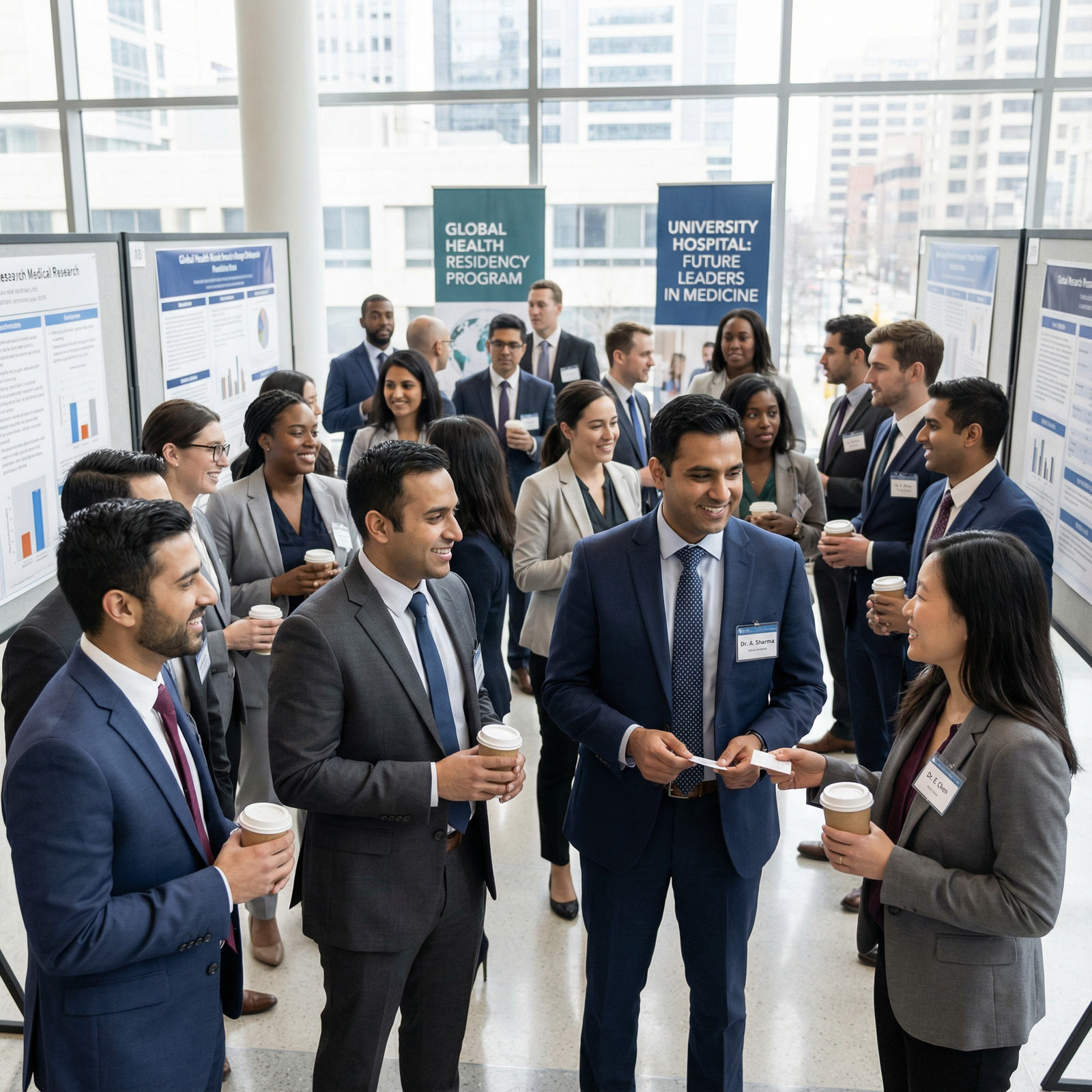
- American College of Physicians (ACP) – Particularly valuable for internal medicine–bound IMGs. Chapters often host regional meetings where medical students and residents present posters.
- Specialty Organizations (AAFP, AAP, ACC, AANS, etc.) – Provide specialty-focused education, mentorship programs, and resident/student sections.
How to Use Organizations for Networking
- Attend local chapter meetings, online webinars, and annual conferences.
- Participate in student or international sections if available.
- Volunteer for committees or abstract review panels when openings arise.
- Apply for formal mentorship programs offered by these societies.
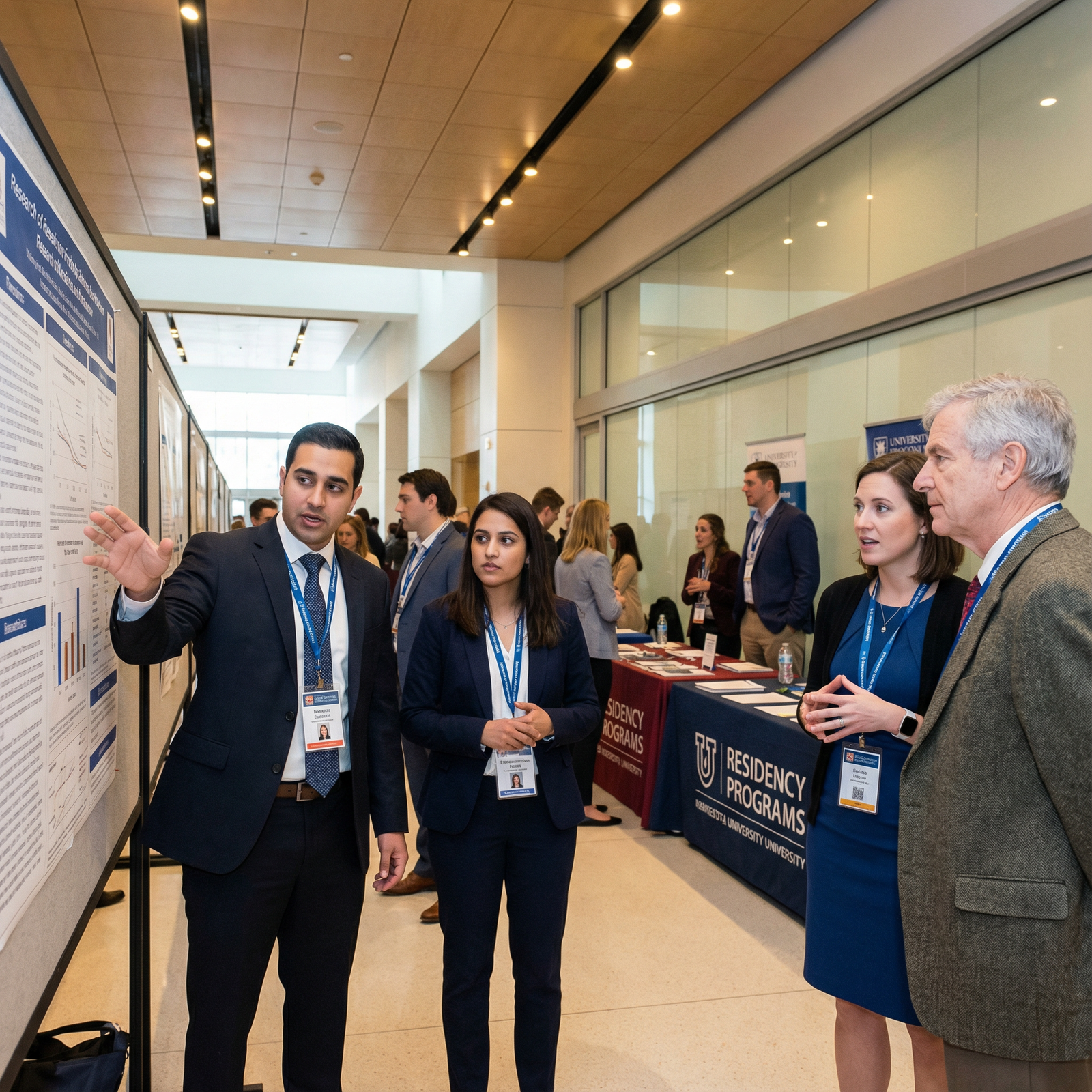
Even one poster presentation at a regional or national conference can give you multiple chances to speak with attendings, fellows, and residency leadership in your chosen specialty.
3. Use Social Media and Online Platforms Wisely
Social media, when used professionally, can serve as a powerful networking amplifier for IMGs.
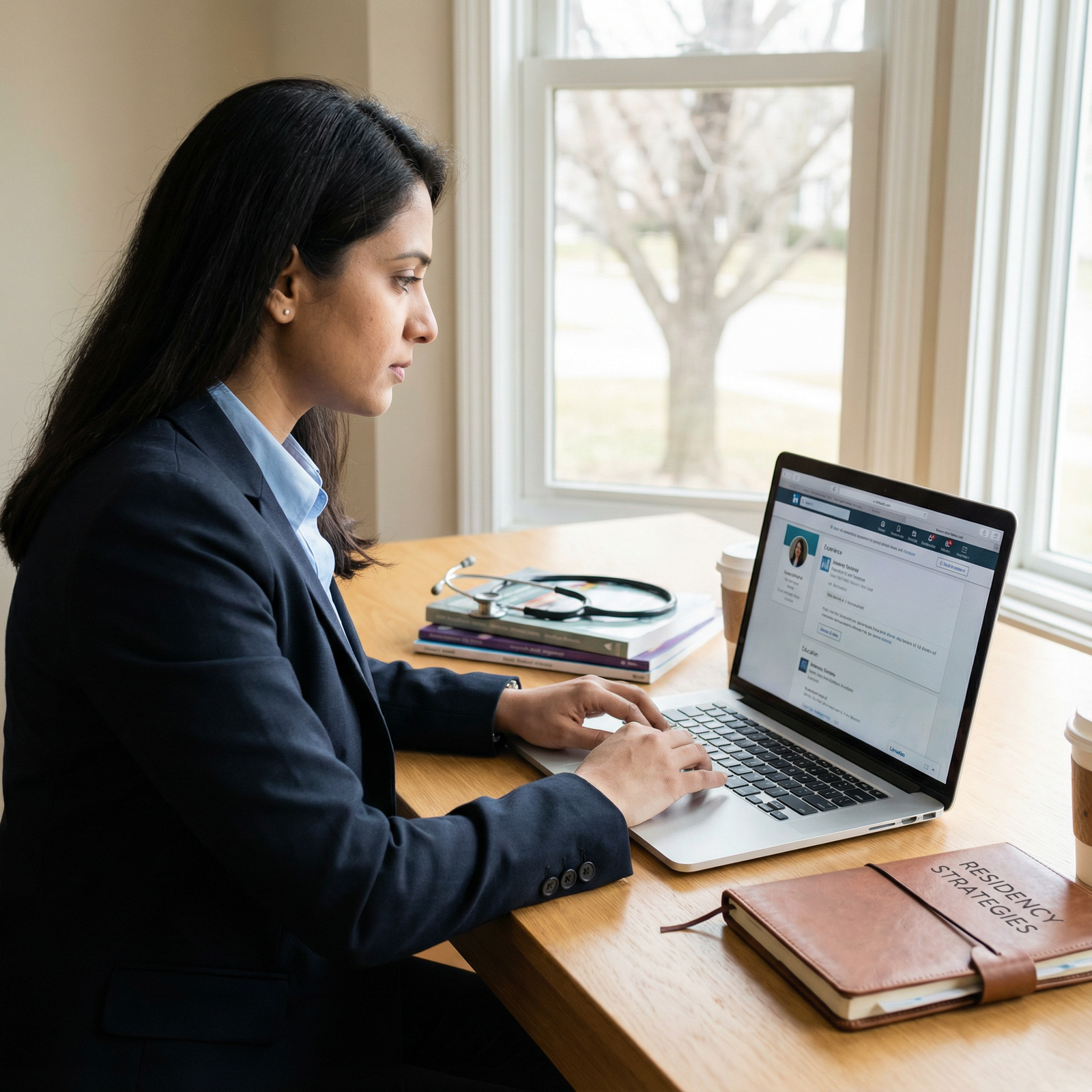
LinkedIn: Your Core Professional Hub
Create a complete, polished profile:
- Professional headshot
- Clear headline (e.g., “International Medical Graduate seeking Internal Medicine residency | Research experience in cardiology”)
- Concise, achievement-oriented summary
- Detailed education, exams, publications, and volunteer work
Engage rather than just connect:
- Comment thoughtfully on posts from program directors, residents, and physicians.
- Share your own academic work, reflections on conferences, or summaries of articles you read.
- Join groups focused on “International Medical Graduates,” “Residency Applications,” or your specialty.
Twitter (X): Academic Medicine in Real Time
Many residency programs, chairs, and physicians are very active on Twitter:
Follow:
- Program accounts in your specialty
- Influential educators and researchers
- IMG support communities
Participate:
- Retweet or comment with substantive contributions.
- Join tweet chats (e.g., #MedTwitter, #FOAMed, specialty hashtags).
Real-Life Example:
An IMG interested in cardiology consistently engaged with a well-known cardiologist’s threads, asking informed questions and summarizing key points. The cardiologist noticed the IMG’s thoughtful engagement and later invited them to collaborate on a review article. This publication became a highlight of the IMG’s CV and opened further networking doors.
Facebook and WhatsApp Groups
- Join IMG-specific groups that post:
- Observership opportunities
- Research or volunteer openings
- USMLE and Residency Application guidance
Exercise discernment; not all groups provide high-quality or accurate advice. Always cross-check important information with official sources.
Building Relationships Through Clinical, Research, and Volunteer Work
1. Clinical Observerships and Externships
Clinical experiences in the U.S. not only strengthen your application but also allow you to build meaningful professional connections.
During an observership or externship:
- Be punctual, prepared, and engaged every day.
- Ask thoughtful clinical questions at appropriate times.
- Offer help with small tasks (presentations, patient education materials, literature searches).
After the experience:
- Send a thank-you email to your preceptor and relevant staff.
- Stay in touch periodically with brief updates on your progress.
- If the relationship has developed well, respectfully request letters of recommendation with plenty of notice.
2. Research Involvement as a Networking Engine
Research can be one of the most direct routes to building a dependable network.
Finding Research Opportunities
Check university and hospital websites for labs or departments that have ongoing projects.
Email faculty in your area of interest with a concise message:
- Who you are (IMG, exams, background)
- Why you’re interested in their work
- What skills you can offer (data collection, literature review, statistics, etc.)
Use your alumni network and professional organizations to identify mentors willing to take on motivated IMGs.
Turning Research into Long-Term Relationships
- Meet deadlines, be reliable, and communicate clearly.
- Offer to present at departmental meetings or co-author abstracts.
- Ask your research mentor for honest feedback and advice about your specialty choice and program list.
Often, research mentors become some of the strongest advocates for IMGs, especially if they’ve seen your work ethic and professionalism firsthand.
3. Volunteering and Community Engagement
Volunteering demonstrates commitment to patient care and the community, while also expanding your network.
- Consider:
- Free clinics or community health centers
- Public health initiatives, vaccination drives, or health fairs
- Nonprofits focused on underserved populations
These environments are often staffed by physicians, nurses, social workers, and administrators who can offer insight, references, or connections to clinical experiences.
Making Mentorship Work for You as an IMG
1. Finding the Right Mentors
IMGs benefit from multiple types of mentors:
- Career Mentors – Help guide specialty choice, exam timing, and long-term goals.
- Application Mentors – Focus specifically on residency applications, personal statements, and interview prep.
- Peer Mentors – Current residents or fellows who recently went through the same process.
- Cultural/Language Mentors – Individuals who can coach you on communication style and U.S. workplace norms.
You can find mentors through:
- Alumni connections
- Professional organizations’ mentorship programs
- Faculty from observerships, externships, or research
- Online IMG-specific mentorship initiatives or local medical societies
2. Being a Good Mentee
To sustain mentorship:
- Be respectful of time; prepare clear questions before meetings.
- Follow through on advice when reasonable—and share updates.
- Be honest about your strengths, weaknesses, and concerns.
- Show appreciation; a sincere thank-you email or note goes a long way.
Example:
An IMG in the U.S. Midwest joined a state medical society that offered a formal mentorship program. She was paired with a community internist who had previously trained IMGs. Over one year, they held regular check-ins where they reviewed her CV, strategized applications, and practiced interviews. The mentor also connected her with two other physicians in academic centers, one of whom became a letter writer. She matched on her first application cycle.
Sustaining and Expanding Your Professional Network
Networking is not a one-time event; it is an ongoing process throughout your career.
1. Staying in Touch Without Being Overbearing
Send short updates 2–3 times a year:
- “I passed Step 2 CK.”
- “I started a research position in X department.”
- “I matched into Y program—thank you again for your guidance.”
Share relevant successes and always acknowledge their role in helping you.
2. Giving Back, Even as a Trainee
Even as a medical student or pre-residency IMG, you can:
- Share reliable resources with junior students.
- Help peers edit CVs or personal statements.
- Introduce others to contacts or opportunities when appropriate.
This mindset sets the foundation for a long-term professional identity based on reciprocity, not just receiving help.
3. Growing Your Network During Residency and Beyond
Once you match, your networking journey continues:
- Get involved in residency committees, quality improvement projects, or teaching activities.
- Attend local and national conferences as a resident presenter.
- Continue participating in specialty organizations, possibly taking on leadership roles in resident sections.
These activities prepare you for fellowship, future job searches, and opportunities in leadership, education, or research.
Common Networking Challenges for IMGs—and How to Overcome Them
1. Cultural and Communication Barriers
Many IMGs feel uncertain about how formal or informal to be, how much to self-promote, or how to handle disagreement with seniors.
Strategies:
- Observe colleagues and residents carefully in clinical environments.
- Ask trusted mentors or peers for honest feedback on your email style, presentations, and interactions.
- Attend workshops on communication skills, cultural competence, or presentation skills if your institution offers them.
2. Language Confidence
Even with excellent exam scores, speaking spontaneously in a second language can feel intimidating.
Strategies:
Practice with:
- English conversation groups (online or in-person)
- Toastmasters or similar public speaking clubs
- Mock interviews with friends, mentors, or online groups
Record yourself speaking and review for clarity, speed, and pronunciation.
3. Navigating Bias and Stereotypes About IMGs
Unfortunately, some IMGs encounter conscious or unconscious bias.
Strategies:
- Focus on consistent excellence in your work and professionalism.
- Build multiple relationships rather than depending on one person or one institution.
- Seek allies: faculty or residents known to be supportive of IMGs can provide both opportunities and psychological support.
- Avoid internalizing negative experiences; discuss them with mentors and peers who can offer perspective.
4. Time and Resource Constraints
Balancing exams, work, family responsibilities, and networking can be overwhelming.
Strategies:
Prioritize high-yield activities:
- One or two key professional organizations
- Select mentors with strong alignment to your goals
- Targeted conferences where you are presenting or likely to meet important contacts
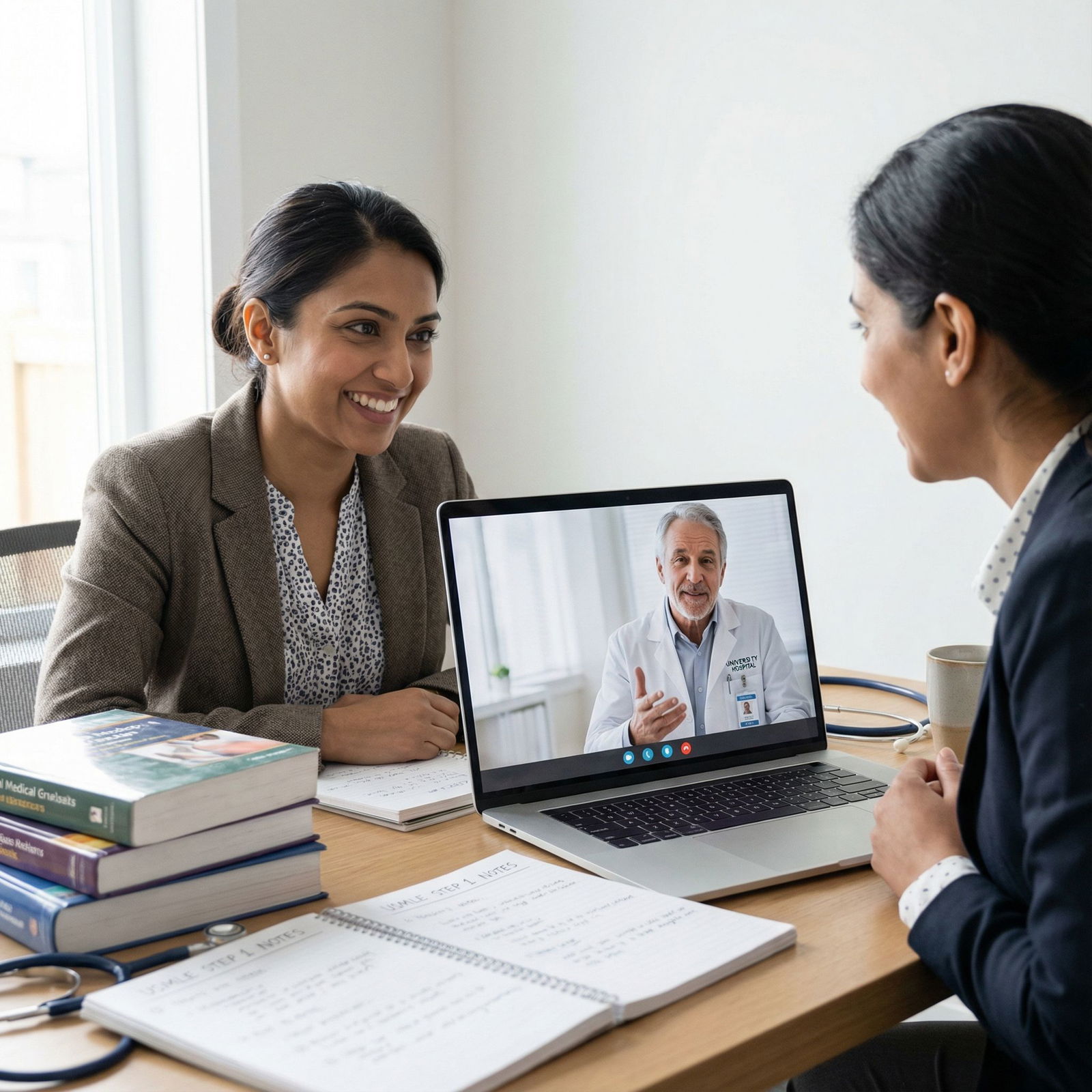
Use virtual networking (Zoom, webinars, online conferences) to save travel costs while still engaging.
FAQs: Networking and Professional Development for IMGs
Q1: What is the single most important networking step I should take as an IMG starting out?
A1: Start by identifying and contacting alumni from your medical school who are currently in U.S. residency or practice. They understand your background, can offer realistic advice on Residency Applications, and may connect you with observerships, research, or other mentors. A few strong alumni relationships are often more valuable than dozens of weak social media connections.
Q2: How early should I begin networking for residency if I am still a medical student abroad?
A2: Ideally, start 1–2 years before your planned application cycle. Early networking allows time to build trust, secure U.S. clinical or research experience, and generate strong letters of recommendation. Even if you are in the pre-clinical years, you can start by joining online IMG communities, connecting with alumni, and attending virtual conferences or webinars.
Q3: How can I approach someone for mentorship without sounding demanding or desperate?
A3: Be concise and respectful. In your initial message, briefly introduce yourself, explain why you are reaching out to that specific person (e.g., their specialty, IMG background, or work), and ask for a short conversation rather than ongoing mentorship right away. Over time, if the relationship develops naturally and you show reliability and initiative, many mentors will voluntarily offer longer-term support.
Q4: What if I live outside the U.S. and cannot attend conferences or rotate in person yet—can I still network effectively?
A4: Yes. Use virtual options extensively:
- Attend online conferences and webinars from professional organizations.
- Engage actively on LinkedIn and Twitter with U.S.-based physicians, residents, and programs.
- Join IMG-focused online communities or mentorship programs.
- Seek remote research collaborations where data analysis or literature review can be done from abroad.
Virtual networking cannot fully replace in-person experiences, but it can create relationships that later lead to in-person opportunities once you can travel.
Q5: How do I know if my networking is actually helping my residency chances?
A5: Signs that your network is becoming effective include:
- Being invited to collaborate on projects or research.
- Receiving personalized guidance about programs and strategy.
- Obtaining strong, detailed letters of recommendation from U.S. physicians.
- Having mentors willing to contact programs on your behalf or provide informal references.
Remember that networking is not about guarantees; it is about improving probability. Even when outcomes are uncertain, a strong network enhances your Professional Development, knowledge, and resilience.
By applying these networking strategies systematically and authentically, International Medical Graduates can transform a daunting, isolated process into one supported by mentors, colleagues, and advocates. Your network will not only improve your chances of matching into residency—it will also sustain your growth as a physician for decades to come.