Understanding Placement Bias in the Residency Match: A Deeper Look at Challenges for International Medical Graduates
For many International Medical Graduates (IMGs), securing a U.S. residency position is the single biggest barrier between years of medical training and a fulfilling career in American healthcare. Beyond exams, visas, and unfamiliar systems, one of the most difficult—and often invisible—obstacles is Placement Bias in the residency match process.
Placement bias does not mean that every program or faculty member is overtly discriminatory. Rather, it reflects a complex mix of cognitive shortcuts, institutional habits, and systemic preferences that, together, disadvantage IMGs compared to U.S. medical graduates (USMGs). Understanding how this works—and learning how to strategically counter it—is essential for any IMG serious about matching.
This guide explores what placement bias is, how it affects IMGs, and concrete, evidence-informed strategies to strengthen your application, your confidence, and your long‑term career development in U.S. medical training.
What Is Placement Bias and Why Does It Matter for IMGs?
Placement Bias in the residency match refers to the tendency of programs to systematically favor certain types of applicants (often USMGs) over others (often IMGs), even when individual qualifications are comparable. This bias can occur consciously or unconsciously and is shaped by:
- Cognitive biases in decision-making
- Institutional policies and historical patterns
- Familiarity and comfort with local medical schools and training systems
Understanding these forces does not solve them overnight—but it helps you anticipate where the hurdles are and develop targeted strategies to overcome them.
Cognitive Biases in Residency Selection
Residency selection decisions are made by humans—program directors, faculty, chief residents, and selection committees—who are all susceptible to cognitive biases. Common ways these biases affect IMGs include:
1. Representativeness and Stereotyping
If a program has had one or two negative experiences with poorly performing IMGs, those outliers can unfairly shape how faculty view all IMG applicants.
- A single IMG struggling with communication may reinforce a stereotype that “IMGs have poor clinical communication skills.”
- Conversely, a USMG with similar issues may be perceived as an individual exception rather than a representative of their group.
2. Confirmation Bias
Once a committee member believes that USMGs are “better prepared” or “easier to work with,” they may subconsciously search for information that supports this belief while downplaying contrary evidence.
- Strong USMLE scores and excellent research from an IMG may be dismissed as “exceptions” or “hard to interpret.”
- Marginal performance from a USMG might be rationalized or excused.
3. Authority and Prestige Bias
Programs often give undue weight to the “brand” of a medical school or previous institution:
- A letter of recommendation from a well-known U.S. academic center may be valued far more than an equally enthusiastic letter from a respected but unfamiliar overseas institution.
- Graduates from top-ranked U.S. schools may be overvalued simply because of institutional prestige.
Institutional Preferences and System-Level Barriers
Beyond individual perceptions, institutional preferences strongly shape selection:
- Some programs officially or unofficially list IMGs as “rarely considered” or accept only a very small number each year.
- Others may only consider IMGs with extensive U.S. clinical experience or very high USMLE scores—even higher than those expected of USMGs.
Reasons for these preferences include:
- Administrative simplicity (fewer visa issues, standardized evaluation systems)
- Historical traditions (“We’ve always taken mainly local graduates.”)
- Assumptions about communication, cultural fit, or clinical preparedness
These preferences can heavily impact where IMGs apply, how many interviews they get, and ultimately how realistic their match chances are, even when they would excel in many programs.
Familiarity and Comfort: The “Known vs Unknown” Problem
Residency programs often feel more comfortable with what they already know:
- They know the curriculum, grading, and culture of nearby or affiliated U.S. schools.
- Faculty may personally know attendings or deans who can vouch for USMGs.
- They understand the “signal” that a 230 USMLE score carries for a USMG, but feel less certain how to interpret an IMG with a different educational background.
As a result, IMGs can be perceived as a riskier choice, not because of individual shortcomings, but because programs lack familiarity with their training context.

The Real-World Impact of Placement Bias on IMGs
Placement bias has tangible consequences—not just on match statistics, but also on emotional health and long-term career development.
Lower Match Rates and Limited Specialties
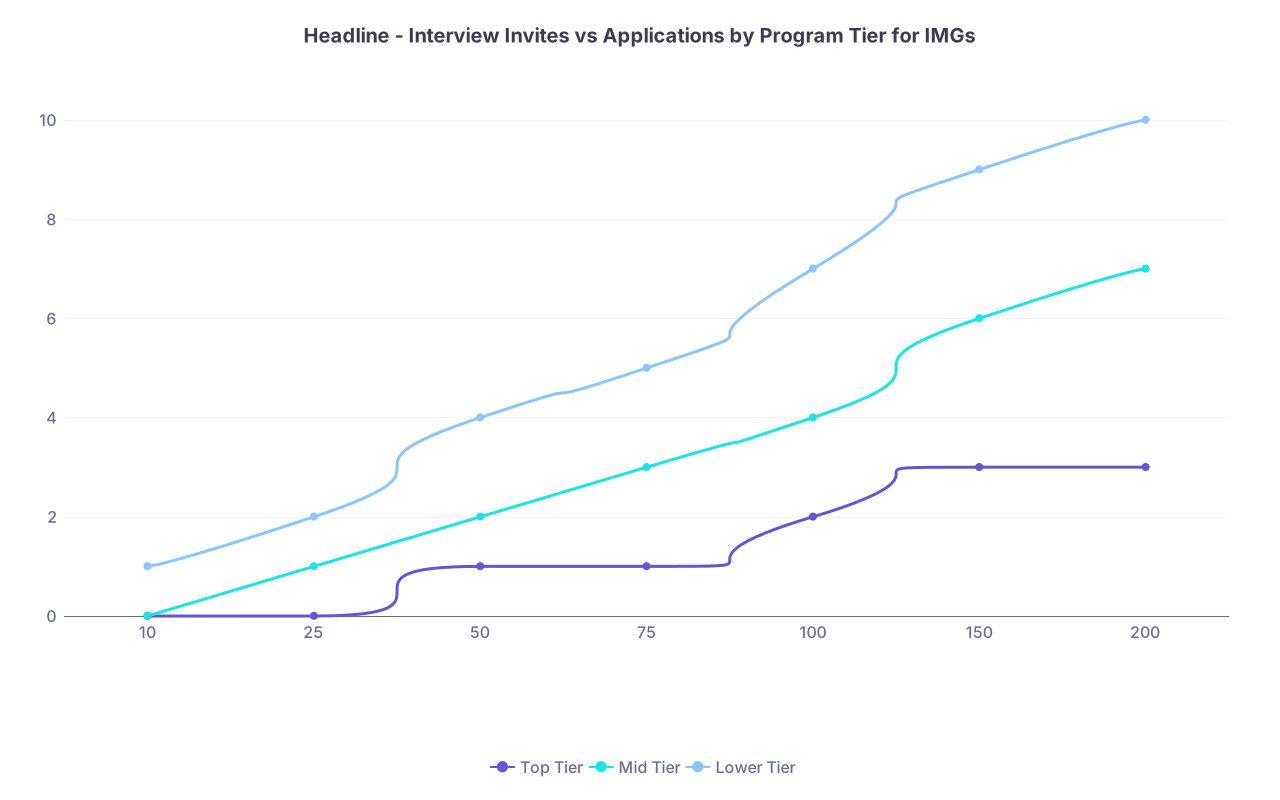
Year after year, NRMP data show a consistent pattern: IMGs (both U.S. citizen and non–U.S. citizen) have lower match rates than USMGs.
While exact figures vary by year and specialty, trends often include:
- USMGs matching at significantly higher rates to competitive specialties and academic programs.
- IMGs more heavily represented in community-based programs and in specific specialties such as internal medicine, family medicine, and pediatrics.
- Non–U.S. citizen IMGs typically facing the steepest challenges.
Even highly qualified IMGs with strong exam scores and clinical experience can struggle to obtain interviews in more competitive fields like dermatology, orthopedic surgery, or integrated plastic surgery, largely due to institutional patterns and risk-averse behavior.
Increased Competition in a Crowded Market
Several forces have intensified competition in recent years:
- More U.S. medical schools and increased class sizes
- Ongoing interest from Caribbean schools and other international institutions sending graduates to the U.S.
- Limited growth in the total number of ACGME-accredited residency positions
For IMGs, this means:
- They are often competing against USMGs with built-in institutional advantages.
- Many programs filter out IMGs automatically by USMLE cutoffs, graduation year, or visa needs.
- Even strong applications might secure fewer interviews than comparable USMG applications.
Emotional and Mental Health Consequences
Placement bias is not only a statistical problem; it is deeply personal:
- Chronic stress and anxiety: Long preparation times, financial pressure, and the uncertainty of outcome can lead to ongoing stress.
- Imposter syndrome: Persistent doubts like “Maybe I’m not good enough” or “Maybe they’re right about IMGs” can undermine confidence during interviews and rotations.
- Burnout and depression: Years of attempts, repeated rejections, and social isolation (especially in a new country) can contribute to serious mental health concerns.
Proactively addressing mental health—through counseling, peer support, and realistic planning—is as important as preparing your CV.
Application-Specific Challenges for IMGs in the Residency Match
Although all applicants struggle with certain aspects of the residency application, IMGs face distinct structural disadvantages in several critical components.
Letters of Recommendation (LoRs) and Clinical Validation
For selection committees, LoRs are one of the most important tools to assess how an applicant functions in the U.S. healthcare environment.
The IMG Challenge
- Limited opportunities to work directly with U.S. faculty who write influential letters.
- Observerships may offer too little direct clinical responsibility for attendings to comment conclusively on your clinical decision-making.
- Letters from overseas supervisors may be undervalued due to unfamiliarity with their roles or institutions.
How This Feeds Placement Bias
When programs see:
- Three strong letters from U.S. academic attendings for a USMG vs.
- One U.S. letter and two international letters for an IMG
They may default to perceiving the USMG as “more proven” in the U.S. system—even when the IMG has comparable or better clinical potential.
U.S. Clinical Experience (USCE) and Adaptation to the System
U.S. clinical experience (electives, clerkships, sub-internships, hands-on externships) is often a gatekeeping criterion for many programs.
Barriers IMGs Face
- Limited spots for visiting students, often reserved for students from partner schools.
- High costs (application fees, travel, lodging, visa).
- Some positions are only observerships, which do not provide hands-on experience.
- COVID-era disruptions created multi-year gaps in opportunities for many IMGs.
Without USCE, program directors may worry about:
- Communication skills in U.S. clinical settings
- Familiarity with electronic health records and documentation standards
- Ability to function within U.S. healthcare team structures
Personal Statements and Cultural Communication
A personal statement is more than a narrative; it is a cultural document that signals how well you understand:
- Patient-centered care in the U.S.
- Concepts like professionalism, systems-based practice, and interprofessional collaboration.
- Your role in a training program’s culture and mission.
Many IMGs:
- Come from systems where self-promotion is uncommon or discouraged.
- Struggle to strike the right balance between humility and advocacy.
- May not fully understand what U.S. programs are actually looking for in a personal statement.
Networking and “Hidden Curriculum” Access
USMGs often benefit from:
- Advisors who personally know program directors.
- Home program rotations where they can “audition” for their preferred departments.
- Informal advice on which programs are “IMG-friendly,” how many programs to apply to, and what realistic back-up strategies are.
In contrast, IMGs may:
- Lack local mentors who understand the match process.
- Be unaware of unspoken expectations (e.g., following up after interviews, how to express interest).
- Miss out on opportunities because they simply do not know they exist.
Standardized Tests (USMLE) and Risk Perception
For many programs, USMLE scores are the first filter—especially for IMGs.
- IMGs are often held to higher score thresholds than USMGs.
- A single attempt at Step 1 or Step 2 with a marginal score can result in automatic filtering at many programs.
- Since Step 1 has transitioned to Pass/Fail, Step 2 CK scores carry even more weight for IMGs.
This heavy reliance on test scores often reinforces placement bias by:
- Overvaluing a single metric while underappreciating clinical experience, resilience, and communication skills.
- Giving programs a convenient but crude way to reduce the number of IMG applications they have to review.
Practical Strategies IMGs Can Use to Counter Placement Bias
While you cannot control systemic biases, you can strategically strengthen your application and positioning. Think in terms of three pillars: Evidence, Exposure, and Endorsement.
1. Build Strong Evidence of Clinical Competence
Your goal is to leave as little doubt as possible that you can excel in U.S. residency training.
Maximize High-Quality U.S. Clinical Experience
Prioritize experiences that provide:
- Direct patient care (externships, sub-internships where permissible)
- Documented responsibility (notes, presentations, patient follow-up)
- Interaction with residents and attendings who write detailed LoRs
Actionable tips:
- Research “IMG-friendly” hospitals and institutions offering structured externships or electives.
- Consider multiple shorter rotations in different settings (academic, community) to increase your network and LoR opportunities.
- Treat every day on rotation as a prolonged job interview: be punctual, prepared, and proactive.
Strengthen Your Academic Profile
- Aim for the highest possible USMLE Step 2 CK score; this is one of your most powerful tools against bias.
- If possible, participate in research projects (clinical, quality improvement, chart reviews) that lead to abstracts, posters, or publications.
- Document additional training (Masters, certificates, teaching roles) when relevant.
2. Increase Your Exposure and Visibility to Programs
You want programs to see you as a known quantity, not a risk.
Targeted Program Selection
- Use NRMP and FREIDA data to identify programs with a consistent track record of taking IMGs.
- Look at program websites and resident lists to see if recent graduates include IMGs or non-U.S. citizen IMGs.
- Apply broadly and realistically:
- Balance “reach” programs with a strong core of IMG-friendly institutions.
- Be mindful of filters: some programs explicitly state “no visa sponsorship” or “no IMGs.”
Strategic Networking
- Attend regional and national conferences (e.g., ACP, AAFP, APA depending on specialty).
- Introduce yourself to program representatives at residency fairs and follow up with a professional email.
- Use LinkedIn and alumni networks to connect with:
- Current residents from your medical school or country.
- Former IMGs now in U.S. residency or faculty roles.
- Join IMG-focused organizations and networks that share opportunities, webinars, and mentorship.
3. Secure Strong Endorsement Through Letters and Advocacy
Your letters, mentors, and references should clearly communicate: This person will be an outstanding resident in our system.
Optimize Letters of Recommendation
- Prioritize letters from U.S. attendings who directly supervised you in clinical settings.
- Seek letters from faculty who:
- Know you well enough to write detailed, specific comments.
- Understand what programs look for in U.S. residency LoRs.
- Provide your letter writers with:
- An updated CV
- A brief summary of your goals and what you hope they can highlight
- Specific examples of cases or projects you worked on together
Craft Compelling Personal Statements and Communication
- Clearly explain:
- Why you chose your specialty.
- Why you are specifically seeking U.S. medical training.
- What unique perspectives and strengths you bring as an IMG.
- Demonstrate understanding of U.S. healthcare values:
- Team-based care
- Patient safety and quality improvement
- Health equity and cultural humility
- Avoid generic or overly dramatic narratives; focus on concrete experiences that show growth, resilience, and professionalism.

Protecting Your Well-Being and Planning for Long-Term Career Development
Addressing placement bias is not only about matching once; it’s about building a sustainable, healthy medical career in a system that may not have been designed with IMGs in mind.
Managing Expectations and Mental Health
- Set tiered goals:
- Primary: Match into your preferred specialty and setting.
- Secondary: Consider related specialties or preliminary years if needed.
- Tertiary: Explore alternative or parallel career paths (research fellowships, MPH, MBA, etc.) if multiple attempts fail.
- Normalize seeking support:
- Professional counseling or therapy.
- Peer-support groups, particularly IMG networks.
- Honest conversations with family about timelines and financial realities.
Developing Skills Beyond the Application
Whether or not placement bias eases over time, you can invest in skills that will always be valuable:
- Communication skills (presentation, writing, and patient interaction).
- Leadership (student organizations, quality improvement projects).
- Teaching and mentorship roles.
- Systems-based practice (understanding insurance, healthcare delivery, and policy).
These not only help you stand out in residency applications but also support your growth into a well-rounded physician.
FAQ: Placement Bias and the Residency Match for IMGs
1. What exactly is placement bias in the residency match, and does it mean programs are intentionally discriminatory?
Placement bias refers to the systematic tendency of residency programs to favor applicants from certain backgrounds—most commonly U.S. medical graduates—over others, including International Medical Graduates, even when individual qualifications are comparable. It does not always mean that programs are intentionally discriminatory. Much of placement bias arises from:
- Unconscious cognitive biases.
- Institutional habits and historical patterns.
- Overreliance on “safe” or familiar applicant profiles.
However, regardless of intent, the impact on IMGs is real, resulting in lower match rates and fewer opportunities in certain specialties and institutions.
2. As an IMG, what can I realistically do to reduce the effect of placement bias on my application?
While you cannot control program behavior, you can reduce the impact of bias by:
- Maximizing objective strengths: Achieving a strong USMLE Step 2 CK score and, if applicable, Step 3.
- Gaining robust U.S. clinical experience: Prioritizing hands-on clerkships, externships, and sub-internships where possible.
- Securing high-quality U.S. letters of recommendation: From attendings who can attest specifically to your clinical skills and professionalism.
- Targeting IMG-friendly programs: Using data and resident lists to focus your applications where IMGs historically match.
- Improving communication and interviewing skills: Practicing with mentors, advisors, or peers familiar with U.S. expectations.
Over time, these steps build a strong, coherent profile that can overcome initial hesitations about IMGs.
3. How important are USMLE scores for IMGs compared with USMGs?
USMLE scores, especially Step 2 CK, are critically important for IMGs—often more so than for USMGs. Many programs:
- Use higher score cutoffs for IMGs than for USMGs.
- Filter IMG applications heavily based on exams because they see them as standardized, comparable metrics.
- Rely on Step 2 CK more now that Step 1 is Pass/Fail, particularly for IMGs.
A strong Step 2 CK score can sometimes offset concerns about unfamiliar schools or international training systems, making it one of the most powerful tools you have against placement bias.
4. How can I get strong U.S. letters of recommendation if I have limited access to U.S. clinical rotations?
If you have limited opportunities, be strategic and intentional:
- Prioritize quality over quantity: One or two well-structured, high-engagement rotations are better than many brief or passive observerships.
- Seek rotations where you will:
- Work directly with attendings rather than only with residents.
- Present patients, write notes (if allowed), and receive feedback.
- Consider:
- Structured IMG-focused externship programs.
- Research positions that incorporate some clinical exposure.
- Telehealth or remote experiences (if they allow meaningful interaction and evaluation).
- Communicate your goals clearly to supervisors and ask if they are comfortable supporting you with a detailed letter if you perform well.
5. If I do not match on my first attempt, what should my next steps be as an IMG?
Not matching is difficult, but it doesn’t have to end your career aspirations. Consider:
- Analyze your prior application honestly: Scores, LoRs, USCE, program list, specialty choice.
- Strengthen key weaknesses:
- Retake Step exams if possible and appropriate.
- Gain more or higher-quality U.S. clinical or research experience.
- Revise personal statements and CV with feedback from experienced mentors.
- Broaden your strategy:
- Apply to a wider range of programs or less competitive specialties.
- Consider a preliminary year or transitional year as a stepping stone.
- Maintain clinical currency: Avoid long gaps without clinical involvement—volunteer, research, or clinical roles (even abroad) can help.
Above all, use the unmatched year strategically to build a significantly stronger application, not just reapply with minimal changes.
Understanding placement bias is not about blaming the system—it’s about seeing it clearly so you can navigate it effectively. As an International Medical Graduate, you bring valuable diversity, global perspective, and resilience to U.S. medical training. By combining strong objective credentials with targeted experience, strategic networking, and deliberate self-advocacy, you can significantly improve your odds in the residency match and lay a solid foundation for long-term career development in American healthcare.