It is mid‑October. You clicked “Certify and Submit” on ERAS two weeks ago from a different time zone. Your friends in US schools are already comparing interview invites in group chats. Your phone? Silent. Your email? Just automated confirmations and random CME spam.
This is the danger zone for IMG applicants: the limbo between ERAS submission and interview season. People either overreact and panic‑apply blindly, or they underreact and waste the most important 8–10 weeks of their application year.
You are not waiting. You are working a structured, weekly plan.
Below is a week‑by‑week and then day‑by‑day framework from post‑submission through peak interview season, aimed specifically at IMGs.
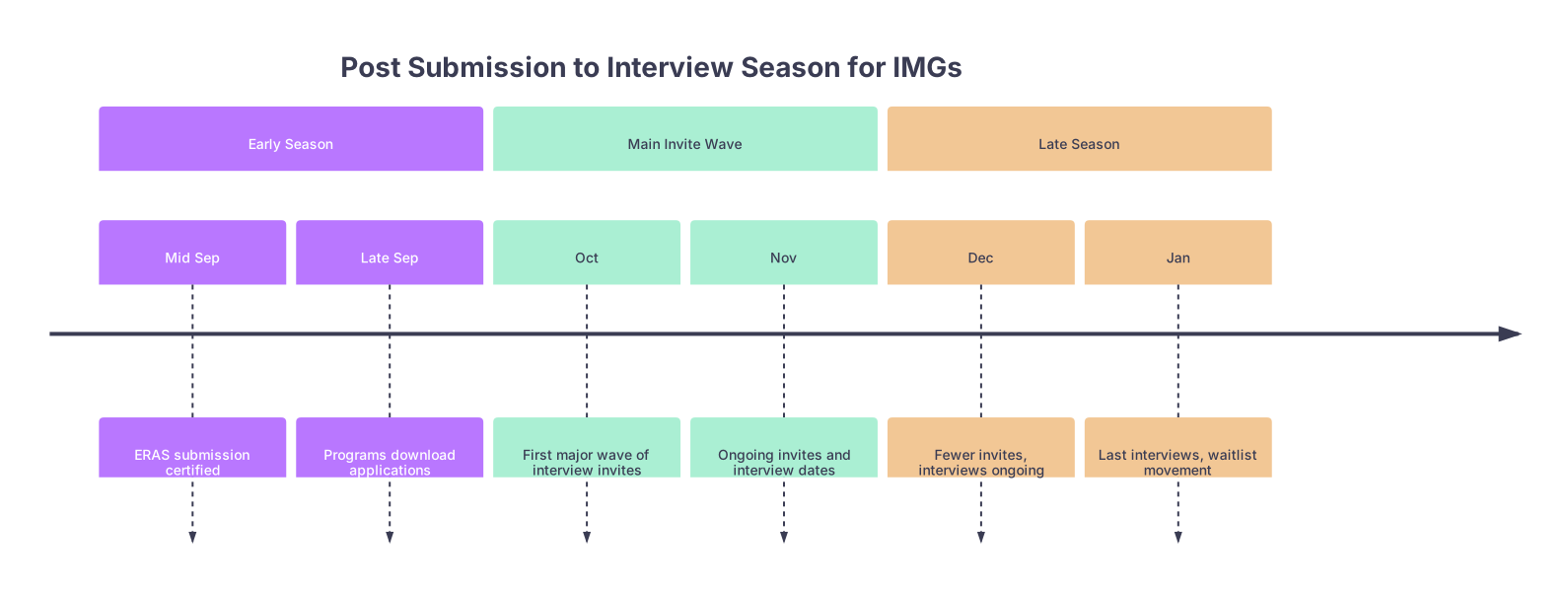
Big Picture Timeline: Post‑Submission Through Interviews
First, orient yourself in the season. Dates vary slightly each year, but the pattern is stable.
| Period | Event |
|---|---|
| Early Season - Mid Sep | ERAS submission certified |
| Early Season - Late Sep | Programs download applications |
| Main Invite Wave - Oct | First major wave of interview invites |
| Main Invite Wave - Nov | Ongoing invites and interview dates |
| Late Season - Dec | Fewer invites, interviews ongoing |
| Late Season - Jan | Last interviews, waitlist movement |
Now the practical version—what you are doing at each stage.
Weeks 1–2 After Submission: Stabilize and Set Up Systems
At this point you should stop “tweaking” your application and start building infrastructure.
Week 1: Application Audit and Communication Setup
Main goals:
- Confirm your application is actually complete.
- Make sure you do not miss an invite because of some stupid technical issue.
By the end of Week 1, you should have:
Verified ERAS and program status
- Log in to ERAS and confirm:
- All programs show as “Submitted”.
- All USMLE scores released (including OET/IELTS where applicable).
- All LoRs assigned to each program.
- Make a simple spreadsheet with:
- Program name
- State
- Specialty
- Applied (Y/N)
- University vs community
- IMG‑friendly (yes / borderline / long shot)
- Log in to ERAS and confirm:
Hardened your communication channels
- Email:
- Create a dedicated residency folder structure:
- “Invites”, “Waitlist / Alternate dates”, “Rejections”, “Program info”
- Set filters so anything with “interview”, “invitation”, “residency”, “application status” is flagged and starred.
- Create a dedicated residency folder structure:
- Phone:
- US number active and tested (Google Voice, VOIP, or physical SIM).
- Voicemail greeting: professional, clear, 10–15 seconds, your full name.
- Time zones:
- Build a quick reference for 5–10 target cities (e.g., EST, CST, PST) vs your local time.
- Email:
Standard email templates drafted Draft 4 templates:
- Interview acceptance
- Request to reschedule
- Polite decline
- Post‑interview thank‑you
Keep them short, formal, and editable per program.
Baseline mental plan
- Decide a “check schedule” to avoid obsessively refreshing:
- Email: 3 fixed times daily (e.g., 9:00, 14:00, 20:00 local).
- ERAS messages: once daily.
- Decide a “check schedule” to avoid obsessively refreshing:
At this stage, your job is prevention—prevent missing an invite, prevent scattered data, prevent chaos when the first emails finally arrive.
Week 2: Targeted Program Maintenance and Backup Moves
At this point you should be tightening your list and setting up Plan B and C.
Tasks for Week 2:
Refine your program tiers
Build a simple tier system in your spreadsheet:
| Tier | Description | Typical IMG Reality |
|---|---|---|
| A | Strong fit, realistic, IMG-friendly | Where most interviews should come from |
| B | Stretch, some IMG history | Worth applying if budget allows |
| C | Long-shot, few/no IMGs | Only if you have a hook |
| D | Mismatch, low fit | Do not chase or email repeatedly |
Be honest. Community IM programs that list “ECFMG Certification required, IMGs welcome” with current IMG residents? That is Tier A.
Finish any incomplete tasks
- If you are waiting on:
- Set calendar alerts on the exact expected release days.
- Prepare a brief update email format for programs that explicitly accept updates.
Create your documentation hub
- Central folder with:
- ERAS PDF of your application
- Personal statement(s)
- CV (1 page and expanded)
- Transcript, MSPE, exam reports
- You will need this for supplemental applications or last‑minute requests.
- Central folder with:
Light program‑specific research No deep dives yet. Just:
- Confirm which programs on your list:
- Sponsor visas (J‑1 vs H‑1B)
- Have recent graduates from your home country or similar schools
- Mark these programs as “High priority for interview prep” later.
- Confirm which programs on your list:
Weeks 3–6: The Main Invite Window – Weekly Structure
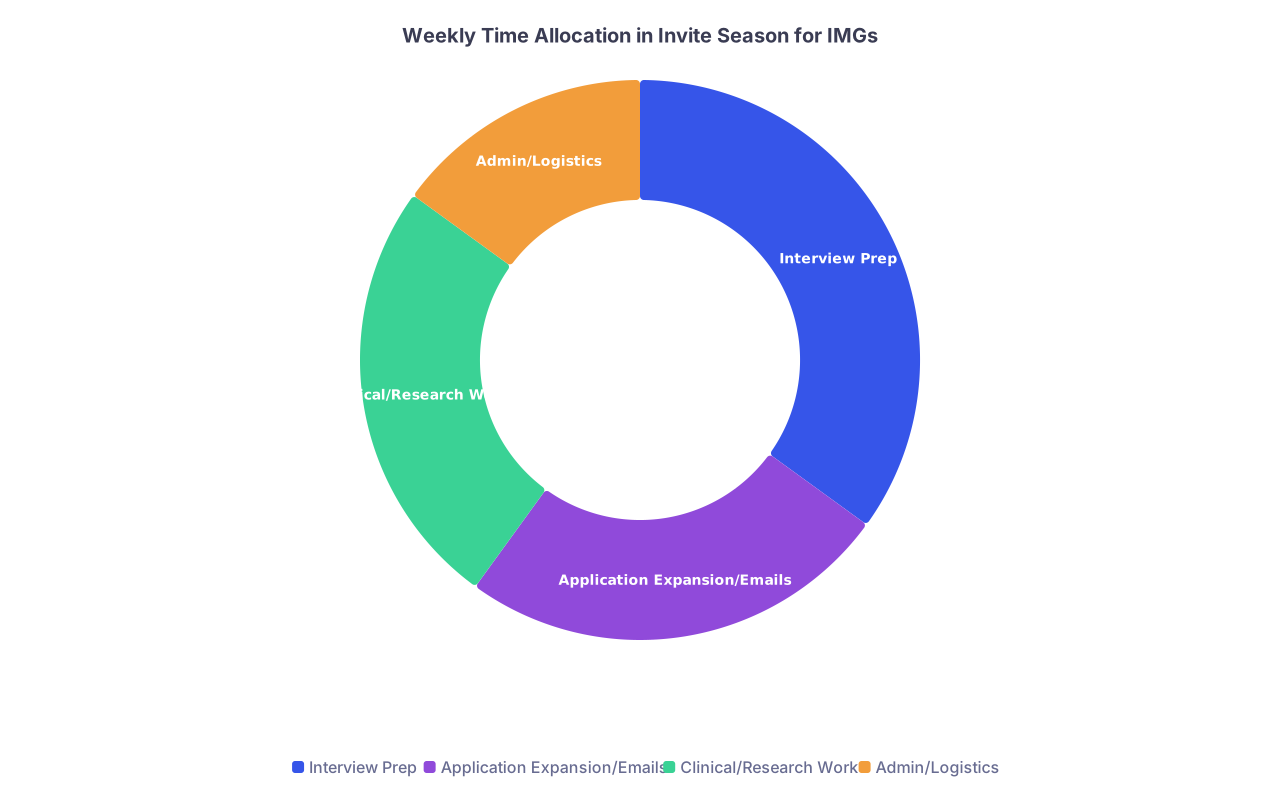
This is the unstable period. Some IMGs get multiple invites. Some hear nothing for weeks. Your weekly structure keeps you from spiraling.
| Category | Value |
|---|---|
| Interview Prep | 35 |
| Application Expansion/Emails | 25 |
| Clinical/Research Work | 25 |
| Admin/Logistics | 15 |
Standard Weekly Framework (Weeks 3–6)
Assume no interviews yet. I will layer in “if you have interviews” right after.
Every week in this period, you should:
Run a program status review (1–2 hours, once weekly)
- Check:
- Any new rejections?
- Programs that have started sending interviews (look at forums, but do not obsess).
- If a program has:
- Sent many invites to others.
- Not contacted you.
- And you are a borderline candidate.
- Then you mark them “low probability” and stop building emotional expectations there.
- Check:
Expand or adjust your list (2–3 hours weekly) By Week 3–4, many IMGs realize: the initial list was too aspirational.
Each week:
- Identify 5–10 additional IMG‑friendly, community‑heavy, visa‑sponsoring programs that:
- Accept late applications.
- Are in less popular locations (Midwest, smaller cities).
- Apply selectively. Do not spam 50 programs in one night. Use your tiers.
- Prioritize:
- Internal Medicine
- Family Medicine
- Pediatrics if you are flexible and your specialty is highly competitive.
- Identify 5–10 additional IMG‑friendly, community‑heavy, visa‑sponsoring programs that:
Interview preparation blocks (3–5 hours weekly minimum) Even with zero invites, you are preparing as if tomorrow morning brings 3 emails.
Tasks:
- Build your answer bank for core questions:
- “Tell me about yourself.”
- “Why this specialty?”
- “Why this program / this city?”
- “Explain this gap / low score / multiple attempts.”
- Record yourself (seriously, on your phone):
- Watch for: speaking speed, accent clarity, filler words, rambling.
- 1–2 mock sessions weekly:
- With a friend, mentor, or paid coaching if you can afford it.
- Build your answer bank for core questions:
Maintain your current activities (5–15 hours weekly)
- If you are:
- Doing research
- Working as a clinical observer
- In a non‑clinical job Do not abruptly stop. Programs ask: “What have you been doing since graduation?”
Keep 1–2 substantial activities alive. You might need them for a “what’s new” email in December.
- If you are:
When Interviews Start: Weekly Structure With 1–3 Interviews
Once invites start trickling in, your timeline compresses quickly.
At this point you should:
Lock a weekly planning session (Sunday or any fixed day)
- List:
- All upcoming interviews
- Travel / Zoom logistics
- Time zone conversions
- Decide:
- Which programs are top priority
- Which ones are backup if conflicts arise
- List:
For each interview week:
- 2–3 days dedicated prep for each specific program:
- Read website, rotation structure, fellowship match list.
- Identify 3 genuine reasons you like them (not “diverse patient population” parroting).
- 1 day for mock interview focusing on:
- That week’s programs’ style (academic vs community).
- 2–3 days dedicated prep for each specific program:
Email discipline
- Same‑day responses to new invites. Within 2 hours if possible during business hours.
- If you cannot attend a proposed date:
- Offer 2–3 alternative windows.
- Do not hoard interviews you know you will not rank. Release early.
Weeks 7–10: Late Invites, Damage Control, and Strategic Follow‑Up
By this stage (usually late November into December), patterns are clear.
If you have:
- Multiple interviews (8–12+ for IM/FM): you are in solid shape, keep prepping.
- Very few (0–3): your focus shifts to maximal salvage and long‑term planning.
Weekly Tasks if You Have Few or No Interviews
At this point you should be brutally honest and very structured.
Weekly Checklist (repeat Weeks 7–10):
Score and profile reality check (1–2 hours)
- Compare yourself against actual matched IMGs in your specialty:
- Step scores
- YOG (year of graduation)
- US clinical experience
- If you are far outside normal ranges, start building a realistic backup path:
- Research positions
- Additional USCE
- Different specialty for next cycle
- Compare yourself against actual matched IMGs in your specialty:
Targeted, not spammy, communication to programs (2–3 hours) You do not mass email 150 program coordinators. That screams desperation.
Instead:
- Identify 10–20 programs where:
- You are a reasonably close fit.
- They are historically IMG‑friendly.
- You have some connection (research interest, geographic, alumni from your school).
- Send short, professional emails:
- Subject: “ERAS Application – [Your Name], [Specialty] Applicant”
- 3–4 sentences:
- Who you are (scores, YOG in 1 line).
- Why their program specifically.
- One concrete update (new rotation, publication, Step 3 passed).
- Attach CV only if appropriate.
Do this once. Not weekly harassment.
- Identify 10–20 programs where:
Ongoing interview prep (3–4 hours, even with no invites yet)
- Tighten your weak stories:
- Gaps
- Fails
- Career pivot explanations
- Practice short answers:
- 60–90 seconds per response, not 5‑minute speeches.
- Tighten your weak stories:
Documentation and updates (1–2 hours) If anything new happens:
- Poster accepted
- Manuscript submitted
- New US rotation
- Step 3 result Prepare a 1‑paragraph update that you can send only to programs that explicitly accept updates or where you have already interviewed.
Zooming In: A Sample “Ideal” Week During Invite Season
Let me give you a Monday‑to‑Sunday pattern that works well for IMGs juggling time zones, ongoing work, and anxiety.
Assume:
- You have 1 interview on Thursday.
- You are in a non‑US time zone.
- You are still hoping for more invites.
Monday
Morning:
- Check email and ERAS once.
- Confirm:
- Thursday interview time in your local time.
- Platform (Zoom, Thalamus, own system).
- Dress code, schedule, interviewers list if provided.
Midday (2 hours):
- Deep dive into Thursday program:
- Read their website thoroughly.
- Note:
- Number of residents
- Types of rotations
- Recent changes (new clinic, EMR switch, merged hospitals).
- Draft 4–5 program‑specific questions that do not sound copy‑pasted.
Evening (1–2 hours):
- Generic interview practice:
- “Tell me about yourself.”
- “Why this specialty?”
- Record yourself once and review.
Tuesday
Morning (1 hour):
- Email + ERAS check.
- Respond immediately to any scheduling emails.
Midday (1.5–2 hours):
- Mock interview 1:
- Ask a friend/mentor to simulate:
- 20–30 minutes questioning
- 10–15 minutes feedback
- Focus:
- Pacing
- Clarity
- Not over‑explaining weaknesses.
- Ask a friend/mentor to simulate:
Afternoon:
- Light program research on 2–3 other programs you have applied to:
- Just enough so that if an invite comes, you are not clueless.
Wednesday
Morning:
- Email/ERAS check.
- Confirm all technical aspects of Thursday:
- Internet
- Quiet space
- Backup device if primary fails.
Midday (1–2 hours):
- Mock interview 2 — self‑driven:
- Stand up, suit on, sit at your actual interview spot.
- Run through:
- 10 common questions out loud.
- Test:
- Background (plain, professional)
- Camera framing
- Audio.
Evening:
- Early night. No cramming. You will just come across as wired and unnatural.
Thursday – Interview Day
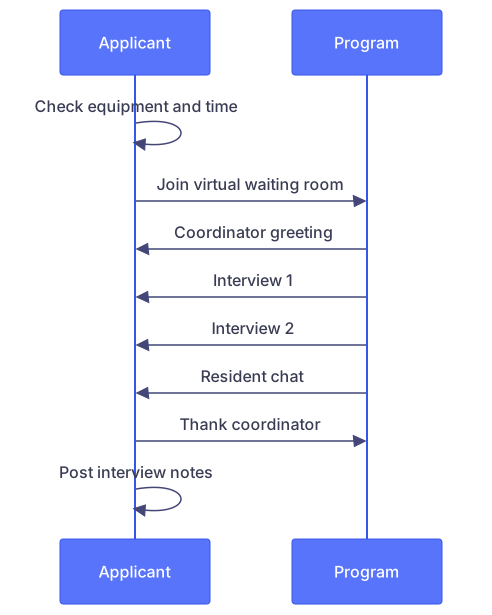
3–4 hours before:
- Light review of:
- Your application
- Program notes
- No new research.
- Dress fully (not just from the waist up).
Right after interview:
- Write:
- Bullet points on:
- Who you met
- Topics discussed
- Program strengths/concerns.
- Bullet points on:
- Within 24 hours:
- Send concise thank‑you emails (if appropriate for your specialty/program culture):
- 3–6 sentences each.
- Mention one specific detail from the conversation.
- Send concise thank‑you emails (if appropriate for your specialty/program culture):
Friday
Morning:
- Email/ERAS check.
- If the program mentioned additional steps (e.g., survey, preference form), complete the same day.
Midday (1–2 hours):
- Self‑debrief:
- What went well?
- Which questions stumbled?
- Any answers you want to refine before the next interview?
Afternoon:
- General application maintenance:
- Identify any new programs that have quietly opened or are known to review late.
- Decide if any are worth a late application.
Saturday
1–2 hours only:
- If you have upcoming interviews next week:
- Start early program research.
- If not:
- Work on generic prep:
- Weak areas in your story.
- Systems questions:
- “Tell me about a time you had a conflict.”
- “Describe a clinical error you learned from.”
- Work on generic prep:
Rest of the day: step away from ERAS. Chronic hypervigilance leads to burnout by December. I have watched it happen every year.
Sunday
Weekly review (1–2 hours):
- Update:
- Spreadsheet of programs:
- New rejections
- New invites
- Interviews completed
- Notes on your evolving rank impressions.
- Spreadsheet of programs:
- Plan next week:
- Block time for each scheduled or potential interview.
- Decide on any targeted follow‑ups or late applications.
Data Reality Check: How Many Interviews Do IMGs Usually Need?
You should anchor your expectations. Not in fantasy. In numbers.
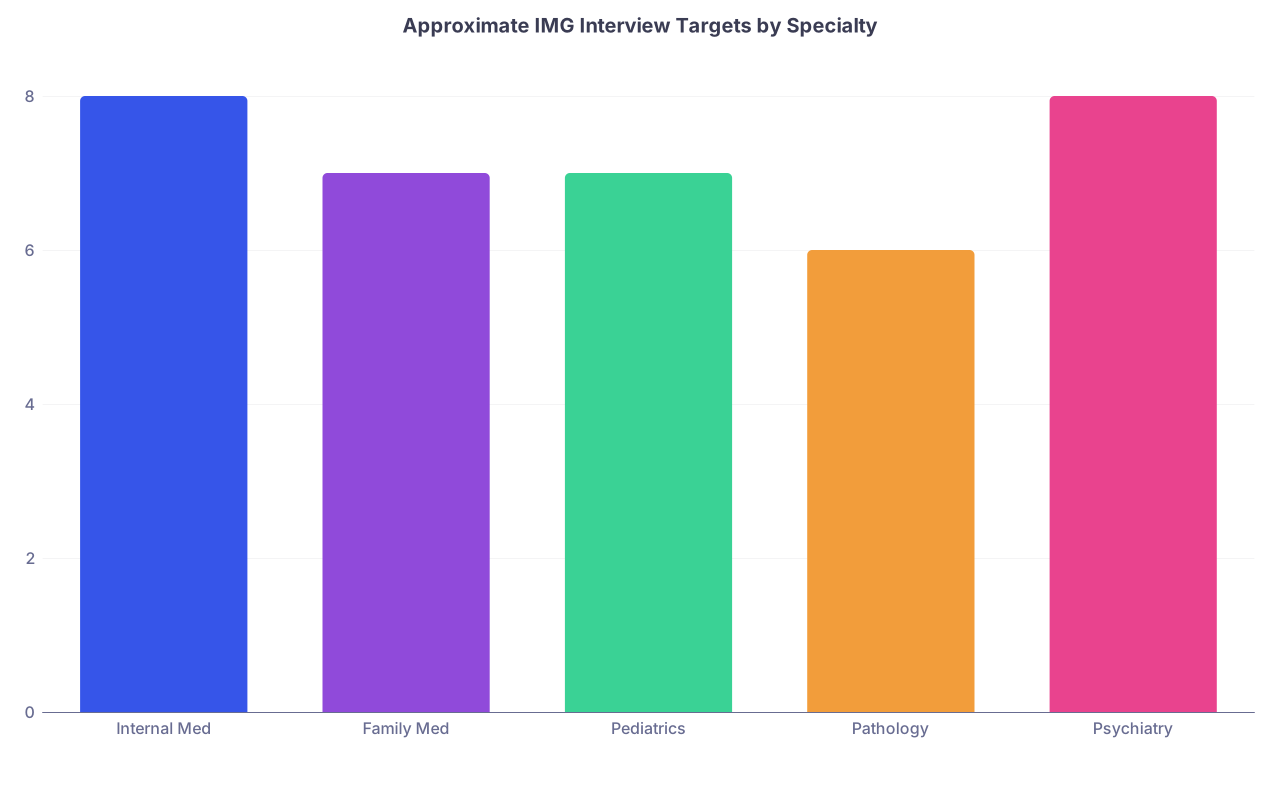
| Category | Value |
|---|---|
| Internal Med | 8 |
| Family Med | 7 |
| Pediatrics | 7 |
| Pathology | 6 |
| Psychiatry | 8 |
Those numbers are not guarantees. But below those ranges, the match probability drops rapidly. Above them, your chances rise. Your whole weekly structure is about nudging yourself closer to those targets.
A Few Hard Rules for IMGs in This Phase

Let me be blunt about common mistakes I see every cycle.
Do not become a professional email refresher.
- Maximum: 3–4 deliberate checks per day.
- Beyond that, you are feeding anxiety, not your application.
Do not spam programs with “any update?” emails.
- Once, with a real reason and a real update, is fine.
- Weekly pings to 60 programs is how you quietly get flagged as “red flag applicant.”
Do not neglect your speaking skills.
- For many IMGs, the biggest gap is not knowledge. It is communication style.
- If your English is heavily accented or hesitant:
- Practice out loud, daily.
- Short, clear sentences.
- Accept feedback, even if it stings.
Do not ignore Plan B while you wait on Plan A.
- By late December, if you have 0–2 interviews:
- Start positioning for:
- Research fellowships
- Additional USCE
- Next cycle specialty recalibration
- Start positioning for:
- By late December, if you have 0–2 interviews:
Final Snapshot: What You Should Be Doing Right Now
If you skimmed everything, take this.
Each week between submission and interviews, you should:
- Review program statuses once.
- Adjust or expand your list thoughtfully.
- Spend 3–5 hours on real interview practice.
- Maintain at least one meaningful clinical or research activity.
In any week with an interview, you should:
- Spend 2–3 days doing focused prep on that program.
- Run at least one mock interview.
- Debrief and document immediately after.
Throughout the season, you should:
- Guard your communication systems (email, phone, time zones).
- Avoid spammy, desperate contact with programs.
- Keep a sober eye on your trajectory and prepare a backup path if invites stay low.
You are not just “waiting to hear back.” You are in the middle of the most important 8–10 weeks of your career trajectory. Treat each week like it matters—because it does.