

29% of matched international medical graduates in recent NRMP data came from schools that most US program directors have never heard of.
That single number already blows up the most common story IMGs tell themselves: “If my school isn’t famous in the US, I’m dead.”
You are not dead. But you are also not playing on “easy mode.” The name on your diploma is a factor. It’s just not the factor most people obsess over.
Let’s separate the real disadvantage from the imagined one.
The “Brand Name School” Obsession — And What PDs Actually Care About
, [Medical school reputation](https://residencyadvisor.com/resources/img-applicant-challenges/how-pds-really-interpret-foreign-medical-school-names-and-rankings), Personal knowledge of school](https://cdn.residencyadvisor.com/images/articles_svg/chart-program-director-importance-ratings-img-focused-sp-3948.svg "Program Director Importance Ratings (IMG-focused specialties)")
| Category | Value |
|---|---|
| USMLE Step 2 score | 4.6 |
| Letters of recommendation | 4.2 |
| [US clinical experience](https://residencyadvisor.com/resources/img-applicant-challenges/the-real-role-of-us-clinical-experience-in-img-screening-meetings) | 4.1 |
| [Medical school reputation](https://residencyadvisor.com/resources/img-applicant-challenges/how-pds-really-interpret-foreign-medical-school-names-and-rankings) | 3.1 |
| Personal knowledge of school | 2.7 |
Those values roughly mirror what multiple NRMP Program Director Surveys have shown: test scores, letters, and US clinical experience regularly outrank “school reputation” as selection factors.
People still cling to the myth that a non‑US school name is automatically fatal. You hear it everywhere:
- “If you didn’t go to SGU, AUC, or Ross, forget it.”
- “Only the ‘Big 4’ Caribbean schools match.”
- “US PDs don’t trust random foreign schools.”
I’ve heard those exact sentences from IMGs in WhatsApp groups and hospital hallways. They’re understandable. They’re also exaggerated.
Here’s the blunt version:
A non‑US, non‑“brand name” school doesn’t kill your chances. It just removes your margin for sloppiness. You don’t get the benefit of the doubt. You have to create your own.
Program directors are not scanning ERAS saying, “Unknown school? Reject.” What they do is this: “Unknown school? Then I need stronger evidence from everything else.”
Different mindset, different strategy.
What the Match Data Actually Shows for “Unknown” Schools
Let’s talk numbers, not folklore.
Each year, thousands of IMGs from hundreds of schools apply to US residency. A sizable chunk of the matched IMGs are from schools most PDs cannot place on a map.
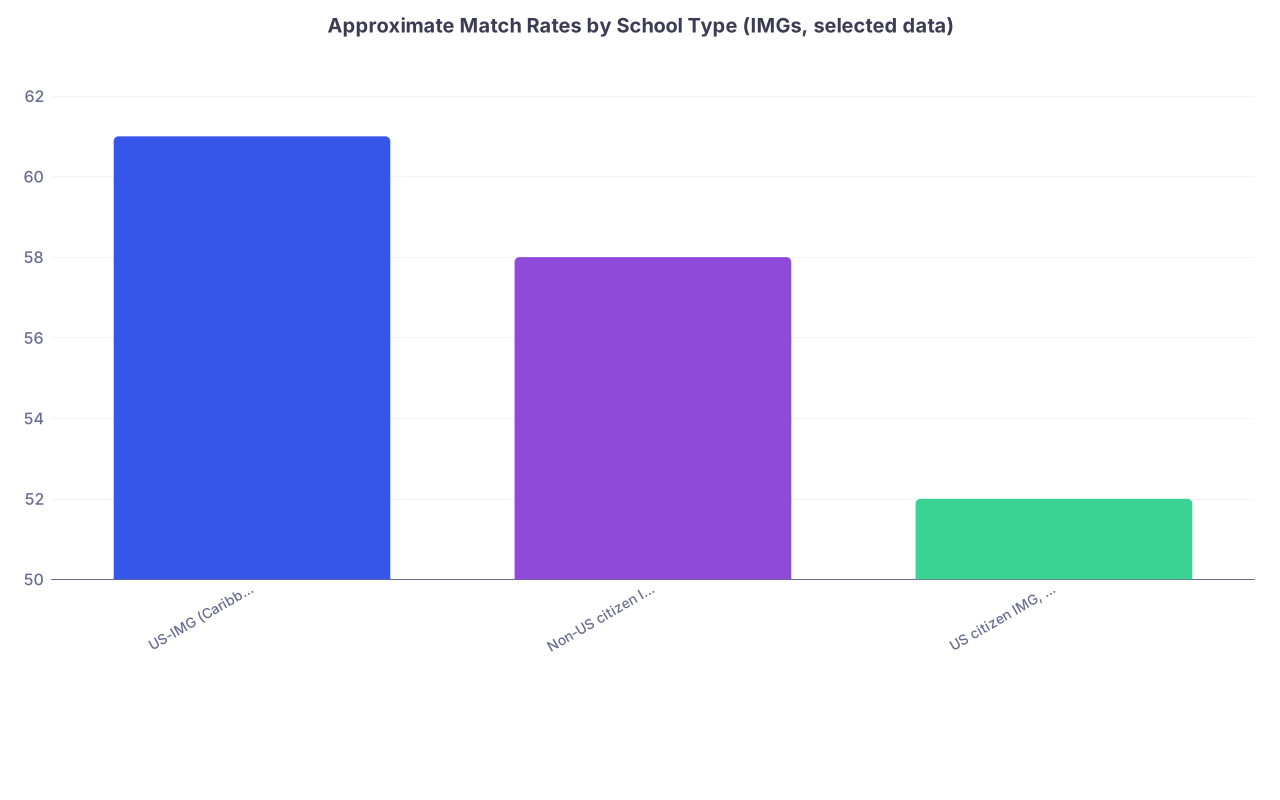
| Category | Value |
|---|---|
| US-IMG (Caribbean) | 61 |
| Non-US citizen IMG | 58 |
| US citizen IMG, non-Caribbean | 52 |
The precise percentages vary year to year, but the pattern is consistent:
- US citizen IMGs from foreign schools (especially Caribbean) have match rates in the 50–60% range.
- Non‑US citizen IMGs hover lower overall but still match in meaningful numbers every year.
- And many of those graduates do not come from any “famous” institution.
If “non‑US school” were a hard dealbreaker, those bars would be near zero. They’re not.
What is true:
School name becomes more important at the extremes — hyper‑competitive specialties and elite academic programs.
A mid‑tier internal medicine community program in Ohio? They will absolutely interview someone from “XYZ University Faculty of Medicine” if:
- The Step 2 score is strong
- There’s real US clinical experience
- Letters are credible and specific
Hopkins neurosurgery? Yeah, then school prestige and known pipelines matter a lot more. But you already knew that.
The myth is “unknown school = impossible.”
The reality is “unknown school = you must be undeniably strong on objective indicators.”
Where School Name Actually Hurts You
Let me be direct: there are three very real disadvantages of having a medical school most US PDs don’t recognize.
1. Baseline skepticism about training quality
PDs have been burned before. I’ve heard them say things like:
- “We had someone from [obscure school] who could not present a basic H&P.”
- “Some schools just push people through; we had to remediate them from scratch.”
One or two bad experiences from your school — or a similar one — and now every future applicant starts in a hole.
It’s not personal. It’s pattern recognition, sometimes lazy and unfair, but human.
What that means for you: your Step 2, your OET/TOEFL (if needed), and your US rotations become your real “school.” They are the evidence that your training is solid, no matter what’s printed on your diploma.
2. Lack of built‑in advocacy
Graduates from places like SGU, UAG, or AUC have a secret weapon: alumni already in US residency programs constantly feeding PDs their experiences.
“Yeah, we’ve had three residents from SGU. All solid. Keep ranking them.”
If your school has few or no grads in the US, that whisper network doesn’t exist. No alumni sending “this student is great” emails. No PDs casually saying “We’ve had good experiences with that school.”
You’re not doomed. You’re just operating without a warm intro.
So you compensate by building individual advocates:
- US attendings who know you well and pick up the phone
- Research mentors who email specific PDs on your behalf
- Program coordinators who remember you from an elective and tell their PD, “This one is good”
That’s how you fake a pipeline.
3. Visa and bureaucracy friction
Some lesser‑known schools cause headaches:
- Transcript verification nightmares
- Confusing or inconsistent grading scales
- ECFMG documentation issues
Programs hate administrative chaos. If they’ve had trouble with a certain region or school cluster, they become wary of anyone from there. Not because of you. Because of their experience with paperwork.
You cannot fix your school’s admin. But you can make yourself the opposite of “difficult applicant”:
- ECFMG certified as early as humanly possible
- All documents clean, translated, and uploaded
- No missing info in ERAS, no last‑minute scrambling
PDs do not want another credentialing headache. Show them you’re not one.
What Matters More Than Your School Name (And How to Prove It)
You cannot change your medical school. You can change how loudly everything else speaks for you.
Here is where the data and PD surveys consistently point, stripped of wishful thinking.
Scores: your primary equalizer
With Step 1 pass/fail, Step 2 CK is now the sharpest weapon you control.
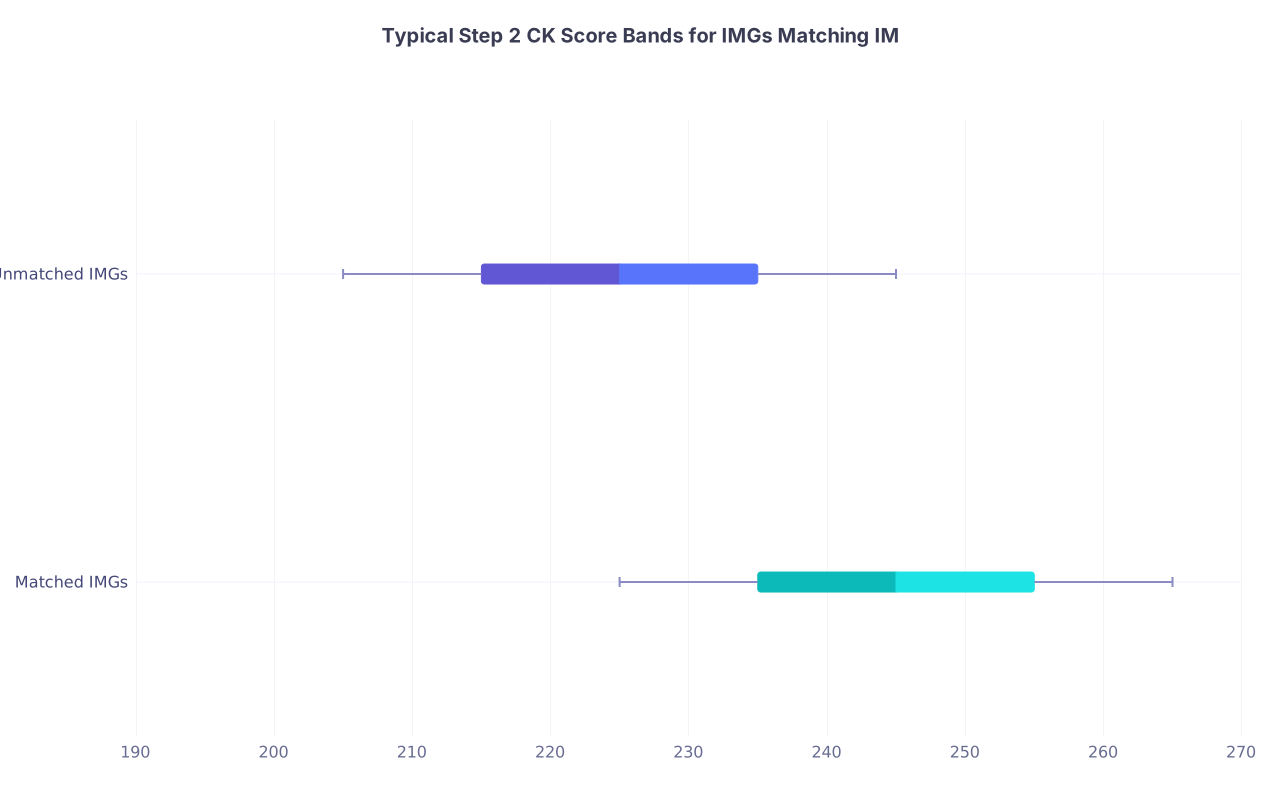
| Category | Min | Q1 | Median | Q3 | Max |
|---|---|---|---|---|---|
| Matched IMGs | 225 | 235 | 245 | 255 | 265 |
| Unmatched IMGs | 205 | 215 | 225 | 235 | 245 |
No, it is not “score or nothing.” But here is the uncomfortable truth:
If your school is unknown, a mediocre Step 2 (let’s say 220) is a significantly bigger problem than if you came from a respected US or big Caribbean school.
The school name sets the baseline level of trust. The score either confirms or upgrades that trust. Or fails to.
Your strategy should be:
- Treat Step 2 like your admissions interview with the entire US system
- Aim over your specialty’s average, not barely at it
- Use NBME practice tests seriously; don’t “see how it goes” on the real thing
If you already took Step 2 and it’s weak? The answer is not to cry about your school. It’s to stack other parts of your application so hard that PDs are willing to overlook it.
US clinical experience: your unofficial audition
The difference between:
“Graduate of Unknown Medical University, no US rotations.”
and
“Graduate of Unknown Medical University, did 3 months of US inpatient internal medicine at X, Y, Z with strong letters.”
is night and day.

US clinical experience shows three things PDs care about more than your school name:
- You’ve seen how US hospitals actually work.
- At least a few US physicians were willing to have you on their team.
- You can be evaluated in the same environment as US grads.
If your school didn’t arrange these rotations, or if you graduated years ago, you’re at a disadvantage — but it’s fixable. You may need to:
- Pay for hands‑on electives/externships (yes, it’s painful financially)
- Prioritize inpatient and core specialty rotations over observerships
- Choose sites where attendings are actually willing to write detailed letters
Rotations aren’t resume decoration. They’re your demo reel.
Letters: your replacement for a famous school name
I’ve watched PDs open ERAS applications and scroll straight to the LoRs before even reading the personal statement.
A generic letter like “Ms. X was punctual and got along well with patients” is worthless. It doesn’t offset an unknown school at all.
A strong letter that says:
- “He functioned at the level of our US fourth‑year students”
- “She independently managed patients overnight with appropriate escalation”
- “I would rank this applicant in the top 5% of students I have worked with in the last five years”
…is pure gold. That is your “reputation.” On paper.
So you do not want four mediocre letters from people who half‑remember you. You want 2–3 letters from US faculty who know you well enough to make concrete, comparative statements.
Ask for that explicitly. “Would you be willing to write a strong and detailed letter of recommendation for my residency application?” If they hesitate, move on.
Time since graduation: silent but brutal
One more thing most IMGs underestimate: year of graduation.
Two otherwise identical applicants:
- 2023 grad from Unknown School
- 2016 grad from the same Unknown School
Who gets the interview? Almost always the recent grad. Because training currency matters.
If you’re an “older” grad, school name hurts more because PDs worry:
- Are their clinical skills rusty?
- Have they failed to secure anything in 8 years?
- Why isn’t someone already willing to hire them?
The only antidote: current, verifiable activity. Recent US rotations. Recent research. Recent clinical work (even if non‑US) that actually looks like real medicine, not just “clinic assistant.”
Do not let your CV go dark and then blame your school name when programs pass.
Known vs Unknown Schools: The Real Gap
Let’s make the comparison brutally simple.
| Factor | Well-known foreign school (e.g., big Caribbean) | Little-known foreign school |
|---|---|---|
| Automatic trust level | Moderate | Low |
| Alumni presence in US | Many | Few or none |
| PD prior experience | Common | Rare/variable |
| Minimum Step 2 needed | High | Very high |
| Impact of strong LoRs | Helpful | Transformative |
Unknown school doesn’t mean impossible. It means that evidence has to shout louder.
If you’re from a smaller Eastern European, Asian, Middle Eastern, African, or Latin American school, your roadmap is the same. You just have less room for “average.”
How To Stop Using Your School Name as a Crutch
Let me be a little harsh here:
Blaming your medical school endlessly is emotionally satisfying and practically useless.
I’ve seen candidates from truly obscure schools match into solid internal medicine and pediatrics programs — often ahead of grads from more “famous” Caribbean schools — because they did three things:
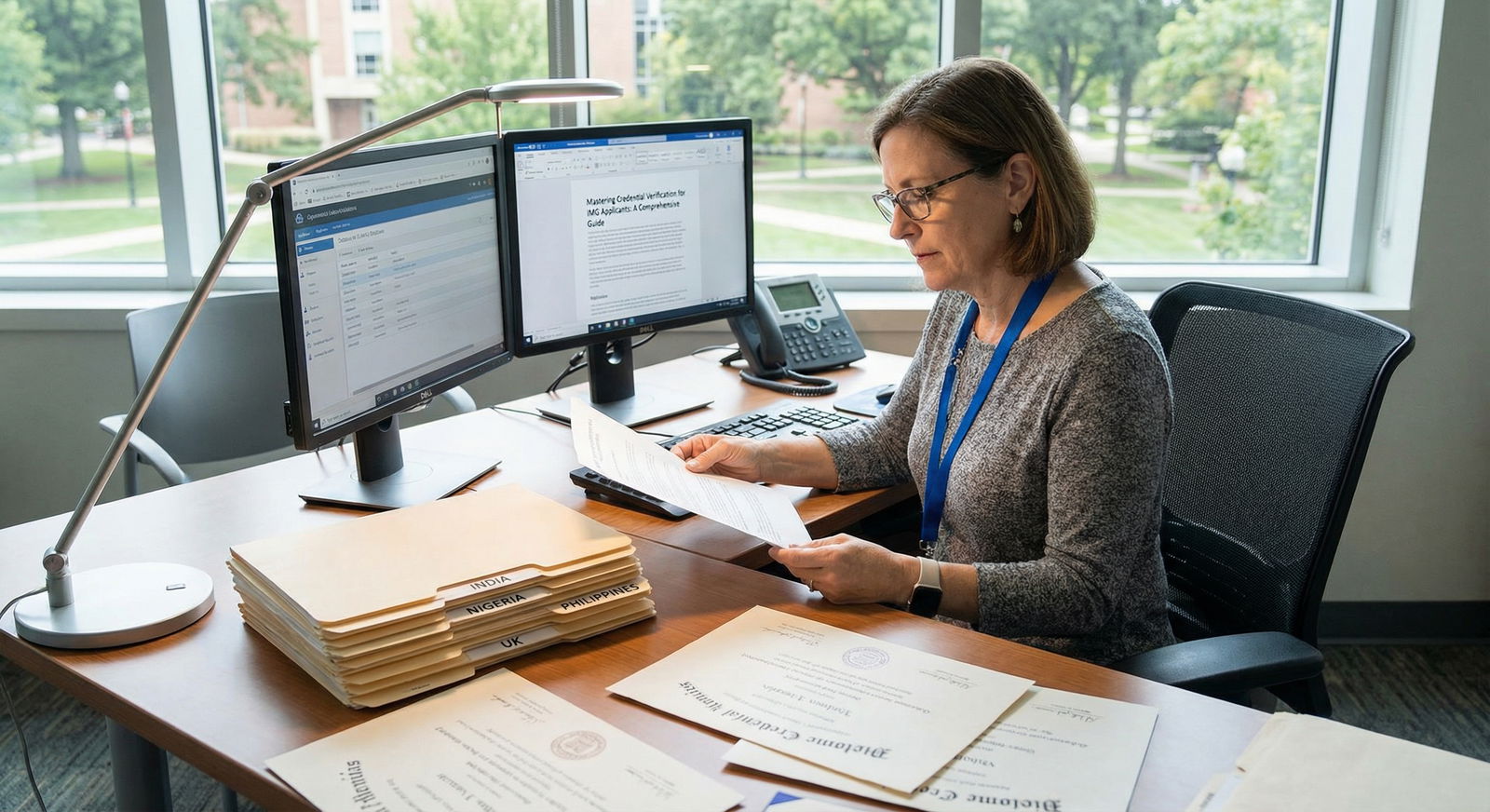
- They treated Step 2 like their one shot at proving competence.
- They hustled for real, evaluated US clinical experience and converted those rotations into fierce, specific letters.
- They filled every gap year with something that made sense on a CV: research, clinical work, QI projects, teaching.
Meanwhile, I’ve watched US‑IMGs from big Caribbean schools with decent but not stellar scores sit out multiple cycles because they assumed the school name would “carry” them. It did not.
Your school name is either:
- A mild tailwind
- Neutral
- Or a modest headwind
What it is not: a brick wall.
Two Myths You Should Throw Out Today
Myth 1: “If my school isn’t recognized, I should apply to 200+ programs to compensate.”
Spray‑and‑pray doesn’t fix a weak profile. It just makes you poor. Target programs that historically take IMGs, match your profile, and are not hyper‑academic.
Myth 2: “Programs filter out unknown schools automatically.”
Some do. Many don’t. What they actually filter on first are Step 2 cutoffs, visa status, YOG, and citizenship. School name affects how they interpret what remains, but it’s rarely the literal first filter.
The Bottom Line: Is a Non‑US School Name a Dealbreaker?
No. A non‑US, non‑famous school name is not a dealbreaker for the US residency match.
It is a forcing function.
It forces you to be objectively strong, relentlessly consistent, and impossible to ignore on the things PDs actually rate highest: Step 2, US clinical experience, and letters that prove you can function at US graduate‑medical‑education level.
Strip it down, and here are the key points:
- School name matters, but far less than most IMGs think; it sets the default level of trust, which you can upgrade with hard evidence.
- Unknown schools aren’t fatal — they just require above‑average performance on Step 2, US rotations, and letters to offset the lack of built‑in reputation.
- Using your school as an excuse is a great way to feel stuck; using it as motivation to build a stronger, louder portfolio is how people from truly obscure schools match every single year.


