
Most unmatched IMGs did not “get unlucky.” They made ranking mistakes that almost guaranteed they would not match.
Let me say it bluntly: you can tank an otherwise solid application in the rank order list (ROL) phase. I’ve watched strong IMGs with interviews from good programs go unmatched because they misunderstood how the algorithm works, listened to bad advice, or ranked emotionally instead of strategically.
You’re not going to do that. Not after reading this.
Error #1: Trying to “Game” the Algorithm Instead of Trusting It
The NRMP algorithm is applicant-friendly. It tries to give you the highest-ranked program that will accept you.
Yet every year, IMGs act like they’re playing 4D chess and ruin their own odds.
The classic mistakes
Shortening the list to “look realistic”
You think:
“I shouldn’t put that university program as #1, they probably won’t rank me high. I’ll put the community program I’m more likely to match at first.”
That’s wrong. The algorithm does not care how “realistic” your list looks. It only cares what you prefer.Moving “safe” programs above your true top choices
I’ve seen this exact line in WhatsApp groups:
“Rank safer programs higher so you don’t go unmatched.”
That is terrible advice. It directly conflicts with how the algorithm works.Leaving out “reach” programs completely
Some IMGs do not even rank their favorite academic programs because they assume they have no chance as an IMG. So they guarantee they’ll never match there.
Here’s the truth you need to tattoo on your brain:
You should rank programs in the exact order you would want to attend them – from most to least preferred – without trying to predict how they’ll rank you.
Trying to second-guess programs is the single biggest ranking mistake IMGs make.
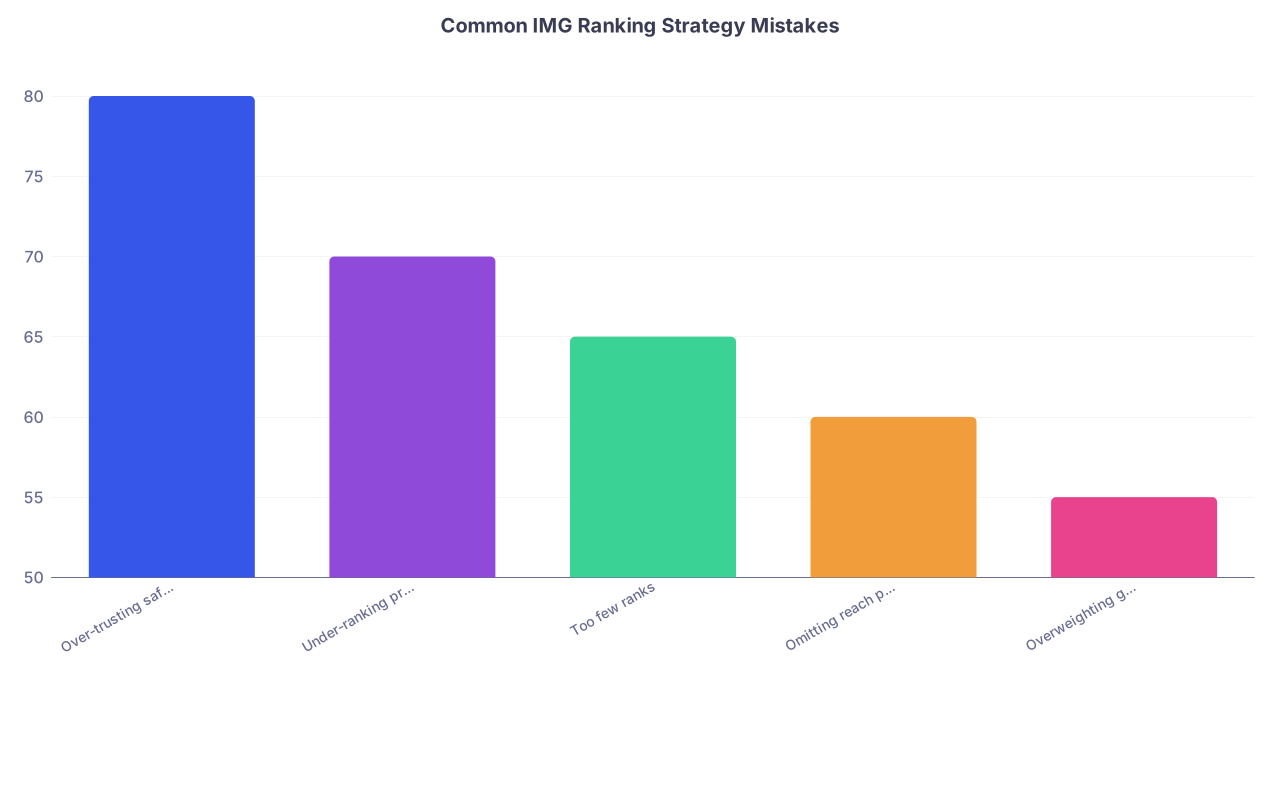
| Category | Value |
|---|---|
| Over-trusting safe programs | 80 |
| Under-ranking preferred programs | 70 |
| Too few ranks | 65 |
| Omitting reach programs | 60 |
| Overweighting geography | 55 |
Error #2: Submitting a Pathetically Short Rank List
This one is brutal because it’s pure math, not opinion.
Every cycle, I meet IMGs who:
- Had 10–12 interview invitations
- Ranked 4–5 programs
- Went unmatched
Then they tell me: “I didn’t want to rank places I didn’t love.”
That’s not noble. It’s reckless.
Why too few ranks kill your chances
More programs on your list = more opportunities for the algorithm to fit you somewhere you’d actually attend.
For IMGs, the margin for error is thin. You are already dealing with:
- Visa issues
- Fewer programs open to IMGs
- Bias (yes, it exists)
- Limited number of interviews compared with US grads
Cutting down your rank list on top of this is like playing Russian roulette with extra bullets.
What “too few” usually looks like
For IMGs, this is what I’ve actually seen:
- Applicant A: 7 interviews, ranks 4 programs → unmatched
- Applicant B: 7 interviews, ranks all 7 → matches at #5
- Applicant C: 5 interviews, ranks 5 → matches at #4
- Applicant D: 12 interviews, ranks 12 → matches at #8
Notice the pattern? People who used every interview usually found a spot. People who trimmed their list “for quality” didn’t.
The line you must not cross
If you would rather match at a program than not match at all, you should rank it.
That’s the rule. The only programs to leave off are those you truly would not attend under any circumstances (dangerous environment, clear abuse, gross violation of your values).
Everything else? It goes on the list.
Error #3: Letting Ego or Shame Dictate Your Rank Order
This one is ugly, but real.
I’ve watched IMGs sabotage themselves because they were so focused on “status” that they forgot the goal is to match, not impress their classmates back home.
How ego quietly ruins your list
Common scenarios:
- You had one interview at a big-name university program and several at small community hospitals. You rank the “tier 1” university #1 even though they were cold, disorganized, and clearly not enthusiastic about you, and you actually felt more welcome at the community site.
- You push a solid community program far down because it’s in a smaller city and your friends in your home country won’t recognize the name.
- You completely ignore how much the program seems to want you, because you’re chasing a brand name.
You know what happens then? On Match Day, you’re sitting with no position, telling yourself, “At least I aimed high.” That doesn’t help when you’re scrambling through SOAP or planning a gap year.
The better mindset
Let me be blunt: prestige does not treat patients. Prestige does not pay your rent during a research year you didn’t want.
Your real priorities should be:
- Will they actually rank you enough to match?
- Can you learn and grow there?
- Is the training solid enough to get you where you want to go next (fellowship, job, etc.)?
You can absolutely put that university program at the top if you genuinely prefer it. But don’t ignore clear signals that a “less famous” program both liked you more and would give you stronger day-to-day support.
Error #4: Ignoring Program Interest Signals
A lot of IMGs flat-out ignore the biggest hidden advantage they have: reading program interest.
No, you won’t always know where a program will rank you. But sometimes they practically wave a flag in your face. Many IMGs pretend those flags don’t exist.
Signals you should take seriously
Examples I’ve seen again and again:
- PD or APD sends you personal emails after interview (“we really enjoyed meeting you,” “we think you’d be a great fit” – more than the generic thanks).
- Multiple faculty reach out or remember you specifically during second looks.
- You’re invited to second-look events or informal chats with residents.
- PD calls you or meets you at a conference and mentions your name unprompted.
- Residents tell you, “We really hope you come here; we told the PD we liked you.”
None of these are guarantees. But they’re signals. And you’d be foolish not to factor them in.
Signals that mean less than you think
On the flip side, IMGs often over-interpret:
- Generic mass emails (“Dear Applicant, we enjoyed meeting all of you…”)
- Automated “we will rank you” style notes sent to hundreds of candidates
- Vague compliments everyone hears on interview day
Do not assign equal weight to a clearly copy-pasted message and a personal follow-up. You’re smart enough to tell the difference.
How to use these signals without overreacting
Here’s the balance:
- Still rank programs in the order you’d like to attend them.
- Use interest signals to decide between close calls.
- If you’re torn between two programs you like equally, and one clearly showed more enthusiasm for you, put that one higher.
Just don’t do the opposite move: ranking a cold program above a warm one purely for prestige or location, and then acting shocked when they don’t rank you high enough to match.

Error #5: Obsessing Over Geography While Ignoring Training and Reality
I’ve seen this mistake wreck otherwise intelligent people.
They filter programs by:
- One state (or a couple of big cities only)
- Places near a particular family member
- Warm weather only
- Major coastal metros only
Then they act surprised when 1) they get very few interviews, and 2) their rank list is dangerously small.
Why this is riskier for IMGs
US grads can sometimes afford to be pickier with location. IMGs usually can’t. You’re already:
- Competing for fewer IMG-friendly spots
- Limited by visa sponsorship
- Competing with US grads who have local ties and schools
If you then demand:
- “Must be in New York, California, or Florida”
- “Must be in a large coastal city”
- “Must be near my cousin in Chicago”
…you’re cutting your own throat.
The mindset shift you need
You are not buying a house. You are not permanently settling your family. You are choosing 3–4 years of training that will dictate the rest of your career.
If you spend more time worrying about weather and nightlife than about:
- Board pass rates
- Program stability
- Educational structure
- How they treat residents
You’re focusing on the wrong variables.
You can still factor in geography, of course. If you have kids, a spouse, specific constraints, that matters. But don’t let geography knock truly solid programs too far down your list when your alternative is potentially not matching at all.
Error #6: Completely Misjudging Your Own Competitiveness
IMGs either wildly overestimate or underestimate themselves. Both lead to ranking mistakes.
Overestimating yourself
Typical pattern:
- Step 2: 220–225
- One US clinical rotation, mixed feedback
- Applying to Internal Medicine or Pediatrics
Then they:
- Put 4–5 “top” university programs first
- Push clearly IMG-friendly community programs far down
- Ignore that some university programs have never taken a non–US IMG or only took them with 245+ scores
Result: they get low or no rank at those “dream” places and don’t have enough realistic options at the top of their list.
Underestimating yourself
Opposite story:
- Step 2: 245+, multiple US rotations, strong letters
- Got several university interviews
They:
- Assume no university will actually rank them high
- Load the top of their list with safety programs they like less
- Place their legitimate higher-tier options lower “to be realistic”
Result: they match at a safety program, then look back later realizing they probably could have matched at a stronger training site.
How to calibrate better
Stop guessing in a vacuum. Use:
- Program’s past IMG match patterns
- Your board scores vs their published averages (if available)
- How many IMGs they have per year
- Specific feedback or vibes from interview day
And if current residents at a program tell you, “With your profile, you definitely fit the usual range of people who match here,” don’t ignore that.
Error #7: Trusting Rumors, Forums, and Friends Over the NRMP Rules
Let me be blunt again: a lot of “strategic tips” that circulate in IMG Telegram/WhatsApp/FB groups are just wrong.
Common harmful myths
You may have heard these:
“Rank programs higher if they said they will rank you.”
The truth: you still rank based on your preference. Their promise doesn’t change the algorithm.“Don’t rank a program if they didn’t send you a follow-up email; it means they won’t rank you.”
False. Many programs send nothing and still rank IMGs highly.“You should not rank more than X or it shows you’re desperate.”
The algorithm doesn’t judge you. It just processes your list.“Programs can see your rank list or know if they’re your top choice.”
Absolutely false. They don’t see your list.
People spread this stuff with complete confidence. I’ve watched smart IMGs act on it and blow up their match.
Who you should actually listen to
- The NRMP’s official ROL guide (yes, it’s dry; read it anyway).
- Trustworthy program directors or faculty who know the system.
- Current residents who successfully matched and clearly understand how the algorithm works.
If someone’s main credential is “guy in a group chat who types fast,” don’t let them dictate how you rank.

| Step | Description |
|---|---|
| Step 1 | Interview Completed |
| Step 2 | Do not rank |
| Step 3 | Assess preference vs other programs |
| Step 4 | Place higher on list |
| Step 5 | Place lower but still rank |
| Step 6 | Submit final rank list |
| Step 7 | Would I attend this program if it were my only option? |
| Step 8 | Do I prefer this over some others? |
Error #8: Leaving Off Programs You’d Actually Attend
This is the subtle cousin of “too short a list.”
It usually sounds like:
- “I liked that program fine, but it’s not ideal, so I didn’t rank it.”
- “Rural, small town… I’ll just go unmatched instead.” (Then SOAP hits and suddenly they’re submitting to far worse options in panic.)
- “I want to reapply next year for a better program instead of settling.”
Here’s the hard truth: an unwanted gap year absolutely can hurt you. It raises questions, forces you into research or observership hunting, and often you end up back in the match with weaker momentum.
If a program is:
- Safe
- Non-toxic
- Provides solid training
- Visa-friendly
… and your only reason for not ranking it is that it’s not flashy enough, you’re risking your entire path for pride.
The only valid reasons not to rank:
- You have credible evidence of abuse, chronic duty hour violations, or serious systemic issues.
- The location is literally impossible for you (no support, major safety concerns, family/legal constraints).
- The specialty/track doesn’t match your career at all.
Everything else should go on the list.
Error #9: Forgetting That Every Year You Wait, You Become “Older Grad”
IMGs love to say, “If I don’t match this year, I’ll just try again next cycle with more research.”
Sometimes that works. Sometimes it doesn’t.
What they forget:
- Many programs prefer “recent grads” (within 3–5 years).
- Each year out of medical school without solid clinical work makes you less attractive.
- Visa rules and your personal life don’t stay frozen while you wait.
I’m not saying you must accept any program at any cost. But when you’re deciding whether to leave off a decent program from your rank list, you’d better compare that against the real cost of going unmatched and reapplying.
For most IMGs, a safe but less glamorous match now is better than being an “older grad with a gap” next year.
| Scenario | Relative Unmatch Risk |
|---|---|
| 10 interviews, rank 10 programs | Lowest |
| 10 interviews, rank 6 programs | Higher |
| 7 interviews, rank 7 programs | Moderate |
| 7 interviews, rank 3 programs | High |
| 4 interviews, rank 4 programs | Significant |
Error #10: Waiting Until the Last Minute to Build the Rank List
This one is less glamorous, but it’s lethal.
Too many IMGs:
- Don’t write anything down during interview season.
- Forget specific details about programs as weeks pass.
- Then throw together a rank list in a 48-hour panic before the deadline.
When you rush, you:
- Overweight recent interviews and forget earlier ones you liked.
- Underweight red flags you noticed but didn’t document.
- Let anxiety, not judgment, run the show.
You should be building a living rank draft the entire season:
- After each interview, jot down real impressions:
- How did residents look? Exhausted? Supported?
- Did the PD know your file?
- Did they have IMG mentors?
- How transparent were they about board pass rates and fellowship matches?
- Update your tentative order as you go.
Then, when deadline time comes, you’re refining, not building from scratch.
What a Sane, Safe IMG Rank Strategy Actually Looks Like
Let me pull this together into something actionable.
If you want to avoid the classic IMG disasters, do this:
Create a full list of every program that interviewed you.
Nothing filtered yet.Mark each program with one of three labels:
- “Definitely would attend”
- “Would attend if needed”
- “Would not attend under any circumstance”
Remove only the “would not attend under any circumstance” ones.
Be honest. Not “don’t love” – truly cannot attend.For the rest, rank purely by where you’d want to train, 1 to N.
Consider:- Training quality
- Supportiveness
- Program interest in you
- Visa security
- Your realistic competitiveness
- Geography, but not as the first filter
Do not shorten the list to “look realistic.”
Rank every program you’d be willing to attend. Every single one.Use interest signals as tie-breakers, not as the main driver.
Ignore anyone telling you to game the algorithm.
If their advice contradicts: “Rank in your true order of preference,” throw it out.
Your Next Step Today
Open a document right now and write down every program you interviewed at this cycle. Next to each one, mark only one of three labels: “definitely would attend,” “would attend if needed,” or “would not attend.”
Do not touch the NRMP website yet. Don’t sort anything. Don’t overthink.
Just make that labeled list today. That one step alone will keep you from making several of the worst ranking mistakes IMGs make every single year.