The biggest mistakes IMGs make on interview day are painfully predictable—and brutally costly.
You work for years, beat the odds for an interview invite, then lose the program director (PD) and fellows in 15 minutes because of missteps that were 100% avoidable. I’ve watched this happen in real time. You walk out thinking, “That went okay,” while the PD is already saying, “Not a good fit,” and the fellows are nodding.
Let’s stop that from happening to you.
This isn’t about polishing your English or memorizing a perfect “Why this program?” script. The real damage happens in how you handle hierarchy, culture, boundaries, and subtle cues with PDs and fellows. You don’t get feedback. You just get no rank.
Below are the biggest interview day missteps IMGs make with PDs and fellows—and how to avoid stepping on those landmines.
1. Treating the Program Director Like a Visa Sponsor, Not a Leader
With PDs, your number one unforced error? Making your visa status the main character of the conversation.
I’ve seen PDs lean back in their chair, cross their arms, and mentally check out as soon as the third question from an IMG was some version of “So you will sponsor H‑1B, yes?”
Here’s what trips IMGs up:
- Opening questions to the PD about visa before fit, training, or curriculum
- Repeated “just to confirm” questions about sponsorship already clearly listed on the website
- Letting anxiety about immigration dominate your body language and tone
You think: “If they won’t sponsor, none of this matters, so I need to know.”
They think: “They care more about staying in the US than about training here.”
You must flip that.
Ask about visa once, clearly and professionally, in an appropriate context (usually with the coordinator or at the end if it hasn’t been addressed). Do not lead with it. Do not circle back three times. Do not make it your personality.
Bad way to ask the PD:
“Do you guarantee H‑1B for all IMGs? I really need H‑1B, J‑1 is a problem for me.”
Better:
“I reviewed the website and it looks like your program sponsors J‑1 and occasionally H‑1B. Is that still accurate, and do you see any expected changes over the next few years?”
One calm, informed question. Then move on.
2. Acting Too Formal With PDs—and Too Casual With Fellows
Many IMGs misread US hierarchy.
Common pattern I’ve seen:
- With the PD: painfully stiff, overly deferential, robotic answers
- With fellows: overly relaxed, over-sharing, sometimes borderline unprofessional
You end up looking fake on both ends.
PDs expect respect, yes, but also a human they can see on their wards without patients being uncomfortable. If you sit there like you’re in front of an embassy officer, you come across as rigid, low emotional intelligence, and hard to teach.
At the same time, fellows are not your buddies from back home. They’re part of the evaluation system whether they announce it or not. Trash-talking other programs, joking about “easy rotations,” or asking about moonlighting money with fellows is a fast track to “Do not rank.”
Don’t make these mistakes:
- Calling everyone “sir” or “madam” 20 times in a 15‑minute conversation
- Speaking to fellows like you’re at a bar: “So, is call actually terrible or are they just exaggerating?”
- Sharing personal immigration or financial struggles in graphic detail
Respectful, professional, steady across all levels. Same core person with the PD, APD, and fellow. That consistency is what they’re looking for.
3. Overcompensating for Accent or Language by Over‑Talking
This one hurts more than you think.
Many IMGs are self-conscious about their accent or fluency. Understandable. But the common overcorrection is deadly: they talk more, talk faster, and never check for understanding.
I’ve watched IMGs give 3‑minute answers to simple questions like “Tell me about yourself.” The PD’s eyes go to the clock at 40 seconds. By minute 3, they’ve decided you’ll be a nightmare on rounds.
You cannot afford to:
- Answer every question with your full life story
- Jump into long monologues with no structure
- Never pause to let the interviewer speak or redirect
PDs and fellows are listening for this: can you give a concise, relevant answer under time pressure? Because that’s exactly what you’ll do on pre‑rounds, sign‑out, and morning reports.
Protect yourself by building a default structure for answers:
- Question about you (background, strengths, failures) → 60–90 seconds
- Question about a specific case or experience → 90–120 seconds max
- Pause, then: “I’m happy to go into more detail if you’d like.”
That last line is gold. It shows you know when to stop and you respect their time. It also lets them ask for more if they’re interested.
4. Being Vague, Generic, and Randomly Enthusiastic
US PDs are allergic to fluff. They’ve heard “I am passionate about internal medicine” 5,000 times.
You know what kills IMGs?
- Giving the same generic “I love this specialty” answer at every station
- Saying “I want to train in a strong academic program” to a clearly community‑based program
- Claiming to love research when you have 1 case report and nothing else
They can tell when you Googled the program for 5 minutes in the hotel lobby.
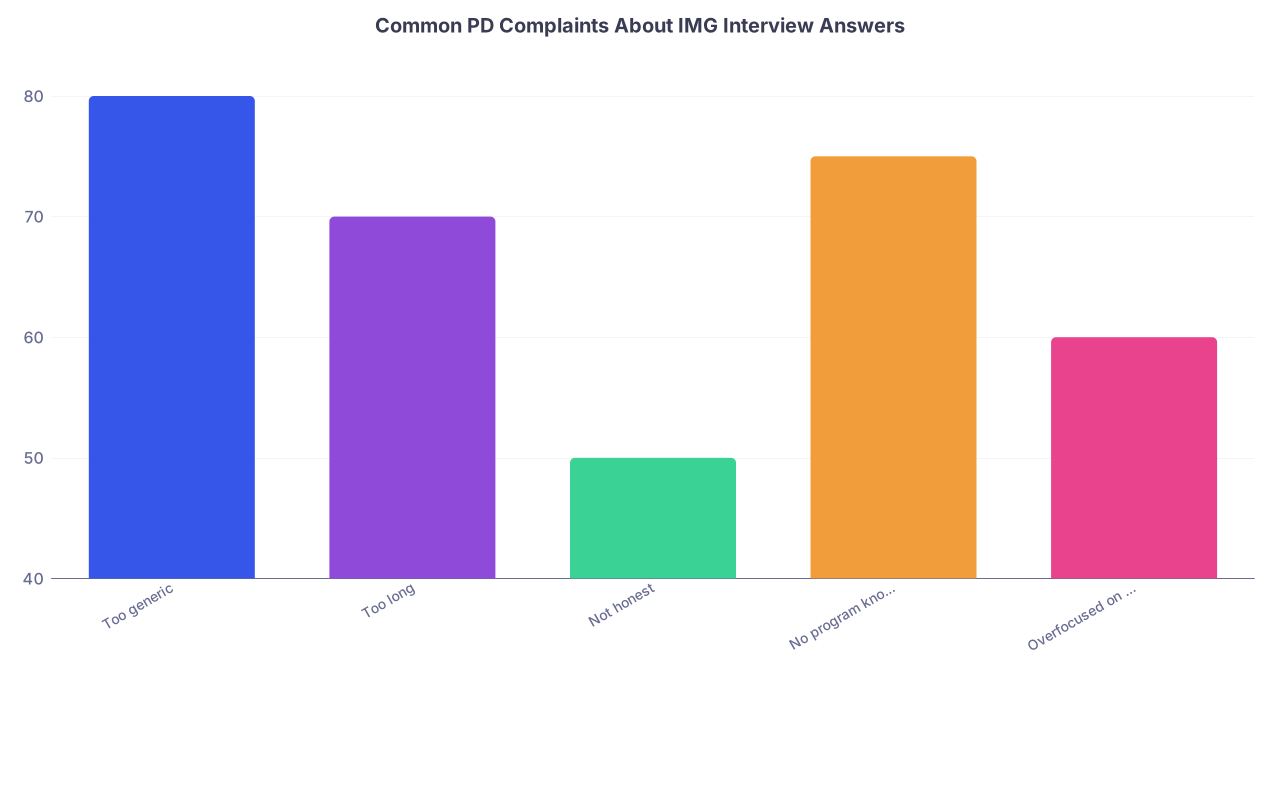
| Category | Value |
|---|---|
| Too generic | 80 |
| Too long | 70 |
| Not honest | 50 |
| No program knowledge | 75 |
| Overfocused on visa | 60 |
If you say, “Your program is my top choice” to every PD, someone will catch the lie. Fellows talk. Faculty move between programs. And your entire vibe will feel off.
Instead of empty enthusiasm, anchor your interest in 2–3 real, specific elements:
- “Your X‑year outcomes curriculum with protected time on Friday afternoons”
- “The heavy county hospital exposure and underserved patient population”
- “Graduates matching consistently into Y fellowship over the last few years”
If you can’t find 2–3 specific things you honestly like about a program, stop pretending it’s your dream. Say you’re excited about the training and patient mix. Leave it there.
5. Mishandling “Weakness” and Red Flag Questions
PDs and fellows are hunting for one thing in these questions: your risk level.
Huge IMG missteps:
- Denying any weaknesses (“I work too hard” is not cute, it’s annoying)
- Blaming circumstances, supervisors, or “system issues” for failures
- Turning a US gap, failed step, or failed attempt into a vague blur of “personal reasons”
If you dance around a problem, they assume the worst possible version.
You must own your issues. Concisely. Calmly. With evidence of change.
Bad answer: “I had some personal problems so I couldn’t focus and I failed Step 2, but that’s all resolved now.”
Better: “I failed Step 2 once. That period coincided with a family health crisis and I didn’t manage my preparation well. I adjusted by joining a structured study group, using question banks more consistently, and taking practice tests under timed conditions. I passed on my next attempt with a score of X, and I’ve continued that disciplined approach during my observerships.”
You don’t need to cry on the table. You also don’t get to dodge. The sweet spot is direct, specific, and future‑oriented.
6. Treating Fellows Like HR Instead of Colleagues
Fellows are your most valuable—and most dangerous—interactions.
Dangerous, because many IMGs think: “They’re young; they’ll understand me.” Then proceed to unload every complaint they have about the match, US system, money, visas, or their home country’s training.
Do not:
- Ask fellows to rate the attendings: “Who is the difficult one?”
- Complain about other interviews: “X program was so disorganized; yours seems better.”
- Press them for gossip: “How many people ranked you last year? Who didn’t match?”
You might think you’re bonding. They hear, “This person gossips, complains, and breaks boundaries easily.”
Use fellows the right way. Ask them questions that show you’re thinking like a future resident, not a desperate applicant:
- “If you could change one thing about this program, what would it be?”
- “How is feedback given here? Formally or more in real time on the wards?”
- “How does the program handle when a resident is struggling clinically?”
Those questions tell them you care about learning, systems, and growth. Not drama.

7. Underestimating Non‑Verbal Cues—and Overdoing “Professionalism”
Here’s a harsh truth: some IMGs look excellent on paper and sound competent, but their non‑verbal communication sinks them.
I’ve seen:
- No eye contact, staring at the table or over the PD’s shoulder
- Frozen posture, zero appropriate smiling, hyper‑formal facial expression
- Or the opposite: nervous laughter at serious moments, inappropriate smiling when discussing adverse events
US culture puts a lot of weight on your “affect”—how you present emotionally. Right or wrong, PDs and fellows are asking: would I trust this person talking to a scared patient at 2 a.m.?
The mistake is trying to “look professional” by shutting down your humanity.
Professional does not mean:
- Robotic
- Humorless
- Emotionless
- Terrified
You want: attentive, calm, responsive. That means you actually react to what they say. If they joke lightly, you can smile. If they describe a tough patient population, your face should show seriousness, not a blank stare.
A practical fix: do 2–3 mock interviews on video with someone who has trained or worked in the US. Watch for:
- Excessive nodding
- Zero nodding
- Too much smiling
- Zero smiling
- Hands clenched, arms crossed, or constant fidgeting
Fixing these before interview day is low‑hanging fruit. Don’t skip it.
8. Asking No Questions—or Asking the Wrong Ones
The “Do you have any questions for us?” segment is not optional. It’s a test.
IMG mistakes here fall into two extremes:
- Saying: “No questions, you covered everything.”
- Asking questions that scream, “How can I make my life easiest here?”
Examples of terrible questions to PDs/fellows:
- “How easy is it to moonlight here?” (especially as an IMG with visa issues)
- “How often do residents fail boards?” (you sound anxious and high-risk)
- “Is it possible to switch to another specialty after intern year?” (they think: flight risk)
- “How many days of vacation exactly? Can I take all of them together?”
You need 3–5 intelligent, program‑specific questions ready for PD, faculty, and fellows. Not generic. Not copy‑pasted from Reddit. Thoughtful.
For PDs:
- “How has the program changed in the last 5 years, and where do you hope to take it next?”
- “What qualities do your most successful residents share?”
- “How do you support residents who are interested in X (research, global health, quality improvement)?”
For fellows:
- “What made you stay here for fellowship (or come here from outside)?”
- “Do you feel the program prepared you well for independent practice?”
- “What does a typical call night actually look like here?”
You’re showing curiosity about training, growth, and culture—not just survival.
9. Over‑Selling, Over‑Promising, and Sounding Desperate
Some IMGs try to “compensate” for their CV by overselling their commitment.
You don’t realize how needy it sounds when you say things like:
- “I will work harder than any resident you’ve ever had.”
- “I will never say no to any shift.”
- “I will be 100% available to the program, no matter what.”
PDs are not impressed. They’re worried. That kind of language says you don’t understand burnout, boundaries, or long‑term sustainability. It also sounds fake. They’ve heard it all before.
Equally damaging is sounding desperate:
- “This is my only chance to be in the US.”
- “I will do anything to match here.”
- “This program is my dream; I beg you to consider me.”
You’re not in a movie. You’re in a professional selection process.
Replace desperation with grounded commitment:
- “I understand residency is demanding. I’ve had similar long‑hour experiences in X and maintained performance by doing Y.”
- “I’m looking for a place where I can contribute reliably and grow over the long term. I think your program offers that.”
Measured. Confident. Realistic.
10. Ignoring the Entire Day Outside the Formal Interview
Too many IMGs treat “the interview” as only the 15–30 minute slot with the PD or faculty. Everything else—the tour, pre‑interview dinner, resident lunch—they treat as social extras.
Wrong. PDs often care more about what the fellows and residents say after they’ve observed you in these “informal” settings than about your polished answers in the actual interview.
Here’s where IMGs misstep:
- Being glued to their phone during waiting times
- Sitting silently at the far end of the table during group events
- Speaking only to other IMGs and ignoring US grads, fellows, or residents
- Dominating conversations with long stories from home country training that no one else can relate to
The resident who walks you between rooms? They can and will comment: “Very quiet, didn’t engage.” Or worse: “Seemed annoyed” or “Complained a lot about the match.”
You need to treat every minute on campus as on‑stage time—but not in a paranoid way. Just aware.
A simple rule:
- Phone stays in your bag unless you’re using it for logistics (Uber, map, schedule)
- Talk to different people, not just those from your country or language group
- Ask others about themselves, their experiences—don’t self‑monologue all day

| Step | Description |
|---|---|
| Step 1 | Arrival and Check in |
| Step 2 | Waiting room interactions |
| Step 3 | Faculty or PD interview |
| Step 4 | Tour and resident interactions |
| Step 5 | Lunch with fellows or residents |
| Step 6 | Final Q and A |
| Step 7 | Post day feedback by staff |
Every arrow there is a place to win them—or lose them.
11. Fumbling the “Any Last Things You Want Us to Know?” Moment
Many interviews end with some version of this: “Is there anything else you’d like us to know about you?”
This is not an invitation to repeat your entire application. It’s your final impression. IMGs often:
- Ramble through their CV again
- Panic and say “No, I think we covered everything” in a flat tone
- Shove in a visa or personal plea at the last second
You want a clean, confident landing.
Aim for a 20–40 second close that does three things:
- Reaffirms your genuine interest
- Connects your strengths to their program
- Leaves a calm, competent impression
Example: “Thank you for the opportunity to interview here today. I really value the combination of [specific feature] and [specific feature] in your program. I bring strong clinical experience from [brief detail] and a track record of working well in diverse teams. I’d be excited to contribute here if given the opportunity.”
Done. No begging. No drama. No last‑minute chaos.
12. Post‑Interview Emails: Clingy, Confusing, or Contradictory
Yes, PDs and fellows read some post‑interview emails. No, they don’t want novels or love letters.
Common IMG mistakes:
- Sending long, emotional thank‑you emails to every single interviewer
- Explicitly ranking multiple programs as “my number one choice”
- Asking for feedback or reassurance: “Do you think I have a chance to match?”
Your follow‑up should be short, specific, and sane.
For PD/fellow:
- 3–5 sentences max
- Thank them genuinely
- Reference one specific thing from your conversation or from the program
- That’s it. No ranking language unless you truly mean it and understand the consequences
| Type of Email | How PDs/Fellows Perceive It |
|---|---|
| Very long (500+ words) | Needy, poor judgment |
| No email at all | Neutral to slightly negative |
| Short, specific note | Professional, positive |
| Conflicting “you are my #1” to multiple programs | Dishonest, risky |
If you’re going to signal strong interest to a program, do it rarely and honestly. PDs talk to each other. Don’t be the person caught double‑promising.
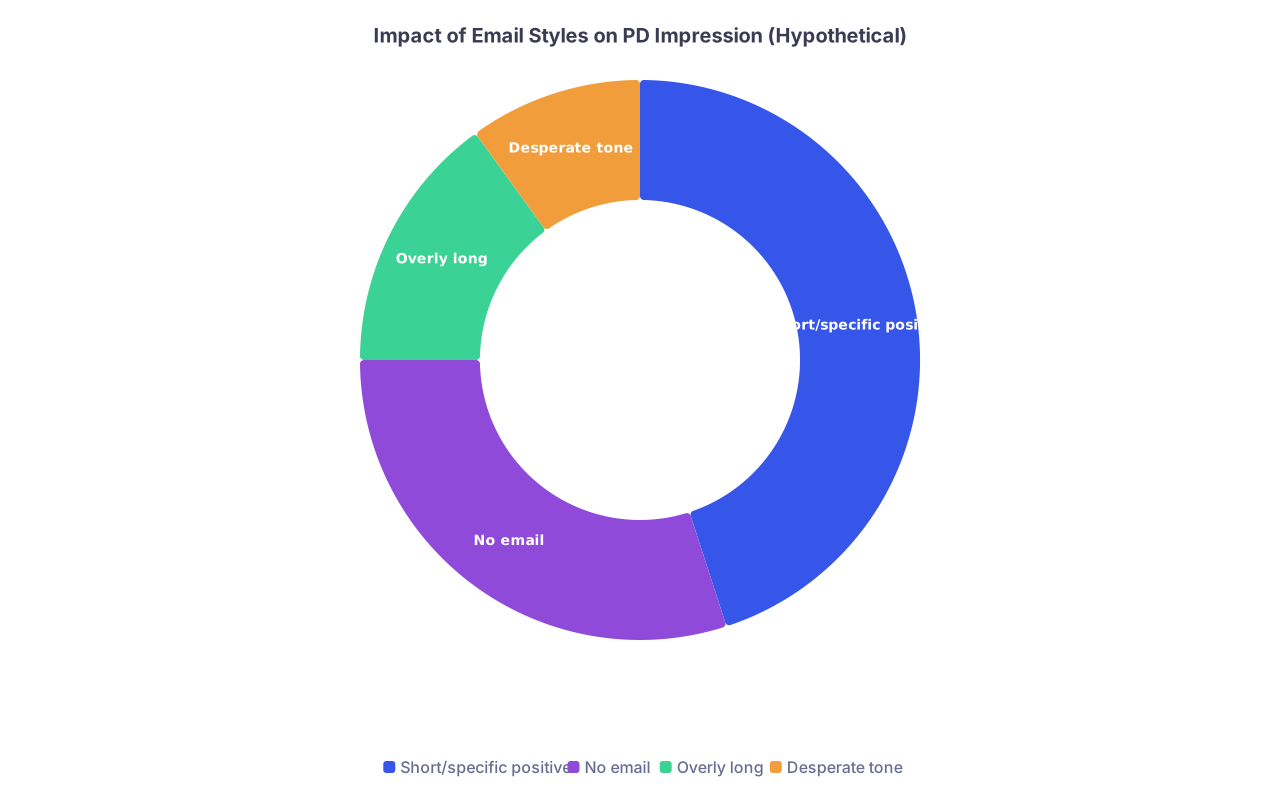
| Category | Value |
|---|---|
| Short/specific positive | 45 |
| No email | 30 |
| Overly long | 15 |
| Desperate tone | 10 |
13. Letting Cultural Deference Turn Into Apparent Passivity
Some IMGs are raised in systems where juniors speak only when spoken to, never challenge seniors, and always agree with whatever the superior says.
US training doesn’t work like that. PDs and fellows want residents who:
- Speak up when something is unsafe
- Ask for help early
- Admit uncertainty
The mistake is coming across as so deferential that you seem passive, afraid, or unable to advocate for patients—or for yourself.
If the PD asks, “What would you do if you disagreed with your senior about a patient management plan?” and your answer is essentially “I would always follow what my senior says,” you’re done.
A better approach:
- Express respect for hierarchy
- Add clear steps for how you’d clarify your concern
- Show you’ll put the patient first
Example: “I respect the experience of seniors, so I’d start by asking them to explain their reasoning. If I still had serious concerns about safety, I’d bring in the attending in a respectful way, focusing on the patient’s best interest.”
You’re not rebellious. You’re not a robot. That’s the balance.

14. Forgetting That Fit Matters—For You Too
One last mistake: acting like the only goal is to get any US residency, at any cost, in any environment.
You sit with PDs and fellows and ignore every red flag:
- Terrible resident morale in the room
- Vague answers when you ask how they support struggling trainees
- No transparency about workload, supervision, or outcomes
Here’s the quiet truth: the wrong program can damage you more than another match cycle would. Burnout, visa nightmares, toxic attendings, or zero support when life hits—you don’t want to be trapped in that.
When you ask questions, you’re not just performing. You’re evaluating. If a fellow tells you, “This program will grind you down and no one cares,” do not romanticize it as “strong training.” Believe them.
Your job is to avoid mistakes on interview day. That includes the mistake of ignoring your own instinct when you feel a program is wrong for you.

Here’s what I want you to walk away with:
- Don’t let avoidable behavior sink you. Talking too much, obsessing over visas, over‑sharing with fellows, and ignoring non‑verbal cues are fixable—if you’re honest about them.
- Treat every interaction—PD, fellow, resident, coordinator, hallway chat—as part of the interview. Because it is.
- Aim for calm, specific, and consistent: in your answers, your questions, your follow‑up, and your self‑presentation. That’s what gets remembered when they sit down to build the rank list.