Unlocking the power of Networking is one of the biggest challenges—and greatest opportunities—for International Medical Graduates (IMGs) pursuing U.S. residency programs. While strong USMLE scores, clinical experience, and letters of recommendation are essential, your professional relationships often determine whether program directors actually notice and trust your application.
This guide goes beyond generic advice to give IMGs specific, realistic, and actionable strategies to build a strong professional network, find Mentorship, and use those connections ethically and effectively during the residency Match and beyond.
Why Networking Matters So Much for International Medical Graduates
For IMGs, Networking is not optional—it is a core Career Development skill that can compensate for limited U.S. exposure and help you stand out in a crowded applicant pool.
How Networking Directly Impacts Residency Outcomes
Networking can influence your residency journey in several concrete ways:
Hidden Opportunities
- Unadvertised observerships, externships, or research positions
- “Last-minute” interview spots when other candidates cancel
- Internal advocacy for you when a program is unsure whom to rank
Credibility and Trust
- A trusted attending recommending you to their program director
- A mentor explaining your international background to U.S. colleagues
- Someone “vouching” that you will be a safe, reliable intern
Information Advantage
- Honest insight into which Residency Programs are IMG-friendly
- Program-specific culture, expectations, and red flags
- Strategy tips on which programs to target and how to tailor your application
Mentorship and Guidance
- Help shaping your personal statement and CV for U.S. norms
- Advice on timing, exam planning, and gap years
- Feedback on your interview performance and communication style
Adaptation to U.S. Medical Culture
- Understanding team dynamics, hierarchy, and interprofessional communication
- Learning how to advocate for patients in a U.S. context
- Adapting to patient-centered communication and shared decision-making
For many successful IMGs, the difference between multiple interview offers and silence in their inbox has often been a handful of strong relationships developed over time.
Building a Strong Networking Foundation as an IMG
Before you ask anyone for help, you need a basic foundation: places to meet people, a clear personal “story,” and a professional presence—especially online.
Identifying High-Yield Networking Opportunities
As an IMG, time and resources are limited. Prioritize activities with the greatest potential impact on your residency application:
1. Professional and Specialty Associations
- National Organizations
- American Medical Association (AMA)
- American College of Physicians (ACP)
- American Academy of Family Physicians (AAFP)
- Specialty-specific societies (e.g., American College of Surgeons, American Psychiatric Association)
How to use them effectively:
- Join the student/resident or international section if available
- Attend local chapter meetings or webinars regularly
- Introduce yourself to speakers after talks and follow up by email
- Volunteer for committees (education, membership, international) to work closely with academic physicians
2. Residency Fairs and Institutional Open Houses
- Medical school or hospital–hosted residency fairs
- Virtual residency showcases (especially important post-pandemic)
- Specialty interest group events featuring program directors or chief residents
Action tips:
- Prepare a 20–30 second “elevator pitch” (who you are, your interests, your goals)
- Research attending programs and faculty beforehand
- Ask thoughtful, specific questions (e.g., “How do IMGs typically succeed in your program?”)
- Collect contact information and send individualized follow-up emails
3. Community and Volunteer Activities
- Community health fairs and screening events
- Free clinics, mobile clinics, or health education outreach
- Public health initiatives, such as vaccination drives or chronic disease workshops
These activities:
- Show your commitment to patient care and underserved communities
- Allow you to network with local physicians, program faculty, and residents
- Provide tangible experiences you can discuss in your personal statement and interviews
4. Digital and Social Media Platforms
Online Networking is especially powerful for IMGs who are not yet physically in the U.S.
- LinkedIn – Essential for professional branding and networking
- Doximity – Used by many U.S. physicians and residents
- Twitter/X – Strong for academic networking, especially with researchers and educators
- Professional forums – Student Doctor Network (SDN), Reddit’s r/medicalschool / r/IMGreddit, specialty forums
Use these platforms to:
- Follow residency programs and see what they value
- Engage with educational content by commenting and sharing
- Reach out to residents, fellows, and faculty with specific, respectful messages
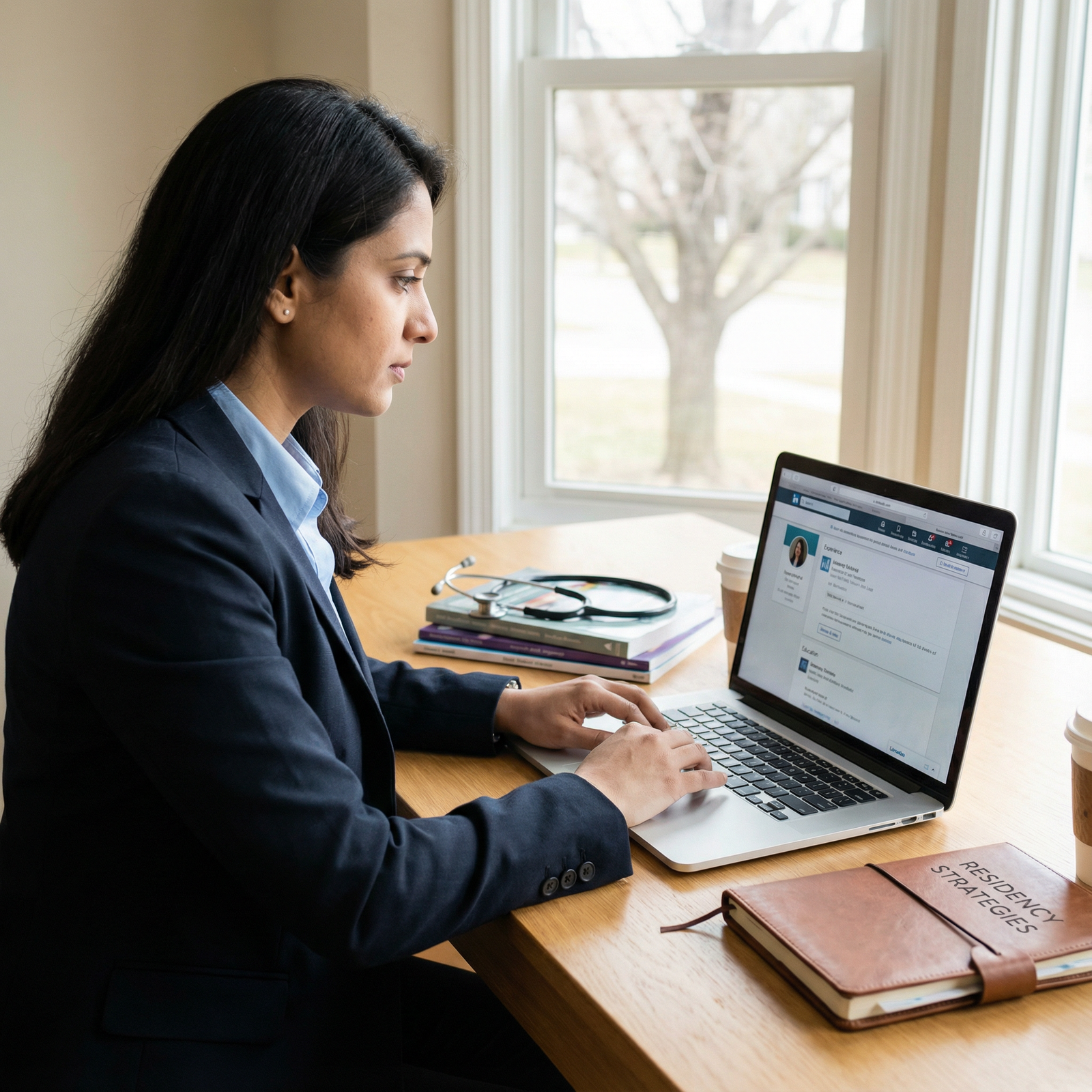
Creating a Professional Online Presence That Works for You
Your online footprint often makes the first impression—even before your CV.
1. Optimize Your LinkedIn Profile for Residency and Career Development
Make sure your LinkedIn reflects who you are as a serious residency applicant:
- Professional photo: Clear, neutral background; business or business-casual attire
- Headline: “International Medical Graduate seeking U.S. Internal Medicine residency | Interested in cardiology, medical education”
- About section: A concise summary (5–7 sentences) highlighting:
- Your medical school and graduation year
- Clinical interests and long-term goals
- Key strengths (teaching, research, global health, QI)
- A short, authentic note about being an IMG and your motivation to practice in the U.S.
- Experience: Organize:
- Clinical rotations and observerships (with clear roles)
- Research, quality improvement, and teaching
- Volunteer and leadership roles
- Skills and endorsements: Include clinical skills, languages, research, and communication skills
- Engagement:
- Share short reflections on cases (de-identified), new Guidelines, or journal articles
- Comment thoughtfully on posts by residency programs and faculty
- Congratulate connections on new positions or publications
2. Use Academic and Professional Networks Strategically
- Follow journals and societies in your intended specialty
- Share brief summaries of recent articles (“1–2 key learning points”)
- Participate in virtual journal clubs or Twitter/X live chats (#MedTwitter, specialty hashtags)
- Join IMG-focused groups on LinkedIn or Facebook to exchange opportunities
Present yourself as:
- Curious
- Consistent
- Professional
- Respectful of patient privacy and institutional policies
Practical Networking Strategies for IMG Applicants
Once your foundation is set, you need concrete, repeatable strategies to turn brief encounters into long-term professional relationships.
Leveraging Existing Connections: Start with Who You Already Know
Many IMGs underestimate how powerful their current network already is.
1. Map Your Network
Make a simple list of:
- Classmates already in U.S. residencies or research
- Alumni from your medical school in the U.S.
- Former attendings with U.S. training or connections
- Relatives or friends working in healthcare (nurses, pharmacists, allied health)
Reach out with:
- A short reintroduction
- Clear explanation of your goals (e.g., “Applying to Internal Medicine in the 2026 Match”)
- Specific questions or requests (e.g., “Could you share how you obtained your first observership?”)
2. Use Alumni Networks and Medical School Connections
- Ask your dean’s office or alumni affairs office if they track graduates in the U.S.
- Connect with alumni via LinkedIn (search by school + specialty + “residency”)
- Request brief Zoom or phone calls to learn from their experiences
A simple message structure:
- Who you are (year, school, country)
- How you found them
- Why you’re reaching out
- A respectful, time-limited ask (15–20 minute conversation)
Cultivating Meaningful, Long-Term Professional Relationships
Networking is not about collecting business cards; it is about building trust, respect, and mutual benefit over time.
1. Conduct Effective Informational Interviews
Informational interviews are short, structured conversations where you learn from someone’s career path.
You might ask:
- “What helped you most as an IMG when applying for residency?”
- “How do IMGs become strong residents in your program?”
- “What would you do differently if you were applying again?”
- “What experiences are particularly valued in your specialty?”
Before the call:
- Research their background
- Prepare 5–8 thoughtful questions
- Be ready to introduce yourself in 2–3 sentences
After the call:
- Send a thank-you email summarizing:
- One or two key points you learned
- How you plan to use their advice
- Keep them updated about major milestones (USMLE scores, research, Match outcomes)
2. Follow-Up: Where Real Networking Happens
Many IMGs introduce themselves once and then never follow up—missing the actual relationship-building stage.
Good follow-up practices:
- Email within 24 hours of meeting someone
- Reference something specific from your interaction
- Connect on LinkedIn (with a personalized note)
- Provide value where possible:
- Share an article related to their interest
- Congratulate them on new roles or publications
- Offer assistance on projects or committees
Consistency (without being intrusive) shows professionalism and reliability—key traits programs value.
3. Collaborate on Projects to Deepen Relationships
Working together is one of the fastest ways to earn trust.
Possible collaborative activities:
- Case reports or small retrospective studies
- Quality improvement projects (e.g., improving discharge instructions)
- Public health campaigns at a community clinic
- Educational presentations for patient groups or students
These collaborations:
- Strengthen your CV
- Create strong letters of recommendation
- Give mentors specific examples of your work ethic to share with residency programs
Overcoming Common Networking Challenges for IMGs
Many IMGs face additional barriers—language, confidence, visa status, or cultural differences. These challenges are real but manageable with the right strategies.
Managing Language and Communication Barriers
Communication, not accent, is what matters most.
Practical Strategies
Targeted practice in medical English
- Join medical English or communication workshops
- Practice presenting cases in English with peers or mentors
- Use standardized patient videos and repeat key phrases
Prepare scripts for common networking situations
- Your introduction (“Tell me about yourself”)
- Why you chose your specialty
- Why you want to train in the U.S.
- Key questions to ask faculty or residents
Ask for feedback
- After presentations or meetings, ask trusted mentors:
- “Was my message clear?”
- “Were there any parts that were confusing?”
- After presentations or meetings, ask trusted mentors:
Navigating Cultural Differences in U.S. Medical Environments
Understanding unspoken norms makes Networking more comfortable and effective.
Key Cultural Points
Hierarchy is real but more informal
- First names are often used among colleagues, but when unsure, start with “Doctor [Last Name]”
- It is acceptable to ask questions and clarify expectations
Direct but respectful communication
- Saying “I’m not sure, but I will look it up” is better than guessing
- Advocating for patient safety is expected, even as a student or observer
Self-advocacy is encouraged
- It is appropriate to express your interests:
- “I’m very interested in cardiology. Are there any residents or faculty you recommend I connect with?”
- It is appropriate to express your interests:
Time is highly valued
- Be punctual
- Keep emails concise
- If you ask for a meeting, propose a clear time frame (15–20 minutes)
Handling Rejection and Non-Response
Not every email will receive a reply. This is normal and not a personal failure.
- Follow up once after 7–10 days
- If still no response, move on and focus elsewhere
- Maintain a mindset of long-term growth:
- You are building a career network, not just hunting for one opportunity
Real-World Networking Success: Maria’s Story Expanded
Maria’s Journey: From International Graduate to U.S. Pediatric Resident
Maria, an international medical graduate with a passion for pediatrics, initially felt lost in the U.S. system. Her scores were solid but not exceptional, and she had no family in the U.S. Still, she matched into a strong pediatric residency by strategically using Networking and Mentorship.
Here’s how she did it:
Starting with One Connection
- She contacted a former classmate in a U.S. pediatric residency via LinkedIn.
- That classmate introduced her to a community pediatrician who offered her a short observership.
Maximizing Every Opportunity
- During the observership, Maria:
- Consistently arrived early and stayed late
- Volunteered to help with patient education materials
- Asked for feedback on her presentations and notes
- The pediatrician later introduced her to a faculty member at a nearby academic hospital.
- During the observership, Maria:
Building an Online Professional Identity
- Maria started posting weekly on LinkedIn:
- Short reflections on pediatric topics
- Summaries of new guidelines in child health
- Her experiences volunteering at local children’s health fairs
- A pediatric program director saw her posts and contacted her to learn more.
- Maria started posting weekly on LinkedIn:
Finding Mentorship
- Through that contact, she gained a formal mentor—an academic pediatrician.
- They:
- Co-authored a case report
- Practiced interview questions together
- Strategized her rank list and program selection
Outcome
- Maria received multiple interview invitations, including from the program where her mentor worked.
- On Match Day, she secured a position at that institution.
- Now as a resident, she mentors new IMGs—continuing the cycle of Networking and support.
Maria’s success was not accidental. It was the result of strategic, consistent Networking, strong Mentorship, and a clear understanding of how Residency Programs evaluate IMG applicants.

Putting It All Together: A Networking Action Plan for IMGs
Here is a practical, step-by-step framework you can start using this month.
1. Clarify Your Goals (Week 1)
- Decide your target specialty (or top two)
- Define your Match timeline (which year you will apply)
- Identify your top needs:
- Observerships/experience
- Research
- Letters of recommendation
- Mentorship
2. Build and Polish Your Professional Presence (Weeks 1–2)
- Update LinkedIn with:
- Professional photo
- Clear headline and About section
- All relevant experiences
- Clean up other social media (remove unprofessional content)
- Draft:
- Your 20–30 second professional introduction
- A short email template for reaching out to potential mentors
3. Expand Your Network Deliberately (Weeks 2–8)
Each week, aim for:
- 3–5 new connection attempts (alumni, residents, faculty)
- 1–2 informational interviews
- 1–2 meaningful online engagements (posting or commenting)
Attend:
- At least one virtual or in-person professional event per month
- Local or online chapter meetings of specialty societies
4. Nurture and Maintain Key Relationships (Ongoing)
For your closest 10–20 professional contacts:
- Check in every 3–4 months
- Share significant milestones (exam scores, publications, interview invites)
- Express genuine gratitude and keep them updated on your progress
FAQs: Networking for International Medical Graduates Applying to Residency
1. What is the most effective way to network as an IMG?
The most effective approach combines multiple strategies consistently:
- Start with existing connections (classmates, alumni, faculty)
- Join professional associations and attend their meetings or webinars
- Use LinkedIn and other platforms to connect with residents and attendings
- Conduct short informational interviews and follow up thoughtfully
- Look for ways to add value, not just ask for favors (e.g., help with research or projects)
Networking works best when it is intentional, respectful, and long-term—not rushed during the application season only.
2. How can I overcome language and communication barriers while networking?
You can improve quickly with focused practice:
- Join medical English or communication workshops (online or local)
- Practice your introduction and common questions with peers or mentors
- Watch U.S.-based medical lectures, grand rounds, and clinic videos to model phrasing
- Ask for feedback from trusted supervisors after presentations or patient encounters
Remember: an accent is not a problem; unclear communication is. Aim for clarity, structure, and active listening.
3. I’m not in the U.S. yet. Can I still network effectively?
Yes. Many IMGs successfully build strong networks before arriving in the U.S. by:
- Using LinkedIn and email to connect with alumni and faculty
- Attending virtual residency fairs and specialty society events
- Participating in online journal clubs and academic discussions
- Engaging with residency programs’ social media accounts
- Contributing to remote research projects or systematic reviews
When you eventually arrive, those digital connections can translate into observerships, in-person meetings, and interview support.
4. How do I find a mentor as an IMG, and what should I expect from Mentorship?
To find a mentor:
- Start with someone you already know (faculty from observerships, research supervisors, senior residents)
- Attend specialty-specific events and introduce yourself to potential mentors
- Ask for a brief meeting to learn about their career path and share your goals
From a mentor, you can reasonably expect:
- Honest feedback about your strengths and weaknesses
- Guidance on specialty choice, program selection, and Career Development
- Help understanding U.S. medical culture and expectations
Remember: Mentorship is a relationship, not a transaction. Show commitment, follow their advice when appropriate, and keep them updated on your progress.
5. What platforms should I prioritize for professional networking as an IMG?
Focus on:
- LinkedIn – Primary for Networking, Mentorship, and professional branding
- Specialty society websites and member portals – For finding meetings, committees, and mentorship programs
- Doximity – Useful for connecting with U.S. physicians and learning about Residency Programs
- Professional forums (SDN, IMG discussion groups) – For peer support and shared experiences
Use these platforms actively but professionally: share educational content, engage with others’ posts, and always maintain patient confidentiality and institutional privacy.
Networking is one of the biggest challenges for IMG applicants—but also one of the most powerful tools you control. By building a strong foundation, approaching relationships with authenticity and respect, and consistently nurturing your professional connections, you can significantly improve your chances of matching into a U.S. residency program and thriving in your long-term medical career.