Educational disclaimer: This article discusses the cost and value of U.S. electives for residency applicants. It is for educational purposes only and is not financial, legal, tax, or immigration advice. Costs, institutional policies, visa rules, and application strategy vary, so review your situation with qualified advisors and professionals before making decisions.
Let me say this plainly: more U.S. electives do not automatically make you a stronger residency applicant. Usually, they do not move you much at all.
That stings because the idea feels intuitive. More time in the U.S. should mean more familiarity, more credibility, more comfort in the system, more chances to impress. I understand why applicants believe it. I have seen students spend months arranging extra electives, paying heavily for them, traveling across cities, collecting hospital badges like trophies, and then sounding shocked when interview season looks almost identical to peers who did fewer but better rotations.
The problem is not that U.S. clinical experience is useless. It is not. Good U.S. electives can be genuinely valuable. The problem is that applicants confuse exposure with signal.
Residency programs do not reward exposure. They reward evidence.
That distinction is everything.
A selection committee is not asking, “How many weeks did this person spend around American medicine?” They are asking: Did this applicant perform at a level that predicts success in our residency? Did an attending directly supervise them and write a specific letter? Did they show ownership, reliability, communication skill, and specialty fit? Did the rotation generate something credible enough to reduce our uncertainty?
That is where the mismatch starts. Many students think in LCME-style educational terms: more rotations, more breadth, more learning. Programs review applications in ERAS-style selection terms: performance, letters, trajectory, and risk. Those are not the same lens.
Why “extra electives” feel helpful—but usually are not
The emotional logic behind extra electives is easy to understand. You are trying to compensate for uncertainty. Maybe your school is outside the U.S. system. Maybe you are worried about bias against international graduates. Maybe you feel that if you just spend more time in American hospitals, someone will eventually “see your potential.”
That is not how this works.
Programs make decisions using compressed, imperfect data. They look for high-yield indicators. Distinct ones. Not vague exposure. Not educational tourism. Not a fourth similar elective that produces the same generic letter as the first two.
What actually moves the needle is narrower and much less glamorous:
- strong specialty-relevant clinical performance
- direct supervision by someone credible
- a letter with specifics, not adjectives
- evidence that your story makes sense
- proof that you are ready for the workload and culture of residency
That last point matters more than applicants realize. Selection committees are not handing out points for effort. They are trying to avoid mistakes. A program director is not impressed because you spent sixteen extra weeks floating through hospitals. They are impressed if one attending says, in substance: I supervised this student directly on service, they carried patients appropriately for their level, presented clearly, followed through, and I would rank them favorably against peers entering residency.
That is signal. Everything else is background noise.
The common applicant belief is: “More time in the U.S. equals more advantage.” Wrong. More time in the U.S. only helps if the added time changes the evidence file. If the extra elective gives you a better letter, stronger specialty alignment, clearer confirmation of fit, or meaningful patient-care responsibility, fine. If it just adds another line to your CV, it is mostly decorative.
And committees know decorative when they see it.
I have read enough applicant narratives and enough program expectations to tell you this bluntly: reviewers remember differentiators. They do not remember accumulation. A student with two sharp, specialty-aligned electives and excellent letters is often far more competitive than a student with five scattered electives and no coherent story.
Fewer, stronger, cleaner. That is usually the winning pattern.
The selection logic: what programs actually reward
Let me break the pathway down the way programs actually process it.
First, your application lands in ERAS. Before anyone meets you, you are a file. That file has a few main currencies: academics, exam profile if relevant to your cycle and specialty, school background, clinical evaluations, letters, personal statement, research or scholarly output, and overall narrative coherence.
Then comes the interpretive step. Program reviewers ask a practical question: what in this file helps us predict that this person will function well here?
Notice what is not in that question. “How many electives did they do?” There is no prize for bulk.
An elective matters only if it improves one or more of the evaluative components that programs actually trust. Usually that means the letter. Sometimes it means a department-level contact who can advocate for you. Occasionally it means an interview because you rotated there and were memorable in a good way. But the elective itself is not the endpoint. It is a vehicle.
That is why letters matter so much. Not the number. The content.
A weak applicant strategy is collecting three to four letters that all say essentially the same thing: “pleasant student,” “hardworking,” “great attitude,” “was present during rounds.” That sounds nice. It does not help much. A useful letter includes detail:
- how closely the attending supervised you
- whether you managed follow-up tasks reliably
- how you presented new patients
- whether you improved across the rotation
- what degree of ownership you showed
- whether your performance was compared favorably with peers
- whether the writer would recruit you into their own program
Specificity is credibility.
Programs also separate structured clinical work from passive observation. This is a huge issue for international students. If your “elective” functioned more like an observership, the signal is weaker. Why? Because risk prediction depends on responsibility. A reviewer trusts data from settings where you had defined tasks, direct supervision, and performance feedback. Clerkship-style responsibilities matter more than simply being physically present in an American hospital.
This is where many applicants get fooled. They think any U.S. hospital affiliation carries weight. It does not. A famous institution with no real student role may produce less useful signal than a less glamorous site where you actively present, write notes when permitted, follow patients, and earn a detailed attending letter.
Fit also outranks duration. I would take four weeks in a clearly aligned specialty elective over twelve weeks of mixed, inconsistent, loosely related rotations almost every time. If you are applying internal medicine, I want to see that you can function in inpatient teams, clinic workflow, consult communication, and continuity thinking. If you are applying surgery, I want evidence that you understand service pace, hierarchy, preparation, and stamina. Specialty alignment sharpens the story.
And yes, extra electives can backfire.
Here is how that happens:
- You rotate through unrelated specialties and look undecided.
- Your performance varies, producing mixed letters.
- You accumulate experiences but cannot explain why you chose them.
- You spend months chasing “U.S. exposure” and neglect the rest of the application.
- You leave reviewers with a diffuse file instead of a clear identity.
That last one is the killer. Programs do not like uncertainty. If your electives muddy your narrative, they did not help you. They hurt you.
Quality vs. quantity: the hidden failure modes of “extra”
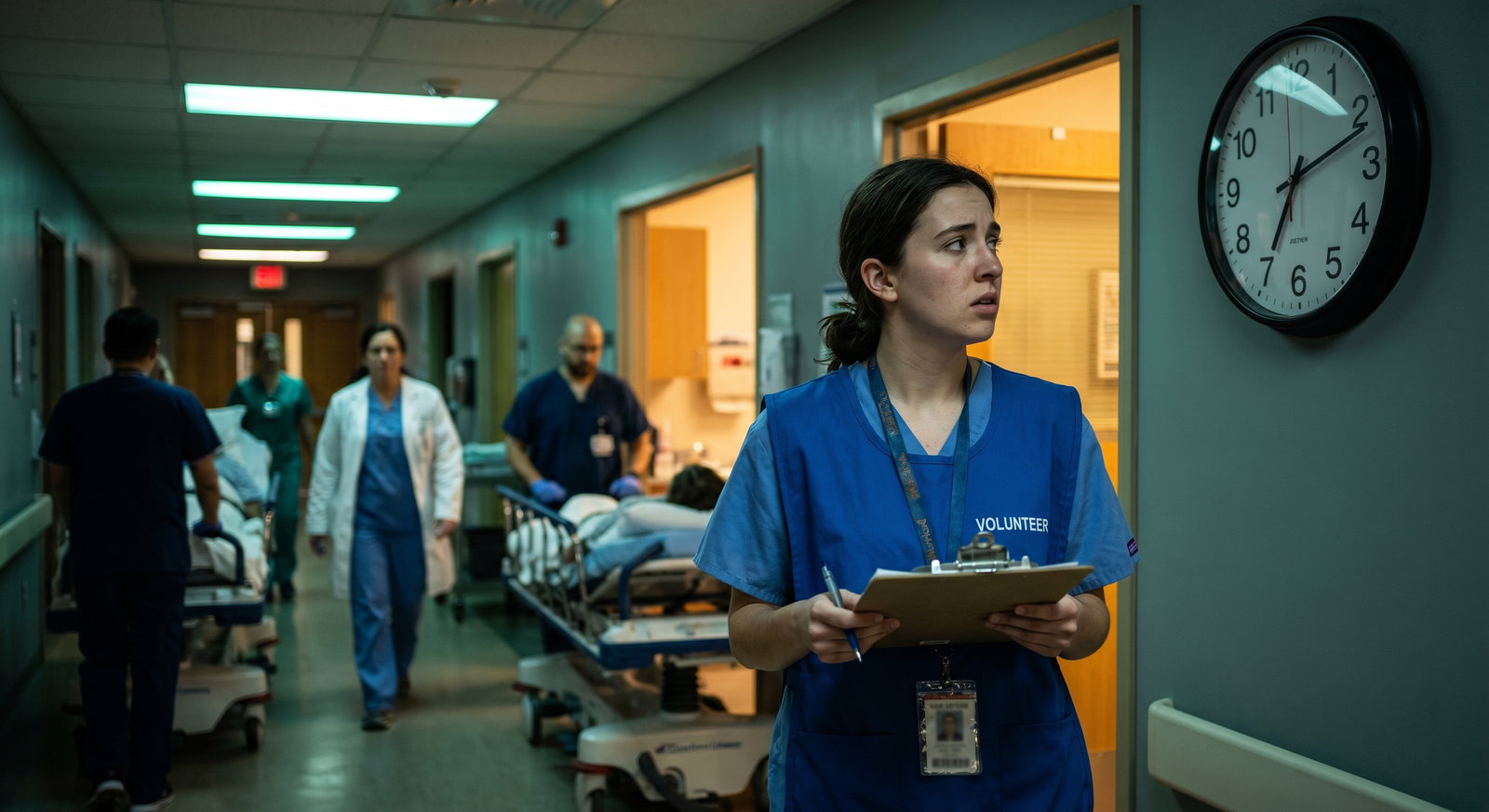
The phrase “do more electives” sounds practical. Often it is lazy advice. It ignores the failure modes. There are several, and they are common.
Failure mode #1: stacking electives without a narrative
I see this constantly. A student does pediatrics, then radiology, then neurology, then family medicine, then a month of internal medicine, and later applies categorical internal medicine while claiming long-standing commitment.
That is not a coherent arc. That is drift.
Committees do not sit around admiring your flexibility. They wonder whether you are unfocused, reacting to availability rather than building toward a specialty. Breadth has a place early in training. But by application season, random accumulation is a bad look.
Every elective should answer a story question. Why this field? Why this setting? Why now? If it does not, it adds clutter.
Failure mode #2: treating electives like time abroad rather than competency demonstration
This one is harsh, but true. Some electives function as expensive sightseeing with a white coat. Students attend rounds, smile, introduce themselves, and assume proximity equals value.
No. Competitiveness comes from demonstrated competence. If the structure of the elective does not allow you to present patients, participate in decision-making at your level, receive feedback, and be judged on something real, then the educational value may be fine but the application value is weak.
You need graded tasks. Defined expectations. Observable behaviors.
If no one can say what you actually did, no one can write a strong letter.
Failure mode #3: inconsistent performance across rotations
More rotations create more opportunities to underperform. Not catastrophically. Quietly.
A student may shine in one service where the team is supportive and the pace fits their style, then struggle in another where they are less prepared, less organized, or less comfortable speaking up. Now the letters are mixed. One is enthusiastic. One is generic. One is delayed because the attending barely remembers them.
This is why “more” is not inherently safer. More exposure means more variance. And variance is dangerous if your baseline is not already strong.
I have seen applicants sabotage an otherwise excellent file with one mediocre elective that produced a lukewarm letter. They assumed another U.S. name on the CV could only help. It did not.
Failure mode #4: low-yield settings with little mentorship
Not all U.S. electives are equal. Some are built for teaching. Others are logistical shells: minimal faculty contact, fragmented schedules, no stable evaluator, little ownership, little feedback.
That kind of site is low-yield.
If you do not know who is watching your work, who can advocate for you, or how you will be assessed, you are gambling. And expensive gambling is still gambling.
Weak signals have a recognizable pattern:
- letters full of praise words but empty of examples
- no mention of direct supervision
- no comparative ranking
- vague role descriptions
- no statement of readiness for residency
- no evidence of growth or reliability
You want the opposite. You want a writer who can say, “I worked with this student closely on inpatient rounds for four weeks. They consistently arrived prepared, synthesized overnight events accurately, handled feedback well, and performed at the top tier of visiting students I have supervised.”
That sentence beats three months of generic exposure.
So here is the action principle I tell students bluntly: every elective needs a job description. Before you start, you should know what you plan to learn, what you will actually do, who will evaluate you, and what tangible outcome you want. If you cannot define the deliverable, the elective is probably too weak to justify the cost.
What “boosts you” instead: letter strategy, specialty alignment, and readiness
The real purpose of U.S. clinical experience is not to “show interest in America.” It is to generate verifiable evidence that you can function in the specialty you want.
That evidence usually comes through letters, and applicants routinely mishandle letter strategy.
First: who writes the letter matters. A letter from an attending who directly supervised your work is usually far more valuable than a title-heavy letter from someone who barely interacted with you. Program directors know the difference immediately. Residents can be wonderful teachers, but unless the attending incorporates those observations into an official letter, the influence is limited. A program director letter can carry weight if it is personal and specific. If it is generic and ceremonial, it is fluff in expensive packaging.
Second: you need to help the letter writer help you. That means giving them material. I advise students to send a concise packet near the end of the rotation:
- CV
- personal statement draft or specialty summary
- list of cases or presentations you worked on
- specific projects, teaching sessions, or call experiences
- reminder of your career goal and what impressed you about the service
Not because you are scripting the letter. Because attendings are busy, and vague memory creates vague letters.
Third: specialty alignment is non-negotiable if your application needs sharper focus. Choose electives that mirror residency reality. For internal medicine, that means inpatient ward dynamics, admissions, sign-out culture, consult communication, and continuity clinic if possible. For pediatrics, think inpatient plus ambulatory exposure with direct patient counseling. For surgery, look at pre-op preparation, OR professionalism, post-op care, and service endurance. For psychiatry, ask whether you will be observed interviewing, presenting mental status findings, and participating in treatment discussions. Mirror the actual job.
This is also where readiness shows. Programs are not just evaluating knowledge. They are watching whether you function like someone who will survive intern year.
Readiness signals include:
- punctuality without reminders
- preparation before rounds
- concise case presentations
- appropriate follow-through
- coachability under feedback
- stable professionalism under stress
- communication that is clear, respectful, and not awkwardly overrehearsed
That last point is worth emphasizing. I have seen strong students lose ground because they treated the elective like an audition for approval instead of a month of steady contribution. Do not perform enthusiasm theatrically. Be useful. Better to be the student who reliably updates labs, follows through on a consult recommendation, and gives a clean presentation than the one who tries too hard to be memorable.
One framework I like is an “equity map.” Look at your current application baseline and ask where the biggest gap is.
- No strong specialty-specific U.S. letter? Then an elective is high-yield.
- Unsure whether the specialty truly fits you? High-yield.
- Already have two excellent letters and clear specialty alignment? Another similar elective may be low-yield.
- Weak communication in clinical settings? Prioritize a setting with direct feedback.
- Thin academic profile but strong clinical performance? Maybe your next move is scholarship or exam readiness, not another rotation.
This is strategic allocation. Not accumulation.
And yes, there is a practical checklist.
Before the elective:
- know the common cases on that service
- review presentation structure
- understand note format if relevant
- fix language weaknesses now, not halfway through the month
- clarify expectations with the coordinator or attending
- arrive with a professional, low-friction work style
During the elective:
- show up early
- prepare one layer deeper than expected
- ask good questions, not endless questions
- volunteer intelligently
- keep a case log
- ask for feedback before the final week
- adjust quickly when corrected
- make it easy for faculty to trust you
A smarter plan: how to decide if electives are worth it—and how many
Here is the framework I actually recommend.
Start with baseline, not anxiety.
Look at your target specialty and be honest about your current file:
- Do you have credible U.S. clinical evaluation?
- Do you have at least one or two strong specialty-relevant letters?
- Does your application tell a clear story?
- Do you need specialty confirmation, or are you already certain?
- Are you compensating for a measurable gap, or just trying to feel safer?
Electives are high-yield in a few specific situations:
You are missing strong letters.
Then yes, a well-chosen elective can be essential.You need recent, structured U.S. clinical evaluation.
Especially if your prior experience is limited or observership-heavy.You need to confirm specialty fit before committing.
Better to discover a mismatch before ERAS than after.You need a clearer narrative.
One sharp elective in your target field can unify the application.
Electives are low-yield when:
- you already have strong specialty letters
- your narrative is coherent
- the available rotation is passive or poorly supervised
- you are adding time instead of adding evidence
- the elective does not produce a meaningful deliverable
How many should you do? Fewer than most applicants think.
There is no magic number. There is, however, a bad strategy: treating electives like bulk purchasing. Aim for the number of rotations in which you can realistically perform well, be noticed for the right reasons, and secure strong outcomes. For many students, that means a small set of carefully chosen rotations, not a marathon.
Think in deliverables. Every elective should produce at least one of these:
- a strong letter
- a concrete skill milestone
- a research or teaching artifact
- genuine specialty confirmation
If it produces none of them, that was probably a low-value month.
Timeline matters too. Schedule electives early enough that letters can be written well before application deadlines. Avoid weird, scattered gaps that make your year look unplanned. A coherent calendar tells the same story a coherent application does: this person knows what they are doing.
That is the real upgrade. Not more U.S. time. Better evidence.
The bottom line
Extra U.S. electives are overrated because programs do not reward accumulation. They reward proof.
If an elective gives you specialty-relevant performance data, a sharp attending letter, stronger fit, and a clearer application story, it is worth doing. If it just adds another month of vague exposure, it is mostly cosmetic. Nice for your own learning, perhaps. Weak for selection.
So stop asking, “Should I do more?” Ask better questions.
What gap am I closing?
Who will evaluate me?
What can this rotation produce that I do not already have?
Will this make my application clearer or just longer?
That is how mature applicants think. And mature applicants are easier to trust.
The good news is that this is fixable. You do not need endless electives. You need sharper choices, stronger performance, and cleaner signals. Build that well, and your application starts to look less like a pile of experiences and more like what programs actually want to see: someone ready.