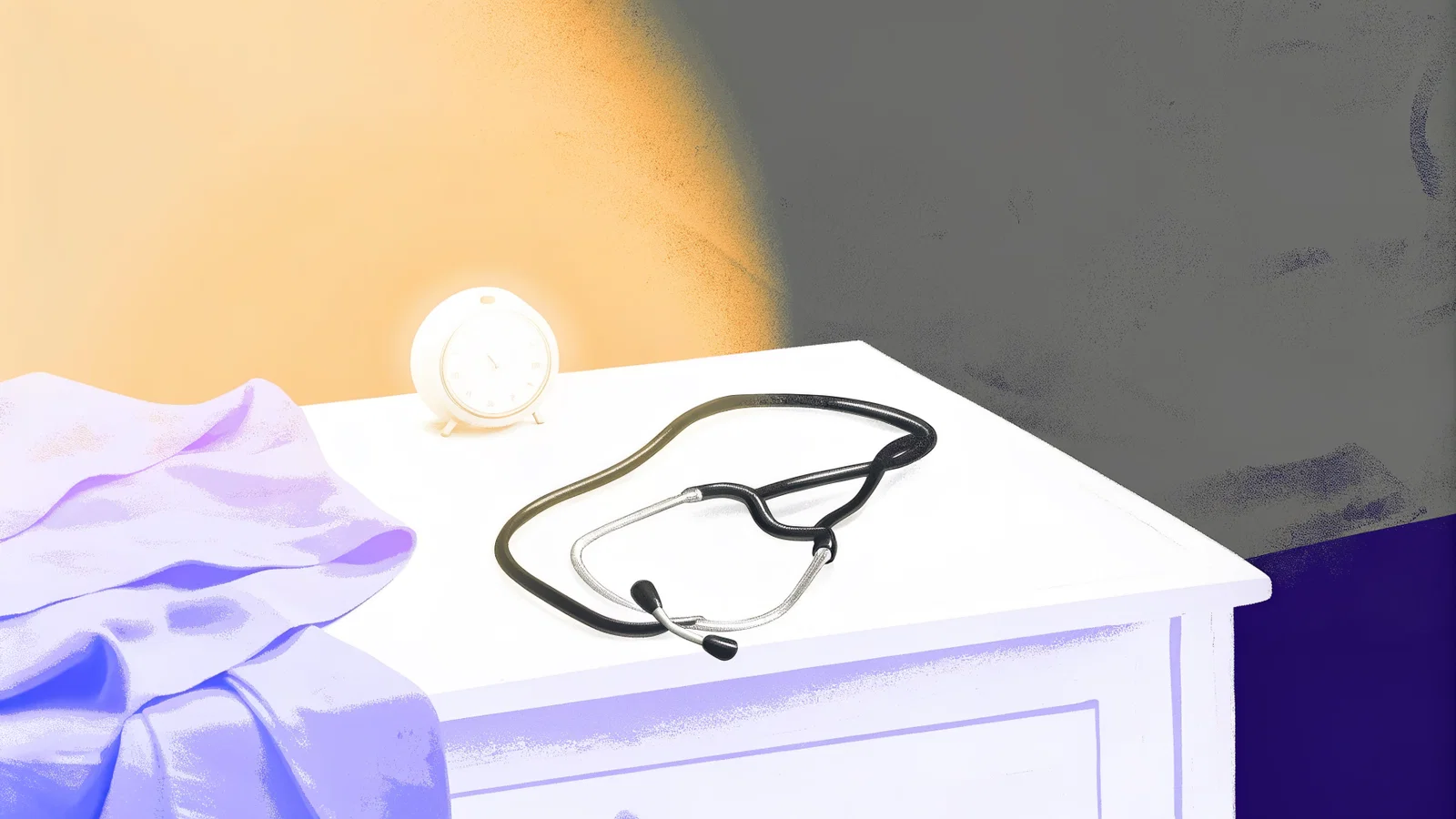
I've been staring at this job posting for three days. "No call. Weekend-free. Lifestyle-friendly." It sounds perfect. Too perfect. And that's exactly what terrifies me.
Every med student forum, every attending I've shadowed, every well-meaning mentor, they all push lifestyle specialties as the promised land. Dermatology. Radiology. Pathology. Anesthesiology. "You'll have your weekends back," they say. But I've been digging into the contracts, the fine print, the anonymous forums where burned-out doctors confess what actually happens at 3 AM on a Saturday, and I don't trust any of it anymore.
This article is for educational purposes only and is not financial advice, not legal advice, and not tax advice. Figures vary widely depending on region, practice type, and contract structure. Always consult a qualified professional before signing anything.
Let me walk you through what I've found, the stuff that keeps me up at night.
For more on how these hidden obligations convert a 9-to-5 job into 24/7 availability, see (https://residencyadvisor.com/resources/lifestyle-friendly-specialties/the-shadow-commitments-that-convert-95-jobs-into-247-availability).
The 3 AM Panic: When 'No Call' Means 'On Call for Everything'
Here's the scenario that haunts me. You match into your dream lifestyle specialty. The contract says "no call." You move to a new city, buy a house, plan your weekends around hiking trails and farmer's markets. Then, three months in, your pager goes off at 3 AM. A trauma just rolled into the ED. They need you. Not tomorrow. Not Monday. Now.
"No call" is a marketing term. It's not a legal shield. It doesn't mean "nobody will ever contact you after 5 PM." It usually means "no scheduled patient care call", no rounding, no phone triage for clinic patients, no elective consults. But when the hospital needs someone, and you're the only specialist within fifty miles, you're getting the page.
I've read story after story on anonymous forums. A pathologist who signed a "no call" contract at a small community hospital and ended up covering frozen sections every other weekend because the group was too small to hire a full backup. A radiologist who was told her job was "daytime only" but got dragged into ED coverage when the night-shift teleradiology service went down during a snowstorm. The teleradiologist couldn't connect. She was the only board-certified radiologist in the building.
The emotional toll is worse than the sleep deprivation. It's the anticipation. You can't relax on Friday night because you know, even if they say you won't be called, that you might be. You plan your Saturday around the possibility of a phone call. You don't drink at the barbecue. You don't go to the concert two hours away. "No call" becomes a leash, not a liberation.
I keep asking myself: Is any job actually what it claims to be? Or am I just trading one set of anxieties for a different, sneakier version?
Discover how program directors signal true lifestyle through protected time versus fake flexibility (https://residencyadvisor.com/resources/lifestyle-friendly-specialties/protected-time-vs-fake-flexibility-how-pds-quietly-signal-true-lifestyle).
The 'Hidden Call' Workflow: How It Happens Before You Know It
The worst part is how invisible it is. Nobody sits you down and says, "By the way, you'll be covering emergencies even though your contract says no call." It just... happens. Through workflow. Through institutional habit. Through the simple reality that hospitals don't shut down on weekends.
Here's what I've pieced together from talking to residents who've been through it.
The Emergency Department pipeline bypasses the scheduler. When a patient rolls in with a subarachnoid hemorrhage at 2 AM Sunday, the ED attending doesn't call the scheduling office. They page whoever's listed as the "physician of record" for that service. If you're the attending radiologist who read the patient's last scan, congratulations, you're now the go-to expert, even if you're technically off.
Then there's the distinction nobody explains during interviews: patient care call versus administrative call. "No call" usually means no patient care call. But administrative call, responding to lab critical values, approving protocols, answering questions from mid-levels who can't reach the attending, that's a different beast. And it often falls on whoever's "available," which is a word with no legal definition.
Moonlighting makes it worse. I've seen contracts where the base salary is below market, and the only way to hit a livable income is to pick up extra shifts. Those extra shifts? They come with call duties. So your "no call" day job becomes a "no call" job plus a "full call" moonlighting job. You're working weekends to compensate for a salary that assumed you wouldn't be working weekends.
It's a trap. A slow, quiet trap.
Radiology & Pathology: The 'Backup' Trap
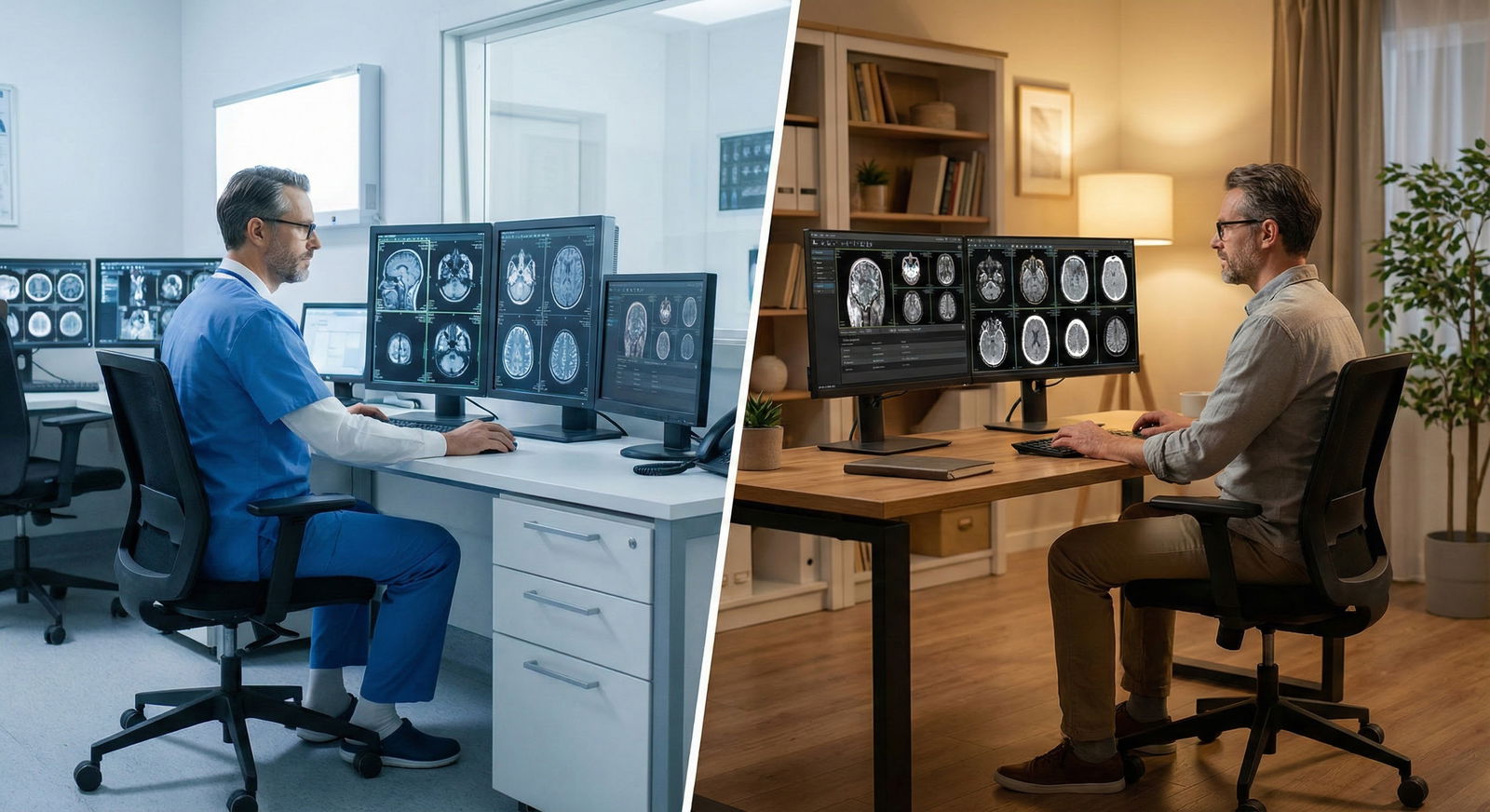
Radiology and pathology are supposed to be the safe havens. The reading rooms. The quiet labs. No patients clawing at your door at midnight. But I keep hearing the same word from people who've been burned: "backup."
In radiology, someone has to read the emergent studies. Teleradiology covers a lot of it, but when the teleradiology service is overwhelmed, when it's flu season and every hospital in the region is flooding them with studies, the local group gets pulled back in. You're the backup. And if you're the junior attending, the newest hire, the one without enough seniority to say no, you're the first backup called.
Pathology is even scarier in some ways. Frozen sections during surgery. If a surgeon is operating on a tumor at 9 PM Saturday and needs an intraoperative consult, someone has to be in the lab. Someone has to look at the slide. That someone might be you, even though your contract says "no call."
I spoke with a third-year resident who told me her attending, a pathologist at a mid-sized community hospital, hadn't had a truly free weekend in eight months. The group had five pathologists. They couldn't hire a sixth because the hospital wouldn't approve the budget. So they rotated "backup" coverage among themselves, and the two junior attendings got the worst of it.
Holidays are the worst. Christmas. New Year's. Thanksgiving. The senior partners take those off. The junior people fill in. "No call" except when it matters most, which is when you most want to be home.
Anesthesiology & EM: The 'On-Call' for Emergencies
Here's where my anxiety spikes even higher. Anesthesiology and Emergency Medicine, both labeled "lifestyle-friendly" in certain settings, come with a reality check that feels almost cruel.
"No call" doesn't mean "no emergencies." It means no elective cases, no scheduled OR time, no routine patient management. But if you're the anesthesiologist on-site and a trauma rolls in, you're running the airway. If the ED is overwhelmed and a code blue happens on the floor, you might be the first responder because you're the closest physician with ACLS training.
Trauma centers are the elephant in the room. A job at a Level I trauma center labeled "no call" is fundamentally different from a job at a community hospital labeled "no call." The trauma center has emergencies. Constantly. The "no call" part might refer to your elective OR schedule, but you're still in a building where bad things happen at all hours.
I've seen job postings for EM that say "no call" and mean "you're not the admitting physician overnight." But you're still in the department. You're still seeing patients. The "no call" refers to what happens after your shift, but during your shift, which might be 12 hours on a Saturday, you're the front line.
And here's what really gets me: some of these "lifestyle" EM jobs are at freestanding emergency departments or urgent care centers. They advertise "no call, no rounding, no admissions." True. But you're working nights, weekends, and holidays as your regular schedule. It's shift work. The "no call" is technically accurate, but you're still giving up your weekends. Just in a different way.
The math doesn't feel like it adds up. I keep running the numbers, checking the forums, trying to find the catch. Maybe the catch is me.
Dermatology & Ophthalmology: The 'Email' Nightmare

Dermatology. The holy grail. The specialty everyone tells you to apply for if you want a life. And maybe it's true, if you can get in. But I've been reading the fine print, and the "no call" promise has evolved into something more insidious.
The pager is dead. The smartphone killed it. And with the smartphone came the expectation of constant availability.
Dermatology attendings I've spoken with describe a steady drip of messages, patient portal questions, refill requests, nurse triage emails, photos forwarded from the ED. It's not "call" in the traditional sense. It's "administrative availability." And it bleeds into every evening, every weekend, every vacation.
One attending told me she gets forty to sixty patient portal messages per day. On weekends, the messages stack up. Monday morning is a wall of administrative work that could've been addressed over the weekend, if she'd been willing to check her phone. The "no call" job becomes a "no sleep" job because you're either answering emails all weekend or dreading the pile waiting for you Monday.
Ophthalmology has its own version. Refill requests. Optometry partners sending photos of questionable findings. Post-op patients calling the answering service with concerns that get routed to your phone. It's not the hospital paging you. It's the entire outpatient ecosystem following you home in your pocket.
How do you negotiate boundaries when the expectation is that you're always reachable? I don't know. I'm genuinely asking. Because the more I dig, the more I realize that "no call" is a moving target, redefined by technology and institutional convenience.
Conclusion: How to Protect Your Peace
Here's where I try to pull myself back from the spiral.
Lifestyle specialties are real. True "no call" jobs exist. People do have weekends off, go to their kids' soccer games, take real vacations. I've met them. They're not lying. But they're also not the default, they're the result of careful contract negotiation, honest conversations during interviews, and sometimes sheer luck in landing with a group that values its members' sanity.
I've started building a list of questions to ask during interviews. What's the backup protocol when you're on vacation? Who covers emergent consults, is it the on-site physician, a teleradiology service, a regional backup group? Is moonlighting expected to reach the advertised salary? How are patient portal messages handled, is there a nursing triage line, or do they route directly to the physician? What happens on holidays, is there a seniority-based coverage system, and as a new hire, where do I fall in that hierarchy?
I'm terrified of signing something I'll regret. But I'm also tired of being paralyzed by fear. The answer isn't to avoid lifestyle specialties, it's to enter them with eyes open and questions ready. Advocate for yourself. Get the backup protocol in writing. Understand that "no call" means different things to different people, and the only definition that matters is the one in your contract.
Ask. Push back. Walk away if the answers don't add up. Your mental health is worth more than a clever marketing phrase.

I'm going to keep researching. I'm going to keep asking uncomfortable questions. And maybe, if I'm careful enough, I'll find a job that actually lets me sleep.