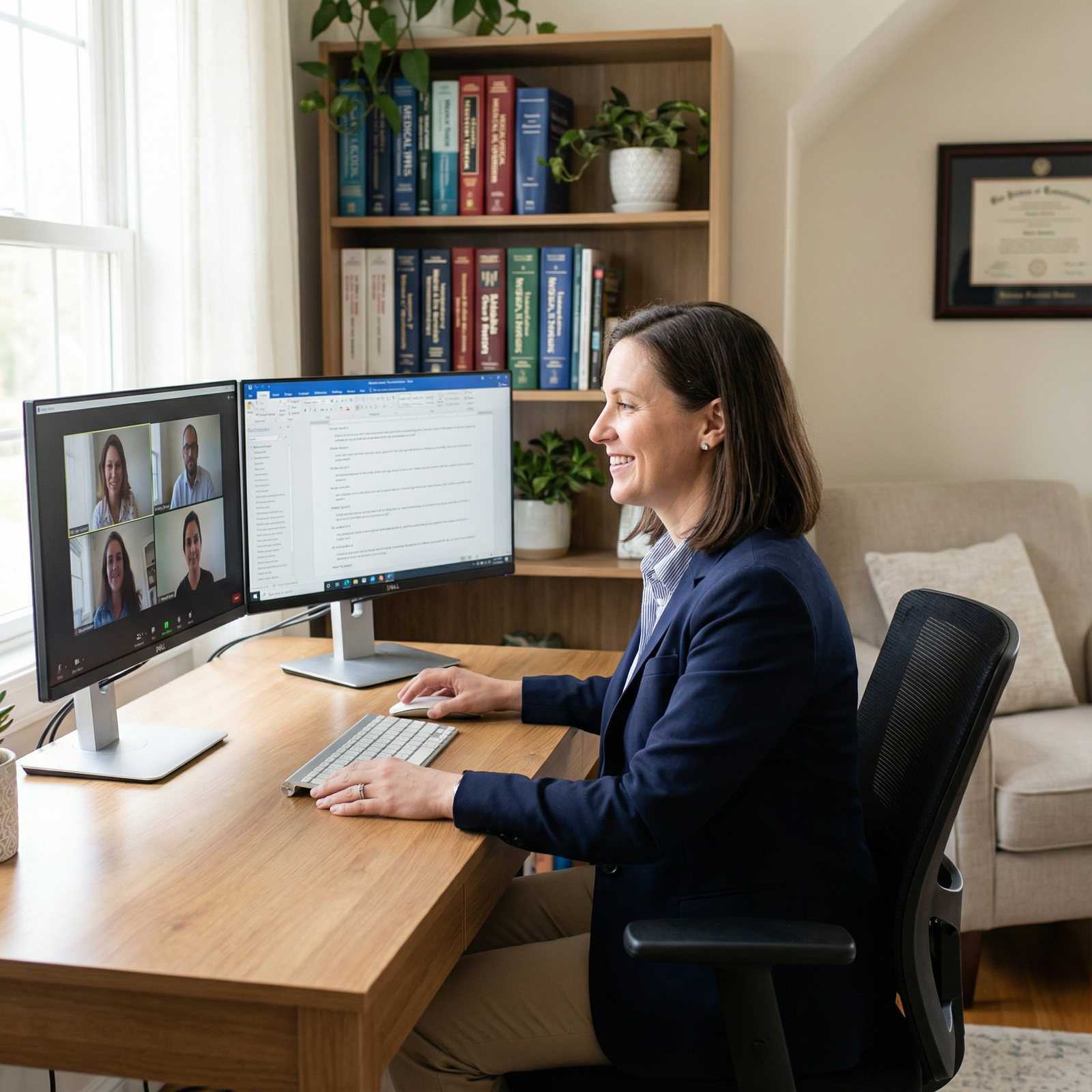
The belief that a “9–5” job in medicine guarantees lifestyle is a lie people tell themselves to feel safe.
If you do not understand shadow commitments—the invisible expectations that turn fixed hours into 24/7 availability—you’re going to walk straight into a trap. Especially when you pick a “lifestyle friendly” specialty and think the story ends there.
Let me be blunt: the specialty is only half the battle. The other half is what your program, your department, and your colleagues quietly expect of you when you’re “off.”
This is where people get burned.
The Biggest Mistake: Confusing Lifestyle Specialty with Lifestyle Job
Plenty of med students think: “I’ll do derm, radiology, psych, maybe outpatient IM or PM&R. They’re lifestyle specialties. I’ll be fine.”
And then they end up:
- Logging into Epic on Sunday to finish notes “before Monday clinic”
- Accepting “just a quick call” from attendings at 10:30 PM
- Replying to group texts about schedule swaps during dinner
- Doing unpaid pre- or post-clinic work every day
- Charting late into the night from their couch
The specialty didn’t fail them. Their expectations did. And the shadow commitments in their work culture finished the job.
There are three layers you need to watch:
- The specialty risk (how inherently lifestyle-heavy it is)
- The practice model risk (inpatient vs outpatient, call structure, academic vs private)
- The shadow commitment risk (all the invisible time you never asked about)
Everyone asks about the first layer. Almost no one interrogates the third.
That’s how you turn a 9–5 into a 24/7 without anyone ever putting it on paper.
What Are “Shadow Commitments” Really?
Shadow commitments are all the expectations that are:
- Not in your contract
- Not on the official schedule
- Not explicitly required
- But heavily, socially enforced
They sound like:
- “Most of us pre-chart the night before so clinic flows better.”
- “We all check our results inbox once or twice over the weekend—just to be safe.”
- “If the attending emails you, it’s good form to respond quickly. Shows you’re engaged.”
- “We send interesting cases on the WhatsApp group. Good learning for the team.”
- “You can leave at 5, but notes are expected to be done by 6 AM next day.”
None of that appears on any residency website. But it absolutely owns people’s evenings and weekends.
Here’s how those shadow commitments stack up in supposedly “lifestyle friendly” paths.
Specialty Examples: Where People Underestimate Lifestyle Creep
You’re in the “Most Lifestyle Friendly Specialties” category, so let’s stick there. Even these are not safe by default.
| Specialty | Hidden Time Risk Level | Typical Shadow Commitments |
|---|---|---|
| Dermatology | Medium | Pre/post clinic documentation, cosmetic consult follow-up |
| Radiology | Medium-High | After-hours reads, message follow-up, remote access temptation |
| Psychiatry | Medium | Patient messaging, crisis callbacks, documentation creep |
| Outpatient IM/FM | High | Inbox management, refills, test follow-up at home |
| PM&R | Medium | Multidisciplinary team communication, note complexity |
Dermatology: The “Lifestyle” That Lives in Your Inbox
Derm often markets itself as 8–4:30, no nights, no weekends. That can be real—if you pay attention to the details.
Shadow commitments in derm:
- Pre-charting several hours at home to get through 25–35 patients/day
- Reviewing cosmetic photos and patient messages after clinic
- Responding to highly anxious cosmetic patients who email constantly
- “Quickly” signing labs, meds, and biopsy results from home so they don’t pile up
Big trap: productivity models. High volume + EMR + cosmetic follow-up = you carrying work home unless the practice deliberately builds protected time.
The mistake: choosing derm assuming lifestyle, not asking: “Where do people finish their notes? At work or at home?”
Radiology: The PACS-in-Your-Pocket Problem
Radiology can absolutely be a controlled-hours specialty. Or it can quietly become “on call for your own workload” if you’re not careful.
Shadow commitments in rads:
- Remote access = constant temptation to “hop on and catch up”
- Overnight or telerad groups expecting near-real-time response to messages even post-shift
- Answering referrer calls/texts when you’re off because “you know the case”
- Being the go-to second opinion on your friends’ and family’s imaging at all hours
One radiology attending told a resident: “The beauty is you can log in from home and get ahead.” That is also the curse. The boundary is your job to defend.
The mistake: thinking remote access is purely a perk. It’s only a perk if you consciously protect your off-hours.
Psychiatry: Emotional Spillover and Crisis Expectations
Psych looks cushy on paper. Clinic days, maybe consult service, not a ton of procedural emergencies.
But mental health work leaks.
Shadow commitments in psych:
- Patients in crisis emailing/portal messaging at all hours
- Boundary-weak clinics where patients are told “message us anytime”
- Informal expectation to check messages after-hours for safety concerns
- Long, narrative notes that easily overflow into nights/weekends if you’re not fast
Residents underestimate the emotional bandwidth–you can physically leave but mentally carry a full roster of struggling patients home with you.
The mistake: focusing only on “call” and completely ignoring how the clinic handles messaging, crisis protocols, and boundaries.
Outpatient IM/FM: The King of Hidden Work
If there were an Olympic event for shadow commitments, outpatient internal medicine and family med would win gold.
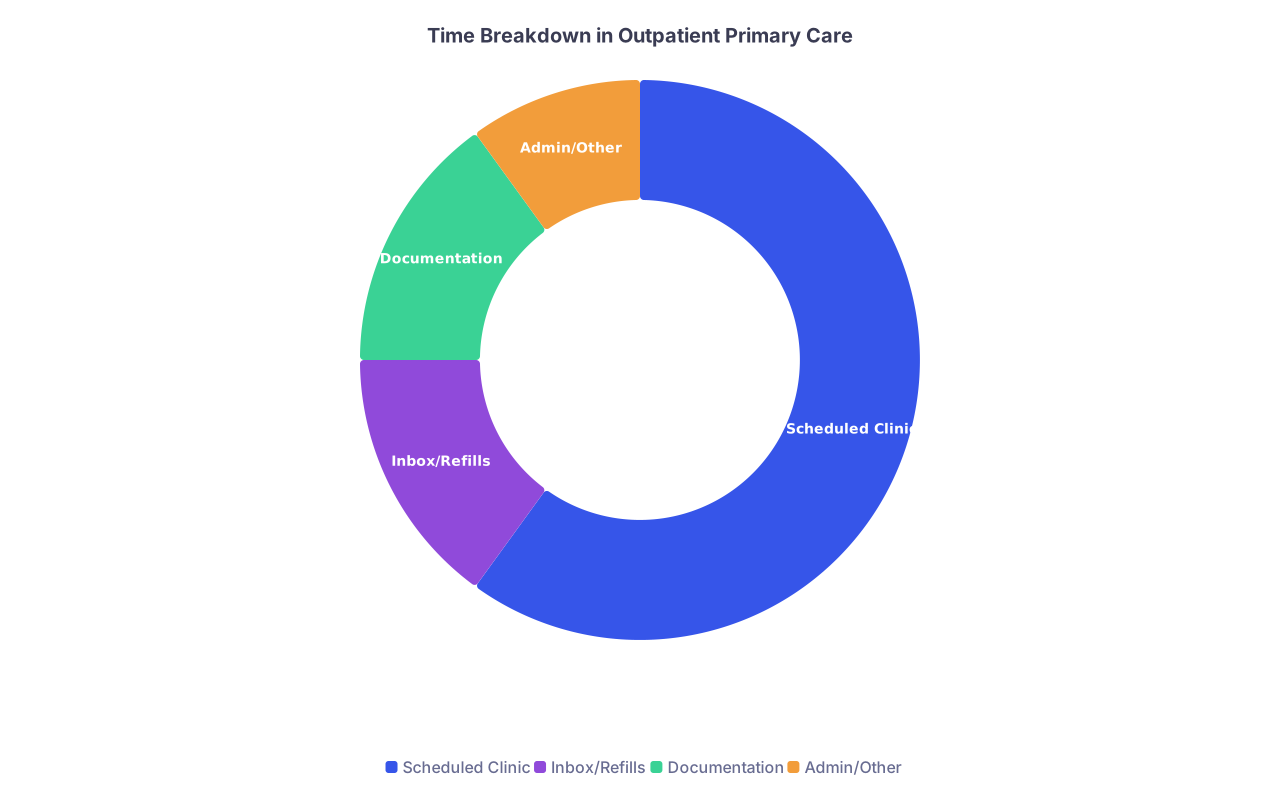
Here’s the honest version of many “8–5” primary care jobs:
- 8–5 clinic, but:
- 1–2 hours/day of inbox
- 1–2 hours/day of unfinished charting
- Constant prior auth and refill requests
- Patients messaging through the portal at 9 PM expecting early responses
| Category | Value |
|---|---|
| Scheduled Clinic | 60 |
| Inbox/Refills | 15 |
| Documentation | 15 |
| Admin/Other | 10 |
That “60% clinic” looks like an 8–5 day. The other 40% often leaks into the evening or early morning unless the practice is structured differently.
Shadow commitments in outpatient IM/FM:
- Uncompensated message work (often equaling another half-clinic per day)
- Feeling morally guilty if you batch responses and don’t answer right away
- Being “the doc” for your own friends and family—texts at all hours
- Accepting overstuffed panels that make inbox control impossible
The mistake: asking only “What are your clinic hours?” instead of “How much time do your physicians spend working from home?”
PM&R: Team-Based Time Sinks
Physical medicine and rehab looks balanced and often is. But multidisciplinary care multiplies communication.
Shadow commitments in PM&R:
- Coordinating with PT/OT/SLP, case managers, social work—often after your “day” ends
- Lengthy documentation for disability, work notes, DME, equipment, rehab plans
- Email chains about team meetings, goals-of-care, placement issues
- “Quick” check-ins on patient functional progress off-hours
PM&R can be extremely reasonable when the system respects documentation time and team meetings as part of the workday. When they don’t, all of that gets shoved into early mornings and late evenings.
The mistake: romanticizing “team-based care” without asking where that communication time fits in the schedule.
The Real Conversion: How 9–5 Quietly Becomes 24/7
A 9–5 job does not become 24/7 overnight. It erodes gradually.
Here’s the typical sequence:

| Step | Description |
|---|---|
| Step 1 | Start 9–5 Job |
| Step 2 | Occasional After Hours Email |
| Step 3 | Regular Evening Charting |
| Step 4 | Weekend Inbox Checks |
| Step 5 | Grassroots Expectation to Be Reachable |
| Step 6 | 24–7 Mental Availability |
Step by step:
- You start with good intentions. “I’ll protect my evenings.”
- Clinic runs late. You do the “right thing” and finish notes from home.
- Your attending praises you: “Thanks for getting those done last night.”
- A patient portal message comes in at 8 PM. You respond. They’re grateful.
- Now you feel like you should respond quickly, because you did it before.
- Colleagues text about coverage or scheduling at night. You answer to be a team player.
- Soon, you’re never truly off. Even if you’re not working, you’re on standby.
The disaster isn’t just time—it’s mental occupancy. The job moves into your brain and refuses to leave.
The mistake: measuring lifestyle strictly by “scheduled hours” instead of “total mental and digital availability.”
What You Must Ask Before You Believe “Lifestyle-Friendly”
You cannot rely on program brochures. You need real, tactical questions. And you need to listen for the hesitations and the “well, usually…” qualifiers.
Here are the questions people forget to ask:
- “Where do residents/attendings finish their notes—at work or at home?”
- “On average, how many hours per week do people spend on the EMR from home?”
- “What’s the policy and culture around after-hours patient messaging?”
- “Are messages/time spent outside clinic blocks compensated or protected?”
- “How do you handle test results that come in on nights and weekends?”
- “Are residents expected to respond to emails/texts when they’re off service?”
- “Do faculty commonly send emails late at night or on weekends—and expect replies?”
If you get:
- Nervous laughter
- “Well, it depends…” with a long pause
- “We’re working on improving that” with no specific change described
Red flag. You are staring at shadow commitments that will land on your couch at 10 PM.
Red Flags in “Lifestyle” Jobs You Should Not Ignore
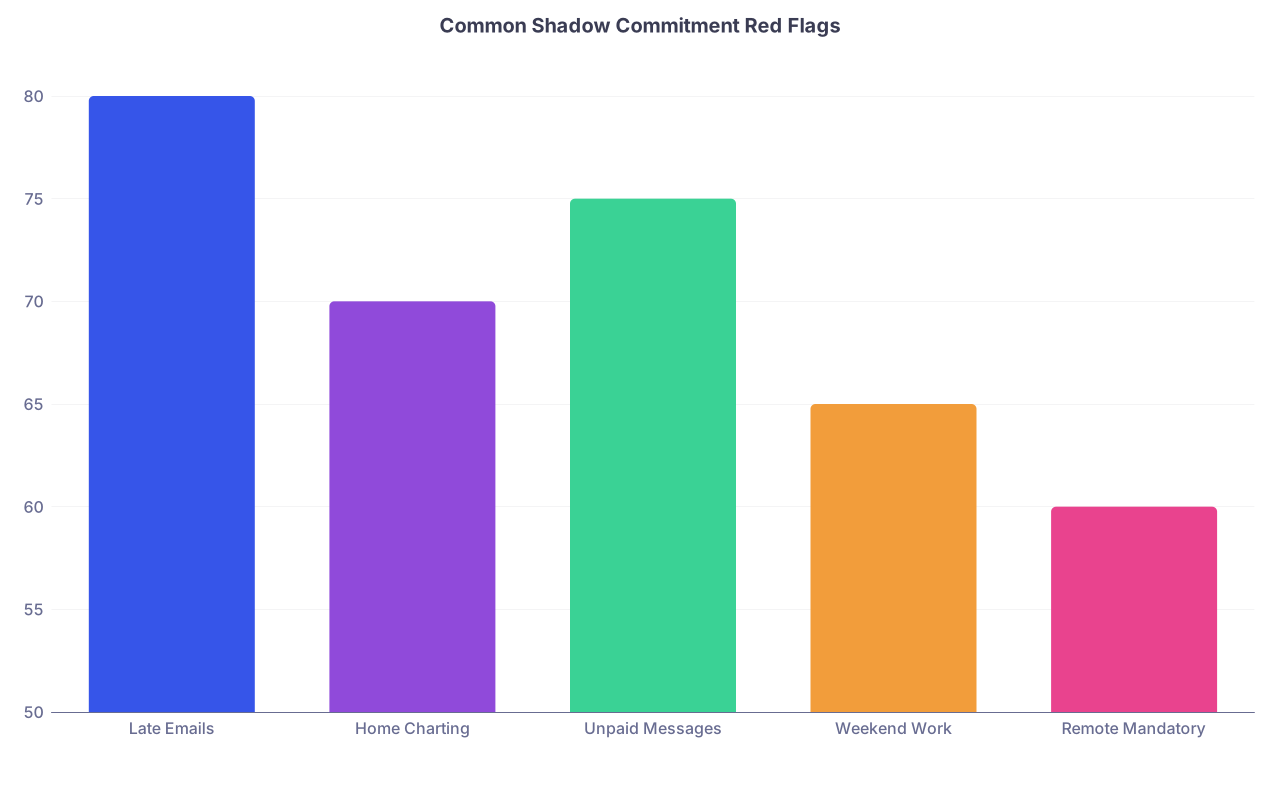
Here’s what I look for when someone tells me, “The hours are really reasonable.”
| Category | Value |
|---|---|
| Late Emails | 80 |
| Home Charting | 70 |
| Unpaid Messages | 75 |
| Weekend Work | 65 |
| Remote Mandatory | 60 |
If more than half of these are present, your “lifestyle” job is at risk:
- Faculty routinely send non-urgent emails after 8 PM
- Residents talk openly about “just finishing notes from home”
- Nobody can tell you the actual average EMR hours per week
- Patient portal messaging volume is high and not compensated
- People brag about logging in from vacation “just to stay ahead”
- Phrases like “we all help out” used to justify blurred boundaries
- Remote access is celebrated but not bounded (“You can always log in!”)
Those are not small details. They’re predictors of whether you’ll feel chained to your work even when physically away.
How This Plays Out During Residency vs As an Attending
Do not make the mistake of thinking, “It’ll be better when I’m done with training.”
If your residency culture normalizes 24/7 soft availability, you will internalize it. Then you’ll recreate it as an attending.
During residency
Shadow commitments show up as:
- Group chats that never sleep
- “You’re off service, but can you just weigh in on this case?”
- Chiefs emailing you at 9 PM about scheduling
- Programs praising “above and beyond” behavior that is actually poor boundary-setting
You don’t push back because you’re scared of evaluations, letters, reputation.
As an attending
Everything scales:
- Larger patient panel
- More responsibility
- More inbox volume
- More staff expectations
And no one magically hands you boundaries if you never learned them. You train people—nurses, MAs, patients, partners—how accessible you are.
The mistake: assuming you’ll start setting boundaries “later.” You won’t. You’ll be more tired, more financially entangled, and more afraid to rock the boat.
Practical Defense: How to Protect Lifestyle in Lifestyle Specialties
You can’t control everything. But you can control a lot more than most residents think.
1. Demand clarity on non-clinical time
Ask programs and employers:
- “How much blocked time per week is allocated for documentation and inbox?”
- “Is that time protected, or do people often lose it to clinical overflows?”
- “Do you track inbox volume per clinician and adjust panel sizes?”
If they can’t answer concretely, they’re not managing it. You will manage it with your nights and weekends.
2. Think like a contract lawyer, not a grateful applicant
Even as a resident, you can at least understand what’s written versus unwritten.
For attending jobs:
- Get specifics about after-hours call for messages, not just emergencies
- Clarify if portal work is billable or paid time, and how it’s tracked
- Ask about the average number of inbox messages per clinician per day
If they dodge? That’s your sign.
3. Build visible, early boundaries
You train people how to treat you. And yes, you can do this as a resident—subtly.
Examples:
- Don’t respond to non-urgent emails late at night; answer in the morning.
- If someone praises you for late-night work, say: “Thanks—I’m trying to keep that to a minimum though; it’s not sustainable.”
- For patient portals (when you have some control), use clear auto-messages: “Messages will be answered within X business days.”
You may feel like you’re being “difficult.” You’re not. You’re being sustainable.
4. Watch your own tech habits
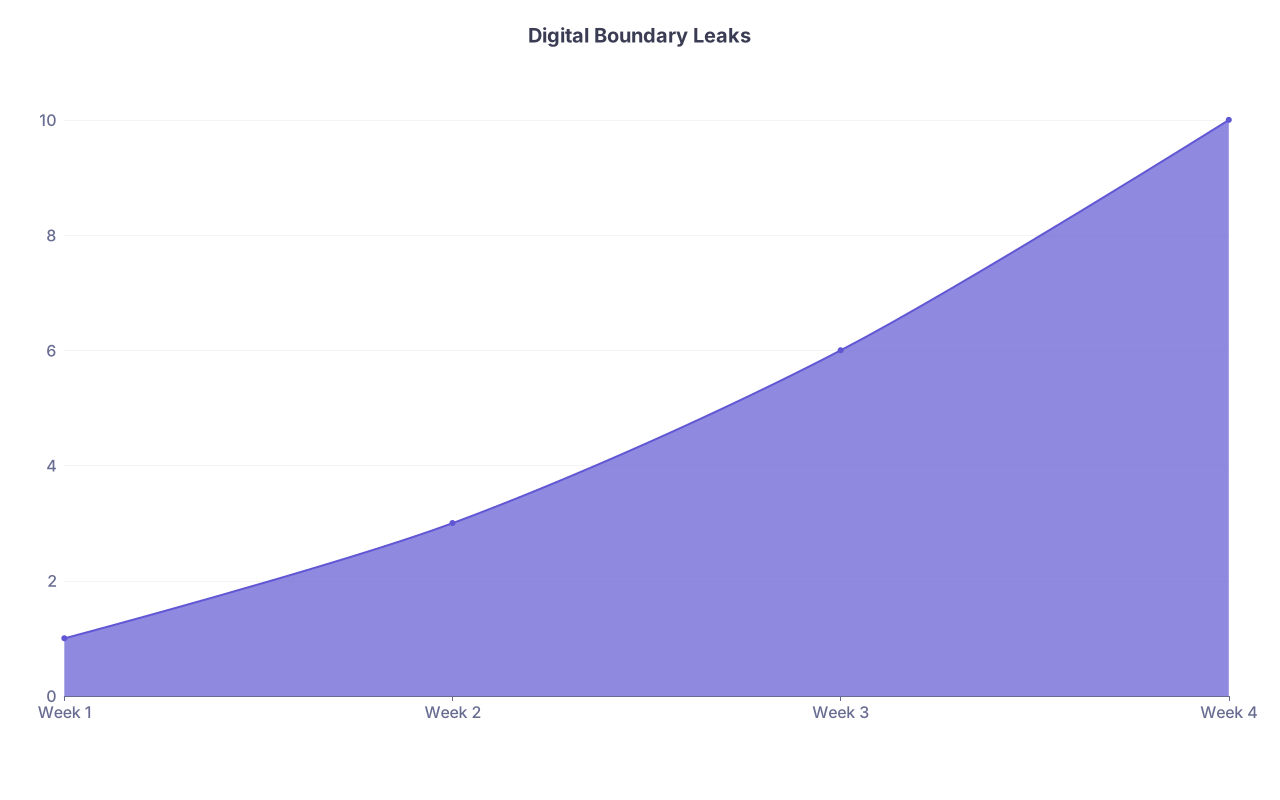
The easiest way to become 24/7 available is to carry the hospital in your pocket.
| Category | Value |
|---|---|
| Week 1 | 1 |
| Week 2 | 3 |
| Week 3 | 6 |
| Week 4 | 10 |
Most people start with “I’ll just check once.” Weeks later, they’re checking 10+ times per evening.
Hard rules that actually help:
- No EMR app on your personal phone if you can avoid it
- Set Do Not Disturb windows where only true call/coverage can reach you
- Log out of remote access every time; don’t leave it one click away
- Have “work devices” and “home devices” when possible
You won’t drift into a sustainable lifestyle. You have to enforce it.
5. Talk to people two years ahead of you, not just current interns
Current interns normalize chaos. PGY-3s and young attendings are more honest.
Ask them:
- “How many hours per week do you work total, not just scheduled?”
- “What does a typical weekday evening look like for you?”
- “How often do you think about work when you’re ‘off’?”
- “If you could go back, what red flag about this program/job would you pay more attention to?”
They’ll tell you about the shadow commitments. If they can’t think of any, that is a good sign.
Different Lifestyle Specialties, Different Shadow Patterns
You’re choosing between lifestyle specialties? Good. Just don’t choose blind.
Quick pattern recognition:

- Dermatology: Watch productivity pressure + cosmetic patient expectations.
- Radiology: Watch remote access culture + referrer demands.
- Psychiatry: Watch crisis coverage and messaging boundaries.
- Outpatient IM/FM: Watch panel size, portal volume, and uncompensated admin work.
- PM&R: Watch documentation complexity and team meeting spillover.
No specialty is automatically safe. Some environments within those specialties are excellent. Others will eat you alive just as effectively as a malignant surgery program—just slower and with more email.
The Core Truth You Can’t Ignore
Lifestyle is not a label. It’s an ongoing negotiation with systems that benefit when you silently give more.
If you only look at the posted clinic hours and call schedule, you’re missing at least 30–40% of the story. The rest lives in:
- EMR logs
- Inbox timestamps
- Text threads
- Slack/Teams channels
- “Just one quick thing” conversations
You are not being paranoid by asking about this. You’re being realistic. The people who shrug and say “it’ll work out” are the ones I see three years later, sitting in dark kitchens at midnight, inevitably saying: “I didn’t think it would be like this.”
Don’t be them.

FAQ (Exactly 5 Questions)
1. How can I tell if a “9–5” residency program actually respects those hours?
Ask residents specifically: “What time do you usually stop all work, including notes and messages?” and “How often do you open the EMR from home?” If most people say they’re regularly working after 7–8 PM or on weekends, the posted hours are fiction.
2. Are patient portal messages really that big of a deal for lifestyle?
Yes. In outpatient-heavy specialties, portals quietly add the equivalent of several extra clinic sessions per week. If they’re not tightly controlled, batched, and compensated, they become a daily reason to log in at night “just to clear things out.”
3. Can I realistically set boundaries as a resident without hurting my evaluations?
You’re not going to rewrite the culture, but you can avoid volunteering for extra off-hours accessibility. Don’t respond instantly to non-urgent messages at night, don’t brag about late-night work, and choose programs that have at least some attendings who model decent boundaries.
4. Is remote work (like teleradiology or tele-psych) safer for lifestyle, or worse?
It’s neutral—depends entirely on how it’s structured. Remote work can give you more autonomy and less commute, or it can erase all boundaries and make you feel obligated to be online constantly. The key issue is: Are your hours and availability clearly defined and enforced?
5. What’s the single best question to ask when evaluating a “lifestyle friendly” job?
Ask: “If I looked at your physicians’ total weekly hours—including home charting, inbox, and calls—what would the real average be?” Anyone serious about lifestyle should have a clear, honest answer. Hand-waving here is your signal to walk away or expect hidden 24/7 demands.
Key points:
- “Lifestyle specialty” does not guarantee a lifestyle job; shadow commitments decide that.
- Always ask concrete questions about EMR work-from-home, inbox load, and after-hours expectations.
- Boundaries are built, not gifted—if you do not actively protect your time, every “9–5” can and will expand into your nights and weekends.