
What do you do when the PD smiles and says, “We don’t really do nights here,” but every resident you see has dark circles and an energy drink?
This is how people end up miserable for three years. They believed the brochure instead of the sign‑out list.
Let me be blunt: call burden and night work are the most lied‑about parts of “lifestyle friendly” specialties. Not because everyone’s evil, but because:
- Programs are competing hard for applicants.
- Definitions get slippery. “No nights” can secretly mean “no traditional 24‑hour calls, but plenty of 16‑hour evening shifts and backup at home.”
- Residents normalize suffering and forget what’s objectively bad.
If you take what you’re told at face value, you will get burned. The goal is not to be paranoid. The goal is to be precise.
Below I’ll walk you through the traps and the specific, surgical interview questions that force real answers about nights, call, and “home call that’s basically in‑house.”
The Lie of “Lifestyle Friendly” Without the Fine Print
First, a reality check. Even the chillest specialties can have brutal call setups if you’re not careful.
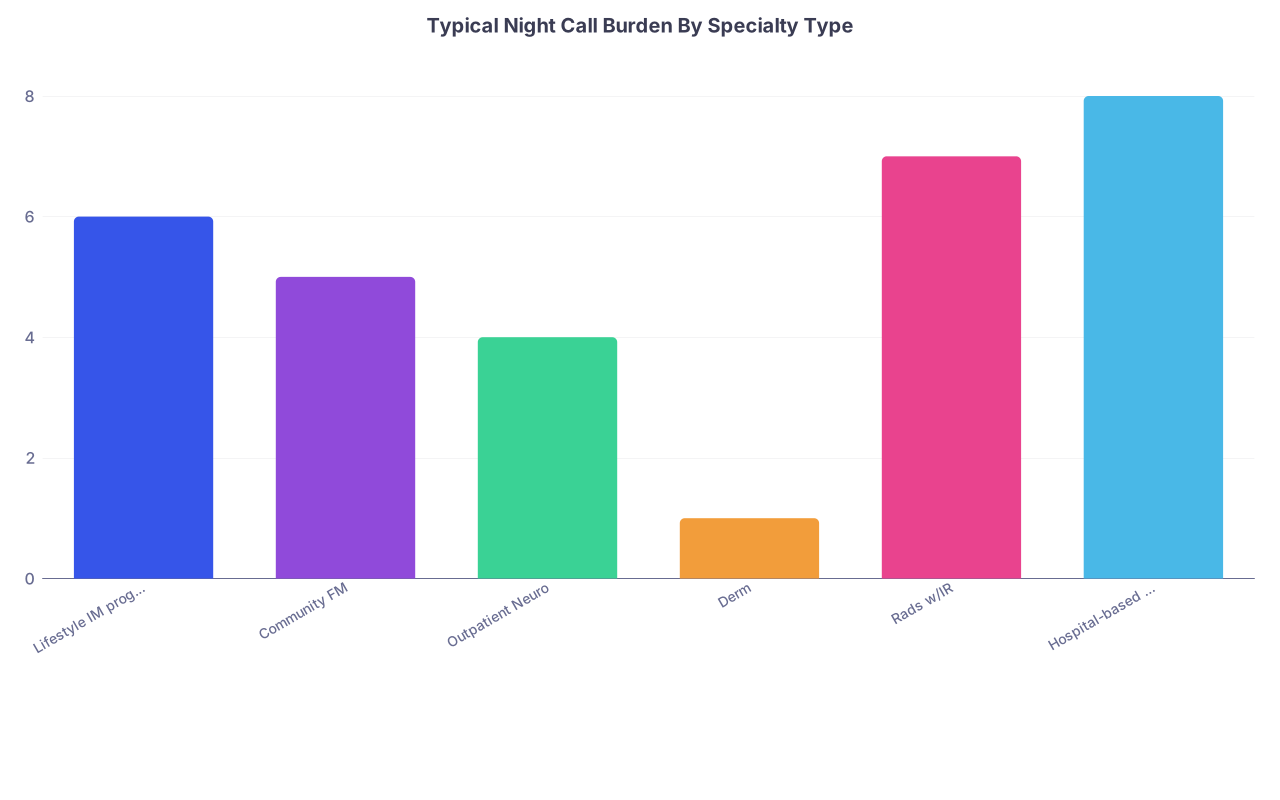
| Category | Value |
|---|---|
| Lifestyle IM program | 6 |
| Community FM | 5 |
| Outpatient Neuro | 4 |
| Derm | 1 |
| Rads w/IR | 7 |
| Hospital-based Anesthesia | 8 |
(Scale 1–10 where 10 = soul‑crushing nights. Yes, I’ve seen outpatient “lifestyle” neurology residents working worse nights than some surgeons.)
Specialties that sound lifestyle friendly on paper but can hide nasty night work:
- Hospitalist‑heavy Internal Medicine “with strong teaching”
- Family Medicine at community hospitals covering unopposed services
- Neurology at a stroke center
- Radiology programs with heavy IR or night float without telerads support
- Anesthesia at Level 1 trauma centers
- “Hybrid” outpatient‑inpatient gigs in almost any field
Do not just chase the specialty label. Chase the actual schedule.
The First Red Flag: Vague, Pretty Phrases
If you hear any of these slogans, your radar should go up:
- “We’re very protective of resident wellness.”
- “We don’t really have traditional call anymore.”
- “Nights are minimal.”
- “We try to keep nights reasonable.”
- “There’s home call, but you rarely get called in.”
None of those sentences mean anything specific. They’re vibes. You are not ranking vibes. You’re ranking:
- Number of nights
- Intensity of nights
- Control over your life on those nights
So your job: convert vague marketing language into concrete, countable facts.
Surgical Questions That Expose Hidden Night and Call Burdens
Here’s where you stop being polite and start being precise. Ask these out loud, exactly like this, and then shut up and wait for real numbers.
1. “How many actual nights do interns and seniors work in a typical month on average?”
For lifestyle‑oriented specialties (IM, FM, neuro, rads, anesthesia, psych), you want numbers, not adjectives.
Push for specifics:
- “Can you give me an approximate number? Five, ten, fifteen?”
- “Is that including night float, home call, and weekend nights?”
Programs that are honest will say things like:
- “On average, interns have 4–6 in‑house nights per month on wards rotations and 0 on clinic months. Seniors have 3–5.”
- “We don’t have 24‑hour calls, but we do a 5‑night‑in‑a‑row night float block every 6–8 weeks.”
Programs that are hiding something say:
- “It depends…”
- “We don’t really think about it that way…”
- “It varies a lot so it’s hard to say…”
That “hard to say” line? That’s nonsense. They know. They just don’t want to put the number in your head while you’re holding a rank list.
2. “Can you walk me through what a night actually looks like here?”
You’re trying to uncover workload and intensity, not just clock hours.
Ask residents:
- “What time do you realistically leave post‑call?”
- “How many admissions did you usually take on a typical night on wards?”
- “Is there a cap? How often do you hit it?”
If they say, “The cap is 10, but we never really hit it,” ask, “In the last month or two, did you hit it?” Make it current. Things change when hospitals expand or ED volumes spike.
3. “Is your ‘no nights’ policy written in the contract or just culture?”
Huge mistake I see: people believe verbal assurances that are not written anywhere.
Ask program leadership:
- “Is the ‘no 24‑hour call’ policy written into the program manual or contract?”
- “In the last few years, has anyone had to do 24‑hour call or overnight coverage outside of what was originally described?”
If they dodge, you know the answer.
Home Call: The Most Abused Phrase in Residency
“Don’t worry, it’s just home call.”
I’ve seen residents say this through gritted teeth at 3 a.m. while logging into the EMR from their couch for the fifth time in a night.
Home call can be:
- Truly benign (maybe 1–2 calls the entire night, rarely driving in)
- Functionally in‑house (called all night, constantly driving in, utterly sleep‑destroying)
You must separate the two.
Questions that expose fake “easy” home call
“How many nights per month are home call vs completely free?”
“On a typical home call night over the last few months, how many times were you called?”
Then: “How many of those those required you to come in physically vs manage over the phone?”
“Who else is in house while you’re on home call?”
If the answer is “just me and the ED,” that’s not soft call. That’s unsupervised stress.
“What’s your post‑call day like after a heavy home call?”
If they’re still working a full day after being up all night on “home call,” that’s a lifestyle lie.
Ask directly: “Would you feel safe driving a car the morning after a typical home call night?”
If someone laughs nervously, you have your answer.
Night Float: The Hidden Lifestyle Destroyer
Many lifestyle specialties “fixed” call by creating night float. Sometimes that’s better. Sometimes it’s just suffering in a different flavor.

| Step | Description |
|---|---|
| Step 1 | Standard Day Rotation |
| Step 2 | Q4 24 hr call |
| Step 3 | 5-7 nights in row |
| Step 4 | Phone + drive ins |
| Step 5 | Recovery day |
| Step 6 | Chronic exhaustion |
| Step 7 | Night Coverage System |
| Step 8 | Is post call protected |
Questions that uncover bad night float
Ask:
- “How many weeks of night float do you do each year by PGY level?”
- “Are those weeks grouped together or scattered all over?”
- “During night float, what are your start and end times?”
- “Do you get truly protected post‑call days, or do you sometimes stay later for sign‑out, teaching, or procedures?”
Then ask residents, not just PDs:
- “How wrecked do you feel at the end of a night float week?”
- “Do you actually sleep during the day, or does life (kids, noise, daylight) make it impossible?”
- “If you had to repeat this schedule for 3 years, would you pick this program again?”
If they pause or say “it’s not that bad once you get used to it,” that’s code for “it’s bad, but we’re numb.”
Matching to “Lifestyle” but Landing in a Level 1 Nightmare
I’ve seen this a lot in community‑based IM/FM and anesthesia. Official line: “We’re a great lifestyle program.” Reality: they’re the only game in town covering a busy Level 1 trauma center or massive stroke volume with thin staffing.
| Situation | Why It Destroys Lifestyle |
|---|---|
| Single resident covering cross-cover at night | Constant pages, no downtime |
| Unopposed program at community hospital | You cover everything nobody else wants |
| New service lines (stroke, IR, LVAD) | Call explodes before staffing scales |
| Expanding ED without more residents | Overnight admits skyrocket |
Questions to ask:
- “Is this a Level 1 trauma center? Stroke center? Heart center?”
- “Has the hospital added any new services in the last 2–3 years? How has that affected night workload?”
- “Has resident or attending staffing increased to match the growth?”
Ask residents privately:
- “Compared to when you interviewed here, has night work gotten better, worse, or the same?”
- “Have they added more call but not increased the number of residents covering it?”
Programs love to talk about “growth” and “expansion.” Growth without more bodies = you doing more nights.
Resident‑Only Red Flags You Shouldn’t Ignore
You will get 10x more truth from a PGY‑3 than from any brochure. But you have to listen between the lines.
Things I’ve seen and what they actually mean:
“You get used to it.”
Translation: It’s bad, but complaining is pointless.“The schedule looks heavy on paper but it’s doable.”
Translation: We survive. Barely.“We’re busy but we learn a lot.”
Translation: Education is used to justify abusing nights.“It depends on the attending / team / census.”
Translation: There is zero predictability. Your life is chaos.
Direct questions that force clarity:
- “What rotation has the worst nights, and how many nights is that per month?”
- “Who has the worst schedule this month? If I texted them right now, what would they say about it?”
- “If you had a partner or kids, would this schedule be sustainable?”
And then the killer:
“Would you let your younger sibling sign a contract here, knowing exactly what you know now?”
If they hesitate, believe that more than any slide deck.
The ACGME Mirage: Why “Within Duty Hours” Still Feels Miserable
Do not let anyone hide behind “we’re within the 80‑hour ACGME limits.” You can be totally “compliant” and utterly crushed.
Common trick: push residents to 78–79 hours/week during heavy rotations, then average down with clinic months. Still “compliant,” still brutal.
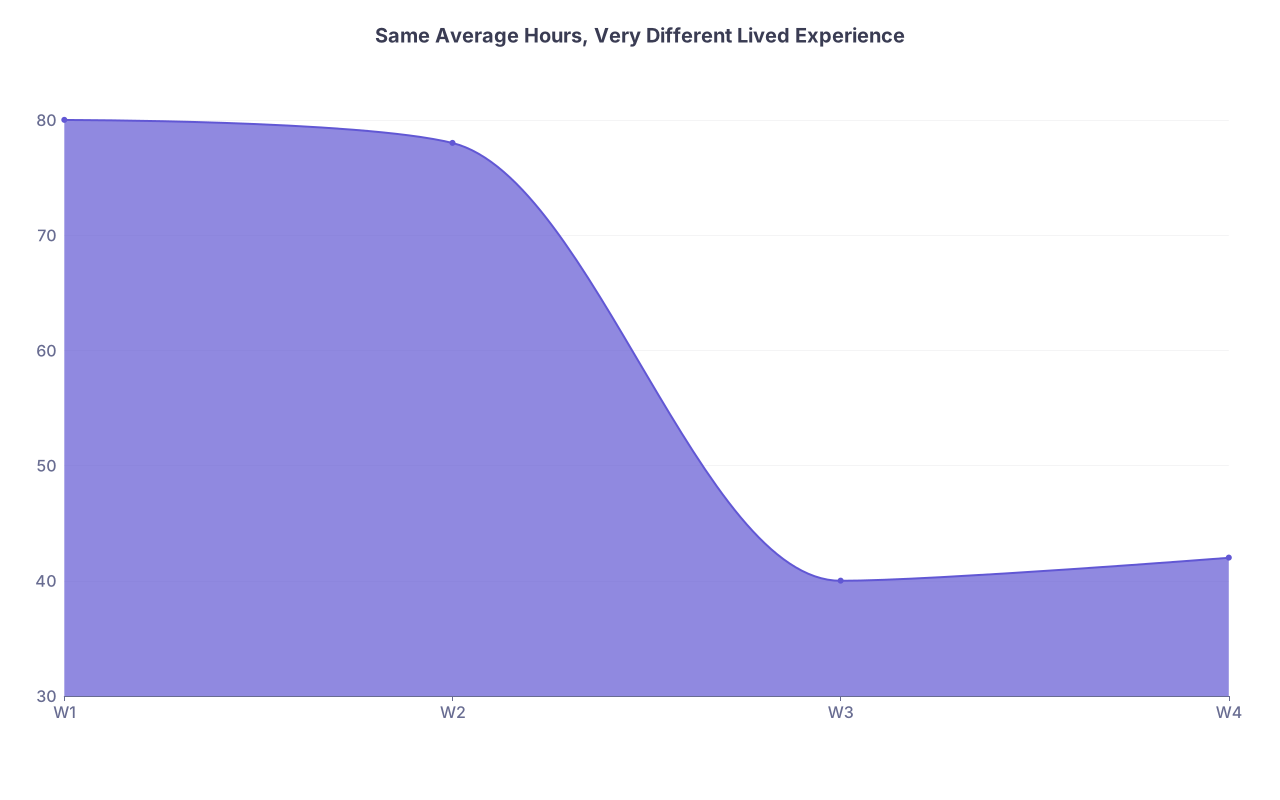
| Category | Value |
|---|---|
| W1 | 80 |
| W2 | 78 |
| W3 | 40 |
| W4 | 42 |
Both average to roughly 60 hours/week, but weeks 1–2 feel like garbage and you’re on nights the whole time.
Ask clearly:
- “How many months per year are you close to 80 hours vs around 50–55?”
- “On your heaviest month, what’s the realistic weekly hours, not what gets recorded?”
- “Do people routinely under‑report work hours to stay ‘compliant’?”
Then ask residents when faculty are not in the room:
- “Have you ever been asked, directly or indirectly, to ‘adjust’ duty hours?”
- “If you log accurately and it’s over 80, what happens?”
If they start talking about “we try to be team players,” you’ve found a culture problem.
Special Notes for Specific “Lifestyle” Specialties
Radiology
Big lie: “Radiology is 8–5, no nights.”
What to ask:
- “How is night coverage structured? Night float? Nighthawk? Residents vs attendings?”
- “Do residents read overnight, or is everything prelim’d and over‑read in the morning?”
- “How many weeks of nights per year by PGY level?”
Ask residents:
- “What was your rough average number of overnights during PGY‑2?”
If there’s IR:
- “Who takes first call for IR? Residents or fellows?”
- “How often are you physically coming in overnight for IR cases?”
Anesthesia
Watch for:
- OR start times (brutal early),
- trauma,
- OB call.
Questions:
- “What time do you usually show up for your earliest room?”
- “How is call split between general OR, trauma, and OB?”
- “How many in‑house calls per month for a CA‑1? CA‑2? CA‑3?”
- “What time do you actually leave post‑call?”
Neurology / Medicine at stroke centers
Stroke call makes nights explode.
Ask:
- “Who responds to stroke codes overnight?”
- “Average number of stroke alerts/page outs per night call?”
- “Do you have tele‑stroke support or are residents physically present for everything?”
How to Cross‑Check a Program’s Story
You’re not stuck with just what they tell you. You can triangulate.
Look at the rotation schedule they show you.
Count the labeled “night float,” “ICU,” “wards,” and “OB” months. If they only show a pretty sample schedule, ask for the full annual block schedule.Ask residents from different years the same question.
If PGY‑1 says “4 nights/month” and PGY‑3 says “more like 7–8,” believe the PGY‑3.Check recent reviews / word of mouth.
Doximity, Reddit, Student Doctor Network are noisy but not useless. If multiple people say, “Call here is worse than what they tell you,” assume smoke = fire.Watch body language when nights are mentioned.
I’ve literally watched a chief say “our nights are very manageable” while three juniors behind them exchanged That Look. That’s your real data.
Don’t Make This Rank List Mistake
The most common mistake I see:
You fall in love with:
- Location
- One super‑nice attending
- Fancy hospital or name
- “Lifestyle specialty” label
And you ignore:
- The PGY‑2 who quietly said, “It’s rough sometimes, but it’s fine”
- The fact that night float blocks are stacked and back‑to‑back with ICU
- That vague “minimal nights” language with zero numbers
Three months into intern year, you’re texting friends in objectively more competitive specialties who are somehow sleeping more than you are.
Lifestyle is not about specialty name. It’s about:
- Call structure
- Night intensity
- Reality vs brochure
You avoid disaster by being the annoying person who asks real questions, waits out the awkward silence, and writes down the numbers.
FAQs
1. When during the interview day should I ask about nights and call?
Ask residents during:
- The pre‑interview dinner
- Any resident‑only Q&A
- Informal hallway chats
Ask program leadership during your formal interview or PD meeting, but use different framing:
- With PD: “Can you walk me through how you designed your night coverage to balance education and wellness?”
- With residents: “What actually happens on a typical night, and how many of those are you doing per month?”
You want both the idealized design and the lived reality.
2. What if they clearly dodge my questions about night burden?
That’s an answer. A bad one.
If they:
- Stay vague after 2–3 follow‑ups,
- Change the subject,
- Or give you “we can’t really quantify that,”
assume the schedule is worse than they want to admit. Rank accordingly. There are too many programs out there to sign up for something you had to drag the truth out of.
3. How much night work is “acceptable” for a lifestyle oriented specialty?
There’s no magic number, but there are red lines.
Reasonable for most lifestyle‑targeting residents:
- 3–6 in‑house nights per month on heavy rotations,
- 0–2 per month on light/outpatient rotations,
- 4–8 weeks of night float per year, max, with real post‑call protection.
Major red flags:
- Double‑digit nights most months,
- Constant, heavy home call with frequent drive‑ins,
- Night float stacked with ICU/back‑to‑back heavy rotations.
If you’re reading that and thinking, “My top program sounds worse than that,” you need to seriously rethink your rank list.
Open your interview spreadsheet or notes right now. For each program, add three columns: “Nights per month,” “Night float weeks per year,” and “Home call reality.” If any program is still a big question mark in those columns, that’s your sign: you don’t understand their lifestyle yet—and you’re about to rank a mystery. Fix that before you click “Certify.”