
The most “lifestyle-friendly” specialties are where residents quietly destroy their lifestyles.
Not because the specialties are bad. Because residents get cocky with scheduling and build lives they cannot physically or emotionally sustain.
If you’re heading into dermatology, radiology, anesthesia, PM&R, outpatient psych, ophthalmology, or any of the so-called “ROAD” specialties (Radiology, Ophtho, Anesthesia, Derm), you’re in the highest-risk group for this particular kind of self-inflicted burnout. The hours can be better. But they can also be a trap.
Let’s walk through the main ways residents in lifestyle-friendly fields sabotage themselves—and how to not be that person.
1. Believing “Lifestyle-Friendly” Means “Low Demand”
The first big mistake is a mindset problem that becomes a scheduling problem: assuming that because your specialty is considered lifestyle-friendly, you can say yes to everything.
I’ve watched new derm, radiology, and anesthesia interns start PGY-2 with this attitude:
- “Now I finally have time to moonlight.”
- “I’ll get my life back and catch up on everything.”
- “I can stack research, side gigs, and maybe an MBA – my schedule’s lighter now.”
They’re not wrong about the relative hours. They are wrong about how their capacity actually works.
Where this goes wrong
You go from intern year chaos to a more predictable PGY-2 schedule. You feel relief. So you:
- Add weekly moonlighting or PRN work
- Take on extra research projects
- Volunteer to be the “reliable one” for every shift trade
- Start intense exam prep or a big side hustle
- Say yes to weekly recurring commitments (coaching, teaching, regular committees)
On paper it looks doable: 50–60 clinical hours + 10–20 “extra” hours.
In reality your:
- Commute time
- Charting after hours
- Call recovery
- Mandatory didactics
- Exam prep (boards, in-service, Step 3)
- Life admin (laundry, cooking, bills, family)
…all get smashed into the leftover scraps.
You don’t notice for the first couple months. Then one day you have a 14-day stretch with only 1 real day off that isn’t hijacked by obligations you voluntarily added.
The problem wasn’t your specialty. It was your ego and your calendar.
How to avoid this
Assume the first 6 months of each new training phase are capacity-unknown.
New program, new responsibilities, new expectations. Do not load them with long-term commitments until you’ve seen your actual energy patterns for at least 3–4 rotations.Lock in a hard weekly time budget—for everything non-required.
For example:- Max 5 hours/week for research
- Max 1 moonlighting shift every 2 weeks
- Max 1 regular weekly commitment outside of medicine
If you go over that, something must be dropped. No exceptions “just this month.”
Treat “lifestyle-friendly” as a margin, not a currency.
The point is not to fill all available space. The point is to have some space that stays empty most weeks. That’s what prevents slow-motion burnout.
2. Underestimating Call, Weekends, and “Soft Time”
Residents love to calculate lifestyle like this:
“Average 50 hours/week, rarely more than 60, no 24s = easy.”
That math is fantasy. Because it ignores the “soft time”—the non-counted hours where you’re not in the hospital but you’re not free either.
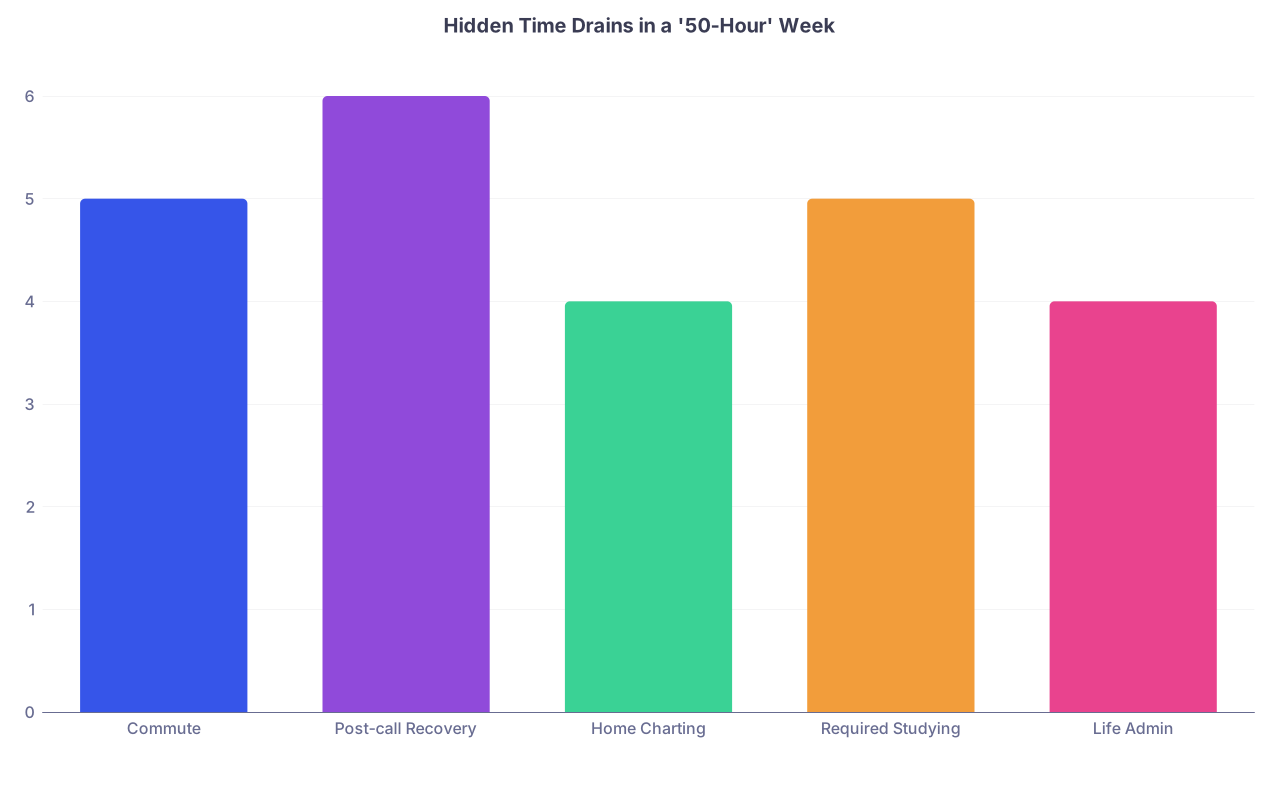
| Category | Value |
|---|---|
| Commute | 5 |
| Post-call Recovery | 6 |
| Home Charting | 4 |
| Required Studying | 5 |
| Life Admin | 4 |
That’s 24 extra hours in a week that people conveniently ignore when they brag about being in a “chill” specialty.
The quiet killers of your schedule
Home call that isn’t really home call
Radiology, anesthesia, even derm in some programs: phone calls, remote reads, or consults that pop up unpredictably. You can’t relax, can’t go out, can’t sleep deeply.Early starts + commute
A 7 a.m. start with a 40-minute commute each way is not an 8–5 job. It’s a 5:30 a.m.–6:30 p.m. day.“Protected” education time you still prep for
Grand rounds presentations, journal club, M&M. Those slides don’t build themselves. That eats evenings.Post-call days that are not real days off
You’re technically off. But you’re destroyed. You’re not doing meaningful life stuff, you’re just surviving.
How unsustainable lifestyles form here
You start filling every “free” evening or weekend with:
- Classes (MBA, MPH, coding bootcamp)
- Regular weekly gatherings (sports league, standing friend dinners)
- Aggressive side hustles
Then you hit a bad call month or heavy rotation and suddenly:
- You’re canceling constantly
- You’re half-assing everything
- You feel guilty in 3 different directions—work, relationships, personal goals
Unsustainable doesn’t always mean obviously overwhelming. It means a schedule that does not bend when reality hits.
What to do instead
Calculate real hours, not scheduled hours. Include commute, studying, charting, and call interruption risk.
Always assume 25–30% of your “free” time will vanish unexpectedly. Fatigue, pages, schedule changes. If your life only works when everything goes as planned, it’s fragile.
Build flex, not bricks.
Limit recurring commitments. Prefer:- One-off or short-term projects
- Flexible hobbies
- Side gigs that tolerate uneven workflow
The litmus test: If you get put on a brutal rotation last minute, you shouldn’t have to blow up your calendar to survive the month.
3. Treating Moonlighting Like Free Money
Moonlighting is where lifestyle-friendly specialties often set themselves on fire.
In anesthesia, radiology, and EM-adjacent roles, you’ll see this pattern constantly:
- PGY-3 or senior resident gets moonlighting rights
- They’re making $60–$200/hour
- They decide to “capitalize” before attending life
- Suddenly they’re working 70–90-hour weeks again, by choice

Why this feels safe… and isn’t
The story in their head:
- “I’m used to hard work, I did 80 hours as an intern.”
- “I’ll just do this for a few months to pay off loans.”
- “My main program schedule is lighter, so I’m fine.”
The reality:
- You’re older and more depleted than during intern year
- You now have higher academic + exam expectations
- You’re often doing high-stakes work while extra tired
- Your body doesn’t reset between shifts anymore
I’ve seen anesthesia residents fall asleep in didactics, miss key cases, and perform poorly on in-service exams because they were chasing shifts.
And the worst part? The habits don’t magically reset when they finish residency. They carry that overwork mentality into attending life—and are baffled when they’re burned out by year three.
Safer rules for moonlighting
Set rules before the money hits your account:
Cap total weekly working hours.
Decide on a hard max (for many, 60–65 hours total is truly the upper safe limit long-term, including moonlighting).Never moonlight on post-call days or pre-call nights.
You are not a robot. Every time you stack fatigue on fatigue, you’re making errors more likely and training less effective.Track the hidden costs.
If your exam scores slip, your evaluations tank, or you’re missing academic opportunities because you’re tired, that “extra money” is costing you future options.Give moonlighting a defined season, not a default setting.
For example: “I moonlight from October to February, max 2 shifts/month, then stop before in-service.” Or “Only during this one lighter rotation block.”
Moonlighting should feel optional and controlled. If you need it to “keep up with your lifestyle,” you’re already in the danger zone.
4. Overbuilding Social and Family Obligations
Lifestyle-friendly specialties tempt you into rebuilding the life you had before med school—too fast, too rigid.
You finally have a more predictable schedule. So you commit to:
- Weekly date nights
- Standing brunch every Sunday with friends
- Family expectations (“You’re less busy now, you can come to everything”)
- Regular coaching, childcare pickups, school events
- Being the “default” person for your partner, kids, or extended family
On paper it sounds healthy. In reality, many residents recreate a full civilian schedule on top of a still-demanding medical job.
The trap for residents with partners or kids
I’ve watched this play out repeatedly:
- A psych or PM&R resident thinks, “My hours are mostly 8–5, I can take on more at home.”
- They volunteer for the majority of school runs, cooking, kids’ bedtime, etc.
- Rotations change, call ramps up, boards approach… but the home expectations stay fixed.
- That resident ends up doing two jobs: doctor and default parent/partner.
Nobody sat down and planned this explicitly. It just grew in the empty spaces that once were recovery time.
The result: resentment, guilt, or both.
How to keep relationships and your sanity
Do not let others define your availability by your specialty’s reputation.
“You’re just derm, you’re basically 9–5” is not a scheduling plan. It’s a misunderstanding.Have a brutally honest calendar talk with your partner or family every 3–6 months.
- Show them your real schedule
- Flag heavy rotations or exam months
- Renegotiate duties in advance
Avoid weekly recurring social events that require your presence.
Prefer:- Monthly friend meetups with built-in flexibility
- “Let’s aim for every other week” instead of “Every Thursday dinner”
Give yourself explicit “off-duty from people” blocks.
A truly empty evening or weekend segment with no social plans, every week. If you don’t protect this, it will quietly fill.
Your relationships will be healthier if you’re not exhausted, resentful, and constantly half-present.
5. Ignoring Rotation Variability in “Chill” Programs
Here’s another way residents in lifestyle specialties get burned: they look at the average schedule instead of the spikiness of the schedule.
| Rotation Type | Typical Hours/Week | Call Type |
|---|---|---|
| Outpatient Clinic | 40–45 | None |
| Inpatient Service | 55–65 | Q4–Q6 |
| Consult Service | 50–55 | Home Call |
| ICU/Procedures | 60–70 | Night Float |
| Elective/Research | 30–40 | None |
Average that out and it looks like a very reasonable 50–55 hours/week. But the distribution matters.
Where residents mess this up
They plan their life based on the best months:
- “On clinic, I’m home by 5:30, so I can definitely do [course/class/hobby] twice a week.”
- “Elective is super light; I’ll finally train for that marathon.”
Then they forget three things:
Those lighter blocks are often exactly when they should be:
- Studying for boards
- Doing research
- Resting and reconnecting
The heavy blocks always feel heavier than they look on paper.
That 60–70 hours/week on inpatient or ICU is mentally brutal, especially when you’re out of shape from months of relative ease.Life doesn’t pause on your bad months just because you’re busy.
Family crises, illnesses, relationship issues—those do not carefully schedule themselves around your inpatient block.
Smarter planning around rotation spread
Plan your life around the worst-case rotation, not the average one.
If your ICU month makes you a zombie, assume any recurrent commitment must survive your ICU self. If it can’t, it’s not sustainable.Designate “rebuild” months, not “bonus productivity” months.
Use light rotations to:- Sleep more
- Fix your health (exercise, cooking decent food)
- Spend genuinely unstructured time with loved ones
- Tie up lingering admin tasks
Don’t automatically turn them into high-output periods just because the hours look lighter.
Use a year map, not a month-by-month fantasy.

Map your year like this. Decide in advance:
- Which months are “no new commitments”
- Which months allow optional extra work or projects
- Which months are for recovery, not for more achievement
6. Letting Admin and Side Projects Creep Into Every Gap
Lifestyle-friendly specialties get hit with a different flavor of overload: “You’re less busy, so you can help with…”
- Program committees
- Curriculum redesign
- Wellness initiatives
- Resident recruitment
- Extra QI projects
- Extra teaching
All good things in isolation. Combined, they turn your 50-hour clinical week into a 65-hour everything-but-patient-care mud pit.
And then you add your own projects:
- Research you insisted on leading
- Starting a podcast or blog “about resident wellness” (the irony…)
- Applying for fellowships that need multiple abstracts, posters, and letters
- Side businesses that sound small but need real time
You don’t crash immediately. You just slowly erode all unscheduled time until there’s nothing left that feels like rest.
How to stop the creep
Set a project quota for the year.
For example:- Max 2 active research projects
- Max 1 major committee role
- Max 1 non-clinical “big thing” (podcast, degree, startup, etc.)
You can swap things out. You cannot simply add more.
Force “sunset clauses” on commitments.
When you say yes, also decide:- When it ends
- How you’ll exit
- Under what conditions you’ll step back
Be honest about your true priorities.
Do not pretend everything is equally important. Decide:- 1–2 things that really matter professionally
- 1–2 things that matter personally
Then let the rest be average. Not everything deserves your best effort.
7. The Board Exam / Application Crunch Blind Spot
Residents in lifestyle specialties often assume they’ll “just study along the way” because their schedule is better than surgery or OB. Then two classic crunch points hit:
- Major board exams (e.g., anesthesia BASIC, radiology CORE, derm boards, psych boards)
- Fellowship or job application seasons
And suddenly their supposedly sustainable life explodes.
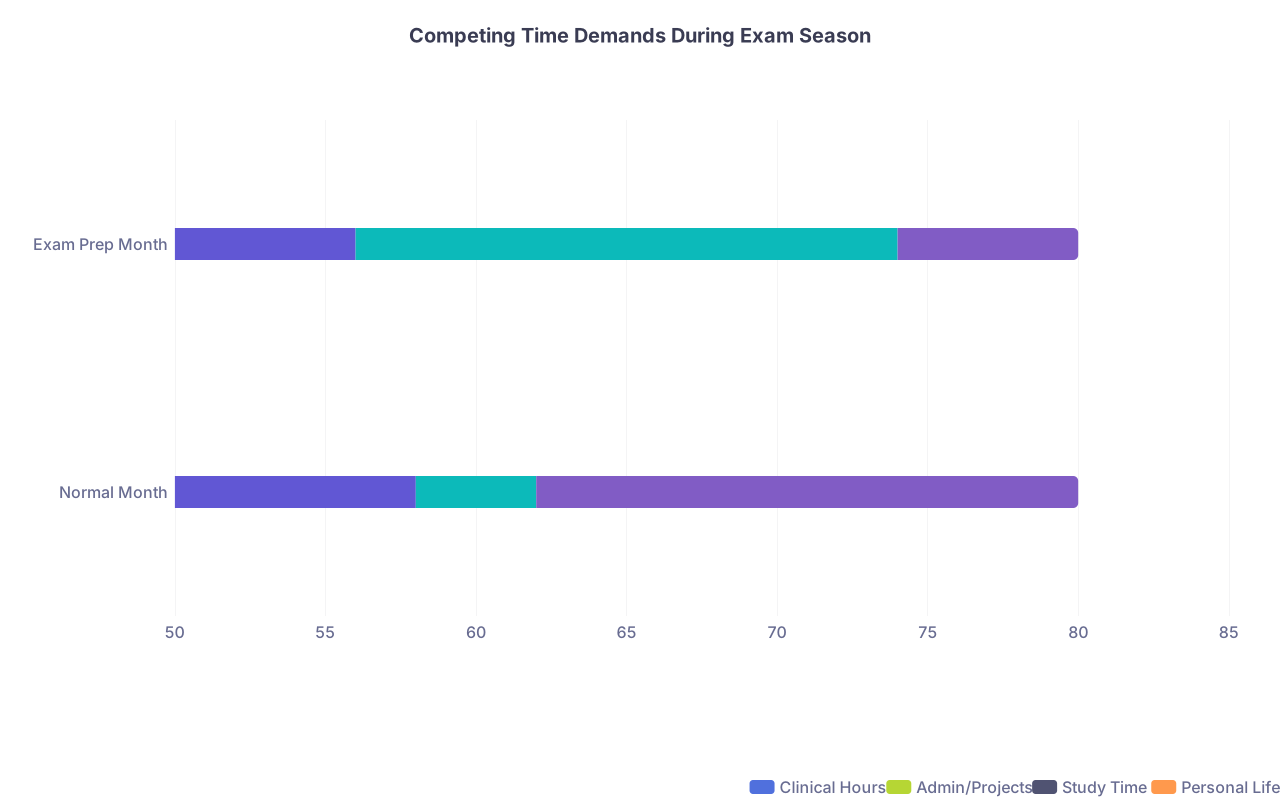
| Category | Clinical Hours | Admin/Projects | Study Time | Personal Life |
|---|---|---|---|---|
| Normal Month | 50 | 8 | 4 | 18 |
| Exam Prep Month | 50 | 6 | 18 | 6 |
You cannot just “add” 15–20 hours/week of serious studying on top of an already full schedule and expect everything else to hold. Something gives:
- Sleep
- Relationships
- Clinical performance
- Your mental health
Avoiding the exam-season collapse
Block out a real taper period—months in advance.
2–3 months before a major exam:- Drop or pause side projects
- Say no to new research/committees
- Reduce social obligations a notch
- Stop moonlighting (yes, even if the money is tempting)
Pre-study during lighter blocks, even if it feels “too early.”
Use those elective and research months to quietly stack hours:- Question banks
- Flashcards
- Core reading
This spreads the load so you’re not cramming everything into the last 6 weeks.
Tell people explicitly: “This is my exam quarter.”
Partners, friends, co-residents. Set expectations so your quieter presence is not misinterpreted as disinterest.
Same thing applies to fellowship/job seasons. Writing personal statements, prepping interviews, updating CVs, networking—all consume real time. Don’t pretend they’re negligible.
8. The Core Skill: Saying “No” Before You Feel Overwhelmed
Most residents only start saying no when they’re already drowning. That’s too late. By then:
- You’ve made promises
- Other people depend on you
- You’re emotionally attached to the commitments
So you try to “push through” and prove you can handle it.
This is where sustainable lifestyles die.
Better rules for “no”
Use some concrete triggers:
Reflexive no if:
- You’re heading into a heavy rotation month
- You’re within 3 months of a major exam
- You’ve added something new in the last 4 weeks
Delayed yes policy:
When asked to join something, say:“Let me look at my next 3 months and I’ll get back to you in a couple days.”
Then really look:
- Total hours
- Upcoming rotation types
- Energy trends
If it only works in a fantasy version of your life, decline.
- Practice one sentence and use it shamelessly:
“This is exactly the kind of thing I would overcommit to and regret. I have to say no right now to protect my bandwidth.”
That’s honest. It also models healthy boundaries for junior residents who are watching you.
Final Thoughts: What Actually Makes a Lifestyle Sustainable
The specialty doesn’t save you. Your scheduling discipline does.
If you want a truly sustainable lifestyle in a “lifestyle-friendly” residency, do not make these mistakes:
Stop treating available time as time that must be filled.
Margin is not laziness. It’s the only reason you’ll still like your job in 10 years.Plan around your worst months, not your best days.
If your life only works during clinic/elective blocks, it’s not actually working.Limit recurring commitments and be ruthless with “no.”
Your future self—exhausted, on call, and trying to study—will be grateful you didn’t build a life that only a superhero could maintain.