
The biggest lie in medical training is that “lifestyle” specialties automatically give you a good life.
They don’t. Not if the curriculum is built to burn you out.
You can match into dermatology, radiology, PM&R, anesthesia, ophthalmology, allergy, even EM… and still live like a chronically jet‑lagged surgery intern if the residency’s structure is trash. I’ve watched it happen. People chase “lifestyle” and walk straight into programs designed in a way that makes burnout almost guaranteed.
This isn’t about the specialty being bad. It’s about how the training is organized. The hidden architecture. Call schedules, clinic templates, service coverage, rotation design, “educational” requirements that look suspiciously like unpaid overtime. That’s where your lifestyle lives or dies.
Let’s go through the curriculum traps that wreck lifestyle‑friendly fields, and how you avoid stepping into them.
The Core Mistake: Assuming Specialty > Program
You do not burn out from “being a radiologist.”
You burn out from things like:
- 6-day work weeks “to maximize exposure”
- Night float that never truly rotates off
- Clinics double and triple booked “so no one gets turned away”
- Mandatory “optional” research during your only free time
- Commuting between multiple hospitals every day
Same specialty. Completely different life depending on the program.
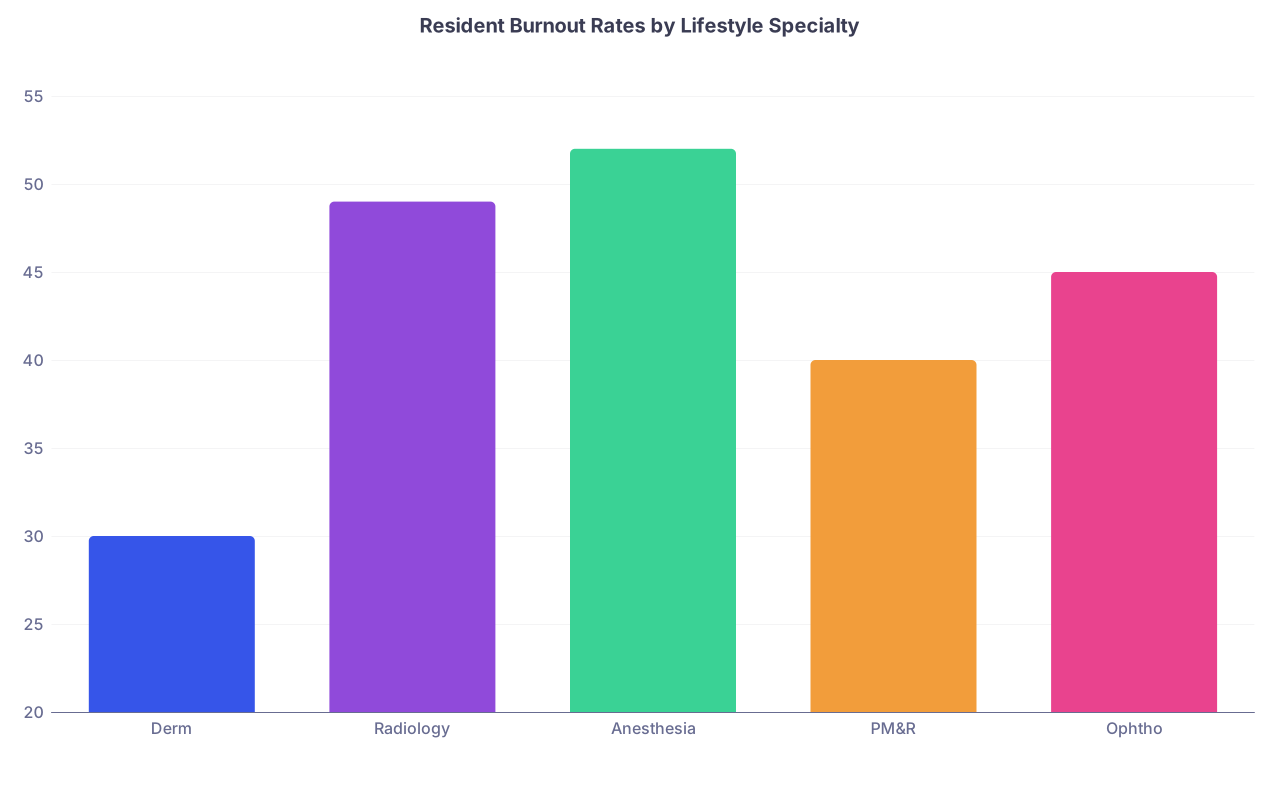
| Category | Value |
|---|---|
| Derm | 30 |
| Radiology | 49 |
| Anesthesia | 52 |
| PM&R | 40 |
| Ophtho | 45 |
Here’s the mistake people make:
They think, “Derm = chill. Rads = good lifestyle. Anesthesia = lots of days off. PM&R = 8–5 and done.”
So they apply broadly, interview, and then rank based on prestige, perceived competitiveness, or flattery from faculty. They barely look under the hood at how the residency is actually structured day to day.
I’ve seen derm residents miserable because their “cush” program:
- Ran 5 days of clinic plus 1 day of “admin” that turned into biopsy backlog day
- Expected full continuity clinic panels as PGY-2s
- Had zero protected didactic time that wasn’t interrupted by pages
- Used them as default consult service for any random rash hospital‑wide
Burnout was baked into the design. Specialty label didn’t save them.
Radiology: “Lifestyle” That Disappears After 5 PM
Radiology has a reputation: good pay, minimal patient drama, flexible options. True long term. But some residency curricula are set up to grind you down.
Structural red flags in radiology programs
Endless “early” and “late” shifts.
Not just occasional. Built in as chronic. 7–5 “regular” plus 5–11 “late” plus weekends “for volume coverage.” Call this what it is: stealth overtime.Night float that isn’t really a “float.”
Rotations where you:- Work 7 nights on, 1 day “off” (which gets eaten by errands and life admin)
- Then swing right back into normal days with no buffer Your circadian rhythm never recovers. People stop sleeping, then stop caring.
Non‑protected call readouts.
You finish a brutal call night, then immediately sit through 3–4 hours of readout with attendings plus noon conference. No protected time to leave, sleep, or decompress. This kills people over 3–4 years.Multiple sites with zero schedule sanity.
Morning at Hospital A, afternoon at Center B, with traffic between them. Call at yet another site. If the curriculum scatters you everywhere without consolidating days, your fatigue is guaranteed.

What to look for (and what to avoid)
Do not ignore these questions on interview day:
- How many sites do residents cover regularly?
- What’s the exact night float schedule? Transition days? Recovery days?
- After a night shift, how long until you’re back on days?
- Is there truly protected education time, or do pages/calls constantly interrupt?
Programs that dodge these questions or give vague answers usually have something to hide.
Anesthesia: “Lifestyle Friendly” Until You See the Call Grid
Anesthesia looks amazing on paper:
Cases start early, often end mid‑afternoon, no clinic panel blowing up your inbox.
And then you see the call structure.
How anesthesia curricula destroy lifestyle
Q3 or Q4 call with “standby.”
Some places formally schedule 24‑hour call every 3–4 days, plus informal “be ready to come in” expectations. Good luck ever planning a life.Post‑call days that aren’t actually post‑call.
This is a classic. You leave the OR at 9 or 10 AM post‑call, but still:- Attend didactics
- Show for simulations
- Finish notes and case follow‑ups
On paper: “We always give post‑call days.”
In reality: you’re still working, just differently.Early OR start times with long prep.
If your program expects residents in at 5:30 AM daily to set up, but also runs rooms until 5–6 PM, you’re doing 12+ hour days routinely. That’s surgical lifestyle in an allegedly lifestyle-friendly field.ICU rotations structured like punishment.
Poorly designed anesthesia residencies overload ICU time (especially PGY-2) with:- 80-hour weeks for months
- No real post‑call enforcement
- Weekends that magically become “optional” coverage residents feel pressured to take
| Program Type | 24h Call Frequency | Post-Call Protection | ICU Weeks/Year |
|---|---|---|---|
| Burnout-Prone | Q3–4 | Often interrupted | 12–16 |
| Balanced | Q6–8 | Protected and real | 8–10 |
| Lifestyle-Oriented | Rare 24h, more day call | Strictly enforced | 6–8 |
If you match into a program that treats your body like a disposable coverage unit “for the sake of training,” your specialty choice will not save you.
Dermatology: Death by Clinic Template
Derm residents don’t usually die by hours. They die by volume and perfectionism.
The curriculum traps in derm
Insane clinic templates.
I’ve seen:- 20–24 patients per half day
- New patients and procedures mixed into “follow-up” slots
- “Double-booking” routine to prevent no-shows from creating gaps
This is primary-care-level throughput, except everyone expects derm-level thoroughness plus biopsies plus cosmetic counseling.
Residents functioning like cheap NPs/PAs.
Some programs plug derm residents into community satellite clinics to act as full attendings with token supervision. Great “autonomy,” terrible burnout risk. You’re doing full attending volumes without full attending control.No real academic half-day.
Or worse: an “academic half-day” that gets eaten by:- Walk-in urgent rashes
- Hospital consults
- Overflow from attendings who overbooked their morning
Consult service chaos.
Ever been the solo derm resident covering:- All inpatient consults for a big academic center
- All ED consults
- Plus regular clinic
On paper: “Robust inpatient exposure.”
In practice: pager PTSD.
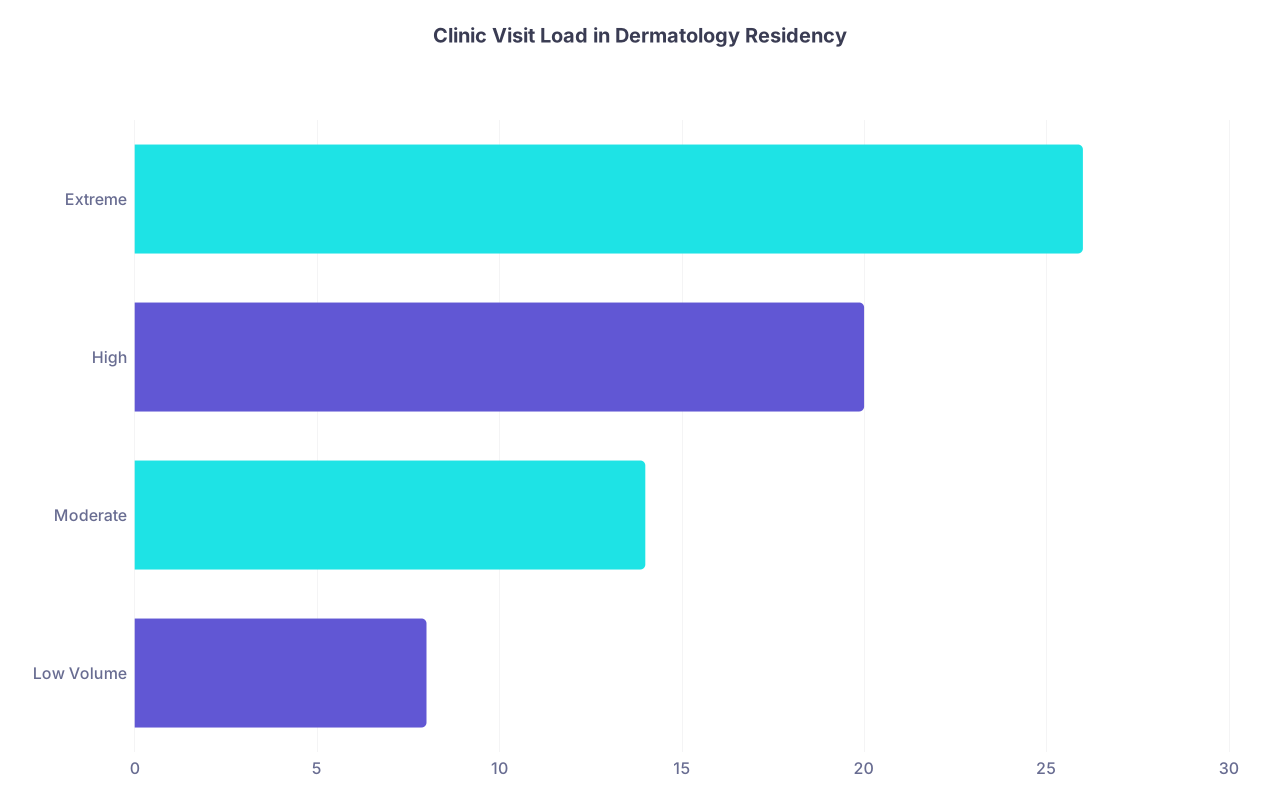
| Category | Value |
|---|---|
| Low Volume | 8 |
| Moderate | 14 |
| High | 20 |
| Extreme | 26 |
The mistake: rating derm programs only on reputation, fellowship match, or “how many cosmetics we see,” and not on daily clinic structure.
Ask to see actual patient templates. Ask how many patients a PGY-2 is expected to see independently. If people “laugh it off,” take that seriously.
PM&R: The Quietly Overloaded “Chill” Specialty
PM&R sells itself as: team-based, outpatient heavy, real lunch breaks. It can be. But some curricula are quietly brutal.
Where PM&R goes wrong
Excessive inpatient time without coverage balance.
PGY-2 year in particular can turn into:- 6-day weeks on rehab units
- Being basically the primary provider for 15–20 complex patients
- Endless family meetings and dispo battles
- Weekend “rounding only” that somehow runs 7 hours
Clinic stacked on top of floor responsibility.
You’ll see setups where:- Mornings = inpatient rounds
- Afternoons = full clinic schedule
- Pager = never off
That combo destroys any chance of feeling like you actually finish your work.
“Team-based care” that means you do the work of three people.
If the program’s structure leans on residents to be social work, case management, and therapy liaison because staffing is poor, you will burn out no matter how “nice” the field is.Geographically scattered rotations.
Rehab centers far from main hospitals, different outpatient sites, frequent driving. A curriculum that has you commuting 45+ minutes each way multiple times a week is stealing hours of your life.
Programs that actually protect lifestyle in PM&R are intentional about:
- Capping inpatient census
- Clearly separating inpatient and outpatient responsibilities
- Having real cross-coverage so one resident can be truly off
If you hear, “Yeah, PGY-2 is rough, but it builds character,” that’s code for structural burnout.
Ophthalmology & ENT Adjacent: Volume vs. Sanity
Ophtho is supposedly one of the best lifestyle specialties after training. But the residency can still wreck you if the curriculum chases volume over humanity.
Ophtho-specific curriculum problems
Clinic treadmill schedules.
40–60 patient days as a resident. Tons of:- Pre-op checks
- Post-op quick visits
- Diabetic retinopathy follow-ups Residents are used as throughput machines.
OR days turning into OR nights.
Cases tacked on at end of the day “to help the schedule,” leaving residents suturing at 7–8 PM regularly. You can’t fix this with “good time management.” It’s systemic.Call that never quiets down.
Especially at trauma centers:- Constant eye emergencies
- Night consults from ED and floors
- Weekend calls with no backup structure
One resident covering everything. Again and again.
If the program’s philosophy is “we’re the only tertiary center in the region, so we see everything,” ask yourself whether you want to be the one paying that price for three years straight.
Emergency Medicine & Shift-Based Fields: The Illusion of Control
EM, urgent care tracks, and some hospitalist-like early fellowships look lifestyle-friendly because they’re shift-based. No clinic panel. No inbox. No rounding lists.
And yet EM burnout rates are through the roof. That’s not random. It’s design.
Toxic shift structures you should run from
Rotating shifts with poor patterning.
Examples I’ve actually seen in schedules:- Day → evening → night → off → day
- 3 nights, 1 off, 2 evenings, 1 day, 1 off
This constant rotation destroys sleep cycles. It’s like permanent jet lag.
Frequent “clopening.”
Closing shift to opening shift. So:- Work 5 PM–1 AM, then back 7 AM–3 PM
Or worse, 3–11 PM followed by 7 AM–3 PM.
Technically within duty hours. Functionally abusive.
- Work 5 PM–1 AM, then back 7 AM–3 PM
Nonstandard “off” days that aren’t restorative.
One random weekday off after a long series of nights when your partner/friends are working. Structurally isolates you socially. EM loneliness is very real.Mandatory “education” on your only free mornings.
If the program puts required conference 8–12 every Thursday, but your schedule has you working 12–10 or overnight that same day, you effectively lose your daytime recovery window.

| Step | Description |
|---|---|
| Step 1 | Day Shift |
| Step 2 | Evening Shift |
| Step 3 | Night Shift |
| Step 4 | Single Day Off |
| Step 5 | Mixed Shifts Week |
| Step 6 | Mandatory Conference |
| Step 7 | Repeat Cycle |
You can’t “toughen up” your way through a garbage shift pattern. It will break you. The design matters more than your grit.
Hidden Curriculum Traps Across All “Lifestyle” Fields
Regardless of specialty, there are recurring structural choices that scream burnout. If you see these, pay attention.
1. “We’re like a family” + poor boundaries
Programs love to say this on interview day. Sometimes it’s true. Sometimes it means:
- Residents routinely cover extra shifts “to help”
- People feel guilty taking vacation
- Saying no is seen as disloyal
A real family respects boundaries. A toxic “family” eats them.
2. Worship of “grit” over system design
Watch for attendings bragging that:
- “When I was a resident, we worked 120 hours a week.”
- “Call is much better now—only every 3 days.”
- “Sleep is for after residency.”
This mindset usually correlates with leadership that refuses to fix broken structures. They see suffering as a feature, not a bug.
3. “Optional” things that are clearly not optional
- “Optional” moonlighting that everyone does to make the schedule work
- “Optional” research that mysteriously appears on every graduating resident’s CV
- “Optional” teaching sessions where absence is “noticed”
If you repeatedly hear “optional” with a wink, assume it’s mandatory culturally.
4. Geographic chaos
Any curriculum that has you:
- Rotating through 3–5 hospitals every month
- Commuting more than 30–40 minutes to any core site
- Paying out of pocket for parking at multiple locations
…is stealing time and energy you will desperately want back. Driving exhausted is its own safety risk. People underestimate this until they almost fall asleep on the highway after a 24.
How to Actually Evaluate Lifestyle During Interviews
You can’t trust the brochure. Or the carefully curated “resident panel” where the PD is in the back of the room.
Here’s how you avoid the trap.
Specific questions that expose structural burnout
Ask residents when you’re away from faculty:
- “Walk me through your last month, day by day. What time did you actually leave?”
- “How often do you truly get a full day with zero work obligations?”
- “What does a bad week look like here? How often does that happen?”
- “How many nights in a row do you get of decent sleep during ICU/ED/call months?”
- “What was the most miserable rotation and why? Did leadership fix anything about it?”
Ask faculty, bluntly but politely:
- “What changes have you made to the schedule in the last 2–3 years to reduce burnout?”
- “How do you handle residents who are struggling with volume or hours?”
- “On average, how many hours a week does a PGY-2 actually work here?”
If they can’t answer cleanly—or they minimize resident fatigue—you got your answer.
Red flag behaviors during interview day
Watch for:
- Residents looking genuinely exhausted mid-interview season
- People joking nervously about “the ICU will destroy you but you’ll learn a lot”
- A culture of bragging about who “toughed it out” the hardest
- No one willing to say, “Yeah, we fixed that schedule, it was bad before”
Also, note how often they mention wellness… compared to how specifically they talk about structural changes. Slides about yoga sessions and resilience workshops are cheap. Changing call patterns and clinic templates costs them something. That’s what matters.
What To Do If You’re Already Stuck in a Burnout-Built Program
Sometimes you only realize you walked into a bad structure once you’re in it. Then what?
No magic fix, but you have options:
Document patterns.
Track duty hours honestly (even if everyone else lies). You need data to push for change.Band together.
One resident complaining is “whining.” Multiple residents with specific, consistent examples is evidence. Go as a group when you can.Target the worst offenders.
You won’t rebuild the whole curriculum. Focus on:- The one rotation that routinely hits 80+ hours
- The clinic that double-books residents constantly
- The call schedule that violates any chance of recovery
Use ACGME standards strategically.
You don’t have to be adversarial, but you can remind leadership of actual rules. Many programs quietly rely on residents “rounding down” their hours.Plan your exit path if needed.
In rare cases, the right answer is to transfer or pivot. It happens more than people admit. Better that than three years of life you can’t get back.
None of this is easy. But pretending the problem is “you’re not resilient enough” when the structure is objectively abusive—that’s how people end up truly broken.
FAQ (Exactly 5 Questions)
1. Aren’t all residencies brutal? Isn’t this just paying your dues?
No. All residencies are demanding; not all are structurally reckless. There’s a difference between hard training with thoughtful recovery built in, and sloppy curriculum design that treats residents like plug‑and‑play coverage. High-quality programs in every specialty manage to train excellent physicians without destroying people. The “everyone must suffer like I did” attitude is lazy and outdated.
2. How much can I really tell from just one interview day?
You won’t see everything, but you can learn a lot by asking precise questions and watching reactions. Focus on schedule patterns, call frequency, true post‑call protection, and rotation sites. Ask multiple residents the same concrete questions. If their answers diverge wildly, or if they hesitate and look around before speaking, that tells you plenty.
3. Is prestige ever worth a worse lifestyle structure in a “good” specialty?
Usually not. Matching into derm, rads, or anesthesia doesn’t feel “lifestyle” if you’re running on fumes for 3–5 straight years. Programs that ride their brand while ignoring resident burnout are trading on your future wellbeing. A slightly less famous program with sane scheduling will serve you—and your long-term career—far better than a big‑name place that chews up residents.
4. What’s one subtle sign a program is actually protective, not performative, about burnout?
They can describe, in detail, specific changes they’ve made in the last few years based on resident feedback: removing a toxic rotation, restructuring call, capping inpatient census, consolidating sites, or enforcing real post‑call days. Programs that only talk about wellness lectures, social events, and “we’re like a family” probably haven’t touched the underlying structure.
5. If I care a lot about lifestyle, should I still consider more demanding specialties like surgery or OB?
You can, but you must go in eyes open. Those fields have inherently heavier demands long term. Lifestyle‑friendly specialties give you more potential flexibility, but only if the residency isn’t designed to be miserable. Do not pick a field you actively dislike just for lifestyle, but also don’t assume a “lifestyle” field guarantees anything. Specialty choice and program design both matter. Ignore either piece, and you risk burning out by design.
Remember:
- Lifestyle is a function of curriculum, not just specialty.
- Bad scheduling and volume decisions will erase any “cush” reputation.
- If you do not interrogate the structure before you rank, you’re gambling three to five years of your life on a brochure.