
The way most residents pick location is backwards—and it’s wrecking their work‑life balance.
If you obsess about “dream city” more than day‑to‑day reality, you’re setting yourself up to be miserable in a very beautiful ZIP code.
Let me be blunt: the right specialty in the wrong city can be worse for your life than a “less cool” city with a sane program. I’ve watched lifestyle‑friendly specialties become absolute grind-fests because the resident chose based on skyline and brunch scene instead of call schedules, commute times, and cost of living.
You’re reading this in the “Most Lifestyle Friendly Specialties” category. That’s good. But if you overvalue location, you can accidentally cancel out every lifestyle advantage of your specialty.
Let’s fix that.
The Core Mistake: Confusing “Fun City” With “Good Life”
People romanticize certain cities—NYC, LA, Miami, Austin, Denver, Seattle. Then they anchor on that dream and try to shoehorn their residency into it, no matter what it does to their actual life.
Here’s the usual script I see:
- Student decides: “I have to be in [insert aspirational city].”
- They apply heavily there, rank those programs higher than they should.
- They ignore red flags: malignant culture, brutal call, insane rent, 45‑minute commute.
- They match. Post the skyline picture. Friends spam “so proud of you!!!”
- Six months in, they’re too exhausted and broke to enjoy a single thing about that city.
You know what they say at 2 a.m. on their fifth night shift in a row?
“Honestly, I could’ve done this in Ohio and at least had a garage and a dog.”
Location does matter. Proximity to family, support system, partner’s job—all valid. But when location becomes the primary filter instead of one factor in a larger equation, you risk turning a lifestyle‑friendly specialty into a lifestyle graveyard.
How Location Quietly Destroys Your Lifestyle Specialty
The biggest trap: assuming a lifestyle specialty (derm, ophtho, radiology, psych, PM&R, anesthesia, certain outpatient IM/FM spots) will “automatically” insulate you from location problems.
It will not.
Lifestyle is the product of specialty + specific program + local reality, not specialty alone.
Mechanism #1: Cost of Living Turns Your Salary Into Sand
Your resident salary is not flexible. Your rent is.
In high‑cost locations, your paycheck gets annihilated before you can even think about “life.”
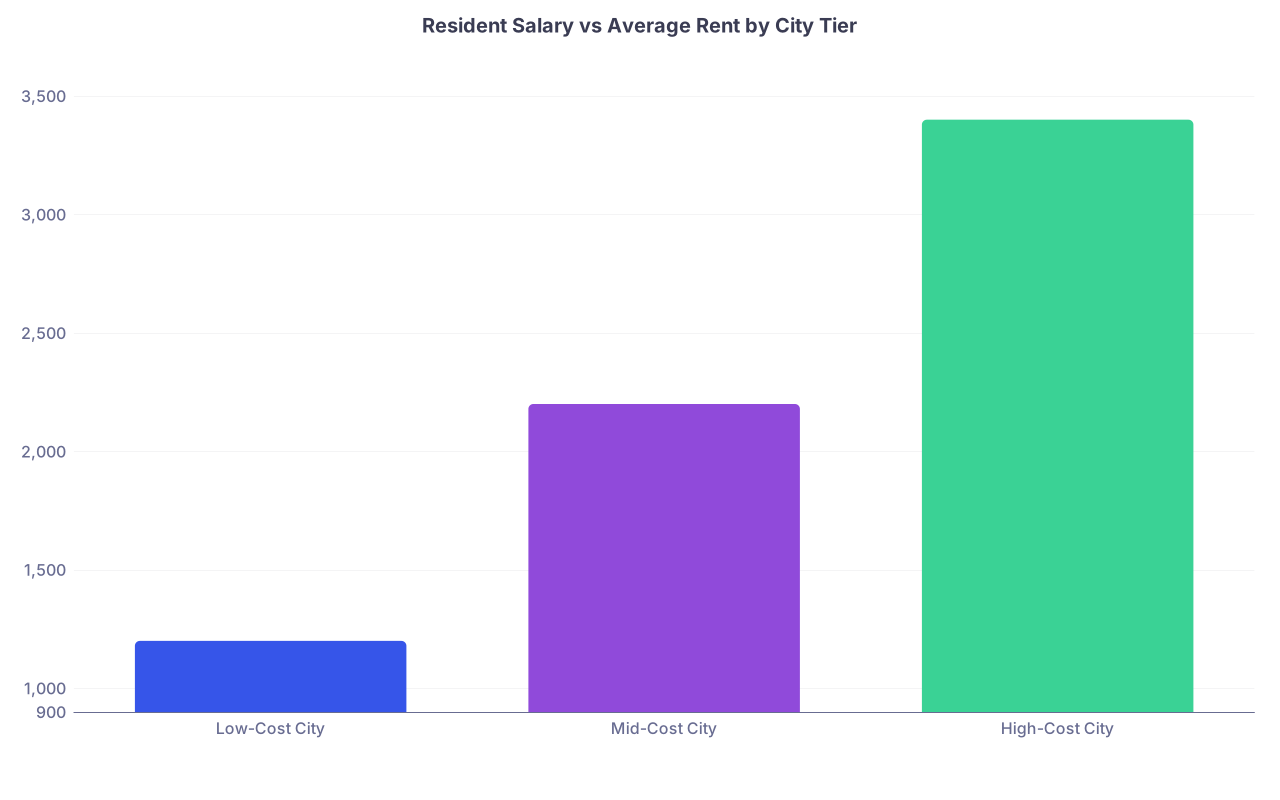
| Category | Value |
|---|---|
| Low-Cost City | 1200 |
| Mid-Cost City | 2200 |
| High-Cost City | 3400 |
Rough picture: monthly rent for a modest 1‑bed place near a major hospital.
You know the mistake:
“I’ll just get roommates.”
“I don’t need much space.”
“I’ll be at the hospital all the time anyway.”
Sounds humble. Actually dangerous.
What this does to your work‑life balance:
- You’re forced further from the hospital to afford rent → longer commute → less sleep.
- You pick up extra moonlighting just to stay afloat → the “easy specialty” magically becomes 80‑hour weeks.
- You can’t afford the things that would make life better (gym near home, occasional trip, decent mattress, therapy).
I’ve seen psych residents in SF share a tiny 2‑bedroom among three people. One slept in the living room. “It’s just for three years” turned into chronic sleep deprivation, constant tension, and zero sense of home. That’s not a life.
Mechanism #2: Commute Kills the “Lifestyle”
Lifestyle‑friendly specialty in theory: clinic 8–5, rare weekends, predictable call.
Lifestyle‑friendly specialty with a 45‑minute commute each way? Very different.
You just added 1.5–2 hours to your day. Every day.
That’s 7–10 hours per week. Basically another workday. Gone.
You’ll hear people say, “It’s fine, I’ll listen to podcasts.” No. When you’ve just finished an emotionally draining day in psych or a full day reading films in radiology, fighting traffic is not “me time.” It’s more stress.
If you choose the glamorous part of town because “I didn’t move to Chicago to live in the suburbs,” you might be paying with the only truly limited resource you have in residency: usable, awake hours.
“Most Lifestyle Friendly Specialties” Still Need the Right Environment
Let’s call out a few of the usual suspects and how location can sabotage them.
| Specialty | Location-Driven Pitfall | Impact on Lifestyle |
|---|---|---|
| Dermatology | Ultra-competitive coastal programs | Intense research, late clinics |
| Psychiatry | Underserved safety-net hospitals in big cities | Heavy caseload, safety stress |
| Radiology | Multiple hospital sites spread across metro | Commute between sites, early starts |
| PM&R | Expensive sports-centric cities | Long commutes to rehab hospitals |
| Outpatient FM/IM | “Trendy” urban neighborhoods | High rent, limited parking, burnout from volume |
Dermatology
The myth: “Derm is chill anywhere.”
Reality: Derm in a super‑competitive, reputation‑obsessed city program can feel like a surgical subspecialty.
What location does:
- High‑profile academic centers in big coastal cities often expect heavy research output, weekend conferences, and constant networking.
- Patients may be demanding, image‑focused, and litigious. That means longer notes, more documentation, more time.
So yes, clinic hours might be “reasonable.” But your evenings vanish into prep, follow‑up, and CV building because “everyone here matches into top fellowships.”
Psychiatry
You pick a major coastal city because “it’s the best place for psych training.” That can be true. It can also be the fastest way to hit emotional burnout.
Urban, safety‑net hospitals in expensive cities:
- Very high acuity and volume
- Frequent violent or unstable patients
- Understaffed mental health services
- Long waits for placement, leading to boarding and late discharges
If you’re also taking public transit at midnight from a hospital in a sketchy area because you can’t afford a safer neighborhood nearby? That lifestyle advantage disappears fast.
Radiology & Anesthesia
Both are often rightly labeled as “lifestyle‑possible” specialties. Location can quietly undercut that.
Large metro programs frequently:
- Cover multiple hospitals → cross‑town commutes between sites.
- Start very early (6:30–7:00 am) → earlier wake up, especially with long transit.
- Expect academic productivity because of their national reputation.
Your supposed “predictable hours” are now book‑ended by long commute blocks, starting in pre‑dawn and ending after dark half the year.
The Quiet Killers: Red Flags People Ignore for Location
Here’s what people routinely downplay because “I really want to live in X city.”
1. Toxic or Overly Intense Program Culture
Residents tell you, “We’re a family here” with dead eyes. Or they joke about “golden handcuffs.” Or they say things like, “You get used to never seeing daylight.”
You hear that on a virtual social and think, “But it’s Boston. I’ll manage.”
You will not. Culture is everything when your brain and body are tired all the time.
2. Misleading “Lifestyle” Claims
Programs in desirable cities know they’re desirable. Some lean on that instead of fixing structural problems.
Watch for:
- “We work hard and play hard” → often means just “we work hard.”
- “We encourage wellness” without any specifics.
- “Our residents are happy” with no unobserved time to verify that.
If they emphasize the city more than the program (“There’s so much to do here!”), that’s a red flag. You’re not moving there as a tourist.
3. Multiple Clinical Sites Spread Across a Metro
On paper: “Great variety of training sites across the city.”
In reality: you live in your car or on the subway.
Ask:
- How often do residents switch sites?
- Is there parking, and how much does it cost?
- How bad is traffic during handoff times?
- Are there months where you have to travel at unsafe hours?
I know an anesthesia resident in LA who spent two hours per day commuting between home and a VA site because living near both primary hospital and VA was financially impossible. Two hours every day. That’s a stolen life.
How to Evaluate Location Without Falling for the Trap
You don’t need to ignore location. You just need to stop romanticizing it.
Step 1: Do the Hard Math First
Before you rank anything:
- Look up realistic rent for safe, reasonable housing within 20–30 minutes of the hospital.
- Subtract that from a typical PGY‑1 salary (ballpark $60–70k, but check).
- Add commuting costs: gas, parking, transit pass, maybe rideshares on call nights.
- See what’s left per month for food, loans, insurance, basic life.
If the numbers only work if you house‑hack, live far, or “take extra moonlighting,” you’re already signaling that your lifestyle specialty will be doing damage control from day one.
Step 2: Ask Residents These Location-Specific Questions
During interviews and socials, stop asking “So, how do you like [city]?”
Everyone will say it’s great. They’re not going to trash it on Zoom.
Ask instead:
- “How long is your commute, and how does that change by rotation?”
- “If you had to move again, where would you live and why?”
- “Do you feel like your salary actually supports living here?”
- “How many hours a week do you realistically spend not sleeping or working?”
- “How often do you actually do the fun city stuff people talk about?”
You’ll hear the truth in the hesitation.
The Anchor Mistake: Wanting the City You Imagined in Undergrad
Another nasty cognitive error: you’re still chasing the version of the city you fell in love with on vacation, or during a gap year, or watching Netflix.
But you’re not going there as a free human. You’re going there as a resident.
Different game.
As a vacationer or a consultant with a big paycheck:
- You pick restaurants based on vibe, not price.
- You Uber if transit is annoying.
- You live in a place sized for comfort, not survival.
- You aren’t trauma‑drained when you step into that cool bar.
As a resident:
- You track happy hours because regular menu prices hurt.
- You check last train times on call nights.
- You debate whether a $30 exercise class is “worth it” this month.
- Your limiting factor is exhaustion, not lack of options.
Chasing that undergrad fantasy version of the city is how you end up too mentally and financially cooked to enjoy a single one of its supposed advantages.
The Safer Strategy: Let Lifestyle and Fit Lead, Then Filter by Location
Here’s the hierarchy that protects your work‑life balance, especially in lifestyle specialties:
Program culture and well-being:
- Are residents genuinely supported?
- Do they cover for each other?
- Does leadership actually adjust when things break?
Schedule structure and workload:
- Realistic hours, call frequency, night float, weekend expectations.
- Actual clinic volumes for derm/psych/FM/PM&R.
- Are “lifestyle” claims backed by resident stories?
Educational quality in your chosen specialty:
- Enough exposure without drowning in service obligations.
- Does the program over‑lean on residents because of staffing issues?
Local logistics:
- Commute times, parking, transit safety at odd hours.
- Typical rent within a short, safe commute radius.
Then – and only then – broader city desirability.
That doesn’t mean you rank random places you’d hate. It means you stop putting a mediocre, overtaxed, coastal program at the top just because you like rooftop bars.
When a “Boring” Location Gives You a Better Life
I’ve seen this play out more times than I can count:
One resident picks a solid psych program in a mid‑sized, low‑cost city. 10–15 minute commute. Reasonable rent. Residents hang out at each other’s houses, hike, do low‑key dinners, actually sleep.
Their classmate picks a brand‑name psych program in a major city with sky‑high housing and complex multi‑site rotations. Hour commute. Constant float coverage. Technically “same specialty.” Completely different life.
Guess who comes out healthy, with savings, with hobbies still intact?
That’s the punchline here: if you truly care about lifestyle, the “boring” choice might be the only one that delivers it.
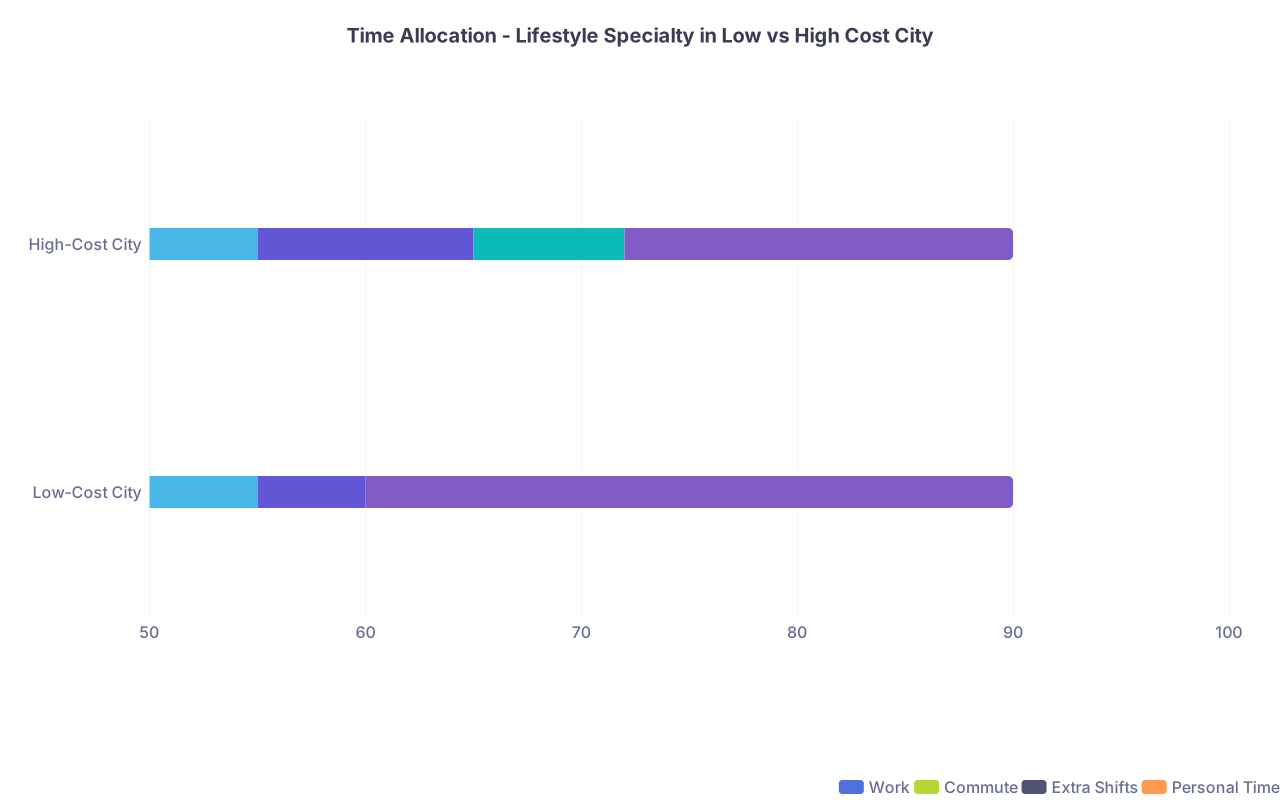
| Category | Work | Commute | Extra Shifts | Personal Time |
|---|---|---|---|---|
| Low-Cost City | 55 | 5 | 0 | 30 |
| High-Cost City | 55 | 10 | 7 | 18 |
Same specialty. Same baseline work hours.
But once you add commuting and extra shifts to survive financially, personal time collapses.
That’s the hidden danger when you overvalue location.
A Sanity Check Before You Submit Your Rank List
Ask yourself three blunt questions:
- If this exact program were in a less trendy city, would I still be this excited about it?
- Am I quietly assuming I’ll “power through” money, commute, and housing stress because the city is cool?
- In my daily life as a resident, will I experience this city mostly as:
- An actual place I live and enjoy, or
- A backdrop I glimpse through a car window on the way to call?
If you don’t like the answers, you’re overvaluing location. Period.

FAQ (Exactly 3 Questions)
1. Isn’t it reasonable to prioritize being near family or a partner, even if the city is expensive?
Yes, but do not lie to yourself about the tradeoffs. Being near family can massively support your mental health and childcare. Just don’t use “near family” as a blanket justification to ignore every other red flag: toxic culture, brutal commute, unsustainable housing. If you must be in that region, cast a wider net within driving distance rather than fixating on the single glamour city in the area.
2. I’m going into a lifestyle specialty—doesn’t that give me more flexibility to handle an expensive or intense city?
It gives you some buffer, not a magic shield. A lifestyle specialty can absorb a little more stress from cost of living and commute, but those things still add up. If your plan to make the city work involves routine moonlighting, 45‑minute commutes, or living in a place where you don’t feel safe, you’re using your “lifestyle advantage” to patch holes, not to live well.
3. How do I balance my genuine desire for a specific city with all these warnings?
Treat the city as a bonus, not the foundation. First identify 3–5 programs—anywhere—that truly protect resident wellness in your specialty. Then see where your favorite city’s programs fall relative to those. If a program in your dream city is also high‑quality, reasonably humane, and logistically workable, great. Rank it high. But if you’re clearly sacrificing your day‑to‑day existence just to say you live there, remember: three to five years is a long time to be exhausted in a pretty place.
Key points:
- Location can quietly erase every lifestyle advantage of a “lifestyle” specialty through cost of living, commute, and toxic cultures you ignored because the city was shiny.
- Treat city desirability as secondary to program culture, workload, and logistics if you care about real work‑life balance—not just the illusion of it.