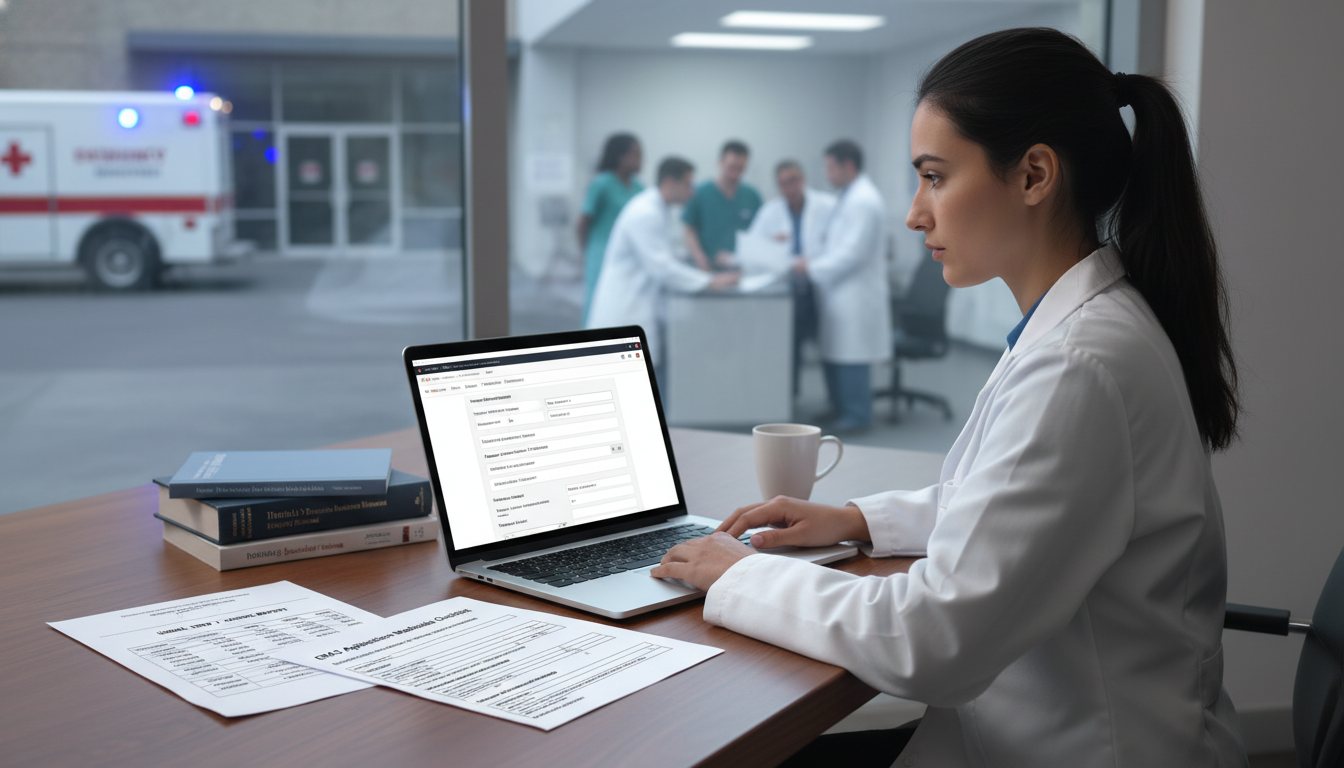
Introduction: You Are More Than Your USMLE Score
Residency applications can feel brutally numerical. For many medical students, the USMLE has become a central focus, and lower-than-hoped-for scores can trigger anxiety, self-doubt, and fear about the Match. Yet residency program directors consistently emphasize that they are not selecting test-takers; they are selecting future colleagues, teachers, and leaders in patient care.
This article will help you move beyond the numbers by showing you how to present your unique qualities, experiences, and growth in a way that strengthens your application—especially if you have low USMLE scores or a prior failure. You will learn how to:
- Understand the real role USMLE scores play in Residency Applications
- Identify and articulate your strengths in a structured way
- Craft a targeted, compelling Personal Statement that addresses weaknesses without centering them
- Elevate your Interview Skills to confidently discuss low scores
- Polish your CV and overall application for a holistic, coherent story
The goal is not to pretend your scores don’t matter—they do—but to ensure they become one data point in a much richer, more compelling narrative about who you are and how you will succeed in residency.
Understanding the Role of USMLE Scores in Residency Applications
Why USMLE Scores Matter—But Aren’t Everything
USMLE exams are designed to ensure that future physicians have the foundational knowledge and clinical reasoning skills necessary for safe practice. Residency programs use these scores mainly for:
- Initial Screening: With hundreds or thousands of applicants, programs often use score cutoffs to reduce the pool.
- Risk Assessment: Lower scores can be perceived (rightly or wrongly) as potential risk for in-training exam performance or board pass rates.
- Comparisons Within a Large Pool: Scores offer an easy way to compare large numbers of applicants quickly.
However, program directors also know that:
- Board scores do not fully predict clinical performance, professionalism, or work ethic.
- Many top residents had imperfect scores but excelled in other domains.
- The Match is moving toward holistic review, especially as some Steps have transitioned to Pass/Fail.
In surveys from the National Resident Matching Program (NRMP), program directors repeatedly rank factors like interpersonal skills, letters of recommendation, perceived fit, and professionalism near the top of their decision-making criteria—right alongside or even above exam scores.
Common Emotional Reactions to Low USMLE Scores
If your USMLE scores are lower than you hoped—or if you have a failure—your emotional response is normal and valid. Common reactions include:
- Embarrassment or shame
- Catastrophic thinking: “My career is over”
- Avoidance of advising meetings
- Hyper-focus on numbers while neglecting strengths
Recognizing these reactions is important because they can lead to passivity (“There’s nothing I can do”) just when you need to be most proactive. Your task is not to hide your score, but to own your story and demonstrate the qualities that programs value most in a resident.
The Human Element: What Programs Are Actually Looking For
Residency programs are communities. They want people who will:
- Show up reliably
- Work hard and learn from feedback
- Take excellent care of patients
- Get along with colleagues and staff
- Handle stress and setbacks without collapsing
These qualities—resilience, teamwork, empathy, growth mindset, integrity, and dedication—cannot be measured by a three-digit score. Your strategy is to show evidence of these attributes across your Personal Statement, letters of recommendation, CV, and interviews.
Step 1: Reflect Deeply on Your Unique Qualities and Experiences
Before you can present your strengths convincingly, you need to clearly understand them yourself.
Systematically Identify Your Strengths
Set aside 30–60 minutes with a notebook or document and reflect on your journey as a medical student. Consider the following domains:
1. Clinical Experience
Ask yourself:
- Which rotations changed how I see patients or medicine?
- When did I receive especially positive feedback from attendings or residents?
- Did I handle a difficult patient interaction, adverse event, or complex family meeting well?
Examples of strengths from clinical work:
- Comfort with underserved or high-acuity populations
- Excellent bedside manner and communication
- Ability to stay calm in emergencies
- Strong teamwork in interdisciplinary settings (nurses, social workers, pharmacists)
2. Research and Scholarly Work
Even if you don’t have publications in top journals, research and scholarly activity can showcase:
- Curiosity and commitment to evidence-based medicine
- Persistence through long projects and setbacks
- Analytical and critical thinking
Reflect on:
- What role did I actually play in projects (data collection, analysis, writing, presenting)?
- Did I present at a local, regional, or national conference?
- Did my work lead to any changes in practice or quality improvement?
3. Leadership and Service
Residency programs care about initiative and impact. Think about:
- Roles in student organizations, interest groups, or committees
- Community service or outreach programs
- Peer teaching, tutoring, or mentoring roles
- Organizing events, workshops, or curricula
Ask:
- Where did I step up when something needed to be done?
- What tangible outcomes resulted from my involvement? (e.g., increased attendance, new initiatives, patient education materials)
4. Personal Challenges and Resilience
Low USMLE scores often occur in the context of real-life challenges:
- Family illness or caretaking responsibilities
- Financial stress or the need to work during school
- Mental health struggles or burnout
- Transitions to a new country, language, or educational system
These experiences, when reflected upon honestly and constructively, can demonstrate:
- Resilience
- Empathy for patients facing adversity
- Maturity and self-awareness
- Capacity for growth and adaptation
Turn Reflection into a Strengths Inventory
To make these insights usable for your Residency Applications, create a simple table or list with columns like:
- Category: Clinical / Research / Leadership / Personal
- Experience: Brief title (e.g., “Student-run clinic director”)
- Story/Example: 2–3 sentences describing what happened
- Strengths Demonstrated: e.g., teamwork, leadership, empathy, adaptability
This document becomes your core reference for your Personal Statement, CV entries, and interview stories.

Step 2: Leverage Your Story in Your Personal Statement and Letters
Crafting a Personal Statement That Transcends Your Score
Your Personal Statement is one of the most powerful tools you have to contextualize low USMLE scores while highlighting who you are as a future resident.
1. Focus on a Clear, Cohesive Narrative
Good Personal Statements are not CV summaries; they are stories that answer:
- Why this specialty?
- Who are you as a person and future physician?
- What strengths and experiences make you a good fit?
- How have you grown from challenges, including academic setbacks?
Structure suggestion:
- Opening vignette or theme: A brief clinical moment or personal experience that encapsulates what draws you to medicine or your specialty.
- Development of your journey: Rotations, research, leadership, or life experiences that deepen your commitment.
- Addressing low scores (if necessary): A concise, honest explanation framed in terms of growth, reflection, and concrete improvement.
- Conclusion: What you bring to residency and your long-term goals.
2. Addressing Low USMLE Scores Strategically
You do not need to lead with your scores, but if they are significantly below average or include a failure, ignoring them completely can raise questions. When you address them:
- Be brief and factual, not defensive.
- Take responsibility where appropriate.
- Emphasize what changed: new study strategies, time management, wellness, or seeking help.
- Highlight evidence of improvement (e.g., later Step performance, shelf exams, clinical honors).
Example framing:
“Early in medical school, I struggled with test-taking and time management, which contributed to a lower Step 1 score than I knew I was capable of. Recognizing this, I sought help from our learning specialist, adjusted my study methods, and created a structured schedule. These changes not only improved my subsequent exam performance but also taught me how to respond constructively to setbacks—an ability I now apply daily in clinical care.”
3. Show, Don’t Just Tell
Avoid generic statements like “I am hardworking and compassionate.” Instead, use specific anecdotes from your strengths inventory:
- A time you stayed late to comfort a scared patient
- A family meeting where you helped clarify complex information
- Leading a QI project that improved clinic flow or patient satisfaction
Each story should highlight attributes that residency programs value: reliability, empathy, initiative, teamwork, and a growth mindset.
Maximizing the Impact of Letters of Recommendation
Letters can powerfully counterbalance low USMLE scores if they provide strong, credible endorsements.
1. Choose Letter Writers Strategically
Prioritize writers who:
- Know you well and have directly observed your clinical work
- Can comment on your professionalism, work ethic, and bedside manner
- Are in your chosen specialty (at least one, ideally two for competitive specialties)
A specific, enthusiastic letter from a faculty member who supervised you closely is more valuable than a vague, generic letter from a “big name” you barely worked with.
2. Prepare Your Letter Writers
When you ask for a letter:
- Ask in person or via video if possible, and be direct: “Would you feel comfortable writing me a strong letter of recommendation for [specialty]?”
- Provide:
- Your CV
- Draft of your Personal Statement
- A brief summary of key cases or projects you worked on with them
- Any particular strengths or themes you hope they can comment on (e.g., “If you feel it is accurate, I would appreciate if you could highlight my reliability and communication with patients.”)
You do not need to hide your low USMLE scores from letter writers; many may already know or infer. Framing your scores as part of a growth story can help them reinforce your trajectory.
Step 3: Elevate Your Interview Skills to Confidently Address Low Scores
Residency interviews are where your application becomes human. Strong Interview Skills can significantly change how programs interpret your USMLE performance.
Preparing for Interview Questions About Low Scores
You should expect some version of:
- “Can you tell me about your USMLE performance?”
- “Were there any challenges you faced during medical school?”
- “I see you had to retake Step X; what happened and what did you learn?”
Effective responses share three qualities: honesty, brevity, and growth.
Framework for Answering Score Questions
- Acknowledge briefly:
- “Yes, my Step 1 score was lower than I had hoped.”
- Provide concise context (without oversharing):
- A challenge, ineffective study strategy, or adjustment period.
- Emphasize what you changed:
- New study methods, time management, seeking mentorship, wellness optimization.
- Highlight evidence of growth:
- Improved clinical performance, later exam scores, or faculty feedback.
- Re-center on your current strengths:
- “This experience made me more organized and resilient, and I now bring that discipline to my patient care and team responsibilities.”
Practice saying a 2–3 sentence version and a slightly longer one, so you can adapt to the interviewer’s style.
Mastering Behavioral Interview Questions Using the STAR Method
Behavioral questions (“Tell me about a time when…”) are designed to assess qualities like teamwork, professionalism, and resilience—exactly where you can shine.
Use the STAR method:
- Situation: Brief context
- Task: Your role or responsibility
- Action: What you did
- Result: Outcome and what you learned
Example:
“During my internal medicine rotation (Situation), a patient with limited English proficiency was repeatedly missing instructions at discharge, and I was responsible for preparing his education (Task). I arranged for an interpreter, simplified the written instructions, and used teach-back to confirm understanding (Action). As a result, the patient and his family felt confident about the plan, and there were no readmissions for medication errors (Result). This experience reinforced the value of clear, patient-centered communication, which I now prioritize on every rotation.”
Prepare STAR stories for:
- A mistake or setback (clinical or academic)
- A conflict with a team member and how you addressed it
- A time you demonstrated leadership or initiative
- A meaningful patient interaction
- A stressful situation and how you managed it
Practice, Feedback, and Iteration
- Schedule mock interviews through your school’s career office, specialty interest groups, or with mentors.
- Record yourself answering common questions; watch for filler words, rambling, or negative body language.
- Ask for specific feedback on:
- Clarity and conciseness
- Warmth and professionalism
- How convincingly you address your low scores
- Refine your answers but avoid memorizing scripts; aim for polished but natural.
Step 4: Polish Your CV and Application for a Holistic Impression
Your CV and application forms (e.g., ERAS) are critical to transforming your experiences into a clear, credible story that supports your candidacy despite low USMLE scores.
Tailor Your CV to Highlight Impact and Growth
When describing experiences:
- Use active verbs: led, developed, coordinated, implemented, taught, analyzed
- Focus on impact and outcomes, not just duties
- Quantify where possible:
- “Coordinated a weekly student-run clinic serving 40–50 patients per month”
- “Tutored 10 first-year students in anatomy, contributing to a 20% increase in pass rates”
Make sure your CV emphasizes:
- Clinical excellence: Honors, strong comments, sub-internships, away rotations
- Consistency: Long-term commitments rather than many short, scattered activities
- Leadership and initiative: Roles where you improved or created something
- Specialty alignment: Activities that show genuine interest in your chosen field
Ensure Consistency Across Your Application
Your Personal Statement, CV, letters of recommendation, and interview responses should:
- Reinforce the same core strengths (e.g., resilience, communication, dedication to underserved populations)
- Be factually consistent (dates, roles, projects)
- Present a coherent narrative: “This is someone who had a challenge, learned from it, and has grown into a dependable, compassionate, and motivated future resident.”
Get an External, Experienced Review
If possible, ask:
- A faculty advisor in your chosen specialty
- A dean or career advisor
- A recent graduate who successfully matched with similar scores
Have them review your:
- CV
- Personal Statement
- List of programs you’re applying to (to ensure you’re realistic and well-distributed in competitiveness)
They can help you identify gaps, redundancies, or inconsistencies and suggest ways to strengthen your presentation.

Additional Strategic Considerations for Applicants With Low USMLE Scores
Be Thoughtful About Specialty and Program Selection
If your scores are significantly below the mean:
- Research NRMP Charting Outcomes in the Match for your specialty to understand realistic score ranges.
- Consider:
- Less competitive specialties if you are open to them
- Community-based or smaller programs that may be more holistic in reviewing applications
- Applying broadly and including a mix of program types and locations
This does not mean abandoning your dream automatically—but it may mean strategic flexibility, dual-application plans, or considering preliminary/transitional years depending on your situation and specialty.
Strengthen the Rest of Your Profile Proactively
Between now and application season, you can:
- Seek sub-internships (sub-Is) or away rotations and perform at your highest level; strong evaluations from these can outweigh score concerns.
- Engage in meaningful research or quality improvement projects, especially if they are specialty-related.
- Take on teaching or mentoring roles, which program directors often value.
- Improve your clinical and communication skills through extra practice, electives, or simulation.
Each additional strength you build gives programs more reasons to feel confident in ranking you.
FAQs: Low USMLE Scores and Residency Applications
1. What if I failed a USMLE Step exam? Is my residency career over?
A Step failure is a significant hurdle but not automatically the end of your residency prospects. Many residents and practicing physicians have failed an exam at some point.
To address it:
- Be honest and concise about what happened (e.g., personal challenges, poor time management, underestimating the exam).
- Emphasize specific changes you made (new study strategies, tutoring, wellness support, accommodations if appropriate).
- Show evidence of improvement (passing on retake, improved later exams, strong clinical performance).
- Use your Personal Statement or the designated section of the application to frame this as part of a larger story of resilience and growth.
Programs are more concerned about patterns of ongoing struggle than a single setback that has been clearly and convincingly addressed.
2. How should I talk about my low scores during residency interviews?
Address low scores with:
- Honesty: Acknowledge them without making excuses.
- Perspective: Provide a brief context if relevant.
- Growth focus: Highlight the changes you made and what you learned.
- Redirection: Shift toward your current strengths and readiness for residency.
Example:
“My Step 1 score was not what I had hoped for. I realized I needed to improve my study strategies and time management, so I met with our learning specialist, created a more structured approach, and joined a study group. Those changes helped me perform better on subsequent exams and, more importantly, taught me how to respond constructively to challenges—an approach I now bring to patient care and team responsibilities.”
Practice this answer until you can deliver it calmly and confidently.
3. Can research and extracurricular activities really offset low USMLE scores?
They cannot make the score disappear, but strong research and extracurriculars can significantly strengthen your overall application, particularly if they demonstrate:
- Long-term commitment to a specialty
- Scholarly potential (publications, presentations, QI projects)
- Leadership and initiative in meaningful projects
- Alignment with a program’s mission (e.g., underserved care, global health, medical education)
Program directors often comment that they remember applicants with unique, well-developed experiences—even if their scores were not at the top of the pool.
4. Is it too late to improve my application after I’ve already taken all my USMLE exams?
It is rarely “too late” to improve your Residency Applications in meaningful ways. You can still:
- Excel in upcoming clinical rotations and sub-internships
- Obtain strong, specific letters of recommendation
- Refine your Personal Statement and Interview Skills
- Take on short-term but impactful roles (teaching, QI projects, patient education initiatives)
- Strategically select a program list where your profile is a reasonable fit
Every new positive data point helps shift the narrative from “low scores” to “strong candidate with a documented history of growth and resilience.”
5. Should I consider a backup specialty if I have low USMLE scores?
For highly competitive specialties, having a thoughtful backup plan can be wise—especially if:
- Your scores are substantially below the typical matched range
- You do not have strong specialty-specific research or mentorship
- Advisors in the field express concern about your competitiveness
If you pursue a backup:
- Choose a specialty that you can genuinely see yourself enjoying; don’t pick something solely because it is “easier.”
- Build experiences in both specialties if time allows.
- Be transparent and strategic with advisors, who can help you navigate dual-application logistics.
Low USMLE scores do not define your worth as a future physician. With honest reflection, strategic storytelling, strong Interview Skills, and deliberate strengthening of the rest of your profile, you can present yourself as a resilient, capable, and compassionate applicant. Programs are looking for colleagues, not just numbers—and your job is to help them clearly see the value you will bring to their team and to your patients.