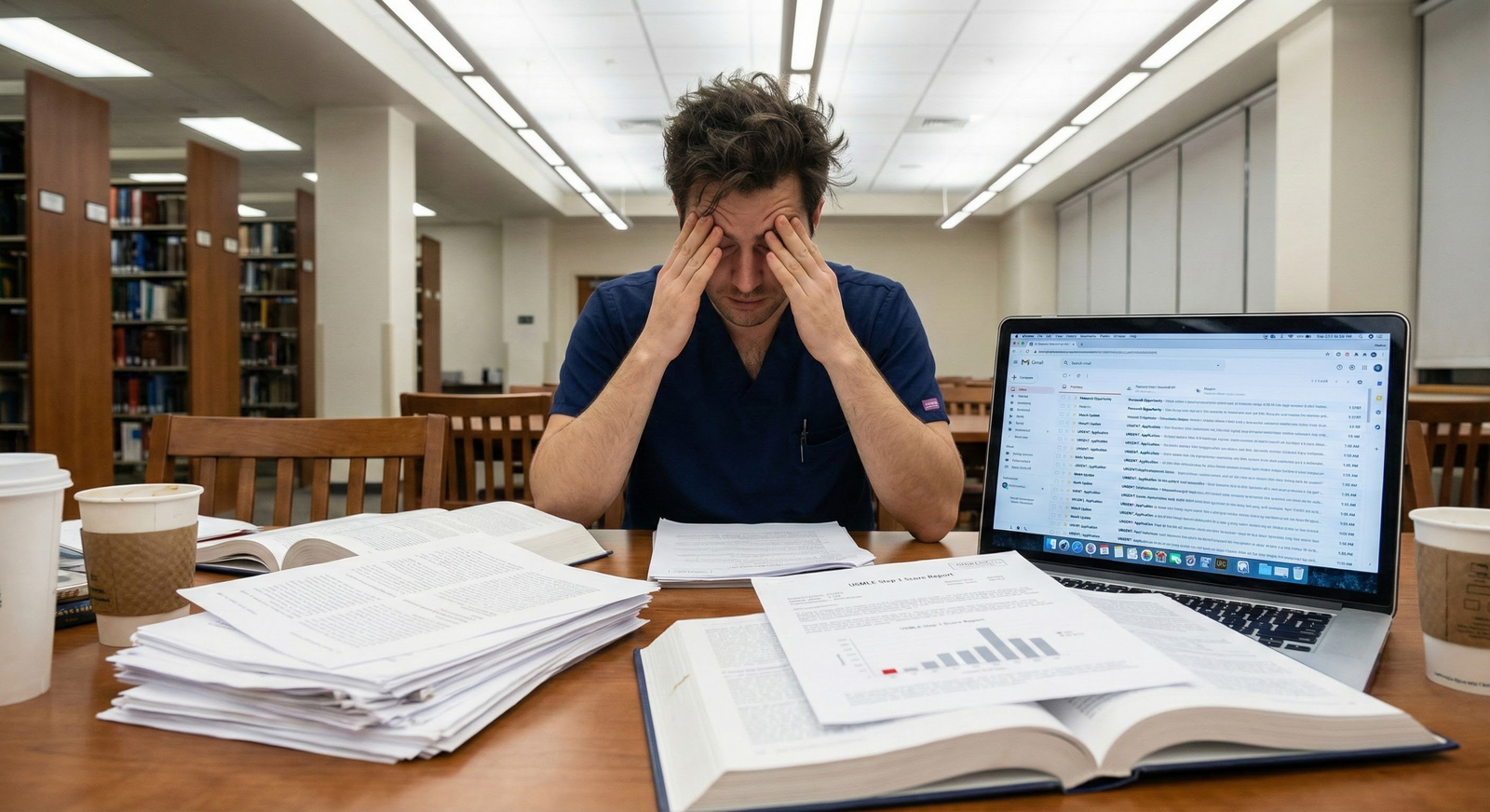
Understanding the Challenge: Low Step Scores as a Caribbean IMG
If you are a Caribbean international medical graduate (IMG) aiming for addiction medicine—with a low Step score or below average board scores—you are navigating several simultaneous challenges:
- Coming from a Caribbean medical school (with associated stigma in some programs)
- Having USMLE Step 1 or Step 2 scores that are not competitive
- Targeting a subspecialty (addiction medicine) that requires a primary residency first
- Competing with U.S. MD, DO, and other IMGs with stronger metrics
Yet Caribbean medical school residency outcomes—especially from schools like SGU (St. George’s University), AUC, and Ross—show that consistent SGU residency match and similar results at other schools are possible even when applicants don’t have stellar scores. The key is strategy.
This article focuses on low Step score strategies for Caribbean IMGs specifically interested in addiction medicine. We’ll break down how to:
- Interpret your scores honestly and identify realistic targets
- Use addiction-related experiences to compensate for numbers
- Build a match-sensible pathway (typically Internal Medicine, Family Medicine, or Psychiatry)
- Address red flags and explain your performance
- Position yourself for an addiction medicine fellowship despite a low Step 1 score or a failed attempt
Step Scores in Context: What “Low” Really Means for Caribbean IMGs
What Counts as a “Low” USMLE Score?
Definitions vary by specialty and cycle, but for most Caribbean IMGs:
Step 1 (pass/fail era)
- A pass on first attempt is expected.
- A fail and subsequent pass is a significant red flag but not necessarily fatal, especially for primary care pathways.
Step 2 CK (numeric)
- “Below average board scores” often means < 225 for IMGs.
- “Low Step 2” is typically < 215–220, and < 210 is high risk for many programs.
Because addiction medicine is a fellowship after residency, your first strategic objective is matching into a residency program that can lead you there.
How Programs See Caribbean Medical School Applicants
Residency programs may use filters, especially for IMGs:
- Automatic cuts based on Step 1/2 CK performance
- Preference for U.S. MD/DO over Caribbean grads
- Suspicion about heavy reliance on “Caribbean medical school residency” marketing
However, many community-based and some university-affiliated programs regularly accept Caribbean IMGs, especially in:
- Internal Medicine (IM)
- Family Medicine (FM)
- Psychiatry
- Occasionally Pediatrics or Neurology
These are the core gateways to an addiction medicine fellowship.
Realistic Mindset: Competitive vs Strategic
With a low Step score, your mindset must shift from “competitive” to strategic:
- You may not match at top-tier academic centers immediately.
- You can still build a path to addiction medicine by:
- Matching at a solid community or hybrid program
- Building an addiction-focused portfolio during residency
- Then applying for an addiction medicine fellowship (often more holistic in how they select fellows)
Your scores limit some doors, but they do not cancel your long-term trajectory—if you choose smart intermediate steps.
Choosing the Right Residency Pathway for Addiction Medicine
Addiction medicine is usually a consultative and longitudinal field that can be entered from multiple primary specialties. For Caribbean IMGs with low Step scores, some paths are more realistic than others.
Primary Specialties That Lead to Addiction Medicine
You can pursue an addiction medicine fellowship after completing residency in:
- Internal Medicine (IM)
- Family Medicine (FM)
- Psychiatry
- Emergency Medicine
- Pediatrics
- OB/GYN and others (less common, but possible)
For Caribbean IMGs with matching with low scores as a concern, the most practical choices are:
Family Medicine (FM) – Often the most IMG-friendly
- Broad primary care + behavioral health + chronic disease
- Strong alignment with substance use screening and longitudinal care
- Many addiction medicine fellowships welcome FM graduates
- Often lower score thresholds and more willing to overlook a low Step 1 score
Internal Medicine (IM) – Excellent for hospital-based addiction care
- Provides a strong foundation for managing medical complications of addiction
- Multiple addiction medicine fellowships are IM-oriented
- Slightly more competitive than FM but still IMG-accessible, especially at community programs
Psychiatry – Ideal conceptual match but more competitive
- Deep focus on mental health, co-occurring disorders, and psychopharmacology
- Strong synergy with substance abuse training
- However, psychiatry has grown more competitive, which may be tough with low scores as a Caribbean IMG
If your Step scores are significantly below average, Family Medicine is often the best strategic path to addiction medicine, followed by community Internal Medicine. Psychiatry can still be realistic, but expect harder filters.
Aligning Your Path With Your Score Profile
Use a simple matrix:
- Step 2 CK ≥ 225, no fails
- Consider: IM, FM, Psychiatry (broadly), with addiction focus.
- Step 2 CK 215–224 or Step 1 pass with some concern
- Strongly target: FM, mid-tier or community IM, selective psychiatry programs with known IMG intake.
- Step 2 CK < 215 or failed attempt(s)
- Focus: FM-heavy strategy, safety-heavy list, possibly include prelim IM years.
- Addiction medicine may be a longer-term goal, but still possible.
This doesn’t mean you cannot try for more competitive programs—it means you must anchor your application strategy to more forgiving specialties and program types.

Building a Strong Addiction-Focused Profile to Offset Low Scores
Even when programs filter by score, many still review applications holistically, particularly in addiction-related and community-serving settings. Your goal is to make your profile scream:
“This applicant is deeply committed to addiction medicine and will thrive in our system.”
1. Clinical Experiences in Addiction Medicine
Seek experiences that demonstrate hands-on involvement with substance use disorders (SUD):
- Rotations or electives in:
- Addiction medicine consult services
- Outpatient addiction clinics
- Methadone or buprenorphine clinics
- Dual-diagnosis psychiatry units
- Inpatient detox units
- Work with:
- Medically assisted treatment (MAT)
- Withdrawal management protocols
- Harm reduction strategies (naloxone, syringe services, etc.)
If you’re still in school or recently graduated from a Caribbean medical school:
- Ask your dean or clinical placement office about electives with addiction exposure.
- If you’re at a school like SGU, explore any structured opportunities to enhance your eventual SGU residency match into addiction-friendly paths like FM or IM with addiction focus.
If you are already graduated and waiting to apply:
- Arrange observerships or externships in addiction or behavioral health clinics in the U.S.
- Volunteer at community recovery programs, opioid treatment programs, or FQHCs with strong SUD programs.
2. Substance Abuse Training and Certifications
Stack your CV with targeted substance abuse training that signals dedication:
- DATA 2000 / X-waiver training (now integrated into baseline DEA requirements; older certificates still show prior initiative).
- Online courses and certificates in:
- ASAM Fundamentals of Addiction Medicine
- Motivational interviewing for SUD
- SBIRT (Screening, Brief Intervention, and Referral to Treatment)
- Participation in:
- State or local addiction training programs
- Quality improvement projects related to opioid prescribing, naloxone distribution, or SUD screening
You want a program director to notice:
“Even if this applicant has a low Step score, they already behave like a future addiction specialist.”
3. Research and Scholarly Activity
You do not need a first-author RCT in addiction medicine. You do need evidence of curiosity and engagement:
- Case reports on:
- Complicated detox
- Overdose with unusual clinical features
- Polysubstance use and comorbid medical disease
- QI projects:
- Implementing SUD screening in a clinic
- Improving follow-up of patients with opioid use disorder after ED visits
- Retrospective chart reviews:
- MAT outcomes in primary care
- Hospital re-admission rates for patients with SUD
If you lack access to research infrastructure, consider:
- Partnering with a mentor at a community hospital
- Joining ongoing projects at your clinical site
- Writing case reports under supervision of an attending
Scholarly work with even modest scope can significantly strengthen a Caribbean medical school residency application in the context of addiction-focused specialties.
4. Volunteering and Advocacy
Addiction medicine is as much about advocacy and compassion as it is about pharmacology:
- Volunteer at:
- Recovery community centers
- Peer support programs
- Harm reduction outreach events
- Engage with:
- Overdose awareness campaigns
- Stigma-reduction education
- Rural or underserved communities where addiction is prevalent
Describe these experiences in your application to demonstrate values that align with addiction medicine: nonjudgmental care, harm reduction, patient empowerment.
5. Letters of Recommendation (LORs) That Spotlight Addiction Interest
With low scores, your LORs must be powerful and specific:
- At least one letter from:
- A physician deeply involved in addiction treatment
- Or a primary care/IM/FM attending who can speak to your work with SUD patients
- Ask them to emphasize:
- Your competence with complex psychosocial patients
- Your empathy and reliability
- Specific examples of initiative (e.g., you created a patient education guide about MAT)
A strong set of letters can prompt programs to look past concerns about a low Step 1 score or borderline Step 2 CK.

Application Tactics: Selling Your Story Despite Low Scores
Once you’ve built content for your CV, the next step is how you present it.
Crafting a Persuasive Personal Statement
Your personal statement should:
- Acknowledge your interest in addiction medicine clearly and early.
- Tell a specific story that ignited that interest (e.g., a patient encounter during rotations in the Caribbean or U.S.).
- Connect your background as a Caribbean IMG to your passion:
- Exposure to limited resources
- Witnessing the impact of addiction on underserved communities
- Subtly reframe your weaknesses (scores) in the context of:
- Growth
- Resilience
- Concrete improvements in clinical performance
Avoid making the entire statement about your low Step score. Address it if needed, but keep the narrative future-focused.
How to Address Low Step Scores or Failed Attempts
Programs want to see honesty, accountability, and trajectory:
- A brief explanation in your ERAS application or personal statement is enough:
- Mention specific factors (e.g., transition to a new system, personal/family issues, underestimating the exam).
- Emphasize how you changed your approach (study strategies, resources, time management).
- Highlight improvement (e.g., passing Step 2, strong clinical evaluations).
Example framing:
“My Step 1 performance did not reflect my abilities or work ethic. At the time, I relied on passive learning and underestimated the need for question-based practice. After this experience, I overhauled my study methods, completed over 2,000 practice questions, and sought structured mentorship. This led to a significant improvement in my clinical performance, strong clerkship evaluations, and a passing Step 2 CK on the first attempt.”
Keep it concise; do not over-apologize.
Strategic Program Selection and Geographic Targeting
To improve your odds of matching with low scores:
Apply broadly:
- 80–120+ programs in FM/IM if your scores are significantly low.
- Fewer if your scores are just slightly below average, but still broad.
Target IMG-friendly programs:
- Use resources like NRMP Charting Outcomes, FREIDA, community forums, and alumni from your Caribbean school.
- Look for programs that:
- Have several IMGs in current or recent classes
- Are community-based or hybrid
- Are in less competitive geographic regions (Midwest, South, some Northeast areas)
Prioritize programs with addiction-related resources:
- FQHC-affiliated residencies
- Programs with addiction medicine faculty or clinics
- Institutions that host an addiction medicine fellowship (even if you’ll apply later)
Your aim is to land in an environment where you can nurture your addiction medicine interests from Day 1 of residency.
Optimizing ERAS and Interview Performance
ERAS Application:
- Use the “Experience” section to emphasize addiction-related roles.
- Highlight any substance abuse training and certificates.
- Use activity descriptions to show impact and reflection, not just duties.
Interviews:
- Be ready to discuss:
- Why addiction medicine?
- How your Caribbean background shapes your approach to care?
- What you learned from exam challenges?
- How you manage complex, nonadherent, or stigmatized patients?
- Show humility about your scores but confidence in your current capability.
- Be ready to discuss:
If asked directly about scores:
- Acknowledge briefly.
- Explain what changed.
- Pivot to how your recent performance and experiences demonstrate your readiness.
Long-Term Planning: From Residency to Addiction Medicine Fellowship
Even if you start with a “safety” residency, you can still reach your goal of addiction medicine.
Making the Most of a Community FM or IM Residency
During residency, intentionally build an addiction-focused profile:
- Electives:
- Rotate with addiction consult teams, if available.
- Seek away rotations at institutions with addiction medicine fellowships.
- Continuity clinic:
- Identify patients with SUD and take ownership of their care.
- Learn MAT protocols thoroughly (buprenorphine, naltrexone, methadone interfaces).
- Projects:
- Lead a QI initiative on SUD screening or MAT access.
- Present posters at local or national addiction meetings (e.g., ASAM).
Applying for Addiction Medicine Fellowship With Low Historical Scores
Addiction medicine fellowships often place more emphasis on residency performance and demonstrated commitment than on Step scores from years prior.
To maximize your chances:
- Obtain at least two strong letters from:
- Addiction medicine faculty
- Or attendings who supervised your work with SUD patients
- Highlight:
- Your clinical outcomes with SUD patients
- Projects, presentations, and teaching in addiction
- Be honest but brief about:
- Your exam history, if it comes up
- Emphasize your trajectory and current level of performance
Your long-term success will depend far more on what you do during residency than on a single low Step score from your Caribbean medical school days.
FAQs: Low Step Scores, Caribbean IMGs, and Addiction Medicine
1. Can I still become an addiction medicine specialist with a low Step 1 score as a Caribbean IMG?
Yes. A low Step 1 score—or even a failed attempt—does not automatically block you from addiction medicine. You will likely need to:
- Enter via a more IMG-friendly residency (often Family Medicine or community Internal Medicine).
- Build a strong addiction-focused portfolio: clinical experiences, substance abuse training, QI projects, and advocacy.
- Demonstrate clear growth and strong performance during residency.
Fellowship programs in addiction medicine typically weigh recent clinical performance and commitment more heavily than older exam scores.
2. Which residency specialty is best for a Caribbean IMG with below average board scores interested in addiction medicine?
For Caribbean IMGs with below average board scores:
- Family Medicine is often the best balance of:
- Higher IMG acceptance
- Strong relevance to addiction medicine
- Flexibility in future practice
- Community Internal Medicine is also a strong option, especially if you like inpatient work and complex medical comorbidities.
- Psychiatry is ideal conceptually but may be harder to enter if your scores are significantly low; still worth including some targeted applications if feasible.
Your priority is to match somewhere solid and supportive, then build your addiction medicine trajectory from there.
3. How important is research for an addiction medicine fellowship if my Step scores are low?
Research is helpful but not mandatory. Fellowship programs appreciate:
- Case reports or small projects in addiction or behavioral health
- Quality improvement efforts related to SUD care
- Any scholarly work that shows curiosity, persistence, and reflection
If your scores are low, applied clinical experiences and strong letters from addiction-focused mentors are often more impactful than high-level research alone. Think of research as an enhancer, not a gatekeeper.
4. I attended a Caribbean school like SGU. Does an SGU residency match into FM or IM give me a real chance at addiction medicine fellowship?
Yes. An SGU residency match (or match from any reputable Caribbean medical school) into Family Medicine or Internal Medicine absolutely provides a real pathway into addiction medicine. Once you are in residency:
- Focus on building a robust addiction-focused clinical and scholarly profile.
- Seek mentorship from addiction medicine physicians early.
- Use electives and QI projects to deepen your expertise.
Fellowship directors are often far more interested in how you performed in residency and what you’ve done for patients with addiction than in the brand of your medical school or your old scores—especially when evaluating a committed, well-trained FM or IM graduate.
By combining careful specialty selection, a deliberate addiction-focused profile, and a mature explanation of your exam history, you can absolutely build a successful path from Caribbean medical school—despite low Step scores—to a rewarding career in addiction medicine.