Understanding the Challenge: Low Step Scores as a Caribbean IMG in Miami
For a Caribbean international medical graduate (IMG), especially from schools like SGU, AUC, Ross, etc., the dream of matching into a Miami or South Florida residency can feel distant if you have a low Step 1 score or below average board scores. Yet every year, applicants with imperfect numbers still match into excellent programs—including in Miami.
To compete effectively in Miami residency programs and South Florida residency in general, you must understand:
- How programs interpret low Step 1 scores and below average board scores
- How your status as a Caribbean medical school graduate helps and hurts you
- How to target Caribbean medical school residency–friendly programs, including the SGU residency match network
- How to position yourself strategically for Miami and South Florida specifically
This article focuses on actionable strategies—what you can actually do over the next 3–18 months—to improve your chances of matching with low scores, tailored specifically for Caribbean IMGs aiming for Miami.
How Programs View Low Scores and Caribbean IMGs in South Florida
What “Low Step Score” Really Means
Depending on the specialty and region, “low” can mean different things:
- In competitive specialties (Derm, Ortho, Plastics, etc.), “low” can be anything below the 75th–80th percentile.
- In core specialties (Internal Medicine, Family Medicine, Pediatrics, Psychiatry), “low” is usually:
- Step 1 (if numeric): below 220, more concerning below 210
- Step 2 CK: below 230, more concerning below 220
For Miami residency programs, which are relatively competitive because of location and lifestyle, the bar may be slightly higher than in many midwestern or rural programs. That said, multiple South Florida programs train Caribbean IMGs every year.
Where low scores hurt the most:
- Initial application filters: Some programs hard-screen by Step 1/2 cutoffs.
- Perception of knowledge base and test-taking ability.
- Comparisons against U.S. MD and DO applicants.
Where they hurt less:
- After you’ve passed initial filters, strong interviews, letters, and clinical performance carry more weight.
- In specialties and programs historically welcoming to IMGs.
How Being a Caribbean IMG Affects Miami Prospects
Caribbean IMGs are well-known in South Florida. Hospitals in Miami and surrounding regions frequently work with:
- SGU (St. George’s University)
- Ross
- AUC
- Saba
- Other Caribbean medical schools
Strengths of Caribbean IMGs in Miami:
- Many South Florida attendings and residents are themselves former Caribbean IMGs.
- Established pipelines (e.g., SGU residency match affiliations) in several Miami and South Florida hospitals.
- Familiarity with U.S. clinical environments from core rotations.
Challenges:
- You’re in a large pool of Caribbean applicants with similar profiles.
- Some Miami programs prioritize U.S. MD/DO applicants or strong international candidates with research.
- Low Step scores can reinforce negative stereotypes unless you actively counter them.
Takeaway: Your low Step score does not automatically exclude you from Miami or South Florida residency. But you must be strategic, targeted, and evidence-driven in how you build and present your application.

Academic Recovery: Using Exams and Rotations to Offset Low Scores
With a low Step 1 or below average boards, your strongest corrective tools are Step 2 CK, clinical grades, and letters of recommendation.
1. Turn Step 2 CK Into a Redemption Story
For many programs, especially with Step 1 now Pass/Fail (and some older applicants still having numeric scores), Step 2 CK is the key objective measure.
If you already have a low Step 1:
- Aim for Step 2 CK ≥ 10–15 points higher than Step 1 (if numeric).
- If your Step 1 is pass only and you fear a low Step 2 CK:
- Delay application by 1 year if needed to secure a strong score.
- Use NBME practice exams to target a predictive margin of safety (e.g., multiple NBMEs > 230 before scheduling the exam).
Practical preparation strategies:
- Study with question-based learning (UWorld, Amboss) consistently 6–8 weeks before the exam.
- Address weak systems and disciplines (neuro, cardio, pharm, biostats) identified in your Step 1 performance or NBME diagnostics.
- Consider a dedicated schedule:
- 6–8 blocks/day of questions (timed, random, mixed)
- Immediate review of missed and uncertain questions with emphasis on pattern recognition
- Weekly NBME or UWSA to track growth
When explaining low Step 1 vs. better Step 2:
- In your personal statement or interviews, frame it as:
- Early transition struggles from basic science → resolved by improving test-taking and clinical reasoning.
- Demonstrated upward trajectory with Step 2 CK and clinical performance.
2. Excel in Clinical Rotations—Especially in South Florida
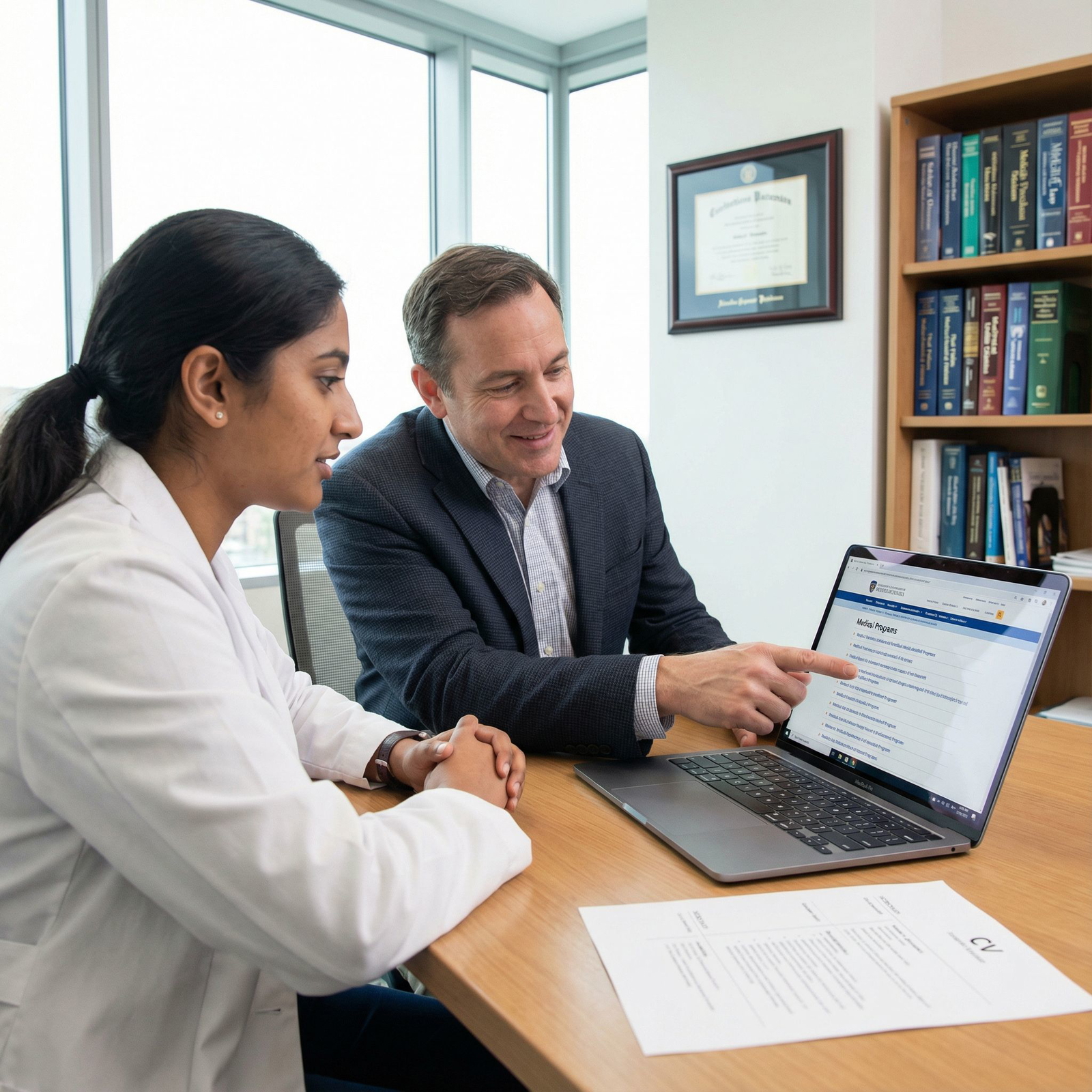
Miami and South Florida programs heavily value observed clinical performance and reliable letters.
You should:
- Prioritize U.S. clinical rotations in Internal Medicine, Family Medicine, Psychiatry, Pediatrics, or Neurology (depending on target specialty).
- If possible, complete audition or sub-internship rotations in South Florida, ideally at institutions that sponsor or host residency programs.
During rotations, focus on:
- Showing up early, staying late, volunteering for extra tasks.
- Knowing your patients better than anyone else: history, labs, imaging, and active issues.
- Practicing concise, structured presentations:
- Example: “Mr. X is a 64-year-old male with uncontrolled diabetes, admitted for sepsis secondary to pneumonia, now improving on day 3 of antibiotics…”
- Asking for formative feedback and showing visible improvement.
3. Generate Strong, Credible Letters of Recommendation (LoRs)
With weaker test scores, letters from respected faculty can move the needle substantially, particularly if they come from:
- U.S. attending physicians in your target specialty
- Faculty affiliated with Miami or broader South Florida residency programs
- Program directors or core faculty at teaching hospitals
Tactics:
- Ask early: Towards the end of a successful rotation, say,
“Would you feel comfortable writing a strong letter of recommendation for my residency application in Internal Medicine?” - Provide a LoR packet:
- Updated CV
- Personal statement draft
- Brief bullet list of patients or cases where you contributed meaningfully
- For Miami/South Florida targets:
- Try to secure at least one letter from someone known regionally (e.g., a South Florida attending, or someone whose trainees often match there).
Strategic Targeting: Choosing Specialties and Miami/South Florida Programs Wisely
Your chances of matching with low scores are much more influenced by where and how you apply than by a marginal score difference.
1. Choose a Realistic yet Fulfilling Specialty
As a Caribbean IMG with low Step scores:
- More realistic specialties:
- Internal Medicine
- Family Medicine
- Psychiatry
- Pediatrics
- Neurology (some programs)
- More challenging (but not always impossible):
- Emergency Medicine (EM)
- General Surgery
- OB/GYN
- Anesthesiology
- Extremely difficult with low scores, especially from Caribbean schools:
- Dermatology
- Plastic Surgery
- Orthopedic Surgery
- Ophthalmology
- ENT, Neurosurgery, etc.
If your dream field is highly competitive, consider:
- Staged pathway: Match into IM or prelim year → build research → later pursue fellowships aligning with your interests (e.g., cardiology, critical care, hospitalist work in academic settings).
- Geographic vs. specialty trade-offs: Are you more committed to being in Miami, or to a specific specialty anywhere?
2. Map the Miami and South Florida Landscape
Miami/South Florida includes:
- University-based academic programs (more competitive, more U.S. grads)
- Community-based university-affiliated programs
- Community programs with strong IMG presence
You should:
- Review each program’s current residents on their website:
- How many are Caribbean IMGs?
- Which schools (SGU, Ross, AUC, etc.)?
- Do they list scores or preferences?
- Check FREIDA and program websites for:
- IMG friendliness
- Minimum Step 1/Step 2 CK scores
- Visa sponsorship policies (J-1 vs. H-1B)
- Talk to recent graduates from your Caribbean medical school about:
- Which Miami residency programs have historically taken Caribbean grads
- How many interviews they received and where
Examples of signals of IMG-friendliness in South Florida:
- Resident list with multiple Caribbean IMG names/schools
- Website explicitly welcoming IMGs
- PD or program coordinator informally stating they consider Caribbean IMGs routinely
3. Use Your Caribbean Network (Especially SGU and Similar Schools)
If you’re from a major Caribbean school like SGU:
- Leverage the SGU residency match list or similar match lists from your school:
- Filter by state (Florida) and city (Miami, Hollywood, Fort Lauderdale, Palm Beach, etc.).
- Note which programs repeatedly appear—these are your top targets.
- Contact alumni:
- Email PGY-1–PGY-3 residents from your school who are currently in Miami residency programs or broader South Florida residency.
- Politely ask:
- How IMG-friendly is the program?
- What do they value in applicants (scores vs. rotations vs. letters)?
- Whether an away rotation there is helpful or necessary.
If your Step scores are low, an honest alum can tell you if your profile is within range or if you should focus your energy elsewhere.

Application Strategy: Crafting a Compelling Profile Despite Low Scores
1. Build a Miami-Relevant, Patient-Centered Narrative
Your personal statement and experiences should signal:
- Commitment to South Florida communities:
- Spanish or Haitian Creole language skills
- Prior volunteer work with underserved Latinx or Caribbean populations
- Personal ties to Miami (family, long-term residence, experience with regional health issues)
- Authentic motivation for your chosen specialty, not score-based desperation.
Example narrative themes:
- A Caribbean background that helps you connect with Miami’s diverse patient population.
- Clinical experiences in South Florida that opened your eyes to specific challenges (e.g., diabetes, HIV, immigrant health, addiction, mental health disparities).
- Growth story: from struggling academically → seeking mentorship → disciplined improvement and service.
2. Bolster Your Application with Local and Relevant Experiences
To stand out with low scores, you should over-achieve in other dimensions:
- Clinical electives in South Florida:
- Particularly at Miami-area teaching hospitals or clinics.
- Try to obtain at least one month in your target specialty in or near Miami.
- Community outreach or free clinics serving Miami-like populations:
- Even if done elsewhere, highlight how it prepares you for Miami’s diverse patients.
- Research or QI projects:
- Small retrospective studies or quality improvement projects at affiliated hospitals.
- Poster presentations at local or regional conferences (e.g., ACP Florida).
Even modest research or QI experience shows initiative and academic engagement. For Caribbean IMGs with low Step scores, these are especially helpful to counter any “less academic” assumptions.
3. Address Low Scores Strategically (Without Excuses)
If you must explain low scores (Step 1, Step 2 CK, or failed attempts):
- Use the Common Application Form (ERAS) “Additional Information” only if there’s a clear, concise context:
- Acute illness, family emergency, or adjusting to a new system.
- Demonstrated recovery afterward (strong Step 2 CK, improved clinical grades).
- Avoid:
- Overly emotional narratives.
- Blaming your school or exam.
- Long-winded paragraphs about test anxiety without showing what you did to overcome it.
Instead, focus on:
“My early performance on Step 1 reflected challenges I faced in transitioning to a new learning environment. I subsequently sought formal academic coaching, changed my study methods to question-based learning, and significantly improved my knowledge base, as reflected by my Step 2 CK and clinical evaluations.”
Programs want to see insight, accountability, and growth—not perfection.
4. Apply Broadly, Then Prioritize Miami Strategically
With low Step scores, you cannot be geographically narrow only to Miami if matching is your priority. A realistic approach:
- Apply broadly across:
- Florida (beyond Miami: Orlando, Tampa, Jacksonville, Gainesville, etc.)
- Other IMG-friendly states (NY, NJ, MI, IL, PA, TX, etc.)
- Still strategically highlight:
- Specific interest in Miami/South Florida in your personal statement version or secondary communications.
- Miami ties where relevant (but avoid sounding like you’ll be dissatisfied elsewhere).
Think of Miami as your top preference but not your only path. If you don’t match in Miami the first cycle, experience elsewhere can eventually bring you back as a fellow or attending.
Interview and Post-Interview Strategy: Converting Opportunities into a Match
Once you secure interviews, your low scores recede in importance. Your interview performance, professionalism, and fit become crucial.
1. Anticipate Questions About Your Scores and Caribbean Background
You may be asked:
- “Can you tell me about your academic performance on Step 1/Step 2?”
- “How do you think your training in a Caribbean medical school prepared you for residency?”
- “What challenges have you faced, and how did you address them?”
Prepare concise, positive responses:
- Acknowledge the lower score.
- Identify a specific lesson learned (e.g., better time management, test-taking strategies, using resources effectively).
- Emphasize clear evidence of improvement: Step 2 CK, strong clerkship evaluations, faculty praise.
Avoid:
- Over-apologizing or sounding ashamed.
- Going into excessive personal detail unless directly relevant.
- Implying the exam was unfair or irrelevant.
2. Sell Your Fit for Miami and South Florida
Miami residency programs care about:
- Ability to work with diverse, multicultural patients.
- Spanish or Haitian Creole proficiency (if applicable).
- Comfort with high patient volume, complex pathology, and limited-resources scenarios.
- Long-term interest in serving South Florida communities.
Be ready with:
- Specific patient stories from rotations (protecting privacy) that show your communication skills and cultural humility.
- Examples of working with Latinx, Caribbean, or immigrant communities.
- Honest discussion of why Miami is not just attractive for lifestyle, but also for professional and service reasons.
3. Post-Interview Communications and Ranking
If you feel strongly about a Miami or South Florida program:
- Send a thoughtful thank-you email, referencing something specific from your interview.
- A genuine interest letter (if program-appropriate) can reiterate:
- Why you felt especially aligned with their training environment.
- Your ties to the region.
- Your gratitude for their consideration despite some academic challenges.
On your rank list:
- Balance dream Miami programs with realistic IMG-friendly options.
- Don’t push all realistic programs below every Miami option if your primary goal is simply to match.
Finally, remember: NRMP rules prohibit programs from asking where you will rank them, and you should not solicit promises from programs either. Keep communications professional and ethical.
FAQs: Low Step Score Strategies for Caribbean IMG in Miami
1. Can I still match into a Miami residency program with a low Step 1 score as a Caribbean IMG?
Yes, it’s possible, but challenging. Your chances improve if you:
- Strongly outperform on Step 2 CK compared to Step 1
- Obtain excellent U.S. clinical evaluations and letters
- Target IMG-friendly Miami and South Florida programs that have a track record of Caribbean medical school residency matches
- Apply broadly beyond Miami to ensure you match somewhere, not just locally
2. Is an SGU residency match connection really helpful for Miami programs?
For SGU and other large Caribbean schools, existing match data and alumni networks are extremely valuable. If your school has a history of placing graduates into Miami residency programs (e.g., IM, FM, Psych), those programs are more likely to consider future applicants from the same school—even with below average board scores—if the rest of the application is strong. Reach out to alumni at those programs for targeted advice.
3. I have a low Step 1 and an average Step 2 CK. Should I retake Step 2 or delay graduation?
In most cases, retaking Step 2 CK is not an option unless you fail. Instead:
- If you haven’t taken Step 2 yet, delay the exam until your NBME practice scores reliably meet your target range.
- If you already took Step 2 and the score is average, focus on maximizing:
- Strong clinical performance and letters
- Strategic program selection
- Additional experiences (research, QI, community work) demonstrating maturity and reliability
Delaying graduation may be warranted only if you haven’t taken Step 2 CK and clearly need more time for focused prep.
4. Which South Florida specialties are most realistic for Caribbean IMGs with low scores?
Most realistic options generally include:
- Internal Medicine
- Family Medicine
- Psychiatry
- Pediatrics
Even within these, competition in Miami is higher than in many other regions. Consider applying widely across Florida and other states, while still giving priority to South Florida residency programs that are historically IMG-friendly and have Caribbean graduates among their current residents.
If you approach your application with honest self-assessment, focused academic recovery, and a targeted Miami strategy, a low Step score does not have to define your entire career. It simply means you have to be more deliberate, more organized, and more proactive than applicants whose numbers open doors automatically.