Understanding the Challenge: Low Scores, Caribbean School, and IR Ambitions
Interventional Radiology (IR) has rapidly become one of the most competitive specialties in the Match. For a Caribbean IMG with a low Step 1 score or overall below average board scores, aiming for IR can feel intimidating—but not impossible. Success requires a strategic, data‑driven approach and a realistic understanding of the current landscape.
Why IR Is So Competitive
IR combines procedure-heavy work, imaging expertise, and close longitudinal patient care. This has led to:
- Limited number of positions (especially integrated IR/DR residencies)
- High interest from US MD and DO applicants
- Strong preference for excellent test scores and academic metrics
Integrated IR programs especially scrutinize:
- USMLE/COMLEX performance
- Medical school pedigree
- Research record, especially IR/DR publications
- Letters from interventional radiologists
This is where being a Caribbean IMG with a low Step score becomes a significant—but not insurmountable—obstacle.
Where Caribbean IMGs Typically Fit in
Caribbean graduates, including those from schools like SGU, Ross, AUC, Saba, and others, commonly:
- Face more scrutiny over academic performance
- Need stronger evidence of clinical excellence and professionalism
- Must outperform expectations on rotations and letters
That said, each year there are successful SGU residency match outcomes in radiology-related fields (Diagnostic Radiology, prelim surgery, transitional year) that later serve as stepping stones toward IR fellowships or ESIR (Early Specialization in Interventional Radiology).
How Low Is “Low”?
“Low” is relative and depends on the year and the applicant pool, but for IR-related pathways:
- CBSE/USMLE Step 1 (if numeric): Significantly below national average (e.g., <220 when the mean is around 230–235) is usually considered low for radiology/IR.
- Step 2 CK: Scores <235–240 can be challenging for integrated IR, especially as an IMG.
Even if Step 1 is Pass/Fail for you, your school transcript (e.g., CBSE scores, internal exams) and Step 2 CK will effectively serve as your numeric differentiators.
The rest of this article breaks down concrete, actionable strategies for Caribbean IMGs with low Step scores who want to pursue Interventional Radiology or IR‑adjacent pathways.
Strategy 1: Reframe the Goal – Multiple Pathways into Interventional Radiology
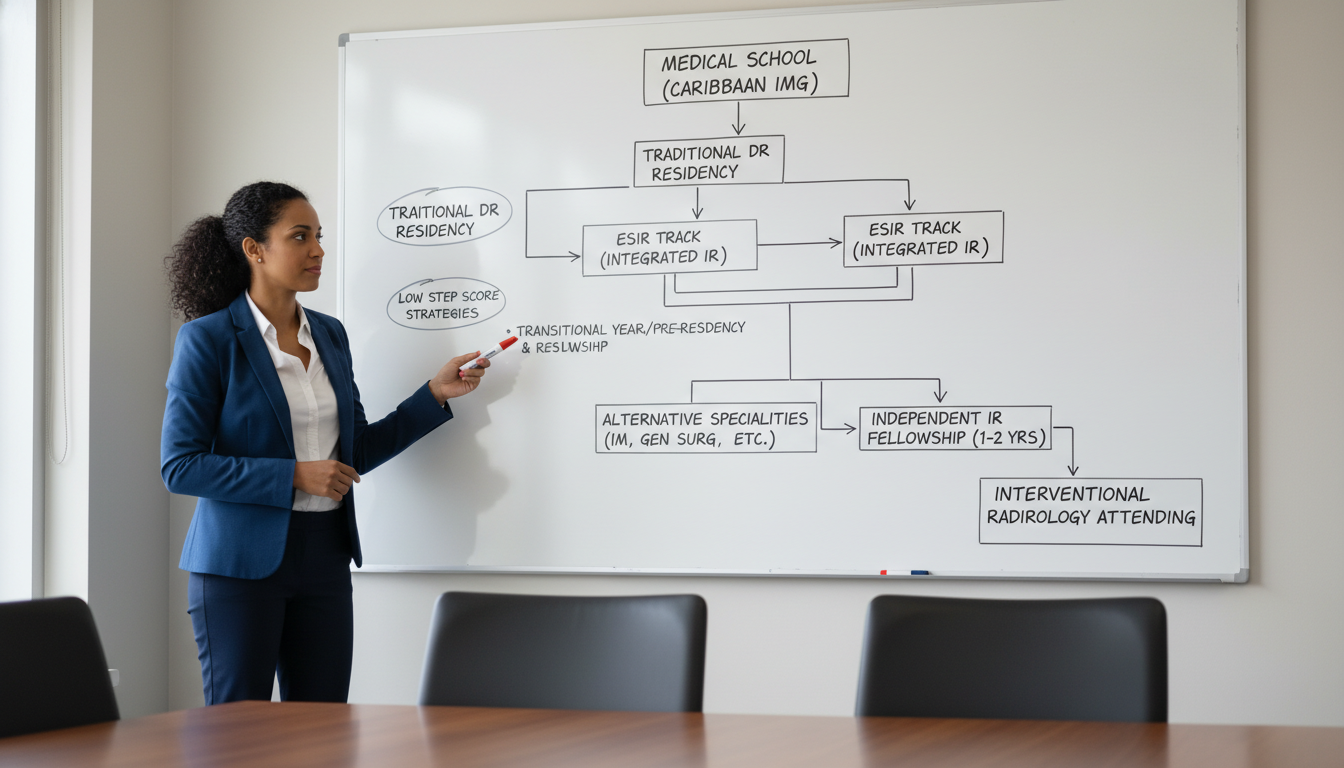
For a Caribbean IMG with below average board scores, going “all in” on integrated IR may be high risk. Instead, think strategically about pathways rather than a single Match outcome.
Main IR-Related Pathways
Integrated IR/DR Residency (5–6 years)
- Direct entry into IR from medical school
- Most competitive route
- Very challenging for Caribbean IMGs with low scores, but not entirely impossible in rare cases with extraordinary CVs
Diagnostic Radiology (DR) Residency → ESIR → Independent IR
- DR residency (4 years) then Early Specialization in IR (ESIR) for 1 year + 1 extra IR year
- More seats than integrated IR; still quite competitive, but more attainable than integrated IR for IMGs
- Many IRs currently in practice trained via this path
Diagnostic Radiology → Traditional Independent IR Fellowship
- Complete DR, then 2-year independent IR fellowship (for non-ESIR) or 1 year (with ESIR)
- Programs may be somewhat more flexible if you bring strong DR skills, good clinical reputation, and IR‑focused activities
Non-DR Preliminary Route: Surgery/Internal Medicine → IR or IR-Adjacent Career
- Match into general surgery, vascular surgery, or internal medicine
- Later attempt to transition into IR fellowship, or pursue closely related fields (e.g., interventional cardiology, vascular medicine, endovascular surgery)
- Riskier and less direct, but can sometimes work, especially with strong IR research and faculty advocates
IR-Adjacent and Hybrid Careers
- Vascular surgery, interventional cardiology, neurointerventional radiology (via neurology/neurosurgery), or specialty practices with procedural focus (e.g., vein centers, interventional pain)
- Reasonable alternatives if IR is not achievable, but you want a procedurally intense career
Strategic Recommendation for Caribbean IMGs with Low Steps
For most Caribbean IMGs with low Step 1 or Step 2 CK scores, the highest yield and most realistic primary target is:
- Diagnostic Radiology residency at a mid‑tier or community-based program with
- An ESIR track, or
- A history of sending residents to IR fellowships
You can still apply to a very small, targeted set of integrated IR programs if you have substantial IR research, strong IR letters, and US clinical experience. But your main focus should be:
- DR programs that are IMGFriendly
- Programs with documented IR pathways (ESIR or fellowship placement)
This reframing is crucial. It changes your application strategy from “integrated IR or bust” to “secure a radiology-related base, then build into IR.”
Strategy 2: Turn Around the Narrative of Low Scores
Your low Step 1 score or below average board scores are a fact. You can’t erase them, but you can contextualize and counterbalance them with evidence of growth, reliability, and clinical excellence.
1. Crush Step 2 CK (If Not Already Taken)
For a Caribbean IMG, Step 2 CK becomes your most important numeric metric:
- Aim to outperform your Step 1 trajectory—even a modest improvement can signal upward trend and resilience.
- Use a disciplined study plan:
- UWorld (full pass, high-quality review)
- NBME self-assessments and UWSA to track progress
- Dedicated 6–10 weeks with a realistic, structured schedule
- Consider a dedicated tutor or group if you previously underperformed on standardized exams.
Programs will often forgive a low Step 1 if:
- Step 2 CK is clearly stronger
- You demonstrate consistent clinical excellence and strong letters
2. Strengthen Other Objective Metrics
If scores are not your strength, focus on every other measurable element:
- Honors in clinical clerkships, especially:
- Internal medicine
- Surgery
- Radiology electives
- Shelf exam improvements over time (if you can highlight a positive trajectory)
- Class ranking or Dean’s letter excerpts showing you in the top tier of your cohort in clinical performance
3. Address Scores Strategically in Your Application
Avoid extensively apologizing for your scores. Instead:
Personal Statement (if needed)
- Briefly acknowledge early academic struggles only if there is a clear turning point
- Focus on what you learned and how it led to improved performance, discipline, and maturity
- Emphasize your subsequent achievements (Step 2, clerkship honors, research projects)
MSPE / Dean’s Letter
- If your school allows, ask for mention of upward trends, strong clinical evaluations, and professionalism
The key is to present your low Step score as one early data point, overshadowed by more recent, stronger evidence of competence.
Strategy 3: Optimize Clinical Experience and Letters to Offset Scores
Program directors repeatedly emphasize that, beyond scores, letters of recommendation (LORs) and clinical performance are decisive—especially for Caribbean IMGs.
1. Prioritize US-Based Radiology and IR Rotations
If possible, secure:
- At least one Diagnostic Radiology elective at a US academic or community program
- One Interventional Radiology rotation (away rotation or elective), ideally:
- At an institution with an IR residency or IR fellowship
- With faculty known for being supportive of trainees and IMGs
During these rotations, your goal is simple: be the best student they’ve had in a long time.
Practical behaviors that stand out:
- Arrive early, stay late when reasonable
- Learn the basics of imaging interpretation and IR procedures ahead of time
- Ask smart, focused questions that show preparation
- Volunteer to work on small projects (case reports, QI projects, presentations)
- Help the team with notes, follow-up calls, or patient education when allowed
2. Aim for At Least One Strong IR Letter
For IR-related pathways, you ideally want:
- 1 IR letter (from an interventional radiologist who knows you well)
- 1 Diagnostic Radiology letter
- 1 Medicine/Surgery or Sub-I letter demonstrating clinical strength and work ethic
If you’re applying predominantly to DR with an eye on future IR:
- Emphasize radiology letters but highlight your IR exposure and career goals in your personal statement.
3. What Makes a “Strong” Letter?
You’re aiming for letters that:
- Use specific anecdotes (e.g., how you handled a complex consult, your initiative in reading up on cases)
- Explicitly compare you favorably to other students or even interns
- “Among the top 10% of students I have worked with in the last 5 years.”
- Emphasize:
- Work ethic
- Communication and teamwork
- Professionalism
- Ability to improve quickly with feedback
Ask letter writers openly:
“Do you feel you can write me a strong, supportive letter for a radiology/IR-focused application?”
If they hesitate, thank them and seek another writer.

Strategy 4: Build an IR-Focused Profile Through Research and Networking
With a low Step 1 score and Caribbean medical school background, you must show that IR is not a last-minute interest but a sustained, serious commitment.
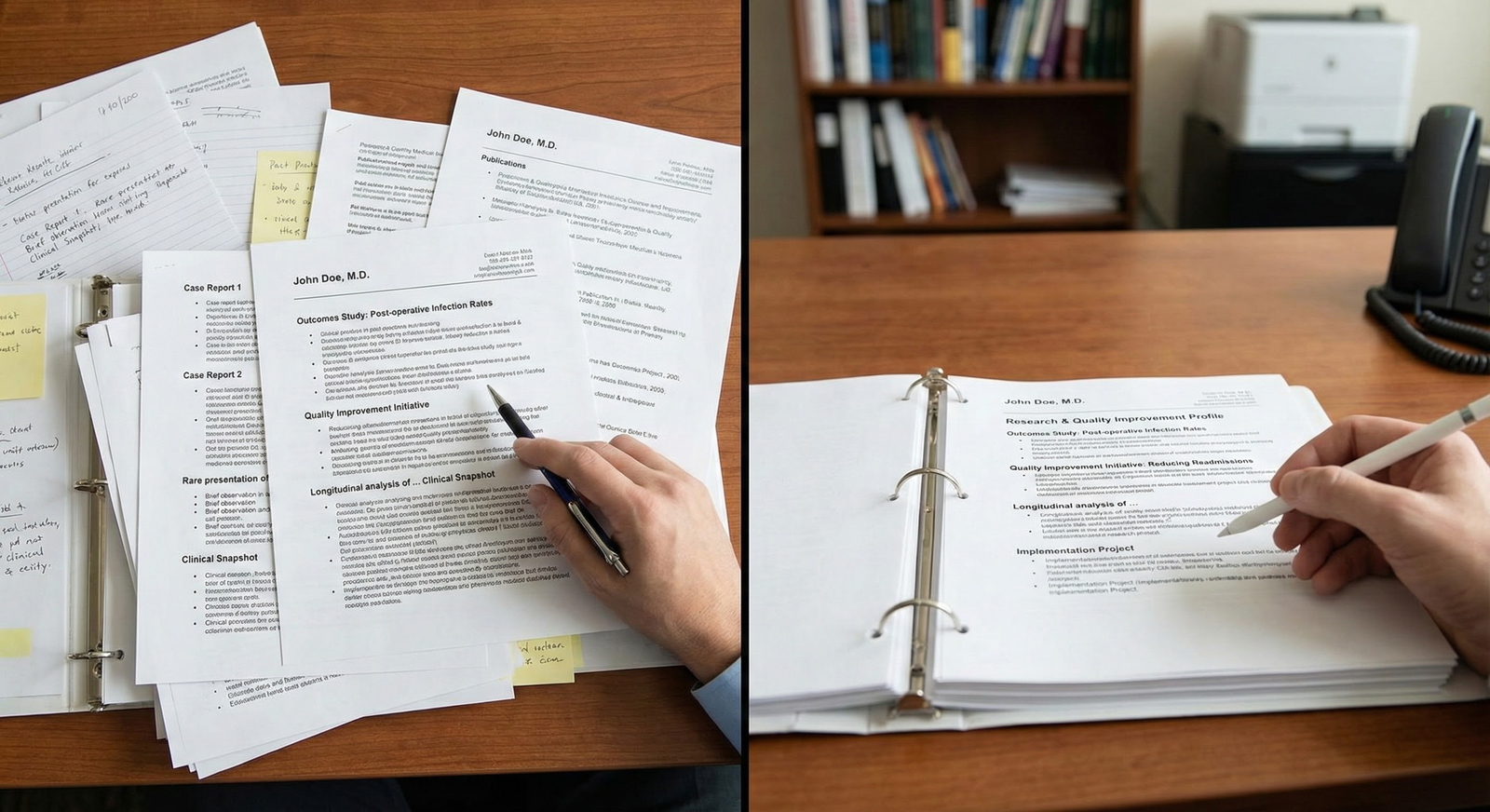
1. Get Involved in IR and Radiology Research
You don’t need a first-author New England Journal paper. Even modest, well-done projects help:
- Retrospective chart reviews on IR procedures
- Case series or case reports of interesting IR interventions
- Quality improvement projects (e.g., reducing contrast usage, optimizing clinic follow-up)
Practical tips:
Email IR attendings at your rotation sites or academic centers with a short, professional message:
- Who you are (Caribbean IMG, year in training)
- Why you’re interested in IR
- Any prior experience with research
- Clear request: “I’d be grateful for the chance to help with any ongoing IR or radiology projects, even data collection or chart reviews.”
Be extremely reliable:
- Meet deadlines
- Keep data organized
- Respond to emails promptly
Even 2–3 publications or conference abstracts/posters specifically involving IR or radiology can help you stand out against other Caribbean IMG applicants.
2. Present at IR and Radiology Conferences
Try to submit:
- Abstracts to SIR (Society of Interventional Radiology) Annual Scientific Meeting
- Posters/talks to RSNA, ARRS, or state radiology societies
Conference activities give you:
- CV entries
- Networking opportunities with IR faculty from multiple institutions
- Talking points during interviews
3. Join Professional Societies and Online Communities
Consider:
- SIR Medical Student Council or student membership
- ACR (American College of Radiology) student or resident involvement
- Attending virtual events, webinars, and journal clubs
Networking strategies:
- Reach out politely on LinkedIn or email after meeting someone at a conference:
- Thank them for their talk
- Share a short reflection on what you learned
- Stay on their radar by occasionally updating them on your progress
These relationships may later yield:
- Research collaborations
- Away rotation opportunities
- Informal advocacy with program directors
Strategy 5: Crafting a Targeted Application Strategy for the Match
With low scores and a Caribbean background, your application strategy and program list can make or break your IR journey.
1. Decide Your Primary Target: DR vs. Integrated IR
For most Caribbean IMGs with low Step scores, the recommended approach is:
- Primary target: Diagnostic Radiology (DR) programs
- Secondary, highly selective target: 3–8 integrated IR programs where:
- You have done an away rotation, or
- You have strong IR advocates or research connections
Applying to dozens of IR programs with weak connections is usually low yield and costly.
2. Build a Smart, Broad DR List
For DR:
Focus on:
- Community or hybrid academic-community programs
- Programs that historically interview/match IMGs
- Locations less saturated with US MD applicants (e.g., some Midwest, South, non-major coastal cities)
Use tools:
- NRMP Charting Outcomes (for prior years)
- Program websites and resident bios (look for IMGs)
- Specialty-specific IMG forums and guidance documents
Given low scores, volume matters:
- Many Caribbean IMGs with below average board scores apply to 60–100+ DR programs, plus a backup specialty (e.g., internal medicine, preliminary surgery, transitional year).
3. Consider a Backup Specialty with IR-Relevant Training
If DR or IR seems out of reach statistically, include:
- Internal Medicine (with an eye toward interventional cardiology, vascular medicine, or IR‑adjacent fields)
- General Surgery (possible bridge to vascular surgery or endovascular work)
- Preliminary medicine or surgery years at hospitals with strong radiology and IR departments
Aim to secure at least one categorical position as a safety net. You can then continue to pursue IR‑related options from a stable residency spot.
4. Tailor Your Application Materials
Personal Statement (for DR, IR, or both):
Tell a coherent story:
- Early attraction to procedures and imaging
- Concrete IR experiences (rotations, cases, mentors)
- Research or QI projects in IR/radiology
- Long-term goal: IR or image-guided therapy career
For DR programs, emphasize:
- Passion for imaging
- Appreciation of diagnostic reasoning
- Plan to pursue ESIR or IR fellowship where available
CV and Experiences section:
- Highlight:
- IR‑specific electives and observerships
- IR and radiology research first, then others
- Teaching, leadership, and community service—especially if they show reliability and professionalism
Strategy 6: Consider a Research Year or Additional Training if Needed
For some Caribbean IMGs with significantly low scores and minimal IR exposure, it may be wise to delay application by a year to build a stronger case.
When to Consider a Research Year
You might benefit from 1–2 dedicated years if:
- Step scores are significantly below typical DR or IR thresholds
- You lack IR/radiology research or letters
- You are graduating in an application cycle with especially tight competition
An IR or radiology research year can offer:
- Multiple publications, posters, and presentations
- Deep mentorship relationships with faculty
- Insider knowledge of departmental culture and program priorities
The key is to ensure your research position is:
- In a reputable IR or DR department
- Supervised by faculty with a track record of supporting trainees
- Structured enough to produce actual CV‑boosting outputs within 12 months
Other Strengthening Options
- Master’s in Clinical Research / Public Health (if combined with ongoing IR-related projects)
- Postgraduate certificate focused on imaging, outcomes research, or procedural safety (only if it directly contributes to your IR narrative)
- Extra sub-internships in internal medicine or surgery at programs with robust IR departments to build local advocates
Putting It All Together: A Sample Roadmap for a Caribbean IMG with Low Scores
Imagine you are a Caribbean IMG (for example, from SGU) with:
- Step 1: Pass with a marginal result or low numeric score
- Step 2 CK: 230 (below the typical IR applicant mean)
- Some clinical honors but no major IR research yet
A realistic, 2–3 year IR strategy could look like:
Year 4 of Medical School (or Final Year):
- Schedule:
- DR elective at a US hospital with resident training
- IR elective/away rotation at a program known for ESIR or IR fellowship
- Secure:
- 1 IR letter
- 1 DR letter
- 1 medicine or surgery letter
- Start:
- A small IR research project (case report, QI, retrospective study)
- Apply:
- Broadly to DR (60–100+ programs)
- Selectively to 3–8 integrated IR programs where you have strong connections
- 20–40 programs in a backup specialty (e.g., internal medicine)
If you match into DR:
- Work toward:
- Excellent performance as a DR resident
- Research in IR or IR‑adjacent areas
- ESIR position if offered
- Then pursue:
- Independent IR fellowship or ESIR → 1‑year IR
If you match into a backup specialty (e.g., IM or surgery):
- Maintain IR involvement:
- Research with the IR department
- Elective rotations observing IR
- Publications/posters
- Reassess after PGY‑1 or PGY‑2:
- Is a transition to DR or IR‑related fellowships feasible?
- Are adjacent procedural careers a better fit?
If you do not match:
- Strongly consider:
- An IR/DR research year
- Reapplication with strengthened CV, new letters, and a refined program list
This staggered, multi-pathway approach is how many Caribbean IMGs, including those in the SGU residency match data, ultimately arrive at satisfying radiology or IR‑adjacent careers—even starting from a low Step score baseline.
FAQs: Low Step Score Strategies for Caribbean IMG in Interventional Radiology
1. Can I realistically match directly into integrated IR as a Caribbean IMG with a low Step 1 score?
It is rare but not entirely impossible. The bar is high: you would need a strong Step 2 CK (preferably well above your Step 1 trajectory), excellent US-based IR/DR rotations, outstanding letters (including at least one from an IR attending), and meaningful IR research or conference presentations. Even then, chances are modest. Most Caribbean IMGs in your situation improve their odds by primarily targeting DR programs with ESIR or strong IR fellowship pipelines rather than relying solely on integrated IR.
2. Is SGU residency match in radiology or IR better than other Caribbean schools?
SGU and a few other larger Caribbean schools often have relatively stronger match outcomes, including occasional matches in Diagnostic Radiology and, less frequently, IR-related positions. However, program directors still evaluate each applicant individually. Your school name alone cannot compensate for low scores; you need strong clinical evaluations, letters, and IR‑focused activities. The advantage of a larger school is usually access to more affiliated hospitals and alumni networks, which you must actively leverage.
3. If I have a low Step 1 score, how high does Step 2 CK need to be to help me?
There is no magic cutoff, but a clear improvement is essential. For example, if your Step 1 was significantly below average, scoring in at least the mid‑230s or higher on Step 2 CK helps demonstrate academic growth. Even if you cannot reach that level, any significant score increase, combined with strong clerkship performance and IR‑focused rotations, helps reframe your profile. You should still build a broad, risk‑balanced program list that includes DR, some IR, and a viable backup specialty.
4. Should I take a dedicated research year if my board scores are low?
A research year can be high yield if:
- It is in a reputable IR or radiology department
- You are likely to produce multiple abstracts, posters, and at least one publication
- You will gain mentors willing to strongly support your application
It is most helpful for applicants with particularly low scores or minimal IR exposure. However, a research year is not a guarantee of a successful IR or DR match. Before committing, confirm that your prospective mentor has a track record of helping students and residents get into competitive programs and that you are prepared to work hard and be productive during that year.
By combining realistic expectations, careful program selection, strong IR-focused experiences, and relentless work ethic, a Caribbean IMG with a low Step score can still build a credible path toward Interventional Radiology—or a fulfilling IR‑adjacent career that uses the same procedural and imaging skills you set out to develop.