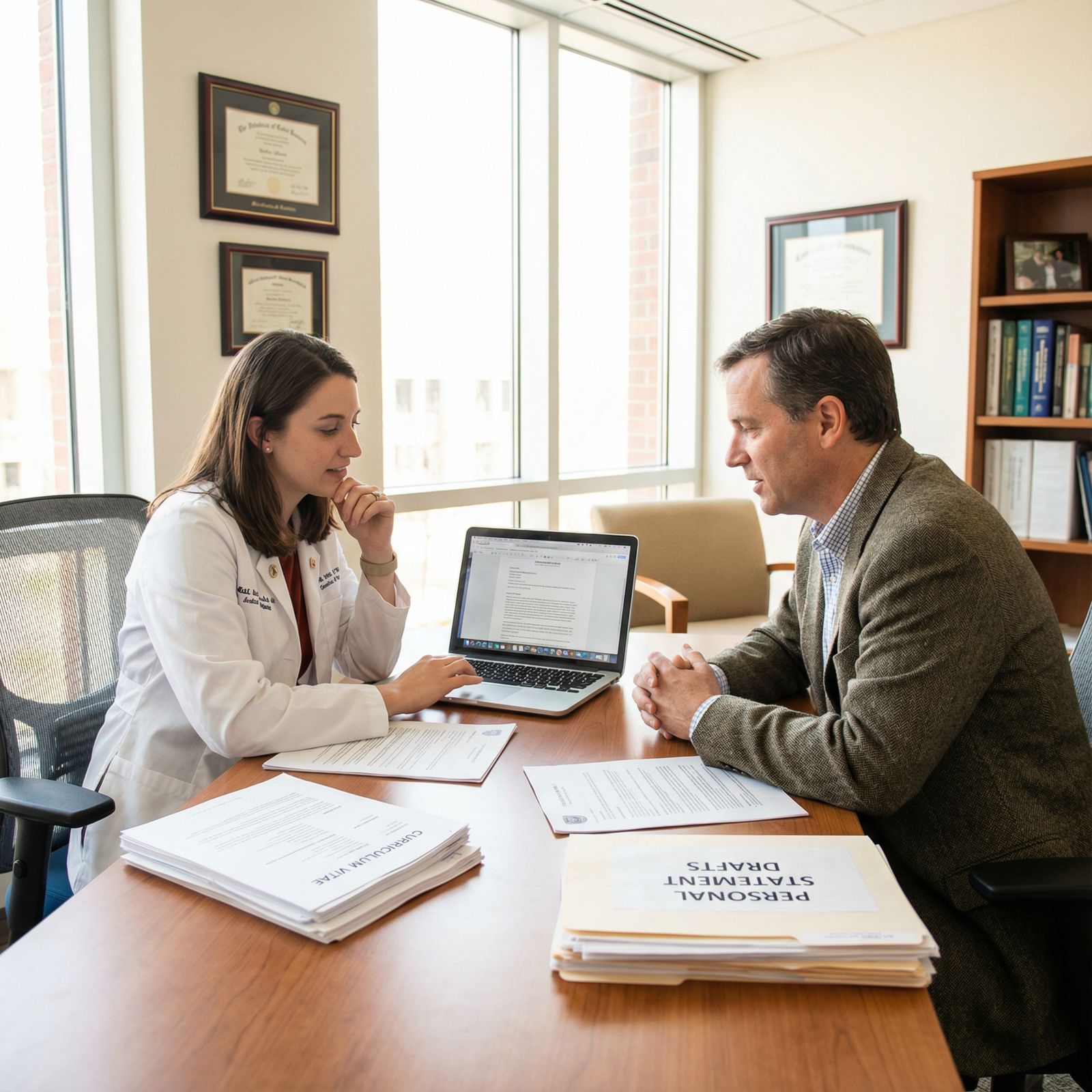
Introduction: Thriving in the Match with Lower USMLE Scores
Residency applications are stressful for almost everyone, but they can feel especially daunting when your USMLE Step scores are below the averages for your desired specialty or programs. You may worry that a single number will define your future.
It won’t.
While USMLE Step 1 (now pass/fail) and Step 2 CK remain important components of residency applications, more programs are actively embracing holistic review. They increasingly recognize that clinical excellence, professionalism, resilience, communication skills, and genuine commitment to the specialty cannot be reduced to a three-digit score.
This guide focuses specifically on strategies for applicants with lower USMLE scores—both U.S. and international graduates—who still aim to build a compelling, competitive residency application. You will learn how to:
- Understand where scores fit into the broader application landscape
- Craft a persuasive Personal Statement that reframes your story
- Leverage Clinical Experience and letters of recommendation to your advantage
- Use Research and scholarly activity strategically
- Implement deliberate Networking to open doors
- Prepare for Interviews that convert invitations into rankings
- Optimize your CV and online presence to reinforce your strengths
Your scores are one part of your story—not the whole story. The goal is to help program directors see the complete, capable, and motivated physician behind the numbers.
Understanding the Residency Application Landscape with Low Step Scores
Where USMLE Scores Fit in Today’s Selection Process
For many programs, USMLE scores are still used as an initial screening tool, especially when receiving hundreds or thousands of applications. Programs may:
- Use a minimum Step 2 CK cutoff to manage volume
- Prioritize higher scores in highly competitive specialties (e.g., dermatology, orthopedics, plastic surgery)
- Pay closer attention to failed attempts or large discrepancies between Step 1 and Step 2
However, this does not mean low scores automatically end your chances. Program directors also understand:
- Test performance may not perfectly predict residency performance
- Some students show strong growth between Step 1 and Step 2 CK
- Life events, health issues, or personal challenges can temporarily affect exam performance
- The Match is increasingly recognizing diverse paths and backgrounds
Your task is to help them see the context behind your scores and the evidence that you will be a reliable, hardworking, teachable resident.
The Rise of Holistic Review in Residency Applications
Holistic review means programs consider the entire applicant profile, not just USMLE scores. They weigh:
- Academic record: clinical grades, honors, trends over time
- Clinical Experience: quality of rotations, sub-internships, evaluations
- Letters of Recommendation: detailed, specific advocacy from trusted faculty
- Personal Statement: motivations, insight, communication, maturity
- Research and scholarly work: not just publications, but engagement and perseverance
- Extracurriculars, leadership, and service: evidence of character, teamwork, and initiative
- Fit with program mission: commitment to underserved populations, primary care, research, or academic careers
If your scores are weaker, you need to be exceptionally strong in the elements you can still control. That is where the rest of your application becomes crucial.
Crafting a Powerful Personal Statement that Reframes Low Scores
Your Personal Statement is the one place in the residency application where you have full control over the narrative. It is your chance to:
- Provide context (not excuses) for academic setbacks
- Demonstrate insight, growth, and resilience
- Present a cohesive, memorable story about who you are as a future resident
Key Goals for Applicants with Low USMLE Scores
Humanize your application
Numbers can’t convey your journey, struggles, or strengths. A well-written Personal Statement can.Address your scores briefly, if necessary
If your scores are significantly below target programs’ averages or you had a failed attempt, consider one concise sentence acknowledging this, framed with maturity and growth.Shift focus to strength, growth, and readiness
The majority of your statement should highlight what you bring to a residency program now.
How to Structure a High-Impact Personal Statement
Opening with a focused, authentic story
Choose a specific moment—on the wards, in community service, or during a personal experience—that crystallized your interest in the specialty. Avoid clichés and overly dramatic narratives; aim for concrete, observable details.Connecting experiences to your specialty choice
Explain how your experiences shaped your interest in, for example, internal medicine, family medicine, surgery, psychiatry, or pediatrics. Describe what aspects of the specialty match your strengths and values: continuity of care, acute decision-making, patient education, procedural work, etc.Brief, honest mention of low scores (if indicated)
One or two sentences is enough. For example:“During the time I prepared for Step 1, I faced [brief context: illness, caregiving responsibilities, adjustment to a new system]. Although my exam performance did not reflect my true potential, the experience taught me to seek help early, refine my study strategies, and build more sustainable habits. This growth is reflected in my clinical performance and Step 2 CK.”
Avoid blaming others or oversharing personal details. Focus on responsibility and growth.
Showcase evidence of growth and competence
Highlight specific examples: strong clerkship evaluations, honors in core rotations, research productivity, leadership, or notable feedback from faculty.Close with forward-looking confidence
End by describing what kind of resident you aim to be and what you hope to contribute to your chosen field and to specific types of programs (e.g., community-based, academic, research-oriented, or serving underserved communities).
Common Pitfalls to Avoid
- Over-defending or over-explaining low scores
- Using vague statements like “I am passionate” without evidence
- Repeating your CV instead of interpreting it
- Writing a single generic statement for all specialties
A strong Personal Statement won’t erase low scores, but it can reframe your application as a story of perseverance, insight, and upward trajectory—qualities many programs value highly.

Leveraging Clinical Experience to Outweigh Weaker Scores
When your USMLE scores are not your main strength, your Clinical Experience becomes one of the most powerful components of your application. Program directors repeatedly emphasize that they want residents who:
- Work well on teams
- Communicate effectively with patients and staff
- Show up prepared and reliable
- Demonstrate clinical reasoning and professionalism
Maximizing the Impact of Core Rotations and Sub-Internships
If you are still in medical school or early in your clinical years:
- Aim for excellence in core rotations. Strong evaluations and honors grades in medicine, surgery, pediatrics, OB/GYN, psychiatry, and family medicine can partially offset lower scores.
- Pursue sub-internships (sub-I’s) in your chosen specialty. These rotations allow programs to see you function at an intern-like level. Be proactive, dependable, and eager to learn.
- Seek actionable feedback. Ask attendings and residents what you can improve, then implement changes visibly. This often translates into stronger evaluations and recommendations.
For graduates or international medical graduates (IMGs):
- Consider U.S. clinical experience (USCE) such as observerships, externships, or hands-on electives where available.
- Choose sites with strong teaching and potential letter writers. A few high-quality rotations are more valuable than many superficial ones.
- Document your responsibilities clearly on your CV (e.g., pre-rounding, presenting cases, writing notes under supervision, performing certain procedures).
Securing Strong, Specific Letters of Recommendation
Letters of Recommendation can carry significant weight—sometimes more than test scores—especially when they are detailed, personalized, and written by faculty known to program directors.
Aim for 3–4 strong letters. Prioritize:
- Clinical supervisors in your chosen specialty who directly observed your patient care
- Faculty who can compare you to peers (“top 10% of students I’ve worked with”)
- Mentors who know your journey, can contextualize your scores if appropriate, and can attest to your growth
Make it easy for writers to support you:
- Provide your CV, Personal Statement draft, and a short “brag sheet” of cases, projects, or feedback you’re proud of.
- Politely ask if they can write a “strong, supportive letter”—this wording allows them to decline if they cannot.
Strategic Research and Scholarly Activity for Applicants with Low Scores
Research is not mandatory for all specialties, but it can enhance your residency application, especially in competitive fields or academic programs.
How Research Helps When Scores Are Lower
Research can:
- Signal intellectual curiosity and commitment to evidence-based practice
- Demonstrate perseverance, collaboration, and time management
- Provide material for interviews and networking
- Lead to abstracts, posters, and publications that strengthen your CV
Programs know not every project leads to a publication. The process itself is valuable.
Getting Involved in Research Strategically
- Start with faculty in your target specialty. Email with a concise introduction, your interests, and a clear ask: “I’m interested in getting involved in ongoing research projects in [specialty]; do you have any opportunities for a motivated student/resident?”
- Be flexible with project type. Case reports, retrospective chart reviews, QI (quality improvement) projects, and educational research are all legitimate.
- Follow through consistently. Meeting deadlines, responding promptly, and doing careful work can turn a small role into a long-term collaboration—and a strong letter.
Presenting, Publishing, and Showcasing Your Work
Even small scholarly contributions can be valuable when framed properly in your CV and interviews:
- Abstract/poster at a regional or national meeting
- Presentation at a local grand rounds or departmental conference
- Co-authorship on a review article or case report
During interviews, be prepared to briefly explain:
- Your specific role in the project
- What you learned (methods, collaboration, scientific thinking)
- How it influences your clinical approach
You don’t need a dozen high-impact publications. You need evidence that you can think critically, follow through, and contribute to the academic environment.
Networking and Professional Relationships: Opening Doors Beyond Scores
In the residency application process, Networking is often the hidden variable that can help candidates with lower Step scores get noticed.
Why Networking Matters
Program directors are more likely to take a closer look at an application when:
- A trusted colleague mentions you positively
- You have rotated at their institution and left a strong impression
- You have collaborated with their faculty on research or teaching
- You have shown sustained interest in their program’s mission
Networking is not about manipulation; it’s about genuine professional relationships and learning opportunities.
Practical Networking Strategies for Applicants
Informational Interviews
- Reach out to residents, fellows, and faculty via email or LinkedIn.
- Ask for 15–20 minutes to learn about their experience in the specialty or program.
- Prepare thoughtful questions and end by asking, “What would you recommend for someone in my situation (e.g., lower scores, IMG, non-traditional applicant) who wants to be competitive?”
Conferences and Specialty Meetings
- Attend local, regional, or national conferences relevant to your specialty.
- Participate actively: ask questions after talks, visit poster sessions, introduce yourself briefly to speakers or program representatives.
- Follow up with a short email thanking them and maintaining the connection.
Home Institution and Alumni Network
- Leverage your medical school’s alumni in your specialty of interest.
- Faculty may connect you to colleagues at other institutions willing to review your application or consider you for auditions.
Away Rotations / Audition Rotations (where possible)
- These can be particularly impactful for lower-scoring applicants: they allow programs to see your work ethic and fit first-hand.
- Treat every day like a month-long interview: be punctual, prepared, and proactive.
Networking cannot replace weak performance, but it can ensure your application gets a fair, holistic look rather than being automatically filtered out by a score screen.
Excelling in Residency Interviews: Converting Invitations into Rankings
When your USMLE scores are on the lower side, every Interview invitation is precious. It means you have already passed an important screening stage. Your task now is to show:
- You will be a dependable, teachable, collegial resident
- You understand the specialty and the program
- You bring unique strengths and experiences that add value
Core Interview Preparation Strategies
Know your application deeply
- Anything listed on your CV is fair game. Be prepared to discuss every research project, leadership role, and clinical experience.
- Anticipate questions about your Step scores and have a concise, honest, growth-focused answer ready.
Practice Behavioral Questions using STAR
Common prompts include:- “Tell me about a time you made a mistake.”
- “Describe a conflict you had on a team and how you resolved it.”
- “Tell me about a time you received critical feedback.”
Use the STAR format: Situation, Task, Action, Result. Emphasize reflection and what you learned.
Communicate your specialty fit and program fit
- Be ready to answer “Why this specialty?” and “Why our program?” with specifics: curriculum structure, patient population, research opportunities, mentorship culture, geographic factors.
- If you have lower scores, showing thoughtful commitment and genuine enthusiasm can have a positive impact.
Prepare a brief, clear explanation of low scores
- Own your performance without self-deprecation.
- Mention one or two concrete steps you took to improve (new study strategies, time management, seeking help).
- Quickly pivot to evidence of current competence (Step 2 CK improvement, strong clinical grades, good feedback from supervisors).
Showing Professionalism and Maturity
- Be punctual, polite, and engaged throughout interview day.
- Treat coordinators, residents, and staff with the same respect as program directors; their feedback is often considered.
- Send personalized, concise thank-you emails within a few days, highlighting a meaningful aspect of your interaction.
Your goal is to leave interviewers thinking:
“This applicant will be safe, hardworking, teachable, and good to work with—even if their scores are lower than some others.”
Optimizing Your CV, Extracurriculars, and Online Presence
Beyond scores and interviews, the remaining pieces of your application should form a coherent, professional picture.
Building a Clear, Impactful Curriculum Vitae (CV)
Your CV should be:
- Well organized: Clear sections (Education, Clinical Experience, Research, Publications, Presentations, Leadership, Volunteer Work, Skills, Languages).
- Specific: Use action verbs and measurable details where possible (e.g., “Led a team of 10 students in organizing a free clinic serving 80+ patients monthly”).
- Honest: Never exaggerate titles or roles. Program directors value integrity above all.
Tailor emphasis to the specialty:
- For primary care specialties, highlight continuity clinics, community service, patient education, and language skills.
- For surgical fields, emphasize technical exposure, teamwork in the OR, and procedural interest.
- For academic or research-heavy programs, feature scholarly work, presentations, and academic honors prominently.
Highlighting Extracurricular Activities and Leadership
Well-chosen extracurriculars can demonstrate:
- Leadership (class representative, organization president, committee roles)
- Service (free clinics, outreach, public health projects, global health work)
- Resilience and time management (balancing commitments with academics)
Programs appreciate candidates who are balanced, mature, and engaged outside pure academics.
Managing Your Online and Social Media Presence
Residency programs may search applicants online. Protect your professional image by:
- Creating or updating a professional LinkedIn profile with your education, interests, and any scholarly work.
- Removing or restricting access to unprofessional content on social media (photos, comments, or posts that could be misinterpreted).
- Considering a simple professional website or portfolio if you have substantial research, advocacy, or creative work.
Your online presence should reinforce the story you tell in your application: serious, professional, and committed to medicine.

FAQs: Navigating Residency Applications with Low USMLE Scores
Q1: How much do USMLE Step scores really matter for residency applications now?
USMLE Step scores still matter, especially Step 2 CK, which many programs now emphasize more heavily since Step 1 became pass/fail. Scores are often used for initial screening, particularly in competitive specialties. However, many programs use holistic review, which means that strong clinical evaluations, compelling Personal Statements, meaningful Clinical Experience, and powerful Letters of Recommendation can significantly mitigate lower scores. You are rarely eliminated based on scores alone once your application is seriously reviewed.
Q2: If my Step score is significantly below a program’s average, should I still apply?
Yes, but strategically. Consider:
- Apply broadly to a range of programs, including community-based and less competitive ones.
- Use tools like FREIDA and program websites to understand typical score ranges, but remember these are averages, not strict cutoffs.
- Strengthen all other parts of your application—especially letters, clinical performance, and your Personal Statement.
- For highly competitive specialties, consider a parallel plan (e.g., applying to both neurology and internal medicine) or a less competitive but related field, if appropriate.
Q3: Should I explicitly mention my low scores in my Personal Statement?
If your scores are a major outlier, you had a failed attempt, or there is a notable discrepancy (e.g., very low Step 1 but substantially improved Step 2 CK), a brief acknowledgment can be helpful. Address it succinctly, take responsibility, and focus on what you learned and how you improved. Avoid long explanations or emotional appeals. If your scores are only slightly below average and there are no red flags, you may choose not to address them directly and instead emphasize your strengths and growth in other ways.
Q4: Can research or a research year significantly boost my chances with low scores?
Yes, particularly in academic and competitive specialties. A research year or sustained involvement in scholarly projects can:
- Show dedication to your field
- Provide strong advocacy from research mentors
- Lead to tangible achievements (presentations, publications) that strengthen your CV
However, research is more impactful when combined with solid clinical performance, good letters, and a clear narrative about your career goals. It is not a quick fix, but it can be a major positive signal when well executed.
Q5: What is the best way to prepare for residency interviews when my scores are a weakness?
Focus on what you can control:
- Practice explaining your scores clearly, briefly, and confidently, emphasizing growth.
- Anticipate common behavioral and situational questions and answer using the STAR method.
- Research each program thoroughly and prepare specific reasons why you fit there.
- Practice mock interviews with mentors, advisors, or peers, and ask for honest feedback.
- Above all, demonstrate professionalism, enthusiasm for the specialty, and genuine interest in the program.
Lower USMLE Step scores will shape your strategy, but they do not define your ceiling. By leveraging your Personal Statement, Clinical Experience, Networking, Research, and Interview skills, you can build a residency application that tells a powerful story of resilience, growth, and readiness for training. Many residents and attendings in successful careers started exactly where you are now—with less-than-ideal scores and a strong determination to prove what they could do next.