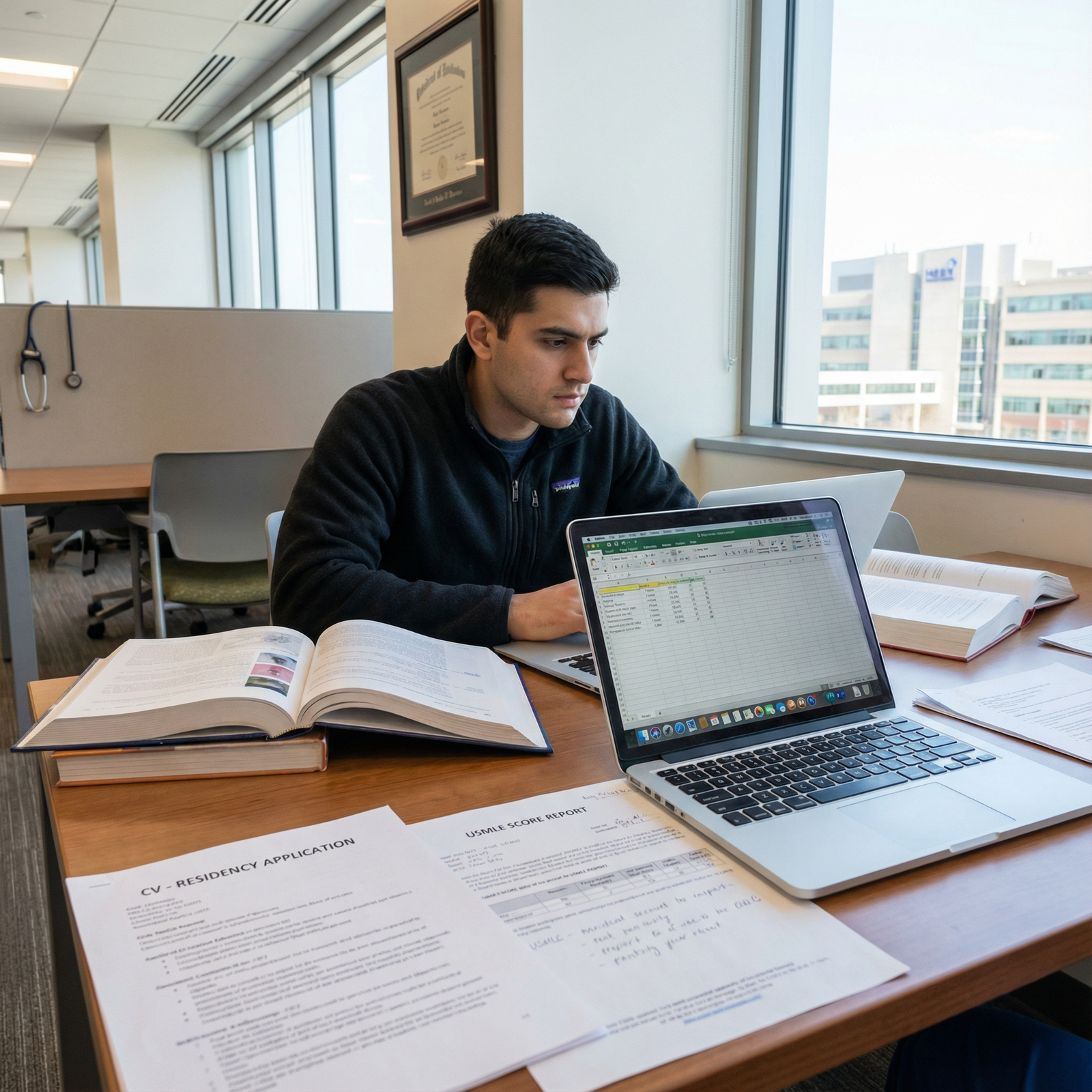
Understanding Your Position: Low Scores in the Context of DO and HBCU-Affiliated Programs
As a DO graduate targeting HBCU-affiliated residency programs, you are already thinking strategically—and that matters more than any one number on your score report. A low Step 1 score or below average board scores (COMLEX or USMLE) can feel like the end of the road, but for many DO graduates it is actually the beginning of a more focused, intentional pathway to residency.
What “low” means is program- and specialty-dependent, but in general:
- Step 1/COMLEX Level 1: Below the national mean, or having one fail attempt
- Step 2 CK/COMLEX Level 2: Significantly below average or with a fail attempt
- Step 3: Less critical for most new graduates, but can be a red flag if failed
For DO graduates, board performance is important, but:
- Many HBCU residency programs and HBCU-affiliated institutions take a holistic review approach
- Osteopathic applicants are often valued for hands-on, patient-centered training
- HBCU-linked institutions may place particular emphasis on mission fit, service to underserved communities, and evidence of resilience
Your goal is not to “hide” low scores. Your goal is to reframe them within an application that unmistakably communicates growth, readiness, and alignment with program values—especially for HBCU-affiliated residencies such as Meharry residency programs and other mission-driven institutions.
How HBCU-Affiliated and Mission-Driven Programs View Low Scores
HBCU-associated institutions—such as Meharry Medical College and their affiliated sites—often serve:
- Underserved, minority, and economically challenged populations
- Urban or rural communities with high disease burden
- Patients who face systemic barriers to care
Because of this, non-numeric qualities become extremely important:
- Commitment to health equity and advocacy
- Cultural humility and lived experience with diverse communities
- Longstanding community service, especially in underserved populations
- Evidence of resilience after setbacks (academic, personal, or professional)
This environment can sometimes work in favor of a DO graduate with low Step scores who can clearly show:
- Improvement over time (e.g., stronger Step 2 or COMLEX Level 2)
- Sustained community engagement and service to underserved populations
- Excellent clinical evaluations and strong letters from faculty who know you well
- Mission alignment with HBCU values—expanding opportunities for underrepresented patients and trainees
Why DO Graduates Are Not Automatically at a Disadvantage
Historically, DO graduates have faced structural barriers in more competitive or university-heavy programs, but:
- Many HBCU-affiliated residencies actively welcome DO graduates
- Osteopathic focus on whole-person care aligns strongly with HBCU missions
- COMLEX scores are increasingly well-understood among ACGME programs
- Your osteopathic training can become a differentiator, not a liability
For a DO graduate, the key to the osteopathic residency match and to non-osteopathic, ACGME HBCU programs is to:
- Translate your DO skillset into language residency directors understand: team-based care, continuity, patient communication, community focus.
- Be explicit about why your background makes you a cultural and clinical fit for mission-driven programs.

Strategic Academic Recovery: Turning “Low” into “Improving”
A low Step 1 score or weak early COMLEX performance does not have to define your application. The way you respond to it will.
1. Use Step 2 / Level 2 as Your Redemption Exam
For many programs, Step 2 CK / COMLEX Level 2 is now the most important exam:
- It is more clinically oriented
- It is taken later, when you are more mature in your training
- Programs lean on it heavily to predict intern-year performance
If your Step 1 or Level 1 is low:
- Aim for a clear upward trend with a stronger Step 2/Level 2 score
- If you already took Step 2 and it’s also low, focus on:
- Stronger shelf exam performance (if still in school)
- Strong clinical evaluations and concrete examples of clinical excellence
- Possibly Step 3 only if advised by a mentor or program director and if you are confident you can perform significantly better
Actionable steps to improve Step 2 / Level 2 performance (or explain it, if already done):
- Do a targeted review of your weakest subjects (via NBME forms or COMSAE/COMPE).
- Focus on high-yield, question-bank driven study (e.g., UWorld, COMBANK/COMQUEST) with active review of missed questions.
- Use structured schedules (e.g., 6-8 weeks of dedicated time) if possible.
If Step 2 is already complete and also low, your narrative must emphasize:
- Concrete factors that contributed (e.g., health event, family crisis)
- Clear, documented improvement after the exam (e.g., high in-service scores, strong sub-internship evaluations, research productivity)
2. Strengthen the Rest of Your Academic Profile
Low scores become more forgivable when everything else looks strong.
Maximize clinical performance:
- Aim for Honors or “Top third” ratings on core rotations, especially in the specialty you are targeting (e.g., internal medicine, family medicine, pediatrics).
- Request early feedback and act on it; show improvement by the end of each rotation.
- Ask attendings directly: “What could I do to perform at a resident level on this service?”
Develop a track record of reliability:
- Show impeccable professionalism: punctuality, follow-through, accurate note-writing, and clear communication with patients and teams.
- Make yourself memorable—in a good way—so your evaluators are eager to write detailed letters.
Participate in academic enrichment:
- Attend and present at morning reports, case conferences, or journal clubs.
- Volunteer to present interesting cases, particularly those involving health disparities or complex social determinants of health.
For HBCU residency programs and institutions like Meharry, applicants who can contribute to discussions around:
- Barriers to care
- Culturally responsive communication
- Practical solutions for marginalized patients
will stand out—even with low board scores.
Building a Competitive Application: Beyond the Numbers
Once you’ve maximized academic recovery, your next priority is crafting an application that minimizes the impact of low scores by maximizing everything else.
1. Curate a HBCU- and Mission-Focused School List
Not every residency program will be equally forgiving of low Step scores. You need to:
- Target programs that emphasize holistic review
- Prioritize institutions and programs with a demonstrated commitment to:
- Underserved populations
- Diversity, equity, and inclusion
- Osteopathic-friendly culture
Examples of program types to research:
- HBCU-affiliated programs (e.g., Meharry-affiliated, Morehouse-affiliated) and their partner hospitals
- Safety-net hospitals and community-based, urban academic centers
- Osteopathic-focused community programs open to DO graduates
While specific program recommendations change annually, your strategy should be:
- Build a broad list: 30–60 applications for primary care and somewhat competitive specialties; more for competitive fields, or if you have multiple red flags.
- Include a mix of osteopathic residency match options and ACGME community programs.
2. Letters of Recommendation: Your Most Powerful Counterweight
For DO graduates with a low Step 1 score or below average board scores, letters of recommendation often carry more weight than usual.
Aim for at least:
- 2–3 specialty-specific letters (e.g., internal medicine letters for IM applications)
- 1–2 letters from faculty who can speak to:
- Your resilience and growth after setbacks
- Your commitment to underserved and minority communities
- Your teamwork, professionalism, and bedside manner
For HBCU-oriented programs, a letter from someone who works in an HBCU-affiliated or safety-net environment, or who can attest to your work with marginalized populations, can be especially high-yield.
How to get strong letters:
- Ask early and in person if possible.
- Provide your CV, personal statement draft, and a summary of how you’ve grown since your low score.
- Use language like:
“I had an early academic setback on Step 1, but I’ve shown steady improvement and am deeply committed to caring for underserved communities. If you feel you can speak to my clinical performance and growth, I’d be honored to have your support.”
3. Crafting a Personal Statement that Owns Your Story
Your personal statement must acknowledge your low score without centering it. The focus should be on:
- Who you are
- Why you chose your specialty
- Why you are committed to HBCU or mission-driven training environments
- How you have grown from challenges
Effective structure for a DO graduate with low scores:
- Opening vignette: A brief story from clinical work, ideally in an underserved or HBCU-adjacent setting, that shows your values in action.
- Why this specialty: Specific motivations, not clichés.
- Addressing the low scores (1 short paragraph):
- Acknowledge reality without over-sharing.
- Briefly note context if relevant (health, family, late diagnosis of learning differences, etc.).
- Emphasize what changed, and what evidence shows your growth.
- Mission alignment:
- Why HBCU-affiliated programs?
- How have you contributed to communities similar to those these programs serve?
- Conclusion: What kind of resident you will be and what you hope to contribute to the program’s mission.
Avoid excuses; focus on insight and evidence of change.

HBCU-Focused Tactics: Standing Out Where Mission Matters Most
When you are specifically targeting HBCU residency programs or Meharry residency–associated sites, you must show:
- Clear familiarity with the program’s mission
- Evidence that you are ready to serve their patients from day one
- Long-term commitment to vulnerable or historically marginalized communities
1. Demonstrate Mission Alignment in Concrete Ways
Programs are wary of applicants who simply say, “I value diversity” without evidence.
Show mission alignment through:
- Long-term service: Multi-year involvement with free clinics, FQHCs, community health fairs, pipeline programs, mentoring underrepresented students.
- Scholarly work: Posters, QI projects, or publications related to:
- Health disparities
- Sickle cell disease, hypertension, diabetes in minority communities
- Access to care, rural health, or social determinants of health
- Leadership roles: SNMA, LMSA, or community organizations focusing on minority health and education.
In your ERAS experiences section, be explicit:
- “Volunteered weekly for three years at a community clinic serving predominantly Black and Latino patients; led an initiative to improve hypertension follow-up rates.”
2. Seek Mentors with HBCU or Minority-Serving Experience
If you don’t already have a tie to an HBCU:
- Look for faculty at your DO school who trained or worked at Meharry, Morehouse, Howard, or other minority-serving institutions.
- Ask them about:
- Program fit for DO graduates
- How HBCU residencies view low Step or COMLEX scores
- If they can connect you with alumni at those programs
A brief email from a respected faculty member to a program director—vouching for your work ethic and mission alignment—can significantly improve the odds of an interview, especially when your scores are borderline.
3. Tailor Your Application Materials to Each Program
For key HBCU or HBCU-affiliated programs:
- Use a program-specific paragraph in your personal statement (where ERAS allows) describing:
- Why their patient population resonates with your experiences
- How their mission statement echoes your past work and future goals
- Reference specific initiatives:
- Pipeline programs, mentorship efforts, community outreach clinics, research centers focused on health disparities.
This shows you have done your homework and that your interest in these programs is authentic—not a last-minute strategy because of low scores.
Interview and Post-Interview Strategy: Converting Opportunities into a Match
A low Step 1 score or low board performance can lower your interview count, so every interview matters.
1. Presenting Your Scores Confidently in Interviews
If asked about your scores, respond:
- Briefly
- Honestly
- With a pivot to your growth and strengths
Example:
“I underperformed on Step 1, partly due to poor test preparation strategies and challenges balancing life and study. Since then, I restructured my approach, sought support, and significantly improved my clinical knowledge, as reflected in my stronger clinical evaluations and performance on Step 2. More importantly, my work in [clinic/hospital] reaffirmed why I want to train in programs like yours that serve underserved communities.”
Key elements:
- Ownership, not blame
- Concrete changes you made
- Evidence that the underlying issue is resolved
- Clear tie-in to readiness for residency
2. Emphasizing Your Strengths as a DO Graduate
Highlight osteopathic strengths that align with HBCU-affiliated training:
- Whole-person and community-oriented approach
- Strong primary care, continuity-of-care foundation
- OMT where appropriate, especially for chronic pain, musculoskeletal complaints, and patients with limited access to specialty care
Frame your DO background as an asset in caring for populations with complex medical and social needs.
3. Post-Interview Communication and Ranking Strategy
For programs that feel like a particularly good fit:
- Send a well-written, specific thank-you email in which you:
- Mention elements of the program that resonated with you (e.g., community clinics, specific faculty, HBCU mission)
- Reiterate your commitment to underserved communities and alignment with their mission.
When building your rank list:
- Be realistic, but don’t self-eliminate solely based on low scores.
- Rank HBCU-affiliated and mission-driven programs highly if they align with your goals; they may be more flexible on scores than some high-stat university programs.
4. Considering a Gap Year or Preliminary Year (If Needed)
If you are shut out of interviews or go unmatched:
- Consider a research year or clinical fellowship (e.g., clinical research at an HBCU or minority-serving center) to:
- Build scholarly output and academic credibility
- Deepen your ties to mission-driven institutions
- Explore preliminary year opportunities (in internal medicine or surgery) that might open categorical doors later.
If you pursue these options:
- Maintain excellent performance and proactively seek mentors who can advocate for you in the next application cycle.
Frequently Asked Questions (FAQ)
1. Can I realistically match into an HBCU-affiliated residency with a low Step 1 score?
Yes, it is possible, particularly for DO graduates aiming at less hyper-competitive specialties (e.g., family medicine, internal medicine, pediatrics, psychiatry) and who show clear alignment with HBCU missions. Programs like Meharry residency sites and other HBCU-affiliated programs may place greater emphasis on:
- Mission fit
- Community service
- Clinical performance
than on raw Step 1 numbers, especially if there is evidence of improvement and strong letters of recommendation.
2. Should I take Step 3 to compensate for low Step 1 and Step 2 scores?
Only take Step 3 if:
- You have strong reason to believe you can score significantly better
- A trusted mentor or program director advises it
- You have the time to prepare thoroughly
A low Step 3 can make your overall testing profile look worse. For many DO graduates, demonstrating improved clinical performance, strong Level 2/Step 2, and excellent evaluations is more impactful than rushing into Step 3.
3. How many programs should I apply to with low scores as a DO graduate?
This depends on specialty and the severity of your score deficit, but in general:
- For primary care specialties (FM, IM, peds, psych): 30–60 programs or more, with a strong proportion of community and mission-driven sites.
- For more competitive specialties: significantly more applications and a very broad net, often including a backup specialty.
Within that list, include:
- HBCU-affiliated and safety-net hospitals
- Osteopathic-friendly programs
- A mix of academic and community-based residencies.
4. If I have both low COMLEX and USMLE scores, do I still have a chance?
Yes, but you must be strategic:
- Focus on specialties and programs that emphasize holistic review and mission alignment.
- Make your application stand out through outstanding letters, clear upward trends in rotations, and strong community involvement—particularly with underserved and minority populations.
- Be open to less competitive geographic regions, smaller community programs, and osteopathic residency match options where DO graduates have historically done well.
Your scores are one data point, not your entire identity as a future physician. For HBCU-affiliated and mission-driven residencies, your story, values, and demonstrated commitment to their communities can matter as much as your test performance—especially when you show that you have learned and grown from early setbacks.