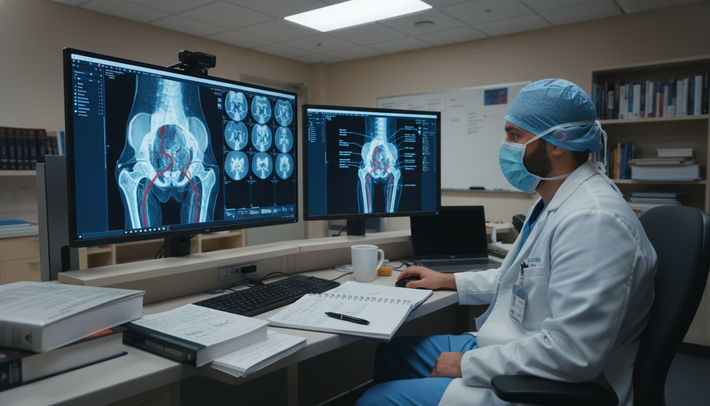
Understanding Your Position as a DO Graduate with a Low Step Score
As a DO graduate aiming for a diagnostic radiology residency, having a low Step 1 score—or below average board scores overall—can feel like a major setback. Radiology is competitive, and many applicants worry that a single number will close doors.
It doesn’t have to.
Residency programs, especially in diagnostic radiology, are increasingly using a holistic review that looks beyond test scores. This is particularly true when reviewing DO graduates, whose training emphasizes clinical skills, patient-centered care, and musculoskeletal medicine.
To build an effective strategy, start by clearly defining your baseline:
Identify what “low” means for you
- “Low Step 1 score” or “below average board scores” is relative. For diagnostic radiology, historically:
- Step 1: Competitive applicants were often in the 230+ range on the old 3-digit scale.
- Step 2 CK: Many matched applicants in radiology have been in the 240–250+ range.
- As a DO, COMLEX-USA Level 1 and Level 2-CE also matter; many programs increasingly accept and understand COMLEX scores alone but some still prefer or require USMLE.
- “Low Step 1 score” or “below average board scores” is relative. For diagnostic radiology, historically:
Clarify your testing profile
Ask yourself:- Is only Step 1 low, or are Step 2 CK and COMLEX Level 2 also weak?
- Is there a failing score attempt (Step or COMLEX)?
- Did your scores show an upward trend?
Understand how radiology programs view DO grads
- Many diagnostic radiology programs now have DO residents.
- Some programs are DO-friendly and have a history of osteopathic residency matches.
- Others may be unfamiliar with COMLEX or biased toward MD applicants.
Your strategy must address two simultaneous goals:
- Offset the impact of low scores with strengths that radiology programs value.
- Target the right programs and application tactics to maximize your chance of a diagnostic radiology match.
The rest of this article will walk you through a structured plan.
Step 1: Reframe and Strengthen Your Academic Profile
1. Prioritize a Strong Step 2 CK / COMLEX Level 2-CE
If your Step 1 is low, a strong Step 2 CK (and Level 2-CE) is your best academic comeback.
- Aim to outperform your Step 1 by a significant margin.
- Example: If your Step 1 score was 215, targeting a 235+ on Step 2 CK can show growth and resilience.
- Take Step 2 CK early enough that programs will see your score before ranking decisions (ideally before ERAS submission or shortly thereafter).
- Build a structured plan:
- Use high-yield resources (UWorld, NBME, COMSAE, AMBOSS).
- Track progress with practice exams and adjust your plan.
- Consider delaying the exam if your practice scores are not close to your target.
A clear upward trend helps programs rationalize your low Step 1 score as:
- A bump in the road,
- Testing anxiety that you learned to manage,
- Or a late bloomer who improved with clinical exposure.
2. Explain, Don’t Excuse: The Personal Statement and Application Narrative
If you have:
- A very low Step score,
- A failed attempt, or
- A large gap between exams,
you should address this briefly, professionally, and specifically—usually in your personal statement or in the ERAS “Additional Info” section.
Keep it:
- Short (2–4 sentences)
- Focused on growth and change, not justification.
Example:
“Early in my training, my Step 1 performance did not reflect my capabilities. Since then, I restructured my study methods, sought mentorship, and prioritized consistent, active learning. These changes led to a significant improvement on Step 2 and have carried over into strong clinical performance and radiology-focused experiences.”
Avoid:
- Emotional venting
- Blaming the exam, school, or life events without emphasizing solutions
- Overlong explanations

3. Strengthen Clinical Grades and Clerkship Performance
For diagnostic radiology, programs care deeply about:
- Clinical judgment
- Work ethic
- Reliability
- Collaboration with multidisciplinary teams
Use your third- and fourth-year rotations to build a consistent record:
- Aim for Honors or High Pass in core rotations:
- Internal Medicine
- Surgery
- Neurology
- Emergency Medicine
- On radiology electives:
- Show up early, stay late when appropriate.
- Ask thoughtful, case-based questions.
- Read about cases you saw that day and follow up with residents or attendings.
Strong clinical performance can counterbalance matching with low scores because it directly reflects how you’ll function as a resident.
Step 2: Build a Radiology-Heavy Portfolio that Outshines Your Scores
1. Seek Dedicated Diagnostic Radiology Experiences
Even as a DO graduate, you can build a strong radiology profile:
Home institution radiology electives
If your school has a radiology department:- Do at least one general radiology elective.
- If possible, add subspecialty rotations (e.g., neuroradiology, musculoskeletal radiology, body imaging).
Away rotations / audition rotations
These are particularly valuable for DO graduates and applicants with low Step scores:- Target DO-friendly radiology programs or academic/community hybrid programs.
- Choose institutions where:
- COMLEX is accepted.
- Past residents include DOs.
- You have personal or geographic ties.
During away rotations:
- Be visible and engaged.
- Read about cases you see and briefly discuss your findings.
- Ask for feedback midway through the rotation: “I’m interested in radiology and would really value feedback on how I’m doing and how I can improve.”
Positive performance can lead to:
- Strong letters of recommendation
- An internal advocate when your application is reviewed
- A realistic sense of your competitiveness at that location
2. Obtain Strong, Targeted Letters of Recommendation
Letters can significantly blunt concerns about matching with low scores.
Aim for:
- At least two letters from diagnostic radiologists
Ideally:- One from your home institution (if available).
- One from an away rotation or well-known radiologist.
- One letter from a clinical supervisor in a demanding specialty (e.g., internal medicine, surgery) that:
- Emphasizes work ethic, reliability, clinical reasoning, and teamwork.
Coach your letter writers indirectly by:
- Providing an updated CV, a short “brag sheet,” and a personal statement.
- Mentioning that radiology is competitive and you hope they can address your strengths in comparison to past radiology applicants.
A powerful letter might say:
“Although this candidate’s Step 1 score is below the average for our entering residents, their clinical performance, intellectual curiosity, and dedication to radiology are truly exceptional and place them among the top students I have worked with in recent years.”
Statements like this directly neutralize board score concerns.
3. Engage in Radiology Research and Scholarly Work
You do not need groundbreaking research to show interest and initiative in radiology. Focus on achievable, meaningful projects:
- Case reports of interesting radiologic findings
- Retrospective chart reviews
- Quality improvement (QI) projects involving imaging utilization
- Educational posters or presentations at local/regional meetings
Actionable steps:
- Ask radiology faculty: “Do you have any small projects or case reports I could help with?”
- Work with residents who may need assistance finishing existing projects.
- Try to produce:
- 1–2 posters or abstracts
- 1–2 small publications (case reports, educational articles)
- Any radiology conference presentations (even virtual or local)
This demonstrates:
- Commitment to radiology as a field
- Intellectual curiosity
- Persistence and initiative—qualities that matter more than your Step 1 score.

Step 3: Be Strategic About Program Selection and Application Tactics
1. Understand the Radiology Landscape for DO Graduates
As a DO graduate with below average board scores, your program list matters as much as your CV.
Key points:
- Many programs accept COMLEX only; some require or prefer USMLE.
- Some institutions historically have little DO representation and may be less DO-friendly.
- Others have a track record of osteopathic residency matches and value DO training.
Actions:
- Use resources like program websites, FREIDA, residency forums, and program social media to identify:
- Programs with recent DO graduates.
- Places that mention COMLEX explicitly.
- Ask senior DOs or mentors which programs are known to be DO-friendly in diagnostic radiology.
2. Apply Broadly—But Intelligently
With a low Step 1 score, your application strategy should be:
- Broad in number:
- Many applicants in your situation apply to 50–80+ diagnostic radiology programs.
- Targeted in type:
- Prioritize:
- Mid-tier university programs
- University-affiliated community programs
- Larger community programs with academic ties
- Consider regions where radiology is slightly less competitive:
- Certain Midwest, South, or non-coastal areas, depending on the year’s trends.
- Prioritize:
Avoid applying primarily to:
- Top-tier, research-heavy academic programs that consistently match extremely high board scores, unless:
- You have strong research, or
- Personal connections or geographic ties that might offset this.
3. Use Geography, Fit, and Ties to Your Advantage
Programs prefer applicants:
- With geographic ties (grew up nearby, went to college/medical school nearby, family in area).
- Who can articulate clear reasons for wanting to train there.
In your ERAS application and interviews:
- Highlight personal connections:
- “I grew up 2 hours from this city and hope to return to the region.”
- “My spouse works in this area.”
- Mention specific program features:
- Volume and diversity of cases
- Strength in certain radiologic subspecialties
- Culture of resident education and mentorship
4. Consider Transitional or Preliminary Year Pathways
Some applicants with very low scores or a failed attempt strategically consider:
- Applying to preliminary medicine or surgery or a transitional year plus applying to diagnostic radiology in a subsequent cycle.
- This can:
- Demonstrate strong clinical performance in residency.
- Provide time to strengthen your radiology portfolio and network.
However, this approach carries risks:
- No guarantee of a future diagnostic radiology match.
- Risk of being labeled as “reapplicant” if not managed carefully.
If you consider this path:
- Seek personalized mentorship from faculty advisors or radiology program directors.
- Use your intern year to:
- Impress radiologists locally.
- Engage in radiology research or electives.
- Strengthen your Step 2/3 (if not already done).
Step 4: Maximize Interviews and Deliver a Compelling Story
1. Increasing Your Chances of an Interview
With a low Step score, you must work harder to get your foot in the door.
Tactics:
Personalized emails to programs
After ERAS submission:- Send brief, polite interest emails to programs, especially where you have:
- Geographic ties
- Away rotation experience
- Faculty who know you
Example:
“Dear Dr. [PD Name],
I recently applied to your diagnostic radiology residency program and wanted to reiterate my strong interest. I grew up in [Region], and I am particularly drawn to your program’s strengths in [Subspecialty or Feature]. While my Step 1 score is below your typical average, my subsequent performance on Step 2 and my radiology experiences have reinforced my commitment to the field. I would be grateful for the opportunity to interview and further demonstrate my fit with your program.”- Send brief, polite interest emails to programs, especially where you have:
Signal programs (if signaling is used)
If ERAS or your specialty adopts preference signaling:- Use your highest priority signals on:
- DO-friendly programs
- Programs where you have connections
- Realistic reach programs
- Use your highest priority signals on:
Ask mentors to reach out on your behalf
- A quick email from a known radiologist to a PD can elevate your application from “borderline” to “interview.”
2. Owning Your Story in Interviews
When you earn an interview, your job is to make your board score become one small part of a much bigger picture.
Be prepared for common questions:
- “I see your Step 1 score was below our average. Can you tell me about that?”
- “How do you handle setbacks or challenges?”
- “Why diagnostic radiology, and why now?”
Your approach:
- Acknowledge briefly
- “Step 1 was a challenge for me.”
- Show insight and growth
- “It taught me to change how I study and manage my time.”
- Highlight evidence of improvement
- “Those changes are reflected in my Step 2 performance and my strong evaluations on radiology rotations.”
- Re-center on your strengths and fit for radiology
- “Now I feel my test scores align better with my abilities, and I’m eager to bring my work ethic, curiosity, and collaborative nature to your program.”
Programs value:
- Humility without self-deprecation
- Growth mindset
- Emotional maturity
- Consistent enthusiasm for radiology
3. Show Radiology-Specific Motivation
Your low score matters less if you can convincingly answer, “Why diagnostic radiology?” with depth and clarity:
Discuss:
- Specific patient cases where imaging changed management.
- What you enjoy in radiology:
- Pattern recognition
- Problem-solving
- Multi-specialty collaboration
- Rapid clinical impact
- Any specific subspecialties of interest:
- Neuroradiology, body imaging, musculoskeletal, emergency radiology, etc.
Mention:
- Radiology research
- Radiology electives
- Mentors in radiology and how they influenced you
The goal is to look like a future radiologist who happened to underperform on one exam, not an undecided applicant using radiology as a backup.
Step 5: Plan for Contingencies and Long-Term Success
Even with the best strategy, radiology is competitive, and matching with low scores is not guaranteed. You should prepare:
1. Have a Realistic Back-Up Plan
Consider:
- Parallel applying to another specialty with overlapping skills and interests:
- Internal Medicine (with future fellowship possibilities like cardiology, oncology)
- Transitional or preliminary medicine/surgery years
- Ask yourself honestly:
- Is diagnostic radiology the only specialty I can see myself in?
- What about fields involving procedural skills, anatomy, or imaging-adjacent work?
If you choose to dual apply, be transparent with advisors and weigh:
- Time commitments of additional interviews
- The risk of programs feeling like a “backup”
2. If You Don’t Match in Radiology
If your first application cycle doesn’t yield a diagnostic radiology match:
- Analyze what went wrong with a faculty mentor:
- Number of radiology interviews received
- Where interviews came from (program type/region)
- Feedback from any trusted contacts
- Consider:
- A research year in radiology
- A prelim or transitional year with strong radiology exposure
- Strengthening letters and clinical experience
Some candidates successfully match into diagnostic radiology on a second attempt, especially if they used the interim period to significantly improve their CV and clarify their narrative.
Frequently Asked Questions (FAQ)
1. Is it still possible to match into diagnostic radiology with a low Step 1 score as a DO graduate?
Yes, it is still possible, especially if:
- You have a strong Step 2 CK and COMLEX Level 2-CE, showing upward academic trajectory.
- You build a radiology-focused portfolio with electives, research, and strong letters of recommendation.
- You apply broadly and strategically to DO-friendly programs and realistic tiers. Many programs now view test scores as one part of a holistic profile, and they increasingly value DO graduates’ clinical skills and perspectives.
2. Do I have to take USMLE if I already have COMLEX scores?
Not strictly, but in diagnostic radiology, USMLE can still help at many programs:
- Some radiology programs strongly prefer or require USMLE.
- Others are COMLEX-friendly and will accept DO-only scores. If you already have an unfavorable Step 1, you might focus on a strong Step 2 CK and ensure your COMLEX Level 2 is solid. Discuss with mentors whether an additional exam is worth the risk, especially if your test-taking history is challenging.
3. How many diagnostic radiology programs should I apply to with below average board scores?
Most DO graduates with low or borderline scores target:
- Approximately 50–80+ diagnostic radiology programs, with:
- Emphasis on DO-friendly institutions
- Mix of academic and community-based programs
- Regions slightly less competitive (depending on trends) The exact number depends on your full profile (Step 2 performance, grades, research, letters, geographic flexibility). When in doubt, err on applying broader rather than narrower—but avoid unrealistic top-heavy lists.
4. How important is radiology research for me if I have low scores?
For applicants with low Step or COMLEX scores, radiology research:
- Is not mandatory, but it is highly beneficial.
- Shows early commitment and engagement with the specialty.
- Can help you stand out in a positive way and compensate for testing weaknesses. Focus on attainable projects:
- Case reports
- Retrospective reviews
- QI projects Even one or two publications or presentations can significantly strengthen your application and help explain why radiology is the right fit for you.
By focusing on test score recovery, targeted radiology experiences, thoughtful program selection, and a clear narrative of growth, a DO graduate with low Step scores can still craft a competitive and compelling application to diagnostic radiology. The key is to be deliberate, proactive, and honest—both with yourself and with the programs you hope to join.