
Understanding the Challenge: Low Step Scores as a DO in the Sun Belt
For a DO graduate targeting southern residency programs in the Sun Belt, a low Step 1 score or below average board scores can feel like a major barrier. Whether you took USMLE Step 1, relied mainly on COMLEX-USA, or did both, you’re competing in a region with many desirable programs and increasing applicant volume.
The good news: matching with low scores is absolutely possible, especially for a DO graduate who plans strategically and understands how southern programs think. Many Sun Belt residency leaders value clinical performance, professionalism, and fit with their community just as heavily as raw test performance—sometimes more.
This article focuses on practical, concrete strategies tailored to:
- DO graduates or final-year students
- Interested in the Sun Belt (e.g., CA, AZ, NM, TX, LA, MS, AL, GA, FL, SC, NC, TN, NV, AR, OK)
- Worried about a low Step 1 score, a low Step 2, or overall below average board scores
- Seeking realistic paths to match, especially in community-based or osteopathic-friendly residency programs
We’ll break down targeted tactics for school selection, application strategy, rotations, letters of recommendation, and interviews—so you can present yourself as a strong, well-rounded candidate despite test score weaknesses.
Step 1: Realistically Assess Your Situation and Goals
Before you can craft an effective strategy, you need an honest appraisal of your overall application—not just your board scores.
1. Understand What “Low” Really Means
“Low” is relative and specialty-specific. As a DO graduate, your competitiveness in the osteopathic residency match and the broader NRMP Match depends on multiple factors:
- For primary care fields (FM, IM, peds, psych), below average board scores are more common and more easily offset by strengths elsewhere.
- For moderately competitive specialties (EM, anesthesia, PM&R, OB/GYN), a low Step 1 score can be partially compensated by strong Step 2, clinical grades, letters, and targeted rotations.
- For highly competitive fields (derm, ortho, ENT, plastics, radiology, urology), a significantly low Step 1 score usually requires a long-term strategy: research, potential extra training (prelim/transitional year), or reconsidering specialty or program type.
Action step:
Compare your scores to recent NRMP and AOA/ERAS Charting Outcomes data for DO applicants in your target specialty. Categorize your board performance as:
- Slightly below average
- Significantly below average (≥1 SD below mean)
- Failing attempt(s) on Step/COMLEX
This will guide the intensity of your remediation strategy.
2. Inventory Your Non-Score Strengths
Sun Belt residency programs — especially southern community and osteopathic-friendly programs — often value:
- Strong clinical evaluations and honors
- Sub-internship/acting-internship performance
- Genuine interest in the local region or underserved populations
- Leadership, volunteerism, or nontraditional background
- Letters of recommendation from respected faculty in the South or at Sun Belt institutions
- Continuity of training (e.g., DO school or undergrad in the region)
List out your top 5 non-score strengths to build your application narrative around them.
3. Clarify Your Priorities
Be explicit about your:
- Primary specialty goal (e.g., Internal Medicine)
- Backup options (e.g., Family Medicine, Transitional Year)
- Geographic flexibility within the Sun Belt (Are you open to smaller cities or rural programs? Only interested in major metros like Dallas, Atlanta, Phoenix, Miami?)
The more flexible you are (specialty and location), the easier it becomes to overcome low scores when targeting a southern residency program.
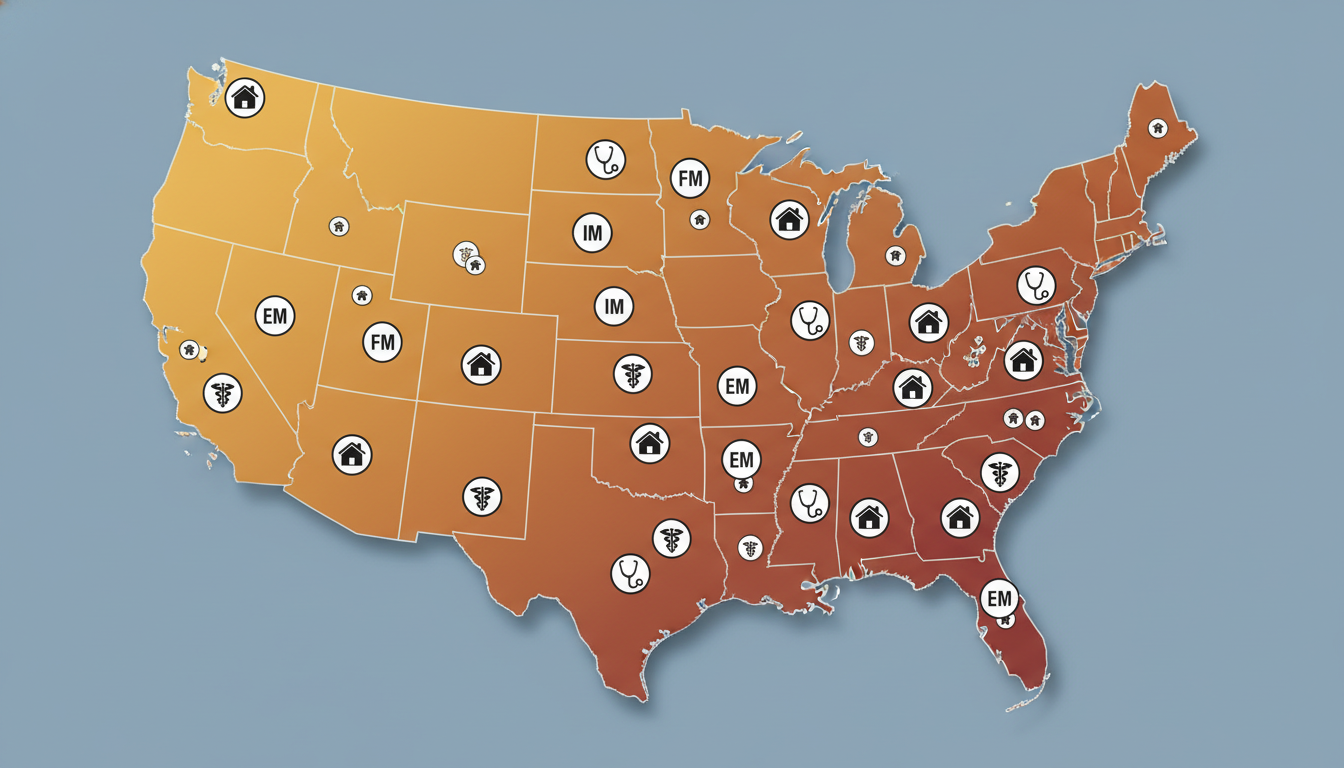
Step 2: Target Programs Strategically in the Sun Belt
With below average board scores, smart program selection is your single most powerful tool. A well-chosen list can transform your odds of matching.
1. Focus on Osteopathic-Friendly and Community-Focused Programs
For a DO graduate residency applicant, the most realistic path with a low Step 1 score or low COMLEX performance often runs through:
- Community-based programs
- Former AOA or dually accredited programs
- Programs with a history of taking DOs
- Newly accredited or smaller Sun Belt residencies
Look for programs that:
- Regularly list DO residents on their website
- Accept COMLEX alone or explicitly say “USMLE not required”
- Are in non-major metropolitan areas (e.g., Lubbock, TX vs. Dallas; Macon, GA vs. Atlanta)
Tools:
- FREIDA and program websites
- DO-specific match advising from your school
- Alumni or recent graduates who matched to southern residency programs
Example:
If you want Internal Medicine in Texas with a low Step 1 score, your best bets might be mid-size city or regional hospitals (e.g., in Lubbock, Tyler, Harlingen, Corpus Christi) rather than top-tier academic centers in Houston or Dallas.
2. Use a “Core + Safety” Strategy
Divide your list into:
- Core programs: Realistic options given your low Step score and DO status (e.g., community IM, FM, psych programs in mid-size southern cities).
- Safety programs: Programs where your overall profile (even with low Step) is at or above the typical accepted range — often smaller or newer residencies, especially in rural or underserved areas of the Sun Belt.
You can still include a small number of reach programs, but the bulk should be core and safety.
Suggested distribution for low scores:
- 60–70% safety programs
- 20–30% core programs
- 10–15% reach programs
3. Align Your Story with Regional Needs
Sun Belt states frequently face:
- High rates of chronic disease (diabetes, hypertension)
- Rural and underserved populations
- Diverse patient demographics, including large Hispanic and Black communities
- Primary care shortages
Frame your regional interest clearly:
- Prior work or training in the South
- Spanish language skills or cultural competency experience
- Interest in underserved medicine or rural health
- Ties to specific Sun Belt states (family, HPSA work, prior education)
Programs are often more forgiving of a low Step 1 score when your narrative shows commitment to their population and mission.
Step 3: Compensate for Low Scores with Strong Clinical and Academic Signals
Even if your board scores are below average, you can send counterbalancing signals that reassure program directors about your readiness.
1. Maximize Step 2 CK / COMLEX Level 2
If your Step 1 is low, Step 2 (or COMLEX Level 2) becomes critical. For many PDs in the osteopathic residency match and the broader NRMP, Step 2 is now a primary “readiness” measure.
If you haven’t taken Step 2 / Level 2 yet:
- Delay the exam until NBME or COMSAE practice scores show improvement into at least the average range.
- Consider a dedicated remediation plan: tutoring, question banks, content review, and test-taking strategy work.
- Aim to take and release Step 2 early enough that programs can see an upward trend before offering interviews.
If you’ve already taken Step 2 and it’s also low:
- Own it in your narrative (e.g., health challenges that are now resolved, learning disability addressed with accommodations, or initial adjustment issues).
- Emphasize clinical performance, rotations, and letters as your core strengths.
- Avoid drawing extra attention to the score in your personal statement unless absolutely necessary.
2. Crush Your Core Rotations and Sub-Internships
For southern residency programs, especially in Family Medicine, Internal Medicine, Pediatrics, Psychiatry, and EM, strong clinical performance often outweighs a low Step 1 score.
Prioritize:
- Honors or high pass in medicine and specialty-specific rotations
- An acting internship/sub-I in your chosen field (ideally at a Sun Belt program of interest)
- Being known as the hardest-working, most reliable student on service
Ask explicitly:
“What can I do on this rotation to demonstrate that I’m ready to function as an intern?”
Then deliver consistently: pre-rounding, knowing your patients cold, anticipating needs, and helping the team run smoothly.
3. Secure Targeted, Impactful Letters of Recommendation
For a DO graduate with low scores, LORs can be your single strongest counterweight.
Aim for:
- At least 1–2 letters from attendings in your chosen specialty
- At least one letter from a Sun Belt institution, preferably a program or hospital in the region where you want to match
- Letters that speak to:
- Clinical reasoning
- Work ethic and reliability
- Teachability and response to feedback
- Fit for their type of program (community, academic, rural, etc.)
When possible, ask:
“Would you feel comfortable writing me a strong and supportive letter of recommendation for residency?”
This phrasing allows attendings to decline if they can’t write a truly positive letter, which protects you.

Step 4: Telling Your Story: Personal Statement and Application Framing
Your personal statement, ERAS app, and interview responses are where you transform “low Step 1 score” from a liability into a single data point within a bigger narrative.
1. Decide Whether to Address the Score Directly
You generally have three options:
Don’t mention it at all
- Best if your score is low but not disastrous, and there are no red flags (no failures).
- Let your improvements (Step 2, clinical grades, LORs) speak for themselves.
Briefly explain contributing factors
- Suitable if something specific affected your performance (family illness, personal health, major stressor).
- Keep it concise, factual, and focused on what has changed.
Example framing:
During my Step 1 preparation, a close family member experienced a serious illness that required my support. Although I did not perform as well as I had hoped on the exam, this period taught me to prioritize time management, mental health, and using institutional resources. These lessons directly contributed to my improved performance and stronger clinical evaluations in third year.
Address remediation and growth
- Use this if you had to remediate a course or exam but subsequently improved.
- Emphasize insight, corrected approach, and sustained change.
Avoid:
- Overly emotional or dramatic explanations
- Blaming schools, exams, or “bad test days”
- Writing long paragraphs focused only on your score
2. Highlight DO Identity and Osteopathic Strengths
As a DO graduate, you have intrinsic advantages that align well with many southern residency programs:
- Training in holistic and patient-centered care
- Experience in OPP/OMM, which can be a distinctive benefit in FM, IM, PM&R, sports medicine, and some EM programs
- Often more extensive exposure to community settings
Use your application to show:
- How osteopathic principles shape your clinical thinking
- Specific examples of using OMT or holistic care approaches in patient care
- Why this makes you a great fit for certain Sun Belt populations (e.g., chronic pain, limited access to specialists, cultural preferences)
3. Make a Clear Case for the Sun Belt
Southern residency programs want residents who will stay and serve their communities. With low Step scores, you need to work twice as hard to show genuine regional commitment.
Explain:
- Personal ties (family, upbringing, prior education)
- Cultural or linguistic connections (e.g., Spanish-speaking in Texas or Florida)
- Career goals aligned with regional needs (rural primary care, border health, community psychiatry, etc.)
A strong geographic narrative can push your application upward in the pile, even if your metrics don’t stand out.
Step 5: Application Tactics, Interview Strategies, and Backup Plans
With a solid story and targeted program list, execution matters.
1. Apply Broadly and Early
For DO graduate residency applicants with low Step 1 scores, you generally need to:
- Apply on Day 1 of ERAS opening
- Target a broad range of programs across Sun Belt states, not just one or two cities
- Over-apply relative to higher-scoring peers, within financial reason
You’re essentially trading application cost for improved match probability. Work with your dean’s office or advisor to determine a reasonable number of applications for your specialty given your scores.
2. Communicate Proactively with Programs
Especially in the South and in osteopathic-friendly environments, personal contact can matter:
- Send polite, concise emails to program coordinators and PDs at your top-choice programs.
- Express:
- Specific interest in their program
- Regional ties or reasons for wanting to train there
- Any particular strengths not obvious in your application (e.g., research in an area of their focus, advanced Spanish proficiency)
Sample email structure:
- 2–3 sentences introducing yourself (DO graduate, school, specialty interest)
- 2–3 sentences about why their specific program and location fit your goals
- Brief note acknowledging your scores if you wish, emphasizing your stronger signals (clinicals, Step 2, LORs)
- Thank you and brief closing
Avoid spammy, copy-pasted messages. Customization is critical.
3. Prepare to Address Low Scores in Interviews
If asked, respond with:
- Brief context (if relevant)
- Reflection on what went wrong
- Specific steps you took to improve
- Evidence of success afterward (better Step 2, strong clinical performance, robust LORs)
Example answer:
I wasn’t satisfied with my Step 1 performance. Looking back, I relied too heavily on passive studying and didn’t use practice exams early enough. I met with our learning specialist, restructured my approach for Step 2, and focused on spaced repetition and question-based learning. Those changes, along with better time management, are reflected in my improved Step 2 score and the feedback I’ve received on rotations. I’m confident in my ability to handle the medical knowledge required for residency, and I’m eager to keep improving.
Deliver this calmly and confidently, without sounding defensive or ashamed.
4. Build a Thoughtful Backup Strategy
Even with strong planning, the match can be unpredictable, especially with low Step scores. Consider backup paths:
- Less competitive specialties (e.g., FM instead of categorical IM in highly desired cities)
- Preliminary or transitional year in the Sun Belt, then re-apply to your target specialty
- Extra year of strengthening your application:
- Research fellowship (especially at a southern institution)
- Clinical experience (e.g., hospitalist scribe, research assistant)
- Additional OMM/OPP-focused roles in DO contexts
The key is to avoid inactivity. Every year after graduation, residency programs will look for recent clinical engagement and continued growth.
Putting It All Together: A Sample Strategy for a DO Graduate with Low Step Scores in the Sun Belt
Consider a hypothetical profile:
- DO graduate, Class of 2025
- Step 1: significantly below average; COMLEX similar
- Step 2: modest improvement but still slightly below average
- Strong clinical evaluations in IM and FM
- Two letters from community attendings in Georgia and Texas
- Interest: Internal Medicine, open to FM as backup
- Geographic preference: Georgia, Florida, Texas, Carolinas, but open across the Sun Belt
A coherent, realistic plan might look like:
Program Targeting
- 25–30 Internal Medicine programs, mostly community-based in mid-size or smaller cities across TX, GA, FL, AL, MS, SC, NC
- 20–25 Family Medicine programs in similar regions
- Majority osteopathic-friendly and historically DO-heavy
Application Documents
- Personal statement emphasizing:
- Growth from board struggles
- Strength in clinical settings
- Commitment to serving southern communities
- Separate tailored versions for IM and FM, each highlighting field-specific motivations
- Personal statement emphasizing:
Communication and Networking
- Early, personalized emails to top 10–15 programs with strongest ties or interest
- Leveraging alumni from the DO school now in Sun Belt residencies for guidance and possible advocacy
Interview Strategy
- Practiced, concise explanation of low Step scores
- Strong emphasis on patient care stories, teamwork, and resilience
- Clear, repeated articulation of why they want to train and stay in the South
Backup Contingency
- If interview numbers are limited in IM, pivot energy to FM programs
- Have a plan for SOAP participation and, if unmatched, targeted clinical or research work in the region while planning a re-application
This type of structured approach dramatically improves the odds of matching in a Sun Belt residency program, even for a DO graduate with low Step 1 or below average board scores.
FAQs: Low Step Score Strategies for DO Graduates in the Sun Belt
1. Can I still match into a Sun Belt residency with a low Step 1 score as a DO graduate?
Yes. Many DO graduates match successfully each year into southern residency programs despite low Step or COMLEX scores. Your chances are highest when you:
- Focus on osteopathic-friendly and community-based programs
- Show a clear upward trend (clinicals, Step 2, letters)
- Target specialties that align with your overall profile (often primary care, psych, IM, EM depending on how low your scores are)
- Demonstrate genuine commitment to the Sun Belt region and its patient populations
2. Is it necessary to take USMLE if I already have COMLEX and want a southern residency program?
Not always. Many Sun Belt programs, particularly those with a strong DO presence, will accept COMLEX-only applicants. However:
- Highly competitive or academic programs in states like Texas, Florida, and California may prefer or require USMLE scores.
- If your COMLEX scores are low, rushing into USMLE without a clear plan for doing better may not help.
Discuss with a trusted advisor whether an additional exam can realistically improve your competitiveness or whether your effort is better spent on Step 2/Level 2 performance and rotations.
3. Which specialties in the Sun Belt are more forgiving of below average board scores for DO graduates?
Generally more accommodating fields include:
- Family Medicine
- Internal Medicine (especially community-based programs)
- Pediatrics (outside the most competitive academic centers)
- Psychiatry (varies by program and location)
- Some Transitional Year programs, particularly in smaller cities
EM, OB/GYN, anesthesia, and PM&R can still be possible but will require especially strategic planning, strong rotations, and program selection.
4. How many programs should I apply to if I have low scores and want a southern residency?
Numbers vary by specialty and the degree of “low,” but as a DO graduate with below average board scores, you generally need to apply more broadly than average:
- Primary care (FM/IM): often 30–40+ programs total across the Sun Belt and possibly beyond
- Moderately competitive specialties: often 40–60+ programs, plus thoughtful backup choices
Work with your medical school’s advising office to calibrate numbers based on recent match data for DO graduates similar to you. When in doubt, err on the side of more applications, as long as they are realistic and you can handle the interview volume.
By combining honest self-assessment, targeted program selection, strong clinical performance, and a compelling story, DO graduates can absolutely overcome low Step 1 scores and succeed in the osteopathic residency match and NRMP within the Sun Belt. Your scores are one piece of your file; how you respond to them — and how you present the rest of your application — is just as important.