
Understanding the Radiology Landscape as a DO Graduate
Diagnostic radiology is a highly analytical, technology-driven specialty that remains moderately competitive. As a DO graduate, you bring unique strengths—holistic training, strong clinical skills, and often broad community exposure—but you may also face extra scrutiny regarding your test scores and perceived “competitiveness.”
To build an effective Step score strategy for a DO graduate in diagnostic radiology, you must understand three overlapping realities:
Radiology is numerically selective.
Programs commonly use Step 1 score residency filters, and even more so now rely on Step 2 CK (and COMLEX Level 2-CE) as Step 1 has become Pass/Fail. For applicants with a low Step score match profile, this can be a major hurdle.DO applicants are still under-represented in some academic radiology programs.
Despite full ACGME integration, many departments still default to “what we know,” meaning MD-heavy rosters and a strong historical reliance on USMLE metrics. This does not mean DOs cannot succeed—it means your strategy must be precise and data-driven, especially around exam scores.Holistic review is growing, but not universal.
Some programs heavily weigh research, letters, and clinical performance. Others still have rigid numeric cutoffs. A smart plan anticipates both types of programs and targets them differently.
Your goal is not just “getting a good score” but aligning your test performance with the overall story of your application—a story that makes you a clear, lower-risk choice to succeed in a demanding diagnostic radiology residency.
Step 1, Step 2, and COMLEX: What Really Matters for DO Applicants in Radiology?
1. The Changing Role of Step 1
With Step 1 now Pass/Fail, the classic Step 1 score residency cutoffs are evolving. However:
- Many program directors still ask whether you passed Step 1 on the first attempt.
- Some still use historic biases based on your school’s typical Step performance.
- For DOs, programs may be more likely to look at USMLE vs. COMLEX concordance if both are available.
If you are a DO graduate who took Step 1 and passed on the first attempt:
- Your Step 1 is mainly a threshold metric: pass early, pass once.
- If you failed once, recovering with a strong Step 2 CK or Level 2-CE is critical.
If you did not take USMLE Step 1 (COMLEX-only):
- A growing number of radiology programs accept COMLEX-only.
- Still, some programs—especially academic or highly competitive diagnostic radiology match sites—explicitly prefer or require USMLE scores.
- Your strategy should reflect this: if you’re early enough in training, consider whether taking USMLE is advantageous for your target programs.
2. Step 2 CK: Your Primary Numerical Signal
With radiology’s heavy clinical reasoning component, Step 2 CK has become the key differentiator, especially for a DO graduate residency applicant. The Step 2 CK strategy you choose can significantly reshape your competitiveness.
For DO graduates:
- Step 2 CK is often the first direct, apples-to-apples metric programs have to compare you with MD applicants.
- A strong Step 2 CK can offset an average Step 1, a less-known school, or DO-related biases.
- A weaker Step 2 CK might trigger automatic screens at some programs, making list-building and targeting even more important.
Target ranges (approximate, recognizing year-to-year shifts):
- Highly competitive radiology programs: Typically prefer Step 2 CK scores around the top quartile of national averages.
- Mid-tier academic or strong community programs: Often use less rigid thresholds but may still screen below particular score cutoffs.
- Community-based/less competitive programs: More likely to weigh clinical performance, letters, and fit—particularly for DO graduates.
The reality: you cannot “change” your score after the exam, but you can change how you use it and what you pair it with in your overall strategy.
3. COMLEX and the DO Advantage (and Challenge)
As a DO graduate, your COMLEX performance matters—especially Level 2-CE:
- For COMLEX-only programs: Your Level 2-CE is their main quantitative clinical exam metric.
- For USMLE-preferred programs: Strong COMLEX scores may not fully compensate for no USMLE, but they still demonstrate high-level performance.
If you did both COMLEX and USMLE, programs will often consider:
- Relative alignment: A high COMLEX and significantly lower USMLE may raise questions.
- Trend: Improvement from Level 1 → Level 2, or Step 1 → Step 2 CK signals academic growth and resilience.
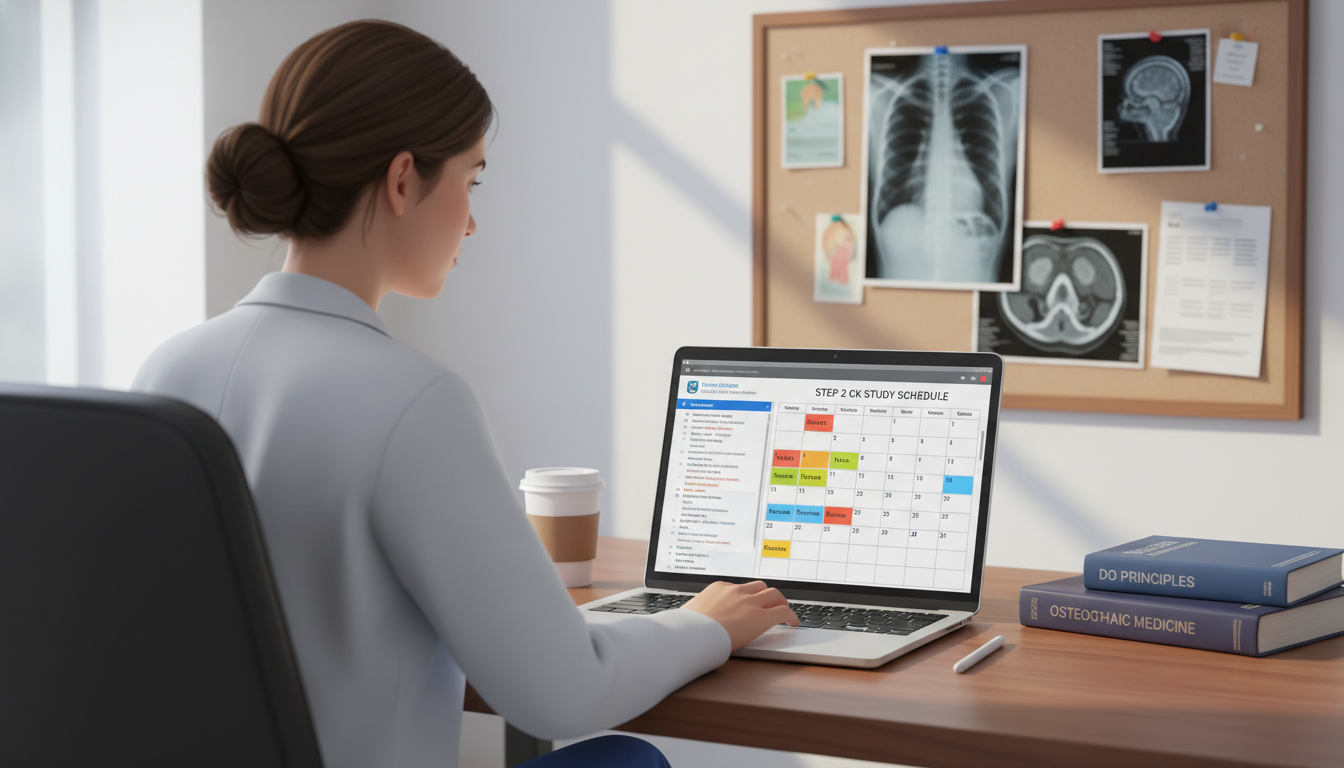
Building a Step 2 CK Strategy Specifically for Diagnostic Radiology
If you are still pre-exam or taking time off as a DO graduate to improve your application, Step 2 CK is your biggest strategic lever. Even if you have already taken it, this section will help you think about how to present your performance.
1. Time Your Exam Strategically
For radiology:
- Programs want Step 2 CK results available by application submission or at least before interviews.
- If your medical school allows, schedule Step 2 CK so that your peak readiness aligns with the late spring or early summer before ERAS.
- If your practice scores are lagging, consider a short, targeted extension instead of rushing to sit for the exam. For a DO graduate residency candidate, a 10–15 point improvement can significantly change your radiology options.
Decision rule example:
- If your NBME/UWSA practice scores cluster within ±5 points of your desired target:
- Proceed with the planned date.
- If they are 10–15 points below your target:
- Consider pushing back 4–6 weeks with an intensive, structured plan.
- If you already have a low Step score profile from Step 1:
- Treat Step 2 CK as a “must-win” exam; don’t schedule until your practice trend is consistently above your minimum target range.
2. Study Focus Areas That Matter for Radiology
Radiology programs care that you:
- Understand core clinical medicine (internal medicine, neurology, surgery, emergency).
- Can apply pathophysiology to imaging-based reasoning (even if the exam isn’t directly radiology-heavy).
On Step 2 CK, this translates into emphasizing:
- Internal Medicine/Cardiology/Pulmonology/GI – heavy exam weight and crucial to radiologic correlation.
- Neurology – brain imaging and stroke pathways are central to diagnostic radiology.
- Emergency Medicine – acute imaging decisions, trauma, PE, dissection, etc.
- Oncology/Hematology – staging, metastasis patterns, and systemic imaging.
Use radiology thinking while you study:
- When reviewing a pneumonia question, ask: “What imaging would be ordered? What would I expect to see?”
- When a question involves trauma, mentally rehearse: “CT vs. plain film vs. ultrasound—what and why?”
This helps you synthesize Step 2 content with your future specialty, reinforcing learning and creating a coherent narrative when you later talk about why radiology in interviews.
3. Tactical Use of Question Banks and NBMEs
For a disciplined Step 2 CK strategy:
Primary Qbank (e.g., UWorld)
- Complete at least 1 full pass, ideally timed, random, and mixed.
- Track performance over time to identify weak systems (e.g., neuro, renal) and high-yield imaging-related topics.
NBME/UWSA practice exams
- Space them out across your study timeline.
- Use them as decision points for whether to delay, proceed, or adjust intensity.
- Document score trends to show your advisor if you’re unsure about timing.
Targeted remediation
- For each low-performing domain, create mini-blocks (20–30 Q) focused on that area every day for a week.
- Pair high-yield review resources (e.g., concise subject summaries) with missed questions.
4. If You Already Have a Low Step Score
Many DO graduates come into application season with at least one low Step score (Step 1, Step 2, or COMLEX). This doesn’t end your radiology ambitions; it simply forces you to be more intentional.
If Step 1 was weak (or a failure) but Step 2 CK is pending:
- Deliberately overprepare for Step 2 CK.
- Aim for a clear upward trend demonstrating growth and correction.
- In your personal statement or advisor letter, you may briefly acknowledge the earlier misstep and emphasize subsequent success.
If Step 2 CK is already low:
- Focus on everything else you can control: audition rotations, letters, research, application breadth.
- Consider whether a preliminary year or transitional year in another specialty, followed by re-application to radiology, might eventually be part of your long-term strategy.
Targeting Programs: Matching Your Scores to the Right Radiology Residencies
Once your scores are fixed, the key becomes program selection and positioning, especially important in the osteopathic residency match context.
1. Understand the Types of Diagnostic Radiology Programs
Broadly, programs fall into:
Highly academic/university programs
- Often large centers with subspecialty fellowships and robust research output.
- Historically more USMLE-focused; some more MD-heavy, less DO-represented.
- More likely to have explicit or implicit score thresholds.
Mid-tier academic and hybrid community programs
- Mix of research, teaching, and service.
- Often more open to DOs, especially with strong performance and good letters.
- Score filters exist but may have exceptions for standout candidates.
Primarily community-based programs
- Strong clinical training and high case volume.
- Often more flexible on Step scores, especially for applicants who demonstrate reliability, clinical excellence, and fit.
As a DO graduate residency applicant, your odds are often better at types 2 and 3, particularly if your Step or COMLEX scores are average or below.
2. Use Your Scores to Stratify Your Application List
Construct your program list like an investment portfolio:
Reach programs (10–20%):
- Scores below their likely average, but you have unique strengths (research, strong letters, DO representation, prior connection).
Target programs (50–60%):
- Your Step 2 CK/COMLEX and overall profile are roughly aligned with their typical residents.
- Often DO-friendly and/or explicitly open to COMLEX-only applicants.
Safety programs (20–30%):
- Programs historically matching many DOs.
- More flexible with low Step score match profiles, especially if other parts of your application are strong.
A DO applicant with modest scores might apply to 40–60 programs in diagnostic radiology, scaling up or down depending on:
- Number of audition rotations.
- Strength of letters from radiologists.
- Research experience.
- Geographic flexibility.
3. DO-Friendly and COMLEX-Friendly Filters
When building your list:
- Check FREIDA, program websites, and past match data for:
- Programs that explicitly accept COMLEX without USMLE.
- Recent matches showing DO residents in the roster.
- Attend virtual open houses and Q&A sessions to ask directly:
- “Do you consider COMLEX-only applicants equally?”
- “Are there any minimum score thresholds for Step 2 CK or Level 2-CE?”
This prevents you from wasting applications on programs that will auto-screen you.

Beyond Scores: How DO Graduates Can Offset Average or Low Scores in Radiology
Numerical performance is only part of the story. For many DO graduates—especially those with lower Step scores—the differentiators are clinical performance, relationships, and narrative.
1. Strategic Radiology Rotations and Auditions
For a DO graduate, a sub-internship or audition rotation in radiology can:
- Allow faculty to see your work ethic, curiosity, and reliability firsthand.
- Generate strong, specialty-specific letters of recommendation.
- Help programs look past a marginal Step 1 score residency profile or low Step score match concern.
During these rotations:
- Be visible and engaged: show up early, ask focused questions, volunteer for case follow-ups.
- Learn the language of radiology: how attendings phrase impressions, how to prioritize differentials.
- Ask for feedback midway through the rotation and demonstrate improvement by the end.
2. Letters of Recommendation with Real Influence
Aim for at least:
- Two letters from diagnostic radiologists, ideally from:
- Your home institution (if radiology department is DO-friendly).
- Away/audition rotations where you performed strongly.
High-impact letters should:
- Explicitly attest to your clinical reasoning, ability to integrate imaging with clinical data, and professionalism.
- Provide comparative statements (“top 10% of students I have supervised”).
- Address any perceived risk factors if you have a low Step score (e.g., “Despite an early exam difficulty, this applicant has shown consistent excellence and mastery in clinical problem-solving”).
3. Research and Scholarly Work
Research isn’t strictly mandatory for every radiology residency, but it helps tremendously when your exam scores don’t stand out.
Particularly valuable:
- Radiology-focused projects: case reports, quality improvement, retrospective chart reviews involving imaging.
- Presentations at local or national radiology meetings.
- Any role in a PACS optimization, AI imaging tool, or workflow study.
For DOs with limited access to academic projects:
- Seek remote collaborations with radiology faculty at other institutions.
- Leverage your osteopathic school’s research office to connect you with mentors.
Framing: In your ERAS and personal statement, tie your research to your intellectual curiosity and analytical style, reinforcing the fit with diagnostic radiology.
4. Personal Statement and Interviews: Owning Your Narrative
Your personal statement is a place to:
- Explain, if necessary, context around a low Step score without making excuses.
- Emphasize your trajectory: how you improved, what you learned, and how you now perform.
- Connect your osteopathic background to radiology:
- Holistic patient understanding.
- Appreciation of functional and structural relationships.
- Desire to be a central consultant in multidisciplinary teams.
In interviews:
- If asked directly about scores:
- Briefly acknowledge (“Yes, my Step 1 was not where I wanted it.”).
- Highlight the changes in study strategy and subsequent performance (e.g., stronger Step 2 CK, shelf exams, clinical evaluations).
- Pivot to strengths: your rotation performance, letters, research, and enthusiasm for the field.
Programs are not only selecting test scores—they’re selecting future colleagues who can learn quickly, handle responsibility, and work well in high-stakes environments.
Special Considerations: DO Graduate Pathways and Backup Plans
Some DO graduates target diagnostic radiology but face multiple constraints: below-average Step scores, limited radiology exposure, and minimal research. You still have options, but you must be realistic and flexible.
1. Combined or Alternative Pathways
Consider:
Preliminary or Transitional Year at a strong internal medicine or surgery program:
- Excel clinically, build strength in imaging-related decision-making.
- Network with radiologists at that institution.
- Potentially re-apply to radiology after showing post-graduate excellence.
Early interest in related fields (e.g., nuclear medicine, radiation oncology, interventional pain with imaging focus) as secondary options if pure diagnostic radiology becomes less feasible.
2. Geographic Flexibility
If your numbers are average or low:
- Be prepared to apply to regions that are less saturated with applicants (some Midwest, South, or non-coastal areas).
- Indicate genuine interest in those areas (family ties, previous training, or willingness to settle long-term).
A DO graduate willing to train outside the major urban hubs often finds more DO-friendly radiology residency options.
3. When to Consider a Reapplication Strategy
If you fail to match into diagnostic radiology:
- Obtain feedback, if possible, from program directors or advisors.
- Strengthen objective weaknesses:
- More radiology exposure and rotations.
- Additional research.
- Strong performance in a preliminary year.
Many successful radiologists matched after one or more attempts, carrying stories of resilience and persistence that resonate with future employers.
FAQs: Step Score Strategy for DO Graduates in Diagnostic Radiology
1. As a DO, do I need USMLE scores to match into diagnostic radiology, or is COMLEX enough?
Not universally. Some diagnostic radiology programs accept COMLEX-only applicants and have successfully trained DOs. Others strongly prefer or require USMLE scores. If you are early in your training and targeting highly competitive or academic programs, taking USMLE (particularly Step 2 CK) can expand your options. If you are already COMLEX-only, focus on identifying COMLEX-friendly programs and strengthening your clinical and radiology-specific credentials.
2. I have a low Step 1 score. Can a strong Step 2 CK compensate for this in the diagnostic radiology match?
Yes, to a meaningful degree. With Step 1 now Pass/Fail, programs increasingly view Step 2 CK as the primary score for clinical reasoning. A clear upward trend—especially from a marginal Step 1 to a significantly stronger Step 2 CK—signals growth and resilience. You still may be screened out at some programs with rigid thresholds, but many will consider your improved performance, particularly if supported by strong radiology letters and clinical evaluations.
3. How many diagnostic radiology programs should a DO graduate with average or slightly low scores apply to?
For a DO applicant with average or slightly low Step/COMLEX scores, applying to 40–60 diagnostic radiology programs is common. The exact number depends on your clinical grades, research, letters, and geographic preferences. Prioritize programs with a track record of matching DOs, explicitly COMLEX-friendly policies, and those where you have done rotations or have strong institutional connections.
4. Should I delay Step 2 CK if my practice scores are below my target range for radiology?
If your practice exam scores (NBME/UWSA) are consistently 10–15 points below what you believe you need to be competitive for your target radiology programs, a brief, structured delay can be wise—provided your medical school timeline allows it. Use the extra time for high-yield review, targeted question blocks, and additional practice tests. For a DO graduate, this extra effort can be especially important, as Step 2 CK is often the primary numerical comparator to MD applicants in the diagnostic radiology match.
By approaching your Board scores as one critical component of a broader application narrative—and by leveraging your strengths as a DO graduate—you can significantly improve your chances of success in diagnostic radiology, even if your exam history isn’t perfect. Your strategy should combine smart exam timing, targeted studying, program selection, and deliberate relationship-building to present yourself as a capable, motivated future radiologist.