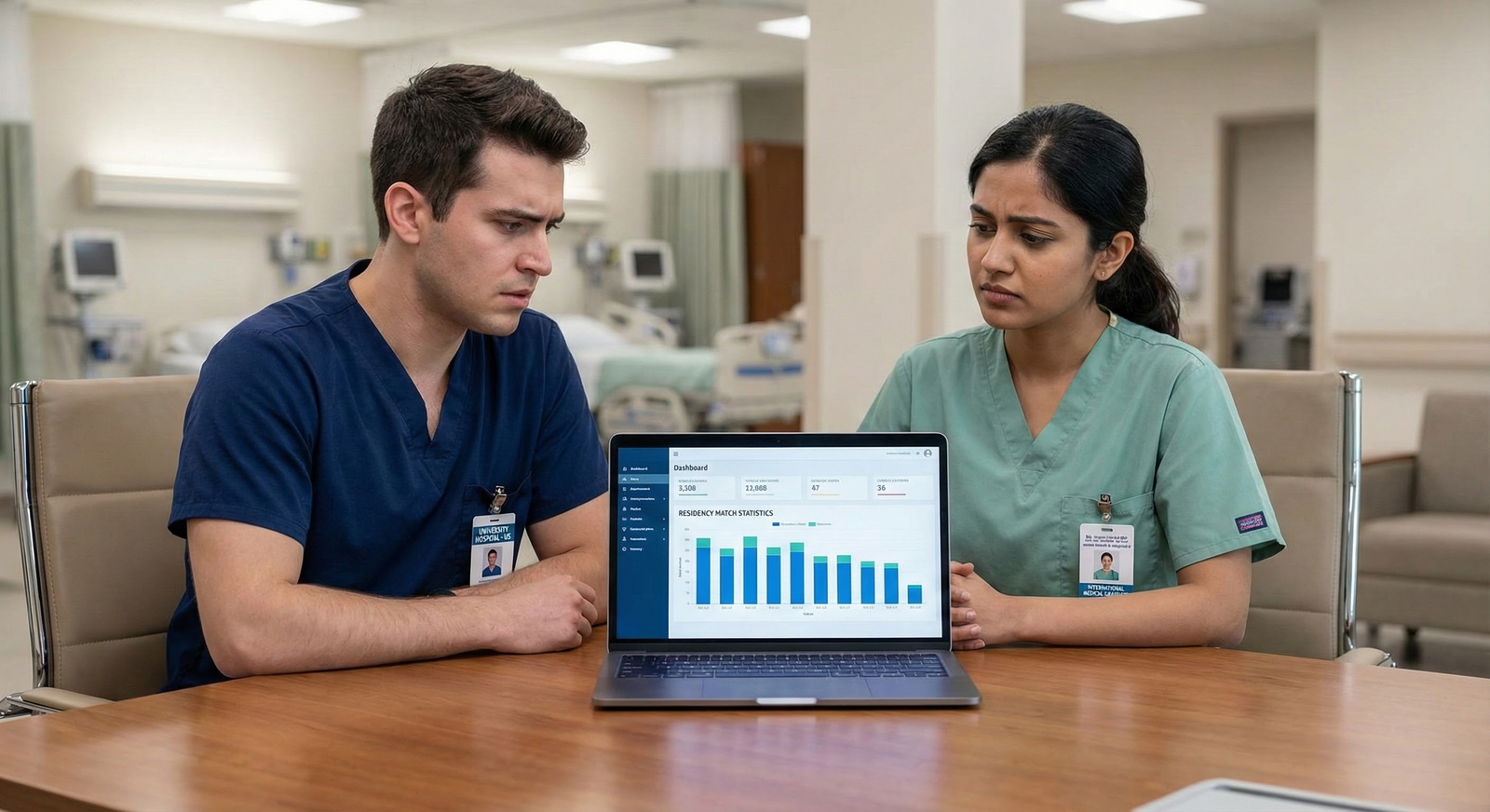
Residency applicants interested in global health often bring rich life experience, language skills, and a passion for working with underserved populations. Yet many worry that a low Step score—whether a low Step 1 (or a pass with a concerning NBME history), low Step 2 CK, or below average board scores overall—will close doors to a global health–focused career.
It won’t—if you are strategic.
This guide walks you through practical, evidence-informed strategies to strengthen your application for global health residencies and global health residency tracks, even if you are matching with low scores. We will focus on what program directors actually care about, where global health pathways differ from standard tracks, and how to present your story clearly and confidently.
Understanding the Landscape: Global Health and “Low” Step Scores
Many applicants assume global health–oriented programs are more forgiving of test scores because they value service and cross-cultural skills. That can be partially true, but there are important nuances.
What counts as a “low” Step score?
- USMLE Step 1 (if numeric):
- Historically, “below average” has meant <230 for competitive fields; for primary care or internal medicine, scores in the 210–220 range may still be acceptable, depending on the program.
- Now that Step 1 is Pass/Fail, “low” may show up as:
- Multiple attempts
- Failure followed by a pass
- Very low NBME practice exam history (sometimes included in MSPEs)
- USMLE Step 2 CK:
- A “low” Step 2 CK often means below the national mean for your application year (commonly mid‑240s for U.S. allopathic seniors, lower for others).
- A score below 230 can be a concern at more competitive academic programs, especially if paired with weaker clinical evaluations or other red flags.
How global health programs view scores
Residency programs with a global health residency track or strong international medicine focus typically prioritize:
- Evidence of commitment to underserved and global populations
- Ability to function in resource-limited environments
- Resilience, adaptability, and teamwork
- Solid clinical performance and professionalism
- The capacity to pass specialty boards eventually
Scores are still important because programs:
- Must maintain board pass rates
- Are constrained by institutional cutoffs (e.g., Step 2 CK >220 or >230)
- Use scores as initial filters due to high application volume
However, many global health–oriented faculty are deeply mission-driven and will consider applicants holistically, especially when they see:
- A clear global health narrative
- Strong clinical evaluations
- Demonstrated growth after early academic struggles
Your goal is not to hide your low score. Your goal is to contextualize it, counterbalance it, and show a trajectory of improvement.
Strategy 1: Choose the Right Specialty and Program Fit
Not all specialties or programs are equally sensitive to low Step scores, and not all global health paths look the same.
Prioritize specialties aligned with global health
Some specialties have especially strong links to international medicine and are more flexible with scores:
- Internal Medicine (IM)
- Family Medicine
- Pediatrics
- Emergency Medicine (more selective overall, but with clear global health opportunities)
- Obstetrics & Gynecology (selectivity varies by program)
- Combined programs (e.g., Med‑Peds) with global health tracks
Super-competitive subspecialties (e.g., dermatology, plastic surgery, some surgical subspecialties) rarely have dedicated global health tracks and are much less forgiving of low scores.
If your primary goal is a career in global health, it may be strategic to:
- Choose a core specialty (IM, FM, Peds, EM, OB/GYN) known for international work
- Use residency to build niche expertise (HIV, TB, maternal health, emergency care systems, health systems strengthening, etc.)
Target programs with established global health tracks
Programs differ widely in how seriously they take global health. Look for:
- Formal global health residency tracks or pathways, often with:
- Protected time for global rotations
- Required curriculum in global health ethics, health systems, and epidemiology
- Mentored global or local underserved projects
- Long-standing partnerships with hospitals or NGOs in low- and middle‑income countries (LMICs)
- Faculty with global health careers and funded projects
- Safety and supervision policies for international rotations
Such programs may value your global health experience and commitment more than a few point differences in Step scores, especially if you show:
- Relevant language skills
- Extended work or volunteer experience in LMICs
- Research or quality improvement projects focused on global or local underserved care
Be realistic about competitiveness
Even within global health–focused programs:
- Highly ranked or research‑heavy academic centers may still have firm score cutoffs.
- Community-based or mid‑tier academic programs with strong global health missions may be more flexible about below average board scores.
Actions:
- Ask directly (via email or during virtual info sessions) whether they:
- Use strict score cutoffs
- Consider applicants with Step failures if there is evidence of improvement
- Create an application list that includes:
- 20–30% “reach” programs (higher score averages, strong global health)
- 40–60% “target” programs (scores in your range, active global or underserved focus)
- 20–30% “safety” programs (historically interview applicants with lower scores, strong primary care/underserved missions, even if global health offerings are smaller)

Strategy 2: Build a Global Health Portfolio That Outshines Your Numbers
If your test scores are a relative weakness, you need clear, compelling strengths in other domains. For global health, that means constructing a portfolio of experiences that show depth, continuity, and impact.
Depth over tourism: Avoid the “voluntourism” trap
Short, unstructured international volunteer trips—especially if focused on high‑risk clinical work without appropriate supervision—can raise ethical concerns.
Stronger experiences include:
- Longitudinal engagement (repeated trips to the same site, or multi‑year involvement with one community or project)
- Programs with clear:
- Local partners
- Capacity‑building goals
- Supervision from experienced clinicians
Example:
- Weak: “I spent 1 week in Country X doing surgeries as a second-year med student.”
- Strong: “Over 2 years, I worked with a community clinic in Country Y, supporting a local-led hypertension registry project, returning twice to evaluate and refine our workflow and train local staff.”
Key elements of a strong global health portfolio
Sustained global or local underserved work
- Domestic clinics serving:
- Immigrants, refugees, asylum seekers
- Uninsured or low-income populations
- International rotations with clear educational goals and preceptors
- Work with reputable NGOs or academic partnerships
- Domestic clinics serving:
Language skills and cultural humility
- Conversational or fluent language ability relevant to your target populations
- Reflective writing or projects demonstrating cultural humility, not just “cultural exposure”
Scholarly output
- Case reports from global sites
- Quality improvement projects (e.g., vaccination campaigns, task shifting, triage systems)
- Co-authorship on papers, abstracts, or posters in global health
Leadership and advocacy
- Organizing student global health interest groups
- Leading refugee health initiatives or immigrant health screenings
- Advocacy with local or international organizations on health equity issues
How this helps compensate for low scores
For a program director committed to training future global health leaders, a robust portfolio signals:
- Motivation that will sustain you through difficult rotations and low-resource settings
- Practical skills beyond test taking (teamwork, improvisation, working with limited diagnostics)
- Resilience and growth, especially if your narrative ties early academic struggles to later maturity and focus
In your application, your task is to assemble these experiences into a coherent story: You are not someone with a low Step 1 score; you are a global health–focused clinician whose early test struggles were a turning point.
Strategy 3: Addressing a Low or Failed Step Score Directly and Strategically
You cannot erase a low Step score. But you can reframe it as:
- A specific, time-limited challenge
- Followed by measurable improvement
- And a clear plan for continued success
Use Step 2 CK to your advantage
If Step 1 was your weak point, Step 2 CK becomes critical.
Actions:
- Delay Step 2 CK if needed to ensure adequate preparation, especially if Step 1 was low or failed.
- Use structured prep:
- Dedicated question bank (UWorld, AMBOSS, etc.)
- NBME practice tests with repeated review
- Learning coach or tutor if you have known learning differences or prior failures
- Treat Step 2 as a priority rotation in your schedule—protect time as if it were a sub‑internship.
A meaningful improvement in Step 2 CK can help program directors believe you will pass the boards, even if Step 1 was concerning.
Explaining low scores in your personal statement and MSPE
You do not need to write a lengthy confession, but you must be:
- Honest
- Brief
- Focused on growth
Example of a concise explanation:
“Early in medical school, I struggled with the transition to independent study and failed Step 1 on my first attempt. This was a significant wake‑up call. I sought academic coaching, underwent evaluation for learning differences, and completely restructured my study systems. Since then, I have passed all subsequent exams on the first attempt, including Step 1 on my second attempt and Step 2 CK with a score of [XXX]. These changes also translated into stronger clinical performance, as reflected in my clerkship evaluations.”
Avoid:
- Blaming others (school, exam, circumstances)
- Overemphasizing the failure
- Leaving it unmentioned when it clearly needs context (especially repeated attempts)
Letters of recommendation as counterweights
Strong letters can neutralize anxiety about your board performance by emphasizing:
- Clinical judgment
- Reliability and professionalism
- Performance “at or above the level of a typical intern”
- Ability to thrive in resource-limited or high-acuity environments
For global health residency tracks, try to secure at least one letter from:
- A faculty member involved in global health or underserved care
- A mentor from international or refugee/immigrant health work who can discuss your on‑the‑ground skills
Tell your letter writers explicitly:
- “I am concerned about my lower Step scores and hoping your letter can help programs understand my strengths as a clinician and my readiness for residency.”

Strategy 4: Optimizing Your Application to Highlight Global Health Strengths
Every part of your ERAS application and interview is a chance to shift focus away from low numbers and toward your strengths and trajectory.
Personal statement: Tell a coherent global health story
Your global health personal statement should:
- Open with a specific experience, not a generic quote about serving the underserved.
- Show:
- How your interest in global health developed
- What you have actually done (concrete roles, responsibilities, outcomes)
- How these experiences shaped your approach to medicine
- Connect this to:
- Why you are choosing this specialty
- Why you are seeking a global health residency track or international medicine–focused program
- Address low Step scores briefly if necessary, then pivot:
- From struggle → reflection → change → evidence of improvement and reliability
Example pivot line:
“While my early exam performance does not reflect the physician I have become, it catalyzed changes in my study habits, time management, and self-awareness that now serve me well in demanding clinical environments.”
Experiences section: Be selective and impact-focused
In ERAS, choose your most meaningful experiences to support your global health narrative:
- Highlight 1–2 global or local underserved experiences:
- Describe the setting, your role, and what changed as a result of your involvement.
- Include any global health research, QI, or leadership roles.
- Emphasize skills:
- Working across languages and cultures
- Resourcefulness and problem-solving
- Systems thinking (clinic workflows, supply chains, referral systems)
When describing roles, use action verbs and outcomes:
- “Co-led a team of 5 students to implement a manual blood pressure registry in a rural clinic, increasing follow-up visit attendance from 40% to 65% over 6 months.”
- “Designed and taught a basic trauma response workshop for 20 community health workers under supervision of EM faculty.”
Program signaling and tailored communication
With limited signaling (if applicable in your year), choose:
- Programs with formal global health or international medicine tracks
- Programs whose websites and resident biographies show meaningful fieldwork, not just an occasional mission trip
In your emails or supplemental application responses:
- Explicitly mention why that program’s global health track fits your goals.
- Reference one or two specific faculty or partnership sites that align with your interests (e.g., HIV care in East Africa, refugee health in a U.S. city, maternal mortality reduction in South Asia).
Interviews: Own your story without apologizing
If asked directly about low Step scores:
- Acknowledge briefly (no defensiveness).
- Provide context (e.g., difficulty transitioning to independent study, health issue—only if you’re comfortable sharing).
- Describe concrete changes you made.
- Point to evidence of success since then:
- Improved Step 2 CK
- Strong clerkship comments
- Leadership roles, consistent performance, or research productivity
Then pivot back to your strengths and goals in global health.
Example response:
“Yes, my Step 1 score was lower than I had hoped. I realized my study methods from college weren’t effective for the volume and complexity of medical content, so I worked with an academic coach to redesign my approach and built a more disciplined schedule. The results show in my Step 2 CK performance and in my clerkship evaluations, which better reflect how I function clinically. I’m confident in my ability to pass boards and, more importantly, to care for patients effectively—especially in the resource-limited settings I hope to work in through your global health track.”
Strategy 5: Backup Planning, Parallel Paths, and Long-Term Perspective
Even with great strategy, matching with low scores—particularly into a structured global health residency track—may not work out in your first cycle. You need Plan B options that still move you toward a global health career.
Diversify your application strategy
Options to consider:
- Apply broadly within global health–friendly specialties:
- Family medicine and internal medicine, in particular, often have:
- Greater flexibility with scores
- Strong roots in underserved care
- Family medicine and internal medicine, in particular, often have:
- Add community programs and those serving:
- Rural populations
- Safety-net hospitals
- Indigenous communities
- Refugee and immigrant populations
These programs may not always brand themselves as “global health,” but their patient populations and mission align with global health values and skill sets.
If you don’t match: Productive gap years
If you go unmatched, you can still strengthen your candidacy by choosing structured, supervised roles with clear educational and CV benefits:
- Preliminary or transitional year residency positions (if available)
- Research coordinator roles in global or immigrant health projects
- Global health fellowships for pre-residency graduates (rare but growing)
- Clinical roles in underserved settings (e.g., as a clinical assistant, scribe, or educator), depending on your degree and licensure status
Use such a year to:
- Demonstrate consistent, responsible work ethic
- Generate new letters of recommendation
- Potentially publish or present work in international medicine or health equity
- Show ongoing academic engagement (courses, certifications, or additional study for future boards)
Remember: Global health is a career, not a single match decision
Many physicians build impactful global health careers without training in formal global health tracks. Alternatives include:
- Completing residency in a community program, then adding:
- Global health fellowships
- Master’s degrees (e.g., MPH with global health concentration)
- Short- and medium-term field assignments with NGOs or academic partners
- Starting with domestic underserved care:
- FQHCs, safety-net hospitals, IHS/tribal health facilities, rural critical access hospitals
- Then gradually incorporating more international work
Your Step scores may shape your initial residency options, but they do not define your long-term capacity to contribute to global health.
Frequently Asked Questions (FAQ)
1. Can I still get into a global health residency track with a low Step 1 score?
Yes, it is possible, especially now that Step 1 is pass/fail and programs are shifting emphasis to Step 2 CK and clinical performance. Programs with global health tracks often value your global health commitment, experiences, and language skills as heavily as marginal score differences, but:
- A failed Step 1 or multiple attempts must be addressed honestly.
- A strong Step 2 CK and positive clerkship evaluations become crucial.
- Targeting programs that explicitly consider applicants “holistically” will increase your chances.
2. Which specialties are most forgiving of below average board scores for global health?
Generally more flexible specialties, especially for global health careers, include:
- Family Medicine
- Internal Medicine
- Pediatrics
- Some Emergency Medicine and OB/GYN programs
However, each program is unique. Look for:
- Mission statements emphasizing underserved and global health
- Strong primary care and community health focus
- A track record of training physicians who work in low- and middle‑income countries or with marginalized populations domestically
3. How much global health experience do I need to offset low scores?
There is no set threshold, but for your experience to meaningfully counterbalance low scores, it should show:
- Consistency: over several years or through multiple projects, not just a single short trip.
- Responsibility: roles with clear duties, leadership, or initiative.
- Reflective growth: evidence that you understand ethics, power dynamics, and sustainable partnerships.
A deep, sustained portfolio of global and/or domestic underserved experience, paired with a well‑articulated narrative, can significantly reduce the emphasis on your numeric scores.
4. Should I mention my low Step score in my personal statement?
If your Step performance includes:
- A failure
- Multiple attempts
- Or a significantly below average score that might raise concerns
then a brief, focused explanation can help. Keep it to 2–4 sentences:
- Name the issue without overdramatizing it.
- Explain what you learned and what changed.
- Emphasize evidence of improvement and reliability since then.
Do not let the statement become an extended apology; most of it should highlight your strengths, global health commitment, and readiness for residency.
Low Step scores are a hurdle, not a verdict. By choosing specialty and programs wisely, building a compelling global health portfolio, addressing your scores transparently, and planning for multiple paths into international medicine, you can still construct a powerful, fulfilling career in global health.