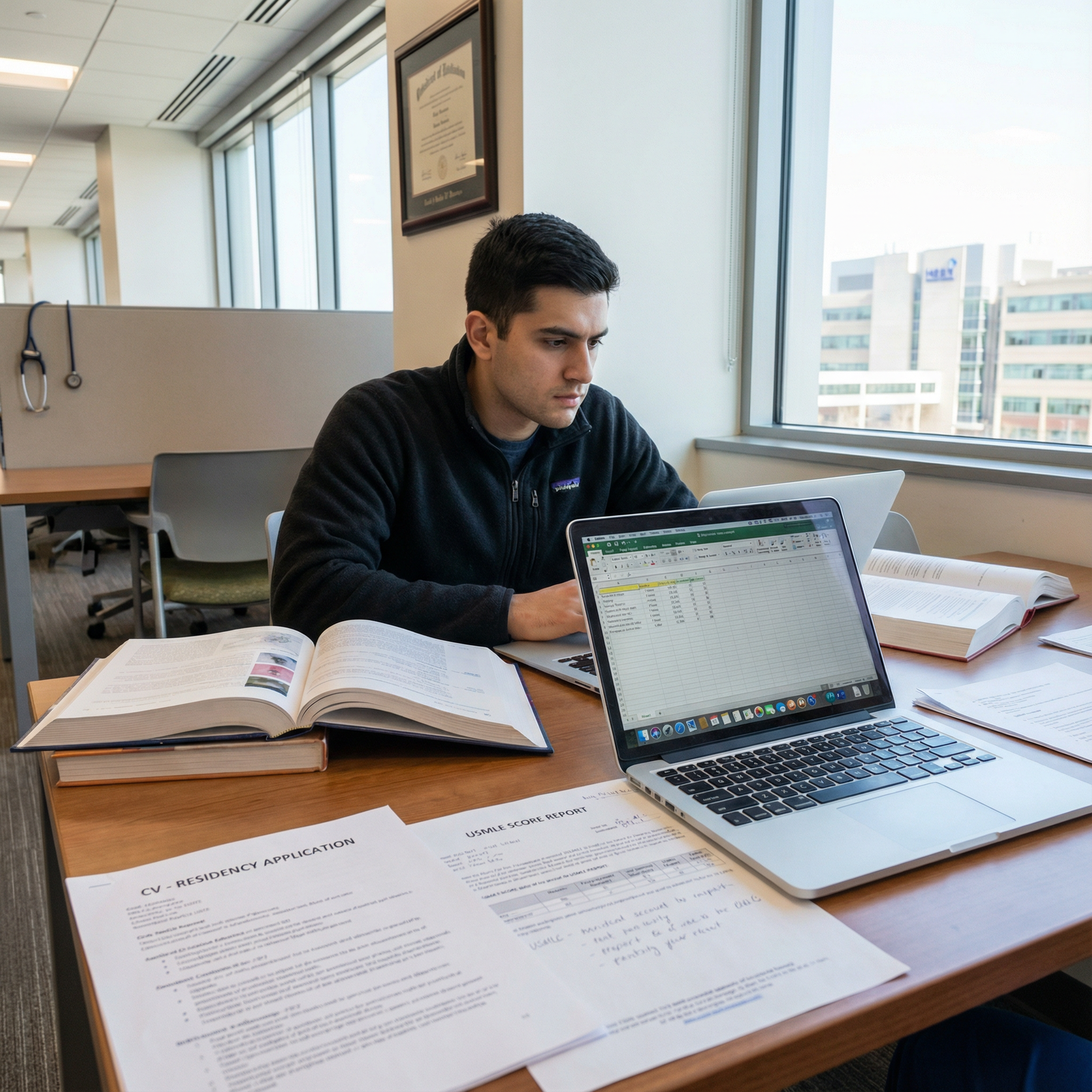
Introduction: Matching with “Less-Than-Ideal” Scores Is Possible
Residency applications can feel unforgiving—especially when your USMLE or COMLEX scores are not where you hoped. In an era of increasing competitiveness, it’s easy to equate a lower score with a closed door to your dream specialty or program.
But your score is not your destiny.
Residency programs increasingly emphasize holistic review, looking beyond numbers to your clinical performance, professionalism, trajectory of growth, and unique experiences. Many residents currently training across the U.S. once worried their “subpar” scores would prevent them from matching—yet they built strategic, thoughtful applications that highlighted their strengths and addressed their weaknesses honestly.
This guide is designed for medical students and international medical graduates who are anxious about Residency Applications because of lower exam performance. You’ll learn concrete, step-by-step strategies to:
- Minimize the impact of low scores
- Leverage your strengths (clinical work, research, service, leadership)
- Tell a compelling story through your Personal Statement and interviews
- Make smart, data-informed decisions to maximize your match chances
Use this as a roadmap to turn a perceived liability into a story of resilience, growth, and commitment to your chosen field.
Understanding the Modern Residency Application Landscape
How Programs Actually Use USMLE/COMLEX Scores
Exam scores still matter. They often serve as:
- Initial screening criteria: Some programs use minimum score cutoffs (or number of attempts) for interview selection.
- Signal of test-taking ability: Particularly relevant in specialties with heavy in-training exam expectations.
- Rough benchmark of medical knowledge: Especially when comparing large numbers of applicants.
However, several important shifts have occurred:
- USMLE Step 1 is now Pass/Fail: Programs place relatively more emphasis on Step 2 CK, clinical grades, letters, and narrative performance.
- Holistic review is increasing: Programs are under pressure to consider qualities like professionalism, communication, resilience, and service.
- Context matters: A slightly low Step 2 CK in a challenging year, balanced by strong clinical evaluations and upward trends, is very different from multiple failures with no remediation plan.
Low scores can close some doors—but rarely all of them. Your task is to target the right doors and present the strongest, most coherent version of your story.
Other Key Components of the Residency Application
Programs rarely make decisions based on scores alone. They also evaluate:
Dean’s Letter / MSPE and Clinical Evaluations
- Narrative comments on professionalism, teamwork, reliability, and clinical reasoning
- Honors/High Pass patterns and any noted concerns or commendations
Personal Statement
- Your motivations, values, and “why this specialty” story
- Evidence of reflection, maturity, and self-awareness
- Explanation of context (when appropriate) without excuses
Letters of Recommendation
- Specialty-specific endorsements from attendings who know you well
- Specific examples of your clinical performance, attitude, and growth
Clinical Experience (Clerkships, Sub-Is, Externships, Observerships)
- Direct patient care, responsibility level, and performance
- U.S. clinical experience is particularly critical for IMGs
Research Experience and Scholarly Work
- Publications, abstracts, posters, QI projects, case reports
- Demonstrated curiosity and engagement with academic medicine
Extracurriculars, Leadership, and Service
- Longitudinal commitments (e.g., student-run clinics, mentoring, teaching)
- Evidence you are a good citizen, team member, and contributor to the community
Your strategy is to build and present a strong, consistent portfolio across these elements so that your exam score becomes just one part of a much richer narrative.
Strategic Application Planning with Lower Scores

Choosing the Right Specialty and Program Targets
When your scores are lower than average, strategy matters as much as effort.
1. Be Realistic About Specialty Competitiveness
Some specialties (e.g., dermatology, plastic surgery, neurosurgery, orthopedics) are extremely competitive and heavily score-driven. Matching into these with clearly low scores is rare, though not impossible if you have:
- Strong connections
- Significant research output
- An extraordinary narrative and mentorship
Most applicants with lower scores significantly improve their odds by:
- Considering moderately competitive or less competitive specialties that genuinely interest them (e.g., family medicine, internal medicine, pediatrics, psychiatry, PM&R, pathology, some community-based programs in other fields).
- Exploring combined or alternative pathways (e.g., transitional year followed by specialty switch, or preliminary positions where relevant).
Align this decision with long-term Career Development goals, not just “what’s easiest to match.” You need a field you can thrive in for decades.
2. Use Data to Guide Program Selection
Instead of guessing, study:
- NRMP Charting Outcomes in the Match and Program Director Surveys
- Individual program websites and FREIDA profiles
- Alumni match lists from your Medical School (or similar schools)
Look for programs that:
- Do not publish extremely high Step 2 CK “recommended” thresholds
- Emphasize “holistic review,” service, or underserved populations
- Historically accept applicants with similar or slightly higher scores
- Are community-based or newer programs (often more flexible about scores)
Create a tiered program list:
- Reach Programs: A few aspirational choices
- Realistic Targets: Majority of your list
- Safety Programs: Programs that have historically interviewed or matched applicants with profiles like yours
Aim for an appropriately broad application strategy, especially if your scores are substantially below the national mean—often 60–100+ applications for IMGs or lower-score applicants, depending on specialty.
Crafting an Application That Offsets Low Scores
Writing a Powerful, Strategic Personal Statement
Your Personal Statement is where you control the narrative.
1. Address, Don’t Obsess Over, Your Scores
If your scores are clearly below average or you had a failure/retake, it’s often better to briefly and maturely address it rather than ignore it. Focus on:
- Context (briefly): major life events, health issues, language transition, test anxiety
- Insight: what you learned about your study approach, time management, or coping skills
- Action: concrete steps you took (or are taking) to grow
- Trajectory: evidence of improvement (strong Step 2 CK, better clinical grades, research productivity)
Example framing:
“I faced significant challenges during my initial standardized exams, which taught me difficult but valuable lessons about preparation strategies and stress management. Since then, I have restructured my study habits, sought mentorship, and focused on consistently applying feedback during my clinical rotations. This process has strengthened my resilience and reinforced my commitment to providing meticulous, compassionate patient care.”
Keep this section short (2–4 sentences). Then pivot to your strengths.
2. Highlight Strengths and Core Themes
Focus on:
- Patient-centered experiences that shaped your specialty choice
- Moments where you demonstrated leadership, initiative, or advocacy
- Clinical encounters that reflect your values and communication skills
- Long-term patterns: commitment to underserved care, teaching, or research
Tie your story to why you will be a high-value resident, not just why you love the specialty.
3. Tailor Thoughtfully to Program Types
You don’t need a unique statement for every program, but you can:
- Have 1–2 versions tuned to different program types (e.g., academic vs community, research-heavy vs clinically intense).
- Mention specific program features in supplemental essays or ERAS experiences where possible (e.g., emphasis on primary care, global health, or QI).
Use your Personal Statement to show you are more than a score: you are a reliable, reflective, and patient-centered future colleague.
Securing Strong, Differentiating Letters of Recommendation
Letters of Recommendation (LoRs) can significantly offset lower scores—especially when they are detailed and specialty-specific.
1. Choose the Right Letter Writers
Prioritize:
- Attendings in your chosen specialty who directly supervised you
- Supervisors who saw you over time (e.g., sub-internship, multiple weeks on service)
- Faculty known to support residents and students, and who are responsive
If possible, include at least:
- 2–3 letters from your target specialty
- 1 letter that comments extensively on your professionalism, teamwork, and work ethic
2. Help Your Writers Help You
Make it easy for them to write a strong letter:
Provide a brief CV, your Personal Statement draft, and bullet points highlighting:
- Cases or responsibilities you handled with them
- Instances where you demonstrated growth or went above and beyond
- Any leadership, teaching, or QI efforts
Politely ask if they can write a “strong and supportive” letter, giving them an out if they do not feel able to.
A detailed, enthusiastic letter stating that you “perform at or above the level of current residents” can meaningfully counterbalance exam concerns.
Building Impactful Clinical Experience
For many programs, what you do with patients today matters more than what you scored on a test yesterday.
1. Maximize Core Rotations and Sub-Internships
During clinical rotations, especially in your target specialty:
- Be reliable: arrive early, volunteer for tasks, follow through
- Show initiative: read about your patients, propose plans, ask thoughtful questions
- Ask for mid-rotation feedback and apply it visibly
- Express interest in letters and future residency candidacy early with potential mentors
Strong clinical evaluations and sub-I performance can directly translate into interviews and LoRs.
2. For IMGs: Prioritize U.S. Clinical Experience
If you’re an international graduate, U.S. experience is critical:
- Hands-on externships or sub-internships are ideal
- Observerships can still help build connections and familiarity with the system
- Use each experience to obtain at least one strong letter and a detailed evaluation
Document specific responsibilities (e.g., admitting patients, writing notes, presenting on rounds) in your CV and ERAS descriptions.
3. Demonstrate Commitment to Patient Care
Volunteer experiences can add depth:
- Student-run free clinics, mobile health units, community screenings
- Long-term work with underserved or marginalized populations
- Telehealth or health education projects
Highlight how these experiences shaped your understanding of health systems, social determinants, and patient advocacy.
Enhancing Your Research and Academic Profile
You do not need multiple first-author publications to match. But some evidence of scholarly engagement can strongly support your application.
1. Join Ongoing Projects
Look for:
- Faculty in your target specialty with active research
- Quality improvement (QI) projects in the hospital or clinic
- Case reports on interesting or rare patients you encounter
Even small contributions—data collection, literature reviews, poster preparation—can lead to:
- Posters or oral presentations at local/regional meetings
- Co-authorship on abstracts or manuscripts
- Stronger relationships with faculty who can write letters
2. Show Follow-Through and Productivity
Programs value applicants who start and finish projects. Make sure you:
- Keep track of timelines and deadlines
- Volunteer to help with less glamorous tasks (editing, formatting, IRB paperwork)
- List all outputs clearly (submitted, accepted, published, presented) on ERAS
This demonstrates discipline, curiosity, and the ability to complete long-term work—all attractive qualities in residents.
Personal Development, Leadership, and Distinguishing Extracurriculars
Residency programs are building teams, not just hiring test-takers.
1. Leadership and Teaching
If you have held roles such as:
- Class representative, committee member, organization president
- Tutor, teaching assistant, OSCE coach, peer mentor
Describe:
- Specific initiatives you led (e.g., creating a new workshop, improving scheduling)
- Impact on other students or the learning environment
- Skills gained (communication, conflict resolution, time management)
2. Meaningful Non-Medical Activities
Non-clinical passions can humanize you:
- Long-term sports, music, or arts participation
- Community service unrelated to medicine
- Entrepreneurship, technology, or writing
These can demonstrate discipline, creativity, and resilience—traits that do matter to program directors.
Networking, Mentorship, and Professional Visibility
Building Strategic Professional Connections
Networking is not about favoritism; it’s about being visible to people who can vouch for you.
Join specialty organizations (e.g., AAFP, ACP, APA, specialty-specific societies).
Attend regional and national conferences—even virtually—to:
- Present posters
- Meet faculty and residents
- Learn what different programs value
Use LinkedIn or specialty forums to connect with:
- Alumni from your Medical School who matched into your specialty
- Residents or fellows at target programs
Be professional, concise, and respectful when you reach out. Ask for brief advice, not for favors.
Finding and Utilizing Mentors
Mentors can:
- Help you interpret your performance in context
- Suggest realistic specialty and program choices
- Edit your Personal Statement and CV
- Advocate for you with colleagues
Consider having multiple mentors:
- A specialty mentor in your target field
- A general advisor (e.g., dean, academic advisor)
- Possibly a former applicant who matched with a similar profile
Meet with them early in your application cycle and follow through on their advice.
Mastering Residency Interviews with Lower Scores

Developing Strong Interview Skills
Interview performance can significantly mitigate concerns about exam scores.
1. Practice, Don’t Wing It
- Conduct multiple mock interviews with faculty, residents, advisors, or peers.
- Practice common questions such as:
- “Tell me about yourself.”
- “Why this specialty?”
- “Tell me about a challenge or failure and how you handled it.”
- “Why are your scores lower than average?”
Record yourself (video if possible) and work on:
- Clear, concise answers
- Professional body language and tone
- Avoiding defensive or overly rehearsed responses
2. Prepare Thoughtful Questions
Programs expect you to ask questions. Use this opportunity to:
- Show you understand the program’s strengths (e.g., community focus, research, diverse patient population)
- Clarify training structure, mentorship, and wellness resources
- Demonstrate genuine curiosity and engagement
Avoid questions easily answered on their website.
Addressing Low Scores in the Interview
If the topic arises, your goal is to be honest, brief, and future-focused.
- Acknowledge: “Yes, my Step 1 score was lower than I hoped.”
- Explain without making excuses: “I struggled with test anxiety and an ineffective study strategy, which I’ve since improved.”
- Demonstrate growth: “I made changes that helped me perform stronger in my clinical rotations and on Step 2 CK, and I continue to refine my learning strategies.”
- Refocus on strengths: “What I hope stands out is my consistent clinical performance, my strong letters, and how I work with patients and teams.”
Avoid blaming others or oversharing personal details. Emphasize insight and resilience.
Conclusion: Reframing Low Scores as One Chapter, Not the Whole Story
A low USMLE or COMLEX score is painful—but it is not the end of your medical journey. Residency programs are increasingly looking for applicants who are:
- Resilient and self-aware
- Strong clinicians and teammates
- Committed to patient care and lifelong learning
- Able to grow from setbacks rather than be defined by them
By:
- Strategically choosing your specialty and program list
- Crafting a compelling Personal Statement and securing strong LoRs
- Maximizing your clinical experiences and scholarly work
- Building mentorships and preparing thoroughly for interviews
you can build a Residency Application that tells a powerful story—one where your lower scores are a challenge you faced, not a barrier you accepted.
Your path may be different from your classmates’, but with planning, honesty, and persistence, you can absolutely secure a residency position that aligns with your skills, values, and long-term Career Development goals.
FAQ: Residency Match Strategies with Low Scores
Q1: Can I still match into residency if I have low USMLE/COMLEX scores?
Yes. Many applicants with below-average scores match every year. Your chances depend on how low the scores are, how many attempts, your specialty choice, your clinical performance, letters, research, and overall application strategy. A realistic specialty choice and a broad, well-targeted application list are critical.
Q2: Should I directly explain my low scores in my Personal Statement or MSPE addendum?
If your scores are significantly below typical program thresholds or you had a failure, a brief, mature explanation is usually helpful. Focus on what you learned, what you changed, and how you’ve demonstrated improvement since then. Avoid lengthy justifications or blaming circumstances.
Q3: Is it better to choose a less competitive specialty just because of my scores?
Not automatically. You should balance true interest with objective competitiveness. If your dream specialty is extremely competitive and your scores are low, strongly consider:
- Related but less competitive fields you could be happy in
- Programs with a strong need for physicians in underserved areas
Ultimately, your long-term satisfaction matters, but so does being realistic about match probability.
Q4: How many programs should I apply to if my scores are low?
There is no single number, but lower scores typically require broader applications. For many IMGs or applicants with clearly below-average scores, 60–100+ programs (or more, depending on specialty and geography) may be appropriate. Work with an advisor to create a tiered list and avoid concentrating all applications in extremely competitive programs or locations.
Q5: What can I do during a gap year or extra time to strengthen my application?
Use any additional time strategically. High-yield activities include:
- U.S. clinical experience (externships, sub-Is, observerships)
- Research and QI projects with tangible outputs (posters, papers)
- Longitudinal volunteer work or clinical service
- Focused studying for any remaining exams to demonstrate improvement
Document your efforts clearly on ERAS and highlight them in your Personal Statement and interviews.
Related Resources
- Mastering Your Residency Rankings: Tips for Optimizing Choices
- Top 10 Common Mistakes in Residency Applications that Hurt Your Match Chances
- Effective Interview Techniques for New Doctors: Stand Out from the Crowd
- Understanding the Importance of Research Experience
- How to Choose Your Specialty Wisely: Avoiding the Most Competitive Fields