
Understanding Step Scores in the Context of Global Health
For an international medical graduate (IMG) pursuing a global health–oriented residency in the United States, test scores feel like the gatekeeper to everything: interviews, visa sponsorship, even future fellowship opportunities. But Step scores are only one piece of a much bigger picture—and in global health, programs often look beyond numbers more than in many other fields.
To build an effective Step score strategy, you need to understand:
- How programs currently interpret Step 1 and Step 2 CK
- How global health–focused programs weigh scores versus mission fit
- How to recover and still match with a low Step score match profile
- How to use your unique international medicine background as an asset
Throughout this IMG residency guide, we’ll integrate practical tactics for both high and low scores, and show how to leverage your global health story—regardless of your Step 1 score residency profile.
How Programs View Step 1 and Step 2 CK Today
Step 1 (Pass/Fail):
- Now pass/fail, but:
- A fail is a major red flag and must be clearly addressed.
- Timing, number of attempts, and improvement in Step 2 CK become crucial.
- Some PDs still informally interpret a “strong pass” if you took it before P/F change, but that is fading.
Step 2 CK: The primary numeric filter
- The Step 2 CK score has largely replaced Step 1 as the primary academic metric.
- Many programs use numeric “soft” filters (e.g., 230, 240), but global health–oriented tracks may be more flexible if you show strong mission fit and field experience.
- IMGs must assume:
- Step 2 CK will be heavily scrutinized.
- You should aim to outperform the average US grad in your target specialty if possible.
For a global health residency track:
Global health programs look for:
- Commitment to international medicine and underserved populations
- Experience working in low-resource or cross-cultural settings
- Evidence of resilience and adaptability
- Academic ability sufficient to handle US training
Scores influence only the last item. The first three can sometimes compensate for a less-than-ideal Step profile—if you present them powerfully.
Building Your Step Score Strategy as an IMG Focused on Global Health
Your Step strategy should be individualized based on:
- Current status (pre-steps, between exams, or post-scores)
- Score profile (strong, average, or low Step score match risk)
- Target specialty and competitiveness
- Global health experience and trajectory
Step 1 Strategy: Pass/Fail Does Not Mean “Doesn’t Matter”
Even though Step 1 is now pass/fail, for an IMG:
- A first-attempt pass with no delays keeps doors open.
- A fail needs a structured recovery plan: strong Step 2 CK, clear explanation, and evidence of growth.
If you haven’t taken Step 1 yet:
- Treat Step 1 as foundational:
- Focus on deep understanding (pathophysiology, mechanisms) rather than pure memorization.
- Use high-yield resources (UWorld, NBME practice exams, Anki if helpful for you).
- Aim to:
- Pass on first attempt.
- Build a knowledge base that boosts your Step 2 CK strategy later.
If you failed Step 1 once:
- Do not rush to retake. Instead:
- Diagnostics: Review NBME practice forms, identify weak systems and disciplines.
- Structured remediation: Use a focused study schedule (e.g., 8–12 weeks) with:
- Daily blocks of UWorld questions with full explanations.
- Targeted review of weak subjects (e.g., biochemistry, pharmacology).
- Proof of readiness: Aim for multiple NBME practice scores comfortably above the passing threshold before registering to retake.
- For your application:
- Prepare a concise, honest explanation emphasizing:
- Adjustment to a new exam format/language/test culture.
- Specific changes you implemented.
- Subsequent academic improvement (especially Step 2 CK).
- Prepare a concise, honest explanation emphasizing:
A single Step 1 fail can be survivable, especially for global health–oriented internal medicine, family medicine, or pediatrics, if you demonstrate an upward academic trend and strong global health credentials.
Step 2 CK Strategy: Your Main Academic Weapon
For most IMGs, Step 2 CK is the most important score in the entire application.
Score targets (general guidance, not absolute rules):
- Highly competitive specialties: 245–255+
- Moderately competitive internal medicine programs: 235–245+
- Family medicine, pediatrics, community-based programs: 225–235+ may be acceptable for IMGs with strong profiles, though higher is safer.
- For a global health residency track (often housed within IM/FM/Peds programs), being at or above the program’s average Step 2 CK score is ideal, but strong global health experience can create flexibility.
Your Step 2 CK strategy should focus on:
- Early planning (6–12 months before exam)
- High-quality question-based learning
- Test-taking skills tailored to US-style exams
- Scheduling timing that aligns with ERAS and interview season
Structuring a High-Yield Step 2 CK Study Plan

1. Timeline and Phases
Consider a 3-phase Step 2 CK strategy over 4–6 months (adapt based on your baseline):
Phase 1 – Foundation (4–8 weeks)
Goal: Build broad clinical knowledge and familiarity with NBME exam style.
- Daily:
- 20–40 UWorld questions (untimed, tutor mode) with detailed review.
- Parallel reading using a structured reference (e.g., Online MedEd, AMBOSS, or your chosen resource).
- Focus on:
- Understanding US guideline-based management (e.g., US-style treatment algorithms).
- Learning typical question stems and phrase patterns.
Phase 2 – Integration & Volume (6–10 weeks)
Goal: Increase speed, endurance, and integration across subjects.
- Daily:
- 40–80 UWorld questions (timed, random blocks).
- Regular NBME self-assessments (every 3–4 weeks).
- Analyze:
- Error patterns by system (e.g., cardiovascular, GI) and by “reason for error” (knowledge gap vs. misreading vs. time).
- Supplement with:
- Extra cardiology, infectious disease, and OB/GYN, which are highly tested.
Phase 3 – Final Refinement (2–4 weeks)
Goal: Stabilize performance, avoid burnout, and refine exam-day skills.
- Focus on:
- Weak systems only.
- Practice exams in near-real conditions (timed, minimal breaks).
- Reviewing question blocks rather than adding new resources.
2. Integrating Global Health Content Into Step 2 Prep
Even though Step 2 CK isn’t labeled “global health,” there’s significant overlap:
- Infectious diseases (TB, HIV, malaria, parasitic infections)
- Maternal and child health, vaccination, nutrition
- Public health, screening, and health systems
As an IMG with interest in international medicine, your pre-existing knowledge can be an asset. However, be careful:
- USMLE focuses on US guidelines and US epidemiology.
- Some management you learned abroad may not match US standards.
Action steps:
- As you answer questions, note where your home-country practice differs from US guidelines (e.g., choice of first-line antibiotics, imaging, or workup).
- Create a mini “US practice vs. my practice” list for:
- TB management
- HIV treatment and prophylaxis
- Malaria treatment (especially for travelers vs endemic residents)
- Vaccination schedules
- Prenatal care, GDM, preeclampsia management
This will help both Step 2 CK performance and future clinical rotations in the US.
3. Step 2 CK Strategy for Non-Native English Speakers
As an IMG, you may lose points not for lack of knowledge but for:
- Misreading long question stems
- Missing qualifiers (“except,” “best next step,” “most appropriate initial test”)
- Struggling with idiomatic or culturally specific phrasing
Mitigation strategies:
- Practice timed blocks very early in your prep.
- Force yourself to underline or mentally note the actual task:
- Diagnose?
- Initial test?
- Most appropriate management now?
- When reviewing wrong answers, ask:
- “Did I misunderstand the question, or did I not know the content?”
If the main problem is reading/comprehension:
- Include brief daily English reading of medical texts, guidelines, or US-based clinical blogs.
- Practice summarizing question stems in one simple sentence before choosing an answer.
Recovering from a Low Step Score and Still Matching in Global Health
Many IMGs worry about being stuck with a low Step score match profile. While extremely low scores can block certain specialties, there are real, actionable strategies to maintain a viable path—especially in global health–oriented internal medicine, family medicine, and pediatrics.
Step 1: Interpret Your Score Realistically
Consider:
- Step 1: Pass with fail history vs clean pass
- Step 2 CK score:
- < 220: High-risk for many IM programs; need strong compensatory factors.
- 220–230: Borderline for competitive academic IM; often acceptable for community IM/FM with a strong overall application.
- 230–240: Reasonable for many programs; global health focus + strong CV can offset this being “below top-tier” for some academic centers.
Step 2: Immediate Strategic Responses
If your Step 2 CK has already been taken and is lower than target:
Avoid panic retakes
- Retaking Step 2 CK is rarely allowed and only in extreme circumstances.
- Unnecessary retakes can draw more negative attention.
Shine everywhere else
- Clinical performance in US rotations (if possible)
- Strong letters of recommendation (LORs), especially from US or recognized global health faculty
- Concrete global health projects that show leadership (not just “interest”)
Consider targeted specialties and program types
- Internal medicine, family medicine, pediatrics are traditionally more IMG-friendly and frequently connected with global health residency track options.
- Focus on:
- Community-based programs with academic affiliations
- Programs with a history of matching IMGs
- Institutions that highlight global health, international medicine, or underserved care on their websites
Leverage your unique international background
- If you have:
- Field experience in low-resource settings
- Humanitarian or NGO work
- Refugee/migrant health experience
- Highlight these as strengths that directly match the mission of global health–focused programs.
- If you have:
How to Present a Low Score in Your Application
Personal Statement:
- Brief, honest acknowledgment if necessary (especially for fails):
- 2–3 sentences, no excuses.
- Emphasize what you learned and how you improved (e.g., Step 2 CK, clinical performance).
Example framing:
“I encountered a setback when I initially failed Step 1, largely due to underestimating the adjustment required for US-style examinations. I responded by restructuring my study methods, increasing question-based practice, and seeking mentorship. These changes led to a strong performance on Step 2 CK and greater confidence in my ability to adapt quickly—an essential skill in both global health work and residency training.”
Interviews:
- Prepare a clear, structured answer:
- What happened
- What you changed
- Evidence that the problem is resolved (improved scores, consistent performance since then)
Programs want assurance that:
- The issue will not repeat in board exams.
- You are self-reflective, teachable, and resilient.
Aligning Step Scores With a Global Health Residency Strategy
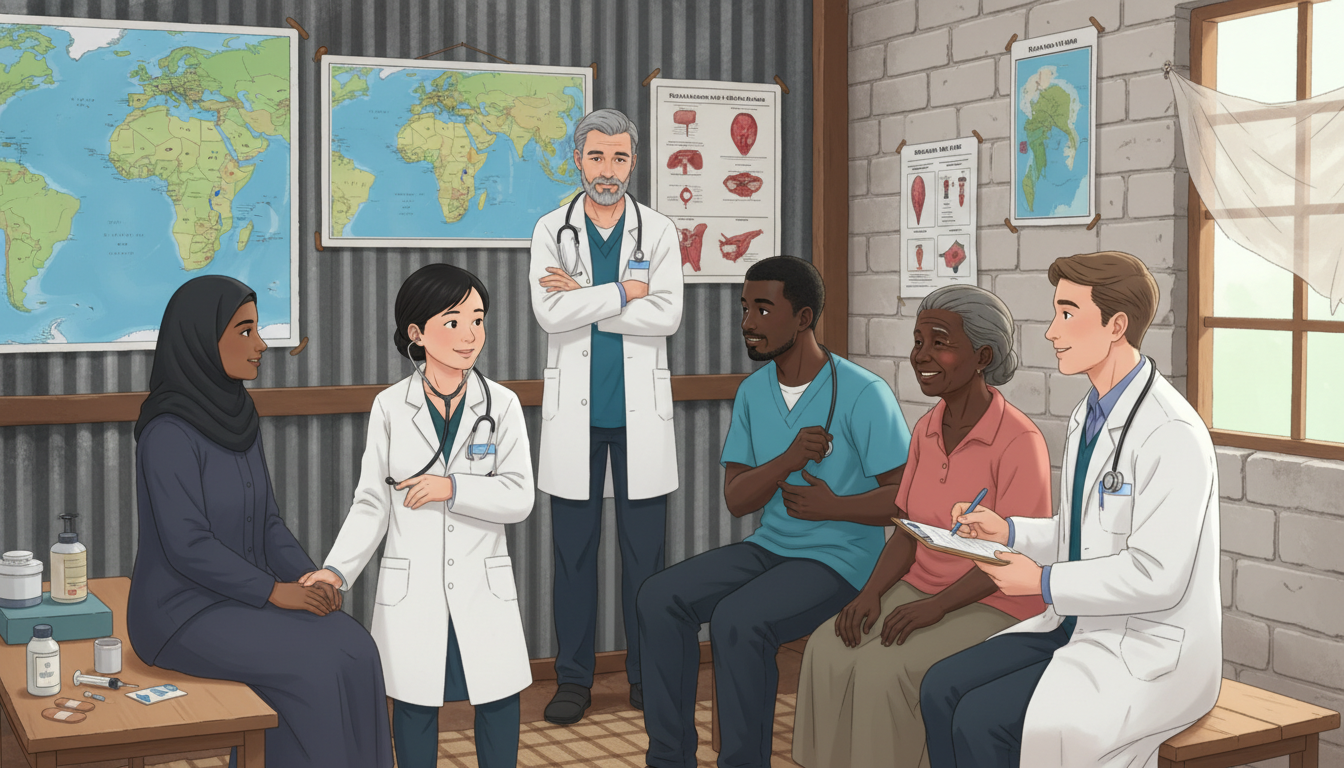
Step scores are only one component of your pathway into a global health residency track. To stand out, you need an integrated strategy that connects your scores, experiences, and long-term goals.
1. Choosing Specialties and Programs Strategically
For an IMG who wants to practice international medicine or global health, common routes include:
- Internal Medicine (IM) with a global health residency track or certificate
- Family Medicine (FM) with strong global health or underserved-care emphasis
- Pediatrics, especially programs with international partnerships
- Occasionally EM or OB/GYN, but these are more competitive and less IMG-friendly in many regions
Score-based targeting:
- If your Step 2 CK ≥ 240:
- Aim high with some academic IM/FM programs that have structured global health tracks.
- Include a mix of:
- University-affiliated global health–branded programs.
- Community programs with established global health electives and a history of international rotations.
- If your Step 2 CK 225–239:
- Focus on:
- Community-based IM, FM, or Peds.
- University-affiliated but less competitive programs.
- Programs that publicly highlight service to immigrant/refugee communities or cross-border care (an applied form of global health).
- Focus on:
- If your Step 2 CK < 225:
- You may still match, but need:
- Very strong clinical evaluations and LORs.
- Multiple backup programs in FM or community IM.
- Explicit demonstration that you’re a safe, reliable, motivated trainee with a deep commitment to global health.
- You may still match, but need:
2. Using Global Health to Strengthen a Borderline Step Profile
Programs with a global health focus often value:
- Language skills (e.g., Spanish, French, Portuguese, Arabic, Swahili, Hindi, etc.)
- Prior work with NGOs, global health research, or mission hospitals
- Demonstrated ability to thrive in challenging environments
If your Step scores are average or slightly below a program’s mean, you can still be an attractive candidate if you offer:
- A clear global health trajectory:
- Medical school electives in low-resource settings
- Participation in public health campaigns
- Work with refugees, migrants, or underserved communities
- Concrete achievements:
- Posters or publications related to global health topics (even at local or regional conferences)
- Leadership roles in student global health organizations
- Project outcomes (e.g., implemented a vaccination campaign, improved clinic workflow)
3. Timing Your Exams Relative to ERAS
For IMGs, one of the most powerful Step 2 CK strategy decisions is when to take and report scores, especially if Step 1 is borderline or failed.
If you performed poorly on Step 1:
- Aim to take Step 2 CK early enough that a strong score is available when you apply.
- A solid Step 2 CK can reassure programs and partially neutralize concern about Step 1.
If you anticipate a strong Step 2 CK:
- Taking it early can:
- Strengthen your application.
- Make you competitive for more programs.
- Consider timing completion by June–July before the September ERAS deadline.
- Taking it early can:
If your Step 2 CK practice scores are borderline:
- It may be better to:
- Delay ERAS submission by a few weeks to give yourself more study time.
- But avoid extending too far into interview season—late scores may reduce the number of interviews.
- It may be better to:
Balance risk:
- Poorly prepared early exam → low Step score match risk increases.
- Slightly delayed but well-prepared exam → fewer total programs may see your score immediately, but a stronger outcome can be more beneficial overall.
Putting It All Together: A Sample Roadmap for an IMG in Global Health
Consider two hypothetical profiles and how step score strategy interacts with their global health ambitions.
Case 1: Maria – Strong Step 2 CK, Global Health Experience
- IMG from Latin America
- Step 1: First-attempt pass
- Step 2 CK: 246
- Experience: 1 year working in a rural primary care clinic, fluent in Spanish and English, small research project on Chagas disease
Strategy:
- Apply broadly to:
- Academic internal medicine and family medicine programs with global health residency track options.
- Community IM programs serving large immigrant populations.
- Highlight Step 2 CK as evidence of strong clinical reasoning.
- Use personal statement to connect:
- Rural primary care experience
- Interest in chronic disease management in low-resource settings
- Desire for a global health–oriented career with potential for international partnerships
Case 2: Ahmed – Low Step 1, Average Step 2 CK, Deep Field Work
- IMG from North Africa
- Step 1: One fail, then pass
- Step 2 CK: 228
- Experience: 2 years with an NGO in refugee camps; led vaccination drives and helped run a mobile clinic.
Strategy:
- Focus on:
- Family medicine and community internal medicine programs with expressed interest in underserved and refugee health.
- In the application:
- Briefly explain Step 1 fail and emphasize adaptation and growth.
- Highlight real-world leadership and resilience under pressure in global health settings.
- Use interviews to:
- Show maturity, situational judgment, and what he brings beyond his test scores.
- Supplement with:
- Strong LORs describing his clinical competence and responsibility.
- Any evidence of quality improvement or data-driven impact in the NGO work.
In both cases, the Step scores matter—but the overall narrative and global health alignment often determine who gets serious attention from programs committed to international medicine and global health.
FAQ: Step Score Strategy for IMGs in Global Health
1. I have a low Step 1 score but a good Step 2 CK. Can I still match into a global health–focused residency?
Yes. Many global health–oriented internal medicine and family medicine programs care deeply about mission fit, cross-cultural experience, and commitment to underserved populations. A strong Step 2 CK can help compensate for a low Step 1 score residency profile. You must, however, apply smartly—prioritize IMG-friendly programs with explicit global health or underserved care missions, and make your global health story central to your application.
2. If I failed Step 1 once, should I mention it in my personal statement?
If your fail is likely to be noticed (which it is), a brief, focused mention can help control the narrative. Keep it short, avoid excuses, and emphasize what changed and how your Step 2 CK strategy and outcomes show real improvement. Don’t let the fail dominate the statement; it should appear as one challenge in a broader story of resilience and commitment to global health.
3. What Step 2 CK score do I need for a global health residency track as an IMG?
There is no single cutoff, but as a rough guide:
- 240+: Competitive for many academic IM/FM programs with global health tracks.
- 230–239: Competitive for many community or mixed programs, especially if your global health experience is strong.
- 220–229: Possible, but you must rely more heavily on your global health credentials, clinical experiences, LORs, and careful program selection.
Programs that are serious about global health often show flexibility if they believe you are an excellent fit for their mission and will pass board exams reliably.
4. Should I delay taking Step 2 CK to study longer, even if it means ERAS submission is later?
If your practice scores are significantly below your target and you risk a truly low Step score match outcome, a short delay to solidify your Step 2 CK strategy can be wise. That said, extremely late scores (well into interview season) may reduce your interview numbers. Aim for a balance: enough extra time to raise your score meaningfully, but not so much that many programs never see your score before ranking decisions. For most IMGs, having a strong Step 2 CK score available by early–mid interview season is ideal, especially when combined with a compelling global health profile.
By approaching Steps 1 and 2 CK as part of a broad, mission-driven strategy—not just as isolated exams—you can align your scores, your story, and your global health aspirations into a coherent and compelling application as an international medical graduate.