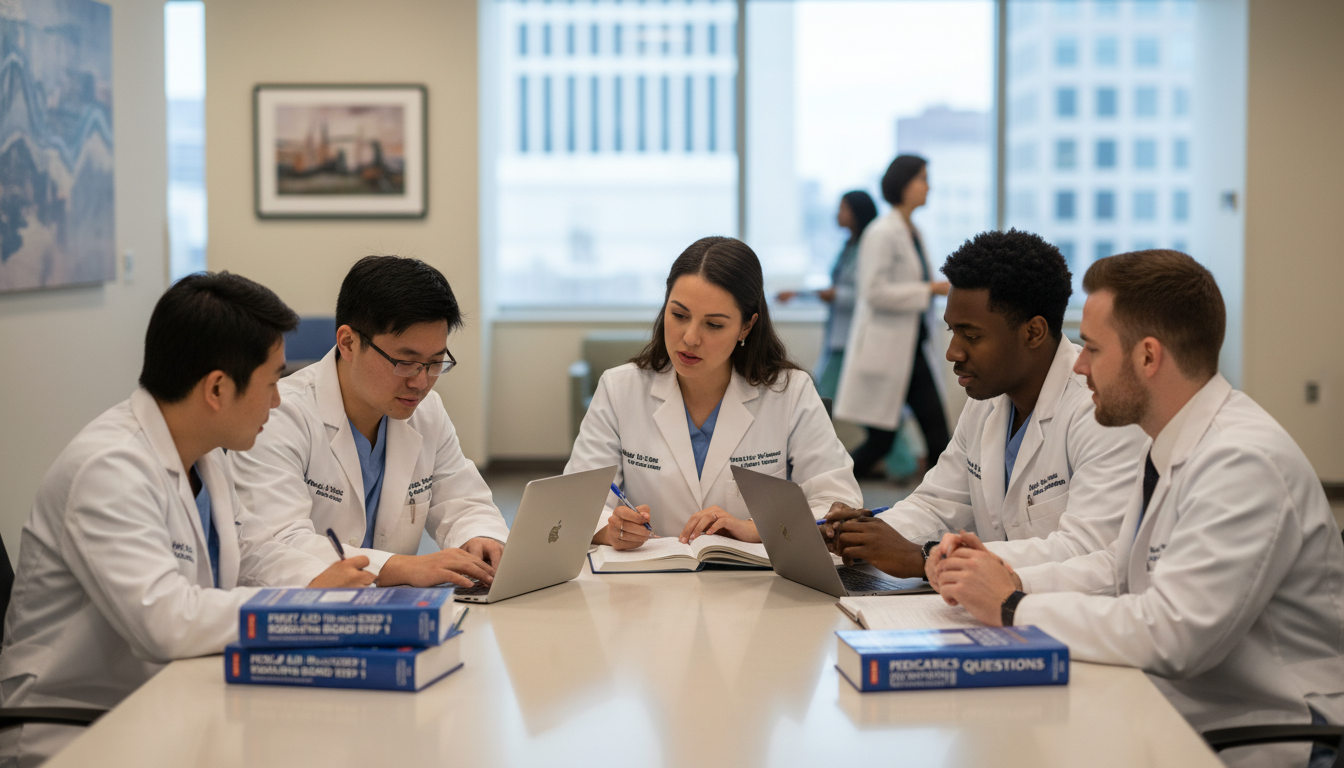
If you’re an international medical graduate (IMG) applying from or to the Denver area with a low Step score, you are not alone—and you are not out of the game. Many successful residents in Colorado residency programs started with below average board scores and still matched because they understood how to strategically compensate for that one weakness.
This IMG residency guide focuses on low Step Score strategies specifically tailored to Denver and Colorado residency programs, helping you create a realistic, competitive pathway even if you are:
- Reapplying after an unsuccessful cycle
- Carrying a low Step 1 score (especially now that it’s Pass/Fail but still reviewed)
- Worried about below average board scores on Step 2 CK
- Navigating extra hurdles as an international medical graduate
Understanding “Low Step Score” in the Denver Context
Before building a strategy, you need clarity on how Denver and Colorado residency programs interpret “low scores” and how that affects selection.
What Counts as a “Low Step Score”?
While exact cutoffs vary, for most competitive urban programs in Colorado (especially in Denver):
Step 1 (if taken before Pass/Fail)
- Below ~215–220 is often considered “low” for competitive specialties.
- Below ~205–210 may raise concerns for many core specialties (IM, FM, Peds, Psych).
Step 2 CK (now the primary numeric academic metric)
- Below ~225–230 is generally “below average” for U.S. MD applicants.
- Below ~215–220 is often considered a significant weakness, especially for IMGs, unless the rest of the application is very strong.
Programs in Denver and throughout Colorado use Step 2 CK as a critical filter, particularly for IMGs, because it is a standardized way to compare applicants from different systems.
How Denver Residency Programs Commonly Use Scores
Most Colorado residency programs, including those in Denver (e.g., internal medicine, family medicine, pediatrics, psychiatry, prelim and transitional year programs), may use scores in these ways:
- Automated filters during ERAS screening
- Example: “Filter out any applicant with Step 2 CK < 220”
- Risk assessment for board pass rates
- Programs must maintain good ABMS board pass rates; low scores can raise concerns about future board performance.
- Contextual assessment
- Strong performance in U.S. clinical experiences (USCE), research, and letters can offset weaker scores.
For IMGs in Denver, scores are often a threshold, not the whole story. Once you pass basic filters, other factors decide whether you get an interview and a rank.
Step 1: Honest Self-Assessment and Strategic Positioning
You cannot change your score, but you can control the narrative around it and choose a realistic path.
1. Map Your Profile: More Than Just a Score
Evaluate yourself across these domains:
Exam Performance
- Exact Step 1 and Step 2 CK scores
- Number of attempts (critical for IMGs—multiple failures are a serious red flag but not always fatal if you show a strong upward trend)
Medical School Background
- Country, school reputation, language of instruction
- Year of graduation (YOG):
- Recent grad (≤3 years) is favorable
- Older grad (>5–7 years) must show continuous clinical engagement
Clinical Experience in the U.S.
- Type: Observerships, externships, sub-internships, research fellowships, scribing, clinical internships
- Location: Experiences in Colorado or nearby states can be highly valuable
Research and Scholarly Activity
- Publications, posters, QI projects, audits, presentations
Other Strengths
- Advanced degrees (MPH, MS, PhD)
- Hands-on clinical work abroad (especially in primary care or underserved settings)
- Language skills that match Denver’s patient population (e.g., Spanish)
Write this out as a short profile. This will help you select the most realistic Colorado residency targets.
2. Choose the Right Specialties and Program Types
With a low Step score, your specialty choice is often more important than your exact numbers.
More accessible (relative) for IMGs with low or below average board scores (especially in Denver and Colorado overall):
- Family Medicine
- Internal Medicine (Community- or university-affiliated community programs)
- Pediatrics (select programs)
- Psychiatry (in some community settings)
- Preliminary/Internal Medicine or Transitional Year spots (as stepping stones)
More difficult (especially in Denver metro) with low scores:
- Dermatology, Orthopedics, ENT, Plastic Surgery, Neurosurgery, Radiology, Anesthesia, EM, Ophthalmology, competitive Surgical subspecialties
Your chance of matching with low scores is much higher if you lean toward primary care–oriented specialties, which align well with Colorado’s needs, particularly in rural and underserved communities.
Step 2: Targeting Denver and Colorado Programs Strategically
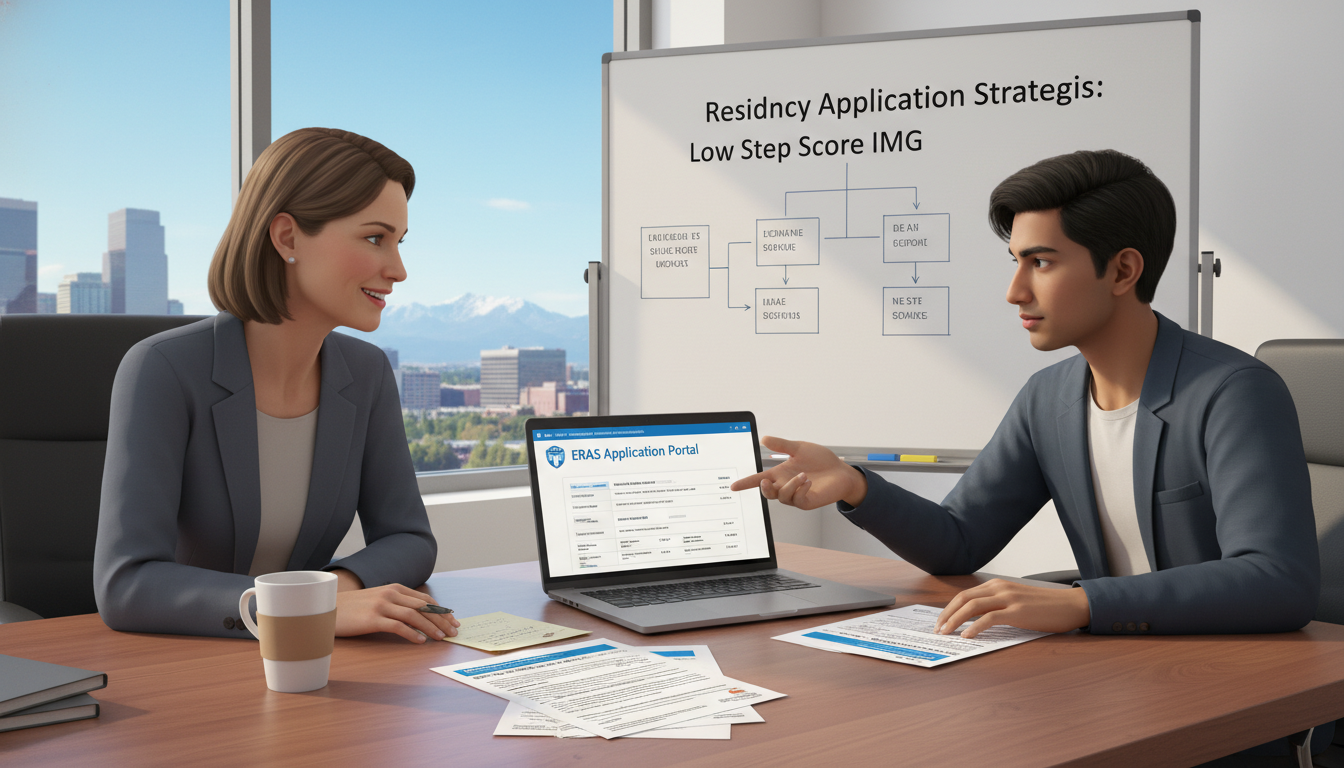
Denver offers a mix of academic, community, and hybrid programs. As an IMG with a low Step score, you must be extremely intentional about how you approach these.
1. Understand the Colorado Residency Landscape
Key hubs in or near Denver and Colorado include:
- Denver metro area
- University-affiliated internal medicine and family medicine programs
- Community-based programs with strong ties to local hospitals
- Colorado Springs, Fort Collins, Greeley, Pueblo, Grand Junction, and rural Colorado
- Often more open to IMGs, especially in family medicine and internal medicine
- May be slightly more flexible on board scores if you fit their mission (e.g., rural/underserved care)
Research every program’s website (and if possible, NRMP/FRIEDA/Residency Explorer data) for:
- Stated minimum Step 2 CK scores
- Whether they accept IMGs
- Percentage of current residents who are IMGs
- Preference for recent graduates
- Emphasis on primary care, underserved, or rural populations (a big theme in Colorado)
2. Use a Broad and Diversified Application Strategy
For IMGs with a low Step score trying to match into Denver or broader Colorado:
- Apply broadly beyond Denver alone.
- Consider a “hub-and-spoke” strategy: Denver as your hub, but with many spoke applications across Colorado and neighboring states (Wyoming, New Mexico, Utah, Kansas, Nebraska).
- Aim for 70–120+ programs if possible (primarily in IM/FM/Peds/Psych), depending on finances and specialty.
- For Denver-specific applications:
- Prioritize community and university-affiliated community programs over extremely competitive university-only tracks.
- Look for programs that highlight:
- Commitment to diversity and inclusion
- Service to immigrant or underserved communities
- Flexibility in considering “holistic review”
3. Signal Genuine Interest in Colorado
Programs in Denver and Colorado want residents who are likely to stay and serve local communities.
You can demonstrate this by:
- Including Denver or Colorado ties:
- Family living in the region
- Previous time living/studying/working in Colorado
- Prior rotations or observerships in Denver
- Explicitly addressing your connection in:
- Personal statements tailored to Colorado
- Email communications with program coordinators (professional and concise)
- Interviews: mention your interest in outdoor activities, rural medicine, or specific local patient populations
Step 3: Actively Compensate for a Low Step Score
Low Step scores can be significantly offset by deliberate strengthening of other parts of your application.
1. Maximize Step 2 CK and (if needed) Step 3
If your Step 1 was low but Step 2 CK is pending:
- Delay ERAS submission slightly if it gives you time to secure a strong Step 2 CK (e.g., 10–20 points higher than Step 1 or above 230 if possible).
- Treat Step 2 CK as your “redemption exam.”
- Build a structured, time-bound study plan.
- Use UWorld, NBME practice exams, and strict review cycles.
If Step 2 CK is already low:
- Consider taking Step 3 before match season (if eligible):
- A solid Step 3 (e.g., ≥220–225) can reassure some programs you will pass boards.
- This can be especially helpful for community-based Denver residency programs or those in broader Colorado that value evidence of improvement.
2. Secure Strong U.S. Clinical Experience (USCE) — Preferably in Colorado
USCE is often the single best way for an IMG with low scores to change how programs perceive your candidacy.
Types of valuable USCE:
- Sub-internships or acting internships (if available)
- Externships with hands-on responsibility
- Observerships (less powerful but still helpful, especially when combined with strong letters)
- Research fellowships with clinical exposure
Try to arrange at least one rotation in:
- Denver academic or community hospitals
- Family medicine clinics serving underserved populations in Colorado
- Internal medicine or hospitalist services in the region
3. Letters of Recommendation (LoRs) That Address Your Strengths
What you need from LoRs as an IMG with a low Step score:
- At least 2–3 strong U.S.-based letters, ideally:
- From core specialty physicians (IM/FM/Peds/Psych) in which you’re applying
- From physicians who can comment directly on:
- Your clinical reasoning
- Reliability and work ethic
- Communication skills with patients (particularly if you work with Spanish-speaking or underserved populations in Colorado)
- If comfortable, a letter writer may acknowledge your growth after a low Step score and emphasize your current competence.
Aim for one Colorado-based letter if you’ve done rotations in the region—this can strongly support your commitment to Colorado residency programs.

Step 4: Crafting a Compelling Application Narrative
Numbers alone rarely tell the whole story. You must control your narrative to explain your low Step scores without making excuses.
1. Personal Statement Strategy for Low Scores
Your personal statement for Denver and Colorado programs should:
Acknowledge the weakness briefly, if appropriate
- Example:
“My Step 1 score does not reflect the physician I have become. During that period, I was adapting to a new educational system and language. Since then, I have demonstrated consistent improvement, as seen in my Step 2 CK performance and my clinical evaluations.”
- Example:
Immediately pivot to strengths
- USCE experiences and feedback
- How working in diverse or underserved settings (perhaps in your home country) prepared you for Colorado’s patient population
- Longstanding interest in primary care, continuity of care, or hospital medicine
Connect yourself clearly to Colorado and Denver
- Interest in outdoor lifestyle, wellness, and community engagement
- Desire to serve immigrant, refugee, or Native American communities in the region
- Any personal or family ties to the state
Highlight growth and resilience
- How you studied differently for Step 2 CK
- Concrete behaviors: study groups, practice exams, time management changes
2. ERAS Application Details That Matter
Beyond the personal statement, use ERAS sections to strengthen your case:
Experiences Section
- Emphasize longitudinal commitments (e.g., >6 months volunteering in clinics, community health work, or telehealth).
- For each experience, describe impact and skills: team collaboration, culturally competent care, quality improvement.
Publications & Research
- Include all peer-reviewed work, posters, and abstracts.
- If you did projects in Denver or Colorado, highlight this prominently.
Awards and Distinctions
- Even local or institutional awards can help show excellence in other domains.
3. Program-Specific Tailoring
For Denver residency programs, consider:
- Customizing one line in your personal statement or ERAS to reference:
- A specific clinic or rotation site in Denver
- A program’s stated mission (e.g., “training physicians to serve the Rocky Mountain region and rural Colorado”)
- Your specific interests aligned with the program (rural track, community track, research track, addiction medicine, etc.)
Send concise, respectful emails to program coordinators only if it adds value:
- Example of appropriate outreach:
- Mention a recent rotation in Denver
- Clarify Step 1/2 improvements
- Express genuine interest, especially if you have a strong geographic tie
Step 5: Interview and Post-Interview Strategy for IMGs with Low Scores
Once you secure interviews, the playing field becomes more level. Your performance can outweigh your scores.
1. Preparing for Score-Related Questions
You may be asked:
“Can you tell me about your low Step 1 score?” or “What happened with your exam performance?”
Recommended approach:
Be honest and concise
- Do not blame others; briefly describe contributing factors (transition to U.S. exams, limited resources, personal challenges) without making excuses.
Focus on insight and change
- What did you learn?
- What specific changes did you make (e.g., question-based learning, structured schedule, seeking mentors)?
Show evidence of improvement
- Better performance on Step 2 CK or Step 3
- Strong clinical evaluations and letters
- Any QI or research work demonstrating academic engagement
Example response:
“I was disappointed with my Step 1 result, which reflected a steep learning curve adjusting to standardized testing in a new language. I recognized that my approach was too passive and content-focused. For Step 2 CK, I changed my strategy: I used question banks daily, formed a study group, and regularly assessed my progress with NBME exams. Those changes helped me improve my score and, more importantly, develop a more analytical approach to clinical problems, which my attendings have noticed in both inpatient and outpatient settings.”
2. Highlighting “Fit” with Denver and Colorado Programs
In interviews with Denver residency programs and broader Colorado residency sites:
Emphasize:
- Interest in primary care, continuity of care, rural health, or hospital medicine
- Comfort working with diverse and underserved populations, including Spanish-speaking communities, refugees, and individuals facing housing insecurity
- Love of the outdoor lifestyle, wellness, and community engagement—which resonates with the culture in Denver and Colorado
Give concrete examples:
- Community projects, vaccination campaigns, health education in your home country or in U.S. free clinics
- Experiences working with limited resources similar to rural Colorado conditions
3. Post-Interview Communication and Rank List Strategy
After interviews:
- Send personalized thank-you notes (email is fine, 24–72 hours after the interview).
- Mention specific interview moments or program features that resonated with you.
- Reiterate your interest, especially if Denver or Colorado is your top geographic priority.
When creating your rank list:
- Prioritize programs that:
- Have shown openness to IMGs historically
- Seemed genuinely interested in your story rather than focusing on scores
- Offer strong support systems and visa sponsorship (if needed)
For IMGs with low scores, a slightly longer rank list increases your chances of matching.
Putting It All Together: Example Pathways
Example 1: IMG with Low Step 1, Improved Step 2, Targeting Internal Medicine in Denver
- Profile: Step 1: 205; Step 2 CK: 233; 2021 graduate; 2 months USCE in Denver; 1 Colorado-based LoR; basic research in hypertension.
- Strategy:
- Apply broadly to IM programs in Denver, Colorado Springs, Greeley, Pueblo, and neighboring states.
- Highlight improvement in exam performance in the personal statement.
- Emphasize long-term interest in hospital medicine and willingness to serve in smaller Colorado communities after training.
- Practice clear, honest responses to Step 1 questions during interviews.
Example 2: Older Grad IMG with Low Scores and Strong USCE, Aiming for Family Medicine in Colorado
- Profile: Step 1: pass/low; Step 2 CK: 218; graduated 7 years ago; extensive primary care experience abroad; 3 months FM observership in Denver and rural Colorado; fluent in Spanish.
- Strategy:
- Focus heavily on family medicine and community-based programs across Colorado and nearby states.
- Stress long-term primary care work, including leadership in clinics abroad.
- Highlight Spanish language skills and commitment to underserved populations.
- Consider taking Step 3 early to assure programs about board readiness.
FAQs: Matching in Denver with Low Step Scores as an IMG
1. Can I match into a Denver residency program with a low Step 1 or Step 2 score?
Yes, it is possible, especially in internal medicine, family medicine, pediatrics, and some psychiatry programs, but you must:
- Show improvement (Step 2 CK and/or Step 3)
- Build strong USCE, ideally in Colorado
- Secure powerful letters of recommendation
- Demonstrate a clear, genuine interest in Colorado and in the specific program’s mission
2. Are Denver programs more IMG-friendly than other U.S. cities?
Some programs in Denver and across Colorado are IMG-friendly, particularly in primary care and community-based settings, but they are often still competitive. The key is to:
- Identify programs with a history of accepting international medical graduates
- Target community and community–university hybrid programs, not just flagship academic programs
- Demonstrate U.S. clinical experience and local ties if possible
3. Should I delay my application to retake an exam or to improve my profile?
Consider delaying only if:
- You have not yet taken Step 2 CK and are confident you can significantly outperform Step 1 with dedicated study.
- You can obtain substantial additional USCE or research during the delay, especially in Denver or broader Colorado.
If you already have low Step 1 and Step 2 CK scores, retaking is generally not possible; instead, consider Step 3 (if eligible) and strengthening other aspects of your application.
4. How many programs should I apply to as an IMG with low scores aiming for Colorado?
If finances allow, consider:
- 70–120+ applications, with a large share in:
- Internal medicine and family medicine
- Colorado and neighboring states
- Community-based and rural-focused programs
If you are specifically targeting Denver residency programs, treat them as part of a broader regional strategy rather than your only option.
A low Step score is a real obstacle, but it does not have to be the end of your U.S. residency ambitions. By aligning your goals with Colorado’s healthcare needs, strengthening your clinical and academic portfolio, and crafting a clear, honest narrative, you can still build a competitive application and open doors in Denver and beyond.