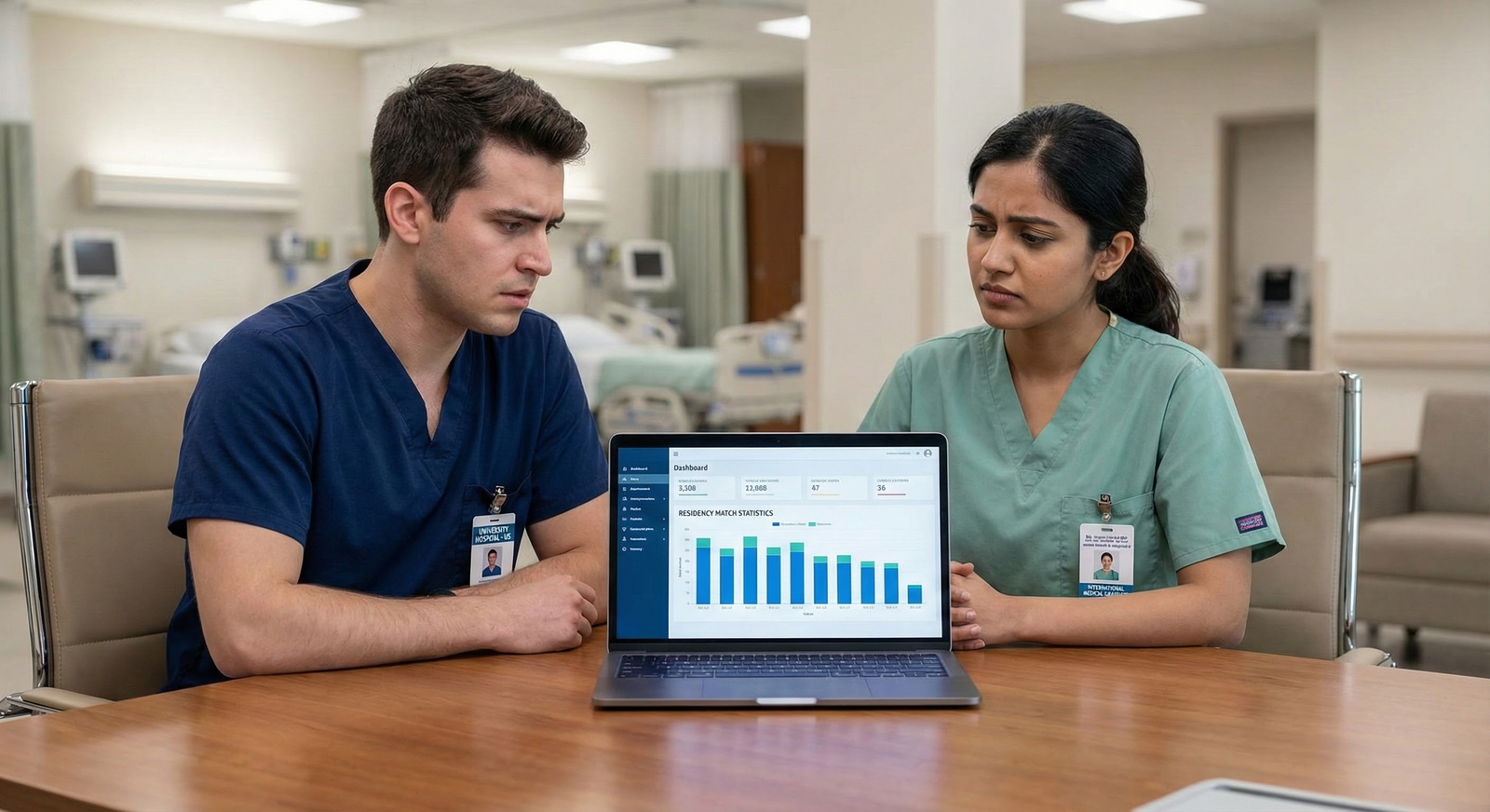
Understanding Low Step Scores in the Context of Global Health
For many international medical graduates, a low Step 1 or Step 2 score feels like a door slamming shut. Yet in global health–focused pathways, your candidacy is evaluated more holistically than you might think—especially post–Step 1 pass/fail. This IMG residency guide will help you understand where scores matter, where they matter less, and how to strategically compensate.
What counts as a “low” Step score?
“Low” is relative to the specialty and program:
- Highly competitive specialties (derm, plastics, ortho): Often expect ≥ 250+
- Internal medicine, family medicine, pediatrics (common global health platforms): Many successful applicants match in the 220–240 range; some below that with strong applications
- Below average board scores often mean:
- Step 1: < 220 (when numerically reported)
- Step 2 CK: < 230 for many academic IM/FM programs
- Any attempt with a fail is a red flag but not an absolute disqualifier
For global health–focused careers, you will typically apply in internal medicine (IM), family medicine (FM), pediatrics, emergency medicine, or OB/GYN—specialties where programs may be more open to holistic review, particularly if you show clear commitment to international medicine and vulnerable populations.
How global health programs view low scores
Programs with a global health residency track or strong international medicine focus often:
- Value language skills, cultural competence, and field experience heavily
- Seek residents who can work in low-resource settings, collaborate across cultures, and handle ambiguity
- Are accustomed to applicants with non-traditional backgrounds, including IMGs
However, many academic centers still use automated filters. A low Step 2 CK, multiple attempts, or a failed exam can limit the number of programs that even see your application. Your strategy must therefore:
- Maximize the strength of everything outside the scores
- Target programs realistically and intelligently
- Signal your global health value clearly and repeatedly
Step-by-Step Recovery Plan After a Low Step Score
1. Stabilize: Analyze what happened and fix the root causes
Before thinking about applications, you must understand why you scored low:
- Content gaps: Certain systems or disciplines were consistently weak
- Test-taking issues: Timing, anxiety, second-guessing, poor strategy
- Life factors: Illness, financial stress, work obligations, family emergencies
Practical actions:
- Request a score report breakdown (if available) and identify patterns
- Do a timed NBME or UWorld self-assessment under exam conditions
- Write a one-page honest reflection:
- “What specifically led to this score?”
- “What have I done or will I do differently for Step 2 CK or future exams?”
This reflection is not just for you; it can later inform your personal statement and interview narrative, demonstrating insight and growth rather than excuses.
2. Protect the next critical exam (usually Step 2 CK)
For an international medical graduate with a low Step 1 score, Step 2 CK becomes your key redemption opportunity. Many programs now emphasize Step 2 CK more heavily, especially after Step 1 became pass/fail.
Strategic recommendations:
- Treat Step 2 CK as a fresh start, not a continuation of failure
- Delay the exam if:
- Practice scores are consistently far below your goal
- You cannot complete at least one full pass of a high-quality question bank
- Set a realistic target:
- If your Step 1 was low, aim to outperform yourself by at least 15–20 points on Step 2 CK
- Even a modest absolute score can be powerful if it shows clear upward trajectory
Focus on:
- High-yield resources (UWorld, NBME forms, high-yield notes/videos)
- Daily timed blocks with full review
- Developing a repeatable test-taking system:
- Read stem → identify the question being asked → list key positive/negative findings → narrow to 2 options → commit
In your later narrative, you can explicitly say:
“I recognized my Step 1 result did not reflect my capabilities. I restructured my study methods and improved my score by XX points on Step 2 CK.”
3. Stabilize and strengthen your clinical performance
US clinical experience (USCE) and strong clinical evaluations can soften the impact of a low score, especially when aligned with global health values.
Aim for:
- Hands-on USCE (sub-internships, acting internships, clerkships) in:
- Internal medicine
- Family medicine
- Pediatrics
- EM or OB/GYN if relevant to your global health interest
- Settings with underserved populations:
- FQHCs, community hospitals, safety-net hospitals
- Programs with global health or international medicine clinics
Emphasize in your evaluations and letters:
- Reliability and professionalism
- Ability to communicate clearly with patients whose language or culture differs from yours
- Comfort with limited resources and creativity in problem solving

Building a Global Health-Focused Profile That Outweighs Your Scores
If your numbers are weaker, your story and portfolio must be stronger. This is especially powerful for global health–oriented residency programs.
1. Showcase meaningful global health or international medicine experience
Global health programs look beyond traditional metrics to ask:
“Has this person actually done work that shows they are committed to international or underserved populations?”
Examples that carry weight:
- Longitudinal work (not just 1–2 week “mission trips”):
- Multi-month involvement with an NGO or public health project
- Year-long engagement with refugee or migrant health services
- Research or projects in:
- TB, HIV, maternal health, vaccine outreach, non-communicable diseases in low-income settings
- Health system strengthening, telemedicine in low-resource areas
- Local global health:
- Working with immigrant/refugee communities in the US or your home country
- Volunteering in clinics serving homeless or uninsured populations
Strengthen these experiences by:
- Documenting specific outcomes:
- “Designed a hypertension education program for 80 rural patients; 60% returned for follow-up.”
- “Helped implement a vaccination registry in a district of 15,000 residents.”
- Seeking a letter of recommendation from a supervisor who:
- Can describe your impact
- Works at or is affiliated with an academic or teaching program, if possible
2. Develop tangible global health skills
Beyond passion, show concrete skills that translate to residency:
- Language proficiency (Spanish, French, Portuguese, Arabic, Swahili, etc.)
- Public health training:
- Short courses in global health, epidemiology, implementation science
- Online certifications (Coursera, edX, WHO courses) that you can list
- Research literacy:
- Capacity to read global health literature and support QI or implementation projects
- Cultural humility and leadership:
- Roles such as organizer of free clinics, coordinator of student global health groups
These can be highlighted under Experiences, Certifications, and Skills in ERAS.
3. Strengthen your research and scholarly output (even modestly)
You do not need a PhD, but some scholarly work in international medicine or underserved care can help offset below average board scores:
- Aim for:
- 1–3 posters or abstracts at conferences (global health, primary care, public health)
- Small retrospective chart reviews, case reports, or QI projects related to:
- Infectious diseases
- Maternal-child health
- Chronic disease management in low-resource settings
- Collaborate with:
- Your home institution’s global health office (if available)
- NGOs that collect outcomes data
- US-based mentors you meet through observerships or virtual mentorship programs
Even modest output, well-framed, signals curiosity and academic potential.
Application Strategy: Matching With Low Scores in Global Health-Oriented Programs
To maximize your chances of matching with low scores, you must be strategic both in where you apply and how you present yourself.
1. Target specialties that align with global health and holistic review
For most global health–bound IMGs with low scores, your best primary residency choices are:
- Family Medicine (FM) – Often highly mission-driven, strong focus on underserved care, many global health residency tracks
- Internal Medicine (IM) – Broad gateway to global health fellowships (ID, general medicine, health systems, policy)
- Pediatrics – Strong alignment with child health, immunization, malnutrition projects
- Emergency Medicine (EM) – Some programs with robust global emergency medicine tracks
Programs with explicit “global health residency track” or “international health pathway” often:
- Emphasize service, language skills, and global experience
- May be more forgiving of low Step scores if your global health story is compelling
2. Build a smart program list
To overcome automated filters and maximize interview chances:
- Diversify program types:
- Community-based programs with strong underserved care focus
- University-affiliated but not top-tier academic centers
- Safety-net hospitals, programs in mid-size cities or less competitive regions
- Research:
- Programs explicitly mentioning “global health”, “international medicine”, “underserved populations”
- Those with known history of accepting international medical graduates
Key indicators on program websites:
- Descriptions of:
- Global health rotations
- International electives
- Refugee/immigrant clinics
- Program leadership with global health backgrounds
- Current residents with international experience or non-traditional paths
Practical approach:
- Create a spreadsheet with columns:
- Program name
- Specialty
- Global health track? (Yes/No/Weak)
- IMG-friendly? (Yes/Some/No)
- Step cutoffs (if known)
- Underserved focus
- Personal notes/contacts
Aim to apply broadly, especially if your scores are well below national averages. For many IMGs with low scores, this might mean 80–120+ applications, emphasizing FM and IM.
3. Strategically explain your low Step scores
You need a coherent, honest, and forward-looking explanation that appears consistently in:
- Personal statement
- Interviews
- Potentially a short “additional information” section in ERAS if needed
Effective framing includes:
Brief context (without excessive detail or excuse)
Example:
“During my preparation for Step 1, I struggled with both inefficient study methods and test anxiety, which limited my performance.”Specific actions you took to improve
“I sought mentorship, created structured study schedules, and changed my approach to practice questions.”Evidence of growth and resilience
“As a result, I improved my performance on Step 2 CK, and my clinical evaluations in US rotations reflect the stronger foundation this new approach provided.”Connection to residency and global health
“Overcoming this challenge taught me how to adapt, seek help, and persevere—skills that are essential in global health, where resources are constrained and obstacles are inevitable.”
Avoid:
- Blaming others or the exam
- Long, emotional narratives without a clear growth outcome
- Overemphasizing the low score at the expense of your strengths

Crafting Application Components That Highlight Strengths Over Scores
1. Personal statement: Turn your journey into a compelling global health narrative
For an international medical graduate with low scores, your personal statement must:
- Explain why global health is your long-term path
- Demonstrate concrete actions, not just ideals
- Integrate your exam story without letting it dominate
Suggested structure:
Opening vignette from a global health or underserved care experience
Example: a clinic in a rural area, a refugee camp patient, or a complex social case in a US safety-net hospital.Development of your global health interest
- How your background, language, or experiences led you to international medicine
- Specific mentors, projects, or rotations
Addressing the low Step scores (brief, honest, growth-oriented)
- 2–4 sentences maximum
- Focus on what changed and how you improved
Future goals
- Global health fellowship, working in low-resource settings, health systems strengthening, disease-focused initiatives
Why this specialty is the right vehicle for your goals
- For FM: continuity of care, breadth of age groups, community engagement
- For IM: platform for ID, NCDs, health systems, research
- For Pediatrics: child survival, vaccination, growth and development
2. Letters of recommendation: Your most powerful counterweight
Strong letters can dramatically mitigate concerns about matching with low scores.
Aim for:
- At least 2–3 US-based letters (if possible), ideally from:
- Program directors, clerkship directors, or faculty at teaching hospitals
- Supervisors who saw you caring for underserved or diverse populations
- 1 letter from someone who can speak to your global health experience, even if not US-based
Ask letter writers to emphasize:
- Clinical reasoning and reliability
- Work ethic and resilience in the face of difficulty
- Communication skills with patients and team members
- Evidence that you already function near the intern level
- Clear commitment to global health and underserved medicine
Provide them with:
- Your CV and personal statement draft
- A brief summary of your global health work and your low score context (if appropriate)
- Specific examples they might reference
3. CV and ERAS entries: Quantify your impact
When describing global health or underserved work:
- Use action + outcome statements:
- “Led weekly health education sessions for 30+ rural patients, resulting in 25% increase in follow-up attendance.”
- “Coordinated a mobile clinic serving 300 refugees over 6 months.”
- Highlight leadership roles:
- Coordinator, organizer, project lead, team leader
- Include languages, listing proficiency level accurately:
- Native / Fluent / Advanced / Intermediate / Basic
4. Interview performance: Sealing the impression
Programs may invite you despite your low score; your job in the interview is to convince them they were right to take the chance.
Prepare to discuss:
- Your low Step score:
- Short, honest explanation
- Emphasis on changes, resilience, and evidence of improvement
- Your global health trajectory:
- Clear long-term goals (e.g., global health fellowship, NGO/hospital partnership work, academic global health)
- How their specific program fits into that journey
- Situational questions:
- Times you worked with limited resources
- Dealt with cultural misunderstandings
- Led a team in a challenging environment
Practice concise answers and avoid sounding defensive. Your tone should be reflective and confident, not apologetic.
Long-Term View: Alternative Paths and Backup Plans
Despite perfect strategy, some IMGs with low scores will not match on the first attempt. You should prepare both an aggressive first-attempt strategy and a rational backup plan that still aligns with your global health interests.
1. Strengthening for a reapplication year
If you do not match:
- Avoid gaps with no medical or health-related activities
- Seek roles that:
- Increase your US clinical exposure (research assistant, clinic assistant, unpaid observerships)
- Expand your global health portfolio (NGO work, remote projects with US collaborators)
- Aim to:
- Gain new global health–relevant experiences
- Produce at least one scholarly output (poster, abstract, publication, QI project)
- Improve any remaining exam or language weaknesses
2. Considering related fields while keeping a global health identity
While your primary goal may be clinical residency, parallel or temporary options include:
- Public health degrees (MPH, MSc Global Health) – especially if they offer:
- Research opportunities
- US-based networks
- Practica with global health faculty
- Research positions in:
- Infectious diseases, epidemiology, health equity, implementation science
- Non-clinical roles in global health organizations
These should be chosen strategically, not randomly, ensuring they:
- Build skills valued by global health residency programs
- Connect you to mentors able to support your next match attempt
- Do not permanently derail your path back to clinical training
FAQs: Low Step Score Strategies for IMGs in Global Health
1. Can I still match into a global health–oriented residency with a low Step 1 score?
Yes, especially if Step 2 CK is stronger and you demonstrate clear commitment to global health. Programs in family medicine, internal medicine, and pediatrics often review applications more holistically, particularly those with a global health residency track. Your chances improve significantly if you have strong US clinical experience, excellent letters, and sustained work with underserved or international populations.
2. Which matters more for global health programs: Step 1 or Step 2 CK?
Today, many programs place greater emphasis on Step 2 CK, seeing it as a more clinically relevant exam. A low Step 1 can be offset by a higher Step 2 CK, particularly if you show an upward trend. Some programs may still use Step 1 numerically as a filter (if available), but a strong Step 2 CK plus strong clinical evaluations can shift attention away from the earlier score.
3. Do short mission trips help my application if my scores are low?
Short trips alone rarely compensate for low scores. Programs look for longitudinal engagement and depth, not brief experiences that may appear superficial. If you have done short trips, frame them in the context of ongoing work: continued collaboration, remote follow-up, or projects you helped design or evaluate. The more sustained and structured your involvement, the more it will help.
4. Should I mention my low scores directly in my personal statement?
In most cases, yes—but briefly and strategically. A concise acknowledgment plus a clear description of how you changed and improved is more effective than silence, which leaves programs to make their own assumptions. Do not make the low score the centerpiece of your statement; instead, integrate it as one challenge in a broader story of growth, resilience, and dedication to global health and international medicine.
By focusing on what you can control—Step 2 performance, clinical excellence, global health experience, and a compelling narrative—you can significantly improve your odds of matching even with below average board scores. For an international medical graduate committed to global health, your lived experience, adaptability, and service history can be just as powerful as your numbers when you present them thoughtfully and strategically.